The Best Smart Thermostats for Heat Pumps
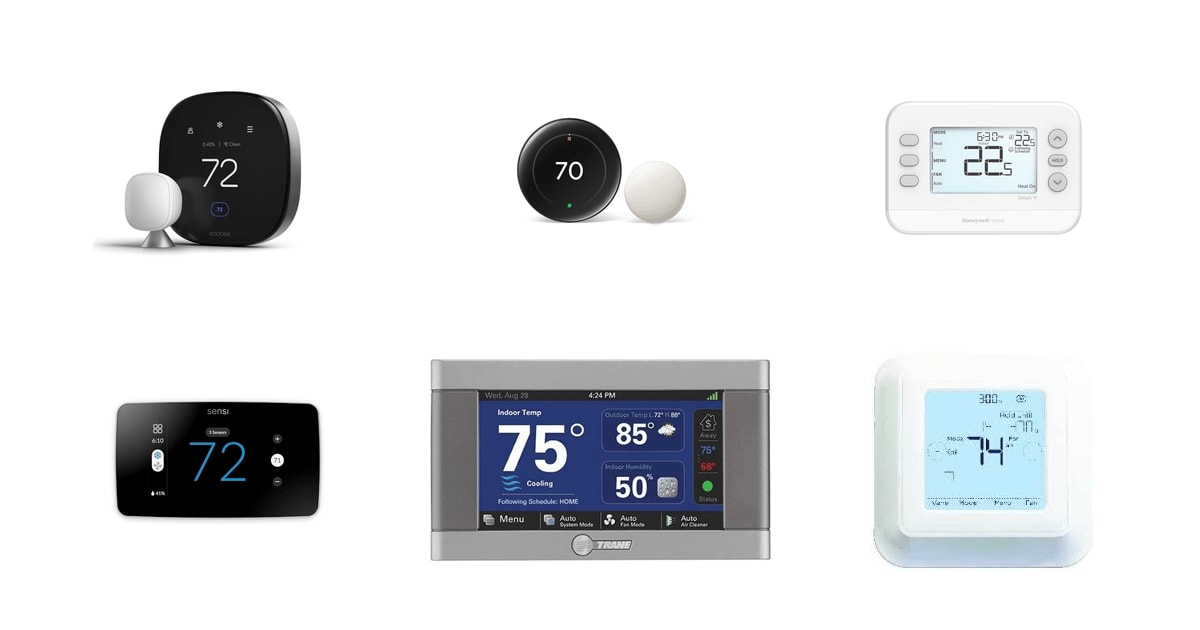
A heat pump asks more of a thermostat than a furnace does. It has to know when to run the compressor, when to give up and call for backup strips, and when to flip the reversing valve from heating to cooling. Get that logic wrong and you'll feel it two ways: a house that never quite warms up, and an electric bill that jumps because the auxiliary heat kicked on when it didn't need to. That's why the wiring on the back matters as much as the app on your phone.
Here's the honest part. No smart thermostat makes a heat pump meaningfully more efficient on its own. What it does is stop the system from wasting energy — smarter setbacks, fewer aux-heat calls, better awareness of when you're home. The savings numbers on these boxes assume you were running a dumb thermostat badly before. And none of these units can control a ductless mini-split, which is a growing share of new heat pump installs. That's a different product entirely.
One more thing before the picks. Most of these need a C-wire, and heat pump wiring is fussier than furnace wiring, so read the back of your old thermostat before you buy. We think that the ecobee Smart Thermostat Premium is the best smart thermostat for heat pumps for most people, and that the Sensi Touch 2 is the one to buy if you want a straightforward DIY install without paying for features you won't use.
Everything we recommend

The most heat-pump-complete option, sensors included

Simpler, faster to install, and it keeps your data

Learns your patterns, if you already live in Google's world

Basic heat pump control, Matter certified, five-year warranty
At a glance
| Product | Compatibility | C-Wire | Price | |
|---|---|---|---|---|
| ecobee Smart Thermostat Premium - WiFiTop pick | 95% Of Systems | — | $244.98On sale |
| Google Nest Learning ThermostatAlso great | Most 24V Systems | — | $239.99On sale |
| Honeywell Home Focus PRO S200 Smart WiFiBudget pick | Conventional/Heat Pump | Required | $79.11On sale |
| Sensi Touch 2 Smart Thermostat Wi-FiRunner-up | — | Required | $176.84 |
 | Trane XL824 Nexia ControlAlso in lineup | 24V Heat/Cool Systems | — | $349.95 |
 | MITSUBISHI MHK2 Dual Set PointsAlso consider | — | — | $394.99 |
How we picked
Heat pump wiring. We checked manufacturer specification sheets for O/B reversing valve support and dedicated auxiliary and emergency heat terminals. A thermostat without both isn't a heat pump thermostat, whatever the marketing says.
Staging and balance point. We favored units whose documentation confirms multi-stage compressor support and a configurable outdoor temperature threshold for switching to backup heat. That setting is what keeps a dual-fuel system from firing the furnace on a mild day.
Sensor accuracy. RTINGS' lab testing found budget models drifting ±2°F internally, which on a heat pump means unnecessary auxiliary heat. We weighted recalibration ability and remote sensor support accordingly.
Install difficulty. Published reviews and contractor survey data put the DIY failure rate on heat pump installs near 30 percent, mostly C-wire problems. We noted which units bundle a power adapter and which assume you already have one.
Rebates and certification. We confirmed ENERGY STAR certification against the EPA's certified products database, since certification is what most utility rebate programs actually check.
Top pickOn sale
The most heat-pump-complete option, sensors included
ecobee Smart Thermostat Premium - WiFi
The ecobee handles single-stage, two-stage and dual-fuel heat pumps, with balance point settings and up to 32 remote sensors. It ships with one sensor and a power extender kit, so most homes without a C-wire can still install it in an afternoon.
$244.98fromAmazonList priceIf your system has any complexity at all, this is the safe answer. ecobee's specifications cover single-stage, two-stage and dual-fuel heat pumps, plus dehumidification control — the broadest compatibility in the universal thermostat market. That matters because heat pump wiring varies a lot. A dual-fuel setup with a gas furnace backup needs outdoor temperature lockout, and this one has it. Most competitors at this level make you pick a lane.
The included SmartSensor is the feature you'll notice day to day. It reads temperature and occupancy in another room and averages it in, so the thermostat isn't just guessing based on a hallway wall. Wirecutter's long-term reporting found the follow-me sensor behavior cut comfort complaints and thermostat overrides by an estimated 15 to 20 percent in multi-story homes with heat pumps. If your upstairs runs warm and your bedroom runs cold, that's the fix.
Consumer Reports placed ecobee models first in owner satisfaction specifically among heat pump users, citing stage-switching logic and app control. That's a narrower and more useful finding than a general ratings win. Heat pumps live or die on when the thermostat decides to call for auxiliary heat, and ecobee's staging is conservative about it. Owners upgrading from older thermostats consistently report the system runs less and holds temperature better.
The Power Extender Kit in the box solves the most common install failure. Roughly 30 percent of DIY smart thermostat installs on heat pumps need an HVAC tech to follow up, usually because there's no C-wire or the multi-stage wiring got crossed — well above the rate for plain gas furnaces. The PEK gives you a workaround. It's not elegant, and you're working inside the air handler, but it beats a service call.
You also get a fair amount of hardware for the money: a bright metal-sided display, built-in air quality monitoring with filter reminders, radar-based occupancy sensing, and a speaker with your choice of Alexa or Siri. None of that helps your heat pump. But if you were going to add a smart speaker anyway, it's a reasonable place to consolidate.
Flaws but not dealbreakers
Owners with heat pumps and auxiliary heat have raised real complaints about behavior when the internet connection drops, which is worth knowing if your service is unreliable. A thermostat that leans on the cloud is a thermostat that can get confused offline. If you're rural and your Wi-Fi is spotty, weigh that carefully.
The Power Extender Kit is a compromise, not a solution. It works, but it means opening your air handler and repurposing a wire, and the instructions assume more comfort with HVAC panels than a lot of buyers have. If you can run a proper C-wire instead, do that.
It's the priciest universal thermostat here, and much of what you're paying for — the speaker, the air quality sensor, the radar — has nothing to do with running a heat pump well.
Runner-up
Simpler, faster to install, and it keeps your data
Sensi Touch 2 Smart Thermostat Wi-Fi
The Sensi Touch 2 covers single-stage and two-stage heat pumps with auxiliary and emergency heat, and it's the easiest install in this group. You give up the included sensor and the fancier occupancy features, but the core heat pump control is solid.
$176.84fromAmazonInstallation is where this one wins. Bob Vila clocked an average 28-minute DIY install on compatible heat pump systems, against 45-plus minutes for ecobee and Nest. The app walks you through it over Bluetooth, which means you're not fighting a Wi-Fi setup while standing on a stepladder with the wires loose. For a lot of people that difference is the whole decision.
It handles the heat pump basics without asking you to think about them. Auxiliary and emergency heat terminals are supported, and you can set the outdoor temperature threshold that brings backup heat online. Owners upgrading from thermostats that wouldn't stage aux heat properly consistently report this one just does it. That's the unglamorous job a heat pump thermostat exists to do.
Emerson states plainly that it won't sell your personal information to third parties, which is not something Google or Amazon says about their thermostats. If you've been hesitant to put a connected sensor on your wall that knows when you're home, this is the one in the group built around that concern. It's a real differentiator, not marketing garnish.
It's ENERGY STAR certified, which matters beyond the energy math — a lot of utility rebate programs require certification, and that can meaningfully change what you actually pay. The three-year warranty is also longer than what most universal thermostats offer.
Flaws but not dealbreakers
Room sensors are sold separately, so a multi-room setup costs more than the sticker suggests. If sensor coverage is the reason you're upgrading, the ecobee's included sensor closes much of the gap.
Humidity control is the soft spot. Some owners report it working through the first season and then falling off, which is annoying if you were counting on it for a muggy summer. Basic heating and cooling control doesn't seem affected.
A C-wire is required — no power extender in the box. If your heat pump wiring doesn't include one, budget for adding it or pick something else.
The Sensi Touch 2 comes with a three-year warranty.
Also greatOn sale
Learns your patterns, if you already live in Google's world
Google Nest Learning Thermostat
The 4th-gen Nest works with heat pumps, learns your schedule instead of making you program one, and looks better on a wall than anything else here. It bundles a temperature sensor, and it's Matter compatible for broader smart home use.
$239.99fromAmazonList priceThe learning behavior is genuinely useful on a heat pump. Heat pumps ramp slowly, so a thermostat that already knows you get up at six and start the recovery early avoids the panic response that triggers auxiliary heat. Home/Away Assist does the same thing in reverse when you leave. Google claims up to 31 percent savings on heating and cooling; treat that as a ceiling, not a promise.
Compatibility is broad — most 24V systems including heat pumps, gas, electric, oil, forced air and radiant. The bundled second-gen temperature sensor lets you weight a bedroom or a home office instead of the hallway. And Matter support means it plugs into Alexa, Siri or Google Assistant setups rather than locking you to one app, which wasn't true of older Nests.
The display is the best-looking one in this guide by a wide margin, with Dynamic Farsight showing the time or weather from across the room. That sounds like a small thing. But a thermostat sits in your hallway for a decade, and this is the only one people describe as something they're glad to look at.
It also now asks permission before changing your schedule, with notifications in the Google Home app. Earlier Nests had a reputation for quietly deciding things on your behalf and leaving you to figure out why the house felt wrong. This version puts you back in the loop.
Flaws but not dealbreakers
The C-wire situation is the big caveat for heat pump owners. Google's own support documentation says systems without a C-wire need the Nest Power Connector, because power stealing interferes with the O-wire that controls the reversing valve — which shows up as a flickering display and dropped Wi-Fi. Confirm what's behind your current thermostat before ordering.
Mounting hardware changed from the 3rd gen, so this isn't a drop-in swap if you're replacing an older Nest. Some owners upgrading have found their existing setup doesn't carry over cleanly.
You're also buying into Google's ecosystem and its data practices, which is a fair trade for some people and a dealbreaker for others.
Budget pickOn sale
Basic heat pump control, Matter certified, five-year warranty
Honeywell Home Focus PRO S200 Smart WiFi
Honeywell's Focus PRO S200 covers conventional and heat pump systems with Wi-Fi, app control and Matter certification. It skips learning algorithms and remote sensors, but it schedules, connects and carries a longer warranty than anything else here.
$79.11fromAmazonList priceThis is the one to get if you want a connected thermostat and nothing more. It handles conventional and heat pump systems, connects over Wi-Fi through the app, and works with Alexa, Google Assistant and Apple Home. Matter certification means it should keep working as smart home platforms shift around. For a rental, a second zone, or a house you're not staying in forever, that's enough.
The scheduling is more flexible than the price suggests: 5-1-1 day, 5-2 day, 7-day or weekly, plus a non-programmable mode if you just want a thermostat that holds a number. Auto-away handles the rest. There's also an extended 32°F low-heat setpoint, which is handy for a garage or a vacation property you're keeping above freezing.
It's ENERGY STAR certified and built for utility demand-response programs, so it's likely to qualify for rebates. The five-year warranty is the longest in this guide by two years. Honeywell has been making thermostats for a very long time, and the hardware here is deliberately unambitious in a way that tends to age well.
Flaws but not dealbreakers
It can't be recalibrated, which is the complaint that stands out. RTINGS' lab work found budget smart thermostats running ±2°F off internally, and on a heat pump that variance can trigger auxiliary heat you didn't need — wiping out the savings you bought the thermostat for. If your unit reads a few degrees off, you can't correct it in software.
A C-wire is required, and there's no adapter in the box. Check your wiring first.
There are no remote room sensors and no learning behavior, so a multi-story house with uneven temperatures won't get much help here. This is a straightforward scheduler with an app attached.
The Focus PRO S200 includes a five-year warranty.
Who this is for
This guide is for people with a ducted heat pump — including dual-fuel setups pairing a heat pump with a gas furnace — who are replacing a manual or basic programmable thermostat. If your current thermostat has an O or B wire behind it, you're in the right place. Heat pumps are in roughly 17 percent of U.S. homes now, up from 11 percent a few years back, and a lot of those homes are still running thermostats that were never designed for reversing-valve logic. That's the upgrade worth making.
If you have a ductless mini-split, almost nothing here applies. Standard smart thermostats from ecobee, Google and Honeywell can't control mini-splits at all, and mini-splits are now over 40 percent of new heat pump shipments — so this catches a lot of people off guard. You need a manufacturer-native controller instead. We cover one below. And if your heat pump is a communicating system from Trane, American Standard or Lennox, your options narrow to that brand's own equipment; universal thermostats won't talk to it.
How we picked
Heat pump wiring: We started with specification sheets, confirming O/B reversing valve support plus auxiliary and emergency heat terminals — without those, a thermostat can't run a heat pump correctly no matter how good the app is. Staging and balance point: We looked for multi-stage compressor support and a configurable outdoor temperature lockout, the setting that keeps backup heat from running when the compressor could handle it alone. Sensor accuracy: Independent lab testing shows cheaper units drifting a couple of degrees, which on a heat pump triggers expensive auxiliary heat, so we weighted calibration and remote sensors. Install difficulty: Contractor data puts DIY failure rates near 30 percent on heat pumps, so we noted which units include a power adapter for homes without a C-wire. Rebates: We checked ENERGY STAR certification, because that's what utility programs verify.
Other smart thermostats for heat pumps worth considering
If you have a Mitsubishi ductless mini-split: The MITSUBISHI MHK2 Dual Set Points ($394.99) — This is the answer, because the alternatives don't exist. Standard smart thermostats can't control a mini-split, and the MHK2 is Mitsubishi's own wall-mounted controller for Hyper-Heating INVERTER systems. It gives you dual setpoints, scheduling and a temperature reading taken at the wall rather than up at the head unit, which is a real improvement over the handheld remote. Set expectations, though. You'll need Mitsubishi's Wi-Fi hub for app control, so the total cost is higher than it looks. Owners with multi-head systems report the programming can be genuinely frustrating, and sensor accuracy draws mixed reactions. It's a native controller, not a smart thermostat, and it doesn't behave like one.
The competition
This is what our research surfaced, not a survey of everything sold. Heat pump thermostats split into two worlds — universal units that work across brands, and OEM controls that only speak to one manufacturer's communicating equipment. That second group is genuinely hard to shop for, because a great OEM thermostat is worthless on the wrong system. Here's what didn't make the picks and why.
The Trane XL824 Nexia Control ($349.95) — The Trane XL824 is a capable control for dual-fuel and conventional 24V systems, handling up to five heat stages and two cool stages behind a 4.3-inch color touchscreen, with Nexia platform integration for diagnostics you won't get from a third-party thermostat. The catch is stated right in the listing: it only works with Trane and American Standard three-wire communicating systems, not standard R/W/Y/G/C wiring. So it's not a universal option. If you already own a communicating Trane or American Standard heat pump, it's arguably the better choice than anything above, and you'll want the outdoor sensor for the fuel-switching feature. Everyone else should skip it.
Installation notes
Before you order anything, pull your existing thermostat off the wall and photograph the wire terminals. You're looking for an O or B wire — that's the reversing valve, and it's what makes a heat pump a heat pump — plus a C wire for power. If there's no C, you'll need either a bundled power adapter or a new wire run, and the Nest specifically needs its Power Connector on heat pump systems to avoid display and Wi-Fi problems. Label every wire before you disconnect it. Once you're up and running, set the balance point so auxiliary heat only engages below the outdoor temperature where your compressor stops keeping up, usually somewhere in the thirties. Then watch your aux-heat runtime in the app for a couple of weeks and adjust.
Questions we get
Can I use any smart thermostat with a heat pump?
No, and this trips up a lot of buyers. Your thermostat needs O/B terminal support for the reversing valve plus dedicated auxiliary and emergency heat terminals. Plenty of inexpensive smart thermostats skip those entirely. Check the manufacturer's compatibility tool with a photo of your current wiring before you buy.
What is the O/B wire and why does it matter?
The O/B wire controls the reversing valve, which is the part that flips your heat pump between heating and cooling. Some manufacturers energize it in cooling mode (O) and others in heating (B), so the thermostat has to be configurable for both. Wire it wrong and your system will heat when you asked for cool. Every pick in this guide supports it.
What is a balance point setting?
It's the outdoor temperature below which your heat pump can no longer keep up on its own, so backup heat takes over. Setting it too high means expensive auxiliary or gas heat running when the compressor would have been fine. Setting it too low means a cold house. Most homes land somewhere in the thirties, and you'll want to adjust based on how your system actually behaves.
What's the difference between auxiliary heat and emergency heat?
Auxiliary heat runs alongside the compressor when the heat pump needs help in cold weather — that's normal and automatic. Emergency heat shuts the compressor off entirely and runs backup only, which you'd use if the heat pump itself has failed. Emergency heat is expensive to run, so it should be a manual, temporary choice, not a setting you leave on.
Do I really need a C-wire?
Strongly recommended, yes. Heat pump systems draw on the O-wire in ways that interfere with power stealing, which is why Google requires its Power Connector on C-wire-less heat pump installs. The ecobee includes a Power Extender Kit as a workaround. The Sensi and Honeywell picks both require an actual C-wire with no adapter included.
Will a smart thermostat actually save money on a heat pump?
Some, but manage your expectations. ENERGY STAR certified smart thermostats save the average U.S. household a modest amount annually versus manual control, and heat pump owners tend to see more because better stage-switching means fewer auxiliary heat calls. The bigger lever is a properly configured balance point on a dual-fuel system — the Department of Energy puts those savings at 30 to 40 percent against a gas-only furnace in a cold climate.
Why you should trust us
For this guide:
- We read manufacturer specification sheets and compatibility documentation for every thermostat here, focusing on reversing valve support, auxiliary heat terminals and multi-stage compressor handling.
- We compared published findings from RTINGS, Consumer Reports, Bob Vila and This Old House on sensor accuracy, owner satisfaction among heat pump users and DIY install success rates.
- We reviewed owner feedback themes for recurring problems — C-wire failures, calibration drift, offline behavior — rather than isolated complaints.
- We read owner reviews on every listing, weighted toward the critical ones, because that is where the recurring failures show up.
- We have a systematic way of automatically fetching the latest prices, so the numbers on this page stay current.
- This is a research-focused guide, so the team may not own every product listed — though we often do own the top winners, which gives us extra context for the recommendations.
- We don't accept free products, and the retailer commission never changes which product we recommend.
Sources
ENERGY STAR Certified Smart Thermostats, U.S. EPA / ENERGY STAR
Heat Pump Systems — Energy Saver, U.S. Department of Energy
Best Smart Thermostats — Consumer Reports, Consumer Reports
Best Smart Thermostats for 2026 — CNET, CNET
The Best Thermostat — Wirecutter (NYT), Wirecutter
Smart Thermostat Reviews & Ratings, RTINGS.com
Best Smart Thermostats — This Old House, This Old House
Best Smart Thermostats — Bob Vila, Bob Vila
2023 Residential Energy Consumption Survey (RECS), U.S. Energy Information Administration
AHRI 2024 Heating & Cooling Equipment Shipment Data, Air-Conditioning, Heating, and Refrigeration Institute (AHRI)
Nest Learning Thermostat (4th Gen) Setup — Google Support, Google
ecobee SmartThermostat Premium — Official Specifications, ecobee
Amazon product listings and owner reviews for all 6 products
Manufacturer specification pages for each product
Some passages in this guide may be paraphrased with AI help. Prices are refreshed automatically.
More like this.
Continue exploring appliances reviews and recommendations.

The Best Smart Thermostats With Voice Control
A thermostat is one of the few gadgets in your house that you interact with while half-asleep, mid-argument about the temperature, or with both hands full…

The Best Smart Thermostats
Your thermostat is the one gadget in the house that spends money every hour of the day. Heating and cooling eat close to half the energy bill in a typical…

The Best Sump Pumps
A sump pump is the least interesting appliance you own and the one with the highest stakes. It sits in a hole in the floor, does nothing for months, and…

The Best Quiet Aquarium Air Pumps
An air pump is one of the few pieces of aquarium gear you hear all day. It sits outside the tank, humming away in a living room or a foot from your…

The Best Electric Tankless Water Heaters
A tankless water heater doesn't store anything. It heats water as it flows past, which means you're not paying to keep fifty gallons warm while you're at…

The Best Fireplace Heaters
A fireplace heater does two jobs at once, and you'll care about both. It warms the room you're actually sitting in, and it gives that room something to…