The Best Smart Thermostats With Voice Control
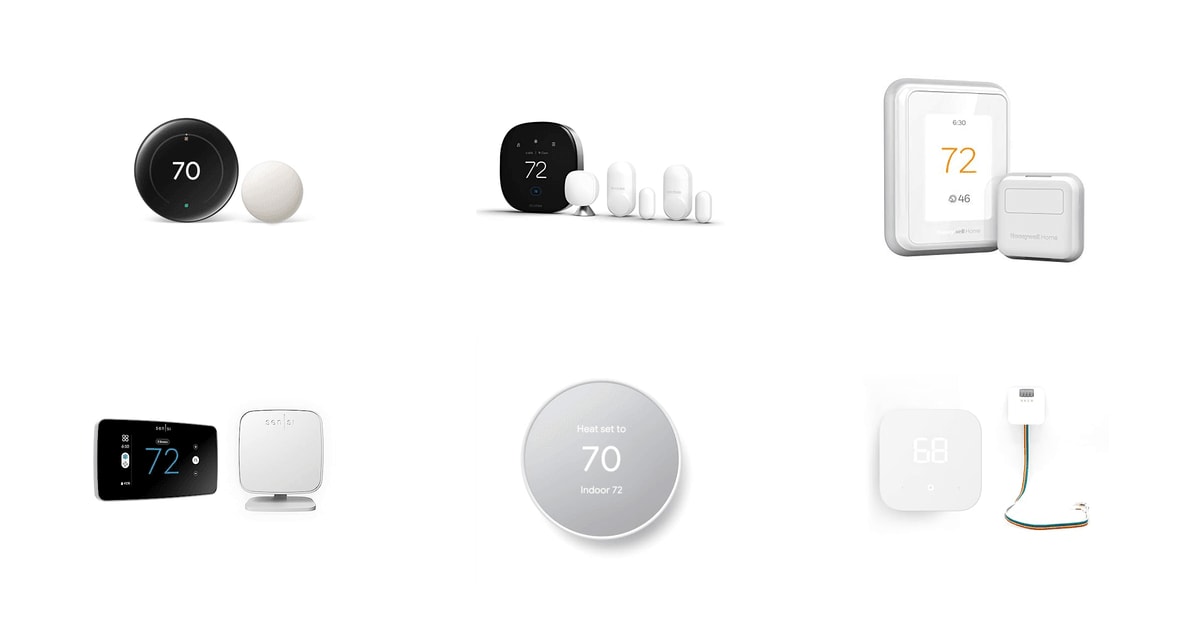
A thermostat is one of the few gadgets in your house that you interact with while half-asleep, mid-argument about the temperature, or with both hands full of groceries. That's why voice control matters more here than it does on most smart-home hardware. You want to say the number out loud and have the house respond, without opening an app or squinting at a tiny screen. The good ones also quietly shave money off your heating and cooling bills by not running the furnace for an empty house all afternoon.
Here's the honest part: no thermostat on this list will fix a house that's badly ducted or poorly insulated. Room sensors help you play favorites between the bedroom and the kitchen, but they can't move air that your HVAC system won't move. Voice response is fast on native pairings and a beat slower through Matter, and you'll notice that beat mostly when you're testing it, not living with it. And every one of these depends on your wiring — the C-wire question decides more purchases than any feature list.
The other constraint is your existing ecosystem. If your house runs on Alexa, a Google-first thermostat will work but never feel native, and the reverse is just as true. So pick the assistant first and the thermostat second. We think that the Google Nest Learning Thermostat (4th gen) is the best smart thermostat with voice control for most people, and that the ecobee Comfort and Security Bundle is the one to buy if your home runs on Alexa and you want the thermostat itself to answer you.
Everything we recommend

Learns your schedule and answers to all three assistants

An Alexa speaker, air monitor and security hub in one dial

The fix for a house with a freezing bedroom and a hot kitchen

Basic, reliable Alexa control with the adapter in the box

Google Assistant on the wall without the learning premium
At a glance
| Product | Price | |
|---|---|---|
| Google Nest Learning ThermostatTop pick | $249On sale |
| ecobee Comfort and Security BundleAlso great | $319.98 |
| Honeywell Home T9 WiFi Smart Thermostat withRunner-up | $114.54 |
 | Sensi Touch 2 Smart Thermostat- White BeveledAlso consider | $225.94 |
| Google Nest Thermostat - Smart Thermostat forAlso great | $107.49On sale |
| Amazon Smart Thermostat with C-Wire AdapterBudget pick | $94.23On sale |
How we picked
Voice response. We compared which assistants each thermostat supports natively versus through Matter, since native pairings answer noticeably faster. Anything that only worked through a separate hub didn't make the cut.
Cross-platform reach. We favored Matter-certified models that answer to Alexa, Google Home and Apple Home at once, based on manufacturer certification listings. Single-ecosystem models had to be cheap or unusually good at their one thing.
Wiring and install. We read the compatibility notes and owner install reports closely, because a missing C-wire ends more purchases than any feature. Models that work without one, or ship an adapter, got credit.
Room-level comfort. We looked for included or supported remote sensors, since a thermostat in a hallway can't know your bedroom is cold. Sensor range and whether one came in the box both mattered.
Efficiency claims. We compared manufacturer savings figures and ENERGY STAR certification across the lineup, treating the percentages as vendor claims rather than independent results.
Top pickOn sale
Learns your schedule and answers to all three assistants
Google Nest Learning Thermostat
This is the rare thermostat that works well no matter which assistant you use, thanks to Matter certification. It also builds its own schedule after watching your household for a week, and the bundled room sensor keeps the bedroom honest instead of the hallway.
$249fromAmazonList priceIt's the only pick here that doesn't make you choose an ecosystem. Google Assistant is native, so those commands land fast. Alexa and Siri reach it through Matter, which adds a beat you'll notice for about a day and then forget. If you've got an Echo in the kitchen and an iPhone in your pocket and a Nest Hub in the bedroom, this is the one that doesn't force a decision. That flexibility is worth real money over the life of the thermostat.
The learning part isn't marketing. Google says the schedule settles in after roughly a week of watching when you get up, when you leave, and when you crank the heat at night. Owners who've come from older Nest generations consistently describe the same arc — a few days of odd guesses, then a schedule they stop thinking about. Google claims up to 31% savings on heating and cooling, which assumes you were previously running a fixed setting.
The bundled second-gen temperature sensor is the piece that makes this a genuine upgrade rather than a nicer dial. Thermostats live in hallways. Nobody sleeps in a hallway. Put the sensor in the bedroom and the system heats the room you're actually in, which matters most in two-story houses where the upstairs runs five degrees warmer than the thermostat believes.
The display is the best-looking one here, and that's not a trivial point. Dynamic Farsight wakes as you walk up and shows the temperature in digits you can read from across the room. You can set it to show a clock or the weather instead when it's idle. Owners routinely mention it as the reason they'd buy again, which tells you something about how often you glance at a thermostat without touching it.
Flaws but not dealbreakers
It's expensive — the second most expensive thing on this list, and roughly double what the budget picks cost. You're paying for the learning engine, the display, and the bundled sensor, and if you don't want all three, the math gets harder to defend.
Setup runs through the Google Home app, full stop. If you've deliberately kept Google out of your house, that's friction you can't route around. There's also a wiring wrinkle worth checking: the fourth generation uses different mounting hardware than the third, and at least some owners with no-C-wire systems have found that a setup their older Nest handled fine doesn't work with this one. Run the compatibility checker before you order.
Google asks permission before changing your schedule, which is polite but means notifications you have to act on. Some people like the visibility. If you wanted a thermostat that just handles it silently, this will feel chatty.
Also great
An Alexa speaker, air monitor and security hub in one dial
ecobee Comfort and Security Bundle
For Alexa households this replaces a thermostat and an Echo at the same time, because the Alexa speaker is built into the thermostat itself. The bundle adds door and window sensors, radar motion detection and an air quality monitor.
$319.98fromAmazonIf your house runs on Alexa, nothing else here comes close. The speaker is in the thermostat, so you're not routing a command through an Echo in another room and waiting for it to reach the wall. Ask it to set the temperature or ask about the air quality and it answers directly. It's Matter-certified too, so Google Home and Apple Home both work — but Alexa is obviously where ecobee put its attention.
Think of this less as a thermostat and more as a wall-mounted hub that happens to control the furnace. It listens for the sound of a smoke alarm going off while you're out. The radar motion sensor watches your main floor when the system is armed. The included SmartSensor handles doors and windows, and it doubles as an occupancy sensor so the system heats the room someone's actually in. ecobee cites up to 26% savings a year against holding a fixed setting.
The air quality monitor tracks what's in the room and nudges you when it's time to change the furnace filter. That filter reminder is the part owners actually use — the rest of the air data tends to sit there being interesting rather than actionable. One owner's summary of it, that the air sensor is a nice-to-have rather than a reason to buy, matches the general pattern of feedback.
Comfort-wise it does the same trick as the Nest: it reads the rooms you care about instead of the wall it's mounted on. If your work-from-home office in the basement turns into a walk-in cooler every July while the upstairs bakes, that's exactly the problem this solves.
Flaws but not dealbreakers
It's the most expensive option here, and a real chunk of that cost is security hardware. If you don't want a security system, you're buying one anyway. The Nest Learning Thermostat gives you comparable voice flexibility for less.
The door and window alerts only reach their full potential with an ecobee Smart Security subscription. That's an ongoing cost that should factor into the decision, not a footnote. Owners who let the free trial lapse have found the sensors considerably less useful afterward, and they don't integrate with third-party alarm systems.
Setup takes longer than the Nest or the Amazon unit — more devices, more pairing, more decisions. Some owners have spent hours on it, including time on the phone diagnosing a bad sensor. Budget an afternoon, not twenty minutes.
Runner-up
The fix for a house with a freezing bedroom and a hot kitchen
Honeywell Home T9 WiFi Smart Thermostat with
The T9 exists to solve one specific problem: the hallway is comfortable and nowhere else is. Its room sensor reaches up to 200 feet and tells the thermostat which room is occupied, so the system heats where you actually are.
$114.54fromAmazonYou don't sleep in the hallway, but that's where your thermostat lives. The T9's included Smart Room Sensor fixes that mismatch. Put it in the bedroom and the system prioritizes that room's temperature at night. Honeywell rates the signal at up to 200 feet, which covers most two-story houses with room to spare, and you can add more sensors to cover more rooms.
Owner feedback on this one is unusually consistent about what it does well and what it doesn't. People who bought it specifically for multi-room comfort tend to keep it and recommend it. The complaints cluster around software and app integrations rather than the hardware on the wall — it's a reliable thermostat with a less polished companion experience than Nest or ecobee.
Auto Home/Away scheduling uses your phone's location to drop into an energy-saving mode when the house empties, then bring things back before you walk in. If your household keeps irregular hours, that's more useful than a fixed schedule. It doesn't learn, though. There's no engine watching your habits and quietly adjusting; you get geofencing and a schedule you set.
It's ENERGY STAR certified and Honeywell includes a rebate finder in the app. Utility rebates are worth checking before you buy any of these, and on a mid-range unit like this they can move the needle meaningfully.
Flaws but not dealbreakers
This one needs a C-wire — that's stated plainly in the compatibility notes, and it's the main reason to check your wall before you order. It also won't run electric baseboard heat.
Extra room sensors are sold separately, so a whole-house setup costs more than the box price suggests. And the app has been the weak point for years according to owner feedback, particularly around third-party smart home integrations that work fine one month and behave oddly the next.
The touchscreen and interface feel a generation behind the Nest and ecobee. It's perfectly legible and does the job. It just isn't the thing you'll show people.
Budget pickOn sale
Basic, reliable Alexa control with the adapter in the box
Amazon Smart Thermostat with C-Wire Adapter
This is the least complicated way into voice-controlled heating if your house already runs on Alexa. It drops into existing routines with no setup, and the bundled C-Wire Power Adapter handles older systems that most competitors make you solve yourself.
$94.23fromAmazonList priceThe bundled C-Wire Power Adapter is the reason to buy this specific listing. Older houses frequently lack a common wire, and that single missing wire kills more smart thermostat purchases than any other factor. Most competitors sell the adapter separately or leave you to source one. Here it's in the box, which turns a potential returns headache into a slightly longer install.
Alexa integration is as deep as it gets, because Amazon built both ends. Say good night and the thermostat drops with the lights and the locks, no custom configuration required. If you've already got Echo devices scattered around the house, this slots in without you thinking about it.
Be clear-eyed about what you're getting. There's no learning, no room sensors, no meaningful Google Home or Siri support. You set a schedule and it follows it. For a lot of households — especially a second home, a rental, or a house where nobody wants to fiddle with settings — that's genuinely all that's needed. Amazon also emails rebate information after purchase, and ENERGY STAR units frequently qualify.
Owners coming from Nest describe it as a surprisingly capable substitute for the basics. The praise is consistent and unglamorous: it works, it looks fine on the wall, you can change the temperature from a thousand miles away when a cold front rolls through.
Flaws but not dealbreakers
The display and materials are plain. It's a flat panel, not a piece of design, and next to the Nest on the same wall the difference is obvious.
Installation isn't always trivial despite the adapter. Some owners have needed an electrician, and at least one ran into a system that simply wouldn't work with it after the return window closed. Run the compatibility check before you buy, not after your remodel finishes.
It's Alexa or nothing in practice. If there's any chance you'll switch ecosystems, this is the pick you'll outgrow first.
Also greatOn sale
Google Assistant on the wall without the learning premium
Google Nest Thermostat - Smart Thermostat for
This is Google's entry-level thermostat, and it covers the essentials: native Google Assistant, Alexa support, and no C-wire needed on most 24V systems. You program the schedule yourself in about ten minutes.
$107.49fromAmazonList priceIf you want Google Assistant control and don't need the schedule to build itself, this is the sensible spend. It handles Google commands natively and works with Alexa. It turns itself down when the house empties. Savings Finder pokes at your schedule and suggests tweaks. That's a complete package for a lot of households and it costs a fraction of the Learning Thermostat.
The no-C-wire design is the practical advantage. Google built it to run without a common wire in most homes, which opens it up to older houses that would otherwise need an adapter — though heating-only, cooling-only, zone-controlled and heat pump systems may still need one. The compatibility checker is worth thirty seconds of your time.
The catch is Apple. There's no HomeKit support and no Matter certification, so Siri isn't part of the picture. If anyone in the house is an Apple Home person, look at the Sensi Touch 2 or step up to the Learning Thermostat, which handles all three assistants.
It also monitors your heating and cooling system and pings you if something looks off, plus reminders for routine maintenance. Small thing, but a furnace that's starting to struggle is cheaper to address early than in January.
Flaws but not dealbreakers
No room sensors, at all. If your upstairs and downstairs disagree about what seventy degrees means, this won't help — look at the T9 or the Learning Thermostat bundle instead.
It doesn't work with the older Nest app, which trips up people who already run multiple Nest thermostats across properties and expected everything in one place. Everything lives in Google Home now.
Owner feedback skews positive but the complaints are worth knowing: the mirrored finish isn't for everyone, the printed instructions are thin, and a handful of owners have questioned how closely the on-screen reading tracks the actual room. It's the entry model, and it reads like one in a few places.
Who this is for
Buy one of these if you're still walking to a wall dial to change the temperature, or if you're paying to heat an empty house every weekday. The savings are real but they're not dramatic on their own — the bigger win is that the house is the right temperature when you get home without you remembering to do anything. Renters should check with a landlord first and keep the old thermostat in a drawer, since swapping back at move-out takes ten minutes.
This guide covers thermostats you can talk to, which means the assistant you already use should drive the decision more than the brand. It doesn't cover whole-home zoning systems, high-voltage electric baseboard controls, or proprietary equipment that only accepts a manufacturer's own thermostat. If your setup is a gravity furnace, a millivolt system, or anything with more than eight wires, get an HVAC tech to look before you order anything here.
How we picked
We weighed five things across this lineup. Voice response: native assistant pairings answer faster than Matter-bridged ones, so we noted which is which for every model. Cross-platform reach: Matter certification means one thermostat serves an Alexa household, a Google household and an Apple household without argument, which matters if your family isn't unanimous. Wiring and install: we read compatibility notes and owner install reports, because the C-wire question decides more purchases than any feature comparison. Room-level comfort: included or supported remote sensors separate a thermostat that heats your bedroom from one that heats your hallway. Efficiency claims: every model here is ENERGY STAR certified, and we treated the manufacturers' savings percentages as claims to report rather than numbers to endorse.
Other smart thermostats with voice control worth considering
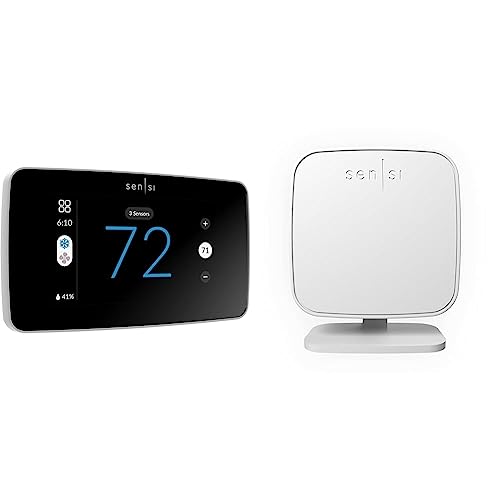
If you want the fastest Siri response: The Sensi Touch 2 Smart Thermostat- White Beveled ($225.94) — The Sensi Touch 2 connects to Apple Home natively rather than through a Matter bridge, so Siri commands skip a translation layer. That's the reason to pick it over the Nest Learning Thermostat if your house is Apple-first. Emerson also commits to not selling your personal data, which is a genuine differentiator in a category built on knowing when you're home. It works with Alexa and Google Assistant too, and it supports Sensi Room Sensors for multi-zone comfort, though those cost extra. What you give up is intelligence — there's no learning here, so you'll program the schedule yourself in the app. Emerson cites about 23% HVAC energy savings from scheduling and remote access. It needs a C-wire, and there's very little owner feedback on this particular listing to draw on.
The competition
This is what our research surfaced in this category, not a census of every thermostat sold. There are good units from other brands we didn't cover here, and this lineup skews toward the models people actually cross-shop when they search for voice control. Every product in this guide earned a spot somewhere above.
Installation notes
Before you order anything, pull your current thermostat off the wall and photograph the wiring. You're looking for a wire in the terminal labeled C — the common wire that gives a smart thermostat continuous power. If it's there, every model here will work. If it isn't, your options narrow to the two Google units, which run without one on most 24V systems, or the Amazon bundle, which includes an adapter. Then run the manufacturer's online compatibility checker with your wire colors and terminal labels in hand. Most installs take twenty to thirty minutes with the app walking you through it. If you've got more than eight wires, a proprietary connector, or a gravity or millivolt system, call a licensed HVAC tech instead of guessing — powering a thermostat wrong can cause erratic cycling or damage the controller.
Questions we get
What's the best smart thermostat for Alexa?
The ecobee Comfort and Security Bundle, because the Alexa speaker is built into the thermostat itself — you're not relaying commands through an Echo in another room. It's also Matter-certified, so Google Home and Apple Home work alongside it. If you want Alexa control for much less, the Amazon Smart Thermostat with C-Wire Adapter has the deepest native integration on this list.
Does the Google Nest thermostat work with Alexa?
Yes, both Google models here support Alexa voice commands. The Nest Learning Thermostat (4th gen) is Matter-certified, so "Alexa, set the thermostat to 72" executes reliably. There's a small delay compared to a native Google Assistant command because of the Matter layer, but on a decent home network it's under a second and you stop noticing it quickly.
Which one is best for Apple HomeKit and Siri?
The Sensi Touch 2 uses a direct HomeKit integration rather than a Matter bridge, which makes it the fastest Siri option here. The Nest Learning Thermostat (4th gen) also supports Apple Home through Matter and is the better pick if your household mixes Apple with Alexa or Google. The entry-level Google Nest Thermostat doesn't support Apple Home at all.
Do I need a C-wire, and what if I don't have one?
Most smart thermostats need a C-wire for steady low-voltage power, so check your HVAC panel for a wire labeled C. If you don't have one, both Google models are designed to work without it on most 24V systems, and the Amazon bundle includes a power adapter. The Honeywell T9 and Sensi Touch 2 both require a C-wire.
What's the difference between a learning thermostat and a programmable one?
A learning thermostat like the Nest Learning Thermostat watches your patterns for a week or two and builds a schedule on its own. A programmable one like the Amazon Smart Thermostat or Sensi Touch 2 does what you tell it and nothing more. Learning models tend to save more over time because they respond to actual behavior, but they cost considerably more upfront.
Which is best for a house with multiple floors?
The Honeywell Home T9, because its included Smart Room Sensor reaches up to 200 feet and automatically prioritizes whichever room is occupied. You can add sensors to cover more rooms. The ecobee bundle and the Nest Learning Thermostat both include a sensor as well, so either works if you want fewer separate pieces.
Why you should trust us
For this guide:
- We read manufacturer specification sheets and compatibility documentation for all six thermostats, paying particular attention to C-wire requirements and which voice assistants each supports natively versus through Matter.
- We reviewed published coverage of these models alongside owner feedback themes, looking for the failure modes that come up repeatedly rather than one-off complaints.
- We compared the manufacturers' stated energy-savings figures and ENERGY STAR certifications side by side, and report them as vendor claims.
- We read owner reviews on every listing, weighted toward the critical ones, because that is where the recurring failures show up.
- We have a systematic way of automatically fetching the latest prices, so the numbers on this page stay current.
- This is a research-focused guide, so the team may not own every product listed — though we often do own the top winners, which gives us extra context for the recommendations.
- We don't accept free products, and the retailer commission never changes which product we recommend.
Sources
Best Smart Thermostats 2026 — Wirecutter / NYT, Wirecutter
Best Smart Thermostat for 2026 — CNET, CNET
The Best Smart Thermostats — PCMag, PCMag
Best Smart Thermostats 2026 — Tom's Guide, Tom's Guide
Smart Thermostat Ratings and Reviews — Consumer Reports, Consumer Reports
Amazon product listings and owner reviews for all 6 products
Manufacturer specification pages for each product
Some passages in this guide may be paraphrased with AI help. Prices are refreshed automatically.
More like this.
Continue exploring home reviews and recommendations.

The Best Smart Thermostats
Your thermostat is the one gadget in the house that spends money every hour of the day. Heating and cooling eat close to half the energy bill in a typical…

The Best Smart Thermostats for Heat Pumps
A heat pump asks more of a thermostat than a furnace does. It has to know when to run the compressor, when to give up and call for backup strips, and when…

The Best Quiet Ceiling Fans With Remote Control
A ceiling fan is one of the few appliances that runs while you sleep, so noise is the thing that decides whether you love it or resent it. A good one…

The Best Clumping Cat Litter for Odor Control
A litter box lives in your home, usually in a bathroom or a laundry room with the door shut. So the litter you buy is really a decision about what your…

The Best Interlocking Patio Tiles and Rubber Pavers
A patio you actually use comes down to what's underfoot. Cracked concrete, a splintery porch, a balcony slab that turns into a puddle after every storm - …

The Best Baby Gates for Stairs
A baby who can crawl will find the stairs within a week. That's the whole reason this category exists. A stair gate has to hold up to a toddler leaning on…