The Best Interlocking Patio Tiles and Rubber Pavers
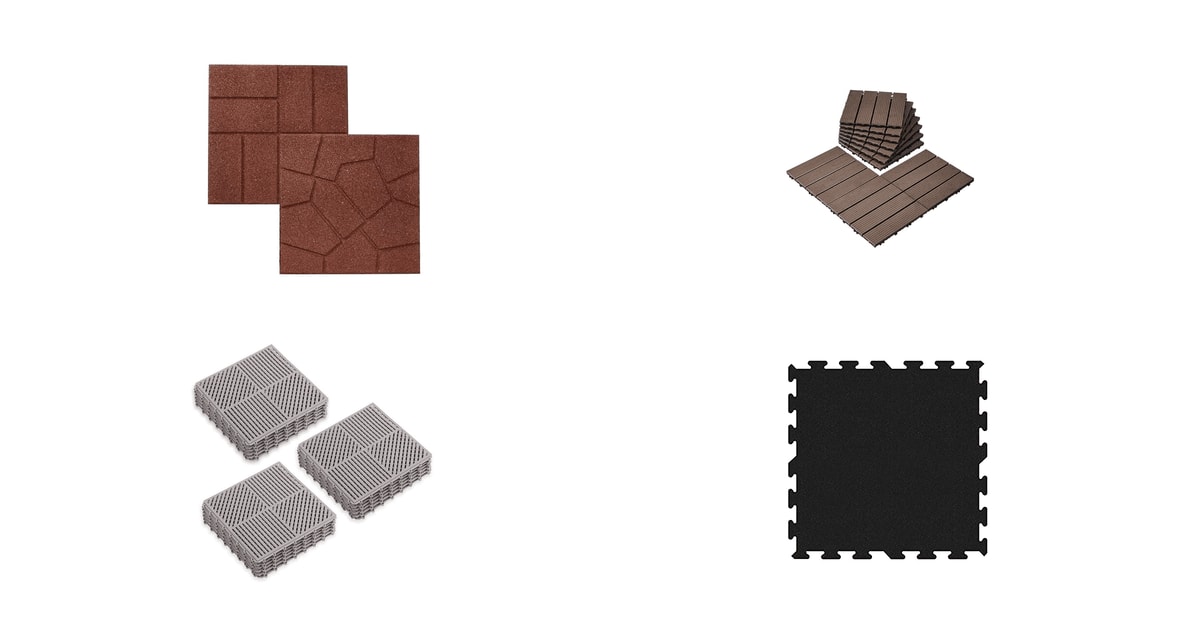
A patio you actually use comes down to what's underfoot. Cracked concrete, a splintery porch, a balcony slab that turns into a puddle after every storm — none of that invites you to sit down. Interlocking tiles and rubber pavers are the fast fix. You snap or lay them over whatever's already there, usually in an afternoon, with no demolition and nobody's truck in your driveway. And if you rent, you can pull the whole floor back up and take it with you.
Here's the honest part: none of these products repairs a bad surface. They cover it. Tiles follow whatever's underneath, so a slab that slopes or heaves shows up as rocking corners and open seams. Most systems want no more than about a quarter inch of variation over ten feet before you need shims or a self-leveling underlayment. Thin tiles telegraph flaws worst. And anything left in full sun without UV stabilizers fades long before it wears out.
So the real question is what you're covering and how wet it gets. Rubber gives you grip, a little give underfoot, and enough flex to ride over small cracks. Composite gives you the look of a wood deck. Open-drainage mats give you a floor that dries fast around a pool or a shower. We think that the Rubberific Dual Sided Rubber Paver is the best patio tile for most people, and that the wiiiw Modular Interlocking Floor Mat is the one to buy if you need drainage in a permanently wet spot.
Everything we recommend

Grippy, forgiving rubber that hides a cracked slab

Great grip and drainage, but too thin for a real patio

The wood-deck look, if your surface is already flat
At a glance
| Product | Tile Size | Thickness | Price | |
|---|---|---|---|---|
| Rubberific Dual Sided Rubber Paver Tile -Top pick | 16"x16" | 0.8" Thick | $14.40On sale |
| VEVOR Interlocking Deck Tiles Plastic WoodAlso great | 11.6"x11.6" | 0.8" Thick | $111.90 |
| wiiiw 18 Pack Modular Interlocking Floor MatBudget pick | 12"x12" | 0.4" Thick | $62.99 |
 | IncStores 8mm Thick Strong Rubber Interlocking FloorAlso in lineup | 23"x23" | 8mm Thick | $13.99 |
How we picked
Thickness and load. The widely published thresholds set our floor: half an inch for pedestrian-only walkways, three-quarters of an inch for patios that hold furniture, and a full inch for anything a vehicle or riding mower crosses. Manufacturer spec sheets had to state a thickness and, ideally, a load rating.
Grip when wet. ASTM C1028 sets 0.60 static coefficient of friction as the safe threshold for wet flooring, and textured rubber typically runs 0.70 to 0.85. We favored molded or coated surfaces over smooth ones, since most of these floors live near pools, hoses and rain.
Sun and freeze-thaw. UV-stabilized products shift less than 5% in color after standardized UV exposure while unstabilized ones can shift up to 40%, so we looked for stated stabilization and for published durability findings. Quality outdoor rubber is rated from -40°F to 140°F, which is what a freeze-thaw climate demands.
Drainage design. We compared open-grid and perforated designs against solid tiles with surface channels, using listing specs and published guidance. For pool surrounds, rooftops and shower floors, water needs a path through the tile, not just across it.
Install and reversal. We prioritized systems that need no tools, no adhesive and no subfloor prep beyond sweeping, since that's what makes them renter-friendly. Published installation guidance suggests a 100-square-foot area goes down in well under two hours with these systems.
Top pickOn sale
Grippy, forgiving rubber that hides a cracked slab
Rubberific Dual Sided Rubber Paver Tile -
This is a 16-inch square of solid recycled rubber, three-quarters of an inch thick, with a different texture molded into each face. It lays straight over old concrete, packed gravel or bare dirt, grips well when wet, and flexes over the dips and cracks that would snap a rigid tile.
$14.40fromAmazonList priceRubber is the most forgiving thing you can put over bad concrete. Family Handyman rates rubber pavers as the best DIY answer for a cracked or uneven slab, because the material bends into dips and over ridges up to about half an inch — the same flaws that crack porcelain or stone. You don't have to grind, patch or level anything first. You sweep, you lay, you're finished.
The three-quarter-inch thickness is doing real work here. That's the minimum most sources recommend for a patio that holds furniture and foot traffic, and commercial-grade rubber at that thickness is rated for static loads in the thousands of pounds per square foot. Your grill, a full dining set, a patio heater — none of it makes a dent. Each tile weighs about six pounds, so it stays put better than a mat.
Wet stone gets slick. Textured rubber mostly doesn't. Rubber pavers with a molded surface typically land between 0.70 and 0.85 static coefficient of friction when wet, well past the 0.60 that ASTM C1028 treats as the safe threshold. If you're crossing this in flip-flops after a rain, or the sprinklers soak it every morning, that's the number that actually matters to you.
It survives a real winter. This Old House reviewers put Rubberific pavers through repeated simulated freeze-thaw cycles and found no cracking, chipping or delamination — the failure mode that ruins rigid pavers in cold climates. The material is 100% recycled tire rubber too, and producing a square foot of three-quarter-inch recycled rubber tile repurposes roughly a tire and a half. That's a nice thing to know about your patio.
Flaws but not dealbreakers
It's sold as a single tile, so covering a whole patio means a large order and a lot of heavy boxes. Per square foot, it costs noticeably more than plastic or composite tiles of the same footprint, and some owners think it's priced high for what it is. If you're floating a big area, price the full count before you commit.
These don't interlock. They're loose-lay pavers, which is why they're so easy to place — but it also means they can creep. Owners consistently suggest bedding them on a layer of sand to keep them flat and stationary, especially on a slope or a windy corner. And the listing says nothing about UV stabilizers, so the red and earth tones may lighten over years in full sun.
Budget pick
Great grip and drainage, but too thin for a real patio
wiiiw 18 Pack Modular Interlocking Floor Mat
These are flexible 12-inch rubber tiles, about four-tenths of an inch thick, drilled through with drainage holes and textured for bare feet. They snap together by hand with eight locks per side, and the finished floor rolls up like a mat when you want it gone.
$62.99fromAmazonPicture the two steps between the pool and the back door, where the concrete never quite dries. That's what these are for. Water falls through the holes instead of sitting on top, so you're not walking across a slick patch every time somebody climbs out. Owners use them at pool exits, in shower stalls, in boats and RV compartments — anywhere the floor stays damp longer than you'd like.
The lock system is the best part of the design. Each tile has eight sets of reinforced locks per side, and you press them together with your fingers — no mallet, no glue, no tools. That makes the whole floor reversible, which matters a lot if you rent. When the lease ends or the season turns, you roll it up and it goes in a closet.
The material is soft and flexible rather than rigid, so it's comfortable under bare feet and doesn't fight you when you cut it. Cleaning is a hose and five minutes. And because it costs the least per square foot of anything here, it's a low-risk way to try covering a small area before you commit to a full patio floor.
Flaws but not dealbreakers
At four-tenths of an inch, this is a mat, not a patio floor. That's well under the three-quarter-inch thickness generally recommended for patios, and it means every pebble and ridge underneath telegraphs through. Keep it on concrete, tile or a wood deck. It won't work over gravel or dirt.
Anything that fits through the drainage holes ends up under the tiles. Owners in showers and pool areas report hair, soap film and grit collecting below, and the fix is to lift a section and rinse it out every month or so. That's easy but it's a chore, and it's the main reason some buyers treat this as a temporary solution rather than a permanent floor.
Also great
The wood-deck look, if your surface is already flat
VEVOR Interlocking Deck Tiles Plastic Wood
This is a 27-tile pack of dark brown wood-plastic composite that covers about 27 square feet. The 12-inch tiles snap together over a balcony or slab and read as a wood deck from across the yard, without the splinters or the annual sealing.
$111.90fromAmazonIf you want your balcony to look like a deck instead of a slab, rubber isn't going to get you there. Composite will. The grain texture and dark brown finish do a convincing job on a small space, and wood-look deck tiles are the fastest-growing outdoor flooring category in homeowner project posts on Houzz — a lot of people are reaching this same conclusion about their concrete.
The thickness is what separates this from a floor mat. At eight-tenths of an inch with a cross-patterned backing, it's rated to support up to 440 pounds, which covers a couch, a grill, a hot tub base or a heavy planter. Grooves and drainage gaps in the surface move rainwater off instead of letting it pool, and the composite doesn't swell the way real wood does.
You can cut these. A jigsaw or a fine-tooth blade gets you around a post, a drain or a curved edge, and the quick-connect tabs mean you're assembling, not installing. For a standard apartment balcony, one pack usually does it. If you're covering more, the packs line up with each other cleanly as long as you keep your rows straight from the first tile.
Flaws but not dealbreakers
Composite is rigid, and rigid tiles need a flat surface. On a slab that dips or heaves, the corners rock and the tabs eventually work loose — exactly where a rubber paver would just conform and sit still. Check your surface for flatness before you buy, and plan on shims or a leveling compound if it's off.
The listing doesn't say whether the composite is UV-stabilized, and that's the difference between a floor that holds its color for years and one that goes chalky. Stabilized composite and polypropylene shift less than 5% in color under standardized UV exposure, while unstabilized products can shift up to 40%. There's also less owner feedback to lean on here than for the rubber options.
Who this is for
Buy these if you have a surface you don't love and don't want to demolish. That's cracked concrete, a stained slab, a splintery porch, a balcony that came with the apartment, or the strip of pool deck that stays wet. Professional paver installation runs several times what DIY tile materials cost per square foot, according to Angi project data, and it takes days instead of an afternoon. If you rent, this is the only outdoor flooring you can legitimately take with you.
Skip them if your slab is badly broken, heaving, or draining toward the house — tiles will hide the problem and let it get worse underneath. This guide covers loose-lay and snap-together tiles you install yourself over an existing hard surface. It doesn't cover mortared porcelain, poured rubber, or paver systems that need a compacted gravel base and edge restraints. And nothing here belongs under a car unless the manufacturer specifically rates it for vehicle traffic at a full inch thick.
How we picked
We started from published thresholds rather than vibes. Thickness: half an inch for walkways, three-quarters for patios with furniture, a full inch for anything a vehicle touches. Grip: ASTM C1028 puts the safe wet-surface floor at 0.60 static coefficient of friction, and textured rubber usually clears it by a wide margin. Weather: UV stabilization is the difference between 5% and 40% color shift under standardized exposure, and outdoor rubber should be rated from -40°F to 140°F. Drainage: wet areas need water to pass through the tile, not pool on it. Install: no tools, no glue, and fully reversible, because that's the whole point of buying tiles instead of pouring concrete.
The competition
This is what our research turned up, not a census of the category. Plenty of good tiles are sold only through big-box stores or flooring specialists and never show up in a general search. Here's the remaining product we looked at and why it didn't make the picks.
The IncStores 8mm Thick Strong Rubber Interlocking Floor ($13.99) — The IncStores 8mm Strong Rubber Interlocking Floor Tile is a well-made recycled rubber tile with a smart three-part system — dedicated center, border and corner pieces give you a clean edge-to-edge floor instead of a ragged perimeter. But at 8mm it's roughly a third the thickness we want on a patio, and the design intent is clear from the listing: basements, home gyms, sheds and trailers. Owners describe a strong rubber odor for the first stretch after installation, which is manageable indoors with ventilation and irrelevant outdoors. Choose it if you're flooring a garage gym, a shed or a covered porch where a low profile matters and equipment needs to roll. For an exposed patio, go thicker.
Installation notes
Start by sweeping and checking your surface. Most systems want no more than a quarter inch of variation over ten feet, so drag a straightedge across the slab and look for gaps — anything worse needs shims or a self-leveling underlayment before you lay a single tile. Work from your straightest edge outward and keep the first row true, because every row after it inherits that line. For loose-lay pavers on dirt or gravel, a thin bed of sand keeps them flat and stops them creeping. Cut edge pieces with a utility knife for soft rubber or a fine-tooth jigsaw blade for composite. After that, upkeep is a hose or a pressure washer, and lifting a section now and then to rinse out whatever's collected underneath.
Questions we get
What's the difference between interlocking patio tiles and rubber pavers?
Interlocking tiles snap together with tabs or locks along their edges and form one connected floor. Rubber pavers are usually loose-lay squares that just sit next to each other, held in place by their own weight and friction. Interlocking systems stay put better on decks and balconies; loose-lay pavers are easier to place one at a time for a path or a partial area.
Can I install these over existing concrete?
Yes, and that's what most of them are designed for. You don't need adhesive, a subfloor or any demolition — sweep the slab and lay the tiles. The one thing to check is flatness, since most systems tolerate no more than about a quarter inch of variation over ten feet before you get gaps and rocking.
Are rubber pavers slippery when wet?
Textured ones generally aren't. ASTM C1028 treats 0.60 static coefficient of friction as the safe threshold for wet flooring, and molded rubber surfaces typically measure 0.70 to 0.85 wet. That's better than wet stone or smooth concrete, which is why pool and spa owners keep buying them.
How many tiles do I need for a 10-by-10 patio?
That's 100 square feet. Sixteen-inch tiles cover about 1.78 square feet each, so you'd need roughly 57. Twelve-inch tiles cover a square foot each, so you'd need 100. Add five to ten percent for cuts and mistakes if your area has curves or obstacles.
What thickness do I need for a patio versus a driveway?
Home Depot's guidance is half an inch for pedestrian-only patios and walkways, and a full inch for driveways and anything with vehicle traffic. We'd treat three-quarters of an inch as the practical patio minimum once you add furniture, a grill or a heater. Thin mats are fine for showers and pool edges but not for a floor you're furnishing.
Do rubber and composite tiles fade in the sun?
It depends entirely on UV stabilization. Stabilized composite and polypropylene shift less than 5% in color after 1,000 hours of standardized UV lamp exposure, while unstabilized products can shift as much as 40%. UV-stabilized outdoor tiles are generally expected to last 15 to 25 years; unstabilized ones can look tired within a few seasons in full sun.
Why you should trust us
For this guide:
- We read the manufacturer spec sheets and full listing details for every tile in this guide, and checked their claims against published guidance from Bob Vila, Family Handyman, This Old House, Popular Mechanics and Greatmats.
- We compared each product's stated thickness, load rating and drainage design against the ASTM C1028 slip threshold and the published thickness recommendations for patios and driveways.
- We read through owner feedback looking for recurring themes rather than one-off complaints — how well the locks hold, what collects underneath perforated tiles, and how the materials handle sun, rain and freeze-thaw.
- We read owner reviews on every listing, weighted toward the critical ones, because that is where the recurring failures show up.
- We have a systematic way of automatically fetching the latest prices, so the numbers on this page stay current.
- This is a research-focused guide, so the team may not own every product listed — though we often do own the top winners, which gives us extra context for the recommendations.
- We don't accept free products, and the retailer commission never changes which product we recommend.
Sources
Best Patio Tiles 2026 — This Old House Reviews Team, This Old House
Best Interlocking Deck Tiles — Bob Vila, Bob Vila
Best Rubber Pavers — Family Handyman, Family Handyman
Outdoor Rubber Flooring Buyer's Guide — Greatmats, Greatmats
ASTM F1292 Standard Specification for Impact Attenuation, ASTM International
ASTM C1028 Standard Test Method for Determining Slip Resistance, ASTM International
How to Install Interlocking Deck Tiles — The Spruce, The Spruce
Patio Flooring Ideas & Costs — HomeAdvisor / Angi, Angi (HomeAdvisor)
Rubber Paving Buyer's Guide — Home Depot, The Home Depot
Best Deck Tiles 2026 — Popular Mechanics, Popular Mechanics
Recycled Rubber Flooring Environmental Impact — Rubber Flooring Inc., Rubber Flooring Inc.
Outdoor Tile & Paver Reviews — Houzz, Houzz
Amazon product listings and owner reviews for all 4 products
Manufacturer specification pages for each product
Some passages in this guide may be paraphrased with AI help. Prices are refreshed automatically.
More like this.
Continue exploring home reviews and recommendations.

The Best Random Orbital Sanders for Woodworking
Sanding is the part of woodworking nobody brags about. It's also the part that decides whether your finish looks like furniture or looks like a school…

The Best Sump Pumps
A sump pump is the least interesting appliance you own and the one with the highest stakes. It sits in a hole in the floor, does nothing for months, and…

The Best Robot Mops And Floor Scrubbers
A robot mop earns its keep on the floors you walk on barefoot. Kitchen tile picks up grease and crumbs. Entryway plank floors collect grit that gets…

The Best Animated Christmas Yard Decorations
A yard decoration works about forty nights a year, and it works hard. It sits out in wind, rain and road salt. It plugs into an outdoor outlet and stays…

The Best Weighted Blankets
A weighted blanket does one simple thing: it presses down on you, evenly, all night. That steady pressure is called deep pressure stimulation, and the…

The Best Stud Finders and Wall Scanners
Hanging anything heavy starts with the same question: where's the wood? Drywall on its own won't hold a TV mount, a floating shelf, or a loaded bookcase.…