The Best Foam Rollers for Muscle Recovery
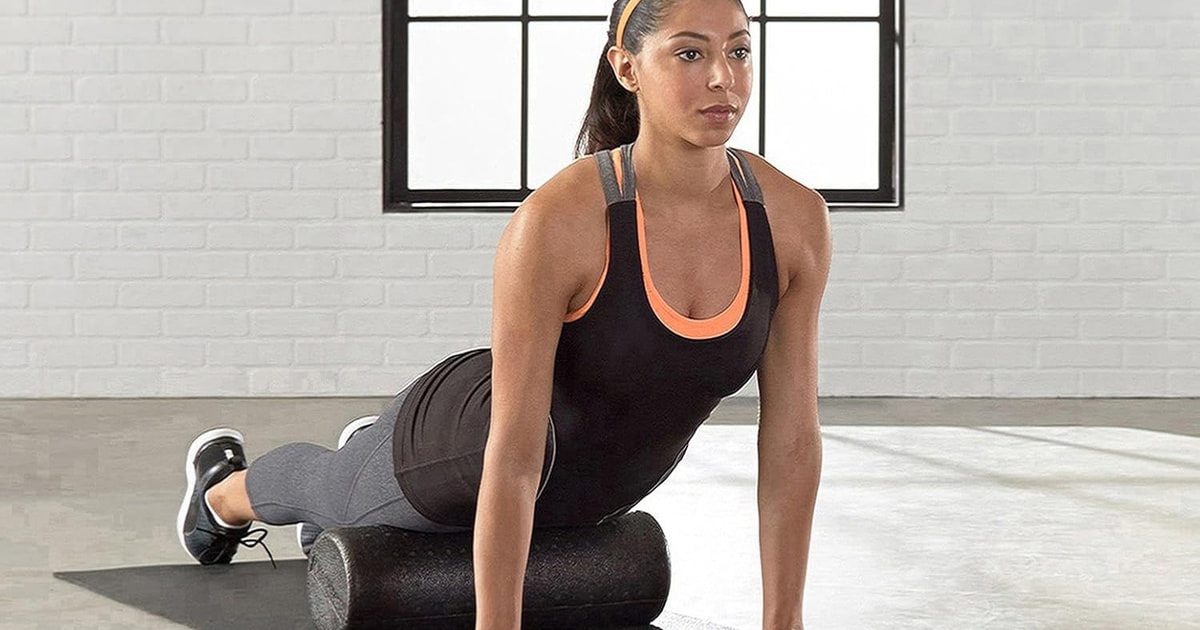
Foam rolling is the rare recovery habit that actually fits into a normal week. You don't need a table, a therapist, or an appointment. You need ten minutes on the floor and something firm to lean into. The idea is simple: press into a tight muscle, move slowly, and push more blood through the tissue than was moving a minute ago. Published research in strength and conditioning journals links short, regular sessions to less next-day soreness and better range of motion. So the roller you pick matters less than whether you'll actually use it.
Here's the honest part. No roller fixes anything on its own, and the gaps between them are smaller than the marketing suggests. Every one of these presses on muscle. The variation is in how much it hurts, how long it holds its shape, and whether it needs charging. Firm textured models can leave you bruised if you jump in too fast, and vibration bolts a battery onto something that never needed one. Rolling also can't safely reach the two places people most want relief: your lower back and your neck.
So buy for your experience level, not your ambitions. If you've rolled before and want one tool that lasts, get a firm textured cylinder and stop shopping. If you're brand new, or you're working around an injury, softer foam will keep you coming back instead of scaring you off in week one. We think that the TriggerPoint Grid 1.0 is the best foam roller for most people, and that the 321 Strong is the one to buy if you want a knobbier surface and a more forgiving density while you build tolerance.
Everything we recommend

Firm, textured rolling that holds its shape for years

Bigger knobs and a softer give while you build tolerance
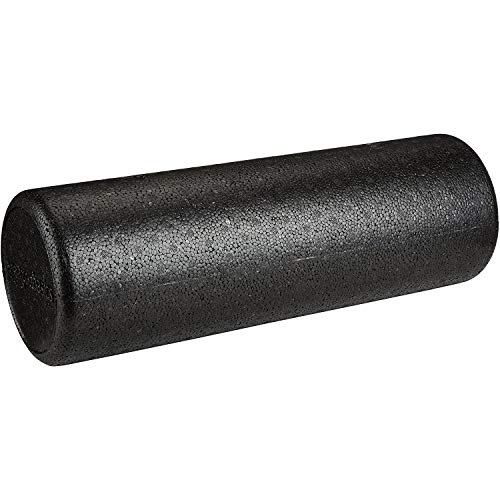
A plain cylinder that does the basics and nothing else
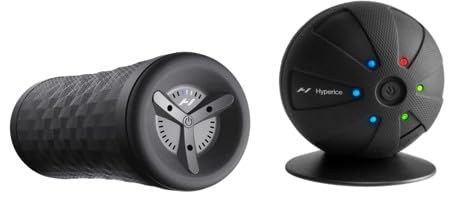
Serious vibration and a massage ball, if you train hard

Soft and long, for tissue that's still sore or healing
At a glance




How we picked
Density and firmness. We compared manufacturer density claims against what published reviews and owner feedback say about how each roller actually feels underweight. The threshold was simple: a roller has to be firm enough to move tissue but not so firm that a new user quits after one session.
Surface texture. We looked at how each surface is meant to interact with tissue, from flat cylinders through ridged and multi-density patterns to knobbed rollers. Anything claiming trigger-point work had to have a texture pattern that plausibly does something a smooth roller can't.
Build and durability. We favored hollow cores and closed-cell EVA over solid open-cell foam, because those are the constructions that keep their shape under repeated body weight. Owner feedback across the category consistently flags flattening and crumbling edges as the first failure.
Length and portability. We treated 36-inch, 18-inch and 12-to-14-inch rollers as answers to different questions rather than as better and worse. Full-back coverage in one pass and gym-bag portability are genuinely incompatible, so we picked in both directions.
Vibration and battery. For powered rollers we weighed motor output, battery life and charging quirks against the research showing vibration reduces soreness more than static rolling. A battery has to earn its place, so we only recommend vibration for people training four or more days a week.
Top pickOn sale
Firm, textured rolling that holds its shape for years
TriggerPoint Grid 1.0 Foam Roller - 13"
The Grid 1.0 is a 13-inch hollow-core cylinder wrapped in EVA foam, with a pattern of ridges, channels and nodules instead of a flat surface. It's firm, it doesn't sag over time, and it's the roller physical therapists are most likely to demonstrate on you.
$28.99fromAmazonList priceThe uneven surface is the whole point. A therapist doesn't press with flat, even pressure, and neither does this roller. TriggerPoint's mix of ridges, wide channels and small nodules puts different amounts of force through your tissue as you move across it. You feel muscle shifting rather than just squashing. On an IT band or a tight calf, that difference shows up in the first minute.
The hollow core is why it outlives cheaper rollers. Solid foam cylinders compress under body weight, and after a few months of daily use they go soft and stop pushing back. The Grid wraps EVA foam around a rigid polypropylene tube, so the shape you buy is the shape you keep. If you roll most days, that's the difference between one purchase and three.
Thirteen inches is a feature if you work problem areas. Most people don't need to cover their whole back in one pass. You need to park a sore quad, a stubborn hamstring or one stiff segment of the upper back and work it slowly. The short body is easy to steer, and it drops into a gym bag without a fight.
It's firm without being punishing. The compression lands closer to a sports massage than a gentle stretch, which is what you want once you've been rolling a few weeks. But the nodules are small and evenly spaced, so pressure spreads instead of concentrating on one screaming spot. That's why it suits a runner's quads and a desk worker's upper back equally.
Flaws but not dealbreakers
You'll reposition a lot for back work. At 13 inches it can't span your shoulders, so covering the thoracic spine means shifting the roller two or three times. If your main complaint is a stiff upper back after long days at a desk, a 36-inch roller does that job in one pass.
It's too firm to be your first roller. Beginners tend to push too hard too early, and the Grid repays that with real soreness for a couple of days. If you've never done this, start softer and work up over a month. There's no vibration here either, which is fine, but worth knowing before you buy.
Runner-up
Bigger knobs and a softer give while you build tolerance
321 Strong Foam Roller - Medium Density
The 321 Strong is a medium-density roller with three sizes of molded projections meant to stand in for fingertips, thumbs and the heel of a palm. It digs into knots far better than a smooth cylinder, without the flinch factor of the knobbiest rollers.
$24.99fromAmazonThree projection sizes give you options on one roller. The small bumps work like fingertips, the larger ones like thumbs, the biggest like a palm. Slide a few inches along the roller and the intensity changes with you. That's handy when your calves want something gentle and your glutes want something mean, and you'd rather not own two rollers.
Medium density is the right call for most people leaving smooth foam behind. It gives just enough under your weight to keep a session tolerable. You still get real trigger-point pressure, minus the bracing that makes people quit after three days. If the Grid sounds like a lot and a plain cylinder sounds like nothing, this sits neatly between them.
Closed-cell EVA shrugs off sweat. The foam doesn't soak up moisture, so a wipe-down is the only maintenance it needs. The core is light and stiff, which keeps the roller from flattening out under a heavier user. For something that lives on the floor of a home gym, that matters more than it sounds.
The included technique guide is more useful than it looks. Most people roll too fast and stay too long, and both waste the session. The eBook walks through positions and timing, which helps a lot if nobody has ever shown you how this works. Beginners get further with instructions than with a firmer roller.
Flaws but not dealbreakers
It's not deep enough for chronic knots. If you've rolled for years and you're chasing one specific adhesion, these projections will feel polite. A knobbed roller reaches tissue this one glides over.
The aqua finish is loud. Purely cosmetic, and not a dealbreaker, but it's the color you get and it won't disappear into a tidy living room.
Budget pick
A plain cylinder that does the basics and nothing else
Amazon Basics High-Density Foam Roller for Exercise
This is a smooth 18-inch cylinder of high-density polypropylene with molded edges and no texture at all. It handles quads, hamstrings, calves and the upper back well enough for general flexibility work, and it's the sensible first buy if you aren't sure the habit will stick.
$17.84fromAmazonIt removes the reason people never start. Plenty of rollers sit unopened because the buyer wasn't convinced rolling was for them. This one asks so little of you that the question stops mattering. Try it for a month and find out. If it sticks, upgrade to texture. If it doesn't, you've lost almost nothing.
Eighteen inches covers more than you'd expect. It spans your quads and hamstrings without repositioning, handles calves and IT bands, and it's just long enough to lie across for upper-back work. For a normal session, a few muscle groups in about ten minutes, you won't feel the length as a limit.
High-density polypropylene keeps its shape longer than the cheap stuff. The molded edges stop the ends from crumbling, which is where the flimsiest rollers fail first. Wipe it down and it looks much the same a year later. It's not a decade-long tool like a hollow-core roller, but it isn't disposable either.
Smooth is the right surface while you're learning. Even pressure is forgiving when you're still working out how much body weight to put through a sore leg. Texture is great later, once you know which spots you're actually hunting.
Flaws but not dealbreakers
A smooth surface can't find trigger points. It presses evenly on everything, so a stubborn knot gets exactly the same treatment as the healthy muscle around it. If knots are what you're after, you'll want texture sooner rather than later.
It softens with heavy use. Roll on it daily and the foam gives up faster than closed-cell EVA or a hollow core does. That's fine for two or three sessions a week, less so if you're on it every morning.
Upgrade pickOn sale
Serious vibration and a massage ball, if you train hard
Hyperice Vyper 3 - Powerful High-Intensity Vibrating
The Vyper 3 pairs a 34-watt, three-speed vibrating roller with the Hypersphere Go, a palm-size vibrating ball. It's the strongest motor in this group, and the contoured body keeps pressure off your spine when you lie back on it.
$302.10fromAmazonList priceVibration does more for soreness than pressure alone. Published research on vibrating rollers shows larger drops in soreness at both the 24- and 48-hour marks than plain rolling produces. If you train five or six days a week, that gap decides whether tomorrow's session is any good. The 34-watt motor here is a clear step up from mid-range vibrating rollers.
The contoured shape solves the spine problem. Straight cylinders press into your vertebrae when you lie back, which is uncomfortable enough that plenty of people give up on back work entirely. The Vyper's EPP body dips where your spine sits. Rolling your mid-back feels supported rather than pinched, and turning the vibration up doesn't change that.
The Hypersphere Go reaches what a roller physically can't. A five-inch cylinder won't get into your glutes, the arch of your foot, or a tight pec. The ball does, with three speeds of its own. If you run, the plantar fascia work alone earns it a spot in the bag.
It's built for people who treat recovery as part of training. Pro training staffs use this line, and you can feel where the money went in the motor and the build. The three speeds run from a light pre-workout wake-up to something that genuinely rattles a quad.
Flaws but not dealbreakers
You can't use it the day it arrives. It needs five hours of charge before first use, which catches out anyone who ordered it for a specific race weekend. Plan around that or you'll be annoyed.
The 10-minute auto-shutoff interrupts long sessions. It's motor protection rather than a defect, but a full-body roll means walking back over to press the button partway through.
It's the most expensive option here, and most schedules don't need it. If you train two or three times a week with rest days between, a good non-vibrating roller gets you most of the way for a fraction of the outlay.
Also great
Soft and long, for tissue that's still sore or healing
OPTP PRO-Roller Soft Density Foam Roller
The PRO-Roller Soft is a 36-inch, low-density EVA cylinder built for clinic use. It's long enough to run the full length of your spine in one position, and soft enough to use on tissue that's still tender from injury, surgery or a brutal week.
$61.99fromAmazonSoft density is the point, not a compromise. Sensitized tissue doesn't respond well to hard pressure, and pushing through it just teaches you to avoid the roller. This gives enough compression to get things moving without setting off the pain that ends a session. If a physical therapist wrote you a rolling protocol, this is likely the roller they pictured.
Thirty-six inches changes what you can do. Lie along it lengthwise and your whole spine is supported, which opens up chest openers, balance drills and Pilates positions that no short roller allows. Turn it sideways and your entire back gets covered in one pass, with no shuffling around between reps.
Closed-cell foam wipes clean. Clinics use it because sweat sits on the surface instead of soaking in. At home, that means it won't start to smell after a summer of use. The heat-molded EVA also holds its shape far longer than the open-cell foam in bargain rollers.
It doubles as a prop more than any other roller here. Yoga, shoulder mobility, gentle thoracic extension, balance work on an unstable surface. If you'd use it for half of those, the length pays for itself.
Flaws but not dealbreakers
Experienced rollers will find it too gentle. If your muscles already tolerate firm pressure, soft foam feels like a warm-up. It won't touch a knot you've been fighting for months.
Three feet of roller is awkward to store and hopeless to travel with. It picks a corner of a room and lives there. Nobody is putting this in a carry-on.
Who this is for
This guide is for anyone who wants to roll out sore muscles at home, in a garage gym or in a hotel room, and who wants one purchase to cover it. That includes runners with cranky IT bands, lifters chasing quad and hamstring tightness, and desk workers whose upper backs seize up by Thursday. It also covers people following a rehab protocol, though we'd point those readers at the softest option here and suggest checking with whoever wrote the protocol first.
It's not for everyone. If you're managing acute pain, a suspected disc issue or anything with numbness attached, a roller isn't the answer and you should see someone. We've stuck to foam rollers proper, so massage guns, vibrating balls sold on their own, roller sticks and lacrosse balls are out of scope, except where a ball ships in the box with a roller. And if you already own a roller you use regularly, none of these will change your life enough to justify replacing it.
How we picked
We weighed five things against published reviews, spec sheets and owner feedback themes. Density: firm enough to move tissue, forgiving enough that a beginner sticks with it, with soft options kept in the mix for rehab. Texture: flat surfaces press evenly and can't chase knots, while ridged, multi-density and knobbed patterns each interact with fascia differently. Build: hollow cores and closed-cell EVA hold their shape under body weight, where cheap open-cell foam flattens within months. Size: 36 inches covers your whole back in one pass but never leaves the house, and 12 to 18 inches travels but needs repositioning. Vibration: worth the battery only if you train four or more days a week and next-day soreness actually costs you something.
Other foam rollers for muscle recovery worth considering
If you want app-guided recovery routines: The TheraGun Therabody WaveRoller - High Density Foam ($179.99) — The Therabody WaveRoller connects over Bluetooth and gives you five vibration frequencies through the Therabody app, plus guided routines that sequence rolling with Theragun percussion work. Battery life is the best of the vibrating rollers here at three hours, and the wave-groove texture spreads contact across big muscles like quads and hamstrings. What you give up is precision and independence. The wave surface is broader and less pointed than the Grid or a knobbed roller, so it's better at loosening whole muscle groups than at hunting one adhesion, and the full feature set needs your phone. It makes most sense if you already own other Therabody gear.
If you want the deepest tissue work available: The RumbleRoller Original Textured Foam Roller - Deep ($49.95) — The RumbleRoller Original is a 12-inch cylinder covered in firm, closely spaced bumps that compress and release fascia as you pass over them. Experienced users and physical therapists keep buying it because it reaches trigger points that ridged rollers skim past. It's also the one product here we'd actively steer beginners away from. Owners are blunt about the intensity on first contact, and going in cold is a fast route to bruising and an abandoned habit. Give yourself a month or two on a medium-density textured roller first, then come back to this one when your tissue has adapted.
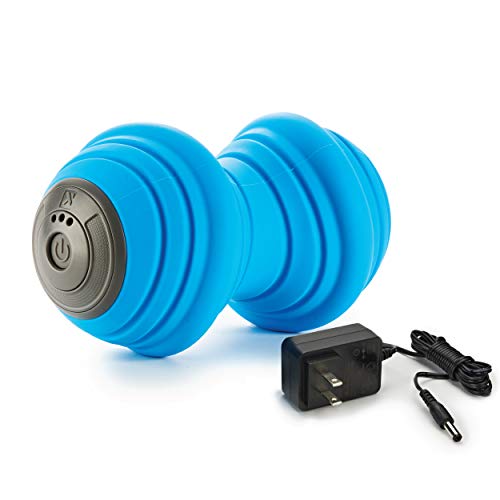
If you want vibration without the top-end motor: The Trigger Point Performance TriggerPoint CHARGE VIBE Three-Speed ($122.99) — The TriggerPoint CHARGE VIBE is the natural step up from the Grid. It carries TriggerPoint's surface thinking into a powered roller, with opposing ridge curves that stretch the muscle on the wide ridges and squeeze it on the narrow ones, plus three vibration frequencies aimed at different tissue depths. The battery runs about two hours and it's small enough for a gym bag at roughly seven by four inches. It's less powerful than the Vyper 3 and narrower than most rollers here, so back work takes more care. But it costs a good deal less than the Hyperice and covers the same core benefit. It carries a one-year limited warranty.
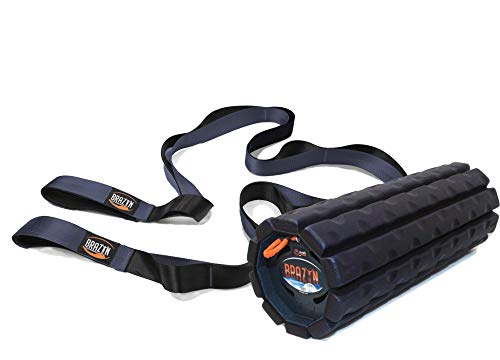
If you travel most weeks of the month: The Brazyn Morph Bravo Foam Roller Bundle for ($87.51) — The Brazyn Morph Bravo collapses to under two inches thick, so it slides into a laptop bag or a carry-on, then pulls open into a 14.5-inch roller with a 5.5-inch diameter. It weighs a pound and a half, uses bamboo and recyclable aluminum, is rated to 350 pounds, and ships with a 12-loop mobility strap. Nothing else here packs flat. The trade-offs are a moving mechanism where solid rollers have none, a shorter working length than a standard 18-inch cylinder, and a price that only makes sense if you're on the road often enough to otherwise skip recovery entirely.
The competition
These are the rollers our research surfaced alongside the picks, not a map of everything on the market. Each one is a reasonable product that lost to a pick for a specific reason, and in a couple of cases the reason is narrow enough that you might still choose it.
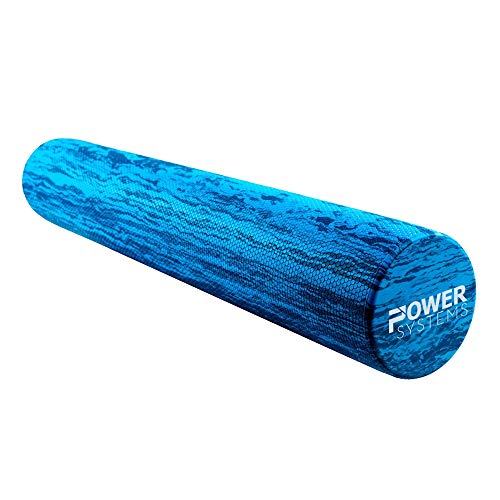
The Power Systems Premium 36-Inch EVA Foam Roller ($46.50) — The Power Systems Premium EVA roller is a firm, high-density closed-cell cylinder sold in 12-inch and 36-inch lengths, aimed at people who want full-back coverage without clinical branding. The foam resists moisture, wipes clean and holds consistent pressure under repeated use, which makes it a solid home-gym workhorse for yoga, Pilates and stretching as well as rolling. It lost to the OPTP because the OPTP's soft density serves the specific group who most need a 36-inch roller: people whose tissue is sensitive. The surface is smooth, so it can't target trigger points, and at three feet it isn't going anywhere. Choose it if you want length and firmness together.
The Rollga Foam Roller LITE - High Density ($34.97) — The Rollga Foam Roller LITE takes a different approach: instead of a straight cylinder, it's contoured so the shape supports your spine and shoulder blades while the raised sections press into the muscle either side. If you've tried rolling your upper back and stopped because it felt like grinding on bone, this is aimed squarely at you, and the LITE version is about 20 percent softer than the standard model. It didn't make the picks because that same contour limits it elsewhere. Legs, arms and calves are more awkward on a shaped roller than a plain one, and lighter users may not sink deep enough into the contours to get much pressure.
The Gaiam Restore Foam Roller for Muscle Massage ($24.99) — The Gaiam Restore is an 18-inch medium-density roller with a shallow textured tread that adds grip and a little pinpoint pressure. It's the gentlest of the textured options and a natural fit next to a yoga or stretching practice, where hammering your quads would work against what you're trying to do. It lost to the 321 Strong, which offers real projections at a similar level of accessibility, and to the Amazon Basics roller for anyone who just wants a plain cylinder. The tread is mild enough that deep-tissue work isn't really on the menu, and 18 inches won't span your back. Pick it if gentle daily use is the goal.
Rolling technique and care
Sixty to ninety seconds per muscle group, two or three times a week, is what the research supports. Longer isn't better. Past about two minutes on one spot you're more likely to stir up inflammation than settle it, so move on. Roll slowly, breathe, and stop short of the pain that makes you hold your breath. Never roll directly on your lumbar spine, your neck, a joint, a varicose vein or an area that's acutely injured. Work the muscles around the problem instead: hip flexors, glutes and the mid-back all help a cranky lower back. For upkeep, wipe closed-cell and polypropylene rollers with a damp cloth and let them dry fully. Store rollers out of direct sun, and charge powered ones every few weeks even if you're not using them.
Questions we get
How long should I foam roll each muscle?
Sixty to ninety seconds per muscle group, two or three times a week, is the range the research supports for reducing soreness and improving mobility. Beyond ninety seconds on one area you hit diminishing returns, and you may increase local inflammation. A full-body session covering quads, hamstrings, IT bands, calves and the upper back takes about ten to fifteen minutes at that pace.
Should I roll before or after a workout?
Both work, for different reasons. A couple of minutes of light rolling beforehand raises tissue temperature and blood flow, which helps your range of motion for the session. Ten to fifteen minutes afterward is what the evidence more strongly supports for cutting next-day soreness. If you only have time for one, roll after. And don't treat pre-workout rolling as your warm-up; you still need to move.
Does foam rolling actually work, or is it a placebo?
The evidence is genuinely positive, if modest. Published work in strength and conditioning research shows real reductions in delayed onset muscle soreness at both 24 and 48 hours in people who rolled versus people who didn't. The mechanism looks like increased local blood flow rather than breaking up scar tissue, which is the claim you'll still hear repeated. Vibrating rollers showed a further improvement over non-vibrating ones.
What density should a beginner start with?
Soft to medium. A plain high-density cylinder like the Amazon Basics roller is firm enough to be useful but forgiving enough that you'll keep going, and it's the right call if you don't yet know whether this becomes a habit. If you're beginning while managing an injury or post-surgical soreness, go softer with the OPTP PRO-Roller Soft. Steer clear of the RumbleRoller until you've got four to six weeks of regular rolling behind you.
Are vibrating rollers worth it?
If you train four or more days a week, probably yes. The research shows vibration cuts soreness more at both the 24- and 48-hour marks, which is exactly the window that determines whether you can train hard again tomorrow. Training two or three times a week with a rest day between? A good non-vibrating roller like the Grid 1.0 will do the job, and it never needs charging.
Where should I never use a foam roller?
Skip your lumbar spine entirely, along with your neck, any joint, and any area with an acute injury, active inflammation, varicose veins, blood clots or a recent surgical site. The muscles on either side of the lower spine are fine to work; direct pressure on the vertebrae is not. For lower back pain, target hip flexors, glutes, piriformis and the mid-back instead, and get a physical therapist to walk you through the first sessions if the pain is significant.
Why you should trust us
For this guide:
- We read the published research on foam rolling and vibration-assisted rolling, then compared it against what each manufacturer claims its surface and density actually do.
- We compared spec sheets, listing details and dimensions across all twelve rollers, alongside published reviews and recurring themes in owner feedback about firmness, durability and charging.
- We did not use, install or measure any of these rollers ourselves.
- We read owner reviews on every listing, weighted toward the critical ones, because that is where the recurring failures show up.
- We have a systematic way of automatically fetching the latest prices, so the numbers on this page stay current.
- This is a research-focused guide, so the team may not own every product listed — though we often do own the top winners, which gives us extra context for the recommendations.
- We don't accept free products, and the retailer commission never changes which product we recommend.
Sources
The Effects of Foam Rolling on Recovery — Journal of Strength and Conditioning Research, NSCA Journal of Strength and Conditioning Research
Best Foam Rollers — Wirecutter, Wirecutter
Best Foam Rollers of 2026 — Forbes Health, Forbes Health
Foam Rolling: What It Is and Why You Should Be Doing It — Healthline, Healthline
Best Foam Rollers, Tested by Editors — Good Housekeeping, Good Housekeeping
Amazon product listings and owner reviews for all 12 products
Manufacturer specification pages for each product
Some passages in this guide may be paraphrased with AI help. Prices are refreshed automatically.
More like this.
Continue exploring health reviews and recommendations.

The Best Protein Powders for Muscle Building
Protein powder is a convenience food, not a magic one. If you're lifting three or four times a week, you need somewhere between 1.6 and 2.2 grams of…

The Best Compression Clothing for Workout Recovery
Compression gear is one of the few pieces of workout equipment you wear when you're not working out. The idea is simple: snug fabric squeezes your legs,…

The Best Vibration Plates for Recovery
A vibration plate is a simple thing: a motorized deck you stand on while it shakes. For recovery, that shaking is meant to loosen tight muscles, nudge…

The Best Ab Rollers
An ab roller is about as simple as fitness gear gets: two grips, a wheel, and a movement that humbles almost everyone the first time. What you're really…

The Best Off-Road Recovery Boards
Getting stuck isn't really an if. Drop a tire into a sand wash, sink into spring mud on a forest road, or spin out on a snowed-in trailhead approach, and…

The Best Tow Straps and Kinetic Recovery Ropes
Getting stuck is rarely dramatic. You back down a boat ramp that's slicker than it looked, or you pull onto a soft shoulder in the rain, and suddenly your…