The Best Yoga Blocks
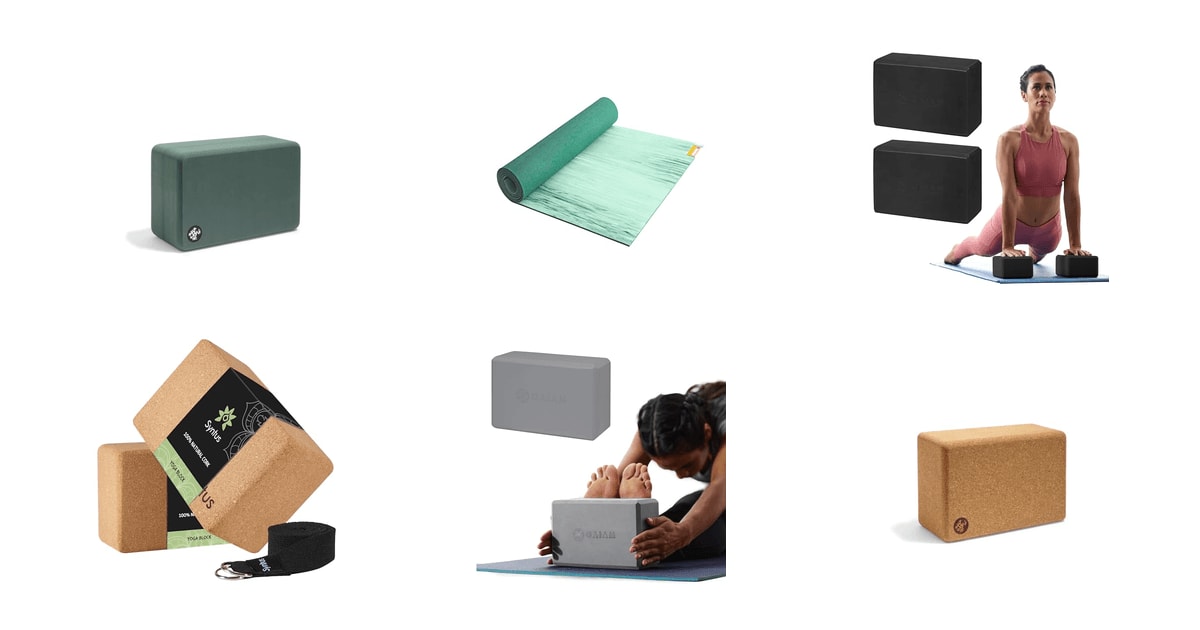
A yoga block is the least glamorous thing in your gear bag and probably the most useful. It brings the floor up to your hands in a standing forward fold. It props your hips in pigeon so you can actually breathe. It sits under your sacrum in a supported bridge and turns a pose you're fighting into one you can hold for five minutes. You don't need to be flexible to use one, and you don't stop needing one once you are. Most poses call for two, which is the first thing nobody tells beginners.
Here's the honest part: no single block is right for everything. Foam is light and forgiving under your shoulder blades, but it compresses when you put real weight on it and it gets slick once your hands sweat. Cork is firm and grippy and naturally antimicrobial, but it's heavier and it will bruise a knee. Wood is the most stable thing you can buy and also the least comfortable — nobody rests their spine on a pine cube. Whatever you pick, you're accepting one of those trade-offs.
We looked at published reviews, manufacturer specs and what owners say after months of use, and we sorted the lineup by who each block actually suits. We think that the Manduka Recycled Foam Yoga Block is the best yoga block for most people, and that the Manduka Cork Yoga Block is the one to buy if you want firmer support for weight-bearing poses and hot-yoga grip.
Everything we recommend

Firm enough to trust, light enough to carry anywhere

Firmer, grippier, and it doesn't budge under load

Two solid blocks for less than one premium one
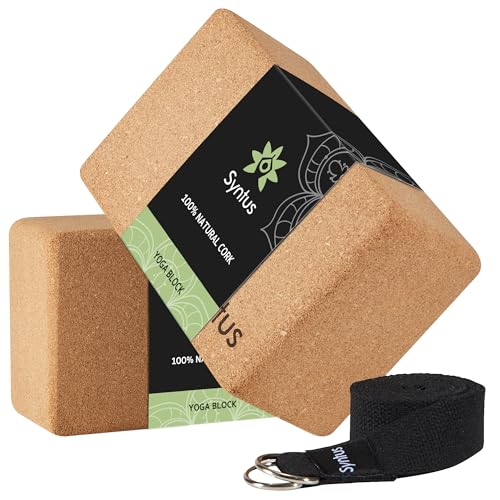
Two cork blocks and a strap, all in one box
Prices as of Oct 22, 7:36 AM PT · Details
At a glance
| Product | Material | Weight | Price | |
|---|---|---|---|---|
| Manduka Foam Yoga Block - Recycled EVATop pick | Recycled EVA Foam | 0.9 lbs | $26 |
 | Hugger Mugger para Rubber Yoga MatAlso in lineup | Natural Rubber | 5.9 lbs | $128 |
| Gaiam Yoga Block - Supportive Latex-Free EvaBudget pick | EVA Foam | 0.76 lbs | $15.43 |
| Syntus Cork Yoga Block and Strap SetAlso great | Cork | 4.59 lbs | $23.39On sale |
 | Gaiam Yoga BlockAlso consider | EVA Foam | — | $9.59 |
| Manduka Yoga Block - Fine-Grain Cork BlockUpgrade pick | Fine-Grain Cork | 2.2 lbs | $26 |
 | Yogikuti Solid Wooden Yoga BlocksAlso consider | Solid Pine Wood | 2.2 lbs | $22.99 |
Prices as of Oct 22, 7:36 AM PT · Details
How we picked
Density and support. We compared manufacturer load figures and material density claims, since a block that compresses under your weight isn't doing its job. Cork runs roughly two to three times denser than standard EVA foam, and wood higher still.
Grip when sweaty. We leaned on published instructor panels and sweat comparisons, which consistently rank cork and para rubber above foam once hands get damp. Anything sold for heated practice had to have real surface texture.
Standard sizing. We checked listed dimensions against the 9-by-6-by-4-inch standard, because a block that's a half-inch short changes how a pose feels. Iyengar-specific sizing is narrower and made of firm material by tradition.
Edges and comfort. We read owner feedback for the complaint that shows up again and again with cheap blocks: sharp corners that dig into palms. Beveled or contoured edges were a requirement.
Materials and cleaning. We looked at recycled content, certifications and sourcing claims from manufacturers, plus how each surface handles sweat and repeated wiping. Cork's natural antimicrobial suberin matters in shared settings.
Top pick
Firm enough to trust, light enough to carry anywhere
Manduka Foam Yoga Block - Recycled EVA
This is a recycled-EVA foam block that's noticeably denser than the cheap stuff, with contoured edges that don't dig into your palms. At 0.9 pounds it's easy to travel with, and it holds its shape under real weight instead of squashing flat.
$26fromAmazonPrices as of Oct 22, 7:36 AM PT · Details
Most foam blocks fail the same way, and this one doesn't. You put your body weight on a soft block in a supported bridge and it slowly pancakes under you. Manduka's recycled foam is firm — owners repeatedly note it barely dents even under a fully standing adult. That firmness is the whole point. A block that compresses isn't supporting your alignment, it's just a squishy pillow that moves while you're trying to hold still.
The edges matter more than you'd guess. Manduka contours them rather than leaving a hard 90-degree corner, so when you grip the block in a half-moon or press into it in a low lunge, the edge doesn't bite into your palm. If you've ever finished a class with red lines pressed across your hands, you know what a difference beveling makes over a 60-minute practice.
It's made from 50 to 75 percent recycled EVA foam, and Manduka states it contains no phthalates or azo dyes, meeting OEKO-TEX Standard 100 criteria. If you're the kind of person who reads material sourcing before buying, that's a real answer rather than a vague eco claim. And unlike cork, it won't add three pounds to a bag you're carrying to a studio across town.
Cleaning is genuinely easy. Wipe it with a damp cloth or a half-vinegar, half-water solution and it's done. Foam won't absorb sweat the way an untreated surface can, and there's no sealing or conditioning routine to remember. For a home practice where the block lives in a corner between sessions, that's one less thing.
Flaws but not dealbreakers
The firmness cuts both ways. If you wanted a block to lie on lengthwise under your spine in a restorative fish pose, this one is unforgiving — a couple of owners specifically flag that it's not comfortable for smaller bodies resting weight on it. Softer foam blocks feel better for that. You're trading padding for support, and this block picks support.
Foam is still foam when your hands are wet. Published grip comparisons put cork well ahead of foam once sweat enters the picture, and this block won't beat that physics. For a heated class, cork or rubber is the safer surface. And the packaging is minimal enough that a few owners struggled to get the plastic off without marking the block.
Upgrade pick
Firmer, grippier, and it doesn't budge under load
Manduka Yoga Block - Fine-Grain Cork Block
Manduka's fine-grain cork block is dense, heavy and about as stable as a block gets without going to wood. The textured cork surface holds onto sweaty hands, and cork's natural antimicrobial properties make it a sensible pick for a shared studio.
$26fromAmazonPrices as of Oct 22, 7:36 AM PT · Details
If you're bearing weight on a block, cork is the material you want. Cork blocks run roughly two to three times denser than standard EVA foam, and that difference is exactly what you feel in a supported bridge or legs-up-the-wall hold. There's no give, no slow sink over a long hold. At 2.2 pounds this block also stays where you put it — it doesn't skitter across the mat when you press into it.
Grip is the other reason to pay up. In a Verywell Fit panel of 14 certified instructors, cork scored highest for grip consistency, ahead of both foam and bare wood. The fine-grain surface has enough texture to hold on when your palms are damp. If you take heated classes, or you just sweat a lot, this is the practical difference between confidence and a wobble.
Cork is naturally antimicrobial thanks to suberin, a waxy polymer in the cell walls. That's a real advantage if the block gets passed around a studio or shared between family members at home. Foam can hold onto odor over time; cork tends not to. Manduka also sources from renewable cork oak and says the blocks are made without toxic chemicals.
Owners who use blocks for strength work — jump-throughs, jump-backs, press drills — keep coming back to this one. The narrow four-inch dimension means you can wrap a hand around the whole block, and cork pressed into a mat simply doesn't slide. Studios buy these in quantity for a reason.
Flaws but not dealbreakers
It's hard. Genuinely hard. Owners note it's sometimes too firm under a forearm in lizard pose or under a knee, and there's no cushioning to soften a bony contact point. Restorative practitioners who want to melt over a block for ten minutes may find it punishing.
It's heavy for travel. At more than double the weight of the foam block, two of these add real bulk to a bag. And cork can chip if you drop it on a hard floor, which foam simply won't do.
Budget pick
Two solid blocks for less than one premium one
Gaiam Yoga Block - Supportive Latex-Free Eva
Gaiam's Essentials foam blocks come as a pair, which matters because most poses use two. They're latex-free EVA with a non-slip surface and beveled edges, and Gaiam says they're denser than standard EVA blocks.
$15.43fromAmazonPrices as of Oct 22, 7:36 AM PT · Details
You need two blocks. That's the pitch. Most sequences — supported bridge, reclined bound angle, any seated forward fold where you're propping both hands — call for a matched pair, and buying two premium blocks costs several times what this set does. Starting out, a pair of adequate blocks beats one excellent block by a wide margin.
They're better than the price suggests. Good Housekeeping's lab comparison of 18 yoga blocks ranked this set first for beginner value, with high marks for cushioning and grip for new practitioners. The foam is denser than the bargain-bin stuff, the surface has some tack to it, and the edges are beveled so they don't cut into your hands.
The softness is actually useful for some things. Where the Manduka foam block is stiff enough to be uncomfortable to lie on, these have enough give to sit under your sacrum or between your shoulder blades without feeling like a brick. Owners describe them as thick, soft and comfortable, and use them for stretching and Pilates as much as yoga.
At roughly 4.6 ounces each these are the lightest option here by a distance. Throw both in a tote with your mat and you'll barely notice. Spot-clean with mild detergent and let them air dry — no maintenance beyond that.
Flaws but not dealbreakers
Soft foam compresses. If you're heavier, or you're putting most of your weight through a single block in an inversion prep, expect noticeable give. High-density EVA generally supports far less static load than cork or wood, and these sit on the softer end of foam.
The non-slip surface is fine dry and mediocre wet. Published sweat comparisons show foam losing far more grip than cork or rubber when hands get damp. For a heated room, look elsewhere.
Also greatOn sale
Two cork blocks and a strap, all in one box
Syntus Cork Yoga Block and Strap Set
The Syntus set pairs two solid cork blocks in the standard 9-by-6-by-4 size with an eight-foot poly-cotton strap and a D-ring buckle. If you're setting up a home practice from scratch, it covers most of what you need in a single purchase.
$23.39fromAmazonTypical pricePrices as of Oct 22, 7:36 AM PT · Details
Buying props piecemeal is how a starter kit ends up costing more than it should. This set gets you the two cork blocks most poses call for plus a strap long enough for shoulder openers and seated hamstring work. There's an instruction booklet too, which is genuinely useful if you're following along at home without a teacher watching your alignment.
The cork itself does what cork does. Owners describe the blocks as sturdy, smooth and firm enough that they don't collapse the way foam does. Several use them well outside yoga — deficit push-ups, calisthenics, general strength work — which is a decent proxy for how much load they'll take. The rounded edges are comfortable in the hand.
The strap is more useful than beginners expect. Eight feet is enough to loop around a foot in a reclined hamstring stretch while you keep your shoulders on the floor, and the metal D-ring holds its position rather than creeping. Poly-cotton webbing doesn't stretch under tension, which is the point.
Flaws but not dealbreakers
Cork quality isn't quite premium here. At least one owner reports the blocks denting under heavy repeated use, which is not something you'd expect from the densest cork. For occasional home practice it's a non-issue; for a studio getting daily use, the Manduka cork block is the more durable buy.
The full set is heavy. Two cork blocks plus a strap is a lot to carry to class, so this is better thought of as a home kit that stays home.
Who this is for
Buy blocks if you practice at home, if you're newer to yoga and the floor still feels far away, or if you hold long restorative poses and want something to prop against. Prop use isn't a beginner crutch anymore — a Yoga Alliance survey found 37 percent of U.S. practitioners use props in every session, up from 28 percent a few years earlier. Get two. Almost every sequence that calls for a block calls for a pair, and one block leaves you improvising with a folded towel halfway through.
This guide covers standard rectangular blocks in foam, cork and wood. It doesn't cover mats, straps sold on their own, bolsters or wedges, and it isn't the right guide if you specifically need Iyengar-spec blocks, which are traditionally narrower at 9 by 4.5 by 3 inches. If you already own a decent pair of blocks that aren't crumbling, there's no reason to replace them — this category doesn't improve much year to year.
How we picked
Density: A block has to hold your weight without pancaking, so we weighted manufacturer load figures and material density heavily — cork runs two to three times denser than standard EVA. Grip: Published instructor panels put cork ahead of foam and bare wood for grip consistency, and sweat comparisons show foam losing far more traction than rubber or cork, so anything aimed at heated practice needed texture. Size: We verified listed dimensions against the 9-by-6-by-4-inch standard, since a short block quietly changes your alignment. Edges: Beveled or contoured corners were a requirement, because sharp edges are the single most common complaint in owner feedback about cheap blocks. Materials: We read sourcing and certification claims, along with how each surface handles sweat, odor and repeated cleaning.
Other yoga blocks worth considering
If you only need one more block: The Gaiam Yoga Block — This is Gaiam's single-block listing, and it's the sensible buy when you already own one block and want a match, or when you need a spare for a second household member. Owners report using it weekly for a year without chipping or crumbling, and it holds full body weight under a lower back. The catch is the listed dimensions, which run slightly under the 9-by-6-by-4 standard — one owner specifically flagged being surprised by the thickness. Check the size on the variation you're ordering before you commit, and know that buying singles works out worse per block than the two-pack.
If you want maximum stability from wood: The Yogikuti Solid Wooden Yoga Blocks — Solid pine, no hollow core, smooth finish with rounded edges. Wood is the traditional Iyengar material and the most stable thing you can put under your hands — there's zero compression, ever. Owners use these for myofascial release and even as a step to reach a pull-up bar, which tells you something about the load they take. Two real caveats: bare wood scored lowest for grip in instructor comparisons when used off a mat, so keep it on your mat surface. And the listing describes a set of four while at least one owner received a single block, so confirm quantity with the seller before ordering.
The competition
This is what our research surfaced in this category, not a census of every block sold. A few listings that came up in the search either aren't blocks at all or aren't the version most people should buy, and here's where they landed.
The Hugger Mugger para Rubber Yoga Mat — The Hugger Mugger Para Rubber listing here is the mat, not the block. It's a well-regarded natural rubber mat — dual-sided grip, quarter-inch cushioning, a teacher favorite for exactly the sweaty-hands problem that sends people looking for grippier props in the first place. Owners consistently mention a strong rubber smell that fades over a few months, and there's a latex warning on it. It's just not a yoga block, so it can't compete with the picks here.
Care and cleaning
Foam blocks are the easy ones: wipe them with a damp cloth, or a fifty-fifty mix of water and white or apple cider vinegar, then let them air-dry fully before stacking them. Skip harsh solvents, which can break down EVA over time. Cork wants less moisture, not more — wipe it down and dry it promptly rather than soaking it, since saturated cork can swell or crumble at the edges. Cork's natural suberin gives it some antimicrobial help, so it needs cleaning less often than foam in a shared setting. Wood just needs an occasional dry wipe and a dry storage spot; keep it away from radiators and damp basements so it doesn't crack. Store any block out of direct sun, which fades and hardens foam faster than use does.
Questions we get
Should I buy foam or cork yoga blocks?
Foam if you want light, cheap and forgiving; cork if you want firm, grippy and durable. Foam is easier to carry and more comfortable to lie on, but it compresses under real weight and gets slick when your hands sweat. Cork is roughly two to three times denser and scores higher for grip in instructor comparisons, at the cost of two to four times the weight. Most people starting out do fine with foam and upgrade to cork later.
How many yoga blocks do I need?
Two. Supported bridge, reclined bound angle, seated forward folds and most alignment work all use a matched pair, and one block leaves you propping the other side with a folded blanket. If budget is the constraint, two adequate foam blocks beat one premium block. Buying a two-pack is usually the cheaper route than two singles.
What size yoga block should I buy?
The standard is 9 by 6 by 4 inches, which gives you three usable heights depending on which face you set down. Some brands sell smaller travel sizes, so check the listed dimensions rather than assuming. Iyengar practice traditionally uses a narrower 9-by-4.5-by-3-inch block in wood or firm cork. If you have small hands, the four-inch width is the dimension you'll grip most, so narrower can feel better.
What's the best block for hot yoga or sweaty hands?
Cork or natural rubber. Published sweat comparisons show foam losing far more grip than cork when hands get damp, and rubber holding grip better still. Cork's texture also gives you something to hold onto rather than a smooth face that slides. If you practice in a heated room, skip foam entirely for weight-bearing work.
Do yoga blocks have a weight limit?
Effectively yes, though most brands don't publish a rating. Manufacturer figures put birch wood blocks around 300 pounds of static load, high-density cork near 200, and standard EVA foam roughly 100 to 150. That's why heavier practitioners and anyone doing weight-bearing work on a single block should choose cork or wood over soft foam. Compression under load is the thing to watch, not catastrophic failure.
Are expensive blocks actually better than cheap ones?
Sometimes, and it depends on what you're doing. A premium block buys you higher density, better edge finishing and more reliable materials, all of which you'll notice in weight-bearing poses and long holds. For gentle stretching and beginner alignment work, a well-reviewed budget two-pack does the job. Pay up when you're putting real body weight on the block.
Why you should trust us
For this guide:
- We compared manufacturer specifications, listed dimensions and stated material composition across every block in this lineup.
- We read published reviews and instructor panels covering grip consistency, density and beginner value, plus owner feedback themes about firmness, edge comfort and long-term durability.
- We did not use, install or measure any of these products ourselves.
- We read owner reviews on every listing, weighted toward the critical ones, because that is where the recurring failures show up.
- We have a systematic way of automatically fetching the latest prices, so the numbers on this page stay current.
- This is a research-focused guide, so the team may not own every product listed — though we often do own the top winners, which gives us extra context for the recommendations.
- We don't accept free products, and the retailer commission never changes which product we recommend.
Sources
Best Yoga Blocks, Tested by Yoga Teachers — Verywell Fit, Verywell Fit
The Best Yoga Blocks of 2026 — Wirecutter (NYT), Wirecutter
Best Yoga Blocks Reviewed — Women's Health, Women's Health
The Best Yoga Blocks for Every Practice — Shape Magazine, Shape
Yoga Block Reviews and Buying Advice — Yoga Journal, Yoga Journal
Cork vs. Foam Yoga Blocks: Which Is Better? — Healthline, Healthline
Manduka Product Page — Recycled Foam Block Specs, Manduka (Manufacturer)
Jade Yoga Sustainability Report — Cork Sourcing & Tree-Planting, Jade Yoga (Manufacturer)
Hugger Mugger Para Rubber Block Product Details, Hugger Mugger (Manufacturer)
Global Yoga Market Size & Growth Statistics 2025–2030 — Grand View Research, Grand View Research
Best Yoga Blocks — Good Housekeeping Tested, Good Housekeeping
Amazon product listings and owner reviews for all 7 products
Manufacturer specification pages for each product
Some passages in this guide may be paraphrased with AI help.
Product prices and availability are accurate as of the date/time indicated and are subject to change. Any price and availability information displayed on Amazon.com at the time of purchase will apply to the purchase of this product.
More like this.
Continue exploring health reviews and recommendations.

The Best Yoga Blocks and Props for Beginners
A yoga block is just a brick you can't fall through, and that's the whole point. When your hamstrings won't let your hand reach the floor in Triangle, a…

The Best Yoga Wheels
A yoga wheel is a simple thing: a rigid hoop with padding wrapped around the outside. You lie back over it, let it hold the arch of your spine, and…

The Best Blue Light Blocking Glasses
If you spend your workday staring at a screen, you've probably had that late-afternoon feeling: gritty eyes, a dull ache behind your forehead, and the…

The Best Yoga Mats
A yoga mat is one of the few pieces of fitness gear you touch with your whole body. You kneel on it, sweat on it, press your palms into it while upside…

The Best RV Leveling Blocks
Pull into a campsite and the pad is never flat. One tire sits low, the trailer leans, and by dinner your soup slides to one side of the pot. Leveling…

The Best Swimming Goggles
A pair of goggles is the difference between a swim you enjoy and one you cut short. When the seal works, you stop thinking about your face entirely and…