The Best Yoga Wheels
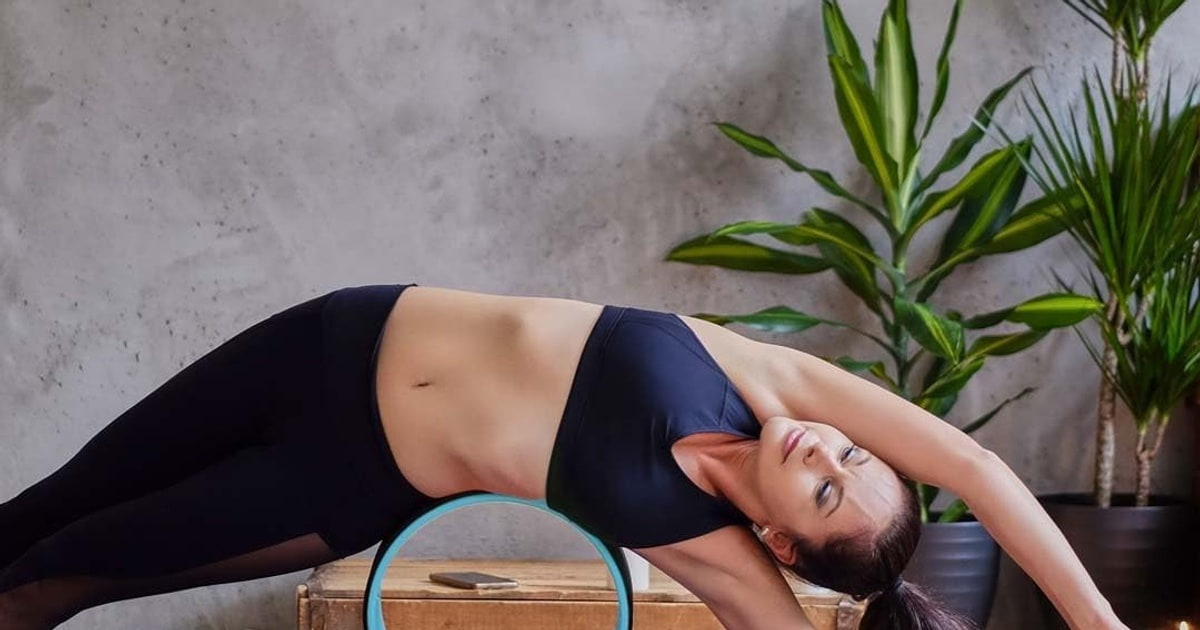
A yoga wheel is a simple thing: a rigid hoop with padding wrapped around the outside. You lie back over it, let it hold the arch of your spine, and breathe. That's most of the appeal. If you sit at a desk all day, the shape opens your chest and shoulders in a way a flat mat can't. And unlike a foam roller, which squashes under your weight, a wheel keeps its round shape, so the stretch feels the same from one session to the next.
No wheel fixes a bad back. Gentle spinal extension can feel wonderful in the moment, and a review of self-myofascial release research points to short-term gains in range of motion, but short-term relief isn't treatment. If you've got a disc problem or ongoing pain, talk to a physical therapist first. The category has a second honest limit. Nearly every wheel here is a molded plastic ring under foam, so the real differences come down to diameter, face width, and padding thickness. Nobody's reinventing the circle.
So the question is how many wheels you need and how wide they should be. Beginners do better on a big wheel, which spreads pressure across more of your back, then move to a smaller one once the stretch stops feeling like enough. Wider faces support your lower back; narrow ones dig in. We think that the Aozora Yoga Wheel 13-inch three-pack is the best yoga wheel for most people, and that the Florensi Yoga Wheel Set is the one to buy if you'd rather skip the extras and just get the three sizes.
Everything we recommend

Three sizes, thick padding, and a book that shows you what to do

The same three-wheel progression in a plainer package
A stiffer single wheel for deep backbends, if you've outgrown a set

Four sizes and the thickest padding, but a narrow face
Prices as of Oct 25, 6:48 AM PT · Details
At a glance
| Product | Weight rating | Largest wheel | Price | |
|---|---|---|---|---|
| Dharma Yoga Wheel Basic - Spine RollerUpgrade pick | 500 lbs | 12 in | $49.99 |
| Florensi Yoga Wheel Set Pack of 3Runner-up | 500 lbs | 13 in | Check price |
 | De Jure Fitness Yoga WheelAlso in lineup | 330 lbs | 12 in | $46 |
| Yoga Wheel Set of 3+1Also great | — | 13 in | $40.99On sale |
| Aozora Yoga Wheel 13" with Most DetailedTop pick | 500 lbs | 13 in | $39.99 |
 | Cork RollerAlso consider | — | 13 in | $36.99 |
Prices as of Oct 25, 6:48 AM PT · Details
How we picked
Size and progression. We favored multi-size sets, because published guidance from Verywell Fit says beginners should start on the largest wheel and work down. A set that spans roughly 13 inches to 6 inches covers gentle backbends and targeted knots.
Face width. Manufacturer spec sheets put the standard face at about 4 inches, and wider wheels are the ones reviewers point toward for lower-back support. We treated 5 inches or more as a meaningful advantage.
Padding thickness. Published reviews found padding ranging from roughly 6mm on budget wheels to over 10mm on premium ones, which changes how long a hold stays comfortable. We looked for listings that actually state a number.
Weight rating. Good Housekeeping's fitness coverage notes that premium wheels list 300 to 500 pounds while thin budget frames cap out lower. We treated a stated 500-pound rating as the safe end of the range.
Grip surface. Instructors interviewed by Women's Health say cork holds grip better than PVC once you're sweating. We noted surface material on every wheel and weighted it for anyone practicing hot yoga.
Top pick
Three sizes, thick padding, and a book that shows you what to do
Aozora Yoga Wheel 13" with Most Detailed
You get a 13-inch wheel for supported backbends, a 10-inch for rolling out your mid-back, and a 6-inch for pressing into one stubborn knot, plus a strap and a step-by-step pose book. The big wheel is 5 inches wide, so your spine settles into the padding.
$39.99fromAmazonPrices as of Oct 25, 6:48 AM PT · Details
A three-size set is the right starting point for almost everyone. You begin on the 13-inch wheel, which spreads your weight over a long, gentle arc and keeps your lower back from folding too far. As your spine loosens, you drop to the 10-inch. The 6-inch isn't really about backbends at all. It's for pressing into the spot beside your shoulder blade that never lets go. Verywell Fit recommends that same progression for beginners.
Width matters more than people expect. Aozora lists the big wheel at 13 inches across and 5 inches wide, a full inch past the roughly 4-inch standard. That inch is the difference between your spine sinking into padding and your ribs hunting for balance. It also makes the wheel useful under a foot or between the shoulder blades, which is where most desk-bound stiffness lives.
The cushion is thick TPE foam, and published reviews put premium wheels above 10mm of padding while budget models sit nearer 6mm. You notice it on the first roll. Thin foam telegraphs the hard ring underneath, especially over the bony stretch of your upper back. There's enough give here that a two-minute hold doesn't turn into a countdown.
The pose book is the part people underrate. A wheel is gym equipment with no instructions printed on it, and plenty of beginners use one for two stretches before it slides under the bed for good. Aozora includes a guide to more than 30 poses plus a strap, which gives you a reason to keep it out. Yoga Journal's beginner sequence, built around moves like supported fish, covers similar ground.
Flaws but not dealbreakers
The 500-pound figure Aozora lists is a breaking strength, which isn't the same as a comfortable working load. The molded ring is stiff, but if you're tall or heavy, get on and off with your hands and feet carrying part of the load rather than dropping onto it.
Three wheels also means three things to store, and together they weigh about six pounds. If you wanted one wheel to toss in a bag for a trip, this isn't it.
Runner-up
The same three-wheel progression in a plainer package
Florensi Yoga Wheel Set Pack of 3
Florensi gives you three wheels rated to support up to 500 pounds, with about 5 inches of face on the largest one. There's no pose book and no strap, so you're on your own for ideas, but the wheels themselves do everything the top pick's do.
Check priceatAmazonPrices as of Oct 25, 6:48 AM PT · Details
This is the set to get if you want the progression and nothing else. Three diameters, one green colorway, no accessories in the box. Florensi rates the wheels to support up to 500 pounds, which puts them level with the strongest single wheels here and well clear of the 300-pound frames that published reviews flag as the soft end of the category.
Nothing about it is clever, and that's the point. It's a molded ring under foam with a textured surface that keeps your palms from sliding when you push up into a supported backbend. Owners who mostly use it to unstick a tight mid-back report the same thing owners of the fancier sets do. It works, and it keeps working. For something you'll put your whole body weight on, boring is a feature.
The set weighs close to seven pounds all in, a bit more than the Aozora wheels. That's mostly ring thickness and padding, and it's fine for a wheel that lives in the corner of the living room. It's less fine if you hoped to pack all three somewhere. Take the biggest one and leave the others home.
You give up the guide and the strap, and for a true beginner that's a real loss. If you've never used a wheel, watch a few sequences before you lie back on one. Keep your feet planted, keep your hands on the floor for the first few sessions, and start with the largest wheel until the arch stops feeling dramatic.
Flaws but not dealbreakers
There's no instructional material at all, so your first week is guesswork unless you go looking for it. That's the main reason it sits behind the Aozora set rather than beside it.
The listing leans hard on wellness language and never states padding thickness, which is the one spec that decides whether long holds feel plush or bony. If thick foam is your priority, the FARINOK set at least puts a number on it.
Upgrade pick
A stiffer single wheel for deep backbends, if you've outgrown a set
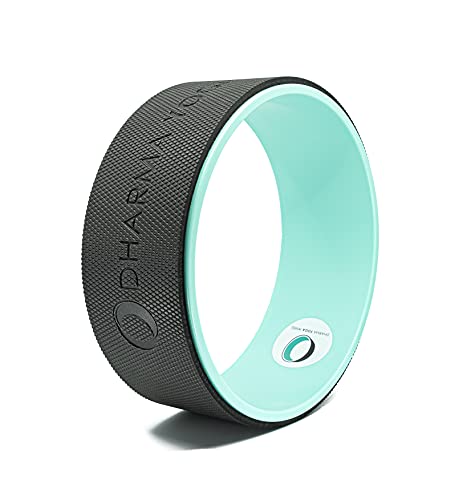
Dharma Yoga Wheel Basic - Spine Roller
Dharma's wheel is a 12-inch ring rated to hold 500 pounds or more, with a 6-inch face that's wider than almost anything else here. It's a single wheel aimed at people working on deep backbends and inversions, not at a first cautious stretch.
$49.99fromAmazonPrices as of Oct 25, 6:48 AM PT · Details
Dharma is the name this whole category grew out of. Its wheel was the patented original, and the reason committed practitioners still reach for one is rigidity. A ring that doesn't flex under a deep hold is a ring you can trust with more of your weight, and Dharma rates this one to hold 500 pounds or more.
The 6-inch face is what you're really getting here. Most wheels run about 4 inches wide. Six inches spreads contact across more of your back, which is the difference between a stretch that opens your whole chest and one that presses a stripe along your spine. If your lower back is the reason you're shopping at all, wider is the direction to go.
It's light, too. At three pounds it moves easily from the mat to the couch to a suitcase, and one wheel takes far less closet space than a stack of three. If you already know which diameter suits you, a single wheel in the right size beats owning two you never touch.
The listing doesn't spell out core material or padding thickness, which is frustrating on a wheel positioned this way. What it does state is a full refund if the wheel doesn't win you over, and a weight rating that matches the strongest options here. For deep backbends and shoulder work, that stiffness is the whole argument.
Flaws but not dealbreakers
One wheel means no progression. There's no small diameter for digging into a knot beside your shoulder blade, and no gentler starting point if 12 inches feels like too much on day one.
The padding is foam over a firm ring, and Dharma never publishes a thickness. If you want a plush, sink-in feel, the thicker TPE cushions on the sets are the safer bet, especially for holds that run past a minute.
Also greatOn sale
Four sizes and the thickest padding, but a narrow face
Yoga Wheel Set of 3+1
This set adds a fourth wheel to the usual three, and FARINOK states 10mm of high-density TPE padding, the thickest number anyone here puts in writing. The tradeoff is width. The face measures about 4.6 inches, and some owners wish it were wider.
$40.99fromAmazonTypical pricePrices as of Oct 25, 6:48 AM PT · Details
Four wheels sounds like overkill until you use the small one. The set runs from a 13-inch wheel for gentle backbends down to a narrow roller meant for one tight spot at a time. People with desk-job shoulders tend to reach for the middle sizes most, then finish on the small wheel right where the knot actually sits.
Padding is the headline. The listing states 10mm of high-density TPE, and published reviews put budget wheels closer to 6mm. Thicker foam changes how long you can stay put in a pose. It also shrugs off sweat and wipes clean, which matters if you're using the wheel after a workout rather than before one.
The width is the honest weak spot. The face is about 4.6 inches, right at the category standard, and more than one owner says plainly that another inch or two would make it more comfortable. On a narrow wheel you spend some attention balancing instead of relaxing. The Dharma's 6-inch face sits more securely under your spine.
Where this set wins is the back-pop crowd. If what you want is that satisfying release across a stiff mid-back, thick foam over a firm ring gets you there without the hard edge thin-padded wheels have. Owner feedback keeps circling the same use: a few minutes at the end of a workout, or at the end of a long day.
Flaws but not dealbreakers
FARINOK doesn't publish a weight capacity for this set, and that's the number you'd most want before putting your whole body on a plastic ring. Published reviews note that thin frames can flex under heavier loads, so ease onto it rather than dropping.
Four wheels is a lot of stuff. They weigh about six and a half pounds together and need somewhere real to live.
Who this is for
Buy a wheel if you're stiff from sitting, curious about backbends, or looking for a way to open your chest and shoulders that doesn't need a class. It suits beginners working toward deeper spinal extension, intermediate practitioners chasing inversions, and anyone who ends the day feeling compressed. Healthline notes the same chest-and-shoulder benefit for desk workers. A wheel is also easy to keep by the couch, which is most of why people actually use one.
Skip it, or at least ask first, if you have a disc injury, spinal hardware, osteoporosis, or pain that's been hanging around for months. A wheel can feel good and still be the wrong idea for your particular back, and it's no substitute for physical therapy. This guide covers padded wheels meant for yoga poses and spinal rolling. It doesn't cover foam rollers, massage guns, inversion tables, or narrow massage wheels built only for the neck.
How we picked
Size and progression: we favored sets that span roughly 13 inches down to 6, since published guidance says beginners should start large and work smaller as the stretch stops feeling like enough. Face width: the standard is about 4 inches, and anything at 5 or 6 supports your lower back better instead of pressing a stripe along your spine. Padding: reviewers found thickness running from about 6mm to over 10mm, and we preferred listings that state the number. Weight rating: 500 pounds is the safe end, while thinner frames rated near 300 can flex under heavier loads. Grip: cork and textured TPE hold on when you're sweaty; smooth PVC doesn't.
Other yoga wheels worth considering
If you want cork grip for sweaty sessions: The Cork Roller — Cork holds onto damp skin far better than smooth foam or PVC, which is why instructors interviewed by Women's Health steer hot-yoga students toward it. FARINOK's cork set pairs a 13-inch wheel for backbends with a small one for deep-tissue work, both surfaced in cork over TPE that resists sweat and wipes down easily. The catch is cushion. This one lists 6mm rather than 10mm, so long holds feel firmer against your spine. You also get two wheels instead of three, with no mid-size option in between. Buy it for grip, not for padding.
The competition
This is what the research surfaced, not a census of everything for sale. Yoga wheels are easy to manufacture and listings come and go constantly, so we stuck to wheels with enough published coverage and owner feedback to say something useful about.
The De Jure Fitness Yoga Wheel — The De Jure Fitness wheel is a single 12-inch wheel with a wide face, an anti-slip TPE surface, and a claim to the thickest liner on the market. Two things kept it out of the picks. Its inner ring is rated to 330 pounds, well under the 500-pound wheels here, and a lower rating is exactly what published reviews warn about on thinner frames. Owner feedback is more mixed than on the sets, too. If you want one wide wheel and you're on the lighter side, it's a fair buy, but the Dharma does the same job with more margin.
Care and setup
Wipe the padding down after sweaty sessions. TPE and cork both shed moisture fine, but salt left to dry gets tacky, and warm water with a little mild soap on a cloth is enough. Skip alcohol wipes on cork, which dry it out over time. Use the wheel on a mat rather than bare hardwood, where it can skate out from under you, and expect it to sit softer and roll less on thick carpet. Store it out of direct sun so the foam doesn't stiffen. For your first few sessions, keep your feet planted and your hands ready on the floor, and get on and off slowly. If you've got a disc injury or ongoing pain, check with a physical therapist before you start.
Questions we get
Are yoga wheels actually good for lower back pain?
Many people find gentle spinal extension over a wheel relieves stiffness in the moment. A review of self-myofascial release research points to short-term improvements in range of motion without hurting muscle performance. That's relief, not treatment. For chronic pain or a known disc problem, see a physical therapist before you lie back on one.
What size wheel should a beginner start with?
Start with the biggest one you have, usually 12 or 13 inches. Verywell Fit recommends exactly that, because a larger diameter spreads your weight over a gentler arc and puts less strain on your lower back. Smaller wheels create a sharper bend and press into a tighter area. Work down to them once the big wheel stops feeling like much.
What's the difference between a yoga wheel and a foam roller?
A foam roller compresses and flexes under your body weight. A wheel holds a fixed circular shape, so the traction through your spine stays consistent, as Self has pointed out. That makes a wheel better for supported backbends and chest opening. A roller is still handier for legs, glutes, and IT bands.
How much weight can a yoga wheel hold?
Most quality wheels list somewhere between 300 and 500 pounds, and several here state 500. Budget frames often cap nearer 250 to 300, so check the specific listing rather than assuming. Treat the number as a breaking strength, not a comfortable working load. Lower yourself onto any wheel with your hands and feet helping.
Should I get a wood or plastic yoga wheel?
Wood-core wheels are stiffer and generally hold more weight, which is why advanced practitioners like them for deep backbend holds. Most wheels sold now, including every one in this guide, use a molded plastic ring under foam or cork. A well-made plastic ring rated to 500 pounds is plenty for the vast majority of practice. Go looking for wood only if you're doing serious weight-bearing work on the wheel.
Can you use a yoga wheel on carpet?
Yes, though it behaves differently. On thick carpet the wheel sinks slightly and rolls less freely, which some people prefer for stability and others find limits the stretch. A yoga mat over a hard floor is the sweet spot. Bare hardwood or tile is the one surface to avoid, since the wheel can slide out from under you.
Why you should trust us
For this guide:
- We read manufacturer spec sheets for every wheel in this guide, comparing diameter, face width, stated padding thickness, surface material, and weight ratings.
- We compared published guidance from Verywell Fit, Women's Health, Yoga Journal, Healthline, Self, and Good Housekeeping's fitness coverage, along with a review of self-myofascial release research.
- We read owner feedback across the lineup for recurring themes about width, padding, stability, and how the foam holds up.
- We read owner reviews on every listing, weighted toward the critical ones, because that is where the recurring failures show up.
- We have a systematic way of automatically fetching the latest prices, so the numbers on this page stay current.
- This is a research-focused guide, so the team may not own every product listed — though we often do own the top winners, which gives us extra context for the recommendations.
- We don't accept free products, and the retailer commission never changes which product we recommend.
Sources
What Is a Yoga Wheel and How Do You Use One? - Healthline, Healthline
Yoga Wheel Benefits: Backbends, Flexibility, and Back Pain - Verywell Fit, Verywell Fit
How to Use a Yoga Wheel: 8 Poses for Beginners - Yoga Journal, Yoga Journal
Chirp Wheel+ Product Specifications and Size Guide, Chirp (Manufacturer)
Dharma Yoga Wheel Official Product Page, Dharma Yoga Props (Manufacturer)
Self-Myofascial Release: A Narrative Review - PMC/NIH, National Library of Medicine (PMC)
Best Yoga Wheels, According to Instructors - Women's Health, Women's Health
Yoga Wheel Buying Guide - Good Housekeeping Fitness Lab, Good Housekeeping
Foam Roller vs. Yoga Wheel: What's the Difference? - Self, Self
UpCircleSeven Yoga Wheel Set Specifications, UpCircleSeven (Manufacturer)
YOGABODY Full Circle Yoga Wheel Product Details, YOGABODY (Manufacturer)
Best Back Stretchers and Yoga Wheels for Lower Back Pain - MyDomaine, MyDomaine
Amazon product listings and owner reviews for all 6 products
Manufacturer specification pages for each product
Some passages in this guide may be paraphrased with AI help.
Product prices and availability are accurate as of the date/time indicated and are subject to change. Any price and availability information displayed on Amazon.com at the time of purchase will apply to the purchase of this product.
More like this.
Continue exploring health reviews and recommendations.

The Best Yoga Mats
A yoga mat is one of the few pieces of fitness gear you touch with your whole body. You kneel on it, sweat on it, press your palms into it while upside…

The Best Yoga Blocks
A yoga block is the least glamorous thing in your gear bag and probably the most useful. It brings the floor up to your hands in a standing forward fold.…

The Best Yoga Blocks and Props for Beginners
A yoga block is just a brick you can't fall through, and that's the whole point. When your hamstrings won't let your hand reach the floor in Triangle, a…

The Best Steering Wheel Locks of 2026
A steering wheel lock is the rare piece of car security you can put to work the day it arrives. There's nothing to wire, nothing to pair with your phone,…

The Best Steering Wheel Covers
You touch your steering wheel more than anything else in your car. And most factory wheels are built to a price, not to your hands: hard plastic on the…

The Best Wheel Chocks for RVs and Trailers
A wheel chock is one of those things you don't think about until the trailer moves. Park on a slight grade, crank down the stabilizer jacks, and you'd…