The Best Yoga Mats
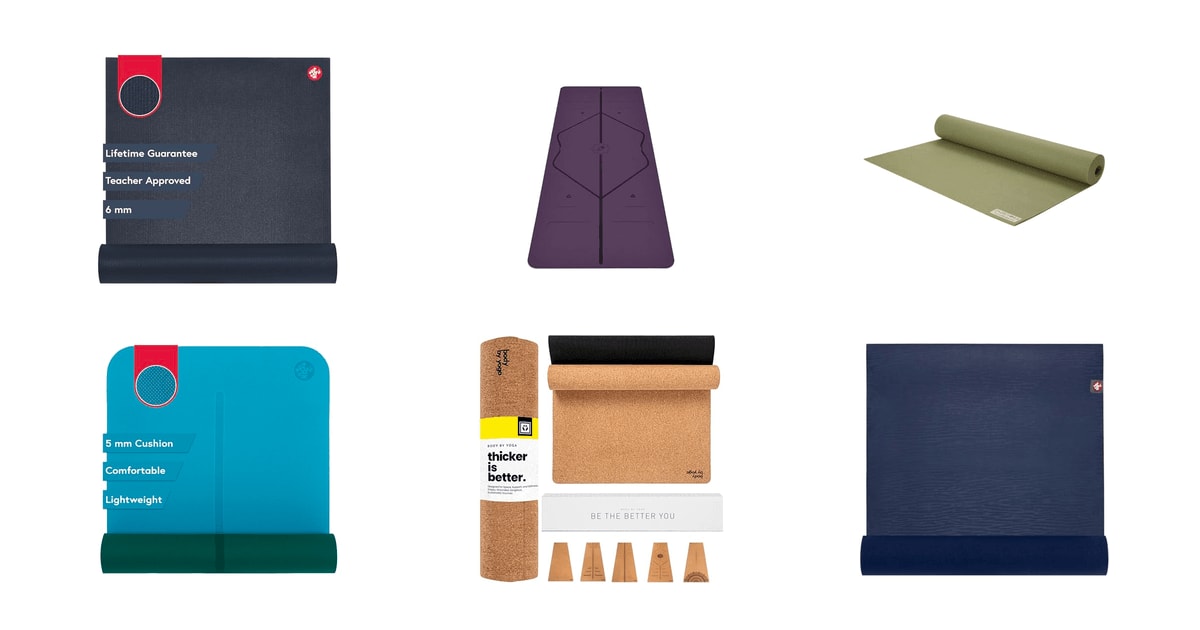
A yoga mat is one of the few pieces of fitness gear you touch with your whole body. You kneel on it, sweat on it, press your palms into it while upside down. So the things that matter aren't the ones on the box. They're grip when your hands get slick, cushion under your kneecaps on a hardwood floor, and whether the surface still holds up after a couple of years of daily use. Get those three right and you'll stop thinking about the mat entirely, which is the whole point.
Here's the honest part: no mat does everything. The ones with the best wet grip tend to be heavy natural rubber, and hauling seven pounds to a studio ten blocks away gets old. The featherweight travel mats give you almost no cushion. Open-cell surfaces feel plush but drink up sweat and need real cleaning; closed-cell surfaces wipe down in seconds but can feel slick until they break in. Cheap PVC mats grip fine on day one and start flaking within a year or so. You're picking which compromise you can live with.
We looked at material, thickness, dimensions, weight and what owners say about grip after months of use. We think that the Manduka PRO is the best yoga mat for most people, and that the Liforme Original is the one to buy if you sweat hard or want alignment markers to guide your poses.
Everything we recommend

Dense cushion and a mat you likely won't replace

Best wet grip, plus markers that teach you alignment

Grippy natural rubber, and a tree planted for every mat

Natural rubber and real grip in a mat you can carry
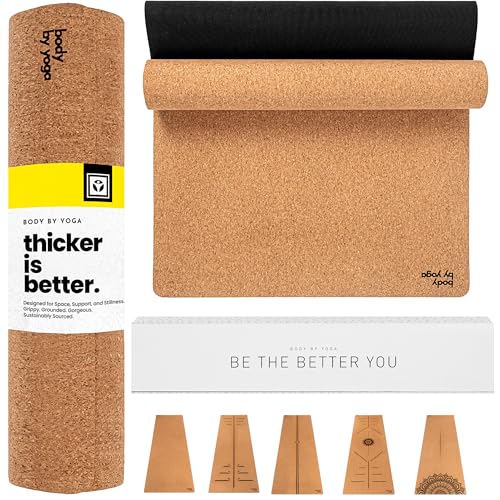
Huge, cushioned cork that grips better as you sweat
At a glance
| Product | Thickness | Material | Price | |
|---|---|---|---|---|
| Manduka PRO Yoga MatTop pick | 6mm | PVC | $144 |
| Liforme Original Yoga MatAlso great | 4.2mm | — | $165 |
| JadeYoga Harmony Yoga Mat- Durable & ThickRunner-up | 3/16 in | Rubber | $126.50 |
 | Manduka Begin Yoga Mat 68" - 5mmAlso consider | 5mm | TPE Foam | $52.70On sale |
| Luxury Cork Yoga Mat - Non SlipUpgrade pick | 0.26in | — | $89.99 |
| MandukaBudget pick | 4mm | Rubber | $71.40On sale |
How we picked
Grip, wet and dry. We compared published grip evaluations from OutdoorGearLab, Yoga Journal and the Good Housekeeping Institute against owner feedback about slipping. A mat had to hold up for someone with damp hands, not just dry ones.
Cushion and stability. We weighed thickness against how firm the surface stays under load, using Verywell Fit's 6mm guidance for joint pain as the threshold for anything we'd recommend to sore knees. Squishy is not the same as supportive.
Durability over years. We looked for flaking, peeling and compression in long-term reviews and in owner reports past the one-year mark. Consumer Reports found premium mats degraded roughly 60% less than budget ones after a year of daily use.
Materials and sourcing. We read spec sheets for certifications like OEKO-TEX and FSC, and noted PVC versus natural rubber versus cork, since decomposition estimates range from decades for rubber to centuries for PVC.
Size and weight. We checked listed dimensions against the 68-by-24-inch standard and flagged anything wider or longer, then compared weights to see which mats you could realistically carry to a studio.
Top pick
Dense cushion and a mat you likely won't replace
Manduka PRO Yoga Mat
The PRO is a 6mm closed-cell PVC mat with a lifetime guarantee and a reputation for outlasting everything around it. It's firm rather than plush, heavy rather than portable, and it's the mat most yoga teachers seem to end up on.
$144fromAmazonThe PRO is dense in a way most mats aren't. At 6mm it gives your knees real padding, but it doesn't sink under you in warrior poses the way soft foam does. That combination is rare. Owners describe the balance the same way over and over: kneeling doesn't hurt, and standing still feels grounded. If you've ever wobbled on a squishy mat during tree pose, you'll notice the difference in the first session.
The surface is closed-cell, which means sweat sits on top instead of soaking into the mat body. Practically, that makes cleanup a wipe-down rather than a project, and it keeps the mat from developing the funk that open-cell rubber can pick up over a year. Manduka specifies OEKO-TEX certified PVC made in an emissions-free German facility, and the mat is latex-free. It's also the reason the PRO tends to smell like nothing after the first few weeks.
It needs a break-in period, and nobody hides this. Straight out of the box the surface can feel slick, and owners consistently describe a few weeks of use before the grip settles in. Some scrub it with salt to speed things up. Once it's broken in, though, the texture stays put — long-term reviews at Wirecutter found no visible surface flaking or edge peeling after a year-plus of daily use, which is the exact failure mode that kills mid-range mats.
Buy this if you plan to practice for years, not months. Consumer Reports found premium mats showed roughly 60% less surface degradation after a year of daily use than budget mats. The PRO backs that with a lifetime guarantee, and owners routinely report keeping theirs for a decade or more. Spread over that long, the upfront cost stops looking like a splurge and starts looking like arithmetic.
At 71 by 26 inches, it's two inches wider than the standard mat, which helps if you're broad-shouldered or your hands wander in wide-legged poses. It's not the longest option here. If you're over six feet, look at the longer sizes Manduka offers or at one of the 74-plus-inch mats below.
Flaws but not dealbreakers
It weighs 7.5 pounds. That's fine if the mat lives in your living room and heavy if you carry it up subway stairs three times a week. Plenty of people buy the PRO for home and something lighter for the studio.
It's PVC, which is a real drawback if landfill impact matters to you — estimates put PVC decomposition at 500 to 1,000 years, versus 5 to 80 years for natural rubber. Manduka's certifications address what's in the mat, not what happens at the end of its life. The counterargument is that one PRO can replace ten cheap mats, but if you want a plant-based material, the Jade or the eKO Lite are the better fits.
The break-in period frustrates some buyers, and if you run hot and sweat heavily, owners generally find the PRO works better with a towel on top than on its own.
Manduka guarantees the PRO to last a lifetime of practice.
Also great
Best wet grip, plus markers that teach you alignment
Liforme Original Yoga Mat
The Liforme pairs a polyurethane top layer that grips harder as it gets damp with 10 etched alignment markers designed alongside physiotherapists. It's wider and longer than a standard mat, and it's the one to get if you sweat.
$165fromAmazonIf you've ever slid forward out of downward dog with wet palms, this is the mat that fixes it. The polyurethane surface behaves opposite to how you'd expect — moisture makes it tackier, not slicker. The Good Housekeeping Institute reported that the Liforme held consistent grip through 500 simulated repetitions of a sweaty downward dog with no measurable increase in slip. Owners who do hot vinyasa and pour sweat say the same thing in plainer words: they don't slide, and they don't need a towel.
The alignment system is more useful than it sounds. Ten etched markers, developed with physiotherapists, show you where your hands and feet belong. If you practice at home without a teacher watching, that's genuinely helpful — you stop guessing whether your feet are square in warrior two. Experienced practitioners sometimes find the lines busy or distracting, so it's a feature you'll either lean on or learn to ignore.
It measures 72.8 by 26.8 inches at 4.2mm. That's nearly three inches wider than the 24-inch industry standard, which matters more than the number suggests during flowing sequences where your weight shifts sideways. The extra length helps taller practitioners keep their heels on the mat in plank. The trade-off is thickness: 4.2mm is moderate cushion, not therapeutic cushion.
It's an eco-polyurethane and natural rubber build, PVC-free, and a carrying bag comes with it. At 5.5 pounds it's lighter than the PRO but still substantial — owners who commute describe the weight as noticeable but manageable, and several say it feels like a fair trade for the grip.
Flaws but not dealbreakers
Polyurethane surfaces wear faster than dense PVC. This isn't a mat with a lifetime guarantee behind it, and heavy daily use will eventually dull the top layer. Consider it a mat you replace after several years rather than one you keep forever.
Light colors show everything. Owners report that pale versions pick up visible marks from sweat and hands, and darker colors hide wear far better. If you're deciding between shades, that's the deciding factor.
It's among the most expensive mats here, and the alignment markers are the main thing you're paying extra for beyond the grip. If you already practice with a teacher, that value drops.
Runner-up
Grippy natural rubber, and a tree planted for every mat
JadeYoga Harmony Yoga Mat- Durable & Thick
The Jade Harmony is open-cell natural rubber, made in the USA, and it grips about as well as anything short of polyurethane. Jade plants a tree for every mat sold — over two million so far — which is why eco-minded buyers keep landing here.
$126.50fromAmazonDry grip is the Harmony's whole argument. OutdoorGearLab gave it a 10 out of 10 for grip in its yoga mat evaluation, the top score in the roundup, crediting open-cell rubber's surface texture for holding up over six-plus months. Yoga Journal's evaluations similarly found natural rubber outpacing standard PVC by 35 to 40% in wet-condition traction. In practice, owners describe going from sliding on a department-store mat to sticking immediately.
The open-cell texture is the reason it's grippy from the first minute — no break-in, no salt scrub. But open-cell means porous, and porous means sweat goes in rather than sitting on top. If you drip heavily, the Harmony can get slick in exactly the spots you need it most, and a few owners report that failure directly. Cleaning has to be more thorough than a quick wipe.
It's 4.6 pounds and 3/16 of an inch thick, which lands it between the PRO's density and a travel mat's thinness. The 74-inch length is the longest of the Manduka-class options here, and at 24 inches wide it's standard — narrower than the PRO or the Liforme. Jade sources rubber tapped from trees, and the mats contain no PVC, phthalates or heavy metals.
New natural rubber smells like rubber. Owners handle this by airing the mat out for several days before first use, and the odor fades. It's worth knowing before you unroll it in a small apartment.
Flaws but not dealbreakers
Natural rubber means latex, so it's off the table if you have a latex allergy. That's not a flaw so much as a hard stop for some people.
Rubber wears faster than PVC. Expect a few years rather than a decade, and expect the surface to shed a little as it ages. The tree-planting and materials story is the reason plenty of buyers accept that trade.
It absorbs sweat, so hot yoga practitioners generally need a towel on top — which somewhat undercuts the point of buying it for grip.
Budget pickOn sale
Natural rubber and real grip in a mat you can carry
Manduka
The eKO Lite is 4mm of natural tree rubber with a closed-cell surface and a rippled catch-grip texture. It's the lightest full-size rubber mat Manduka makes, and it costs meaningfully less than the PRO while sharing the build quality.
$71.40fromAmazonList priceThis is the mat for someone who wants Manduka durability without the PRO's weight or price. It's 5.2 pounds and 4mm thick, made from natural tree rubber rather than PVC. The closed-cell construction is the interesting bit — most rubber mats are open-cell, so the eKO Lite resists moisture soaking in the way the Harmony can't, while still being a plant-based material.
Grip is textured rather than sticky. The rippled surface catches your hands instead of gluing to them, which owners describe as confidence-inspiring in flows and steady holds alike. It works well in a normally heated room. Push into a genuinely sweaty practice, though, and the reports get mixed — some owners find it slips once they're really wet, and a towel becomes the fix.
At 4mm, the cushion is moderate. If you've been on a 6mm mat, you'll feel the floor more, and knee-heavy sequences on hardwood will remind you. Verywell Fit recommends at least 6mm for anyone with knee, wrist or hip trouble, noting that 4mm on hardwood transfers up to 30% more impact force during weight-bearing poses. So this isn't the joint-pain pick.
It's 71 by 24 inches — full length, standard width. Rubber needs a bit of care: keep it out of direct sun, skip soap, and use a rubber-specific spray. Owners who follow that report mats still in shape after years.
Flaws but not dealbreakers
Sweaty practices are its weak spot. Multiple owners say it grips well until they're actually dripping, and then it doesn't. Hot yoga people should look at the Liforme or a cork mat instead.
Natural rubber carries a smell out of the box and rules the mat out for latex-sensitive people. The odor fades with airing, the allergy doesn't.
4mm is thinner than the specs make it sound once you're kneeling on a hard floor. Several owners say they wish they'd sized up.
Upgrade pick
Huge, cushioned cork that grips better as you sweat
Luxury Cork Yoga Mat - Non Slip
This Body By Yoga cork mat runs 80 by 26 inches at 0.26 inches thick — larger and thicker than nearly anything else here. Cork grips harder when it's wet, resists odor naturally, and this one adds optional alignment lines.
$89.99fromAmazonCork's trick is that moisture helps it. As your hands get damp, the surface gets grippier, which is the opposite of what PVC and standard rubber do. Yoga Journal's evaluations found cork improved the most as moisture increased. That makes it a rare mat you can use for hot yoga without a towel, and owners with permanently sweaty palms are the ones who rave loudest about it.
The size is the other reason to buy it. At 80 by 26 inches, your whole body fits with room left over — no more heels hanging into the floorboards during a long savasana. Plus-size and taller practitioners specifically call out feeling secure on it, including in poses where a thinner mat used to stretch or shift underneath them.
It's genuinely thick at 0.26 inches, backed with natural rubber, and the cork layer is thicker than the sandpaper-thin veneer some cork mats use. Verywell Fit's 6mm-minimum guidance for cranky knees and wrists applies here — this clears it. If kneeling has been the reason you skip poses, this mat changes that calculation.
Cork also handles smell on its own. Well+Good's 30-day odor evaluation found cork surfaces scored highest of any material category, which comes down to suberin in cork naturally discouraging bacteria and fungus. No antimicrobial chemical treatment required. Wiping the surface with water is usually enough.
Flaws but not dealbreakers
It weighs 10 pounds. This is a mat that stays where you put it, and not by choice — one owner who commutes to studios called the weight the dealbreaker. Buy it for home.
Cork feels different underfoot than rubber or PVC. It's firmer and slightly textured, and some people never warm to it. If you love the soft-tacky feel of a rubber mat, this will read as unfamiliar for a while.
It's a large, thick mat, which means it's bulky to roll and store. A closet shelf that fit your old mat may not fit this one.
Who this is for
This guide is for anyone buying a mat they'll actually practice on regularly — a first mat, or a replacement for one that's started shedding. If you're new, a mid-range mat will serve you better than an entry-level one, mostly because slipping is discouraging and a grippy surface removes one reason to quit. If you sweat heavily, skip standard PVC entirely and go to polyurethane or cork. If your knees hurt on hardwood, prioritize thickness over everything, then check grip second.
You probably don't need to upgrade if your current mat still grips and hasn't started flaking or thinning at the hands and feet. And if you mostly do HIIT or floor strength work rather than yoga, a thicker exercise mat is a better fit than anything here — yoga mats are built for stability, which means they're firmer than what you want under burpees. We cover full-size mats for standing practice; we don't cover travel mats under 2mm, mat towels, or blocks and straps.
How we picked
Grip: the mat had to stay put with damp hands, judged against published grip evaluations and owner reports of slipping rather than marketing claims. Cushion: thickness only counts if the surface stays stable under load, so we favored dense mats over soft ones and used 6mm as the bar for joint-pain relief. Durability: we looked for flaking, peeling and thinning past the one-year mark, since that's the failure mode that sends people back to the store. Materials: we read spec sheets for OEKO-TEX and FSC certifications and weighed PVC against natural rubber and cork on both feel and end-of-life impact. Size and weight: anything wider or longer than the 68-by-24-inch standard got noted, and so did every pound you'd have to carry.
Other yoga mats worth considering
If you want a cushioned first mat that's easy to carry: The Manduka Begin Yoga Mat 68" - 5mm ($52.70) — The Manduka Begin is 5mm of TPE foam at just 2.1 pounds, with a center alignment stripe and a reversible two-color design. That combination — real cushion, almost no weight — is unusual, and it's why this works so well as a starter mat or a kid's mat. Owners like the thickness and report it holding shape over years of regular use. What you give up is grip under sweat: foam gets slippery, and owners are clear that a heated class needs a towel. It also has a mild smell at first that wipes away in a few sessions. For gentle home practice and travel, though, it's hard to beat at the weight.
The competition
These are the other mats our research surfaced, not a survey of everything sold. They're worth knowing about because each one wins on a specific point, even if it lost to a pick overall.
Care and cleaning
Match the cleaning to the material, because the wrong approach ruins a good mat. Closed-cell surfaces like the PRO and the eKO Lite just need a wipe with a damp cloth and a mat-specific spray; skip soap on natural rubber, since it breaks the surface down. Open-cell rubber like the Harmony absorbs sweat, so it needs a more thorough wipe after sweaty sessions and real drying time before you roll it. Cork wipes clean with plain water and resists odor on its own. Never soak a mat, put it in a washing machine, or hose it down. And keep rubber out of direct sunlight — UV degrades it faster than use does. Store any mat rolled loosely in a cool, dry spot rather than crammed under something heavy, which creates permanent creases.
Questions we get
What thickness yoga mat should I get for bad knees?
Go to 6mm or more. Verywell Fit recommends at least 6mm for anyone with knee, wrist or hip issues, noting that a 4mm mat on hardwood transfers up to 30% more impact force during weight-bearing poses. But thickness alone isn't enough — a soft, squishy 6mm mat makes balance poses harder. Look for dense cushion, like the Manduka PRO or a thick cork mat, rather than plush foam.
Are expensive yoga mats actually worth it?
If you practice regularly, yes. Consumer Reports found premium mats showed roughly 60% less surface degradation after a year of daily use than budget ones, and mats like the Manduka PRO routinely last a decade or more. Replacing a cheap mat every year or two adds up fast. If you practice once a week or you're still deciding whether yoga sticks, start cheaper.
What's the best yoga mat for hot yoga?
Look for polyurethane or cork, both of which grip harder as moisture increases. The Liforme Original held consistent grip through 500 simulated sweaty downward dogs in Good Housekeeping Institute evaluations, and cork mats grip better wet than dry. Standard PVC and open-cell rubber go the other direction and get slick. If you already own one of those, a grippy mat towel on top is the workaround.
What's the difference between PVC, natural rubber and cork?
PVC is durable, easy to clean and usually closed-cell, but it takes an estimated 500 to 1,000 years to break down in a landfill. Natural rubber grips better — Yoga Journal's evaluations put it 35 to 40% ahead of PVC in wet traction — and biodegrades within 5 to 80 years, but it's heavier, smells at first and contains latex. Cork resists odor naturally thanks to its suberin content and grips harder when wet, though it feels firmer underfoot than either.
How long should a yoga mat last before I replace it?
Budget PVC mats typically show visible wear within 12 to 18 months of regular use. Premium mats can go a decade, and the Manduka PRO carries a lifetime guarantee. The signs to watch for are flaking bits on your floor, thin worn patches where your hands and feet land, and grip that no longer comes back after cleaning.
Can I use a yoga mat for Pilates or HIIT?
For Pilates, yes — most yoga mats work fine, and a 5mm or 6mm one is comfortable for mat work. HIIT is a different story. Yoga mats are firm on purpose, for stability in standing poses, so they don't absorb much impact from jumping. If you're doing plyometrics regularly, a dedicated thicker exercise mat is the better tool.
Why you should trust us
For this guide:
- We read manufacturer spec sheets for every mat here, comparing listed dimensions, thickness, weight and material certifications against the claims in the marketing copy.
- We reviewed published grip and durability evaluations from OutdoorGearLab, Yoga Journal, Consumer Reports, Good Housekeeping Institute, Well+Good and Verywell Fit.
- We read through owner feedback for recurring themes — break-in periods, sweat performance, odor and how each surface held up past the first year.
- We read owner reviews on every listing, weighted toward the critical ones, because that is where the recurring failures show up.
- We have a systematic way of automatically fetching the latest prices, so the numbers on this page stay current.
- This is a research-focused guide, so the team may not own every product listed — though we often do own the top winners, which gives us extra context for the recommendations.
- We don't accept free products, and the retailer commission never changes which product we recommend.
Sources
The Best Yoga Mats, Tested and Reviewed — Wirecutter (NYT), Wirecutter
Best Yoga Mats of 2026 — Yoga Journal, Yoga Journal
Best Yoga Mats, Tested by Fitness Experts — Self Magazine, Self Magazine
Best Yoga Mats Reviewed — Verywell Fit, Verywell Fit
Best Yoga Mats — Good Housekeeping Institute Testing, Good Housekeeping
Yoga Mat Buying Guide — Consumer Reports, Consumer Reports
Best Yoga Mats — Well+Good, Well+Good
Yoga Mat Materials Compared: PVC, Rubber, Cork, TPE — Shape, Shape Magazine
The Best Yoga Mats for Every Practice — OutdoorGearLab, OutdoorGearLab
Manduka PRO Product Specifications — Manduka, Manduka (manufacturer)
Liforme AlignForMe System — Liforme, Liforme (manufacturer)
Jade Yoga Environmental Impact Report — Jade Yoga, Jade Yoga (manufacturer)
Amazon product listings and owner reviews for all 6 products
Manufacturer specification pages for each product
Some passages in this guide may be paraphrased with AI help. Prices are refreshed automatically.
More like this.
Continue exploring health reviews and recommendations.

The Best Yoga Blocks and Props for Beginners
A yoga block is just a brick you can't fall through, and that's the whole point. When your hamstrings won't let your hand reach the floor in Triangle, a…

The Best Yoga Wheels
A yoga wheel is a simple thing: a rigid hoop with padding wrapped around the outside. You lie back over it, let it hold the arch of your spine, and…

The Best Yoga Blocks
A yoga block is the least glamorous thing in your gear bag and probably the most useful. It brings the floor up to your hands in a standing forward fold.…

The Best Grounding Mats
Most of us spend our days on floors that don't conduct anything. The EPA puts the average American's indoor time at roughly 90 percent, which means bare…

The Best All-Weather Car Floor Mats
Winter doesn't stay outside. Salt, slush, sand and gravel ride in on your boots and grind into the carpet every time you get in. A good all-weather mat…

The Best Garage Floor Containment Mats
Winter doesn't stay outside. Every time you pull into the garage, your tires and wheel wells carry in slush, road salt and grit, and it all melts into a…