The Best Stationary and Spin Bikes
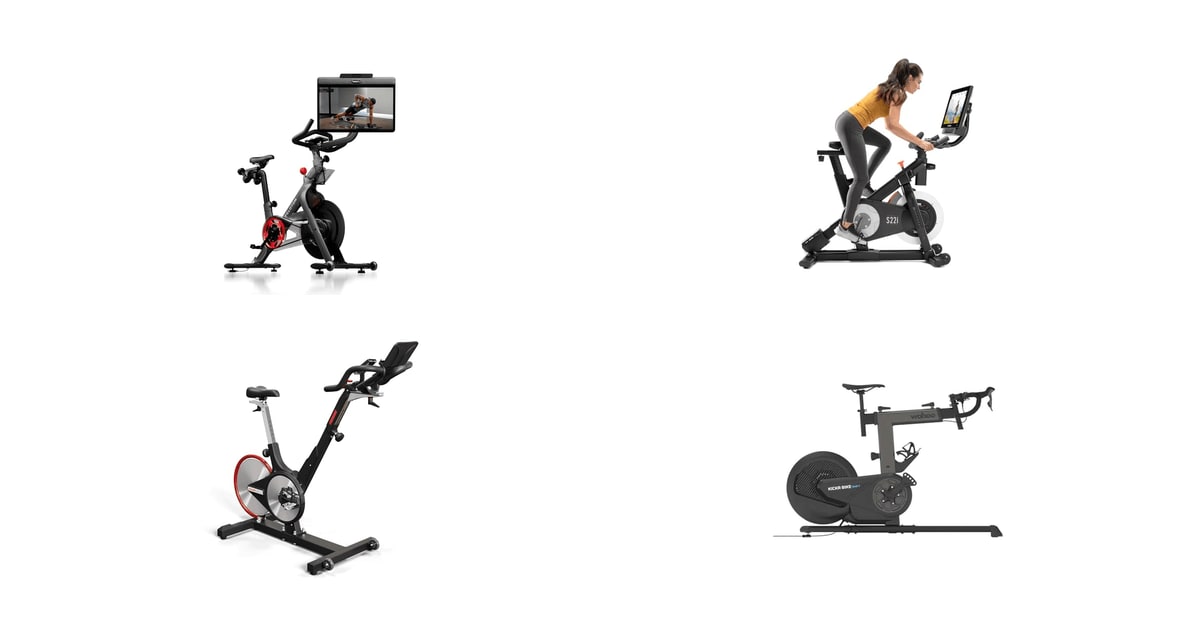
A stationary bike only helps you if you actually get on it. That sounds obvious, but it's the thing most buying advice skips. The bike that wins isn't the one with the biggest flywheel number — it's the one that fits your body, fits your room, and gives you a reason to clip in at 6 a.m. on a Tuesday in February. Some people need an instructor shouting encouragement. Others need a power number to chase. A few just want to pedal while the news is on.
Here's the part nobody advertises: almost every bike in this category asks you to keep paying after you buy it. Subscriptions unlock the classes, the coached routes, the automatic resistance changes. Skip the subscription and most of these bikes drop to a manual dial and a stopwatch. They still work — you can absolutely ride one for free forever — but the motivation engine goes quiet. Owner complaints across brands cluster around software and support far more than around the metal itself.
We also can't ignore assembly and delivery. These are heavy machines, they arrive in big boxes, and owner reports are full of bent legs, crushed cartons and long waits for a replacement part. That's worth planning around, whichever bike you pick. We think that the Peloton Exercise Cross Training Bike+ is the best stationary bike for most people, and that the Schwinn Fitness IC4 Indoor Cycling Bike is the one to buy if you'd rather spend less on hardware and choose your own app.
Everything we recommend

The most polished class experience, if you'll pay monthly

Most of the ride quality for a fraction of the outlay

Studio-grade metal that will outlive every app you try

For riders who train by the numbers and race virtually
At a glance
| Product | Resistance Type | Weight | Price | |
|---|---|---|---|---|
| Peloton Exercise Cross Training Bike+Top pick | — | 187 lbs | $2,695 |
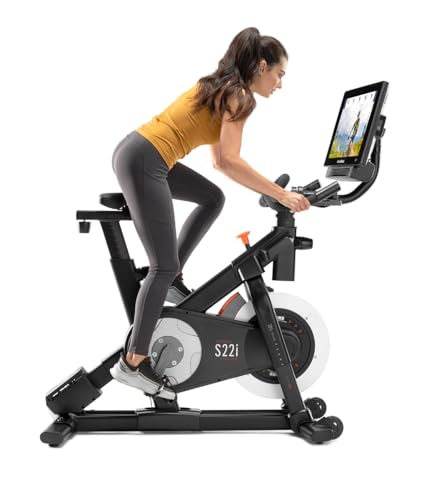 | NordicTrack Commercial S22i Studio CycleAlso consider | SMR Magnetic Resistance | 3 lbs | $1,189 |
| Keiser M3i Studio Plus Indoor BikeUpgrade pick | — | 91 lbs | $3,490 |
| WAHOO KICKR BIKE SHIFT INDOOR TRAINERAlso great | — | 77.1617917 lbs | $2,103.48On sale |
| Schwinn Fitness IC4 Indoor Cycling BikeBudget pick | Magnetic Resistance | 112 lbs | $795.99 |
How we picked
Ride feel and resistance. We compared flywheel design, resistance type and adjustment granularity across spec sheets, and cross-checked those numbers against how owners describe the pedal stroke. Magnetic resistance was a requirement; friction systems wear out and get loud.
Noise in a real home. Apartment riders and early risers are the majority of the audience here, so we weighted quiet operation heavily. Owner feedback about waking a partner or a downstairs neighbor was more useful than any manufacturer claim.
Software you can leave. We looked at whether a bike still does something useful with no subscription, and whether it broadcasts standard Bluetooth or ANT+ data. Being locked to one company's content is a real risk over a decade of ownership.
Fit and adjustability. Four-way seat adjustment plus handlebar height is the floor for comfort past 30 minutes. We favored bikes where two people of different heights can share without tools.
Delivery and support. Published reviews rarely cover this, so we leaned on owner reports about damaged shipments, missing setup service and warranty response times. It changed how we ranked more than one bike.
Top pick
The most polished class experience, if you'll pay monthly
Peloton Exercise Cross Training Bike+
This is the connected bike that makes the classes feel like the point, not an add-on. Resistance follows the instructor's cues on its own, the big screen swivels for floor work, and the ride is quiet enough for a shared apartment wall.
$2,695fromAmazonIf instructor energy is what gets you on the bike, nothing else here comes close. Peloton's class library is enormous and it keeps growing — live rides, on-demand rides, beginner ramp-ups, power-zone programs for people training seriously. You're unlikely to run out. Published reviews across the fitness press consistently rank the instruction and production quality at the top of the category, and that's the whole reason this bike costs what it does.
The hardware detail that matters most is auto-follow resistance. When an instructor calls a target, the bike sets it for you. You don't grope for a dial mid-sprint or spend the class second-guessing whether you're actually at the number she said. It sounds small. In practice it's the difference between following a class and just riding along next to one.
The screen swivels, which turns the bike corner into a workout corner. Step off, rotate it, and you're doing strength or stretching from the same spot. Peloton has leaned further into this with movement tracking and rep counting on the newer model. If you live somewhere without room for a bike and a separate setup, that dual use is genuinely practical.
Noise is a real strength. The magnetic resistance system runs quietly enough that owners routinely ride early without waking anyone, and that shows up again and again in owner feedback. Combine that with a heavy, planted frame and you get a bike that doesn't creep across the floor during a standing climb.
Assembly is more approachable than the size suggests. Owners describe a long but clearly documented process with the tools included, and several handled it alone. Delivery-with-setup is offered but doesn't always materialize as promised, so don't build your weekend around it.
Flaws but not dealbreakers
The membership isn't optional in any meaningful sense. Without it you get a basic ride mode with your speed, cadence and output on screen — fine, but you've bought a very expensive dumb bike. Add the monthly fee to your two-year math before you order, not after.
You're in Peloton's world and only Peloton's world. There's no native path to Zwift or TrainerRoad, and the power figures aren't independently certified, so serious structured training doesn't transfer cleanly. Riders who care about that should look at the Wahoo or the Keiser.
A handful of owners report arriving units with a loose plug or a screen that won't wake, and getting that sorted through a third-party seller is slower than going through Peloton's own service network. It's not common, but it's the failure mode to know about.
Budget pick
Most of the ride quality for a fraction of the outlay
Schwinn Fitness IC4 Indoor Cycling Bike
The IC4 gives you a heavy flywheel, fine-grained magnetic resistance and pedals that work with your sneakers or your cycling shoes. You supply the screen and pick whichever app you like, which keeps your options open.
$795.99fromAmazonFor most first-time buyers, this is the sensible place to start. You get a 40-pound flywheel and 100 micro-adjustable resistance levels, which is more granularity than plenty of pricier bikes offer. The pedal stroke feels smooth and road-like, and owners describe the bike as sturdy and quiet enough for daily use in a shared house.
The dual-sided pedals deserve more credit than they get. One side takes SPD cleats, the other is a toe cage. So you can start in running shoes tomorrow, decide six months later that you want proper cycling shoes, and never buy a new pedal. If two people of different commitment levels share the bike, this alone is worth it.
App flexibility is the real argument here. Bluetooth means you can ride Peloton's app-only tier, try Zwift, use Schwinn's own JRNY, or bounce between them until something sticks. Nothing about the hardware forces a decision. If a content company changes its pricing, you shrug and switch.
It's also the bike people seem to keep. Owner feedback skews strongly positive over long stretches of ownership, with the recurring notes being quiet operation and a ride that holds up. That consistency across a very large base of buyers is the strongest signal in this whole guide.
Flaws but not dealbreakers
The resistance numbers don't map to calibrated watts. If you want to run structured power-zone workouts and trust the numbers, this isn't the bike — the readings are repeatable for you but not comparable to anything else.
There's no screen, so your phone or tablet does all the work on a handlebar mount. And the stock seat and pedals draw the most consistent complaints from owners; both are cheap to swap and many people do exactly that. Bottle holders are also awkward for tall bottles.
Shipping damage comes up more than you'd like. Bent frame legs and crushed boxes appear repeatedly in owner reports. Unbox and inspect the legs before you start assembling anything.
Upgrade pick
Studio-grade metal that will outlive every app you try
Keiser M3i Studio Plus Indoor Bike
The Keiser M3i is the bike that gyms buy because it survives constant use. It's exceptionally quiet, it broadcasts real power data to any training app, and it doesn't care whether any subscription service still exists in ten years.
$3,490fromAmazonYou've probably ridden one already without noticing the badge. Keiser bikes fill group cycling studios, and the M3i is that same machine sized for a spare room. Everything on it is built for a machine that gets ridden hard by strangers all day — which is a much harsher life than yours will give it.
The lack of a screen is a feature, not an oversight. The M3i sends calibrated power over Bluetooth and ANT+, so it talks to Zwift, TrainerRoad, Rouvy or whatever comes next. Mount your tablet, pick an app, cancel it, pick a different one. Your hardware never becomes a paperweight because a content company changed direction.
It's the quietest bike here. The magnetic system produces very little sound, and the pedal-driven generator means there's no battery to replace and no plug to find — your legs power the display. For anyone riding at 5 a.m. next to a sleeping partner, that combination is hard to beat.
The 8-pound flywheel throws people, because heavier is supposed to mean smoother. Keiser's is precision-balanced and positioned at the rear, and experienced riders generally report the stroke feels excellent once they stop expecting heavy-flywheel momentum. It is a different sensation, though, and worth trying in a studio if you can.
Flaws but not dealbreakers
You're buying hardware, not an experience. There's a small LED display and a device mount, and that's it. Every bit of guided content comes from a subscription you arrange yourself, which means the total cost isn't as far below a connected bike as the hardware suggests.
One owner report notes a screech traced to clipless pedal engagement rather than the bike itself — a reminder that this listing has very little feedback behind it compared with the mass-market options. Parts and authorized service can also be harder to track down than for the big consumer brands.
Also greatOn sale
For riders who train by the numbers and race virtually
WAHOO KICKR BIKE SHIFT INDOOR TRAINER
The KICKR Bike Shift is a training instrument shaped like a spin bike. Virtual shifting mimics your outdoor drivetrain, the geometry adjusts across five points, and Zwift controls resistance while the bike feeds power back.
$2,103.48fromAmazonList priceIf you already race or train with power, this is the one that speaks your language. You program the gearing to match your outdoor bike — Shimano, SRAM or Campagnolo ratios, your actual cassette — and shifting indoors feels like shifting outdoors. Nothing else in this lineup attempts that, and for off-season training it means the work you do inside transfers cleanly.
The fit system is the other half of the argument. Five adjustment points let you dial in stack, reach and setback to match your road, time-trial or tri position, guided by a setup app. If you've paid for a professional bike fit, you can reproduce it here instead of guessing.
Owners consistently describe it as effectively silent, with a belt drivetrain that responds fast when the gradient changes on screen. Several also praise the lateral feel out of the saddle, which is where cheaper smart bikes tend to feel dead and stiff.
The bidirectional link with Zwift and similar platforms is the whole point. The app sets resistance to match the virtual hill while the bike reports power and cadence back. You're not approximating a ride; you're doing the work the course demands.
Flaws but not dealbreakers
Quality control is the reason this isn't a higher pick. A meaningful share of owner reports describe units arriving broken or grinding from the first pedal stroke, and several describe slow, frustrating warranty support afterward. When it works, people love it. Getting to that point isn't guaranteed.
There's no screen and no built-in content, so a laptop or tablet plus an app subscription is mandatory. It's also considerably more complicated than a spin bike — connection troubleshooting comes up repeatedly from riders who just wanted to pedal.
It's big, awkward to move even though it isn't especially heavy, and overkill for anyone whose goal is three sweaty classes a week.
Who this is for
This guide is for anyone putting a serious indoor cycling bike in a home — a spare room, a garage, a corner of the bedroom. If you want live classes and someone telling you what to do, or you're a road cyclist who needs to keep training when it's dark at 4:30 p.m., there's something here for you. It's also for the person who tried a gym membership twice and knows the friction of leaving the house is what killed it.
It's not for everyone, though. If you have knee or back issues, or you want to pedal gently while reading, a recumbent or upright comfort bike suits you better — spin bikes put you in a forward-leaning position with a narrow saddle, and that's the point. We also don't cover the most basic tier of indoor bikes; at that level you get lighter flywheels, cruder resistance and no meaningful app connection, and people tend to replace them within a year or two.
How we picked
We started from what actually determines whether a bike still gets ridden a year later. Ride feel: magnetic resistance with enough adjustment steps to make small progressions, and a flywheel — heavy or precision-balanced — that carries the pedal smoothly through the bottom of the stroke. Noise: quiet enough for a shared wall or a sleeping household, since that's the constraint most home riders actually live with. Software freedom: what the bike does with no subscription, and whether it broadcasts standard Bluetooth or ANT+ power so you're not stranded if a platform changes. Fit: four-way seat adjustment plus handlebar height at minimum, and a narrow enough Q-factor to stay comfortable past half an hour. Delivery and support: how often owners report damage in transit and how quickly the brand makes it right.
Other stationary and spin bikes worth considering
If you want to feel the hill: The NordicTrack Commercial S22i Studio Cycle ($1,189) — The NordicTrack Commercial S22i Studio Cycle physically tilts, from a comfortable descent to a steep alpine grade, and during iFIT-coached outdoor routes the incline and resistance both change on their own to match the real terrain. Nothing else here does that, and for anyone training for a hilly ride it's a genuinely different experience. The rotating 22-inch screen and 10,000-plus workout library are strong too. We held it back from a pick for two reasons: owner feedback is noticeably more divided than for the others, with recurring complaints about software updates breaking things and about support, and the marquee features are locked behind an iFIT subscription. Without it, an expensive bike becomes a manual one.
The competition
This is what our research surfaced, not a census of every indoor bike sold. Plenty of capable machines from smaller brands and budget lines aren't represented here, and a few well-regarded studio bikes never make it to mainstream retail at all. Everything in this lineup we considered seriously; the ones above earned a recommendation for a specific kind of rider.
Setup and maintenance
Open the box before you clear your schedule. Damaged legs and crushed cartons are the single most common owner complaint across every brand here, and it's much easier to start a return before you've half-assembled the thing. Give yourself an hour or two and a second pair of hands for lifting the frame upright. Once it's together, level it on the floor adjusters — a bike that rocks will feel rough no matter what the flywheel weighs. After that, upkeep is light: wipe sweat off the frame and handlebars after every ride, because salt corrodes bolts and screen bezels faster than anything else. Check the seat and handlebar clamps monthly and snug them if they've loosened. If you hear a click or screech, check your pedals and cleats first; that's usually the culprit, not the bike.
Questions we get
What's the difference between a spin bike and a regular stationary bike?
A spin bike copies the geometry of a road bike: forward-leaning posture, narrow saddle, weighted flywheel, and resistance you dial in yourself. An upright or recumbent stationary bike sits you upright on a wider seat with preset console programs. Spin bikes are better for hard intervals, class-based riding and anyone who cares about matching their outdoor fit. Comfort bikes are better for rehab and easy steady-state pedaling.
Can I use one of these without a subscription?
Yes. Every bike in this guide works as a plain fitness machine with no membership — you set the resistance and ride. The Bluetooth models will also pair with free apps like Apple Health or Garmin Connect for basic numbers. What you lose is the classes and the automatic resistance, which is the thing most people say keeps them consistent.
Is Peloton worth it compared to a cheaper bike?
It depends entirely on whether instructor-led classes are what gets you riding. If you'll ride five times a week and the live energy is your motivation, the per-session cost drops fast compared with a studio membership. If you prefer self-directed training or you'll realistically ride twice a week, a Schwinn IC4 with an app-only subscription gets you similar fitness for far less over two years.
How heavy should the flywheel be?
For a conventional spin bike, roughly 38 to 45 pounds gives the smoothest, most road-like stroke. Below about 30 pounds the ride can feel choppy at low resistance. But flywheel weight isn't the whole story — the Keiser M3i uses an 8-pound precision-balanced wheel and experienced riders rate its feel very highly. Bearing quality and overall balance matter just as much.
Which bike is best if I'm over 300 pounds?
The Keiser M3i is the safest bet, because it's built to commercial specification for continuous studio use by riders of every size. The NordicTrack S22i also publishes a high maximum user weight. Always check the current manufacturer-published limit against your own weight before ordering, since those figures get revised between production runs.
Do I need cycling shoes?
Not to start. The Schwinn IC4 has dual-sided pedals, so you can ride in regular athletic shoes in the toe cage and switch to SPD cleats later without changing anything. Most other bikes here assume clipless shoes, though you can usually swap in your own pedals — the standard thread is 9/16 inch. Clipping in does make your pedal stroke smoother and more efficient.
Why you should trust us
For this guide:
- We read manufacturer spec sheets for every bike in this lineup and compared resistance systems, flywheel design, adjustment range and connectivity claims side by side.
- We reviewed published coverage from fitness and cycling publications alongside owner feedback, paying particular attention to recurring themes around noise, assembly and post-purchase support.
- We did not ride, install or measure any of these bikes ourselves.
- We read owner reviews on every listing, weighted toward the critical ones, because that is where the recurring failures show up.
- We have a systematic way of automatically fetching the latest prices, so the numbers on this page stay current.
- This is a research-focused guide, so the team may not own every product listed — though we often do own the top winners, which gives us extra context for the recommendations.
- We don't accept free products, and the retailer commission never changes which product we recommend.
Sources
Best Exercise Bikes — Wirecutter, 2026, Wirecutter / The New York Times
Best Exercise Bikes Tested in 2026 — Tom's Guide, Tom's Guide
Best Stationary Bikes of 2026 — Good Housekeeping, Good Housekeeping
Best Exercise Bikes for Home 2026 — CNET, CNET
Best Spin Bikes 2026 — Men's Health, Men's Health
Indoor Cycling Bike Reviews — Verywell Fit, Verywell Fit
Best Exercise Bikes — Consumer Reports, 2025–2026, Consumer Reports
Best Peloton Alternatives in 2026 — Forbes Health, Forbes Health
Amazon product listings and owner reviews for all 5 products
Manufacturer specification pages for each product
Some passages in this guide may be paraphrased with AI help. Prices are refreshed automatically.
More like this.
Continue exploring health reviews and recommendations.

The Best Stationary Exercise Bikes
A stationary bike earns its space by being the thing you'll actually use on a gray Tuesday. It's low-impact, so your knees and back don't take the beating…

The Best Electric Spin Scrubbers for Bathrooms
Cleaning a shower by hand is mostly a lower-body problem. You kneel on tile, you lean into the tub, and your back files a complaint about ten minutes in.…

The Best Exercise Bikes
A good exercise bike is the one you'll actually climb onto on a Tuesday night when it's dark and cold and you don't feel like it. That comes down to a few…

The 11 Best Electric Commuter Bikes for City Riding in 2026: Tested & Reviewed
Expert-tested guide to the best electric commuter bikes of 2026, featuring top picks from Specialized, Trek, Rad Power Bikes, Aventon, and Giant.

The Best Wrist Braces for Carpal Tunnel
Carpal tunnel symptoms don't usually announce themselves at the office. They wake you up at 3 a.m. with a hand that feels like it fell asleep and won't…

The Best Shower Chairs for Seniors
A shower chair is one of the simplest safety upgrades you can make to a home, and one of the few that changes a daily routine immediately. Standing on wet…