The Best Fitness Trackers and Heart Rate Monitors
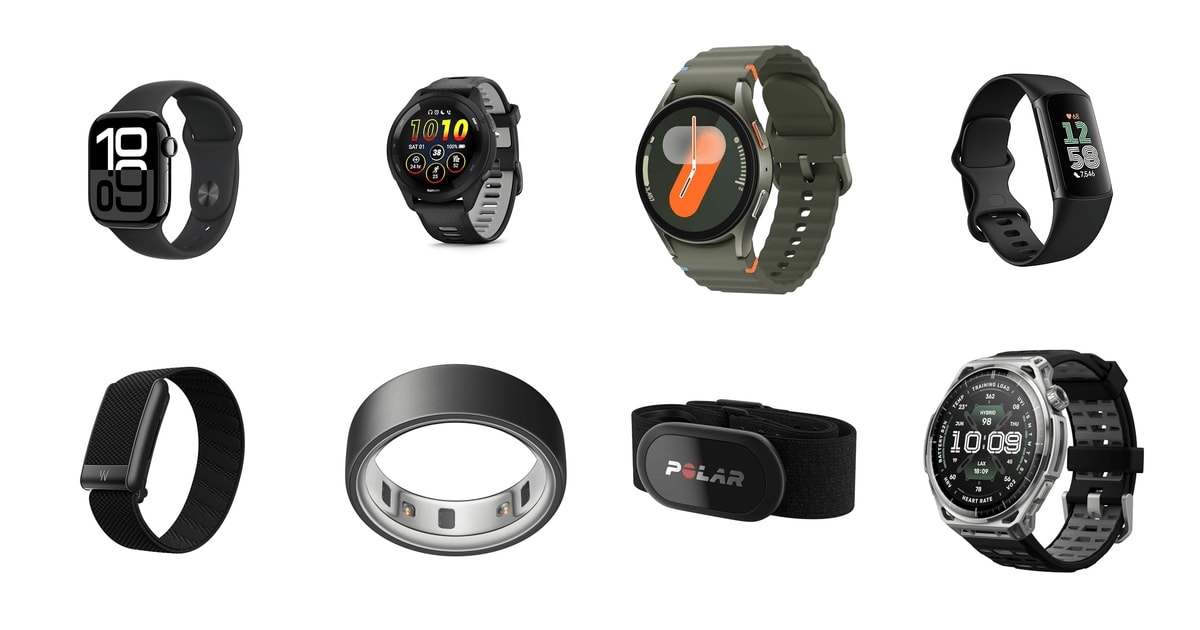
A fitness tracker only helps if you actually wear it. That sounds obvious, but it's the thing most people get wrong. The band that counts every calorie is useless in a drawer because it's bulky, or because charging it every night broke your habit. So the real question isn't which device measures the most. It's which one fits your wrist, your phone, your sport, and your patience for charging cables. Everything else — heart rate, sleep stages, VO2 Max — comes second to that.
Here's the honest part: none of these devices is a medical instrument, and the wrist is a bad place to read a heartbeat. A JMIR mHealth meta-analysis of 13 studies found wrist-based optical sensors were off by an average of 5.3 BPM during moderate-to-vigorous exercise, while chest-strap ECG monitors stayed under 1 BPM. Sleep staging, stress scores and recovery numbers are estimates dressed up as certainties. Treat the trends as useful and the individual numbers as approximate, and you'll be much happier.
We also weighed what these things cost to keep, not just to buy. Some devices are useless without an ongoing membership, and that changes the math over a few years. Others give you everything in a free app. We think that the Apple Watch Series 10 is the best fitness tracker for most people, and that the Garmin Forerunner 265 is the one to buy if you're training for a race or you just refuse to charge a watch every night.
Everything we recommend

The most complete health picture, if you carry an iPhone

Better GPS and far better battery, with a plainer smartwatch
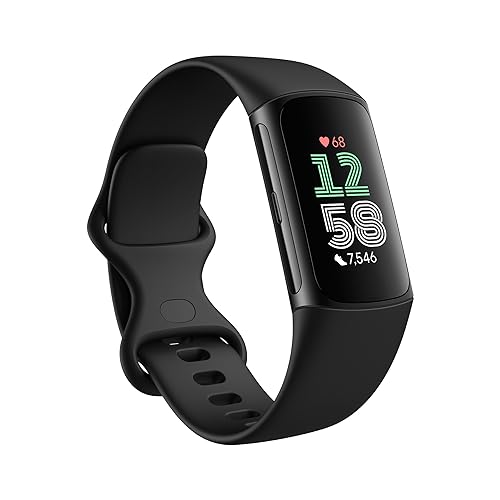
A slim band that does the basics well and lasts a week
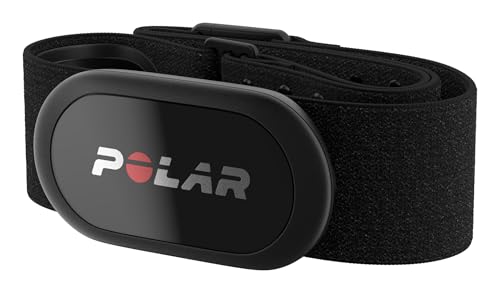
The accuracy standard, if you train hard enough to need it

Serious sleep and recovery data, in something you'll forget you have on
At a glance
| Product | Battery Life | Built-in GPS | Price | |
|---|---|---|---|---|
| Apple Watch Series 10 [GPS 42mm case]Top pick | — | GPS | $399 |
| Garmin Forerunner® 265Runner-up | 13 Days | GPS Mode | $439.85 |
 | Samsung Galaxy Watch 7 40mm Bluetooth SmartwatchAlso in lineup | — | — | $169.88 |
| Google Fitbit Charge 6 - Fitness TrackerBudget pick | — | Built-in GPS | $130.14On sale |
 | WHOOP Peak - 12 Month Membership -24/7Also consider | 14+ Days | — | $239 |
| OURA Ring 4 Smart Ring - StealthUpgrade pick | 8 Days | — | $349 |
| Polar H10 Heart Rate Monitor Chest StrapAlso great | — | — | $104.88 |
 | Amazfit Balance 3 Smart WatchAlso consider | 21 Days | Dual-Band GPS | $369.99 |
How we picked
Heart rate accuracy. We leaned on peer-reviewed accuracy studies and independent benchmark evaluations that compare wearables against clinical ECG references. Devices had to hold up at rest and during moderate effort; we say plainly where wrist sensors drift during hard intervals.
GPS quality. We compared published GPS evaluations and manufacturer specs, favoring multi-band GNSS for anyone running or riding in cities. Single-band devices had to earn their place some other way, usually on battery or price.
Battery and wearability. We read manufacturer battery ratings alongside independent real-world battery evaluations and owner reports of how long charges hold up after a year. A device you take off to charge every night misses sleep data, so we weighted this heavily.
Total cost to own. We checked which devices need an ongoing membership to be useful at all versus which put everything in a free app. Subscriptions can outweigh the hardware over a few years, so we flag them in every entry.
Sensors and ecosystem. We compared spec sheets for ECG, SpO2, HRV, skin temperature and body composition, plus which phones and third-party apps each device supports. Regulatory clearance for ECG mattered more to us than the raw count of sensors.
Top pick
The most complete health picture, if you carry an iPhone
Apple Watch Series 10 [GPS 42mm case]
The Series 10 pairs the widest health sensor suite in a mainstream watch — ECG, blood oxygen, irregular rhythm alerts, sleep apnea notifications — with an app ecosystem nothing else matches. You charge it daily, and you need an iPhone.
$399fromAmazonIf you already own an iPhone, this is the easy answer. Everything lands in Apple Health without setup, and the workout data flows on to Strava, MyFitnessPal or whatever else you use. Consumer Reports' 2025 fitness tracker testing gave the Series 10 the highest composite accuracy score in the group, 92 out of 100, across resting and active heart rate, step counting and calorie burn. For daily walking, gym sessions and steady-state cardio, that's more than enough precision.
The health features are the real reason to spend here. You can take an ECG on your wrist, and the watch will nudge you if it spots an irregular rhythm — a Heart Rhythm Journal study put Apple's AFib detection at 84% sensitivity and 97% specificity against a 24-hour Holter monitor. Owners regularly describe the watch flagging a heart rate problem they hadn't noticed. It's not a diagnosis. It's a reason to call your doctor, which is a genuinely different thing from a step count.
Apple made this one thinner — 9.7mm — with about 30% more screen area than the Series 6. That matters more than it sounds. A thinner case is a watch you'll keep on overnight, which is the only way sleep tracking works at all. The fast charger gets you to 80% in roughly half an hour, so you can top up while you shower instead of losing a night of data.
Multi-band GNSS is the other quiet upgrade. Wareable's 2025 GPS evaluation found multi-band trackers cut positional error by up to 40% in dense urban areas versus single-band devices. If you run between tall buildings, your pace readout stops jumping around. And with 50m water resistance plus depth and water temperature sensing, lap swimming is fine.
Flaws but not dealbreakers
Battery life is the deal. You get roughly a day, and heavy workout tracking eats into that. Owners who came from a Fitbit that ran a week say the charging routine is the one thing they still miss. If you'd rather not think about a charger, look at the Garmin or the Amazfit instead.
It's iPhone-only, full stop. There's no Android path, and no partial workaround. And during hard intervals, the wrist sensor drifts like every other optical sensor — pair a chest strap if you care about zone accuracy in HIIT.
Apple covers the Series 10 with a one-year limited hardware warranty.
Runner-up
Better GPS and far better battery, with a plainer smartwatch
Garmin Forerunner® 265
The Forerunner 265 is built for people with a training plan. It runs up to 13 days between charges, 20 hours with GPS going, and gives you race-day pacing, training readiness and HRV status in one screen each morning.
$439.85fromAmazonIf you're training for a half marathon, this beats the Apple Watch on the things that matter to you. Tom's Guide's GPS testing found the 265 averaged under 15 meters of route deviation on a certified 5K course, better than every single-band competitor in the same evaluation. Multi-band GNSS pulls GPS, GLONASS and Galileo at once. Your splits stop lying to you on tree-lined trails and city loops.
The battery changes how you use a watch. Garmin rates the 265 at up to 13 days in smartwatch mode and 20 hours with GPS running continuously. That's the difference between charging on a Sunday and charging every night. It also means you can wear it to bed all week without a gap, which is what makes the morning report useful — sleep, recovery, HRV status and training outlook, all on one screen before coffee.
The coaching is genuinely good. You put your goal race into Garmin Connect, and the watch suggests a workout each day that adapts based on how the last one went and how recovered you are. Over 30 activity profiles cover running, triathlon, cycling and open-water swimming. Beginners tell us — well, tell reviewers — that the structure is the part that keeps them going, not the raw data.
The AMOLED screen is bright and sharp, and Garmin kept physical buttons alongside the touchscreen. That sounds minor until you're eight miles in with wet, cold hands and you need to hit lap. Buttons work when a touchscreen won't.
Flaws but not dealbreakers
As a smartwatch it's a step down. No tap-to-pay card stack to speak of, clumsier text handling, and calls go through your phone. People switching from an Apple Watch consistently mention missing those conveniences even while they prefer the training data.
Firmware has been bumpy for some owners, with Bluetooth sync to Garmin Connect dropping out after updates. Most cases get resolved, but it's a recurring complaint rather than a one-off.
The 46mm case is large. On a slim wrist it reads as a piece of equipment rather than a watch.
Budget pickOn sale
A slim band that does the basics well and lasts a week
Google Fitbit Charge 6 - Fitness Tracker
The Charge 6 covers the essentials — 24/7 heart rate, built-in GPS, sleep scores, an ECG app and 40-plus exercise modes — in a band you'll forget you're wearing. It runs about a week per charge and costs a fraction of the watches above.
$130.14fromAmazonList priceNot everyone wants a computer on their wrist. The Charge 6 is a narrow band, which makes it far easier to sleep in than a watch case, and that's exactly where trackers earn their keep. Sleep scores, Daily Readiness and stress management scores all depend on continuous overnight wear. A week of battery removes the excuse to take it off.
For the money, the feature list is unusually deep. You get built-in GPS, so runs and rides get mapped without dragging your phone along. There's an ECG app, Active Zone Minutes that nudge you when you hit a heart rate zone, Google Maps turn-by-turn on your wrist and Google Wallet for tap-to-pay. It also links to compatible treadmills and ellipticals to show live heart rate on the machine.
It works with both iPhone and Android, which none of our watch picks can say. If your household is split across platforms, or you switch phones every couple of years, that flexibility is worth something on its own.
Flaws but not dealbreakers
Reliability is the sore spot. Owner feedback splits sharply, with a meaningful group reporting units that stop syncing, fail to reboot or die within a few months. That pattern shows up across the Charge line, not just this generation.
Some owners find step and heart rate readings drift compared to what they expected from older Fitbits. And the best coaching sits behind a Google Health Premium subscription, so the free experience is thinner than the marketing suggests.
Also great
The accuracy standard, if you train hard enough to need it
Polar H10 Heart Rate Monitor Chest Strap
The H10 is a chest strap, not a tracker — no screen, no steps, no sleep. What it gives you is heart rate you can trust during intervals, and it pairs with essentially any watch, bike computer or gym app you already own.
$104.88fromAmazonWrist sensors fall apart exactly when you need them most. During hard efforts, blood flow shifts and the watch bounces, and optical readings lag or spike. DC Rainmaker's benchmark testing found the H10 stayed within 1 BPM of a 12-lead clinical ECG across 14 structured sessions covering cycling, running and HIIT intervals. If you do zone-based training, that gap between 5 BPM of error and 1 BPM is the whole point.
It connects to everything. Bluetooth, ANT+ and 5 kHz analog, with two Bluetooth connections at once — so your watch and a gym machine can both read it simultaneously. It's fully waterproof and stores hours of data internally, meaning you can record a session without a paired device and sync later.
The strap itself is the part people underrate. Polar's electrodes and silicone grip dots keep it from sliding mid-run, which is the usual cause of garbage readings from a cheap strap. Cyclists and lifters — where the wrist is either locked to bars or gripping a barbell — get the most out of it.
Flaws but not dealbreakers
You have to want to wear a strap around your chest. It's less comfortable than a watch, and it's not a 24/7 device, so it does nothing for sleep, steps or recovery scoring.
Connection problems come up often in owner feedback, usually with specific gym equipment rather than phones and watches. Battery drain is the other recurring gripe — some owners burn through CR2025 cells fast, and popping the sensor off the strap between workouts seems to help.
Upgrade pick
Serious sleep and recovery data, in something you'll forget you have on
OURA Ring 4 Smart Ring - Stealth
The Oura Ring 4 tracks over 50 metrics from a titanium band you wear like jewelry. Its sleep staging is the most rigorously validated here, and there's no screen to distract you — but the app requires a monthly membership.
$349fromAmazonSome people just won't sleep in a watch. The ring solves that, and sleep is where it's strongest: a peer-reviewed NPJ Digital Medicine study found an Oura Ring hit 96% epoch-by-epoch agreement with clinical polysomnography for sleep stage classification. That's a lab-grade comparison, and it's the reason recovery-focused athletes and people wrestling with insomnia gravitate here.
Readiness is the feature that actually changes behavior. Each morning the ring blends HRV, skin temperature and resting heart rate into one score that tells you whether to push or back off. Because there's no screen and no vibration, you check it deliberately in the app instead of glancing at your wrist all day. Owners consistently say that's the appeal — data without the nagging.
Sizing is its own step, and Oura is clear about it: the ring uses its own sizing system, not standard jewelry sizes, and you're meant to order a sizing kit first. Skip that and the fit will be wrong, which wrecks the sensor contact the whole thing depends on.
Flaws but not dealbreakers
Longevity is the recurring worry. A number of long-term owners report battery life collapsing after several months — from eight days down to one or two — and some describe sensors misbehaving after a year. Oura has replaced rings for people who complained, but you shouldn't have to.
The membership is mandatory for the app, so the ring keeps costing you after purchase. And it's not a workout device: there's no GPS, no display, and heart rate during hard exercise isn't what it's for.
Who this is for
This guide is for anyone buying their first serious tracker, or replacing one that's worn out. If you mostly want steps, sleep and a nudge to move, a slim band or an entry-level watch is plenty — you don't need training load analytics. If you're training for a race, or you do a lot of interval work, spend the extra on GPS quality and either a Garmin-class watch or a chest strap. And if you dislike wearing anything on your wrist, the ring is a real option rather than a compromise.
You should skip all of this if you're looking for a medical device. None of these will diagnose you, and the sleep stages and stress scores are estimates, not measurements. We're also only covering consumer wearables you can buy off the shelf here — no clinical Holter monitors, no continuous glucose monitors, no smart scales. If you already own a two- or three-year-old watch from any of these brands and it still holds a charge, the year-over-year gains probably aren't worth an upgrade.
How we picked
We started from what a tracker actually has to get right. Heart rate accuracy: we leaned on peer-reviewed studies and independent benchmarks against clinical ECG, and we're honest that every wrist sensor drifts during hard efforts. GPS: multi-band GNSS earned a clear edge for city runners, based on published positional-error evaluations. Battery and wearability: we combined manufacturer ratings with independent battery evaluations and long-term owner reports, because a tracker you unstrap nightly can't track sleep. Total cost to own: devices that need a membership to function got scrutinized harder than devices with a free app. Sensors and ecosystem: we compared spec sheets for ECG, SpO2, HRV and body composition, and weighed which phone platform and third-party apps each one supports.
Other fitness trackers and heart rate monitors worth considering
If you want long battery and no subscription: The Amazfit Balance 3 Smart Watch ($369.99) — The Amazfit Balance 3 is the practical choice when you'd rather not think about charging or monthly fees. Amazfit rates it at up to 21 days, it has dual-band GPS with offline maps and turn-by-turn navigation, and a 1.5-inch AMOLED screen under sapphire glass. The Zepp app puts health, recovery and workout data behind no paywall, and it syncs to Strava, TrainingPeaks and Intervals.icu. What you give up is ecosystem depth and a long accuracy track record — Garmin's training analytics and Apple's health features are more proven. It's also a big watch; smaller wrists should look elsewhere.
If you want coaching built entirely around recovery: The WHOOP Peak - 12 Month Membership -24/7 ($239) — WHOOP takes the opposite approach to everything else here: no screen, no notifications, just continuous physiology. You get Sleep, Strain, Recovery, VO2 Max and a real-time stress monitor, plus a journal that logs behaviors so you can see what actually helps you recover. Battery runs 14-plus days and the pack charges on your wrist. But the hardware only comes bundled with a membership, so it's a recurring cost by design, and there's no GPS watch hiding inside — it won't replace a Garmin on race day. Some owners have also had the clasp fail. Buy it for the coaching, not the hardware.
The competition
This is what our research surfaced, not a survey of every tracker sold. We focused on devices with meaningful independent coverage, published accuracy data or a large enough owner base to spot patterns. A few strong options are missing simply because there wasn't enough evidence to say anything useful about them.
The Samsung Galaxy Watch 7 40mm Bluetooth Smartwatch ($169.88) — The Samsung Galaxy Watch 7 is the natural pick for Android and especially Samsung phone owners. Its 3-in-1 BioActive sensor handles optical heart rate, ECG and bioelectrical impedance body composition in one module, so you get body fat percentage and skeletal muscle estimates alongside the usual metrics. Sleep apnea detection and the Energy Score round it out, and Samsung Health integration is genuinely tight. We didn't make it a pick because this particular listing is a renewed 40mm unit, and owner feedback includes several reports of watches arriving locked in retail demo mode — a fixable problem, but an annoying one. If you're on a Galaxy phone and you're comfortable with a refurbished unit, it's still the best fit for your ecosystem.
Care and wearability
Fit does more for accuracy than any spec. A wrist device should sit about a finger's width above the wrist bone, snug enough that it doesn't slide when you shake your arm, and you'll usually want it a notch tighter during workouts than for everyday wear. Clean the sensor window and the underside of the band regularly — sweat and lotion build a film that scatters the optical signal, and that's the most common cause of readings that suddenly go strange. Chest straps need moisture on the electrodes to work, so wet them before you start, then rinse the strap after use and let it dry flat. Pop the sensor pod off between sessions to save the battery. For rings, follow the maker's sizing kit rather than your jewelry size, and take it off before heavy lifting so you don't dent it.
Questions we get
Is a chest-strap heart rate monitor really more accurate than a smartwatch?
Yes, and the gap is biggest during hard exercise. A JMIR mHealth meta-analysis of 13 studies found wrist-based optical sensors averaged 5.3 BPM of error during moderate-to-vigorous exercise, versus under 1 BPM for chest-strap ECG monitors. At rest and during easy effort, a good watch is close enough for most people. If you train by heart rate zones or do a lot of intervals, add a strap.
Do I need built-in GPS, or is my phone good enough?
Phone GPS works fine if you always run with your phone anyway. Built-in GPS matters when you want to leave the phone home, and multi-band GNSS matters if you run in a city. Wareable's evaluation found multi-band trackers cut positional error by up to 40% in urban canyons compared with single-band devices. On open trails and roads, the difference shrinks a lot.
Can a fitness tracker detect atrial fibrillation?
It can flag a possible irregular rhythm, which is not the same as diagnosing one. A Heart Rhythm Journal study put Apple Watch's AFib detection at 84% sensitivity and 97% specificity against a 24-hour Holter monitor. A Stanford Medicine study found continuous wearable heart rate monitoring surfaced clinically actionable arrhythmias in about 1.9% of people with no prior cardiac diagnosis. Treat an alert as a reason to see a doctor, not as an answer.
Is a subscription-based tracker like WHOOP or Oura worth it?
It depends on whether you'll act on the data. Both are built around recovery and sleep coaching rather than workout tracking, and both keep charging you after purchase — which can add up to more than the hardware over a few years. If you want one device that does everything, a Garmin or Apple Watch with a free app makes more sense. If you specifically want a daily readiness read and you'll change your training because of it, they earn their keep.
Which tracker is best for sleep tracking?
The Oura Ring 4 has the strongest published validation here: a peer-reviewed NPJ Digital Medicine study found 96% epoch-by-epoch agreement with clinical polysomnography for sleep staging. The ring form factor also helps, since it's easier to sleep in than a watch. That said, any device you consistently wear overnight beats a more accurate one you take off to charge.
How long do these actually last on a charge?
It's the sharpest trade-off in the category. The Apple Watch Series 10 runs roughly a day, though it fast-charges to 80% in about half an hour. Garmin rates the Forerunner 265 at up to 13 days in smartwatch mode and 20 hours with GPS active, and Amazfit rates the Balance 3 at up to 21 days. Expect real-world numbers below the rating, and expect capacity to fade after a year or two.
Why you should trust us
For this guide:
- We read peer-reviewed accuracy research on wrist optical sensors, chest-strap ECG references and sleep-stage agreement with clinical polysomnography.
- We compared manufacturer spec sheets for battery, GPS bands, water resistance and sensor suites against independent GPS and battery evaluations from established review outlets.
- We reviewed themes across large volumes of owner feedback, watching for repeated complaints about durability, connection reliability and battery fade over time.
- We read owner reviews on every listing, weighted toward the critical ones, because that is where the recurring failures show up.
- We have a systematic way of automatically fetching the latest prices, so the numbers on this page stay current.
- This is a research-focused guide, so the team may not own every product listed — though we often do own the top winners, which gives us extra context for the recommendations.
- We don't accept free products, and the retailer commission never changes which product we recommend.
Sources
Best Fitness Trackers — Wirecutter / The New York Times, Wirecutter
Best Fitness Trackers 2026 — Tom's Guide, Tom's Guide
Best Fitness Trackers — PCMag, PCMag
Polar H10 Heart Rate Sensor Review — DC Rainmaker, DC Rainmaker
Best Fitness Trackers 2026 — Wareable, Wareable
Fitness Tracker Ratings — Consumer Reports, Consumer Reports
Oura Ring Sleep Accuracy vs. Polysomnography — NPJ Digital Medicine, NPJ Digital Medicine
Apple Watch AFib Detection Accuracy — Heart Rhythm Journal, Heart Rhythm Journal
Wrist-Based Heart Rate Monitor Accuracy Meta-Analysis — JMIR mHealth and uHealth, JMIR mHealth and uHealth
Wearable Devices for Cardiac Arrhythmia Detection — Stanford Medicine, Stanford Medicine
Amazfit Balance Full Review — 9to5Google, 9to5Google
Samsung Galaxy Watch 7 Official Specifications, Samsung
Amazon product listings and owner reviews for all 8 products
Manufacturer specification pages for each product
Some passages in this guide may be paraphrased with AI help. Prices are refreshed automatically.
More like this.
Continue exploring health reviews and recommendations.

The Best Fitness Trackers and Activity Bands
A fitness tracker earns its keep in the small moments. You glance down and see you've been sitting for three hours. You wake up and find out why you feel…

The Best Fitness Trackers for Sleep Tracking
You spend about a third of your life asleep, and until recently you had almost no way to know what happened during those hours. A sleep tracker changes…

The Best Smartwatches and Fitness Trackers
A smartwatch earns its place on your wrist in small moments. It taps you when a text lands so you don't dig out your phone. It counts a swim, logs a run,…

The Best Smart Fitness Watches
A fitness watch earns its place on your wrist by being useful before you think about it. It tells you that you slept badly before you've had coffee. It…

The Best Lightweight Travel Wheelchairs
A travel wheelchair earns its keep in the ten seconds it takes to get it out of the trunk. If you're the one lifting, weight is everything. Twenty pounds…

The Best Posture Correctors and Back Braces
Most of us slouch without noticing. You lean toward a monitor, your shoulders round forward, and by mid-afternoon your neck and upper back ache. A posture…