The Best Lightweight Travel Wheelchairs
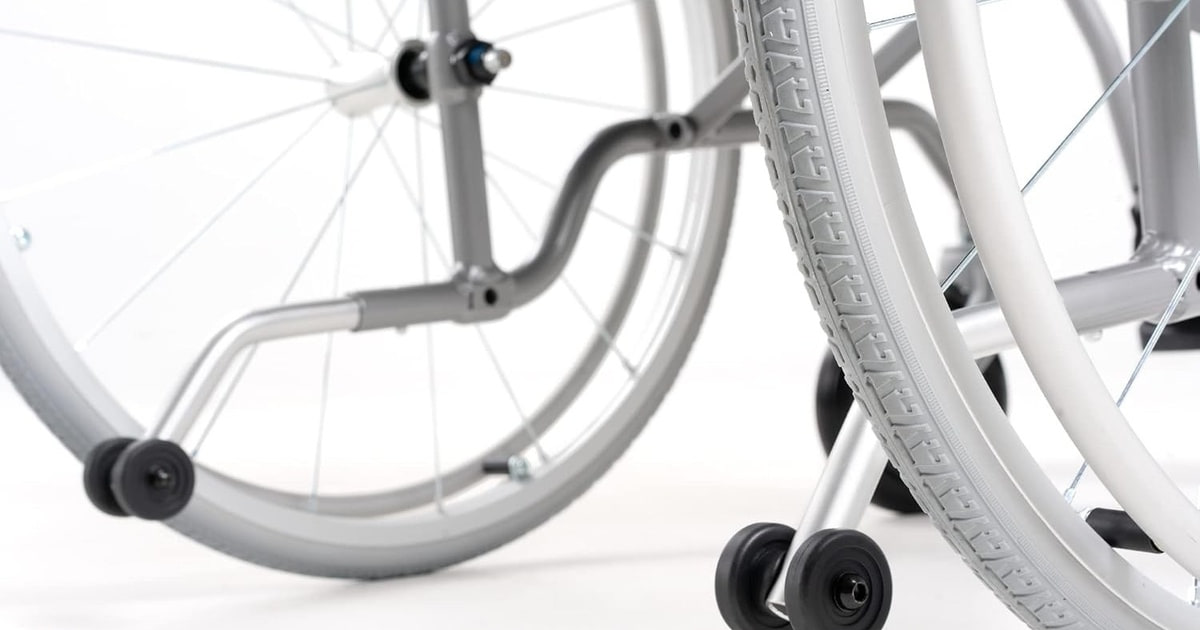
A travel wheelchair earns its keep in the ten seconds it takes to get it out of the trunk. If you're the one lifting, weight is everything. Twenty pounds you can swing up over a bumper with one arm. Thirty pounds means bracing your knee against the car and hoping your back holds. The folded shape matters just as much. A chair can be light and still refuse to fit in a compact sedan's trunk opening, which is why AARP's travel guidance tells you to measure your actual car before you buy anything.
Here's the honest part: nothing in this category is comfortable for eight hours. These chairs are built to be light and fold small, so the seats are thin slings, the cushions are minimal, and the frames flex more than a daily-use chair. Padding gets sacrificed first. And insurance rarely helps. Medicare and most private plans won't cover a premium ultralight or a power-assist folder as a second chair, so you're likely paying out of pocket for the weight savings you actually want.
We also can't get around the physics of self-propelling. Big rear wheels let you push yourself but add pounds and folded width. Small rear wheels shed both but hand the job to whoever's with you. Which side of that you land on drives most of this decision. We think that the FeatherMobility folding wheelchair is the best lightweight travel wheelchair for most people, and that the Drive Medical Fly-Lite is the one to buy if you mostly need a companion-pushed chair for occasional trips.
Everything we recommend

The lightest frame you can buy, if you can lift solo
Light, cheap and easy to push, but someone has to push
Ergonomic hand rims and a narrow folded profile
Real powered mobility that still folds and flies
Prices as of Oct 24, 6:27 AM PT · Details
At a glance
| Product | Weight | Propulsion | Price | |
|---|---|---|---|---|
| FeatherMobility - Gray Lightweight Folding Wheelchair -Top pick | 13.5 lbs frame | — | $645 |
| Karman Healthcare Karman Ergonomic Wheelchair Ergo FlightAlso great | 19.8 lbs | — | $783 |
 | Karman Healthcare S-Ergo 115 18" Seat WidthAlso consider | 25 lbs no footrest | — | $599 |
| Drive Medical Fly-Lite Lightweight Folding Transport WheelchairBudget pick | 16.2 lbs no footrest | Transport | Check price |
| WHILL Model F Power Chair - ConvenienceUpgrade pick | 58.9 lbs | Power | $2,499 |
Prices as of Oct 24, 6:27 AM PT · Details
How we picked
Weight you actually lift. We compared manufacturer weight figures for both the bare frame and the fully assembled chair, since those numbers differ by 5 pounds or more. Chairs under 20 pounds assembled cleared our bar for a single caregiver lifting into a sedan.
Folded size and fit. We read published folded dimensions against typical trunk openings, because AARP's travel guidance flags that two chairs at similar weights can differ by inches folded. Chairs that fold flat or narrow scored higher than chairs that only fold short.
Self-propel or companion. We separated true self-propel chairs from transport chairs rather than ranking them against each other. NCOA's panel notes transport chairs run 5 to 10 pounds lighter but need someone to push, so we picked in both groups.
Capacity and seat fit. We checked stated weight capacity and seat width for every chair, since most travel models cap at 250 to 300 pounds per 1800Wheelchair's category data. Seat width under 18 inches counted as a fit limitation, not a flaw.
Airline compliance. For battery-powered chairs we checked the manufacturer's watt-hour figure against FAA guidance, which treats batteries under 300 watt-hours as generally compliant without special approval. We also confirmed gate-check rights under the Air Carrier Access Act.
Top pick
The lightest frame you can buy, if you can lift solo
FeatherMobility - Gray Lightweight Folding Wheelchair -
The Feather chair's frame weighs 13.5 pounds on its own and 19 pounds with the wheels and leg rests attached. It's a self-propel chair, so you can push yourself, and it still folds small enough for a sedan trunk and a gate check.
$645fromAmazonPrices as of Oct 24, 6:27 AM PT · Details
No mass-market manual wheelchair weighs less. Feather Mobility puts the bare frame at 13.5 pounds and the complete chair at 19 pounds with wheels and leg rests. That's roughly a gallon of milk lighter than most aluminum competitors, and you feel it on the third lift of the day. If you're a caregiver in your sixties loading a parent's chair into a trunk, those few pounds are the difference between routine and dreading it.
The quick-release rear wheels are the reason it works. You pop both wheels off, and what's left is the 13.5-pound frame you actually lift. Wheels go in separately, or in the back seat. It's an extra step, and some people won't bother, but it turns a two-hand heave into something you can manage one-handed. Feather says unfolding and reattaching the wheels takes under a minute.
It's a real self-propel chair, not a transport chair with delusions. The big rear wheels mean you can move yourself across a hotel lobby without waiting for someone. The listing gives folded standing dimensions of 26 by 30 by 35 inches, narrow enough for most doorways. Weight capacity is 300 pounds, which covers more adults than the 250-pound limits you see on comparable ultralights.
Braking is better thought out than the weight suggests. You get front wheel locks the user can reach, plus bicycle-style locking levers on the push handles for whoever's pushing. On a ramp or a sloped parking lot, having brakes at both ends genuinely matters. Plenty of light chairs give the caregiver nothing but a hope and a firm grip.
Flaws but not dealbreakers
Getting to 13.5 pounds means giving things up, and the seat is where it happens. The upholstery is thin, and the chair ships with a basic gray cushion rather than a pressure-relieving one. For airport-to-gate distances that's fine. For a full day at a theme park, plan on buying a better cushion.
The quick-release wheels are a feature only if you use them. Carry the chair fully assembled and you're lifting 19 pounds, which puts it in the same range as several cheaper chairs here. The weight advantage is real but conditional on you doing the extra step every time.
Budget pick
Light, cheap and easy to push, but someone has to push
Drive Medical Fly-Lite Lightweight Folding Transport Wheelchair
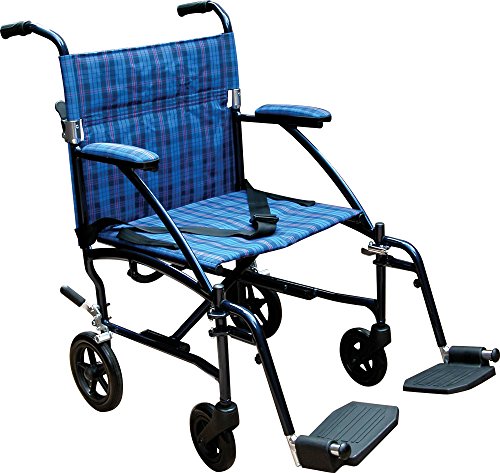
The Fly-Lite is a transport chair, so it has small rear wheels and no hand rims. It weighs 16.2 pounds without footrests and 18.9 with them, folds flat, and supports 300 pounds. You'll need a companion to move it.
Check priceatAmazonPrices as of Oct 24, 6:27 AM PT · Details
This is the chair to buy if you don't need to self-propel. Drive Medical lists it at 16.2 pounds bare and 18.9 pounds with footrests, on an aluminum frame rated to 300 pounds. It costs a fraction of what the ultralight self-propel chairs run. For a daughter who takes her father to appointments twice a month, that math is hard to argue with.
It folds flat, which is the part people underestimate. NCOA's panel notes that transport chairs with 8-inch rear wheels typically run 5 to 10 pounds lighter than self-propel chairs with 24-inch wheels. You also lose the width those big wheels add. The Fly-Lite slides into a trunk or across a back seat instead of wedging in at an angle.
Small comforts are handled. There's a safety belt, padded armrests, and height-adjustable footrests you can change without tools. Rear wheel locks hold it steady during transfers, which is when most falls happen. Front casters are 6 inches and rear are 8, so it rolls over sidewalk seams and airport carpet without much fuss.
The trade is straightforward and worth saying plainly. No hand rims means no independence. If the person in the chair wants to move themselves anywhere, ever, this isn't the chair. But if they walk short distances and use the chair only for long concourses and museum days, they'll never miss the big wheels.
Flaws but not dealbreakers
Eight-inch rear wheels are hard on rough ground. Gravel, grass, cobblestone and steep curb cuts all take real effort from whoever's pushing. Sidewalk cracks that a 24-inch wheel rolls over will stop these casters.
The seat is 19 inches wide and 15.5 inches deep, and that shallow depth doesn't suit tall users. If your legs are long, your thighs will hang off the front edge, which gets uncomfortable within about an hour.
Also great
Ergonomic hand rims and a narrow folded profile
Karman Healthcare Karman Ergonomic Wheelchair Ergo Flight
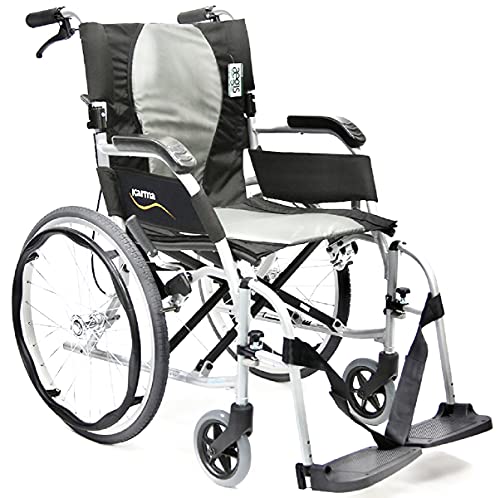
The Ergo Flight weighs about 19.8 pounds complete, and its frame is 14.5 pounds once the rear wheels come off. Karman shapes the seat and rims to reduce shoulder strain, which matters if you push yourself for hours.
$783fromAmazonPrices as of Oct 24, 6:27 AM PT · Details
Karman built this one around your shoulders. The ergonomic frame and hand rims are shaped to cut the strain of repetitive pushing, which is the injury that ends most people's self-propelling. If you push yourself daily rather than occasionally, that design choice will matter more to you a year from now than a pound of frame weight does today.
The folded profile is the quiet advantage here. Karman designs the Ergo Flight to clear most sedan trunk openings, roughly 13 inches wide folded. Two chairs at the same weight can differ by several inches folded, and AARP specifically warns buyers to check that dimension against their own car. Narrow beats light when you're wrestling it past a trunk lip.
The numbers land close to our top pick without matching it. Complete weight is 19.8 pounds, and the frame alone is 14.5 pounds with the rear wheels removed. Seat dimensions are 17 by 16 inches with a 19-inch seat height. Footrests come off and adjust for height, so you can dial in leg position for a longer user.
Flaws but not dealbreakers
The 16-inch seat width is narrow. That's a real fit constraint for anyone above average build, and it's the main reason to look at an 18-inch chair instead. Check your measurement before ordering.
Owner feedback on this model is thin compared with the mass-market chairs, so there's less accumulated evidence about how the frame holds up over years of airline handling. Karman references RESNA frame fatigue standards, but the crowd-sourced picture is smaller.
Upgrade pick
Real powered mobility that still folds and flies
WHILL Model F Power Chair - Convenience
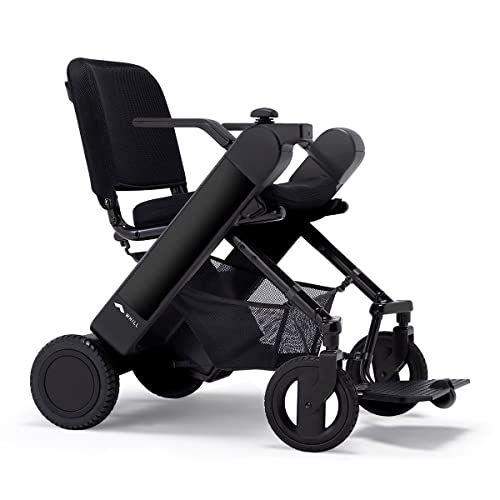
The WHILL Model F folds in under three seconds and drops below 53 pounds with the battery out. You get a 12.4-mile range, a 3.7 mph top speed and app-based remote driving, in a footprint that fits airline checked baggage.
$2,499fromAmazonPrices as of Oct 24, 6:27 AM PT · Details
Buy this if pushing is off the table. The Model F is a genuine power chair, not a manual with a motor bolted on. Two motors climb obstacles up to 1.4 inches, the turning radius is 30.7 inches, and the lithium battery gives 12.4 miles per charge. For a cruise or a week of city sightseeing, that range covers a full day with margin.
It's heavy at 58.9 pounds, but it comes apart. Pull the battery and the chair drops under 53 pounds, and WHILL designs the chair to split into pieces a single caregiver can handle, with the heaviest under 24 pounds. That's the whole reason a power chair can go in a trunk at all. Folding takes under three seconds.
Air travel is the case this chair is built for. The Air Carrier Access Act requires U.S. airlines to carry your wheelchair free, including as a gate check, and TSA lets mobility aids through security without counting against carry-on limits. The FAA treats wheelchair batteries under 300 watt-hours as generally compliant without special approval. Call your airline anyway and confirm the battery.
The app is more useful than it sounds. You can drive the chair remotely, which means positioning it next to a bed or into a tight hotel bathroom without anyone squeezing in behind it. Controller side, arm height and arm width from 18 to 20 inches all adjust, so it fits left- or right-handed users.
Flaws but not dealbreakers
It costs several times what any manual chair here does, and insurance almost certainly won't help. Medicare rarely covers a premium foldable power chair as a travel-specific second chair, so treat this as an out-of-pocket purchase.
The 250-pound weight capacity is lower than the 300-pound manual chairs in this guide, which rules it out for some riders. And even at 53 pounds without the battery, this is a two-person lift for most trunks unless you break it down first.
Battery rules add friction to every flight. You'll need to know your watt-hour figure, and airlines can and do ask. That's a phone call before each trip, not a one-time setup.
Who this is for
This guide is for people who need a wheelchair for trips, not for every hour of the day. Think airport concourses, museum floors, family weddings and cruise ships. If you or your parent walks short distances but can't manage a long one, a travel chair fills that gap without the cost or bulk of a daily-use chair. It's also for the adult child doing the lifting, because the person choosing the chair is often not the person sitting in it.
If you use a wheelchair full-time, buy a properly fitted daily chair instead and treat one of these as a backup. The thin seats and flexing frames that make these chairs light aren't built for all-day pressure management. We've limited this guide to folding manual and foldable power chairs marketed for travel. Rigid ultralights, custom-fitted chairs, scooters and bariatric models above 350 pounds capacity are outside what we looked at here.
How we picked
We started with the numbers a shopper can verify and worked outward. Weight: we compared bare-frame and assembled weights from manufacturer specs, treating 20 pounds assembled as the line a single caregiver can lift without strain. Folded size: we read published folded dimensions rather than trusting the word compact, since AARP warns that similar weights can hide inches of difference. Propulsion: we sorted true self-propel chairs from companion-pushed transport chairs and picked separately in each group. Capacity and fit: we checked stated weight limits and seat widths, since most travel chairs stop at 250 to 300 pounds. Airline rules: for powered models we matched battery watt-hours against FAA guidance and confirmed free gate-check rights under the Air Carrier Access Act.
Other lightweight travel wheelchairs worth considering
If you want a wider seat and flat-free tires: The Karman Healthcare S-Ergo 115 18" Seat Width — The S-Ergo 115 gives you an 18-inch seat and 24-inch flat-free polyurethane rear wheels, so you'll never patch a tube in a hotel parking lot. Karman adds removable AEGIS seat and back cushions and a breathable stain-resistant mesh sling, which is more real padding than most chairs at this weight offer. The catch is the weight itself: 25 pounds without footrests and 30 with them, well above our 20-pound line. Capacity is also 250 pounds. Pick it if comfort and seat width matter more to you than the last five pounds, and if someone else usually handles the loading.
The competition
This is what our research surfaced on Amazon in this category, not a map of the entire market. Plenty of chairs sold through medical suppliers and specialty dealers never show up here, and a few of the models most often recommended in travel-chair roundups aren't listed on Amazon at all. Treat the list below as the honest remainder of what we looked at, with a note on why each one didn't become a pick.
Care and travel prep
Before any flight, take a phone photo of your chair from both sides. Airline handling causes most travel-chair damage, and a photo makes a damage claim straightforward. Tape a card with your name and phone number to the frame, and take removable parts with you into the cabin, since footrests and cushions go missing first. Every few weeks, check that the axle bolts and footrest hardware are snug, because folding and unfolding works fasteners loose over time. Wipe the frame down after beach or winter trips, since salt eats aluminum joints. If your chair has a lithium battery, charge it to a partial level before flying rather than full, and keep the watt-hour label readable so gate agents can check it without a debate.
Questions we get
What is the lightest travel wheelchair you can buy?
The Feather chair is the lightest mass-market manual wheelchair sold in the U.S., at 13.5 pounds for the bare frame. With the rear wheels and leg rests attached it comes to 19 pounds. Most aluminum competitors land between 19 and 25 pounds assembled. Carbon-fiber and carbon-reinforced frames buy you those savings at three to four times the cost of a comparable aluminum chair.
Can I bring a folding wheelchair as a carry-on, or does it have to be checked?
You can take it through security and all the way to the gate. TSA confirms that wheelchairs and mobility aids pass through checkpoints and don't count against your carry-on limit. At the gate you check the chair, and under the Air Carrier Access Act U.S. airlines have to transport it at no extra charge. You'll get it back at the jet bridge on arrival if you ask.
Do lithium-battery power wheelchairs need special approval to fly?
It depends on the battery size. The FAA treats wheelchair batteries under 300 watt-hours as generally compliant without special approval. Between 300 and 360 watt-hours you need the airline's consent, and larger batteries aren't allowed. Find your watt-hour figure on the battery label and call the airline before you book anything tight.
What's the difference between a transport chair and a self-propel wheelchair?
Self-propel chairs have large rear wheels with hand rims so the rider can push themselves. Transport chairs have small rear wheels and no rims, so a companion has to push. NCOA's panel puts the weight difference at 5 to 10 pounds in the transport chair's favor, and they fold narrower too. Choose a transport chair only if the rider will always have someone with them.
Is carbon fiber worth paying extra for over aluminum?
It's worth it if you lift the chair yourself and you lift it often. Carbon and carbon-reinforced frames save roughly 5 to 8 pounds over aluminum at three to four times the price. For a solo traveler managing the chair alone at every curb and trunk, that's a daily difference. If a caregiver does the loading, put the money toward a better cushion instead.
Does Medicare cover a lightweight travel wheelchair?
Rarely. Medicare and most private insurers cover a wheelchair as durable medical equipment when it's needed for use inside your home, which doesn't describe a travel chair. Premium ultralight and foldable power models are almost never approved as a second chair. Most people in this category pay out of pocket, so factor that in before you shop.
Why you should trust us
For this guide:
- We read manufacturer specification sheets from Feather Mobility, Karman Healthcare, Drive Medical and WHILL, comparing stated frame weights, assembled weights, folded dimensions and capacity limits side by side.
- We reviewed federal guidance from the FAA, TSA and the Department of Transportation on wheelchair battery limits and gate-check rights, plus category guidance from NCOA, AARP and Consumer Reports.
- We looked at recurring themes in owner feedback for each chair, particularly around seat comfort, folded fit in real cars and how the frames hold up to airline handling.
- We read owner reviews on every listing, weighted toward the critical ones, because that is where the recurring failures show up.
- We have a systematic way of automatically fetching the latest prices, so the numbers on this page stay current.
- This is a research-focused guide, so the team may not own every product listed — though we often do own the top winners, which gives us extra context for the recommendations.
- We don't accept free products, and the retailer commission never changes which product we recommend.
Sources
Wheelchairs and Mobility Aids: What Air Travelers Should Know, U.S. Department of Transportation
Best Lightweight Wheelchairs for Travel - National Council on Aging, National Council on Aging (NCOA)
Feather Chair Product Specifications, Feather Mobility (Manufacturer)
Karman Healthcare Ergo Flight Specifications, Karman Healthcare (Manufacturer)
How to Choose a Travel Wheelchair - Consumer Reports Health, Consumer Reports
Traveling with a Wheelchair or Scooter - TSA Guidance, Transportation Security Administration (TSA)
Lithium Battery Rules for Mobility Devices on Aircraft, Federal Aviation Administration (FAA)
WHILL Model F Technical Specifications, WHILL Inc. (Manufacturer)
Foldawheel PW-999UL Product Details, Foldawheel (Manufacturer)
Choosing the Right Wheelchair for Air Travel - AARP, AARP
RESNA Wheelchair Standards and Testing Overview, RESNA (Rehabilitation Engineering & Assistive Technology Society)
1800Wheelchair Buying Guide: Transport vs. Lightweight Chairs, 1800Wheelchair
Amazon product listings and owner reviews for all 5 products
Manufacturer specification pages for each product
Some passages in this guide may be paraphrased with AI help.
Product prices and availability are accurate as of the date/time indicated and are subject to change. Any price and availability information displayed on Amazon.com at the time of purchase will apply to the purchase of this product.
More like this.
Continue exploring health reviews and recommendations.

The 7 Best Portable Bluetooth Keyboards for Travel in 2026: Lightweight, Multi-Device Picks
Expert-tested portable Bluetooth keyboards for travel in 2026. Compare weight, battery life, and multi-device pairing across 7 top picks from Logitech, Keychron, nuphy, and more.

The Best Lightweight Cordless Stick Vacuums
A cordless stick vacuum earns its place by being the vacuum you actually reach for. It hangs on a wall or leans in a closet, and you grab it when the dog…

The Best Compression Socks for Travel in 2026
Long flights are hard on your legs. You sit still for hours, the cabin pressure drops, and fluid settles in your ankles until your shoes feel a size too…

The Best Duffel Bags for Travel and Weekenders
A duffel is the bag you grab when a suitcase feels like too much. Three days at a friend's place, a Friday flight straight from the office, a weekend at…

The Best Pet Carriers for Car Travel
Most of us drive with a pet the way we did as kids: the dog loose on the back seat, the cat yowling in a box on the floor. That works right up until it…

The Best Packable Down Jackets for Travel
A packable jacket earns its place in your bag by disappearing. You want something that squashes down to the size of a loaf of bread, sits in the bottom of…