The Best Pet Carriers for Car Travel
Most of us drive with a pet the way we did as kids: the dog loose on the back seat, the cat yowling in a box on the floor. That works right up until it doesn't. The Center for Pet Safety points out that a 10-pound dog in a 30 mph crash generates roughly 500 pounds of projectile force — enough to badly hurt the pet and injure whoever's sitting in front of it. A good carrier keeps your pet in one place. It also keeps your eyes on the road, which is the part you'll notice every single day.
Here's the frustrating part. Almost every carrier on the shelf says "crash tested" somewhere on the box, and almost none of those claims mean much. Manufacturers run their own tests, set their own pass marks, and publish the results that flatter them. Only a short list of products has been through the Center for Pet Safety's standardized program, and outside testing has been unkind to the rest. Consumer Reports found that most popular pet seatbelts failed to hold a dummy in a simulated 30 mph frontal impact.
So buy for your pet's size first, and treat certification as the tiebreaker. A cat or a five-pound terrier needs something small enough that it can't slide around inside. A 70-pound retriever needs a restraint, not a bag. Sizing matters more than any feature list, because a carrier with too much room just lets your pet slam into its own walls. We think that the Sleepypod Mobile Pet Bed is the best pet carrier for car travel for most people, and that the Sherpa Original Deluxe is the one to buy if you want a lighter carrier that flies as well as it drives.
Everything we recommend
Crash-certified safety for a cat or a very small dog

A light, flight-friendly carrier that belts into the back seat

Hard-shell protection for a dog that rides in the cargo area

The pick for a big dog no carrier in a car will hold
At a glance
| Product | Weight | Crash Tested | Price | |
|---|---|---|---|---|
| Sleepypod® Mobile Pet BedTop pick | 4.5 lbs | Crash Tested | $224.99 |
| Gunner G1 Small Dog KennelUpgrade pick | 27 lbs | 5 Star Crash Tested | $600 |
 | Snagle Paw Portable Dog Crate for CarAlso in lineup | 9.7 lbs | — | $94.99On sale |
 | Kurgo Rover Pet Booster Seat for SmallAlso consider | — | — | $45.80 |
| RuffwearAlso great | 0.93 lbs | — | $99.99 |
 | K&H Pet Products Rectangle Bucket Booster PetAlso consider | 3.09 lbs | — | $90.17 |
| Sherpa Original Deluxe Travel Pet CarrierBudget pick | 3 lbs | — | $61.86On sale |
 | Midwest Homes for Pets Skudo 24” PlasticAlso in lineup | 6.1 lbs | — | $59.98 |
How we picked
Independent crash data. We treated a Center for Pet Safety rating as the only crash claim worth weighting, since CPS uses one standard test and publishes failures. Self-reported "crash tested" language on a listing counted for nothing on its own.
How it attaches. Every product here has a defined path for the seatbelt, a headrest strap, or both. Anything that just sits on the seat and hopes for the best didn't make the list.
Sizing and fit. We compared published interior dimensions against stated weight limits, because a carrier with too much slack lets a pet slam into its own walls. Products that quote a weight limit without interior measurements got a harder look.
Airflow and comfort. Mesh panels or molded vents on multiple sides matter on a long summer drive, and visibility calms a lot of anxious pets. We favored designs where a pet can see out without being able to chew through.
Cleaning and storage. Removable, machine-washable liners and wipe-down interiors came up constantly in owner feedback, mostly from people whose pet got sick on the way home from the vet. Folding or collapsing for off-season storage was a bonus.
Top pick
Crash-certified safety for a cat or a very small dog
Sleepypod® Mobile Pet Bed
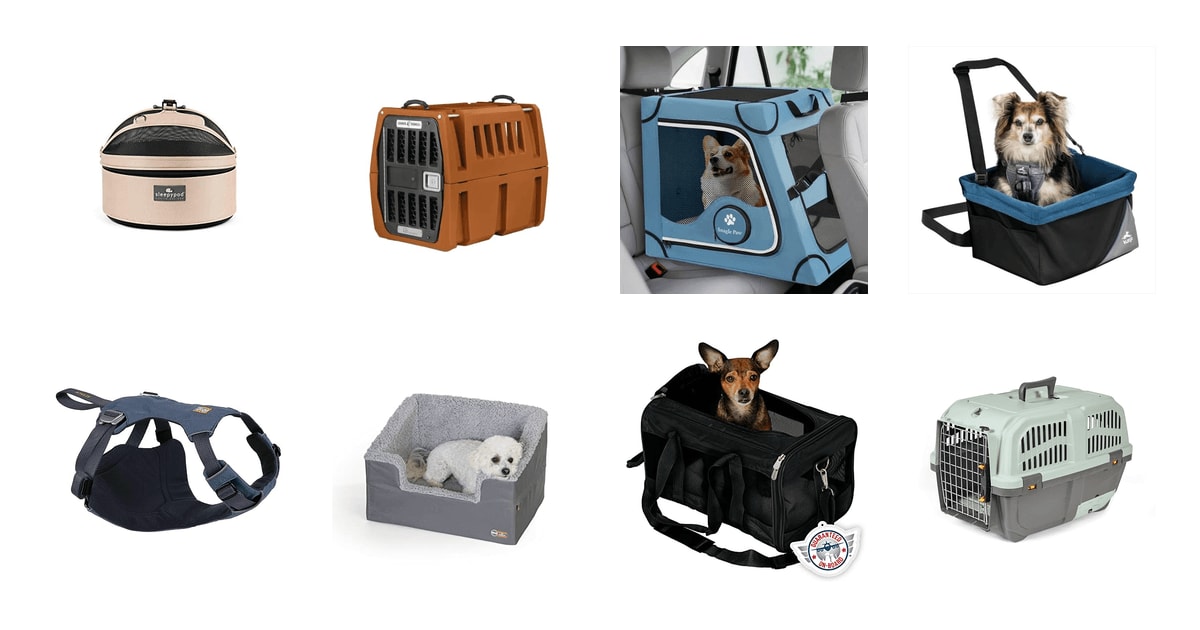
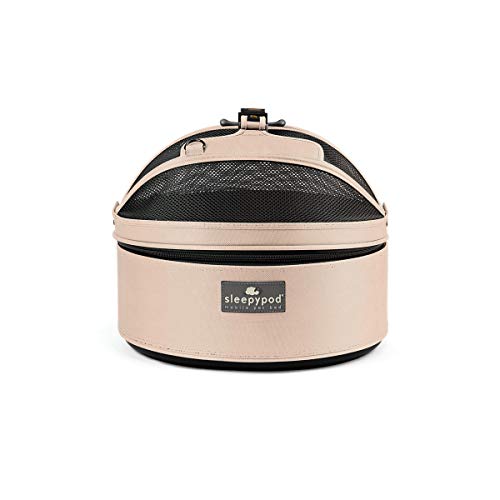
This is a carrier, a car seat and a plush bed in one, sized for cats and dogs up to 15 pounds. Your seatbelt runs through the base so the whole thing stays put, and the mesh dome lifts off so your cat can nap in it at home between trips.
$224.99fromAmazonIt's one of the very few soft carriers to earn a five-star crash rating from the Center for Pet Safety. That matters more than it sounds. CPS runs the same test on every product and publishes what fails, so the rating is the one number here you can actually compare across brands. Sleepypod's covers a 30 mph impact at a 45-pound simulated crash force, which brackets nearly every cat and small dog.
The reason it works so well with cats is that it doesn't feel like a carrier. Leave the dome off and it's a round plush bed your cat sleeps in on the living room floor. When the vet appointment comes, you zip the dome on with the cat already inside instead of shoving a frightened animal through a small door. Anyone who's wrestled a cat into a plastic box knows what that's worth.
Getting it into the car takes about two minutes. The vehicle seatbelt threads through a channel around the base, and a second strap loops the headrest so the bed can't pitch forward under hard braking. There's no adapter to buy and nothing to tighten with a tool. Owners consistently report it stays flat on the seat over long drives, which is the entire point.
It's built like luggage, not like bedding. The shell is luggage-grade nylon, the inside is plush polyester over a water-resistant foam liner, and the bedding pulls out for the wash. Chew-resistant mesh on three sides gives your pet airflow and a view out the window. That view seems to be the thing that settles anxious cats on a long ride.
Flaws but not dealbreakers
The weight limit is real. Sleepypod recommends this size for pets 15 pounds and under, and a dog at the top of that range won't have much room to turn around. If you've got a big Maine Coon or a stocky pug, look at the hard-sided options instead.
It's also the most expensive thing in this guide, and it holds exactly one pet. Two cats means two beds, and two of these eat most of a back seat. Some owners find the round shape awkward to carry through a parking lot, too — the shoulder strap helps, but it swings.
Budget pickOn sale
A light, flight-friendly carrier that belts into the back seat
Sherpa Original Deluxe Travel Pet Carrier
A soft carrier for cats and dogs up to 16 pounds, with top and side doors and a luggage strap that doubles as a seatbelt pass-through. It's airline approved, so one bag covers the drive to the airport and the flight after it.
$61.86fromAmazonList priceMost people don't need a carrier that lives in the car. You need one carrier that goes to the vet, rides in the trunk on a road trip, and slides under an airplane seat once or twice a year. The Sherpa does all three, which is why it has stayed on the market essentially unchanged for so long. If you're buying one carrier and one only, this is the sensible one.
The seatbelt pass-through is what earns it a spot here. A luggage strap across the top slips over your car's belt, so the belt holds the carrier down rather than lying uselessly across it. That's the floor you should accept from a soft carrier. Plenty of soft bags have no belt path at all, and they simply slide off the seat at the first hard stop.
Two doors help more than you'd guess. The top entry lets you lower a cat straight in instead of aiming her through a hole at the front. The Spruce Pets, in a long-term comparison of more than a dozen carriers, found that top-loading designs made removal at the vet less stressful than front-loading ones, which force the cat to back out blind.
The spring-wire frame is the durability story. The rear end pushes down several inches to fit under a seat, then springs back. That repeated flexing is what usually kills a cheap carrier's seams. You also get locking zippers your cat can't nose open, mesh on the sides, a waterproof base and a machine-washable liner — the whole package weighs about three pounds.
Flaws but not dealbreakers
It isn't crash certified. Sherpa makes no Center for Pet Safety claim, and the belt strap stabilizes the carrier rather than restraining your pet the way the Sleepypod's system does. For the weekly vet run, that's fine. For a highway road trip, it's a real step down.
The frame that makes it packable also makes it floppy. Load a 15-pound cat and the sides bow inward. And the medium tops out at 16 pounds, so this is a cat-and-small-dog carrier, full stop.
Upgrade pick
Hard-shell protection for a dog that rides in the cargo area
Gunner G1 Small Dog Kennel
A double-wall rotomolded kennel built like a hard cooler, with a five-star crash rating and a heavy-duty door system. It's heavy and it's a commitment, but it's the most protective thing here for a dog who has outgrown a soft carrier.
$600fromAmazonNothing else here absorbs a crash the way a rotomolded shell does. The G1 earned a five-star rating from the Center for Pet Safety, with less than two inches of interior deformation and no latch failures reported in a 30 mph frontal impact. Interior space is what keeps a dog from being crushed in a crate, so deformation is the number worth caring about.
This size suits a dog up to roughly 30 pounds — a beagle, a corgi, a small spaniel. The interior floor runs 21.75 by 14.5 inches, with 15.5 inches of headroom. Measure your dog standing and sitting before you order. A crate your dog can't stand up in makes for a long, miserable drive, and one with slack lets him tumble.
It's designed for the back of an SUV, not a bench seat. The outside measures 24.5 inches long by 18.625 wide and 19 tall, or 20.5 with the carry handles up. Airflow channels run through the double walls and the floor sits raised off the shell, so a cargo area in July doesn't turn into a sealed plastic box.
Cleanup is the underrated part. The interior is one molded surface with no fabric to hold a smell, so a car-sick dog means a hose and a towel instead of a laundry cycle. That's worth thinking about, since roughly one in six dogs gets motion sick in the car. Wipe it out at the trailhead and it's ready for the drive home.
Flaws but not dealbreakers
Straps aren't included, and without them the kennel isn't anchored to anything. A 27-pound crate slides and tumbles like any other loose object, so treat the tie-down kit as part of the purchase rather than an accessory you'll get around to.
It's heavy and it's bulky. At 27 pounds empty you aren't carrying it into a waiting room with a dog inside, and it more or less lives in your cargo area. It's also too tall for the back seat of most sedans, so check your vehicle before you commit.
Also great
The pick for a big dog no carrier in a car will hold
Ruffwear
A padded car harness for medium and large dogs, with strength-rated metal hardware and a loop your seatbelt threads straight through. For a 50- or 80-pound dog, it's the practical answer, because a crate that size won't fit in most vehicles.
$99.99fromAmazonAt some point your dog is simply too big for a box. A kennel sized for an 80-pound retriever won't go in a crossover, and the real choice becomes a harness or nothing at all. The Load Up is the harness we'd pick, because it's one of a very small number to pass an independent vehicle restraint test at MGA Research Corporation.
Most pet seatbelts are theater. The Center for Pet Safety's harness study found that all four leading brands failed, and in one run the test dummy traveled 28 feet past the point of impact. Consumer Reports came to a similar conclusion about the seatbelts it looked at. Assume a harness hasn't been verified unless the maker can point you to an outside lab.
The design detail that counts is where the load goes. Wide padded panels spread force across the sternum instead of the throat — that's the difference between a bruised chest and a crushed windpipe. Metal slide buckles and strength-rated hardware mean you aren't trusting a plastic side-release clip, and the universal loop works with whatever belt your car has.
Fit is the whole ballgame with a harness. Ruffwear publishes a sizing chart and a fitting video, and it's worth twenty minutes with a tape measure around your dog's girth. A loose harness lets your dog build up speed before the belt catches, and one he can back out of is just decoration. The knit mesh lining and dense foam keep it comfortable enough to sleep in on a long haul.
Flaws but not dealbreakers
A harness restrains your dog; it doesn't shield him. There's no shell between your dog and a loose suitcase, and nothing stops a panicking dog from tangling in the belt. If a hard kennel fits your vehicle and your dog, that's still the safer setup.
Your dog also gets the run of the seat within the belt's length, so a pacer will still pace. And sizing is specific enough that you shouldn't split the difference between two sizes — measure, then order.
Who this is for
This guide is for anyone who drives with a pet more than a couple of times a year — the vet run, the drive to a relative's house, the summer road trip. It's aimed mostly at cats and dogs small enough to travel in a carrier, plus the big dogs who need a harness because nothing else fits. If your pet already rides quietly in a certified carrier that fits your car, you don't need to replace it. Buy now if you're still driving with a loose pet or a bag that slides around, because that's the situation these products actually fix.
We're not covering airline compliance in depth, cargo-hold shipping crates, truck-bed kennels, or full-size crates for dogs over about 70 pounds. Booster seats appear here as a comfort-and-visibility option for small dogs, not as a safety upgrade — none of them is crash certified, and you should always clip the tether to a well-fitted harness rather than a collar. One more thing worth knowing: a growing number of states now have animal transport laws with restraint provisions, and New Jersey's penalties are the steepest in the country.
How we picked
We built the list around five things. Certification: a five-star Center for Pet Safety rating is the only crash claim we treated as evidence, because CPS runs one standardized test and publishes what fails. Attachment: every product needed a real belt path, headrest strap, or cargo tie-down, not just a hopeful nonslip bottom. Fit: we lined up published interior dimensions against weight limits, since a too-roomy carrier defeats itself. Airflow: mesh or molded venting on multiple sides, plus a view out, which helps both heat and nerves. Cleanup: washable liners and wipe-down shells, because sooner or later somebody gets carsick.
Other pet carriers for car travel worth considering
If you want a booster seat so a small dog can see out the window: The Kurgo Rover Pet Booster Seat for Small ($45.80) — The Kurgo Rover raises a dog up to 20 pounds high enough to watch the world go by, which genuinely helps some dogs with motion sickness — a higher, forward-facing view is one of the things VCA veterinarians point to for reducing symptoms. Metal supports keep it from collapsing, the outside is waterproof, and it installs in a front bucket seat or the narrow side of a 60/40 rear bench. An adjustable tether clips to your dog's harness, and there are pockets for treats and bags. What you give up is protection: this is a comfort and anti-distraction product, not a crash-rated one, and a dog near 30 pounds won't be able to lie down in it.
If you want a booster that holds two small pets or one medium one: The K&H Pet Products Rectangle Bucket Booster Pet ($90.17) — The K&H Bucket Booster in the large size measures 21.5 by 16 inches, which is enough room for two small dogs or one medium breed, and it has two tethers so you can clip both. The seatbelt buckles underneath a removable cushion, so there's no belt lying across your pet. The fleece cover pulls off for the wash, and the whole thing knocks down flat for storage between trips — handy if your back seat also carries people. It shares the same limitation as every booster here: no crash certification, and the foam bolster contains your pet rather than restraining her. The front dips low, which makes climbing in easy but also makes it easier to climb out if the tether is slack.
The competition
This is what our research surfaced, not a survey of everything sold. Two products came close enough to discuss but lost out to a pick for specific reasons.
The Snagle Paw Portable Dog Crate for Car ($94.99) — The Snagle Paw Portable Dog Crate is a soft crate on a non-collapsible metal frame, and it's genuinely well thought out for the back seat: a seatbelt runs through it, two top straps anchor to the front and rear headrests, and an internal leash keeps a dog from bolting when you open the door. Side feeding windows let you pass a treat through without unzipping, and the frame comes out so the fabric can go in the wash. At 24.8 by 18.9 by 20.9 inches it's roomy for a medium dog, and it folds into a bag when you're done. It lost to the Gunner on protection — there's no independent crash certification, and a fabric shell can't do what a rotomolded one does. If you want a back-seat crate for a dog too big for a Sherpa and you're not ready for a hard kennel, this is a reasonable middle path.
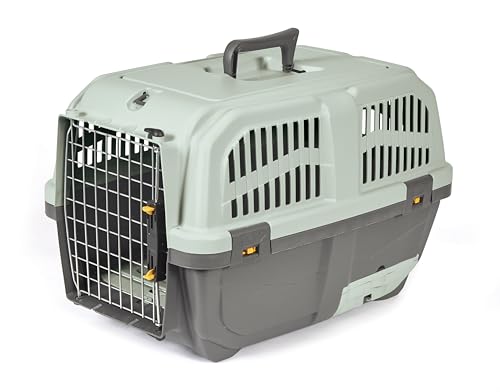
The Midwest Homes for Pets Skudo 24” Plastic ($59.98) — The MidWest Skudo is a 24-inch hard plastic carrier with buckle latches, vents on the sides, and an unusual trick: a built-in litter tray with a removable cover, so your cat can use the box without you opening the door. On a two-day drive with a nervous cat, that's a real advantage over anything else here. It's also light for a hard carrier at about six pounds, and the shell hoses out. But it has no seatbelt path and no crash certification, so securing it in your car is on you — cargo straps or a belt looped around the body, neither of which is a designed restraint. Choose it if multi-day travel and litter access matter more to you than crash performance.
Acclimation and care
The carrier is only half the job. The AVMA recommends introducing a pet to a new carrier two to four weeks before a trip, and AKC behaviorists report that this cuts down the whining, panting and scratching that make car rides miserable for everyone. Leave it open on the floor with a blanket and a few treats inside. Feed a meal in it. Take a five-minute drive around the block before you attempt three hours. Skip your pet's meal a couple of hours before you leave if she gets carsick, and point the carrier forward in the back seat. Between trips, pull the liner and wash it, wipe hard shells with mild soap, and check buckles, zippers and stitching — that's where these things fail first.
Questions we get
Which pet carriers are actually crash tested and certified?
Only products rated by the Center for Pet Safety have been through a standardized, independently published crash test. In this guide, that's the Sleepypod Mobile Pet Bed and the Gunner G1. Everything else either makes an in-house claim or makes none at all, and "crash tested" on a box means whatever the manufacturer decided it means.
Is a dog harness or a carrier safer for car travel?
A certified hard kennel is the safest option, because it puts a shell between your dog and everything else in the car. A harness is the right answer only when your dog is too big for any crate that fits your vehicle. If you go that route, pick one that's passed an outside lab test — most haven't, and one Center for Pet Safety study found the test dummy traveling 28 feet past impact.
What's the best carrier for a cat who hates car rides?
Look for a top-loading design and one your cat can live with at home. The Spruce Pets found top-load carriers made vet-visit removal less stressful than front-load ones, which make a cat back out blind. The Sleepypod's removable dome lets it double as a bed, so the carrier stops being the object that only appears before bad things happen.
Can I put a pet carrier in the front seat?
Don't, if you can avoid it. An airbag deploys with enough force to crush a carrier, and the rear seat is the safer position for a pet the same way it is for a child. If your vehicle has no back seat, disable the passenger airbag and secure the carrier to the belt. Rear, forward-facing placement also tends to reduce motion sickness.
How do I secure a soft carrier without a dedicated pet seatbelt?
Use the carrier's own belt path if it has one — the Sherpa's luggage strap and the Sleepypod's belt channel both do this. If yours has neither, run the shoulder belt through the top handle and cinch it, then wedge the carrier against the seat back. It's an imperfect fix, and it's a good argument for buying a carrier that was designed for the car.
Are there laws requiring me to restrain my pet in the car?
In some states, yes. Eight states have animal transport laws that include vehicle restraint provisions, up from three not long ago, and New Jersey's fines are the highest in the country. Even where there's no specific statute, an unrestrained pet can fall under distracted-driving rules. AAA found only 16% of dog-owning drivers use any restraint, though 29% admit their pet has distracted them.
Why you should trust us
For this guide:
- We read the Center for Pet Safety's published crash-test results and checked them against every "crash tested" claim in these listings.
- We compared manufacturer spec sheets for interior dimensions, weight limits and attachment hardware, since sizing decides whether a carrier works at all.
- We reviewed published findings from Consumer Reports, The Spruce Pets, VCA and AAA, plus recurring themes in owner feedback about zippers, tipping and cleanup.
- We read owner reviews on every listing, weighted toward the critical ones, because that is where the recurring failures show up.
- We have a systematic way of automatically fetching the latest prices, so the numbers on this page stay current.
- This is a research-focused guide, so the team may not own every product listed — though we often do own the top winners, which gives us extra context for the recommendations.
- We don't accept free products, and the retailer commission never changes which product we recommend.
Sources
2013 Harness Crash Test Study — Center for Pet Safety, Center for Pet Safety
Distracted Driving: Pets in Vehicles — AAA NewsRoom, AAA
Best Dog Car Seats and Restraints — Wirecutter (NYT), Wirecutter
Pet Travel Safety — American Veterinary Medical Association, AVMA
Traveling With Your Pet — American Kennel Club, American Kennel Club
Gunner Kennel G1 Crash Test — Gunner Kennels Safety Page, Gunner Kennels
Sleepypod Mobile Pet Bed CPS Certification, Sleepypod
Pet Restraint Laws by State — Animal Legal Defense Fund, Animal Legal Defense Fund
Car Sickness in Dogs and Cats — VCA Animal Hospitals, VCA Animal Hospitals
Best Cat Carriers for Car Travel — The Spruce Pets, The Spruce Pets
Ruffwear Load Up Harness Independent Testing, Ruffwear
Dog Car Safety: What You Need to Know — Consumer Reports, Consumer Reports
Amazon product listings and owner reviews for all 8 products
Manufacturer specification pages for each product
Some passages in this guide may be paraphrased with AI help. Prices are refreshed automatically.
More like this.
Continue exploring pet reviews and recommendations.

The Best Car Travel Accessories
A long drive exposes every gap in how your car is set up. Your phone slides off the seat mid-turn. The kids' snacks migrate under the seat. Somebody's…

The Best Handheld Vacuums for Car and Pet Hair
Pet hair doesn't sit on car upholstery. It works its way into the weave, and a plain suction nozzle glides right over the top of it. That's the whole…

The Best Handheld Vacuums for Car and Pet Hair
Pet hair in a car doesn't behave like pet hair on a floor. It works down into the seams of a bench seat, wraps around the fibers of a rubber-backed mat,…

The Best Roof Racks and Cargo Carriers
Your roof is the only empty space left once the car is packed. Skis, a week of luggage for four, a stroller, folding chairs - it all has to go somewhere,…

The Best Trailer Hitch Cargo Carriers
Every road trip has the same moment. The trunk is full, there's still a cooler and a folding chair on the driveway, and someone in the back seat is about…

The Best Rooftop Cargo Carriers
A rooftop carrier buys you back the space your family took away. Once the third row is up and the cooler is in, there's nowhere left for duffels, sleeping…