The Best Car Travel Accessories
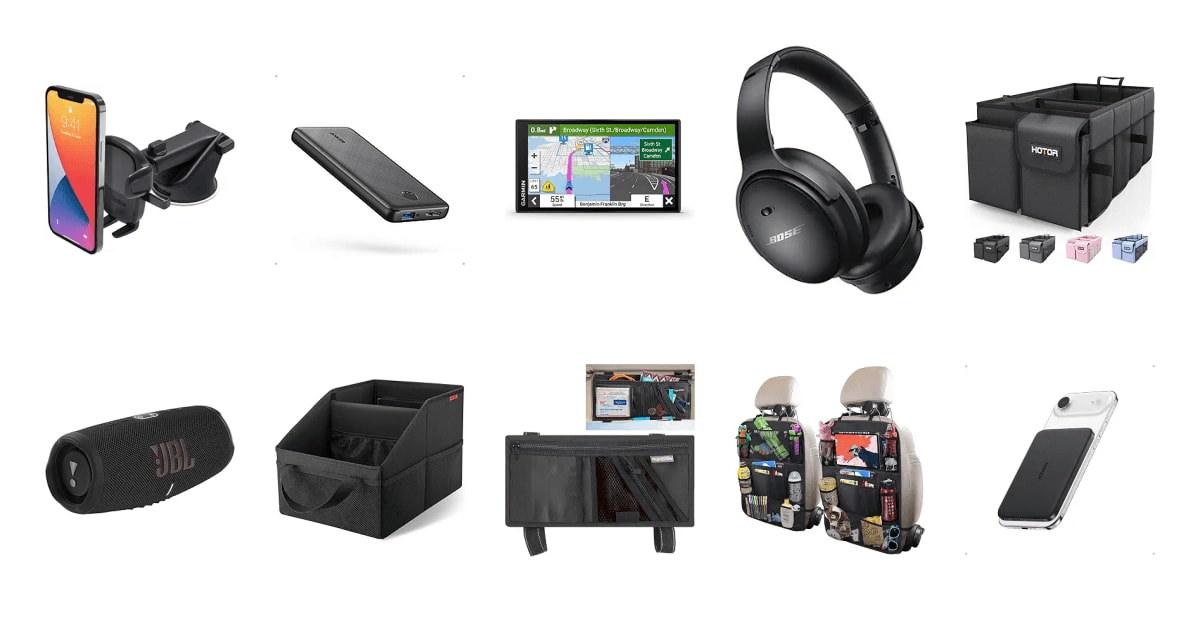
A long drive exposes every gap in how your car is set up. Your phone slides off the seat mid-turn. The kids' snacks migrate under the seat. Somebody's battery hits 4% two hours from the next stop. None of these are emergencies, but they stack up, and by hour five they're the difference between a trip you remember fondly and one you just survive. The right handful of accessories fixes most of it — a place for the phone, a place for the stuff, and enough power to go around.
Here's the honest part: no single product in this category is going to transform your car. These are small fixes, and each one solves exactly one problem. Suction mounts eventually let go in a hot car. Fabric organizers sag when you overload them. Battery packs run out and need their own charging time. Anything that clips, sticks, or straps to a car interior is fighting heat, vibration, and gravity every day. Buy for the specific annoyance you actually have, not for the fantasy of a fully outfitted vehicle.
We looked at phone mounts, power banks, a dedicated GPS unit, headphones, a Bluetooth speaker, and four different organizers, because that's the realistic shopping list for someone about to drive a long way. We think that the iOttie Easy One Touch Signature is the best car travel accessory for most people, and that the Anker PowerCore 10K is the one to buy if your phone is doing the navigating and dying by lunch.
Everything we recommend
A mount that opens one-handed and stays where you put it

Enough backup power for a full day, in a pocketable slab

Stops the trunk from turning into a rolling junk drawer

Real quiet on the road, if you're not the one driving

The speaker for when everyone gets out of the car
At a glance
| Product | Product Type | Price | Price | |
|---|---|---|---|---|
| iOttie Easy One Touch Signature Dashboard &Top pick | Phone Holder | — | $24.95 |
| Anker Power BankRunner-up | Power Bank | — | $21.99On sale |
 | Garmin DriveSmart 66Also consider | GPS Navigator | — | $183.99On sale |
| Bose QuietComfort 45 Bluetooth Wireless Noise CancellingUpgrade pick | Headphones | — | $329.99 |
| HOTOR Trunk Organizer - Car OrganizerBudget pick | Trunk Organizer | — | $12.98On sale |
| JBL CHARGE 5 - Portable WaterproofAlso great | Bluetooth Speaker | — | $179.95 |
 | Car Organizer - Automotive Organizer for FrontAlso in lineup | Car Organizer | — | $24.99 |
 | High Road Car Visor Organizer with SecureAlso in lineup | Visor Organizer | — | $12.99On sale |
 | Car Backseat Organizer with 10" Table HolderAlso consider | Backseat Organizer | — | $19.99 |
 | Anker Nano MagSafe Power BankAlso consider | Power Bank | — | $54.99On sale |
How we picked
Solves a real problem. We started with the annoyances people actually describe on long drives — dead phones, nowhere to put things, no safe place for the phone — and worked backward to products. Anything that only existed to sell a gadget got cut.
Holds up in a car. Car interiors swing from freezing to well over 120°F and vibrate constantly. We weighted owner feedback about mounts letting go, adhesive melting, and stitching giving out far more heavily than first-impression reviews.
Fits most vehicles. We compared listed dimensions and strap or mount specs against common sedans and SUVs, and preferred products with adjustable straps, foldable panels, or universal cradles over anything that assumes one dashboard shape.
Long-run owner reports. Reviews written after a year or two tell you far more than reviews written on day three. We looked hardest at feedback from owners describing what broke, loosened, or kept working after extended use.
Doesn't create new problems. An accessory that blocks your view, rattles, or becomes a projectile in a hard stop is a downgrade. We favored products that mount low, strap down, or fold away.
Top pick
A mount that opens one-handed and stays where you put it
iOttie Easy One Touch Signature Dashboard &
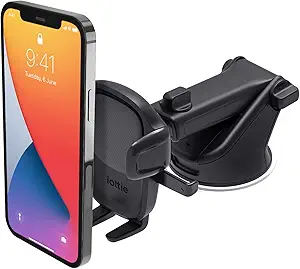
This is the phone holder that solves the most common road-trip problem: nowhere safe to put your phone while it's navigating. The spring-loaded arms close around the phone when you press it in, and the telescopic arm pulls the screen closer to your line of sight.
$24.95fromAmazonThe one-touch mechanism is the whole reason to buy this over a cheap clamp. You push the phone against a trigger in the middle of the cradle and the side arms snap shut around it. One hand, no fiddling, no looking down. Getting the phone out is a squeeze of the side arms. If you're a delivery driver or you're just picking the phone up at every stop, that difference adds up fast over a day.
The telescopic arm extends from 5 to 8 inches and pivots 260 degrees, which matters more than it sounds. Most dashboards put your phone too far away and too low, so you end up glancing down instead of across. Pulling the screen up and toward you keeps the map closer to where you're already looking. There's also a small magnetic tab near the base for corralling your charging cable so it isn't dangling into the footwell.
Owners who've had one on the windshield for two or three years keep reporting the same thing: it's still stuck there. That's the part that separates this from the pile of near-identical mounts. The suction base and the adjustable bottom foot work together, with the foot bracing against the dash so the whole assembly doesn't wobble every time you hit a seam in the pavement.
It takes any phone in any case, which sounds like marketing until you've owned a mount that wouldn't close around a phone in a thick protective case. The cradle is wide, the button is large, and there's no magnet plate to stick to the back of your phone. If you swap phones or you're sharing a car with someone whose phone is a different size, nothing needs adjusting.
Flaws but not dealbreakers
The suction cup is the weak point, and owners are consistent about it. On textured or soft-touch dashboards it often won't hold at all — several people report it dropping within twenty minutes on the dash and then working perfectly on the windshield. Hot cars are the other issue: a windshield that bakes all summer can soften the adhesive layer on the suction base, and cleaning that residue off is a genuinely annoying job involving rubbing alcohol and patience.
It's also bulky. The arm, the cradle, and the foot together take up real estate on your dash or a noticeable chunk of your windshield, and a few owners with very large phones in thick cases have found the geometry awkward. The adjustment points can loosen over months of repositioning, though snugging them back down takes a second.
Runner-upOn sale
Enough backup power for a full day, in a pocketable slab
Anker Power Bank
A 10,000mAh battery that's slim enough to leave in a door pocket and forget about. It'll refill an iPhone about twice, charges over USB-C in both directions, and it's the size of a phone that got a little thick.
$21.99fromAmazonList priceIf your phone is your GPS, your music, and your camera, the car's own USB port often can't keep up. Navigation with the screen on drains a battery faster than most cars replenish it, especially in an older vehicle. A 10,000mAh pack closes that gap without you having to think about it. Anker rates it at roughly two full charges for an iPhone 15 and just under two for a Galaxy S23.
The USB-C port works in both directions, which is the feature that makes it easy to live with. You recharge the pack with the same cable you use to charge your phone. No hunting for a micro-USB cable in a drawer. Owners who travel regularly describe the routine the same way: plug it in overnight at the hotel, drop it in the bag in the morning, don't think about it again.
It's genuinely thin — about 0.6 inches — and weighs around 8.5 ounces. That's the difference between a battery you carry and one that stays home. Anker also rates it for a 3.2-foot drop and built the shell to resist scratching, which is relevant when the thing's job is to rattle around in a center console with your keys and change.
Flaws but not dealbreakers
Ten thousand milliamp-hours is a day of insurance, not a weekend of independence. Two phones, a tablet, and a set of earbuds will drain it before dinner. If you're camping without power for several days, you want something bigger.
The pack itself takes a few hours to refill, so it's an overnight item rather than a quick top-up. And a handful of owners who loved an older generation of this battery report that the newer casing feels cheaper than what they had before, with a few units arriving damaged. Anker's replacement process gets good marks, but it's worth checking yours works when it arrives rather than the night before you leave.
The PowerCore 10K comes with an 18-month warranty.
Budget pickOn sale
Stops the trunk from turning into a rolling junk drawer
HOTOR Trunk Organizer - Car Organizer
A folding two-compartment bin with six mesh side pockets that holds groceries, jumper cables, and kid gear without letting any of it slide around. It collapses flat against the trunk floor when you don't need it.
$12.98fromAmazonList priceEveryone has the same trunk problem. A gallon of milk tips over on the first left turn, the jumper cables end up under the spare, and the reusable bags migrate to the corners. This is a rigid-ish fabric bin with two big compartments and reinforced stitching, and it mostly just stops things from moving. Owners describe it staying put through normal driving and only shifting on a hard turn.
The Velcro side strips are the clever bit. You can fold the whole thing in half to make it narrower for a sedan trunk, keep it full-size for an SUV, or collapse it flat when you need the whole cargo floor for something bulky. That flexibility is why one organizer works across very different vehicles, and it's why people who bought it for a Camry and people who bought it for a CR-V both report a good fit.
At 21.3 by 12.6 by 10.6 inches with a rated 60-pound capacity, it's sized for real cargo rather than tidiness theater. The base panel is thickened and the handles are reinforced, so you can lift the whole loaded thing out and carry it into the house. Parents hauling diapers, wipes, and spare clothes use it that way constantly — the trunk organizer becomes the bag.
Flaws but not dealbreakers
It doesn't anchor to anything. There are no straps or hooks tying it to the trunk, so in an empty cargo area with an aggressive driver it will eventually slide. If your trunk is mostly empty, put it against a wall or wedge it behind something.
Fabric organizers are also only as sturdy as what's in them. Loaded lightly, the walls of this one can lean, and a few owners note the sides lack rigidity when the compartments aren't full. It's a container, not a shelf.
Upgrade pick
Real quiet on the road, if you're not the one driving
Bose QuietComfort 45 Bluetooth Wireless Noise Cancelling
Bose's noise cancelling shaves off the low drone of highway travel — tire roar, engine hum, the constant wash of air. They're light, the clamping force is gentle, and 24 hours of battery covers a long day of passenger seat time.
$329.99fromAmazonRoad noise isn't loud so much as relentless. Tires on coarse pavement produce a broad low rumble that grinds you down over four or five hours, and that's exactly the frequency range active noise cancelling handles best. Owners who fly and drive a lot consistently rank the QC45 at the top for how much of that background it removes without making your ears feel pressurized.
Comfort is the other half of the argument, and it's the half people underrate. These weigh about 15.7 ounces, use plush synthetic leather earcups, and Bose deliberately kept the clamping force light. Several long-term owners report wearing them 20 to 30 hours a week without the headache that stiffer headphones cause. On a twelve-hour driving day, that matters more than a marginal difference in bass response.
Aware Mode is the feature that makes them usable in a car with other people in it. Flip it on and outside sound comes back in while your music keeps playing, so you can hear the driver ask a question without pulling a cup off your ear. Battery is rated at 24 hours, and a 15-minute charge buys about three hours. There's also an included cable for wired listening when the battery's gone.
These are for passengers, not drivers. Wearing noise cancelling headphones behind the wheel is unsafe and illegal in a lot of places. If you're the one driving, the speaker or the car's own stereo is the answer — this pick is for the person in the passenger seat trying to sleep, or the teenager in the back who's heard the playlist enough times.
Flaws but not dealbreakers
The QC45 sits in an older generation of the lineup, and the trade-off shows in the feature list rather than the sound. There's no adjustable level of noise cancelling — you get Quiet or Aware, nothing in between — and no head-tracking or spatial audio. Owners moving from newer models notice the gap.
They're also the most expensive thing in this guide by a wide margin, which is a lot to spend on something that only helps one seat in the car. And they're over-ear headphones, so in a hot car with the sun on you, the earcups get warm.
Also great
The speaker for when everyone gets out of the car
JBL CHARGE 5 - Portable Waterproof
A waterproof Bluetooth speaker with about 20 hours of playtime and enough output to fill a campsite or a beach setup. The built-in power bank means it can top off a phone, though doing so eats into the music.
$179.95fromAmazonThe Charge 5 isn't really a car accessory — it's what you use at the other end of the drive. Campsite, tailgate, picnic table, hotel balcony. It has a long-excursion driver, a separate tweeter, and dual passive radiators, which in plain terms means it gets loud outdoors without the sound collapsing into mush. Owners repeatedly describe being surprised by how much volume comes out of something this size.
IP67 waterproofing is what makes it a travel speaker rather than a shelf speaker. Rain, a pool deck, sand at the beach, a cooler full of melted ice — none of it matters. You can rinse it off. That's a meaningfully different product from a speaker you have to protect, and it's the reason people take this camping instead of leaving it at home.
Twenty hours of rated playtime means you charge it before the trip and don't think about it for a weekend. Owners report comfortably clearing ten hours of continuous use at real volumes. You can pair two phones to it and trade off DJ duty, and PartyBoost links it to other JBL speakers if someone else brought one.
Flaws but not dealbreakers
The USB power bank output is a nice extra, not a reason to buy. Using the speaker to charge a phone pulls directly from the battery that's playing your music, so you're trading playtime for a partial phone charge. Bring the Anker instead.
It's also 2.1 pounds and shaped like a fat cylinder, so it's a real item in a bag rather than something you toss in a pocket. And it charges slowly — plan on an hour or two, and charge it fully before use rather than while playing, which is what JBL recommends and what long-term owners say preserves the battery.
Who this is for
This guide is for someone about to drive somewhere far, or someone who drives a lot and has decided the current state of their car is unacceptable. If your phone is your navigation system, start with a mount and a battery pack — those two solve the most problems for the least money. If you have kids, an organizer will do more for your sanity than any electronics. And if you're regularly the passenger on long hauls, good noise cancelling headphones change the experience more than anything else here.
We're covering interior accessories, power, navigation, and audio. We're not covering tires, roof boxes, dash cams, jump starters, tool kits, or car seats, all of which deserve their own research. If you already have a phone that mounts to a vent clip you like and a car with modern USB-C ports, you may not need anything on this list — and that's a legitimate outcome. Nobody needs ten accessories. Most people need two or three.
How we picked
We built the list around five things. Real problem: every product had to solve an annoyance people actually describe on long drives, not a hypothetical one. Durability in a car: interiors bake in summer and vibrate constantly, so we weighted long-term owner reports about melting adhesive, failing suction and split seams heavily. Fit: we checked listed dimensions and strap specs against common sedans and SUVs, and preferred adjustable designs over ones built for a single dashboard. Long-run feedback: reviews written a year or two in told us more than first-week impressions, so those carried the most weight. No new problems: anything that blocks your view, rattles loose, or could fly forward in a hard stop was out, no matter how well it worked otherwise.
Other car travel accessories worth considering
If you want navigation that doesn't depend on cell service: The Garmin DriveSmart 66 ($183.99) — The Garmin DriveSmart 66 stores North America maps on the device, so it keeps routing through canyons, national parks, and the long dead zones in the mountain West where your phone quits. The 6-inch screen stays readable in direct sun, and driver alerts for school zones, sharp curves and speed changes are genuinely useful. Voice assist and Alexa integration work when it's paired with your phone. The trade-off is that you're carrying a second screen that duplicates something you already own, and the Bluetooth pairing draws consistent complaints — owners report slow, unreliable reconnection every time they get back in the car. Buy it for the offline maps, not for the smart features.
If you're driving with kids: The Car Backseat Organizer with 10" Table Holder ($19.99) — This two-pack of ULEEKA backseat organizers covers the seat backs with 600D polyester and waterproof PVC, which does two jobs at once. It stops small shoes from grinding dirt into your upholstery, and it puts nine pockets within a toddler's reach, including a clear window that fits a 10-inch tablet so a movie can play without anyone holding anything. The fabric is machine washable, which you'll use. What you give up is front-seat legroom and a bit of dignity — a fully loaded kick mat makes the back of your seats look like a tackle box, and the straps and buckles need occasional retightening as the fabric settles.
If you have a recent iPhone and hate cables: The Anker Nano MagSafe Power Bank ($54.99) — The Anker Nano MagSafe snaps magnetically onto the back of an iPhone and charges wirelessly at up to 15W, with a USB-C port for 20W wired output. At a third of an inch thick and under 6 ounces, it's small enough that you barely notice it stuck to your phone. Anker's graphene cooling keeps it under 104°F, which addresses the usual complaint about magnetic packs cooking your phone. The catch is capacity: 5,000mAh is roughly one phone charge, and wireless charging wastes more of that than a cable does. It's a top-up, not a day of backup. Get the PowerCore instead if you want real range.
The competition
This is what surfaced when we looked at the accessories people most often buy before a long drive — it isn't every product on the market, and the category is enormous. A few of these are perfectly good products that lost to a pick on scope or fit rather than quality.
The Car Organizer - Automotive Organizer for Front ($24.99) — The INFIVITA car organizer is a front-seat caddy: 15.7 by 9.8 by 9.4 inches of 600D Oxford cloth with cardboard stiffening, a divider, a zipper pocket, and nine mesh pockets. It threads onto the seat belt so it stays put on the passenger seat or floor, which is a smarter anchoring solution than the HOTOR's. Owners with pickups and with young kids like it a lot. It lost the budget pick because it's a smaller container for a narrower job — front-seat clutter rather than trunk cargo — and because the price relative to similar bins at discount stores comes up in owner feedback. If your problem is a full center console and nowhere to put the wipes, this is the better shape.
The High Road Car Visor Organizer with Secure ($12.99) — The High Road visor organizer solves the most specific problem here and solves it well: registration, insurance card, sunglasses, and a couple of pens, all six inches wide so it doesn't hang past the visor or block your view. Two deep pockets, a clear document sleeve, and a zippered mesh pocket keep things from sliding out when you flip the visor down. The backing is stiff enough not to sag and the hook-and-loop straps don't stretch out in the sun the way elastic does. It's not a pick only because it's a narrow accessory rather than a road-trip essential. One caveat worth checking: the straps fit visors up to about 8 inches, and owners with thicker visors report coming up short.
Installation notes
Set everything up a few days before you leave, not in the driveway on departure morning. Suction mounts need a genuinely clean surface — wipe the glass or dash with rubbing alcohol, let it dry, then press and lock, and give it a firm tug before trusting it with your phone. If it won't hold on your dashboard, move it to the windshield; textured plastic defeats most suction bases. Check the mount's position from the driver's seat before you go, since anything that blocks your view of the road is worse than no mount at all. Strap organizers down or wedge them against something so they can't slide forward, and don't leave battery packs baking on a dash in summer. Recheck suction cups and straps every few weeks — they loosen quietly.
Questions we get
Do magnetic phone mounts damage phones?
No. The magnets in phone mounts won't harm a modern smartphone or erase anything on it. The real conflict is with wireless charging — a metal plate stuck to your phone or case can block a charging pad, and a magnetic mount can interfere with alignment. If you charge wirelessly, a clamp mount like our top pick avoids the issue entirely.
How much power can I safely draw from my car's 12V outlet?
Most vehicles handle 150 to 400 watts of continuous draw from the 12V socket with the engine running, though your owner's manual has the specific number. Phone chargers and battery packs sit far below that, so they're not a concern. What does get people is running anything meaningful with the engine off — that drains the starting battery faster than you'd expect.
Can I leave accessories plugged in when the car is parked?
For a normal overnight, yes. Most modern chargers draw very little on standby and many cars cut power to the 12V socket when the ignition is off anyway. For anything longer than a few days, unplug them — small parasitic draws add up, and a car that sits for two weeks with something plugged in can come back with a flat battery.
How do I keep a car organizer from sliding around?
The most reliable method is anchoring it to something the car already has. Front-seat organizers that thread onto the seat belt won't move at all. For trunk bins with no straps, wedge them against a wall of the trunk or put a non-slip rug pad underneath. Keeping the organizer reasonably full also helps, since a heavy bin slides less than an empty one.
Do I still need a dedicated GPS if I have a smartphone?
Most people don't. Phone navigation is better in cities, better at live traffic, and free. A dedicated unit earns its place when you're driving where coverage disappears — national parks, mountain passes, long stretches of the rural West — because its maps live on the device. If your trips stay on interstates and near towns, skip it.
What should I set up first if I'm only buying one or two things?
A phone mount and a battery pack, in that order. The mount makes navigation safer and stops you from picking the phone up at every turn, and it costs the least of anything here. The battery pack covers the gap between what navigation drains and what your car's USB port replaces. Everything else is comfort.
Why you should trust us
For this guide:
- We read through manufacturer specifications and listing details for every product here, comparing dimensions, capacities, materials and stated battery figures against what each one claims to do.
- We reviewed published coverage of the audio and navigation products and looked at recurring themes in owner feedback across all ten listings, paying particular attention to reports written months or years after purchase.
- We did not use, install or run any of these products ourselves — every judgment here comes from specifications, published reviews and what owners consistently report.
- We read owner reviews on every listing, weighted toward the critical ones, because that is where the recurring failures show up.
- We have a systematic way of automatically fetching the latest prices, so the numbers on this page stay current.
- This is a research-focused guide, so the team may not own every product listed — though we often do own the top winners, which gives us extra context for the recommendations.
- We don't accept free products, and the retailer commission never changes which product we recommend.
Sources
Amazon product listings and owner reviews for all 10 products
Manufacturer specification pages for each product
Some passages in this guide may be paraphrased with AI help. Prices are refreshed automatically.
More like this.
Continue exploring electronics reviews and recommendations.

The Best Pet Carriers for Car Travel
Most of us drive with a pet the way we did as kids: the dog loose on the back seat, the cat yowling in a box on the floor. That works right up until it…

The Best Winter Car Accessories for Snow and Ice Removal
Winter mornings punish the unprepared. You walk out to a windshield glazed in a quarter inch of ice, and whatever you grab from the trunk decides whether…

The Best Travel Power Banks
A power bank earns its place in your bag on the day everything goes wrong. The gate agent announces a three-hour delay, every outlet along the wall is…

The Best Universal Travel Adapters
You land at midnight with a phone at 4 percent, a dead laptop, and a hotel room whose only free outlet sits behind the nightstand. That's the moment a…

The 7 Best Portable Bluetooth Keyboards for Travel in 2026: Lightweight, Multi-Device Picks
Expert-tested portable Bluetooth keyboards for travel in 2026. Compare weight, battery life, and multi-device pairing across 7 top picks from Logitech, Keychron, nuphy, and more.

The Best Portable Espresso Makers for Travel
Bad hotel coffee is a small daily tax on travel. A portable espresso maker is the fix: a hand-pumped cylinder that takes fine grounds and hot water and…