The Best Rooftop Cargo Carriers
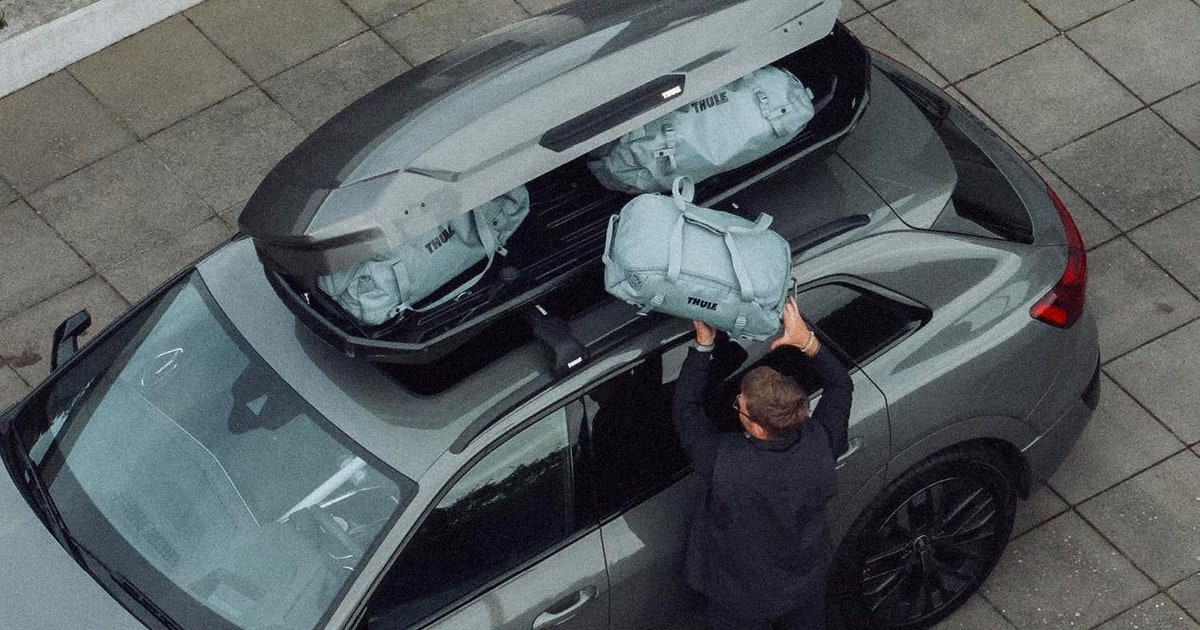
A rooftop carrier buys you back the space your family took away. Once the third row is up and the cooler is in, there's nowhere left for duffels, sleeping bags and the folding chairs nobody wants on their lap. Moving that pile to the roof means everyone rides with legroom and you can actually see out the back window. The good carriers open easily, stay dry in a downpour, and lock so you can leave gear inside at a motel. The bad ones whistle, leak and fight you every time you load them.
But every carrier costs you something. Anything strapped to your roof adds drag, and drag costs fuel — published fuel-economy testing puts the hit at roughly 2 to 4 mpg on the highway for gas vehicles, and EV testing suggests a 10 to 20 percent range loss at sustained highway speeds. Weight limits are tighter than people expect, usually somewhere between 150 and 175 pounds including the carrier itself. And a big box may not clear your garage door. There's no carrier that solves all of that.
We also can't pretend hard shells and soft bags are the same purchase. A hard-shell box costs several times what a strap-on bag does, and it's a commitment: you need crossbars, storage space and a reason to use it more than once a summer. A bag needs almost nothing. We think that the Thule Force 3 XL is the best rooftop cargo carrier for most people, and that the Rightline Gear Sport Jr is the one to buy if your car has no roof rack at all.
Everything we recommend

Opens from both sides and mounts without a fight

A slipperier shape for people who drive a lot of highway
No rack, no crossbars, no problem — just less space

Metal handles and a flat floor, if you pack awkward gear
Prices as of Oct 23, 7:21 AM PT · Details
At a glance
| Product | Capacity | Opening style | Price | |
|---|---|---|---|---|
| Thule Force 3 XL USTop pick | — | — | $929.95 |
| Yakima SkyBox NX 18 XLG Rooftop CargoAlso great | 18 cu ft | Dual-side | $848.95 |
 | SportRack Vista XL Rear Opening Cargo BoxAlso consider | 18 cu ft | Rear opening | $399.99 |
| Rightline Gear Sport Jr Waterproof Rooftop CargoBudget pick | 10 cu ft | — | $65.99 |
| Thule Motion 3 XLRunner-up | — | — | $1,149.95 |
Prices as of Oct 23, 7:21 AM PT · Details
How we picked
Loading and access. We prioritized dual-side or rear opening over single-side access, because published guidance indicates dual access roughly halves load times on tall vehicles. For a sedan, single-side matters much less.
Aerodynamics. Fuel-economy testing from automotive publications puts the highway penalty at roughly 2 to 4 mpg, and EV range loss at 10 to 20 percent. We favored lower, sleeker shells over boxy ones.
Weatherproofing. Lab rain testing has found hard shells with dual gasket seals stay fully dry through simulated heavy rainfall. For soft carriers, we required welded seams and a sealed zipper rather than plain stitching.
Mounting and fit. We looked for tool-free hardware with a positive indicator that the box is secured, and we checked whether a carrier works without crossbars at all — which decides the purchase for a lot of drivers.
Security and limits. We noted lock design and stated load capacity for every carrier. Consumer Reports puts typical static limits at 150 to 175 pounds including the box, and NHTSA advises staying under your vehicle's roof limit.
Top pick
Opens from both sides and mounts without a fight
Thule Force 3 XL US
The Force 3 XL is a long, aerodynamic hard shell that opens from either side of the car and clicks onto your crossbars without tools. It's the carrier we'd pick for a family that road-trips a few times a year and wants gear to stay dry and locked.
$929.95fromAmazonPrices as of Oct 23, 7:21 AM PT · Details
Dual-side opening is the feature you'll appreciate most. If you drive an SUV or a minivan, the roof is already above your shoulders. Being able to walk around to whichever side is free — the curb side at a rest stop, the driveway side at home — saves real time. Wirecutter's guidance suggests dual-side access roughly halves loading and unloading time on tall vehicles compared with single-side boxes. Once you've used it, single-side access feels like a downgrade.
Mounting is the part people dread, and Thule's system takes most of the dread out. The quick-mount hardware clicks audibly when the box is seated correctly on your crossbars, so you're not crouching on a step stool second-guessing whether it's tight. No tools, no loose bolts rolling under the car. The SlideLock system handles locking separately from opening, and it won't let you lock the box unless the lid is actually shut.
At 84.8 inches long, this is a big box, and that length is what makes it useful. Skis, snowboards, camp chairs, a folded pack-and-play — long awkward things are exactly what you want off the floor of the car. The shell is a smooth, low-profile shape rather than a boxy one, which matters: published road testing has found sleeker shells cut wind noise noticeably at highway speed versus square-shouldered competitors.
This is the carrier to buy if you plan to keep it for a decade. Thule states the box is put through road safety and durability testing at its own test center, and the brand's boxes turn up in used listings still working years later. Owner feedback for Thule boxes centers on hardware that keeps working — latches, locks, mounting clamps — rather than on the shell itself, which is usually the part that outlives the car.
Flaws but not dealbreakers
It's the most expensive way to solve this problem, by a wide margin. If you take one trip a year, that math is hard to justify, and a strap-on bag will get the gear there.
Measure your garage before you order. At nearly seven feet long and a foot and a half tall on top of your crossbars, this box will clear some garage doors and not others — and if it doesn't, you're storing a very large plastic shell somewhere. Taking it off is easy, but it's a two-person lift and it needs a wall or a rafter hoist to live on.
Expect a fuel-economy penalty whenever it's up there. It's a slick shape, but it's still a shape, and empty boxes cost you just as much drag as full ones. Take it off between trips.
Runner-up
A slipperier shape for people who drive a lot of highway
Thule Motion 3 XL
The Motion 3 XL is Thule's wing-shaped box, with a forward-leaning nose meant to cut drag, plus a lid you can close one-handed. Get it if most of your miles are interstate miles and you want the quietest ride you can reasonably buy.
$1,149.95fromAmazonPrices as of Oct 23, 7:21 AM PT · Details
The nose is the whole argument here. Where most boxes present a blunt front edge to the wind, this one leans forward into a wing profile, and Thule positions it specifically for reduced drag and better fuel efficiency. Popular Mechanics' buying guidance makes the same point from the other direction: a shape that fights your roofline adds noise and drag even on an otherwise slippery box. If you spend hours at 70 mph, shape is not a cosmetic choice.
One-handed operation sounds like marketing until you're holding a sleeping bag. The lid uses a wide handle designed to open and close smoothly with a single hand, which is what you want when your other arm is full and you're already reaching above your head. The PowerClick mount clicks when the torque is right, so attaching it to your crossbars is a matter of feel and sound rather than guesswork.
At 88 inches, this is the longest carrier in this guide, and it takes long gear that shorter boxes won't. Thule also sells accessories for it that other boxes don't offer — an interior light for loading in the dark, a liner, a storage cover for the off-season. None of that is essential. But if you've ever tried to find one specific bag inside a black plastic box at a campground at night, the light makes sense.
So why isn't it the top pick? Mostly cost and overlap. It sits above the Force 3 XL and gives you a better nose and a nicer handle rather than a fundamentally different box. For a family that mostly drives a few hours to a lake, that's a refinement you don't need. For someone crossing three states twice a year, it's the better buy.
Flaws but not dealbreakers
You're paying a premium over our top pick for a better nose and a nicer handle, not for more room or a tougher shell. If most of your driving is a couple of hours on two-lane roads, that upgrade buys you very little.
At 88 inches it's the longest carrier here, so it's also the hardest to live with when it's off the car. Check your garage ceiling and your wall space before you order, and check how far it hangs past your windshield and rear glass once it's mounted.
The extras that make it pleasant — the interior light, the liner, the off-season cover — are sold separately, so the box you get out of the carton is just a box.
Budget pick
No rack, no crossbars, no problem — just less space
Rightline Gear Sport Jr Waterproof Rooftop Cargo
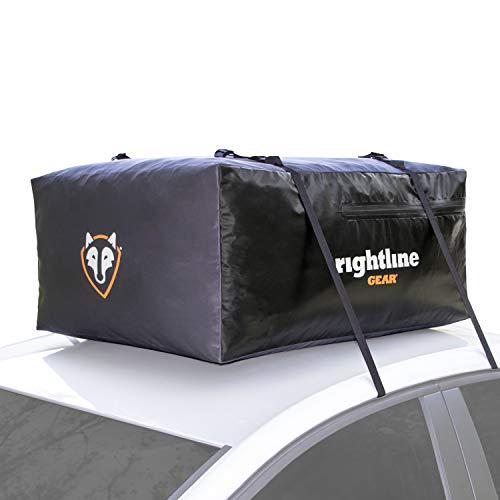
The Sport Jr is a 10-cubic-foot waterproof bag that straps to a bare roof using clips that hook into your door frames. It's the simplest honest answer for a sedan with no rack, and it folds into a stuff sack when you're done.
$65.99fromAmazonPrices as of Oct 23, 7:21 AM PT · Details
If your car has no roof rack, this is where to start. Rightline's clips attach to the weather molding inside your door frames, so a plain sedan roof works fine — no crossbars, no drilling, no rack purchase that costs more than the bag. That single fact rules out most hard shells for a lot of drivers. If you rent, lease or just don't want permanent hardware on your car, this is the practical option.
The waterproofing is more serious than the price suggests. The seams are welded rather than stitched, and the zipper is a sealed design, which is the combination that keeps rain out of a soft bag. Owner feedback across soft carriers tends to split hard along this line — bags with taped or welded seams stay dry, bags with sewn seams don't. Rightline also includes a protective mat option in its lineup for bare roofs, which is worth using if you're strapping directly to paint.
Ten cubic feet is roughly half of what the big hard shells hold, and you should plan around that. It swallows duffels, sleeping bags, pillows and jackets — soft, squishy things. It's not where you put a cooler or anything with corners. For a family of four on a week's trip, it handles the overflow rather than the whole load.
It packs away to nothing, which is quietly the best thing about it. The bag folds into an included stuff sack that lives in a closet or under a seat, so there's no garage-storage problem and no reason to leave it on the roof between trips. That alone saves you fuel that a permanently mounted box would cost.
Flaws but not dealbreakers
There's no real security. A soft bag with a zipper is not a lock, so don't leave anything you'd miss inside it at a hotel overnight. Plan to carry valuables in with you.
Strapping through the door frames means the straps run through your door openings, and you'll get some wind noise and some water intrusion around the seals in heavy rain. It's manageable but it's not elegant. Some owners route a towel along the frame on long wet drives.
Soft bags flap. Pack it full so it holds its shape, cinch every strap, and check them at your first fuel stop. A half-empty bag at 70 mph is loud.
Also great
Metal handles and a flat floor, if you pack awkward gear
Yakima SkyBox NX 18 XLG Rooftop Cargo
The SkyBox NX 18 XLG holds 18 cubic feet, opens from both sides, and has a full metal opening handle that locks gear in the box and the box to the car. Its flat interior floor makes it easier to pack than boxes with a contoured base.
$848.95fromAmazonPrices as of Oct 23, 7:21 AM PT · Details
Yakima builds the interior differently, and that's the reason to consider it. The floor inside is flattened and unobstructed, so bags sit flat instead of wedging into a curved trough. If you've ever tried to slide a duffel into a box only to have it hang up on a molded ridge, you'll get why this matters. Yakima rates it for gear for up to four campers and says it takes skis and snowboards up to 195 cm.
The handle is metal, and that's not a small detail. Latches are the part of a cargo box that fails, and plastic handles are the usual culprit — they get brittle in the cold, and cold is exactly when you're using a box for ski gear. The full metal opening handle here locks the contents inside and locks the box to your crossbars in the same motion, using Yakima's SKS lock system, so you're managing one key rather than two systems.
It opens from both sides, like our top pick, which is the single feature that separates pleasant loading from annoying loading on a tall vehicle. At 16.5 inches tall it's also the shortest hard shell here, which helps with garage clearance and with reaching over the side of an SUV. If your driveway has a low overhang, measure this one first.
We rank it just behind the Thule boxes rather than above them mostly on mounting. It's a good system, but Thule's click-to-confirm hardware is the more foolproof one for people who put the box on and take it off several times a season. If yours mostly stays put, that difference nearly disappears.
Flaws but not dealbreakers
It's heavy — 53 pounds before you put anything in it. That weight counts against your roof load limit, and it makes solo installation genuinely awkward. Get a second person for the lift.
Yakima rates the load at 150 pounds, a bit below what some competitors claim. In practice the vehicle's roof limit is usually the tighter constraint anyway, but check both numbers before you load heavy.
It costs about as much as our top pick without clearly beating it, so choose it for the flat floor and metal handle rather than expecting a bargain.
Who this is for
Buy a carrier if your car fills up before your trip does — a family of four or more, a dog in the cargo area, ski or camping gear that eats the whole back. If you drive an SUV or minivan with a third row, this is the accessory that makes that third row usable. Renters and people without crossbars aren't shut out either; a strap-on bag works on a bare roof and stores in a closet.
Skip it if you take one trip a year and can rearrange the trunk instead, or if your garage clearance is tight and you have nowhere to store a seven-foot shell. EV drivers should think hard about the range hit before committing to a box for long highway drives. This guide covers rooftop boxes and bags that mount on the roof itself; it doesn't cover hitch-mounted cargo trays, roof baskets, crossbars or racks, or rooftop tents, all of which solve different problems.
How we picked
We compared manufacturer specifications, published reviews and owner feedback themes against five things. Access: dual-side or rear opening beat single-side, since published guidance says two-sided access roughly halves load time on tall vehicles. Aerodynamics: we favored low, wing-shaped shells, because testing pegs the highway cost at roughly 2 to 4 mpg in gas cars and 10 to 20 percent of range in EVs. Weatherproofing: hard shells needed gasket seals, soft bags needed welded seams and a sealed zipper. Mounting: tool-free hardware with a positive click or torque indicator, and rack-free options for cars without crossbars. Capacity and limits: stated cubic feet and load ratings, checked against the 150-to-175-pound range that's typical and against your vehicle's own roof limit.
Other rooftop cargo carriers worth considering
If you want a hard shell without the hard-shell price: The SportRack Vista XL Rear Opening Cargo Box — The Vista XL gives you the same 18 cubic feet as the premium boxes for a fraction of what they cost, and it's built by Thule's own parent company. It's made from UV-resistant ABS, the mounting hardware is tool-free, and it comes with a key and lock that secures both the contents and the box to your rack. The compromises are real but livable: it opens from the rear only, not from the sides, and at 39 inches wide and 19 inches tall it's a boxier shape that will cost you more drag and more wind noise than the sleeker Thule and Yakima shells. Rear opening does have one genuine advantage — you're loading from the sidewalk end of the car rather than standing in traffic. If you're outfitting a first road trip and don't want to spend premium money to find out whether you'll use it, start here.
The competition
Our research also turned up several carriers we couldn't confirm as currently available listings, so they aren't covered here. This guide reflects what the research surfaced rather than everything sold in this category. Notably, we looked into lower-profile mid-range boxes and vacuum-compression soft bags — the latter compress after packing to cut drag, which is an interesting idea for EV drivers worried about range — but we can't recommend what we can't verify.
Installation and storage notes
Check two numbers before you buy: your vehicle's roof load limit and your crossbar rating. NHTSA guidance is clear that rooftop loads, including the carrier itself, must stay under the vehicle manufacturer's limit — and that limit is often lower than what the rack alone can hold. A 53-pound box leaves less cargo headroom than you'd think. Load heavy items low and centered, not at the nose or tail. Then walk around and tug every strap and clamp before you pull out, and check them again at your first fuel stop. Take the carrier off between trips; an empty box costs the same fuel as a full one. Store hard shells on a wall bracket or rafter hoist rather than flat on a garage floor, where the shell can warp. Rinse road salt off the shell and lubricate the lock cores once a season.
Questions we get
Do you need a roof rack for a rooftop cargo carrier?
For a hard-shell box, yes — you need crossbars, and they're a separate purchase if your car doesn't have them. Soft-shell bags are the exception. The Rightline Gear Sport Jr includes clips that hook into your door frame weather molding, so it works on a bare roof with no rack at all.
How much does a rooftop cargo box hurt gas mileage?
Published fuel-economy testing puts the highway penalty at roughly 2 to 4 mpg in gas vehicles, depending on the shape of the box and the profile of your car. A wing-shaped box on a low sedan costs less than a boxy one on a tall SUV. The penalty applies whether the box is full or empty, so take it off when you're not using it.
How much does a cargo box reduce EV range?
Testing from automotive publications suggests roughly 10 to 20 percent of real-world range at sustained highway speeds. Drag scales sharply with speed, so the hit is worst on interstate driving and much smaller around town. If you're planning a long EV road trip with a box on, add charging stops to your route rather than assuming your usual range.
How much weight can a rooftop cargo carrier hold?
Most boxes are rated somewhere between 150 and 175 pounds, and that figure typically includes the weight of the box itself. But the binding number is usually your vehicle's roof load limit, which is often lower than the rack's rating. Check your owner's manual, subtract the carrier's weight, and load to whatever's left.
Are soft-shell or hard-shell carriers better?
They solve different problems. Hard shells lock, hold their shape at speed, cut drag better and last for years — but they cost several times as much and need crossbars and storage space. Soft bags cost little, fold into a closet and work without a rack, but they offer no real security and hold less. If you travel a few times a year and have a rack, go hard shell.
Can a rooftop cargo carrier fit in a garage?
Sometimes, and you should measure before you buy. Add the box's height to your roof height plus crossbar height — the boxes here run from 16.5 to 19 inches tall on their own. Many drivers find they need to remove the box before pulling in, which is another argument for a mounting system that comes off quickly.
Why you should trust us
For this guide:
- We read manufacturer specifications for every carrier here, along with published reviews and buying guides from automotive outlets covering aerodynamics, fuel economy and rain resistance.
- We compared stated capacities, load limits, mounting systems and opening styles across the lineup, and weighed recurring themes in owner feedback about latches, seals and wind noise.
- We did not mount, load or drive with any of these carriers.
- We read owner reviews on every listing, weighted toward the critical ones, because that is where the recurring failures show up.
- We have a systematic way of automatically fetching the latest prices, so the numbers on this page stay current.
- This is a research-focused guide, so the team may not own every product listed — though we often do own the top winners, which gives us extra context for the recommendations.
- We don't accept free products, and the retailer commission never changes which product we recommend.
Sources
Best Rooftop Cargo Boxes 2026 - Consumer Reports, Consumer Reports
We Tested 12 Roof Cargo Boxes: Here's What We Found - Car and Driver, Car and Driver
Best Cargo Boxes for Road Trips - Wirecutter, Wirecutter
Thule Force XT Roof Box Review, Thule (Manufacturer)
Yakima SkyBox 18 Carbonite Specifications, Yakima (Manufacturer)
How Rooftop Cargo Boxes Affect EV Range - Edmunds, Edmunds
Roof Box Aerodynamics and Fuel Economy Testing - MotorTrend, MotorTrend
Rooftop Cargo Carrier Buying Guide - Popular Mechanics, Popular Mechanics
Rightline Gear Car Top Carrier Waterproofing Test, Rightline Gear (Manufacturer)
IIHS and NHTSA Guidance on Rooftop Weight Limits, NHTSA
Best Car Roof Boxes Tested 2026 - AutoExpress (UK), AutoExpress
SportRack Vista XL Product Specifications, SportRack (Manufacturer)
Amazon product listings and owner reviews for all 5 products
Manufacturer specification pages for each product
Some passages in this guide may be paraphrased with AI help.
Product prices and availability are accurate as of the date/time indicated and are subject to change. Any price and availability information displayed on Amazon.com at the time of purchase will apply to the purchase of this product.
More like this.
Continue exploring home reviews and recommendations.

The Best Roof Racks and Cargo Carriers
Your roof is the only empty space left once the car is packed. Skis, a week of luggage for four, a stroller, folding chairs - it all has to go somewhere,…

The Best Trailer Hitch Cargo Carriers
Every road trip has the same moment. The trunk is full, there's still a cooler and a folding chair on the driveway, and someone in the back seat is about…

The Best Rooftop Tents
Pitching a ground tent is fine until it isn't. You get in after dark, the only flat spot is a gravel pullout, and the ground is soaked. A rooftop tent…

The Best Pet Carriers for Car Travel
Most of us drive with a pet the way we did as kids: the dog loose on the back seat, the cat yowling in a box on the floor. That works right up until it…

The Best Truck Bed Cargo Nets
A cargo net is the difference between a load that arrives and a load that scatters across two lanes of highway. Most of what you haul in a pickup bed - …

The Best Waterproof Roof Cargo Bags
A soft roof bag is the simplest way to buy back space in a packed car. You strap it down, you load it, and suddenly the middle seat isn't a luggage shelf…