The Best Waterproof Roof Cargo Bags
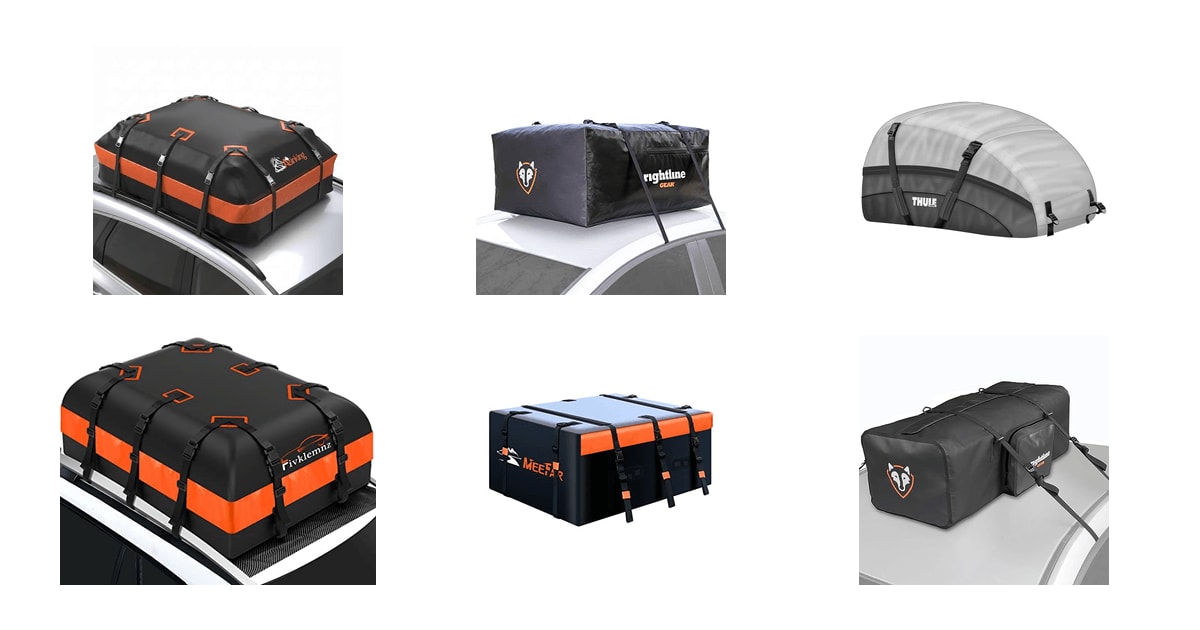
A soft roof bag is the simplest way to buy back space in a packed car. You strap it down, you load it, and suddenly the middle seat isn't a luggage shelf anymore. Unlike a hard box, a good bag mounts on almost anything — a sedan with a bare roof, a crossover with side rails, a minivan with factory crossbars — and it folds into a closet when the trip's over. What separates a great one from a soggy disappointment is boring: how the seams are made, how many straps hold it down, and whether the zipper has a flap over it.
Here's the honest part. None of these bags is a sealed container, and owners of every model here have opened one up after a long drive in the rain and found something damp. Water tends to creep in around the zipper or pool at the bottom, not soak straight through the fabric. They also make noise. A loaded bag at highway speed adds wind roar and some strap flutter, and no amount of tightening removes all of it. Pack in dry bags, expect a little hum, and you won't be disappointed.
Capacity is the other thing people get wrong, usually in both directions. A 21-cubic-foot bag swallows a week of luggage for four, but it can also hang off the edge of a compact car's roof — measure before you order. Something around 10 cubic feet is plenty for two people on a weekend and much easier to live with. We think that the FIVKLEMNZ 21 Cubic Rooftop Cargo Carrier is the best waterproof roof cargo bag for most people, and that the Rightline Gear Sport Jr is the one to buy if you drive a smaller car and travel light.
Everything we recommend

Big, secure, and it comes with everything you need
Smaller, simpler, and the closure you can trust most

A deeper cavity and a lock, for gear that stands tall

The most complete kit, if you're willing to bet on a newer name
At a glance
| Product | Capacity (cu ft) | Requires Roof Rack? | Price | |
|---|---|---|---|---|
| Asinking Car Rooftop Cargo Carrier Bag 21Budget pick | 21 cu ft | With or Without | $72.99On sale |
| Rightline Gear Sport Jr Waterproof Rooftop CargoRunner-up | 10 cu ft | With or Without | $65.99On sale |
 | Thule Interstate Rooftop Cargo Carrier BagAlso in lineup | 16 cu ft | — | $151.56 |
| FIVKLEMNZ 21 Cubic Rooftop Cargo Carrier WaterproofTop pick | 21 cu ft | With or Without | $85.49On sale |
| Car Roof Bag Rooftop Cargo Carrier BagAlso great | 21 cu ft | With or Without | $149.99 |
 | Rightline Gear Car Top Waterproof Duffle BagAlso consider | 120 Liters | With or Without | $69.99 |
How we picked
Seam construction. We looked for welded or high-frequency-bonded seams rather than stitched seams with a surface coating, because needle holes become leak points as the coating ages. Every bag we recommend uses bonded seams according to its specifications.
Closure design. Zippers leak before fabric does, so we gave weight to bags with a waterproof zipper, a storm flap, or both. Owner reports of damp contents almost always trace back to the closure rather than the shell.
Rack-free mounting. Most people shopping for a soft bag don't have crossbars, so we prioritized systems with door hooks or door clips and enough straps to hold a load steady at highway speed. We compared the number of attachment points listed for each model.
Capacity that matches real cars. We matched stated dimensions against typical roof sizes, since a 52-inch bag doesn't belong on a compact sedan. Overhang complaints from owners were a strong signal that a bag was oversold for the vehicle it was bought for.
Owner failure patterns. We read through owner feedback for each model looking for repeated problems rather than one-off complaints. Confusing instructions, clips that don't fit certain door frames, and water pooling at the bottom all came up often enough to shape our picks.
Top pickOn sale
Big, secure, and it comes with everything you need
FIVKLEMNZ 21 Cubic Rooftop Cargo Carrier Waterproof
The FIVKLEMNZ holds a week of luggage for a family of four and mounts on a car with no roof rack at all. Welded seams, ten straps, six door hooks and an anti-slip mat come in the box, so there's nothing extra to buy.
$85.49fromAmazonList priceThis is the bag that fits the most cars and the most stuff. At 52 by 40 by 18 inches, it's rated for four to six suitcases, which in practice means a family of four can pack for a week and still see out the back window. The ten reinforced straps and six door hooks mean you don't need a rack, crossbars or side rails. If your car has doors, you can mount it.
The waterproofing is layered rather than clever. FIVKLEMNZ uses 840D PVC with high-frequency welded seams, so there are no needle holes in the shell for water to find, and then adds a second waterproof cover on top of that. Owners who've driven through desert heat and multi-hour downpours consistently report dry luggage. That's the pattern that matters more than any single claim on the box.
Not perfectly dry, though, and we want to be straight about that. A meaningful minority of owners report damp items after long drives in steady rain — usually the things sitting at the very bottom, or the ones nearest the zipper. The fix owners land on is simple: fold the storm flap fully over the zipper and press it down before you leave, and put anything that has to stay dry inside a trash bag or dry sack.
Six hooks is the setup that inspires confidence. With all six attached, the bag sits still. Owners describe long interstate runs — thousands of miles, triple-digit heat, hard rain — with no shifting and no drama. The instructions for those hooks are the weak link. Several people found the printed guide confusing and went looking for a video, which is worth doing once at home before the morning you actually leave.
Flaws but not dealbreakers
The footprint is genuinely large. Owners with a Subaru Forester and similar mid-size wagons report it running long and wide for the roof, which means overhang at the front or back. Pull a tape measure across your flat roof area before you order — if you're under about 50 inches of usable length, look at a smaller bag.
The door-hook instructions aren't good. Enough owners struggled with them that we'd call it a real flaw rather than a quibble, and a few didn't trust the hooks afterward and added their own straps. Do a dry run in the driveway.
Loaded, this thing is heavy and awkward to lift onto a roof. If you're short, or your vehicle is tall, plan on a second person for the initial hoist.
Runner-upOn sale
Smaller, simpler, and the closure you can trust most
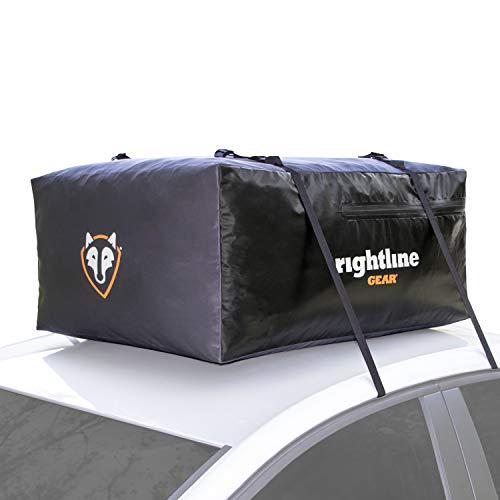
Rightline Gear Sport Jr Waterproof Rooftop Cargo
The Rightline Gear Sport Jr holds about 10 cubic feet — two carry-ons and a couple of soft bags. Its SZIP waterproof zipper is the most convincing closure design here, and the compact shape sits properly on a sedan roof.
$65.99fromAmazonList priceIf you drive a Prius, a Civic, an older coupe, this is the bag that actually fits. Ten cubic feet doesn't sound like much next to a 21-cubic-foot carrier, but it's the right size for two people on a long weekend, and it doesn't hang past the edges of a small roof. Owners have run it on everything from a Kia Spectra to a two-door Acura and reported a clean fit.
The zipper is the part worth paying for. On most roof bags, the zipper is the leak path — water wicks between the teeth in sustained rain no matter how good the fabric is. Rightline's SZIP design adds a secondary waterproof membrane behind the closure to block that route. Combined with welded seams, it's why owners who've driven through winter storms across the Midwest report opening the bag to dry gear.
The shell is UV-protected PVC semi-coated mesh, which matters if the bag lives on your roof through summer trips rather than in a closet. Owners several seasons in report it still holding shape and color. Everything folds into the included stuff sack, and the setup guide is sewn into the sack itself — a small thing you'll appreciate the second time you use it.
Expect the first install to take a while. Owners describe roughly 25 minutes the first time and closer to five after that, which is a good argument for a practice run. It also makes noise at speed. That's true of every bag here, but on a small quiet car you'll notice it more.
Flaws but not dealbreakers
Ten cubic feet is about two soft carry-ons. For three or more people, or any trip past a weekend, it's not enough, and no amount of clever packing fixes that.
The included car clips don't fit every door frame. Owners report the clips working fine on some cars and not seating properly on others, and several bought aftermarket straps to feel secure. The straps themselves also draw complaints for being fiddly to adjust.
There's no anti-slip mat in the box and no lock. Owners are near-unanimous that you need the mat — buy one with the bag, not after your first trip.
Also great
A deeper cavity and a lock, for gear that stands tall
Car Roof Bag Rooftop Cargo Carrier Bag
The MeeFar holds the same 21 cubic feet as our top pick but shapes it differently — 22 inches deep instead of 18. Ski boots, camp chairs and tall backpacks fit without wrestling, and a combination lock is included.
$149.99fromAmazonThe extra height is the reason to pick this one. Most large roof bags are wide and shallow. The MeeFar measures 47 by 35 by 22 inches, so it's narrower on the roof and deeper in the middle. That's the shape you want for ski boot bags, folding chairs, a stuffed camera pack — anything that doesn't want to lie flat. On a shorter roofline, the narrower footprint is a bonus.
The 4+2 door hooks mean no straps run through the inside of your car. If you've ever driven with a strap pressing against your ear for six hours, you know why that matters. Owners moving across the country — Texas to Louisiana, 2,500-mile relocations — report the bag staying put and the contents staying dry through rainstorms along the way.
Construction is 800D PVC tarpaulin with high-frequency bonded seams and an upgraded waterproof zipper under a flap. It's slightly thinner material than our top pick's, and on paper that's a small step down. In owner feedback, it doesn't show up as a durability problem. What does show up is the same advice as everywhere else: seat the zipper flap properly before you drive.
One recurring note from owners is that this is a two-person bag. It's stiff, it's tall, and getting it positioned and hooked while it's loaded is awkward alone. Several owners describe working out their own modifications to make loading easier, which tells you the stock process takes some figuring out.
Flaws but not dealbreakers
The combination lock secures the zipper pulls and nothing more. It stops a casual grab, not anyone with a knife. Camera gear and laptops belong inside the car overnight, always.
At 22 inches tall and fully packed, it presents more surface to the wind than a flatter bag. Expect a bit more noise and a bit more drag than a low-profile carrier of the same volume.
Loading it solo is a chore. Between the height and the weight, most owners end up with a helper for the lift and the hook routing.
Budget pickOn sale
The most complete kit, if you're willing to bet on a newer name
Asinking Car Rooftop Cargo Carrier Bag 21
The Asinking bundles 900D PVC with welded seams, ten straps, six hooks, a non-slip mat and a luggage lock. It's the thickest shell material here, and owners have taken it thousands of miles without trouble.
$72.99fromAmazonList priceNothing else here arrives this complete. Mat, lock, six hooks, ten straps, storage sack — all in the box. With most bags you end up ordering a mat separately and a cable lock after that, so the bundle genuinely saves you a couple of purchases and a week of waiting.
The shell is 900D PVC tarpaulin, the heaviest gauge in this group, with every seam joined by high-frequency welding rather than stitching. Owners report cross-country runs — 3,000-plus miles, Colorado winters, Denver to Moab loaded with four large duffels — with the bag quiet and dry at the end. One owner with a rack-free Pontiac ran the hooks under the weather stripping as instructed and had no issues.
There's a real caution in the owner feedback, though. Alongside a lot of strong reports there's a cluster of accounts of things going badly wrong on long highway drives, and that's not something we'd wave away on a product that rides above your head at 70 mph. Check every strap before you go, recheck them at your first fuel stop, and don't overstuff — owners who report problems often mention a bag packed past its shape.
At 52 by 40 by 18 inches it's a large footprint, same as our top pick. On a compact sedan, that's overhang. On an SUV or minivan, it sits well within the roof and the hooks reach the door frames easily.
Flaws but not dealbreakers
The reliability picture is more mixed than the raw enthusiasm suggests. Most owners are delighted; a small but vocal group describes serious failures on long drives. If you're planning a single multi-thousand-mile trip and want the safest bet, our top pick has a far longer track record behind it.
Loading and unloading is a two-person job at this size, and owners say so plainly. Anything you need at a rest stop should stay in the car.
Measure first. On a compact car, 52 inches of bag on a 45-inch roof means it overhangs the windshield or the hatch, neither of which you want.
Who this is for
Buy a soft roof bag if you take a few long trips a year and your car is full before the luggage goes in. They cost a fraction of a hard box, they mount on vehicles with no rack at all, and they fold flat between trips instead of eating half your garage. For a family of four heading out for a week, a large bag is the difference between a comfortable drive and one where somebody rides with a duffel on their lap.
Skip them if you haul gear weekly, if you need real theft protection, or if you park outside in weather for days at a stretch — a keyed hard box is the better tool for all three. This guide covers soft, foldable rooftop carriers only. We haven't looked at hard cargo boxes, cargo baskets, hitch carriers or trailers, and we don't cover the crossbars or racks that some of these bags can attach to.
How we picked
Seams: We favored welded or high-frequency-bonded construction over stitched-and-coated shells, since needle holes turn into leaks as coatings age. Closure: A waterproof zipper, a storm flap, or both, because that's where water actually gets in. Mounting: Door hooks or clips plus enough straps to hold a full load steady, so you don't need a roof rack. Fit: Stated dimensions checked against real roof sizes — a bag that overhangs your windshield isn't a bargain. Owner patterns: Repeated complaints about instructions, clip fitment or pooling water counted more than any single bad trip.
Other waterproof roof cargo bags worth considering
If you want a waterproof bag you can also carry: The Rightline Gear Car Top Waterproof Duffle Bag ($69.99) — The Rightline Gear 120L Duffle uses the same welded seams and urethane-coated zippers as the Sport Jr, plus a hook-and-loop flap over the closure, but in a duffel shape with a shoulder strap. That makes it useful in a cargo basket, a truck bed, a hitch rack or the back of a wagon, not just on a roof. At 120 liters it's about one large suitcase — fine as overflow for a couple, not enough as your only cargo solution. Owners also report the Velcro flap as the weak spot: when it lifts, water finds the zipper. And strapping it to a bare roof without a basket isn't something we'd do at highway speed.
The competition
This is what our research turned up among widely bought soft rooftop carriers, not a survey of everything sold. We focused on models with enough published specification detail and owner feedback to say something useful about how they hold up. The bag below didn't make the picks, but it may still be the right call for a specific setup.
The Thule Interstate Rooftop Cargo Carrier Bag ($151.56) — The Thule Interstate is the one premium-brand bag here, and it's the only one with a padded base — genuinely better protection for your paint than a rubber mat, which matters on a lease or a car with soft clearcoat. Its 16 cubic feet suits three people for a week, and the coated three-sided zipper with large storm flaps makes loading in the rain less miserable. Two things keep it out of our picks. It's weather-resistant rather than fully waterproof, so sustained heavy rain can work through the seam stitching. And owner feedback splits sharply: plenty of long, dry, trouble-free trips, but also a real cluster of reports of holes and failures within a season or two, with warranty service that owners found unhelpful. It also needs a roof rack, which rules it out for most of the people this guide is written for. If you already have crossbars, want the padded base, and take a lot of short trips in mixed weather, it's still a reasonable buy.
Installation and care
Do your first install in the driveway, not at 6 a.m. on departure day — most owners need twenty minutes the first time and five after that. Always put a mat, or a mat plus a microfiber towel, between the bag and your roof; the mat stops sliding but micro-abrasion still happens over hundreds of miles. Pack the bag full so it doesn't balloon, tuck every loose strap end under a tight one to stop flutter, and fold the storm flap fully over the zipper before you pull out. Recheck strap tension after the first half hour and at every fuel stop. Don't take a loaded bag through an automated car wash. When the trip's done, wipe off road salt and grime, let it dry completely before folding — damp storage means mold and corroded zippers — and keep it out of direct sun.
Questions we get
Do roof cargo bags work without a roof rack?
Yes, and most people buying these don't have one. Door hooks and door clips thread through your closed doors and grip the frame, so the bag holds without rails or crossbars. The FIVKLEMNZ, Asinking, MeeFar and Rightline Sport Jr all support rack-free mounting; the Thule Interstate is the exception and needs a rack. Rack-free systems generally top out around 100 to 120 pounds.
Are these bags waterproof or just water-resistant?
Mostly waterproof, with an asterisk. Bags with welded or bonded seams have no needle holes for water to enter, so the shell itself holds up in sustained rain. But owners of every model here occasionally report damp contents after long wet drives, almost always at the zipper or the bottom of the bag. Put anything that must stay dry in a dry bag or a trash bag inside.
What size do I need for a family of four?
Aim for 18 to 21 cubic feet for four people on a week-long trip — that's roughly four to six suitcases. Sixteen cubic feet works for three. Ten cubic feet or a 120-liter duffel is a solo or couples-weekend size, not a family solution. Measure your flat roof area first, because a 21-cubic-foot bag runs about 52 inches long and won't sit properly on a compact sedan.
How fast can I drive with one loaded?
Manufacturers generally advise staying under 65 to 80 mph with a loaded bag. Going faster stresses the zipper and the straps, and highway on-ramps are where wind loads spike hardest. Stick to the posted limit and check strap tension every couple of hours — straps loosen as the load settles.
Will it scratch my car's paint?
It can, if you skip the mat. An anti-slip mat stops the bag from sliding, but fine abrasion still happens over a few hundred miles of vibration. Add a microfiber towel under the mat on long trips, especially on a lease or a newer car with soft paint. The Thule Interstate's padded base is the best built-in protection here.
How do I cut down the wind noise?
Pack the bag completely full so there are no air pockets to flutter. Tighten every strap before you leave and recheck after the first thirty minutes, then tuck all loose strap ends under a taut strap. Positioning the bag slightly forward of the roof's center puts it in calmer air behind the windshield. Some noise is unavoidable — owners of every model here mention it.
Why you should trust us
For this guide:
- We compared the published specifications for all six carriers, focusing on shell material, seam construction, closure design and the number of included attachment points.
- We read owner feedback for each model looking for repeated failure patterns — water pooling at the bottom, clips that don't fit certain door frames, confusing hook instructions — rather than isolated complaints.
- We cross-checked stated bag dimensions against typical vehicle roof sizes to flag which models overhang smaller cars.
- We read owner reviews on every listing, weighted toward the critical ones, because that is where the recurring failures show up.
- We have a systematic way of automatically fetching the latest prices, so the numbers on this page stay current.
- This is a research-focused guide, so the team may not own every product listed — though we often do own the top winners, which gives us extra context for the recommendations.
- We don't accept free products, and the retailer commission never changes which product we recommend.
Sources
Best Rooftop Cargo Bags — Wirecutter, Wirecutter
Best Roof Cargo Bags Tested — Car and Driver, Car and Driver
Best Rooftop Cargo Bags 2026 — Popular Mechanics, Popular Mechanics
Best Rooftop Cargo Bags Reviewed — OutdoorGearLab, OutdoorGearLab
Best Roof Cargo Bags — Forbes Vetted, Forbes
Amazon product listings and owner reviews for all 6 products
Manufacturer specification pages for each product
Some passages in this guide may be paraphrased with AI help. Prices are refreshed automatically.
More like this.
Continue exploring electronics reviews and recommendations.

The Best Roof Racks and Cargo Carriers
Your roof is the only empty space left once the car is packed. Skis, a week of luggage for four, a stroller, folding chairs - it all has to go somewhere,…

The Best Trailer Hitch Cargo Carriers
Every road trip has the same moment. The trunk is full, there's still a cooler and a folding chair on the driveway, and someone in the back seat is about…

The Best Truck Bed Cargo Nets
A cargo net is the difference between a load that arrives and a load that scatters across two lanes of highway. Most of what you haul in a pickup bed - …

The Best Roof Rakes for Snow Removal
A foot of wet snow on your roof isn't a cosmetic problem. Fresh powder weighs about 3 pounds per cubic foot, but dense, water-logged snow can hit 20…

The Best Heat Cables for Gutters and Roofs
An ice dam starts quietly. Snow melts on the warm part of your roof, runs down to the cold overhang, and freezes into a ridge at the eave. Water then…

The Best Waterproof E-Readers
Reading in the bath used to mean paperbacks with wavy, buckled pages. A waterproof e-reader fixes that. Every device here carries at least an IPX8 rating,…