The Best Smart Fitness Watches
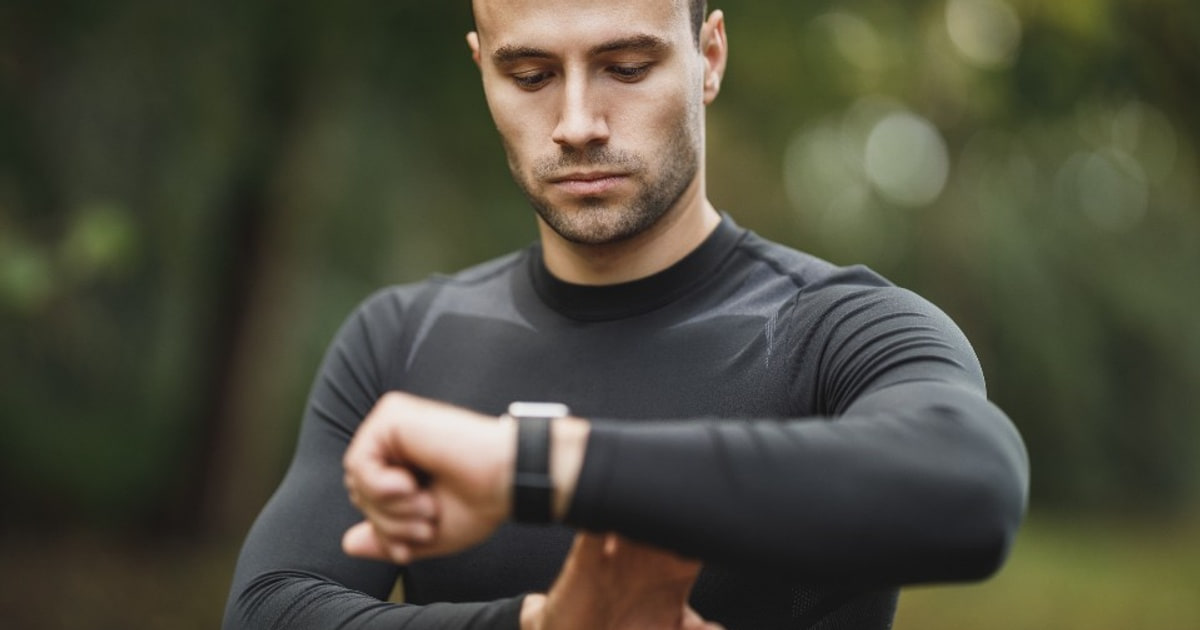
A fitness watch earns its place on your wrist by being useful before you think about it. It tells you that you slept badly before you've had coffee. It counts a walk to the train as movement. It buzzes when your heart rate climbs during a hard interval and nudges you to back off. The good ones do that quietly, for days, without asking to be charged. The mediocre ones make you manage them — dead batteries, missed workouts, sleep data with holes in it. That gap matters more than any single sensor spec.
Here's the honest part: none of these watches is a medical device, and the ones that come closest are careful to say so. Wrist-based blood oxygen readings drift when you move, when you're cold, or when the band sits loose. Sleep staging is an estimate built from motion and heart rate, not brain waves. Non-invasive glucose features on premium watches show trends, not clinical numbers, and you shouldn't dose anything based on them. Calorie burn is a guess across the board. Treat all of it as a directional signal you check over weeks, not a readout you trust to the decimal.
The other thing nobody tells you up front is that your phone picks your watch. An Apple Watch paired to an Android phone is close to useless, and the reverse is nearly as bad. So start there, then decide how much training depth you actually want. We think that the Apple Watch Series 10 is the best smart fitness watch for most people, and that the Garmin Forerunner 965 is the one to buy if you're training seriously for races and want battery life measured in weeks.
Everything we recommend

The easiest one to live with, if you carry an iPhone

Deeper training data and weeks of battery, at a real cost

The Android pick, with body composition and apnea alerts
Core health sensors in a band you'll forget you're wearing

Weeks of battery and a build meant for actual wilderness
At a glance
| Product | Battery Life | Display | Price | |
|---|---|---|---|---|
| Apple Watch Series 12 GPS 42mm SmartwatchTop pick | — | — | $389.99 |
| Garmin fēnix® 8 Solar SapphireUpgrade pick | Up to 28 Days | 1.3in Solar Display | $999.99 |
| Samsung Galaxy Watch 7 40mm Bluetooth SmartwatchAlso great | — | — | $139 |
| Garmin Forerunner® 965Runner-up | Up to 23 Days | AMOLED Touchscreen | $599.99On sale |
| Google Fitbit Charge 6 - Fitness TrackerBudget pick | — | — | $130.14On sale |
 | POLAR Vantage V3Also consider | Up to 8 Days | AMOLED Touchscreen | $679.90 |
 | Amazfit Balance 3 Smart WatchAlso consider | Up to 21 Days | 1.5in AMOLED | $369.99 |
How we picked
Sensor accuracy. We prioritized watches with published, third-party accuracy data rather than manufacturer claims alone. Peer-reviewed studies, lab comparisons against DEXA and polysomnography, and FDA clearance status all carried more weight than a feature bullet.
GPS precision. Multi-band GPS (L1 + L5) is the dividing line now, and independent testing puts dual-band watches within a couple of meters of reference tracks versus 10 to 15 meters for single-band. We favored watches with dual-band radios for anyone tracking pace seriously.
Battery and charging. We looked at manufacturer runtime ratings alongside published real-world results and owner reports, since claimed figures usually assume the always-on display is off. Anything that needed charging more than once a day was out.
Phone compatibility. We checked which phone each watch actually needs, not just which it technically pairs with. Watches that lose major features outside their home ecosystem are recommended only to people in that ecosystem.
Everyday usability. Screen legibility in sunlight, button controls that work with wet hands, and comfort overnight all mattered. Owner feedback themes about software stability and charger quality helped separate watches that look good on paper from ones people keep wearing.
Top pick
The easiest one to live with, if you carry an iPhone
Apple Watch Series 12 GPS 42mm Smartwatch
The Series 10 is the thinnest Apple Watch yet, and it disappears on your wrist in a way older models didn't. You get ECG, sleep tracking, fall detection and the deepest app library of any watch here — as long as your phone is an iPhone.
$389.99fromAmazonIf you already carry an iPhone, this is the watch to get. Nothing else matches how little setup it demands. Texts, calls, Apple Pay, Maps directions and your gym app all show up without configuration. The app catalog is far deeper than Wear OS or Garmin's, so whatever niche thing you track — a specific climbing log, a physical therapy program, a medication reminder — there's probably something for it.
Apple lists the Series 10 at 9.7mm thick, about 10% thinner than the Series 8, with a display 30% larger than the Series 6. Those numbers sound like marketing until you sleep in it. A thinner case is the difference between wearing a watch overnight and taking it off, and sleep data only works if you actually wear the thing every night.
The heart rate sensor is genuinely good. A 2024 peer-reviewed JMIR study of six consumer smartwatches found the Apple Watch Series 9 hit 98.3% resting heart rate accuracy against medical-grade ECG monitors. That's the previous generation, but it's the same sensor lineage, and it's the strongest published evidence in this lineup.
The health features go past step counting. ECG, irregular rhythm notifications, high and low heart rate alerts, and fall detection are all here. For someone managing a known cardiac condition, or an older parent living alone, that combination is the reason to buy an Apple Watch specifically. Just talk to a doctor about what the readings mean instead of self-diagnosing from a chart.
This particular listing is a renewed unit, professionally inspected and sold with a battery above 80% of new capacity. Owners of these renewed watches report units arriving effectively cosmetically flawless, often with battery health in the high 90s. It's a reasonable way into the Apple ecosystem, and Amazon backs it with a one-year replacement or refund window.
Flaws but not dealbreakers
Battery life is the weak point, and it isn't close. You'll charge this daily, or near enough. Consumer Reports' 2025 smartwatch ratings found only 22% of Apple Watch owners rated battery life 'Excellent,' compared with 78% of Garmin Fenix owners. Charging speed frustrates people too — owners of this renewed listing note the included third-party charger is slow, and several bought a better one.
It's an iPhone accessory, full stop. Pair it with an Android phone and most of what makes it good stops working. If you're on Android, skip to the Samsung or the Pixel.
For serious endurance training, Garmin and Polar simply offer more. There's no equivalent to Garmin's training readiness score or race predictor here without third-party apps, and a marathon build with daily charging is a chore.
This renewed unit is eligible for a replacement or refund within one year of receipt if it doesn't look like new or work as expected.
Runner-upOn sale
Deeper training data and weeks of battery, at a real cost
Garmin Forerunner® 965
The Forerunner 965 pairs a bright AMOLED screen with Garmin's full running platform: multi-band GPS, built-in color maps and training readiness scoring. Garmin rates it at up to 23 days in smartwatch mode and 31 hours with GPS running.
$599.99fromAmazonList priceThis is the watch for anyone with a race on the calendar. Garmin's training readiness score pulls together sleep, recovery, training load and HRV into one number each morning, and it's the rare metric people actually act on. The race predictor is credible too — Runner's World editors found it landed within 90 seconds of actual marathon finish times across a 12-runner panel.
Battery life changes how you use a watch. Garmin rates the 965 at up to 23 days in smartwatch mode and 31 hours with GPS active. That means a marathon, a long trail day, or a week of travel without packing a charger. Owners regularly report going two to three weeks between charges with several GPS runs mixed in.
Built-in full-color maps with multi-band GPS are the underrated feature here. You can drop into an unfamiliar city or a new trail network and follow a route on the wrist without your phone. Owners who backpack call this the reason they keep the watch, and it works well beyond running.
The AMOLED screen fixed the one thing that used to push people toward an Apple Watch. Older Garmins used dim transflective displays that looked dated indoors. This one is bright and sharp outdoors in full sun, with physical buttons you can hit with cold or wet hands mid-run.
Flaws but not dealbreakers
Garmin's software is dense. There are metrics stacked on metrics, and the first week involves a lot of menu diving to figure out what you care about. If you just want steps and a sleep score, this is more watch than you need.
Smart features lag the Apple and Samsung watches. Notifications work, but replying is limited, the app selection is thin, and the whole thing feels built around training rather than around daily life. It's a 47mm watch, too — check it against a smaller wrist before committing.
Also great
The Android pick, with body composition and apnea alerts
Samsung Galaxy Watch 7 40mm Bluetooth Smartwatch
The Galaxy Watch 7 is the most complete option for a Samsung phone, adding BIA body composition scans and FDA-cleared sleep apnea detection. Its Energy Score gives you a daily readiness number without the learning curve Garmin demands.
$139fromAmazonIf you carry a Galaxy phone, this is the obvious answer. Setup takes minutes, Samsung Health handles the data, and the Energy Score gives you a simple daily readiness number based on the previous day's activity and sleep. It's less granular than Garmin's version, which is exactly why more people will actually use it.
The sleep apnea feature is the standout. Stanford Sleep Medicine Center found Samsung's wrist-based detection reached 85% sensitivity and 88% specificity against polysomnography, the clinical gold standard. That won't diagnose you, but if it flags something, it's a reasonable prompt to see a doctor — and apnea goes undiagnosed constantly.
Body composition through BIA is a genuinely uncommon feature. Tom's Guide measured the Galaxy Watch 7's readings within 2.5% of DEXA scan results across a 30-participant test. If you're tracking a body recomposition and tired of guessing from a bathroom scale, that's useful — take readings at the same time of day for consistency.
This renewed 40mm listing suits smaller wrists, and owners consistently describe units arriving without visible blemishes. A couple report receiving watches stuck in demo mode, which required a return, so check that it activates and pairs properly in the first few days.
Flaws but not dealbreakers
Battery life is roughly a day and a half, sometimes two if you dial back the always-on display. That's better than an Apple Watch and far behind any Garmin. Plan on charging it most nights, which complicates sleep tracking.
It works best with a Samsung phone specifically. On other Android handsets you lose some features, and on an iPhone it's a non-starter. Some of the more interesting insights also live in the phone app rather than on the watch.
Budget pickOn sale
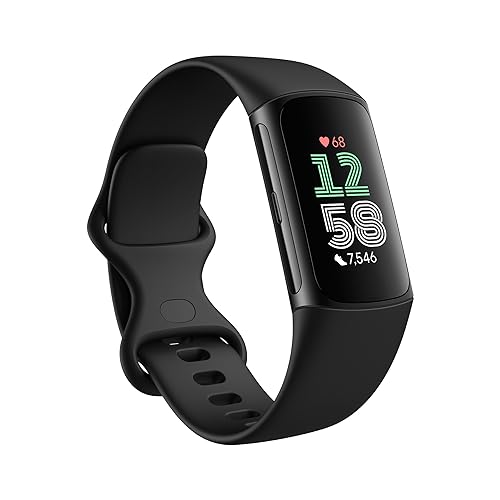
Core health sensors in a band you'll forget you're wearing
Google Fitbit Charge 6 - Fitness Tracker
The Charge 6 packs ECG, SpO2, skin temperature and built-in GPS into a slim band that costs a fraction of the watches here. Google Maps directions and Wallet payments make it more capable than the form factor suggests.
$130.14fromAmazonList priceA band beats a watch for a lot of people, and this is the best argument for one. It's light enough to forget about overnight, which is exactly when sleep tracking works. Owners who moved over from an Apple Watch cite that specifically — they finally got sleep data because they stopped taking the thing off to charge it.
The sensor list is unusually complete for the money. ECG, SpO2 and skin temperature normally live on watches that cost several times as much. Verywell Fit scored the Charge 6 at 4.5 out of 5 for value on that basis. You also get built-in GPS, 40-plus exercise modes, a stress management score and a nightly sleep score.
The Google integration is more useful than it sounds. Turn-by-turn Maps directions on your wrist during a run or ride, Wallet payments at the coffee shop after, and YouTube Music controls throughout. It also broadcasts heart rate to compatible gym treadmills and ellipticals, which most bands can't do.
Think of it as a health baseline device, not a training computer. If you want to know roughly how much you move, how you slept and whether your resting heart rate is trending up, it covers that well. It won't structure a marathon build.
Flaws but not dealbreakers
Reliability is the recurring complaint. Owner feedback includes units that stopped syncing or refused to reboot within a few months, and some report heart rate readings that drift during intense intervals. It's the least consistent product in this guide on that front.
The tiny screen limits what you can do. Reading a notification is fine; responding to one isn't really. And the most interesting coaching sits behind a Google Health Premium subscription after the trial ends, which is worth factoring in before you buy.
Upgrade pick
Weeks of battery and a build meant for actual wilderness
Garmin fēnix® 8 Solar Sapphire
The Fenix 8 Solar Sapphire wraps Garmin's full multisport platform in DLC titanium with a sapphire lens and a solar-charging display. Garmin rates it at up to 28 days in smartwatch mode with three hours of daily sun.
$999.99fromAmazonBattery life here is a different category, not a better number. Garmin rates the Fenix 8 Solar at up to 28 days in smartwatch mode with three hours of daily sun, and up to 92 hours with GPS running under the same conditions. Garmin's lab figures reach 48 days for the solar variants in the best conditions, versus 18 without solar. For a thru-hike or a week off-grid, that's the whole argument.
The build is the other half. A DLC titanium bezel and scratch-resistant sapphire lens hold up to the kind of contact that would mark an aluminum case, and owners report banging the face repeatedly without finding a scratch. There's a built-in LED flashlight too, which sounds gimmicky right up until you're setting up camp after dark.
You get everything the Forerunner offers plus more: training readiness, real-time stamina tracking, targeted strength plans and sport-specific workouts across a long list of built-in apps. A speaker and mic handle calls from the wrist, and off-grid voice commands work without a phone nearby.
This is a lot of watch for someone whose longest outing is a 10K. If your training happens on roads and in gyms within reach of a charger, the Forerunner does the same analytics for meaningfully less. Buy the Fenix for the durability and the days away from power.
Flaws but not dealbreakers
The software has been rocky. Owner feedback includes reports of instability and crashes during recorded activities, and some longtime Garmin users find the Fenix 8's watch face, activity list and sensor menus a step backward from earlier models. That's a real risk on the most expensive watch here.
Water resistance is rated for swimming and surface water, but at least one owner reports a unit flooding during recreational diving. Don't treat it as a dive computer replacement without confirming the exact depth rating for your use.
It's big. The 47mm case is heavy and tall on a slim wrist, and it's the most expensive product in this guide by a wide margin.
Who this is for
This guide is for anyone who wants their watch to do more than tell time — track workouts, log sleep, keep an eye on heart health and hand you a rough sense of whether you're recovered. That covers a lot of people: the casual walker who wants a baseline, the runner building toward a first marathon, someone whose doctor mentioned atrial fibrillation, a parent who wants fall detection on an aging relative. If you mostly want notifications and a nice face, almost any of these will do, and you should buy on comfort and battery instead of sensors.
Two groups should look elsewhere. If you need clinical-grade measurement — glucose for diabetes management, a diagnosed sleep disorder, a cardiac condition under active treatment — no watch here replaces the equipment your doctor uses. And if you're a dedicated cyclist or swimmer with a chest strap and a bike computer, a watch is a supplement, not an upgrade. We also stuck to wrist-worn devices sold on Amazon, so screenless rings, chest straps and dedicated bike head units are out of scope.
How we picked
We weighed five things. Sensor accuracy: we leaned on peer-reviewed studies, independent lab comparisons and regulatory clearances rather than manufacturer feature bullets, since wrist optics vary enormously between brands. GPS precision: dual-band L1+L5 radios land within a couple of meters of reference tracks while single-band models drift 10 to 15 meters, so multi-band was close to a requirement for anyone tracking pace. Battery and charging: we compared rated runtimes against published real-world results and owner reports, and anything needing more than one charge a day was disqualified. Phone compatibility: we checked which handset each watch genuinely needs, because half these watches lose their best features outside their home ecosystem. Everyday usability: sunlight legibility, physical buttons, overnight comfort and owner reports about software stability separated the watches people keep wearing from the ones that end up in a drawer.
Other smart fitness watches worth considering
If you want long battery without a subscription: The Amazfit Balance 3 Smart Watch ($369.99) — The Amazfit Balance 3 is the value play in this lineup, and it's a serious one. Amazfit rates it at up to 21 days on a charge, and independent lab testing of the previous Balance logged 13.7 days of real-world use with the always-on display disabled — close to the claim. You get dual-band GPS with offline maps and rerouting, a 1.5-inch sapphire-covered AMOLED screen, a built-in flashlight and HYROX training plans. The big one: all your health and recovery data is free in the Zepp app with no subscription, which is unusual now. What you give up is ecosystem polish and app depth. Zepp's software is clunkier than Garmin Connect or Apple Health, third-party integration is limited to the basics like Strava and TrainingPeaks, and the case runs large enough that some owners find it too big for a slim wrist.
If you're training for a triathlon: The POLAR Vantage V3 ($679.90) — The Polar Vantage V3 is built for multisport athletes, with over 150 sport profiles, offline topographic maps and Polar's recovery tools — the Orthostatic Test for catching overtraining and Nightly Recharge for daily readiness. Its GPS is the most accurate here on published evidence: DC Rainmaker's testing placed its dual-band L1+L5 within 1.8 meters of reference tracks. Polar rates it at up to 140 hours of training time and eight days of regular use. Two things hold it back from a pick. The charging cable draws consistent complaints — owners describe connections that need constant cleaning and monitoring, with several buying replacement cords. And firmware has frustrated some buyers enough to return the watch. It's the specialist's choice, not the safe one.
The competition
These are the watches our research surfaced alongside the picks, not a survey of everything on the market. Smartwatch shipments hit 247 million units globally in IDC's 2025 report, up 9.4%, with health features cited as the top purchase driver by 61% of buyers — so there's far more out there than any one guide covers. The watch below didn't make a pick, but it's a reasonable choice for the right person.
Wearing and maintenance notes
Fit does more for accuracy than any sensor upgrade. Wear the band about a finger's width above your wrist bone and snug enough that it doesn't slide when you shake your arm — a loose band is the single biggest cause of junk heart rate and SpO2 data. Loosen it slightly at night for comfort. Rinse the case and band with fresh water after sweaty workouts, saltwater or a chlorinated pool, and dry the back before charging. Silicone bands hold odor, so wash them with mild soap weekly. Wipe the charging contacts with a dry cloth when charging gets slow or intermittent, which is a common complaint on several of these watches. Take the watch off for a few hours a day to let your skin breathe, and check depth ratings before diving or high-speed water sports rather than assuming waterproof means anything goes.
Questions we get
Which fitness watch should I buy first?
Start with your phone, not the watch. If you carry an iPhone, the Apple Watch Series 10 is the default and everything else is a compromise. On a Samsung phone, get the Galaxy Watch 7; on other Android handsets, the Pixel Watch 3 or the Amazfit Balance 3 make more sense. Only after that should you weigh battery life and training depth.
Which one has the longest battery life?
The Garmin Fenix 8 Solar, by a wide margin. Garmin rates it at up to 28 days in smartwatch mode with three hours of daily sun, and its lab figures stretch to 48 days for solar variants in ideal conditions versus 18 without solar. The Amazfit Balance 3 is next at a rated 21 days, and the Forerunner 965 at 23 days in smartwatch mode. Apple, Samsung and Google watches all land in the one-to-two-day range.
Is an Apple Watch good enough for marathon training?
For a first marathon, probably. It records pace, distance and heart rate accurately enough, and third-party apps fill some gaps. The problem is battery: you'll charge it daily, and a slow marathon can strain a single charge. If you're chasing a time goal and want training readiness scoring, race predictions and structured workout guidance, the Forerunner 965 is the better tool.
Can a smartwatch detect sleep apnea?
It can flag signs of it. Samsung's wrist-based detection reached 85% sensitivity and 88% specificity against polysomnography in Stanford Sleep Medicine Center testing, which is strong for a consumer device. But it's a screening prompt, not a diagnosis. If a watch flags a pattern, take that to a doctor for a proper sleep study.
How accurate are blood oxygen and glucose readings?
Blood oxygen is reasonably useful as a trend when you're still, and unreliable when you move, when your hands are cold, or when the band is loose. Non-invasive glucose features on premium watches show directional trends only — they are not clinical measurements and shouldn't inform any medication decision. Treat both as patterns you watch over weeks, not numbers you act on tonight.
What's the difference between a fitness tracker and a smartwatch?
A tracker like the Fitbit Charge 6 focuses on sensors in a slim band with a small screen, and it costs far less. A smartwatch adds a full app platform, payments, voice assistants and real notification handling on a larger display. If you mainly want a health baseline and comfortable overnight wear, a band is often the smarter buy.
Why you should trust us
For this guide:
- We read manufacturer specification sheets for every watch here, along with the Amazon listing details for the exact configurations sold.
- We compared published third-party findings — a peer-reviewed JMIR heart rate study, DC Rainmaker's GPS accuracy work, Stanford Sleep Medicine Center's apnea testing, Tom's Guide body composition comparisons, Runner's World race-predictor results, Wareable battery logging and Consumer Reports satisfaction ratings — against each brand's own claims.
- We reviewed recurring themes in owner feedback, particularly around software stability, charger quality and renewed-unit condition, to identify problems that specification sheets don't surface.
- We read owner reviews on every listing, weighted toward the critical ones, because that is where the recurring failures show up.
- We have a systematic way of automatically fetching the latest prices, so the numbers on this page stay current.
- This is a research-focused guide, so the team may not own every product listed — though we often do own the top winners, which gives us extra context for the recommendations.
- We don't accept free products, and the retailer commission never changes which product we recommend.
Sources
Best Smartwatches 2026 — Wired, Wired
Best Fitness Trackers — Wirecutter (NYT), Wirecutter
Garmin Fenix 8 Solar Review — DC Rainmaker, DC Rainmaker
Apple Watch Series 10 Full Review — The Verge, The Verge
Samsung Galaxy Watch 7 Review — Tom's Guide, Tom's Guide
Smartwatch Heart Rate Accuracy Study — JMIR mHealth, JMIR mHealth and uHealth
Polar Vantage V3 In-Depth Review — DC Rainmaker, DC Rainmaker
Best GPS Running Watches 2026 — Runner's World, Runner's World
Google Pixel Watch 3 Review — Android Authority, Android Authority
Amazfit Balance Long-Term Review — Wareable, Wareable
Sleep Apnea Detection Accuracy — Stanford Sleep Medicine Center, Stanford Sleep Medicine Center
State of Wearable Technology Report 2025 — IDC, IDC
Amazon product listings and owner reviews for all 7 products
Manufacturer specification pages for each product
Some passages in this guide may be paraphrased with AI help. Prices are refreshed automatically.
More like this.
Continue exploring health reviews and recommendations.

The Best Fitness Trackers and Heart Rate Monitors
A fitness tracker only helps if you actually wear it. That sounds obvious, but it's the thing most people get wrong. The band that counts every calorie is…

The Best Fitness Trackers and Activity Bands
A fitness tracker earns its keep in the small moments. You glance down and see you've been sitting for three hours. You wake up and find out why you feel…

The Best Fitness Trackers for Sleep Tracking
You spend about a third of your life asleep, and until recently you had almost no way to know what happened during those hours. A sleep tracker changes…

The Best Smartwatches and Fitness Trackers
A smartwatch earns its place on your wrist in small moments. It taps you when a text lands so you don't dig out your phone. It counts a swim, logs a run,…

The Best Smart Home Gym Systems
The pitch for a smart home gym is simple: the equipment is already in your house, so the hardest part of working out - getting there - disappears. That's…

The Best Smart Water Bottles
Most of us know we should drink more water, and most of us don't. CDC analysis of NHANES data found that roughly 43% of U.S. adults drink fewer than four…