The Best Fitness Trackers for Sleep Tracking
You spend about a third of your life asleep, and until recently you had almost no way to know what happened during those hours. A sleep tracker changes that. It logs when you actually fell asleep, how often you surfaced, how your heart behaved overnight, and whether your body recovered or just lay still. That last distinction matters more than most people expect. Plenty of us log eight hours and still wake up flattened, and a good tracker helps you connect that feeling to something you did the day before.
Here's the honest part. None of these devices are medical instruments, and none of them stage your sleep the way a lab does. Consumer trackers get total sleep time and broad stage ratios roughly right, but the line between light sleep and REM can drift by fifteen or twenty minutes against a clinical sleep study. Two devices here carry FDA clearance for spotting sleep apnea patterns; the rest offer blood-oxygen screening that flags something worth asking a doctor about. Treat all of it as a trend line, not a diagnosis.
Form factor drives accuracy more than brand or price does. A ring sits on your finger, which twists far less than your wrist does when you thrash around at 3 a.m., so it picks up fewer motion artifacts. A watch gives you a screen, apps, and GPS, but it's a slab pressed against your mattress all night. We think that the Oura Ring 4 is the best fitness tracker for sleep tracking for most people, and that the Samsung Galaxy Watch 7 is the one to buy if you suspect you have sleep apnea and carry an Android phone.
Everything we recommend

The most accurate sleep data, if you don't need a screen

Cleared apnea detection and a full smartwatch, if you're on Android

Simple nightly sleep scores, no subscription needed

Two weeks per charge and deep recovery data, no fees ever

A month of battery and a medical-grade ECG, in a normal-looking watch
At a glance
| Product | Battery Life | Sleep Feature | Price | |
|---|---|---|---|---|
| Oura Ring 4 - Gold - SizeTop pick | 8 Days | — | $399 |
| Samsung Galaxy Watch 7 40mm Bluetooth AIRunner-up | — | — | $248.99 |
| Garmin Venu 3 Slate Stainless Steel BezelAlso great | 14 Days | Sleep Score | $367.72 |
 | Apple Watch Series 10 [GPSAlso consider | — | — | $226.99On sale |
| Fitbit Charge 6 Fitness Tracker with GoogleBudget pick | — | Sleep Score | $118.21On sale |
 | POLAR Vantage V3Also consider | 8 Days | — | $679.90 |
| WITHINGS ScanWatch 2 - Women's Men's HealthUpgrade pick | 35 Days | Sleep Stages | $369.99 |
How we picked
Sleep stage accuracy. We leaned on published comparisons against clinical sleep studies and on how each maker describes its own staging algorithm. Devices with peer-reviewed validation behind their staging ranked above ones that only make marketing claims.
Apnea detection status. We separated FDA-cleared apnea detection from ordinary blood-oxygen screening, because the two are not the same thing. Only cleared devices earned a recommendation for readers who suspect they have apnea.
Battery and data gaps. We treated five days as the threshold where charging stops eating into your nightly record. Anything shorter means you'll periodically lose a night, so we weighed stated run times against how owners describe real-world use.
Overnight comfort. Owner feedback about wearing each device to bed mattered as much as spec sheets here. Case thickness, band width, and whether a screen or vibration motor interrupts sleep all factored in.
Cost after purchase. We noted which features are gated behind a monthly membership and which come with the hardware. A device that meters its best analysis has to be clearly better to justify it.
Top pick
The most accurate sleep data, if you don't need a screen
Oura Ring 4 - Gold - Size
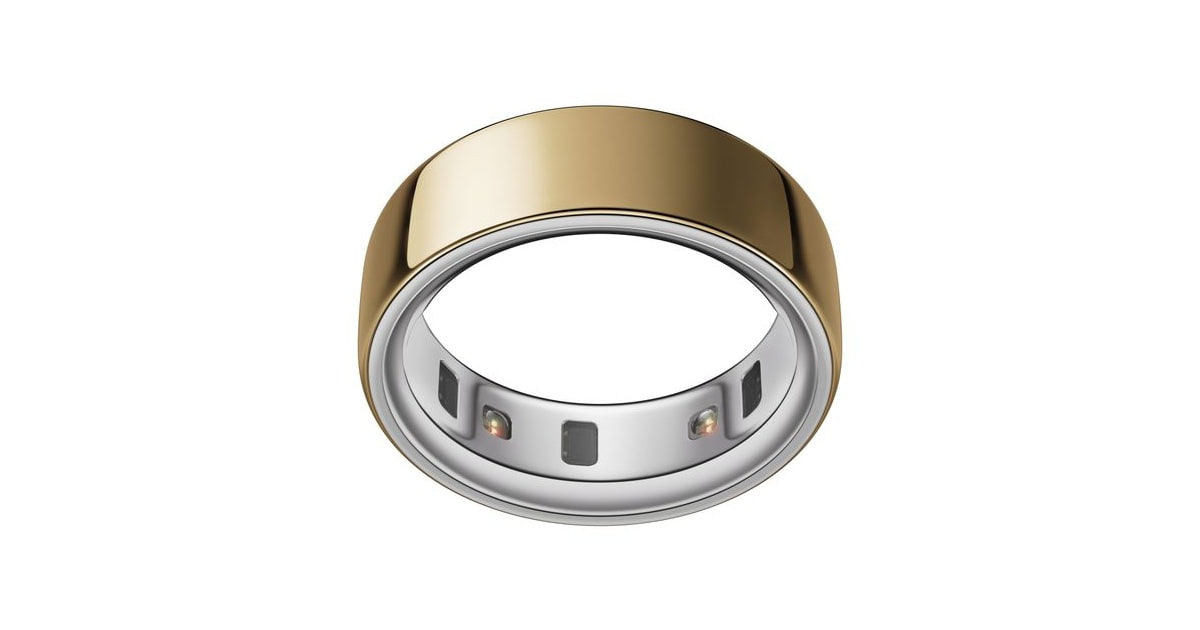
A titanium ring that tracks more than 50 health metrics overnight and runs about eight days per charge. It's the closest thing to a tracker you'll genuinely forget you're wearing, and its sleep-stage data holds up better than anything you strap to your wrist.
$399fromAmazonYour finger is a better place to measure sleep than your wrist. Rings sit closer to the radial artery and move less when you roll over, so the optical sensor gets a cleaner signal all night. Wrist bands slide, twist, and lift off the skin every time you shift position, and each of those moments is a gap the algorithm has to guess through. That's the whole reason ring trackers keep outperforming watches in published sleep-stage comparisons.
Eight days of battery means you actually get a trend, not a scrapbook. Most smartwatches need a charge every day or two, and that charge has to happen sometime. If it happens at night, you lose a night. Oura's stated eight-day run time lets you wear it for a full week straight, so when you go looking for a pattern — say, why Thursdays are always bad — you have seven unbroken nights to look at instead of four with holes in them.
No screen, no buzzing, nothing to snag on the sheets. The Ring 4 is all titanium and water resistant, with no display protruding off it and no vibration motor. Side sleepers don't get a watch case digging into a shoulder. Light sleepers don't get a notification LED flaring at 2 a.m. If you've ever taken a smartwatch off at bedtime because it bugged you, this is the device that solves that specific problem.
The morning readout is built for people, not data scientists. Oura's Smart Sensing platform learns your personal baseline instead of comparing you to a population average, then rolls the overnight numbers into a readiness rating with an AI Advisor layer that says what to actually do about it. You get sleep-stage timelines, heart-rate-variability curves, blood oxygen, and skin temperature trends in one dashboard. Skin temperature is the sleeper hit here — it flags illness coming on and cycle phase shifts.
It's the strongest option for tracking your cycle alongside your sleep. Continuous overnight temperature trending picks up ovulation windows and phase transitions more precisely than a calendar app guessing from dates. Because that data lives next to your sleep and readiness scores, you can see the connection directly — why sleep quality dips in one phase and rebounds in another. If you're tracking both, this is the one device here that treats them as the same story.
Flaws but not dealbreakers
The subscription isn't optional if you want the good stuff. Your first month of Oura Membership comes with the ring, and after that it's a monthly fee tied to your account rather than the hardware. The readiness score and the coaching layer live behind it. You'll still see raw sleep data without it, but the interpretation — the part most people actually use — stops. Budget for it as an ongoing cost, not a one-time purchase.
There's no FDA-cleared apnea detection here. Oura offers respiratory irregularity screening, which can flag that something looks off, but it's not the same as the cleared detection the Samsung and Apple watches carry. If loud snoring, gasping, or daytime exhaustion have you wondering about apnea specifically, buy one of those instead. And regardless of device, a flagged result means call a sleep physician, not self-diagnose.
Sizing is its own small ordeal, and getting it wrong is genuinely annoying. Oura uses proprietary sizing that doesn't map to standard jewelry rings, so your usual ring size tells you nothing. Order the sizing kit first and wear the sample for a day before you commit. A ring that's too loose reads badly and a ring that's too tight is miserable overnight. There's also no built-in GPS, so this doesn't replace a running watch.
Runner-up
Cleared apnea detection and a full smartwatch, if you're on Android
Samsung Galaxy Watch 7 40mm Bluetooth AI
The Galaxy Watch 7 pairs FDA-cleared sleep apnea detection with Galaxy AI coaching and charges you nothing extra each month. It's the pick if you want a real smartwatch on your wrist and want your sleep breathing watched by something a regulator has looked at.
$248.99fromAmazonThis is the first consumer smartwatch cleared by the FDA to detect sleep apnea. That clearance means the feature was validated to catch moderate-to-severe apnea patterns at a defined sensitivity, not just to notice your oxygen dipped. Published testing puts it in the high eighties for sensitivity on moderate-to-severe events. It won't diagnose you — nothing short of a sleep study does — but it's a real signal that's worth taking to a doctor.
The three-night waiting period is a feature, not a delay. The watch collects respiratory data across three separate nights before it fires an alert. One weird night after a heavy dinner and three glasses of wine shouldn't send you into a health spiral, and this threshold is designed so it doesn't. You trade immediacy for an alert you can trust when it finally arrives. That's the right trade for something this consequential.
Everything runs without a subscription. Sleep staging, overnight heart-rate-variability trends, snore detection, blood oxygen, the Energy Score, and the apnea feature are all included when you buy the watch. Compared with rivals that meter their best analysis monthly, the total cost here is just the watch. If recurring fees are what's kept you away from sleep tracking, this removes the objection entirely.
The morning Energy Score turns numbers into a plan. Galaxy AI combines last night's sleep, your overnight heart-rate variability, and what you did the day before into a single readiness rating with plain-language tips attached. A score with a note about why it dropped beats a raw variability figure you have to interpret yourself. The Samsung Health sleep dashboard is also the easiest here to read cold — stages, snoring, oxygen, and stress stack in one scroll.
Flaws but not dealbreakers
The battery forces a charging decision every single day. Expect roughly a day and a half of real use, which means you're finding a slot to charge it constantly. Charge at bedtime and you lose the night's data — the exact thing you bought it for. Most owners settle into topping up during a morning shower or commute, and it works, but it's a habit you have to build and it's easy to fumble on a busy week.
Android only, and it's a real watch on your wrist all night. Samsung Health doesn't support iPhone, so this is a non-starter if you're in Apple's world. And even the smaller 40mm case is thicker than a ring. Side sleepers report it pressing into bedding and into the wrist, and if you're the kind of light sleeper who notices a tag in a shirt, you'll notice this.
The Galaxy Watch 7 comes with a one-year manufacturer warranty.
Budget pickOn sale
Simple nightly sleep scores, no subscription needed
Fitbit Charge 6 Fitness Tracker with Google
The Charge 6 is a slim band that gives you a clear nightly sleep score, stage breakdown, and a smart alarm that wakes you out of light sleep. It costs a fraction of the premium options and runs most of a week per charge.
$118.21fromAmazonList priceIt's the easiest first sleep tracker to actually understand. The nightly sleep score rolls duration, stage quality, and restoration into one number from zero to a hundred, with the light, deep, and REM breakdown underneath if you want it. You don't need to know what heart-rate variability is to use it. If you've never tracked your sleep and aren't sure you'll stick with it, start here before spending real money.
A week of battery on a band this thin is a genuinely good trade. Published testing puts real-world life around six and a half to seven days with sleep tracking running the whole time. That covers a full work week with a day to spare, so charging becomes a weekend chore instead of a nightly ritual. You won't lose nights to a dead battery the way you will with a full smartwatch.
The smart alarm is the feature people keep using. Set a window and the Charge 6 wakes you during a lighter phase inside it rather than yanking you out of deep sleep at a fixed minute. That's the difference between a groggy hour and a normal morning. It's a small thing that changes how the day starts, and it's the reason a lot of owners keep wearing this after the novelty of the charts wears off.
It's a real activity tracker too, not just a bedtime device. You get more than forty exercise modes, built-in GPS, all-day heart rate, and heart rate that reads off compatible gym equipment. Six months of the Premium tier ships with it, which opens up snore detection and deeper analysis while you decide whether that's worth paying for. Most people won't renew, and the core sleep data keeps working when they don't.
Flaws but not dealbreakers
The blood-oxygen screening isn't cleared for apnea, and the best analysis expires. The Charge 6 can flag low oxygen events but has no FDA clearance behind that, so it's a nudge to see a doctor at most. Snore and noise detection also sit behind Premium once your included six months run out. Plan on either paying or losing those features.
A slim band has less sensor contact than a ring or a watch case. There's simply less surface pressed against your skin, and thin bands can shift on the wrist overnight. Accuracy holds up fine for duration and broad trends, but the stage detail isn't at the level of the Oura Ring 4. You'll also need a Google account for the full ecosystem, which some people would rather not create.
Also great
Two weeks per charge and deep recovery data, no fees ever
Garmin Venu 3 Slate Stainless Steel Bezel
The Venu 3 pairs a two-week battery with Garmin's full sleep and recovery suite — stage detection, overnight heart-rate-variability trending, nap logging, and Body Battery — with nothing gated behind a subscription. It's the best pick if you train hard and want sleep data that connects to it.
$367.72fromAmazonFourteen days per charge ends charging anxiety completely. In smartwatch mode the Venu 3 runs about two weeks, which is two full weeks of unbroken nightly data. You'll never make the choice between charging and tracking. If you're a shift worker on a long rotation or someone who travels for a week at a time, this is the practical difference between a complete record and a broken one.
Everything Garmin measures at night is included at purchase. Sleep staging, overnight heart-rate-variability trending, nap detection, Body Battery, and stress scoring all unlock the moment you set it up. There's no monthly tier holding back the useful analysis. For anyone who resents recurring software fees on hardware they already bought, that's a straightforward reason to choose this over the ring.
Body Battery gives you a number you can plan a workout around. It tracks your energy through the day, draining with effort and stress and refilling with rest and good sleep. Wake up high and you can push a hard session. Wake up low and it's telling you the fatigue you're feeling is real and measurable. Athletes use it to spot the difference between a bad night and a genuine hole they've dug over a week.
Nap detection makes this the right choice for irregular schedules. The Venu 3 logs daytime sleep automatically instead of ignoring it or forcing you to tag it by hand. If you sleep in fragments — nurses, new parents, anyone on nights — that's the difference between a device that understands your rest and one that just says you slept badly. Multi-band GPS and a 5 ATM water rating mean it works as a serious sports watch too.
Flaws but not dealbreakers
It's a big watch to sleep in. The 45mm case with a stainless steel bezel has real presence on the wrist, and owners regularly say it feels bulky overnight, especially on smaller wrists or if you sleep on your side. If wrist comfort is what's stopping you from wearing something to bed, a ring or the slim Fitbit band will suit you better.
The two-week claim assumes you leave the display off. Run the AMOLED screen in always-on mode and that estimate drops sharply. You can still get many days, just not fourteen. There's also no FDA-cleared apnea detection here, and Body Battery takes a couple of weeks of wear before its baseline settles enough to mean anything.
Upgrade pick
A month of battery and a medical-grade ECG, in a normal-looking watch
WITHINGS ScanWatch 2 - Women's Men's Health
The ScanWatch 2 is a hybrid with analog hands, a sapphire crystal, and up to 35 days per charge. It tracks sleep and breathing overnight and takes a medical-grade ECG on demand, all without looking like a gadget.
$369.99fromAmazonThirty-five days per charge is a different category of convenience. Five weeks of continuous wear before you think about the charger. There's no charging routine to build and no risk of losing a night because you forgot. For anyone tracking a long-term trend — recovery from illness, a new medication, a sleep schedule you're trying to fix — an unbroken multi-week record is worth more than a slightly sharper stage graph with gaps in it.
It's the only tracker here you'd wear to a wedding without thinking about it. Real analog hands, stainless steel case, sapphire glass, and a small digital window that stays out of the way. Nothing about it announces that you're being monitored. That matters more than it sounds — the best tracker is the one you keep on, and plenty of people quietly stop wearing an obvious smartwatch after a few weeks.
The cardiac features go further than the rest of this lineup. You get a 30-second medical-grade ECG with AFib detection through the Withings ECG App, plus high and low heart rate notifications. That's a level of cardiac monitoring the Fitbit and Garmin here don't match. If you see a cardiologist regularly or someone in your family does, this is the device that produces something worth bringing to an appointment.
Overnight breathing tracking rounds out the picture. Continuous blood oxygen monitoring feeds a respiratory disturbance measure that flags disrupted breathing patterns during the night, alongside sleep stages and a vitality score. Skin temperature trending is in there too, which picks up illness coming on and cycle phases. A month of Withings+ comes with it for the personalized layer.
Flaws but not dealbreakers
The breathing metric is a screen, not a diagnosis. Withings' respiratory disturbance index isn't FDA-cleared for apnea the way the Samsung and Apple watches are. It can tell you something looks irregular, and that's where its job ends. If cleared apnea detection is what you're after, this isn't the device.
The sleep detail is shallower than a dedicated tracker's, and it costs more than it looks like it should. Stage data is less granular than what the Oura Ring 4 or Garmin Venu 3 produce, and the small hybrid display can't show much of a dashboard, so you're in the phone app for anything real. It also asks more money than the Galaxy Watch 7 while doing far less as a smartwatch. You're paying for the battery, the ECG, and the way it looks.
Who this is for
Buy one of these if you want to understand your own sleep — why some mornings feel fine and others don't, whether that late dinner or that evening workout is costing you, whether your recovery is actually keeping up with your training. Trackers are good at that. They're good at trends over weeks, at showing you the shape of your nights, and at flagging something odd enough to mention to a doctor. If you already sleep well and don't want another number to fret over, skip it. Some people get anxious watching a score every morning, and a bad score can convince you that you slept badly when you didn't.
This guide covers wearable consumer trackers you sleep in — rings, smartwatches, hybrid watches, and slim bands. It doesn't cover under-mattress sensors, bedside radar devices, or clinical home sleep tests. Nothing here diagnoses anything. If you snore heavily, wake up gasping, or feel wrecked after a full night in bed, the right move is a sleep physician and probably a proper sleep study. A tracker's job is to tell you it's time to make that appointment.
How we picked
We started with what actually separates a useful sleep tracker from a device that reports how long you were in bed. Stage accuracy: we favored devices whose staging algorithms have peer-reviewed validation behind them over ones making unsupported claims. Apnea clearance: FDA-cleared detection and blood-oxygen screening are different things, and we only recommend cleared devices to readers who suspect apnea. Battery: five days is where charging stops punching holes in your nightly record, so long-running devices scored higher. Comfort: owner reports about case thickness, band width, and whether a screen or buzz wakes you carried real weight, because a tracker in a drawer measures nothing. Ongoing cost: we tracked which features are gated behind a subscription, and expected metered devices to be meaningfully better to earn it. Ecosystem: iPhone and Android compatibility decided a few matchups on their own.
Other fitness trackers for sleep tracking worth considering
If you have an iPhone and want cleared apnea detection: The Apple Watch Series 10 [GPS ($226.99) — The Apple Watch Series 10 is the natural pick for iPhone owners, and this renewed listing is the least expensive way into FDA-cleared sleep apnea notifications. Overnight it monitors heart rate, respiratory rate, wrist temperature, and blood oxygen, and flags when several of those drift from your baseline on the same night. Like Samsung, it waits three nights before alerting you, which keeps one strange night from setting off alarm bells. Everything routes straight into Apple Health with no third-party app in between. What you give up is battery certainty. This is a renewed unit inspected by Amazon-qualified suppliers rather than Apple, with capacity guaranteed above 80 percent of new — and a watch that's rated for roughly a day and a half when new can land noticeably shorter than that. If your overnight record has to be complete, buy new or take the Garmin's two weeks instead.
If you're an endurance athlete who wants the deepest recovery data: The POLAR Vantage V3 ($679.90) — The Polar Vantage V3 is the most complete training-and-recovery system here, and its Sleep Plus Stages algorithm has the strongest peer-reviewed backing of anything in this guide. What makes it different is Nightly Recharge, which scores your autonomic nervous system recovery separately from your sleep quality and then combines them. That separation catches something other trackers miss entirely: you can sleep a full eight hours and still show suppressed nervous system recovery, which is exactly what deep training fatigue looks like. Add dual-frequency GPS, offline topographic maps, and more than 150 sport profiles and it's a serious tool for triathletes and ultra runners. But it's the most expensive device here by a wide margin, its sleep features are built to serve training rather than the other way around, and it's a large, heavy watch to sleep in. If sleep is your actual concern rather than training load, the Garmin Venu 3 gets you most of the way for far less.
The competition
This is what our research surfaced across ring trackers, smartwatches, hybrids, and fitness bands — not a census of everything on the market. Every device we looked at appears somewhere in this guide, either as a pick, an alternative, or here. The sleep tracking category moves fast, and a device that misses a recommendation on battery or comfort today may fix that in its next generation.
Getting useful data out of your tracker
Give any new tracker two or three weeks before you judge it. Nearly all of these devices build a personal baseline first, and the scores mean very little until they know what normal looks like for you. Wear it consistently — a partial week produces a misleading average. Keep the sensor side clean and dry, since skin oils and lotion smudge the optical window and degrade readings, and a quick wipe with a soft cloth is usually enough. Fit matters more than people expect: too loose and the sensor loses contact when you move, too tight and you'll take it off at 2 a.m. Charge on a fixed schedule that never touches your sleep window, like during a morning shower. And resist reading any single night as a verdict. The value is in the trend across weeks.
Questions we get
Which sleep tracker is the most accurate?
For sleep staging, the Oura Ring 4 leads this group. The ring sits on your finger, which moves far less than a wrist during sleep, so the sensor gets a cleaner signal and the algorithm has less to guess through. Published comparisons with clinical sleep studies consistently favor ring-form devices over wrist wearables on stage agreement. For apnea detection specifically, though, accuracy means something else, and the Samsung Galaxy Watch 7 is the stronger choice.
Can a fitness tracker really detect sleep apnea?
Two devices here hold FDA clearance for it: the Samsung Galaxy Watch 7 and the Apple Watch Series 10. Both watch your breathing across three nights before alerting you, which keeps a single odd night from triggering a scare. They identify patterns consistent with moderate-to-severe apnea and tell you to see someone about it. They do not diagnose you — a sleep study is still the only thing that does — and every other device here offers blood-oxygen screening, not cleared detection.
Is a ring more comfortable to sleep in than a watch?
For most people, yes, and it isn't close. The Oura Ring 4 is flush titanium with no screen sticking out, no vibration motor, and no crown to catch on a duvet. A watch case presses into your wrist or your mattress if you sleep on your side. The Withings ScanWatch 2 is the most comfortable wrist option here because its hybrid face is thinner than a full smartwatch, but a ring still wins on comfort.
Do I have to pay a monthly fee to get useful sleep data?
Mostly no. The Garmin Venu 3, Samsung Galaxy Watch 7, Apple Watch Series 10, Polar Vantage V3, and Withings ScanWatch 2 all include their sleep staging, heart-rate-variability trends, and recovery scores with the hardware. The Oura Ring 4 is the exception — its readiness score and coaching require an ongoing membership after the first month. Fitbit's Charge 6 sits in between: the nightly sleep score is free forever, while snore analysis needs Premium once the included six months end.
I toss and turn all night. Will any of these work for me?
A restless night is exactly where wrist trackers struggle, because every twist lifts the sensor off your skin and creates a gap. Fingers move differently and produce fewer of those artifacts, which is why the Oura Ring 4 is the best pick for restless sleepers. Among wrist devices, the slim Fitbit Charge 6 band gives your wrist less leverage to twist against than a heavy watch case does. Whatever you wear, snug it up slightly before bed.
How much should I trust the sleep stage numbers?
Trust the direction, not the minutes. These devices are reliable on total sleep time and broad ratios of light, deep, and REM, but the boundary between light sleep and REM can shift fifteen to twenty minutes compared with a clinical sleep study. Oura and Polar publish peer-reviewed validation for their staging, which is the strongest backing in this group. Use the numbers to spot patterns across weeks, not to make any medical decision from a single night.
Why you should trust us
For this guide:
- We compared manufacturer specifications, feature documentation, and regulatory clearance status across every ring, smartwatch, hybrid, and band in this lineup.
- We read published reviews and validation research on sleep-stage accuracy, apnea detection sensitivity, and real-world battery life for each device.
- We reviewed recurring themes in owner feedback, particularly around overnight comfort, charging habits, and how long each device's readings stay reliable.
- We read owner reviews on every listing, weighted toward the critical ones, because that is where the recurring failures show up.
- We have a systematic way of automatically fetching the latest prices, so the numbers on this page stay current.
- This is a research-focused guide, so the team may not own every product listed — though we often do own the top winners, which gives us extra context for the recommendations.
- We don't accept free products, and the retailer commission never changes which product we recommend.
Sources
Amazon product listings and owner reviews for all 7 products
Manufacturer specification pages for each product
Some passages in this guide may be paraphrased with AI help. Prices are refreshed automatically.
More like this.
Continue exploring health reviews and recommendations.

The Best Fitness Trackers and Heart Rate Monitors
A fitness tracker only helps if you actually wear it. That sounds obvious, but it's the thing most people get wrong. The band that counts every calorie is…

The Best Fitness Trackers and Activity Bands
A fitness tracker earns its keep in the small moments. You glance down and see you've been sitting for three hours. You wake up and find out why you feel…

The Best Smartwatches and Fitness Trackers
A smartwatch earns its place on your wrist in small moments. It taps you when a text lands so you don't dig out your phone. It counts a swim, logs a run,…

The Best Sleep Tracker Rings
A sleep ring earns its place by being something you forget you're wearing. That's the whole pitch. A watch on your wrist gets in the way when you roll…

The Best Bedside Sleep Trackers
You spend a third of your life asleep and remember almost none of it. That's the appeal of a bedside sleep tracker. It fills in the blanks: when you…

The Best Smart Fitness Watches
A fitness watch earns its place on your wrist by being useful before you think about it. It tells you that you slept badly before you've had coffee. It…