The Best Compression Clothing for Workout Recovery
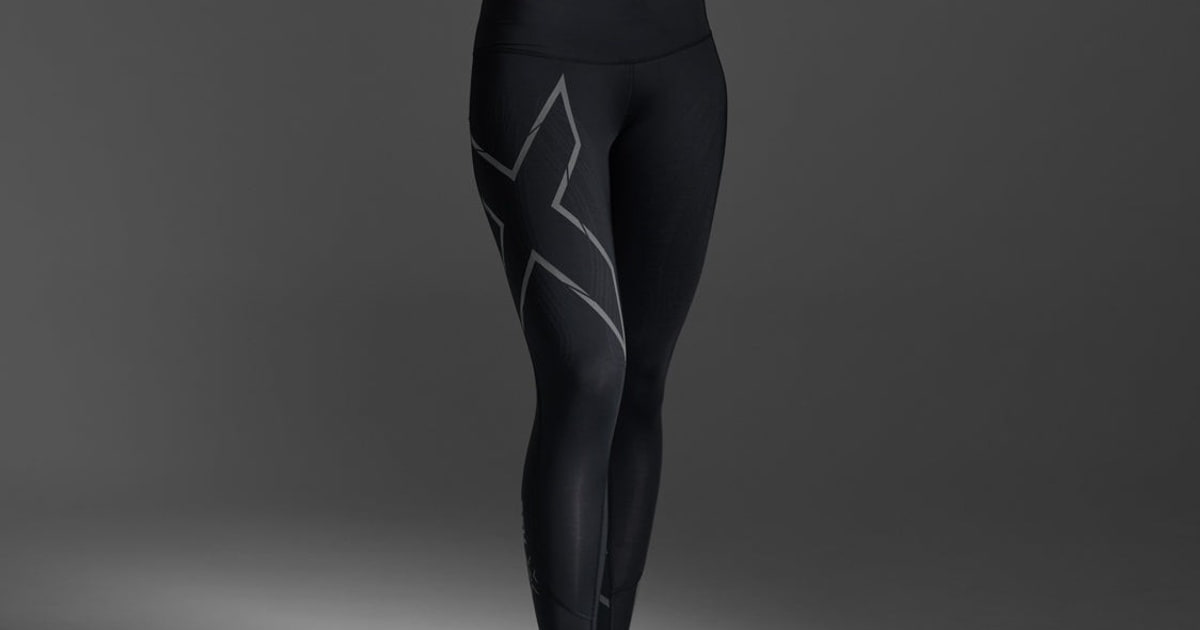
Compression clothing sits in an odd spot in your gym bag. It isn't a shoe or a barbell, and it won't make you faster on the day you wear it. What it does is help your legs feel less trashed the next morning. A meta-analysis of 12 randomized trials in the British Journal of Sports Medicine found compression cut perceived soreness by about 26% in the one-to-three-day window after hard exercise. That's not magic. But if you run, lift, or ride often, it's a difference you'll notice on stairs.
Here's the honest part. No compression garment fixes a bad training block, and the effect is mostly about how you feel rather than what a lab can measure inside your muscles. Fit does most of the work, and sizing charts across brands don't agree with each other, so the wrong size gives you either a slightly snug legging or a tourniquet. Compression also fades. Elastane loses tension with every wash, and most tights hold only about 70 to 75% of their original squeeze after 50 cycles.
So we looked for graduated construction, a stated compression range in the 15–30 mmHg band, fabric that survives the laundry, and sizing that owners describe as predictable. We also split the field by body part, because your calves and your quads want different things. We think that the 2XU Light Speed MCS Compression Tights are the best compression clothing for workout recovery for most people, and that the Nike Pro Dri-FIT 3/4-Length Tights are the ones to buy if you want an easy, forgiving first pair.
Everything we recommend
Firm, muscle-mapped compression that holds up wash after wash

Predictable sizing and a milder squeeze, if you're just starting

A lighter squeeze for tired calves, on a smaller budget

Panel-by-panel fit and serious support, if you'll pay for it

Medical-grade calf compression when your legs are the problem
At a glance
| Product | Compression Level | Garment Type | Price | |
|---|---|---|---|---|
| 2XU Women’s Light Speed Mid-Rise Compression TightsTop pick | — | Compression Tights | $129.99 |
| CEP Core Run Tall Compression Socks 5.0Also great | 20-30mmHg | Tall Compression Socks | $59 |
| Nike Men's Pro Dri-FIT 3/4-Length Fitness TightsRunner-up | — | Fitness Tights | $27.97 |
 | Under Armour Men's HeatGear Armour LeggingsAlso consider | — | HeatGear Armour Leggings | $28On sale |
| SKINS Series-5 Womens Compression Long Tights SUpgrade pick | — | Compression Long Tights | $159.99 |
 | Tommie Copper Women's Pro-Grade Lower Back SupportAlso consider | — | Back Support Shorts | $43.67On sale |
| Zensah Tech+ Compression Socks - Knee HighBudget pick | — | Knee High Running Socks | $49.95 |
 | Lululemon Align Stretchy Full Length Yoga PantsAlso in lineup | — | Yoga Pants | $98On sale |
How we picked
Stated compression level. We favored garments that publish an mmHg range, because research shows the recovery benefit starts around 15 mmHg and is strongest at 20–30. Garments without a stated figure had to earn their place on fit and published reviews instead.
Graduated construction. We looked for compression that's tightest at the extremity and eases toward the core, which is the arrangement tied to faster venous return. Uniform-squeeze leggings were treated as comfort wear, not recovery gear.
Wash durability. Compression dies in the laundry, so we weighted manufacturer retention figures and owner reports of sag after a few months. A tight that keeps roughly 90% of its pressure after 50 washes is worth far more than one that starts strong and quits.
Sizing you can trust. We read owner feedback specifically for sizing complaints, since the wrong size makes compression either useless or painful. Brands with consistent fit across body types moved up.
Coverage that matches the ache. We made sure the lineup covers both calf-and-ankle soreness and quad-and-hamstring soreness, because those call for different garments. Where a product covers only part of your leg, we say so.
Top pick
Firm, muscle-mapped compression that holds up wash after wash
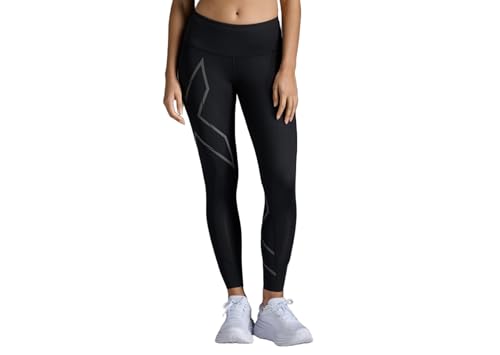
2XU Women’s Light Speed Mid-Rise Compression Tights
These are seriously compressive running tights built around 2XU's Muscle Containment Stamping, printed panels that pull tighter over your quads, hamstrings and calves. They're made for the hour or two after a long run, when your legs feel wobbly and you want them held together.
$129.99fromAmazonThe graduated, muscle-mapped construction is what you're paying for. Graduated compression means the fabric squeezes hardest at your ankle and eases as it climbs, which is the arrangement that helps blood get back up your legs. A Journal of Sports Sciences review of 23 studies found garments in the 18–30 mmHg range raised blood velocity in the femoral vein by as much as 123% compared with bare legs.
Pull them on after an 18-mile long run and the difference shows up the next morning. Runner's World's gear lab ranked the MCS tights first among seven pairs for quad soreness after long efforts, with its testers reporting less next-day stiffness. That tracks with what owners say too: the tights feel almost aggressively tight for the first ten minutes, then they disappear.
The PWX fabric also holds its tension better than most. 2XU reports its MCS tights keep about 92% of their original compression after 50 wash cycles, against an industry norm closer to 70 to 75% for tights without reinforced yarn. If you wash recovery gear twice a week, that gap decides whether a second year of tights still does anything for you.
They work as recovery wear, not just run wear. The American College of Sports Medicine points to the first one to three hours after exercise as the window where compression pays off. These are comfortable enough to keep on through a shower and breakfast, and the mid-rise waistband has a small stash pocket for keys or a gel if you wear them back out the door.
Flaws but not dealbreakers
The compression is firm enough that getting into them is a fight the first few times, especially over damp legs. Owners consistently describe the sizing as running small, so if you're between sizes, go up. The mid-rise cut also sits lower than the high-waisted leggings most people wear now, which feels odd under a loose top.
This listing is the women's cut in a single black-and-reflective colorway. If you want a men's fit or another color, you'll be shopping 2XU's other lines rather than this one.
Runner-up
Predictable sizing and a milder squeeze, if you're just starting
Nike Men's Pro Dri-FIT 3/4-Length Fitness Tights
Nike's Pro tights are the compression garment most people already own or can find in ten minutes. The 3/4 length covers your quads and calves without any ankle-cuff fuss, and the Dri-FIT polyester dries fast enough to wear from a workout straight into errands.
$27.97fromAmazonSizing is the quiet reason we like these. Compression only helps if the garment actually fits, and Nike's Pro line runs consistent enough across body types that ordering your usual size usually works. That sounds boring. It's also the single most common complaint about compression gear from nearly every other brand, and it's the thing Nike mostly solves.
The compression is mild, and that's a real limitation. Nike doesn't publish an mmHg figure, and the fabric — 90% polyester with 10% spandex — is a second-skin fit rather than a graduated medical garment. Research tends to find the clearest recovery benefit starting around 15 mmHg, so treat these as the gentle end of the category rather than a therapeutic tool.
For everyday post-lift soreness, gentle may be all you need. Men's Health's wearability panel scored tights like these a step below the plushest lifestyle pairs for two-hour post-exercise comfort, but comfort is what decides whether you keep a tight on at all. One you peel off after 20 minutes does nothing for you.
The 3/4 length is a genuinely useful compromise. It clears your ankles, so nothing bunches inside socks, and it stacks nicely with compression socks if your calves are the sore part. There's a side pocket for a card or key, and they wash like any gym legging — no special handling, no line-drying ritual.
Flaws but not dealbreakers
The 3/4 cut leaves your lower calves and ankles bare, which is exactly where graduated compression does its best work. Pair them with socks if that's your problem area. The polyester picks up odor faster than copper-treated or merino-blend fabrics too, so they need a wash after most sessions.
And because Nike states no compression level, you're trusting fit instead of a spec. If you want a number you can check against the research, the socks below are the better buy.
Budget pick
A lighter squeeze for tired calves, on a smaller budget
Zensah Tech+ Compression Socks - Knee High
These knee-high socks give you true graduated compression — tightest at the ankle, easing up the calf — for a fraction of what medical-grade socks cost. They're knit in Italy with a seamless toe, and they hold their shape far better than their price suggests.
$49.95fromAmazonFor sore calves specifically, socks beat tights on cost and often on comfort. Zensah's Tech+ socks measured in the 15–20 mmHg range in Wirecutter's budget-category work, right at the threshold where research starts to show a recovery benefit. That's lighter than medical-grade 20–30 mmHg, but it's real graduated compression, not a snug tube sock with marketing on the packaging.
The knit is why they last. A 200-needle-count construction in a polyamide-elastane blend resists the sag that kills cheap compression socks within a month, and the anatomical left-and-right shaping puts the arch band where it belongs. Owners who wear them for shin splints and calf tightness tend to come back and buy more pairs, which is about the best signal you get.
They're also the easiest way into all of this. If you're not sure compression does anything for you, a pair of socks is an inexpensive experiment to run after your next hard session. A Verywell Fit survey of 1,400 active adults found 63% noticed less leg fatigue after an hour or two in compression socks, compared with just changing out of their gym clothes.
Flaws but not dealbreakers
Fifteen to 20 mmHg is the floor, not the sweet spot. If you're coming back from a marathon or managing a lower-limb injury, the stronger evidence sits in the 20–30 mmHg range, and these won't get you there.
Sizing runs by shoe size and calf circumference, and people with larger calves report the top cuff digging in. The knee-high height also shows under shorts, which some people mind more than others.
Upgrade pick
Panel-by-panel fit and serious support, if you'll pay for it
SKINS Series-5 Womens Compression Long Tights S
Skins builds the Series-5 from more than 20 separate panels, each mapped to a muscle group, in a dense 6.6 warp-knit fabric. It's the most serious garment here — the kind of tight endurance athletes pull on after a race, not something you toss in a gym bag.
$159.99fromAmazonYou can feel the panel count before you finish pulling them up. Instead of one tube of fabric doing the same job everywhere, Skins varies tension across the quad, hamstring and calf, so the squeeze lands on the muscle rather than wherever a seam happens to fall. It's the same idea behind 2XU's stamping, executed through construction instead of print.
The warp-knit fabric is the durability story. Warp knits resist runs and hold tension far better than the circular knits used in most leggings, which is why Skins markets these for competition and training rather than recovery alone. Add UPF 50+ and strong moisture management, and they work as a summer training tight too, not just something you change into afterward.
If you race, the case gets stronger. Sports Medicine reviews put lactate clearance roughly 10 to 15% better during active recovery in the 15–25 mmHg band, and a Journal of Strength and Conditioning Research study found athletes who wore 20–30 mmHg tights for two hours after a marathon regained quad strength about 18% faster at the 24-hour mark. Garments at this level are what those studies describe.
Flaws but not dealbreakers
They're expensive, and the fit is unforgiving. Skins sizes by height and weight, so a chart miss leaves you with either weak compression or genuine discomfort, and returns get tedious. The dense fabric runs warm as well — in a garage in July, they're a lot.
This listing is the women's long tight in black only, so it isn't a broad size-and-color pick. And the compression is firm enough that most people won't want to lounge in them all evening.
Also great
Medical-grade calf compression when your legs are the problem
CEP Core Run Tall Compression Socks 5.0
These knee-high socks deliver 20–30 mmHg of targeted compression — the level with the strongest evidence behind it — with the ankle, Achilles and arch each getting their own pressure zone. If your recovery problem lives below the knee, start here.
$59fromAmazonTwenty to 30 mmHg is the number that keeps showing up in the research. That's the medically effective band, and it's where meta-analyses find the clearest reductions in soreness and swelling. Most consumer compression socks sit well below it and don't say so. CEP states the range plainly, which means you're buying to a spec instead of a vibe.
The zoning is more than packaging copy. Separate compression at the arch and Achilles targets plantar fasciitis and shin splints, the two complaints that push most runners toward socks in the first place. Air channels and quick-drying yarn keep them from turning swampy if you leave them on for a couple of hours after a run.
Durability is where CEP earns the premium. The socks are built to hold both shape and pressure through repeated washing, and reviewers at OutdoorGearLab singled out CEP's Run socks for the most consistent compression across different wearers in their sock comparison. Compression socks are effectively disposable once they go slack; these stay honest much longer.
Flaws but not dealbreakers
Twenty to 30 mmHg is a lot of squeeze, and getting these on takes real effort — plan on two hands and a minute of wrestling. People with wide calves or high arches often need to size up, and CEP sizes by calf circumference rather than shoe size, so measure before you order.
They also only cover your lower leg. If your quads are what's screaming after a heavy squat day, socks do nothing for them.
Who this is for
This guide is for people who train hard enough to feel it the next day: recreational runners chasing faster leg turnaround, lifters dealing with delayed onset soreness after a heavy session, cyclists whose calves are wrecked after a long ride, and anyone easing back from a lower-limb injury. If you work out a couple of times a week and feel fine afterward, compression is a nice-to-have rather than something you need. It won't replace sleep, food or an easy day.
We cover garments meant for the recovery window — graduated tights, compression socks and support shorts you pull on after activity. We're not covering prescription medical stockings for venous disease, pneumatic compression boots, or shapewear that squeezes without a gradient. If you have a circulatory condition, diabetes, or nerve issues in your feet, talk to a doctor before wearing anything in the 20–30 mmHg range.
How we picked
Compression level: we favored garments with a published mmHg range, since the evidence gets clear at 15 mmHg and strongest at 20–30. Graduation: tightest at the ankle and easing upward, because that gradient is what helps blood move back toward your heart. Wash durability: manufacturer retention figures and owner reports of sag, because a tight that goes slack in two months is money gone. Sizing: brands whose charts match reality, since the wrong size makes compression either useless or genuinely painful. Coverage: a mix of socks and full-length tights, because calf soreness and quad soreness aren't the same problem.
Other compression clothing for workout recovery worth considering
If you want a warm-weather gym legging: The Under Armour Men's HeatGear Armour Leggings ($28) — Under Armour's HeatGear Armour leggings are the thinnest compression fit here, and that's the whole point. In a hot garage or a packed weight room in summer, a dense warp-knit tight is miserable and these aren't. The ergonomic seam placement keeps abrasion off your inner thighs under squats, and there's a drop-in side pocket for a phone. But Under Armour publishes no mmHg figure and doesn't claim graduated construction, so this is a second-skin training fit rather than a recovery garment with a spec behind it. Buy it to train in, and treat any recovery benefit as a bonus.
If your lower back is what hurts: The Tommie Copper Women's Pro-Grade Lower Back Support ($43.67) — Most compression clothing ignores everything between your ribs and your hips. Tommie Copper's Pro-Grade shorts don't — power-mesh panels wrap the lower back and glutes, which is a genuinely different job from squeezing a calf. The copper-infused knit does control odor well, so you can keep them on for hours after a heavy deadlift session without the gym-bag smell. Just know that the evidence for copper improving muscle recovery, as opposed to killing bacteria, is thin. These are support shorts first; if you want graduated leg compression, the tights and socks above do more for you.
The competition
This is the field our research surfaced, not everything on the market. Brands cycle through models constantly, and plenty of what gets sold as compression is really just a snug legging with a good marketing line. The garment below is worth knowing about — mostly so you don't buy it expecting something it isn't.
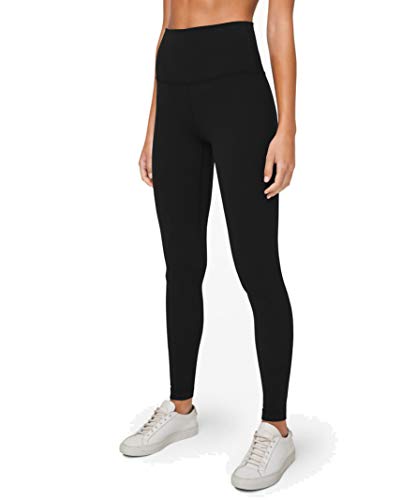
The Lululemon Align Stretchy Full Length Yoga Pants ($98) — The Lululemon Align pant is a lovely legging and a poor compression garment. Nulu fabric is buttery, weightless and cut for yoga, and the zoned compression in the listing describes smoothing rather than the graduated pressure that helps blood move. If you just want something to change into for the couch after a long ride, Align is more comfortable than anything else here, and Men's Health's wearability panel rated premium lifestyle tights highest for two-hour post-workout comfort. But don't expect the soreness reduction the studies describe. Buy it for the all-day feel, then buy a pair of socks for the actual recovery.
Care and washing
Compression is elastane, and elastane hates heat. Wash everything cold on a gentle cycle, skip the fabric softener — it coats the fibers and kills the stretch — and hang it to dry. A hot dryer is the fastest way to turn a firm tight into a loose one. Turn tights inside out to protect printed panels like 2XU's stamping, and don't wad them into a damp gym bag for two days. Socks need washing after every wear, since sweat and skin oils break down the knit faster than the machine ever will. Expect to replace socks after roughly a year of regular use, and tights once you notice they slide on easily. That easy pull is the compression telling you it's gone.
Questions we get
What mmHg compression level is best for workout recovery?
Twenty to 30 mmHg has the strongest support behind it, and it's what medical-grade socks and the most serious tights are built to. Below about 15 mmHg you're mostly getting a snug fit without much physiological effect. Reviews of graduated garments in the 18–30 mmHg range report large increases in venous blood velocity. If you're new to compression, 15–20 mmHg is a sensible place to start.
How long should you wear compression clothing after a workout?
The American College of Sports Medicine points to the first one to three hours after activity as the window that matters, and studies it cites show returns dropping off past six hours for most athletes. So the routine is simple: put your compression on when you finish, keep it on through breakfast or dinner, and take it off a couple of hours later. Wearing it all day isn't harmful, but it isn't buying you much either.
Does compression clothing actually work, or is it placebo?
A bit of both, honestly. The measurable effects — better lactate clearance, higher venous blood velocity — are real but modest. The bigger and more consistent finding is perceived soreness: a British Journal of Sports Medicine meta-analysis of 12 randomized trials found roughly a 26% reduction in how sore people felt one to three days out. Feeling less wrecked has value even if your muscles can't explain why.
What's the difference between graduated and uniform compression?
Graduated compression is tightest at the ankle and gets progressively looser as it moves up your leg; uniform compression squeezes about the same everywhere. Graduated is the better choice for recovery, because that pressure gradient helps push blood back toward your heart. Anything worth buying says graduated on the label or in the specs. If a listing never mentions it, assume it's uniform.
Can you sleep in compression tights after a hard workout?
You can, and some endurance athletes do after races, but there's little evidence you gain much beyond the first few hours. Overnight wear also means hours of pressure without your muscle pump working, which leaves some people with numb spots or a restless night. If you want to try it, use a lighter garment rather than 20–30 mmHg socks. And check with a doctor first if you have any circulatory issues.
Are compression socks better than tights for leg recovery?
It depends where you actually hurt. Socks target the calves, ankles and arches, which is what runners and cyclists usually complain about, and they're much easier to keep on for a couple of hours. Tights cover the quads and hamstrings, where lifting soreness and long-run fatigue tend to settle. Plenty of people own both and choose based on the session.
Why you should trust us
For this guide:
- We read the manufacturer specifications and listing details for every garment here, paying particular attention to stated compression ranges, fabric composition and whether the construction is graduated.
- We compared published evaluations from Runner's World, OutdoorGearLab, Men's Health and Wirecutter alongside peer-reviewed research on compression and recovery from the British Journal of Sports Medicine, Journal of Sports Sciences and Sports Medicine.
- We reviewed recurring themes in owner feedback, especially around sizing accuracy and how well each garment holds its compression after months of washing.
- We read owner reviews on every listing, weighted toward the critical ones, because that is where the recurring failures show up.
- We have a systematic way of automatically fetching the latest prices, so the numbers on this page stay current.
- This is a research-focused guide, so the team may not own every product listed — though we often do own the top winners, which gives us extra context for the recommendations.
- We don't accept free products, and the retailer commission never changes which product we recommend.
Sources
Best Compression Socks — Wirecutter, New York Times, Wirecutter
Best Compression Tights for Running and Recovery — Runner's World, Runner's World
Compression Garments for Sport: Athletic Performance and Recovery — Journal of Sports Sciences, Journal of Sports Sciences (Taylor & Francis)
Compression Garments and Recovery from Exercise-Induced Muscle Damage: A Meta-Analysis — British Journal of Sports Medicine, British Journal of Sports Medicine
Effect of Compression on Lactate Clearance and Recovery After High-Intensity Exercise — Journal of Strength and Conditioning Research, NSCA Journal of Strength and Conditioning Research
Best Compression Tights and Socks, Tested — Outside Online, Outside Online
How Compression Clothing Works — Verywell Fit, Verywell Fit
Best Compression Socks, Lab Tested — OutdoorGearLab, OutdoorGearLab
Compression Garments in Sport: Evidence and Recommendations — American College of Sports Medicine, American College of Sports Medicine
Best Compression Pants for Men 2026 — Men's Health, Men's Health
Best Compression Leggings for Women — Women's Health, Women's Health
Compression Stockings and Sleeves in Sport — Sports Medicine (Springer), Sports Medicine (Springer)
Amazon product listings and owner reviews for all 8 products
Manufacturer specification pages for each product
Some passages in this guide may be paraphrased with AI help. Prices are refreshed automatically.
More like this.
Continue exploring health reviews and recommendations.

The Best Clothes Steamers
Most wrinkles don't need an ironing board. You need a shirt that looks fine by the time you leave the house, and a steamer gets you there in a few…

The Best Compression Socks for Travel
Long flights are hard on your legs. You sit still for hours, the cabin pressure drops, and fluid settles in your ankles until your shoes feel a size too…

The Best Compression Socks for Circulation
If you're on your feet for twelve hours, or wedged into a middle seat for nine, your calves are doing a lot of quiet work. Compression socks help with…

The Best Heated Compression Knee Massagers
Knee pain rarely shows up at a convenient moment. It's the first ten minutes after you get out of bed, or the ache that settles in after a long drive, a…

The Best Foam Rollers for Muscle Recovery
Foam rolling is the rare recovery habit that actually fits into a normal week. You don't need a table, a therapist, or an appointment. You need ten…

The Best Vibration Plates for Recovery
A vibration plate is a simple thing: a motorized deck you stand on while it shakes. For recovery, that shaking is meant to loosen tight muscles, nudge…