The Best Hiking Backpacks
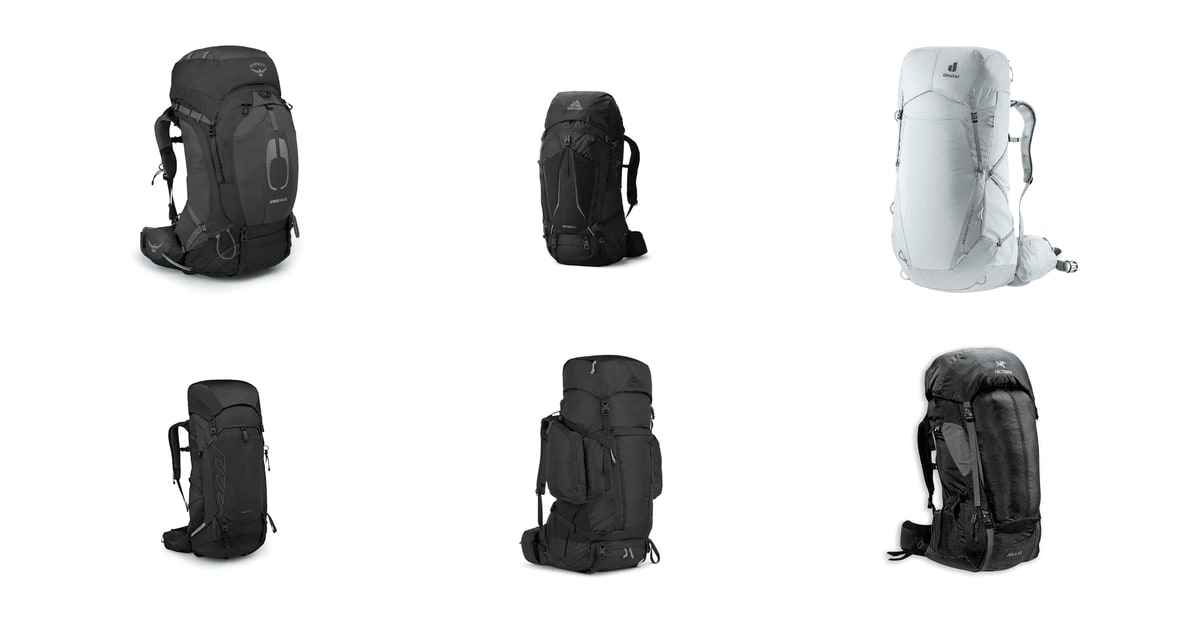
A backpack is the one piece of gear you never put down. Everything else — tent, stove, sleeping bag — gets used and stowed away. The pack rides on you for eight hours at a stretch. So the thing that matters most isn't the fabric or the pocket count. It's whether the hipbelt sits on your hip bones and carries most of the load, and whether the shoulder straps lie flat instead of digging in around hour five. REI puts the target at 70 to 80 percent of the weight on your hips.
Here's the honest part. No pack in this guide fits perfectly out of the box, and none of them is waterproof. Torso length, not height, decides your size, so a six-foot hiker and a five-foot-six hiker can need the same frame. Ventilation and load control also pull against each other: a mesh panel that keeps your back dry holds the weight farther from your spine. Rain covers help, but water still runs down your back and into the pack. Line the inside if you expect real weather.
The lineup here splits cleanly by how much weight you plan to carry and how much pack weight you'll accept in return. A handful of full-size backpacking packs, one trail-weight 44-liter, and a women's pack that's harder to recommend. If you're new to this, start with volume and fit, and let the features come last. We think that the Osprey Atmos AG 65 is the best hiking backpack for most people, and that the Deuter Aircontact Ultra 50+5 is the one to buy if you want a lighter pack that still handles a full multi-day load.
Everything we recommend

All-day comfort and a cooler back, if you accept the weight

Lighter and closer to your back, with fewer comforts

Old-school and heavy, but it hauls a big load without complaint

The one to carry when your load creeps past forty pounds
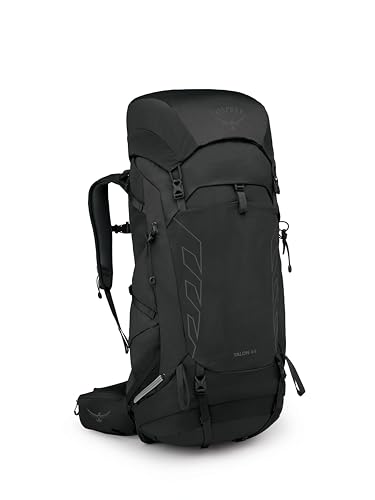
Enough pack for a weekend, light enough for a long day out
At a glance
| Product | Capacity | Weight | Price | |
|---|---|---|---|---|
| Osprey Atmos AG 65L Men's Backpacking BackpackTop pick | 65L | 4.61 lbs | $319.85On sale |
| Gregory Baltoro 65L Backpacking PackUpgrade pick | 65L | — | $277.46 |
| Deuter Aircontact Ultra 50+5 Trekking BackpackRunner-up | 50+5L | 2.755778275 lbs | $295 |
| Osprey Talon 44L Men's Lightweight Hiking BackpackAlso great | 44L | 3.55 lbs | $233.59 |
| Kelty Coyote 60-105 Liter Internal Frame BackpackBudget pick | 65L | 4 lbs | $139.99On sale |
 | Arc'teryx Arcteryx Altra 62 Backpack - Women'sAlso in lineup | 62L | — | $200 |
How we picked
Suspension and load transfer. We weighted this above everything else, because it decides whether a heavy pack feels manageable or punishing. We compared manufacturer suspension claims against published load-carrying evaluations, looking for packs that stay stable when the load climbs past 30 pounds.
Fit adjustment range. Torso length, not height, determines your size, so we favored packs that come in multiple sizes or let you move the harness and hipbelt after you buy. Packs with a single fixed fit had to be exceptional elsewhere to make the list.
Weight versus capacity. We compared empty weight against usable volume, since every ounce of pack is an ounce you can't spend on food or water. We looked for packs that justify their weight with either comfort under load or genuine durability.
Ventilation. Back sweat is the complaint that shows up most often in owner feedback, and Switchback Travel has documented that suspended trampoline panels hold a one-and-a-half to two-inch air gap even under 30 pounds. We noted which approach each pack takes and what it costs in load control.
Durability and support. We read owner feedback for patterns over years rather than first impressions, watching for failed buckles, blown seams and worn-through fabric. We also gave credit to brands with warranties and parts support that hikers report actually using.
Top pickOn sale
All-day comfort and a cooler back, if you accept the weight
Osprey Atmos AG 65L Men's Backpacking Backpack
The Atmos AG 65 is a 65-liter pack built around a suspended mesh back panel that lets air move behind you while the frame keeps the load steady. It carries a weekend or a week comfortably, and both the harness and hipbelt adjust after you've bought it.
$319.85fromAmazonList priceThe suspension is why this pack keeps winning. Osprey's Anti-Gravity system wraps a continuous mesh panel from your shoulders to your hipbelt, so the load spreads over a wide surface instead of pressing on three or four spots. Outdoor Gear Lab rated it the top pack for multi-day comfort in a round-up of more than 20 packs covering hundreds of trail miles. Owners describe the same thing in plainer words: the weight stops feeling like weight.
Fit is the part most people get wrong, and this pack gives you room to fix it. The harness and hipbelt both adjust after purchase, so if your torso measurement lands between sizes or the belt sits a touch high, you can move it. That matters more than it sounds. A hipbelt an inch off your iliac crest sends the load straight to your shoulders, and you'll feel it by lunch.
At 65 liters it's sized for the trips most people actually take. Three days, five days, a week if you pack tight. Both sides open with long curved zippers, so you can pull a jacket out of the middle without unloading the whole thing at a trailhead. There's a zippered sleeping bag compartment with a removable divider, a hydration sleeve with a center exit port, and a rain cover tucked into its own pocket.
It also holds up. Owner feedback skews strongly toward durability over years, not months — people replacing packs they've carried for decades and finding this one a clear step up in suspension. Combined with Osprey's warranty, that makes it a reasonable pack to buy once. If you hike a few weekends a year, this is likely the last 65-liter you'll shop for.
Flaws but not dealbreakers
It's heavy for what it is. At about 4 pounds 10 ounces empty, it weighs roughly a pound and a half more than the Deuter, and that's weight you carry before a single item goes in. Ultralight hikers chasing a sub-20-pound base weight should look elsewhere; this pack spends its budget on comfort, not grams.
The mesh back panel that keeps you cool also pushes the load slightly away from your spine, which some hikers feel as a subtle backward pull on steep scrambles. And the included rain cover is a shower cover, not waterproofing. Water runs down your back and past it, so use a liner bag inside for anything that must stay dry.
Osprey's All Mighty Guarantee covers the Atmos AG 65 for life against defects in materials and workmanship, regardless of when or where you bought it.
Runner-up
Lighter and closer to your back, with fewer comforts
Deuter Aircontact Ultra 50+5 Trekking Backpack
The Aircontact Ultra 50+5 gives you a real backpacking pack at well under three pounds, with a spring steel frame and a back system that pulls the load in tight to your spine. You give up some airflow and some padding to get there.
$295fromAmazonStart with the number that matters. It weighs about 2 pounds 12 ounces, roughly a pound and a half less than the Atmos, and it still has a frame, a structured hipbelt and a proper lid. That's the gap between an ultralight pack and a traditional one, closed most of the way. Over a long day, a pound and a half off your back is more noticeable than any pocket layout.
Deuter's Aircontact system trades airflow for control. Instead of suspending the load behind a mesh panel, it brings the weight in close to your center of gravity. Deuter's technical documentation reports load distributed within about 5 percent variance across the lumbar and shoulder contact points, versus up to 22 percent in generic frameless packs. In practice that means the pack moves with you on scree and switchbacks rather than swaying behind you.
The build is thru-hike oriented. The body uses a 175D polyamide ripstop chosen for abrasion resistance at low weight, and the frame is a spring steel round profile that flexes instead of taking a permanent bend. You get a lid pocket, a whistle, a hydration compartment sized for a 3-liter reservoir, and a 5-liter collar extension for the first day out when food is heaviest.
It's a good fit for hikers who've done a season or two and now want to shed weight without giving up organization. If you're planning a long trail and expect 50 liters to be enough — and for most three-season setups it is — this covers you with room to expand.
Flaws but not dealbreakers
Your back will be warmer than it is in the Atmos or the Baltoro. The ventilated hip fins help, but there's no air gap behind your spine. On a humid climb in July, expect a soaked shirt.
It comes in one regular fit here, so there's less room to dial in a torso that runs long or short. And the owner feedback pool for this listing is small and mixed, which makes it harder to judge how the fabric holds up over years. Deuter's track record is good, but there's less independent signal here than on the Osprey and Kelty packs.
Budget pickOn sale
Old-school and heavy, but it hauls a big load without complaint
Kelty Coyote 60-105 Liter Internal Frame Backpack
The Kelty Coyote is a 65-liter internal-frame pack with an adjustable torso, a perimeter frame and a sleeping bag compartment. It's rated for 30 to 55 pounds of gear, which is more than most people should carry and more than lighter packs handle well.
$139.99fromAmazonList priceThis is the pack to buy when you're not sure backpacking will stick. It costs a fraction of what the Osprey and Gregory packs do, and it does the core job: it holds a lot, and it puts the weight on your hips. Kelty has kept a version of the Coyote in the line for well over a decade, and it stays a top seller at REI. That's a long run for a pack that isn't fashionable.
The Fit Pro torso adjustment is genuinely useful for beginners. You slide the harness to your measured torso length without tools, and you can change it on the trail — handy when you shed layers, or when you hand the pack to a partner for a stretch. Owners with unusual proportions, including hikers well over six feet, report getting a workable fit out of it.
It's built for abuse rather than for weight. An aluminum stay and a perimeter frame keep a heavy, awkward load stable, and the fabric is thick enough that hunters carrying gear through backcountry brush report seasons of use without a failed buckle or zipper. If your trips involve bushwhacking, group gear or hauling water, that ruggedness is worth more than a pound saved.
Organization is generous in an unfussy way. Wing pockets on the hipbelt, two front zip pockets, a J-zip that opens the main compartment wide, water bottle pockets, daisy chains and a separate sleeping bag compartment. Nothing clever, all of it usable with cold hands.
Flaws but not dealbreakers
It's the heaviest pack here relative to what it carries, at about 4 pounds 10 ounces empty and 18 inches wide. That width catches on doorways, brush and car trunks. If you're counting ounces at all, this is the wrong pack.
The shoulder straps are the recurring complaint in owner feedback — thinner and less contoured than what you get on the Osprey and Gregory packs, and the first thing people notice on long carries. The suspension does its job at the hips, so the straps matter less than they would otherwise. But they're the reason this is a budget pick and not a runner-up.
Upgrade pick
The one to carry when your load creeps past forty pounds
Gregory Baltoro 65L Backpacking Pack
The Baltoro 65 is built for heavy hauls: a suspension that rotates with your stride, a cushioned mesh back panel, and a harness shaped to avoid hot spots. It's the most capable load carrier here and one of the heaviest packs to carry empty.
$277.46fromAmazonMost packs get worse as the load grows. This one holds its shape. In Outdoor Gear Lab's load-transfer evaluation, the Baltoro 65 came out on top of the field above 40 pounds, which is the weight where a mediocre suspension starts folding the load onto your shoulders. If you carry a bear canister, camera gear, group food or winter kit, that's the difference between a long day and a miserable one.
The FreeFloat A3 suspension moves instead of fighting you. Dynamic flex panels and auto-rotating shoulder straps let the harness follow your hips and shoulders through each step, so the pack tracks with your body over uneven ground. The 3D harness and hipbelt are shaped rather than folded, which keeps the padding from wrinkling into pressure points on a long descent.
Airflow is handled by a cushioned mesh back panel rather than a suspended trampoline, so you get breathability without pushing the weight away from your spine. That's the right compromise for a pack meant to carry a lot. It comes in three sizes matched to torso length and body shape, so buy by measurement, not by shirt size.
Gregory's customer support also shows up well in owner feedback — small parts like zipper pulls replaced without a fight. On a pack you plan to keep for a decade, that's worth factoring in.
Flaws but not dealbreakers
It's the heaviest pack in this guide at around 5 pounds 1 ounce, close to double the Deuter. Carry it with 25 pounds inside and you're hauling frame you don't need. This pack earns its weight only when your load is genuinely heavy.
It doesn't include a rain cover, and that surprises buyers often enough that it shows up repeatedly in owner feedback. That's a design choice, not an omission — but plan on buying a cover or a liner separately, and don't expect the pack fabric alone to keep gear dry in sustained rain.
Also great
Enough pack for a weekend, light enough for a long day out
Osprey Talon 44L Men's Lightweight Hiking Backpack
The Talon 44 sits between a daypack and a backpacking pack, with a ventilated back panel, hipbelt pockets and side-zip access to the main compartment. It's the right size for overnights, hut trips and fast weekends when you're not carrying a stove for four.
$233.59fromAmazonForty-four liters covers more trips than most people expect. An overnight, a two-day loop, a summer hut-to-hut, a long day with rope and layers. Below that, you're leaving the tent behind. Above it, you start filling space just because it's there. If your hiking looks like Saturday out and Sunday back, this is the size to buy, and it's over a pound lighter than the Atmos.
The AirScape back panel is a middle path on ventilation: ridged foam channels move air without pushing the load off your spine, so the pack stays stable when you scramble. A sliding yoke sets torso length and the BioStretch hipbelt flexes as you walk. Owners consistently describe it as comfortable well past the point where a pack this light usually starts biting.
Access is better than a top-loader has any right to be. There's a full-length side zipper into the main compartment, a separate sleeping bag area, a big stretch mesh front pocket for a wet shell, dual zippered hipbelt pockets for snacks and a phone, and tuck-away ice axe loops. You can get at almost anything without emptying the bag onto the dirt.
It's also a decent travel pack. Streamlined enough to move through airports and buses, tough enough that owners report no seam or stitching trouble after hard trips.
Flaws but not dealbreakers
The main compartment is shallow for its volume, which owners notice when packing bulky items like a winter bag. You'll pack it in layers rather than dropping gear in.
Osprey changed the harness adjustment on the current version, and some long-time Talon owners prefer the older mechanism. It works, but it's fussier to set the first time. As with any coated nylon pack, the water-repellent finish wears off over years of use, so treat the fabric as weather-resistant and pack a liner for anything critical.
Osprey's All Mighty Guarantee covers the Talon 44 for life against defects in materials and workmanship, regardless of when or where you bought it.
Who this is for
This guide is for anyone carrying a pack overnight or longer — first-time backpackers, weekend hikers, and people planning a long trail. If you're only doing day hikes with a water bottle and a sandwich, all of these are more pack than you need; a 20-to-30-liter daypack will serve you better and cost less. If you already know your base weight and it's under 12 pounds, you're shopping in a different category than this one, where frameless and Dyneema packs live.
We cover full-size backpacking packs from about 44 to 65 liters, plus one that straddles the line between daypack and overnighter. We don't cover kids' packs, technical alpine haul bags, or travel luggage that happens to have straps. One note before you buy: if there's a gear shop near you, get your torso measured and try a loaded pack on. Nothing in this guide substitutes for that, and a pack that fits badly is worse than a cheaper pack that fits well.
How we picked
We ranked these packs on five things. Suspension and load transfer: whether the frame and hipbelt keep the weight on your hips as the load grows past 30 pounds, judged against published load-carrying evaluations. Fit adjustment: multiple sizes, or a harness and hipbelt you can move after purchase, since torso length rather than height sets your size. Weight versus capacity: empty weight measured against usable volume, because pack weight is weight you can't spend on food or water. Ventilation: how each back system handles sweat, and what it gives up in load control to do it. Durability and support: patterns in owner feedback over years, plus warranties and parts support that hikers report actually using.
The competition
This is what our research turned up in this lineup, not a survey of every pack on the market. Plenty of well-regarded packs — including ultralight Dyneema builds and several mid-range models from the same brands — weren't part of what we could look at here. The pack below is a real product with real strengths; it just didn't make the picks.
The Arc'teryx Arcteryx Altra 62 Backpack - Women's ($200) — The Arc'teryx Altra 62 is a women's-specific pack from a brand with a reputation for construction quality, and it's the only women's-fit option in this lineup. The problem is information. This listing carries almost no specification detail and barely any owner feedback, and the single account we have flagged sizing trouble — a reminder that tall and regular versions of a women's pack differ mainly in torso length, not overall height. Arc'teryx builds excellent packs, and if you can try this one on at a shop and it fits, it's worth considering. Buying it sight unseen is a bigger gamble than we'd recommend, and the Deuter and Osprey packs give you more adjustment range to work with.
Fit and packing
Measure your torso before you buy: from the bony bump at the base of your neck down to the top of your hip bones. That number, not your height, picks your size. When you load up, put heavy items — food, water, stove — against your back and centered between your shoulder blades, with the sleeping bag at the bottom and light bulky layers up top. Tighten the hipbelt first, on your hip bones rather than your waist, then snug the shoulder straps, then the load lifters. You're aiming for 70 to 80 percent of the weight on your hips. Guide Andrew Skurka suggests keeping total pack weight under about 30 percent of your body weight, and a base weight under 20 pounds for three-season trips.
Questions we get
What size hiking backpack do I need for a 3-day trip?
Somewhere between 40 and 55 liters covers most three-day trips in warm weather. Go bigger — 55 to 65 liters — if you're carrying a bear canister, cold-weather gear, or shared group items like a tent and stove. The Osprey Talon 44 is a good fit for lean summer overnights, while the 65-liter packs here give you room for winter or for hauling a share of the group kit.
How do I measure my torso length for a backpack?
Have someone measure along your spine from the C7 vertebra — the bump at the base of your neck when you tip your head forward — down to the level of the top of your hip bones. That measurement, usually 15 to 21 inches, maps to a size chart. Height doesn't decide it; two hikers the same height can need different frames. If you're between sizes, a pack with an adjustable harness gives you a way out.
Are women's hiking backpacks actually different from men's?
Yes, in ways that matter. Women's packs typically use shorter torso lengths, narrower and more S-curved shoulder straps to clear the chest, and hipbelts contoured for wider hips relative to waist. Plenty of women carry unisex or men's packs comfortably and plenty of men fit women's frames — the shape is what counts, not the label. Try both if you can.
Do hiking backpacks need to be waterproof?
None of these packs is waterproof, and the included rain covers aren't either. Water runs down your back and past the cover, and seams and zippers let it in. For serious wet weather, line the inside of the pack with a heavy-duty trash compactor bag or a dedicated pack liner, and keep your sleeping bag and insulation in their own dry bags. That's more reliable than any cover.
How much should a backpacking pack weigh when fully loaded?
Aim to keep the loaded pack under about 30 percent of your body weight — that's Andrew Skurka's guideline, and problems cluster above it. For a 160-pound hiker, that's roughly 48 pounds at the absolute maximum, and most three-season trips should come in far below. Skurka suggests targeting a base weight under 20 pounds, meaning everything except food, water and fuel.
Is Osprey or Gregory better for long-distance backpacking?
It depends on your load. Gregory's Baltoro 65 handles heavy weight better than anything else here, so it's the pick if you routinely carry more than 40 pounds. Osprey's Atmos AG 65 is lighter, better ventilated and backed by a lifetime guarantee, which suits the moderate loads most long-distance hikers actually carry. Fit should break the tie — try both loaded before you commit.
Why you should trust us
For this guide:
- We read published evaluations from Outdoor Gear Lab and Switchback Travel covering multi-day comfort, load transfer above 40 pounds and back-panel ventilation.
- We compared manufacturer specifications and technical documentation from Osprey, Gregory, Deuter, Kelty and Arc'teryx against each listing's stated weights, volumes and materials.
- We looked for recurring themes in owner feedback — strap comfort, missing rain covers, fabric wear over multiple seasons — rather than individual opinions.
- We read owner reviews on every listing, weighted toward the critical ones, because that is where the recurring failures show up.
- We have a systematic way of automatically fetching the latest prices, so the numbers on this page stay current.
- This is a research-focused guide, so the team may not own every product listed — though we often do own the top winners, which gives us extra context for the recommendations.
- We don't accept free products, and the retailer commission never changes which product we recommend.
Sources
Best Backpacking Packs of 2025-2026 — Outdoor Gear Lab, Outdoor Gear Lab
Best Hiking Backpacks — REI Expert Advice, REI
Best Backpacking Packs — Wirecutter/NYT, Wirecutter
Best Hiking Backpacks 2025 — Switchback Travel, Switchback Travel
Hiking Backpack Reviews — Trailspace, Trailspace
Best Backpacking Packs — Clever Hiker, Clever Hiker
Backpacking Gear Guide — Andrew Skurka, Andrew Skurka (Professional Wilderness Guide)
Best Backpacking Packs — Pack Hacker, Pack Hacker
How to Choose a Backpack — REI Expert Advice, REI
Osprey Atmos AG 65 Full Review — Outdoor Gear Lab, Outdoor Gear Lab
Gregory Baltoro 65 Full Review — Outdoor Gear Lab, Outdoor Gear Lab
Hyperlite Mountain Gear 3400 Southwest Review — Clever Hiker, Clever Hiker
Amazon product listings and owner reviews for all 6 products
Manufacturer specification pages for each product
Some passages in this guide may be paraphrased with AI help. Prices are refreshed automatically.
More like this.
Continue exploring lifestyle reviews and recommendations.

The Best Hiking Boots
A hiking boot has one job: get you back to the car without blisters. Everything else - the Vibram logo, the Gore-Tex tag, the lug depth - only matters if…

The Best Hiking Poles
Hiking poles change how a trail feels. On a steep descent, they take a real bite out of what your knees absorb - research published in Clinical…

The Best Camping and Hiking Gear Essentials
Gear failures rarely announce themselves at home. They show up at 2 a.m. when a zipper jams, or three miles from the trailhead when your headlamp dies and…

The Best Waterproof Hiking Boots
Wet feet ruin a hike faster than a steep climb does. A creek crossing, an hour of rain, a morning of soaked grass - any of them will leave you squelching…

The Best Hiking Daypacks
A daypack is the one piece of gear you never stop noticing. It rides on your shoulders for six hours, and every decision the designer made shows up…

The Best Hiking Boots and Trail Running Shoes
Footwear is the one piece of hiking gear you feel with every single step. A boot that rubs at mile two can ruin a whole weekend, and a sole that slides…