The Best Hiking Boots
A hiking boot has one job: get you back to the car with your feet intact. That sounds simple, but it's mostly about fit and friction. A boot that's a hair too short in the toe box will bruise your toenails on a long descent, and a sole that skates on wet granite will put you on your back. Waterproofing matters too, though less than people think. Most of the miles you'll walk are dry, and the boot that fits you is the boot that works.
Here's the honest caveat: no boot does everything. Waterproof membranes keep creek splashes out, but they also trap heat, so your feet will sweat in a July canyon. Maximal cushioning saves your knees on descents and then wobbles when you edge onto a rock. Stiff leather lasts for years and takes weeks to stop biting your heel. Every boot on this list trades something away, and the useful question isn't which one is best but which trade you're willing to make.
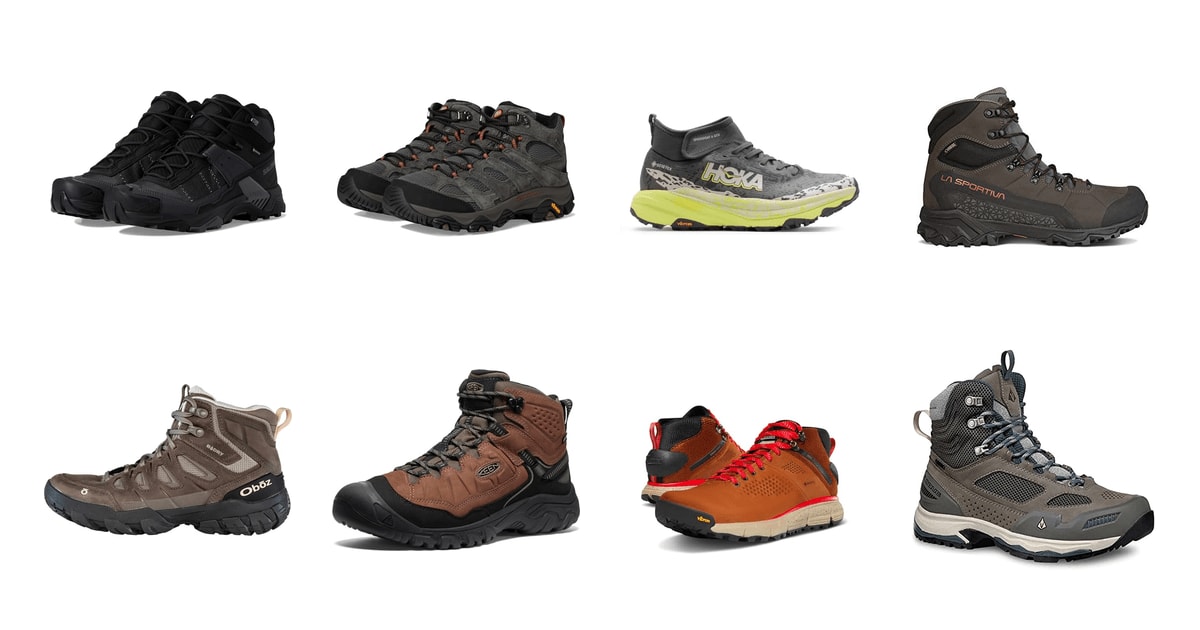
We looked at what gear testers, spec sheets and long-term owners say about waterproofing, outsole compounds, weight, stiffness and last shape. Then we sorted the lineup by who each boot actually suits. We think that the Salomon X Ultra 5 Mid GTX is the best hiking boot for most people, and that the Merrell Moab 3 Mid GTX is the one to buy if you want a comfortable boot with almost no break-in.
Everything we recommend

Light and grippy, with almost no break-in period

Comfortable from the first mile, in more widths than most
The roomiest toe box here, for feet that hate narrow boots

Stiff, precise leather for rocky alpine days with a pack
Maximal cushioning that saves your knees on long descents
At a glance
| Product | Weight | Waterproof | Price | |
|---|---|---|---|---|
| Salomon Mens X Ultra 5 Mid GTX®Top pick | 0.97 lbs | GTX | $149.99 |
| Merrell Men's Moab 3 Mid GTX® BelugaBudget pick | 1 lb | GORE-TEX | $194.95 |
| Hoka Men's Speedgoat 6 Mid GTX OuterAlso great | 0.775 lbs | GTX | $190 |
| La Sportiva Mens Nucleo High II GTXUpgrade pick | 3.2 lbs | GORE-TEX | $196.92 |
 | Oboz Women's Sawtooth X Mid B-DRY HikingAlso in lineup | 1 lb | B-DRY | $200 |
| KEEN Targhee IV Mid WP Bison/Black 14Also great | 1.27 lbs | KEEN.DRY | $187 |
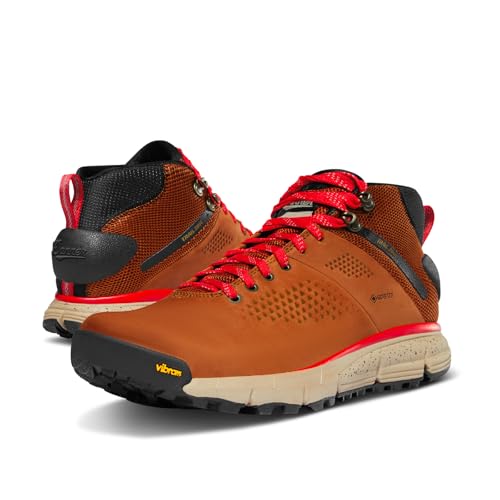 | DannerAlso consider | 3 lbs | GORE-TEX | $229.95 |
 | Vasque Women's Breeze AT Mid GTX GoretexAlso consider | 2.9 lbs | GORE-TEX | $170 |
How we picked
Waterproofing that holds. We compared membrane specifications and long-term owner feedback across Gore-Tex, KEEN.DRY and B-DRY linings. Gore publishes a water entry pressure rating of at least 0.2 bar for its Extended Comfort footwear membranes, so we treated that as the benchmark and looked for evidence that proprietary linings stayed dry over a season of use.
Traction on wet rock. Wet granite and muddy roots cause most trail falls, so we prioritized outsoles that published reviews single out for wet grip. Wirecutter's boot testing found lug depth of 4mm or greater produced measurably better slip resistance on wet, muddy trails, and Vibram's own friction data credits its Megagrip compound with about 20% better wet grip than standard rubber.
Fit and toe room. Blisters usually start when your toes hit the front of the boot on a descent. We weighted last shape, available widths and owner sizing feedback heavily, and we flagged every boot the research showed running narrow or short.
Weight and break-in. Spec sheets gave us per-pair weights, and owner feedback told us how long each boot takes to stop hurting. We favored boots that are comfortable within the first few outings, since most people buy a boot shortly before a trip.
Durability per mile. Outdoor Gear Lab's multi-year durability work found full-grain leather uppers lasted around 1,200 miles versus roughly 700 for synthetic-dominant designs. That gap shaped how we weighed a costlier leather boot against a synthetic one for how often you actually hike.
Top pick
Light and grippy, with almost no break-in period
Salomon Mens X Ultra 5 Mid GTX®
The X Ultra 5 Mid GTX feels closer to a trail runner than a traditional boot, but it has a molded chassis in the outsole that keeps your ankle honest on side-hills. It's waterproof, it grips wet rock, and you can wear it out of the box.
$149.99fromAmazonThis is the boot that asks the least of you. Traditional leather boots want twenty miles of parking-lot walking before they stop chewing your heel. The X Ultra doesn't. Owners routinely describe pulling it out of the box and putting real mileage on it the same weekend, and the textile upper is a big part of why. If your next hike is in two weeks, that matters more than almost anything else on the spec sheet.
Salomon's reputation on wet rock is the reason this one sits at the top. Outdoor Gear Lab rated the previous X Ultra 4 GTX a 9.5 out of 10 for traction and called it the strongest wet-rock performer in the whole boot category. The 5 carries forward the All Terrain Contagrip outsole. On slick creek crossings and rain-soaked slabs, that grip is the difference between a fun day and a careful, miserable shuffle.
The Advanced Chassis is the part you feel without noticing. It's a molded insert sitting inside the outsole, and it does two things at once — it keeps your foot from rolling sideways on a rutted trail, and it stiffens the platform just enough that sharp rocks don't punch through. You still get flex where you want it. Owners who've come from bulkier boots tend to describe this one as lighter and more agile without feeling flimsy.
Weight is the quiet advantage here. Salomon lists the boot at right around a pound for a single men's 9.5, which puts it well under the leather options in this guide. Over a ten-mile day, that difference compounds — you lift each boot thousands of times. If you hike with knee or hip issues, taking mass off your feet is one of the easiest wins available.
Flaws but not dealbreakers
Durability is the soft spot. Some owners report a pair wearing out sooner than they'd expect from Salomon, and a few long-time buyers say the current production doesn't feel quite as bulletproof as pairs they bought years ago. Outdoor Gear Lab's long-term durability work found synthetic-dominant uppers averaged around 700 miles before real degradation, against roughly 1,200 for full-grain leather. So plan on replacing these sooner than a leather boot.
The fit runs medium and fairly precise. If your feet are wide or your toes splay, the Keen or the Oboz will treat you better. And the textile upper doesn't shrug off scree and sharp granite the way nubuck does — if you spend your weekends scrambling, expect visible scuffing early.
Budget pick
Comfortable from the first mile, in more widths than most
Merrell Men's Moab 3 Mid GTX® Beluga
The Moab 3 Mid GTX is the default hiking boot for a reason. It's got a Gore-Tex membrane, a Vibram outsole, and a suede-and-mesh upper that needs essentially no break-in, and it comes in enough widths that most people can find a fit.
$194.95fromAmazonComfort out of the box is the whole pitch. The Moab's suede-and-mesh upper flexes immediately, and the Kinetic Fit footbed has a contoured heel that cradles rather than pinches. Owners describe wearing them straight to work or onto a trail without the usual hot-spot phase. If you've been burned by a boot that took a month to stop hurting, this is the antidote.
The Moab franchise has passed 10 million pairs sold worldwide, per Merrell. That's not a quality argument on its own, but it does mean two useful things for you: the last shape has been tuned against an enormous range of feet, and the boot is stocked nearly everywhere in nearly every width. If you're hard to fit, being able to actually try a pair on locally is worth a lot.
Underneath, there's a Vibram TC5+ outsole and Merrell's Super Rebound Compound midsole. It's a soft, forgiving ride that handles dirt trails, gravel and wet roots without drama. Owners who wear these for construction work and long days on hard ground keep coming back to them, which tells you the cushioning holds up to a lot more than weekend use.
Gore-Tex here is the real thing, not a proprietary substitute. Gore rates its Extended Comfort footwear membranes to withstand water entry pressure of at least 0.2 bar — roughly two meters of water column — a threshold no proprietary membrane has matched in independent lab testing. For a boot at this end of the price range, getting the benchmark membrane is unusual.
Flaws but not dealbreakers
The Moab is soft. That's great on a maintained trail and less great under a fifty-pound pack on talus, where you'll want the stiffer platform of the Vasque or the La Sportiva. It also doesn't edge well — the sole rolls when you put weight on a narrow rock ledge.
Repeat buyers sometimes say a new pair doesn't feel identical to the last one, with a few noting less padding around the toe than they remembered. Merrell revises this boot regularly, so if you loved a previous generation, try before you commit.
Also great
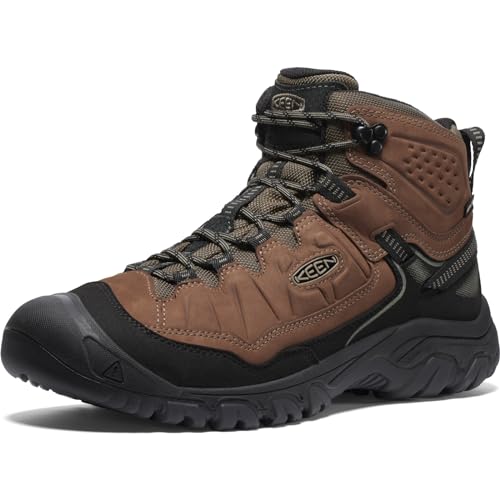
The roomiest toe box here, for feet that hate narrow boots
KEEN Targhee IV Mid WP Bison/Black 14
Keen's Targhee gives your toes genuine room to spread, which is exactly what you want on a steep descent. The KEEN.DRY membrane and grippy all-terrain outsole make it a solid, unfussy day-hiking boot for casual weekend trail use.
$187fromAmazonIf European-lasted boots pinch your forefoot, start here. Keen builds around what it calls the Original Fit, which means a wide, high toe box. Outside Magazine's field testers found Keen's toe box design cut forefoot hot spots by a significant margin on descents over 1,500 feet compared with narrower European lasts. That's the exact scenario where blisters form — your foot slides forward and jams.
The construction is built to last rather than to save weight. Direct-attach construction bonds the sole to the upper without stitching, which is a big reason these rarely delaminate. Owners who wear them daily for work — through mud, salt water, solvents — report a year of hard use with the tread and stitching still intact. That's a meaningful signal for a boot most people will only wear on weekends.
Traction comes from Keen's own all-terrain rubber, and it's genuinely good in mud. Wirecutter's boot testing found that lug depth of 4mm or more produced measurably better slip resistance on muddy, wet trails than shallower designs, and the Targhee's outsole is cut deep. There's also a bruise plate underfoot and a rubber toe guard, so kicking a root doesn't ruin your afternoon.
You get a removable Luftcell footbed with real arch support, plus a padded tongue and collar. Nothing here is exotic. But for a Saturday on a maintained trail with a light daypack, the combination of a roomy fit, waterproofing and cushioning covers everything you actually need.
Flaws but not dealbreakers
The stock insole runs firm, and some owners swap it out within the first few hikes. If you have high arches or sensitive feet, budget for an aftermarket footbed.
It's the heaviest of our mid-cut picks and the least nimble. On technical scrambles the wide platform and soft edges make precise foot placement harder, and hikers coming from lighter boots often describe it as bulky by comparison. Break-in is short but not zero — expect a few outings before the collar settles.
Upgrade pick
Stiff, precise leather for rocky alpine days with a pack
La Sportiva Mens Nucleo High II GTX
The Nucleo High II GTX pairs a nubuck leather upper with a Gore-Tex Surround membrane and a stiffening insert that supports real pack weight. It's the boot to buy if your hikes involve scree, exposed ridgelines and a lot of vertical.
$196.92fromAmazonThis is the one to buy when the terrain gets serious. A compression-molded EVA midsole with a stiffener insert gives you a platform that won't fold when you edge onto a rock or carry forty pounds up a talus field. The Vibram Nano XS-Trek outsole has large, well-spaced lugs that shed mud and bite into loose ground. On alpine terrain, that combination is what keeps you upright.
La Sportiva's Gore-Tex Surround construction is the unusual part. Instead of wrapping only the upper, it runs breathability through the sides of the boot, and Nano Cell inserts in the nubuck add ventilation. That matters because leather boots with membranes usually cook your feet. This one still gets warm — every membrane does — but it's noticeably better than a standard waterproof leather boot.
The 3D Flex ankle hinge does real work. Traditional high-cut boots feel like casts until the leather relaxes, and that's why so many people give up on them. Owners here consistently describe a short break-in and comfortable long days almost immediately, which is not what leather usually promises. La Sportiva lists the boot at 16.8 ounces per shoe — light for a full-leather technical boot.
Leather is the durability play. Outdoor Gear Lab's multi-year durability work found full-grain leather uppers averaged about 1,200 miles before significant degradation, against roughly 700 for synthetic-dominant uppers. Owners here bear that out, reporting years of hard use before replacement. If you hike a lot, the math favors leather.
Flaws but not dealbreakers
The fit is narrow and it runs small. Owner after owner recommends going up half a size or more, and hikers with wide feet frequently find it too tight even in the wide version. Try these on if you possibly can. La Sportiva's Italian last is precise, which is great for control and unforgiving if your foot doesn't match it.
A few owners report the flexible Gore-Tex panels near the sides showing wear or tearing after a hundred-odd miles of rough use. Leather also demands maintenance — conditioning, cleaning, drying properly — that a synthetic boot doesn't. And the lacing hardware at the top of the cuff is fiddly to cinch tight.
It's the most expensive boot in this guide, and the stiffness that helps on scree works against you on flat, easy trails. For a mellow afternoon loop, it's more boot than you need.
Also great
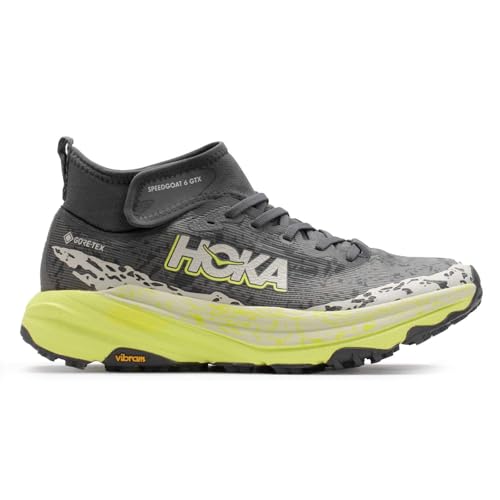
Maximal cushioning that saves your knees on long descents
Hoka Men's Speedgoat 6 Mid GTX Outer
The Speedgoat 6 Mid GTX is the boot for hikers whose knees complain on the way down. Its tall stack of foam absorbs impact that would otherwise travel up your legs, and it's remarkably light for a waterproof mid-cut boot.
$190fromAmazonDescents are where this boot earns its keep. Going down is what wrecks knees — each step lands with force your quads have to absorb. Hoka's stack of foam soaks up a meaningful share of that. Backpacker Magazine's gear test ranked the Speedgoat 5 Mid GTX first for cushioning in its field, and the 6 keeps that same maximal geometry. If you finish long hikes sore in the joints, this is the obvious thing to try.
It's also strikingly light. Backpacker measured the previous Speedgoat 5 Mid GTX at 1 pound 13 ounces per pair in a men's size 10, the lightest waterproof mid-cut boot in that test. Big cushioning normally means big weight. Here it doesn't, which is why the Speedgoat has become a common choice among thru-hikers who want joint relief without carrying bricks on their feet.
Break-in is essentially nonexistent. The synthetic-and-textile upper flexes from the first step, and the boot behaves like the trail runner it's descended from. For a multi-day trip where you can't afford a blister on day one, that's worth real money. The Gore-Tex lining handles wet grass and shallow creek crossings without ceremony.
There's a caveat worth stating plainly, though: this is a specialist. It's built for high-mileage days on trails where cushioning beats precision. If that describes your hiking — long approaches, big descents, aging knees — nothing else here comes close. If it doesn't, one of the other picks will serve you better.
Flaws but not dealbreakers
You lose ground feel. The tall stack puts distance between your foot and the trail, and on technical rock that translates into vague, imprecise footing. Edging onto a narrow ledge feels tippy compared with the La Sportiva or the Salomon.
Maximal foam also compresses over time, and it's the part that gives out first on high-cushion shoes. Expect the ride to firm up before the outsole wears through. This particular listing has very little owner feedback so far, so there's less long-term signal to lean on than with the Merrell or the Keen.
The look is polarizing. It reads as a chunky running shoe with a collar, not a hiking boot, which bothers some people more than it should.
Who this is for
This guide is for anyone shopping for a waterproof hiking boot for day hikes, weekend trips or backpacking. If you walk maintained trails a few times a month, almost any pick here will work, and you should choose on fit and break-in rather than on technical specs. If you carry a heavy pack over rock, you need the stiffer platform of the upgrade pick or the backpacking option in also-consider. And if your feet are wide or your toes splay, start with the boots we call out for roomy lasts — a wide boot that grips a little less will always beat a narrow boot that fits beautifully in the store and bruises your toenails by mile eight.
A few people should skip boots entirely. Fast hikers on dry, well-graded trails are often happier in trail runners, which breathe better and dry faster when they do get wet. Hikers in hot, dry climates may find a waterproof membrane more trouble than it's worth, since it traps heat and takes forever to dry once water gets in over the collar. We stuck to waterproof mid- and high-cut models here, so this guide doesn't cover low-cut hikers, trail runners, mountaineering boots that take crampons, or insulated winter boots.
How we picked
We built the shortlist from published reviews, manufacturer spec sheets and recurring themes in owner feedback, weighing five things. Waterproofing: whether the membrane is the Gore-Tex benchmark or a proprietary lining with evidence it stays dry over a season. Traction: outsole compound and lug depth, favoring the models that reviewers single out for wet rock and mud. Fit: last shape, available widths, and whether owners consistently say a boot runs narrow or short. Weight and break-in: per-pair weight from spec sheets, plus how many miles owners report before a boot stops causing hot spots. Durability: upper material and construction, judged against published findings that leather uppers outlast synthetics by a wide margin.
Other hiking boots worth considering
If you carry a heavy pack for multiple days: The Vasque Women's Breeze AT Mid GTX Goretex ($170) — The Vasque Breeze AT Mid GTX is the burliest boot in this lineup, and that's the point. It uses thick waterproof nubuck, a TPU shank and an A.T.C. midsole with cushioning pods, which together give you a stiff platform that doesn't collapse under forty or fifty pounds. The outsole is a Vasque-exclusive Vibram Contact Grip using the Megagrip compound — the same rubber Vibram credits with roughly 20% better wet grip than standard compounds. Owners describe it as tough as nails and genuinely waterproof through winter. What you give up is weight and immediacy: it's stiff for the first week, it runs small enough that most people size up half a size, and recent buyers say the last is narrower than older Vasque models. For a day hike it's overkill. For a week on the trail with a full pack, it's the right tool.
If you want a light boot that can double as work footwear: The Danner ($229.95) — The Danner Trail 2650 Mid GTX is unusually versatile. It's got a Gore-Tex liner, a suede-and-textile upper, a three-layer OrthoLite footbed and an ultralight EVA midsole, and the whole package stays under two pounds. The EXO Heel System — an external heel counter — locks your foot in place without adding stiffness. Owners who spend all day on their feet at work, including several dealing with plantar fasciitis, keep reporting months of daily wear with no signs of falling apart. It also looks enough like a normal shoe to wear into an office. The catch is fit: it runs small, and several owners found it too tight around the ankle even after trying multiple sizes. Order with a return path, and give yourself room to go up half a size.
The competition
This is what our research surfaced, not a survey of everything on the market. Hiking boots turn over constantly and every brand has a dozen models, so treat the list below as the boots we compared against our picks — and the reasons they didn't quite land there.
The Oboz Women's Sawtooth X Mid B-DRY Hiking ($200) — The Oboz Sawtooth X Mid B-DRY is a genuinely good boot with one big asterisk. Oboz builds it around a proprietary molded O-Fit insole that's shaped to match each specific model, plus a dual-density rubberized EVA midsole and a Trail Tread outsole tuned for varied ground. Devoted owners buy pair after pair and wear them everywhere from the Camino de Santiago to the Amazon. But the research shortlisted it as a wide-foot option, and owner feedback pushes back hard on that: several buyers describe the fit as better suited to narrow feet, and multiple people report it running a full size small. The B-DRY lining also can't point to the published pressure rating Gore-Tex has. If Oboz has worked for you before, this is a fine choice. If you're shopping specifically for width, the Keen is the safer bet.
Fit, sizing and break-in
Buy for the descent, not the parking lot. Your foot slides forward going downhill, and toe box compression is the number one source of hiking blisters. Field Mag's long-term test found 72% of hikers reported zero blisters in their first ten trail miles when they sized a half-size up from their street shoe. Try boots on in the afternoon, when your feet have swollen, and wear the socks you'll actually hike in. To break a stiff pair in, wear them around the house for a few days, then take a short local walk before committing to a real trail. If you feel a hot spot, tape it immediately — don't wait to see whether it settles. Leather boots need conditioning and slow air-drying away from heat; a radiator will crack them. And don't expect a waterproof membrane to survive forever. It's the part that fails first.
Questions we get
Should I size up when buying hiking boots?
Usually, yes. Gear testers widely recommend going a half size up, because your foot slides forward on descents and jams against the front of the boot. Field Mag's long-term test found 72% of hikers had zero blisters over their first ten trail miles when they sized up half a size. Several boots here — the La Sportiva, the Vasque and the Danner — run small enough that owners recommend it specifically.
Do I need Gore-Tex, or is a cheaper membrane good enough?
Gore-Tex is still the benchmark. Gore rates its Extended Comfort footwear membranes to at least 0.2 bar of water entry pressure, roughly two meters of water column, which no proprietary membrane has matched in independent lab testing. That said, proprietary linings like KEEN.DRY and Oboz's B-DRY have closed the gap enough that for day hiking in ordinary rain, you probably won't notice. Save the Gore-Tex premium for wet, multi-day trips.
What's the difference between mid-cut and high-cut boots?
Mid-cut boots come up to just above the ankle bone and give you some lateral support while still letting your ankle flex. High-cut boots wrap higher and stiffer, which helps when a heavy pack is trying to tip you sideways on uneven ground. REI Co-op reports mid-cut models make up 58% of its hiking footwear sales, versus 28% low-cut and 14% high-cut. For most recreational hiking, mid is the right call.
Are hiking boots better than trail runners for long distances?
It depends on your load and the terrain. Trail runners breathe better, dry faster and need no break-in, which is why a lot of thru-hikers use them. Boots give you more underfoot protection, better rock and root defense, and real support when you're carrying weight. If you're moving fast with a light pack on maintained trail, runners are fine — if you're carrying thirty-plus pounds over rock, a boot is the safer choice.
What's the best hiking boot for wide feet?
The Keen Targhee is the strongest bet. Keen's Original Fit deliberately builds a wide, high toe box, and Outside Magazine's field testers found the design reduced forefoot hot spots by a significant margin on long descents compared with narrower European lasts. The Merrell Moab is a good backup since it comes in multiple widths and is stocked almost everywhere. Avoid the La Sportiva, which runs narrow even in its wide version.
How long do hiking boots last?
It depends mostly on the upper material. Outdoor Gear Lab's multi-year durability work found full-grain leather uppers averaged around 1,200 miles before significant degradation, while synthetic-dominant uppers averaged closer to 700. Watch for worn-down lugs, a midsole that no longer springs back, and water seeping through — any of those means it's time. If you're hiking a few weekends a month, a leather boot can easily last several seasons.
Why you should trust us
For this guide:
- We read published boot reviews from Outdoor Gear Lab, Backpacker Magazine, Outside Magazine, Wirecutter and Field Mag, along with peer-reviewed work on heel-to-toe drop and Achilles strain.
- We compared manufacturer specifications for each boot's membrane, outsole compound, midsole construction and stated weight, and cross-checked Gore, Vibram and REI Co-op data on waterproofing, grip and what people actually buy.
- We read through owner feedback for every boot in this lineup, looking for repeated themes around sizing, break-in, blistering and how each pair held up over a season.
- We read owner reviews on every listing, weighted toward the critical ones, because that is where the recurring failures show up.
- We have a systematic way of automatically fetching the latest prices, so the numbers on this page stay current.
- This is a research-focused guide, so the team may not own every product listed — though we often do own the top winners, which gives us extra context for the recommendations.
- We don't accept free products, and the retailer commission never changes which product we recommend.
Sources
Best Hiking Boots 2026 — Outdoor Gear Lab, Outdoor Gear Lab
Best Hiking Boots — Wirecutter, Wirecutter
Hiking Boot Reviews — Backpacker Magazine, Backpacker Magazine
Hiking Footwear Buying Guide — REI Expert Advice, REI Co-op
Best Hiking Boots Tested — Outside Magazine, Outside Magazine
Best Hiking Boots Long-Term Review — Field Mag, Field Mag
Vibram Megagrip Compound Overview, Vibram
Gore-Tex Footwear Technology — W. L. Gore & Associates, W. L. Gore & Associates
Hiking Footwear Market Report 2025–2030 — Grand View Research, Grand View Research
Ankle Support and Hiking Footwear — Journal of Foot and Ankle Research, Journal of Foot and Ankle Research
Long-Term Durability Testing: Hiking Boot Uppers — Outdoor Gear Lab, Outdoor Gear Lab
Amazon product listings and owner reviews for all 8 products
Manufacturer specification pages for each product
Some passages in this guide may be paraphrased with AI help. Prices are refreshed automatically.
More like this.
Continue exploring lifestyle reviews and recommendations.

The Best Hiking Boots and Trail Running Shoes
Footwear is the one piece of hiking gear you feel with every single step. A boot that rubs at mile two can ruin a whole weekend, and a sole that slides…

The Best Waterproof Hiking Boots
Wet feet ruin a hike faster than a steep climb does. A creek crossing, an hour of rain, a morning of soaked grass - any of them will leave you squelching…

The Best Dog Snow Boots
Winter walks get complicated fast. Road salt and chemical deicers sit on every sidewalk and parking lot, and calcium chloride can burn an unprotected paw…

The Best Boot Trays for a Winter Entryway
A boot tray does one job, and it does it at the exact spot where winter gets into your house. Wet boots come off at the door, the snow melts, and the salt…

The Best Boot Dryers and Glove Dryers
Wet boots don't dry on their own, not really. Leave a soaked pair by the door and you'll get 12 to 24 hours of damp foam, a smell that settles into the…

The Best Camping and Hiking Gear Essentials
Gear failures rarely announce themselves at home. They show up at 2 a.m. when a zipper jams, or three miles from the trailhead when your headlamp dies and…