The Best Home EV Charging Stations
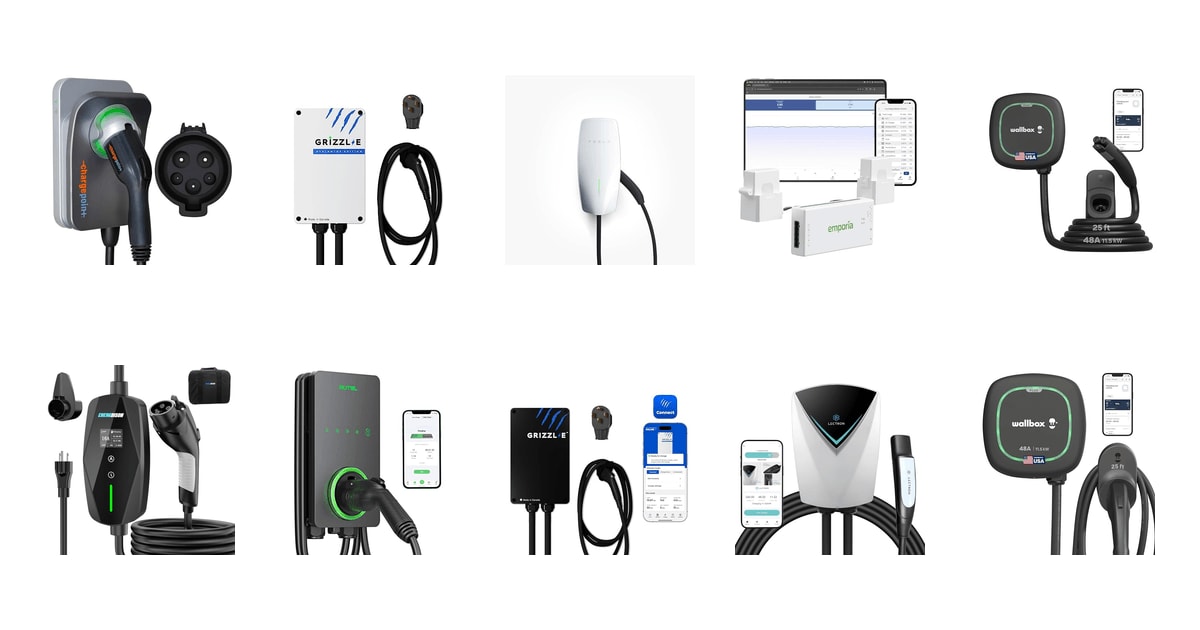
Home charging is the whole reason an EV feels easy. A 240-volt Level 2 charger adds roughly 25 to 45 miles of range an hour, so you plug in after dinner and leave in the morning with a full battery. You stop planning your week around public stations. You pay your home electricity rate instead of a public network's markup. And you almost never think about charging again, which is exactly the point. Most EV charging happens at home for a reason.
Here's the part nobody puts on the box: the charger is often the cheap half of the job. You'll likely need an electrician, a dedicated circuit, and sometimes a panel with room to spare — and none of these units can tell you what that will cost until someone looks at your panel. The other honest caveat is speed. Your car's onboard charger sets the ceiling, so a 48-amp unit won't charge a car that only accepts 32 amps any faster than a 32-amp unit will.
Wi-Fi is the other soft spot. Nearly every smart charger here has owners who fought with app setup or lost the connection later, and the ones that keep working offline are the ones worth trusting. We think that the ChargePoint HomeFlex is the best home EV charging station for most people, and that the Grizzl-E Classic is the one to buy if you'd rather skip the app entirely and just have a rugged box that charges your car.
Everything we recommend

Dial in the power to fit the panel you already have

No app, no Wi-Fi, no problems — just a metal box that charges

The obvious answer if everything in your driveway is a Tesla

Faster, smarter, and it plays well with utility programs

The rugged Grizzl-E build, with scheduling added on top
Prices as of Oct 22, 7:36 AM PT · Details
At a glance
| Product | Max Amperage | Cable Length | Price | |
|---|---|---|---|---|
| ChargePoint HomeFlex Level 2 EV Charger J1772Top pick | 20A/80A Circuit | — | $549 |
| Grizzl-E Classic Level 2 Electric VehicleBudget pick | 16-40A Adjustable | 24 ft | $299.99 |
| Tesla Level 2 Charger NACS 48A -Also great | Up to 48A | — | $459.89On sale |
 | Emporia Vue 3 Home Energy Monitor -Also consider | — | — | $99.99 |
 | Wallbox Pulsar Plus Level 2 EV ChargerAlso in lineup | 48A / 11.5kW | 25 ft | Check price |
 | Level 1&2 EV Charger -16Amp Adjustable CurrentAlso in lineup | 16A Adjustable | 25 ft | $107.99On sale |
| Autel Home Smart Electric VehicleUpgrade pick | Up to 50A | 25 ft | $499 |
| Grizzl-E ClassicRunner-up | 16-40A Adjustable | 24 ft | $299.99 |
 | Wallbox Pulsar Plus Level 2 EV ChargerAlso in lineup | 48A / 11.5kW | 25 ft | $699 |
Prices as of Oct 22, 7:36 AM PT · Details
How we picked
Charging speed that's real. We compared rated amperage and kilowatt output across every listing, then weighed it against what typical EVs can actually accept. A unit only earns credit for 48 amps if a normal buyer can use them.
Install reality. We looked at whether each charger is hardwired or plugs into a NEMA 14-50 outlet, and what circuit size it demands. Plug-in units with adjustable amperage got preference because they fit more houses without a panel upgrade.
Weather and build. We checked enclosure ratings — NEMA 4, 4X, IP67 — and cable cold-weather claims from spec sheets, since most of these live in an unheated garage or on an exterior wall.
App reliability. Owner feedback across every smart model in this guide repeatedly flagged Wi-Fi pairing and dropped connections. We favored chargers that keep charging when connectivity fails.
Certifications. We required UL or CSA listing on anything we recommend, because permit inspectors and utility rebate programs generally do too.
Top pick
Dial in the power to fit the panel you already have
ChargePoint HomeFlex Level 2 EV Charger J1772
The HomeFlex adjusts from 16 to 50 amps, so it can match almost any circuit your house can spare. Pair that with the most useful app in the category — cost tracking, off-peak scheduling, reminders — and it's the charger that fits the widest range of homes.
$549fromAmazonPrices as of Oct 22, 7:36 AM PT · Details
The amperage range is the reason to buy this one. Most chargers give you a fixed output or two settings. The HomeFlex spans 16 to 50 amps, which means your electrician works with the capacity your panel already has instead of quoting you a service upgrade. If your box is full and you can only spare a 30-amp circuit, this still works. That flexibility is worth more than a spec-sheet win.
The app is the other half. You can set charging to start when your off-peak rate kicks in, watch what each session actually costs you, and get a nudge when you forget to plug in. Owners who've had one for a year consistently describe it as the part that keeps working — not a novelty they stopped opening. It's not a perfect app, but it's the most complete one here.
ChargePoint has been building charging hardware for a long time, and it shows in the boring details. The unit is UL-certified, rated for outdoor mounting, and the cable stays flexible when it's cold — which matters if your charger lives on an exterior wall in a place with real winters. The 25-foot cable reaches across a two-car garage without you parking creatively.
It charges roughly nine times faster than a standard household outlet, up to about 45 miles of range per hour depending on your car. For most drivers, that's overkill in the best way: you'll be full long before morning even if you come home nearly empty.
Flaws but not dealbreakers
It costs more than most of the chargers here, and you're partly paying for the app. If you never plan to schedule a charge or look at a cost report, that money is wasted on you and the Grizzl-E Classic will charge your car just as well.
Getting the full 50 amps means a dedicated 60-amp circuit and a licensed electrician — this one is hardwired, not plug-and-go. And while most owners report years of trouble-free use, a persistent minority describe a hardware fault that required a replacement, with customer service that tested their patience. Support did make it right in the accounts we read, but it's a real risk to know about.
It uses a J1772 connector, so Tesla owners need an adapter.
ChargePoint's listing does not state a warranty term, so check the documentation in the box before you buy.
Budget pick
No app, no Wi-Fi, no problems — just a metal box that charges
Grizzl-E Classic Level 2 Electric Vehicle
The Grizzl-E Classic strips out the connectivity and spends the money on an all-metal, weather-sealed enclosure and a heavy cable. It charges at up to 40 amps, plugs into a NEMA 14-50 outlet, and asks nothing of you but a place to hang it.
$299.99fromAmazonPrices as of Oct 22, 7:36 AM PT · Details
Some people buy the dumb charger on purpose, and this is the one they buy. There's no app to configure, no firmware to update, no Wi-Fi that drops in February. Your car probably already handles scheduling in its own app, which makes the charger's smarts redundant. Owners who chose this specifically after reading about connectivity headaches elsewhere tend to sound relieved.
The build quality is the selling point. The enclosure is steel, sealed to NEMA 4 and IP67, and rated for real weather — snow, rain, desert heat. Owners repeatedly note that the box doesn't get warm even pulling a full 40 amps for hours, and that the cable feels closer to industrial equipment than a consumer accessory. It's heavy enough that you should mount it into a stud, not drywall anchors.
You get four amperage settings — 16, 24, 32 and 40 — matched to 20, 30, 40 and 50-amp breakers. At the top setting, that's around 28 to 30 miles of range per hour, which fills an empty battery overnight for nearly everyone. The NEMA 14-50 plug also means a simpler, cheaper install: an electrician runs one outlet, and you're done.
It's UL certified and eligible for the federal rebate program, which matters when your utility or municipality offers a credit that requires a listed unit. Protections cover ground fault, over-current, over-voltage, over-temperature, and it recovers on its own after a power outage.
Flaws but not dealbreakers
There's no Wi-Fi, no app, no scheduling and no energy tracking. If your car can't schedule charging on its own and your utility charges you more during peak hours, that's a real cost you'll pay every month.
It's J1772 only, so Tesla drivers need the adapter. And because the unit is genuinely heavy, a sloppy mount will sag — a few owners also mention the connector fit on their car being tighter or looser than they expected.
Also greatOn sale
The obvious answer if everything in your driveway is a Tesla
Tesla Level 2 Charger NACS 48A -
Tesla's Wall Connector uses a native NACS plug, pushes up to 48 amps, and hooks straight into the Tesla app you already use. Up to six units can share one circuit, which is the trick that makes two-EV households workable.
$459.89fromAmazonList pricePrices as of Oct 22, 7:36 AM PT · Details
If you drive a Tesla, this is the least complicated choice you can make. No adapter dangling off the connector, no second app, no compatibility questions. The charging status shows up where you already look. Owners describe the hardware itself as close to flawless — the complaints that do come up are almost always about the initial Wi-Fi pairing, not the charging.
Power-sharing is the feature worth understanding. Link up to six Wall Connectors and they divide a single circuit's capacity between them, so a two-car household doesn't need two dedicated 60-amp runs. Overnight, both cars fill up regardless — you're asleep for eight hours and the electricity has plenty of time to move.
Output is adjustable down through 40, 32, 24, 16 and 12 amps, so it adapts to a modest panel the same way our top pick does. At the full 48 amps you'll see up to about 44 miles of range per hour, depending on which Tesla you drive. It's UL certified, Energy Star rated, and installs indoors or out.
The install is well-documented enough that some owners handle it themselves, though it needs 6 AWG wire and a 60-amp breaker. Those materials cost real money on top of the charger, so budget for the whole job rather than just the box.
Flaws but not dealbreakers
It's built for Teslas. A non-Tesla EV needs a J1772 adapter, which is one more thing to buy, carry and lose.
Smart-home integration outside Tesla's own ecosystem is thin — if you want your charger talking to Home Assistant or a utility demand-response program, look at the Autel instead. Several owners also describe a frustrating first pairing with the Tesla app, which usually resolves but wastes an evening.
Upgrade pick
Faster, smarter, and it plays well with utility programs
Autel Home Smart Electric Vehicle
Autel's MaxiCharger runs up to 50 amps and 12 kW, has a color display, and supports OCPP — the open protocol that lets it join utility demand-response programs and third-party smart-home setups. It's more charger than most people need, in a good way.
$499fromAmazonPrices as of Oct 22, 7:36 AM PT · Details
OCPP support is the unusual part. Most home chargers only talk to their manufacturer's cloud, so when that cloud has a bad day, your scheduling goes with it. This one can point at a local server instead — owners have connected it to Home Assistant and gotten direct control over availability, current and a stack of sensors. That's a genuine hedge against a company changing its app or its mind.
At 50 amps and 12 kW, it's the fastest unit here on paper. That's roughly 37 miles of range added per hour, which only matters if your car's onboard charger can accept it — most can't. Where it does pay off is if you're buying now and planning to keep the charger through your next EV, which will likely accept more.
Autel has been building automotive diagnostic tools since 2004, and mechanics who use their scan tools tend to arrive at this charger already trusting the badge. It's CSA certified, NEMA Type 4 rated for snow and hail, and eligible for the federal rebate program. The 25-foot cable stays flexible in the cold.
The app handles scheduling, off-peak optimization and remote start, and it connects over Wi-Fi, Bluetooth or Ethernet. That wired option is a small thing that matters if your garage sits at the far edge of your router's range.
Flaws but not dealbreakers
Not everyone reaches the advertised 50 amps. Some owners with correctly installed circuits report the unit settling at a lower current than expected, and describe support as slow to work through it. If maximum speed is why you're buying, that's the risk.
It's expensive for a single-car household that charges overnight, and the full-capacity install demands a large dedicated circuit your panel may not have room for.
The MaxiCharger comes with a three-year warranty.
Runner-up
The rugged Grizzl-E build, with scheduling added on top
Grizzl-E Classic
The Grizzl-E Smart puts Wi-Fi scheduling, energy tracking and remote monitoring into the same all-metal, weather-sealed body as the Classic. It charges at up to 40 amps and — importantly — keeps working when the Wi-Fi doesn't.
$299.99fromAmazonPrices as of Oct 22, 7:36 AM PT · Details
This is the Classic with the one thing the Classic lacks. Same steel NEMA 4X enclosure, same fire and water resistance, same adjustable 16-to-40-amp output, same simple NEMA 14-50 install. Add Wi-Fi, charging schedules, real-time monitoring and consumption stats through the Grizzl-E Connect app. If you want off-peak scheduling but don't trust plastic chargers outdoors, this is the combination.
It's UL tested and certified, Energy Star certified, and eligible for the federal rebate program — the paperwork trifecta that keeps permit inspectors and utility rebate desks happy. Owners coming from a carmaker's included mobile charger consistently report a large jump in actual charging current, which is the whole reason to install a Level 2 unit.
Crucially, charging works with or without an internet connection. That's not a footnote. It means a failed app pairing costs you features, not a working charger — and given how often connectivity is the sore spot in this category, designing for that failure was the right call.
Flaws but not dealbreakers
The Wi-Fi setup is the recurring complaint. A meaningful share of owners describe long, failed attempts to get the charger onto their network, and some simply gave up and used it as a dumb charger. That mostly works out because the hardware doesn't care, but it makes the Smart premium a gamble.
The app is functional rather than polished — it doesn't match ChargePoint's cost reporting. And a handful of owners describe support as email-only and slow when something genuinely breaks.
You'll need a proper NEMA 14-50 outlet rated for continuous duty. The inexpensive ones aren't built to carry 40 amps for hours, and that's a fire-safety corner not worth cutting.
Who this is for
This guide is for someone who owns or is about to own an EV or plug-in hybrid, has a place to park it, and can get a 240-volt circuit run to that spot. If you're in that position, a Level 2 charger is the single upgrade that changes daily ownership the most. It's also for two-car households, where power-sharing and dual-circuit planning start to matter.
It's not for you if you're renting without permission to touch the electrical panel, or if you drive so little that a standard outlet already keeps up — plenty of retirees and short-commute drivers genuinely never need more. We cover home wall-mounted and portable Level 2 charging hardware. We don't cover DC fast chargers, public network subscriptions, outlets, breakers, or the electrical work itself, and we can't tell you what your install will cost.
How we picked
We built the shortlist around five things. Speed: rated amperage and kilowatts, weighed against what real EVs can actually accept, since a 48-amp charger does nothing extra for a 32-amp car. Install: hardwired versus NEMA 14-50 plug-in, and how far the amperage can be dialed down to fit an existing panel without a service upgrade. Build: enclosure ratings and cold-weather cable claims from spec sheets, because most of these hang in an unheated garage. App reliability: owner feedback flagged Wi-Fi pairing failures on nearly every connected model, so we favored units that keep charging offline. Certification: UL or CSA listing, which permits and rebate programs usually require anyway.
Other home ev charging stations worth considering
If you want to see where your electricity actually goes: The Emporia Vue 3 Home Energy Monitor - — The Emporia Vue 3 isn't a charger at all — it's a whole-home energy monitor that clamps onto your panel and reports usage circuit by circuit, including solar and net metering. Pair it with an EV charger and you can finally answer the question every new EV owner asks: how much is this actually adding to my bill? It's also the tool for planning a solar or battery install, since it tells you your real load instead of your guessed one. Note that branch sensors are sold separately, and some owners report difficulty sourcing additional sensors for this generation.
The competition
This is what our research surfaced, not a survey of every charger sold. A few models here are perfectly good and simply lost to a pick on price, cable length or app reliability — and one or two have specific reasons we'd steer you elsewhere.
The Wallbox Pulsar Plus Level 2 EV Charger — The Wallbox Pulsar Plus in its J1772 configuration is a genuinely nice piece of hardware: 48 amps, 11.5 kW, a 25-foot cable, Wi-Fi and Bluetooth, UL and Energy Star certified, assembled in the US, and one of the smallest 48-amp bodies you can hang on a wall. It's rated from -22°F to 104°F, so it handles a cold garage. We'd point most people to the ChargePoint instead because the app is more useful for tracking what you spend, and because this one is hardwired-only. But if wall space is genuinely tight — a narrow strip between a door and a workbench — the compact footprint is a real advantage and the Wallbox app is polished.
The Wallbox Pulsar Plus Level 2 EV Charger — This is the same Wallbox Pulsar Plus with a NACS connector instead of J1772, aimed at Tesla owners who want the compact European design rather than Tesla's own box. The hardware case is identical: 48 amps, 25-foot cable, hardwired install, weather-rated for indoor or outdoor mounting. We'd take the Tesla Wall Connector for a Tesla household because of power-sharing and native app integration, and because owner feedback on this variant is still thin — with at least one report of a unit arriving defective. Worth a look if you like the design and want NACS without Tesla's ecosystem.
The Level 1&2 EV Charger -16Amp Adjustable Current — The Energbison portable charger is the entry point: it runs on both 110V and 240V, adjusts from 6 to 16 amps, and comes with a NEMA 6-20 plug plus a standard 5-15 adapter, a 25-foot cable and a carrying bag. On 240V it adds roughly 12 miles of range per hour, which covers a modest commute and makes a fine backup or travel charger. It also has a built-in delay timer for off-peak charging without any app. But 16 amps is a fraction of what the picks deliver, and a few owners report units failing outright within the first couple of months and support that couldn't help. Treat it as a second charger, not your only one.
Installation notes
Before you buy anything, open your panel and count the empty breaker slots — then get an electrician to confirm your service can carry the load. A 40-amp charger needs a 50-amp circuit; a 48-amp charger needs a 60-amp one. If your panel is full or your service is small, an adjustable charger that dials down to 32 or 24 amps will save you a costly upgrade. For plug-in units, insist on a NEMA 14-50 outlet rated for continuous duty, since the inexpensive ones aren't built to carry that current for hours. Mount into a stud, not drywall anchors — these boxes are heavy. And keep every receipt and invoice: the federal credit under IRS Section 30C covers a share of qualified hardware and installation, and your utility may add its own rebate on top.
Questions we get
Do I really need a Level 2 charger, or is a standard outlet enough?
A standard 120V outlet adds about 3 to 5 miles of range per hour. A Level 2 charger adds 25 to 45. If you drive more than about 40 miles a day, Level 1 won't keep up over a week. If you drive very little — and plenty of people genuinely do — an outlet is fine and you can skip all of this.
Should I get a 32-amp charger or a 48-amp one?
It depends entirely on your car. Your EV's onboard charger sets the ceiling, and many accept only 32 amps, in which case a 48-amp unit charges no faster. Higher amperage is worth paying for if you plan to keep the charger through your next vehicle, or if you have a big battery you regularly run down. Otherwise 32 to 40 amps refills nearly any EV overnight.
What's the difference between a hardwired and a plug-in charger?
Plug-in units connect to a NEMA 14-50 or 6-50 outlet and can be unmounted and taken with you when you move. Hardwired units are wired directly into the circuit, which looks cleaner and is required to run above 40 amps under US code. If you rent, or think you might relocate, plug-in is the safer bet.
How long does an overnight charge take?
With a 48-amp charger, most EVs with 60 to 100 kWh batteries recharge fully in roughly 8 to 14 hours. A 32-amp charger typically needs 10 to 20 hours from near-empty. In practice you rarely arrive home empty, so an overnight top-up is usually a few hours.
Can I install one myself?
If a suitable 240V outlet already exists, plugging in a NEMA 14-50 charger is straightforward. Running a new circuit is not — it involves your panel, permits and local code, and it's the part where mistakes are dangerous and expensive. Hire a licensed electrician for the circuit, even if you mount the charger yourself.
Is there a tax credit for a home charger?
IRS Section 30C offers a credit covering a share of qualified home EV charger hardware and installation costs for eligible taxpayers, and it runs through 2032. Eligibility depends on your location and tax situation. Keep your electrician's invoices and confirm with a tax professional before you file. Many utilities run separate rebate programs that require a UL or CSA listed unit.
Why you should trust us
For this guide:
- We read manufacturer specifications and certification listings for every charger here, comparing amperage ranges, enclosure ratings, connector types and cable lengths side by side.
- We reviewed owner feedback across all ten listings to find the failure modes that repeat — Wi-Fi pairing trouble, support response times, and units that don't reach their rated current.
- We compared how each unit behaves when connectivity fails, since that turned out to be the most common real-world complaint in this category.
- We read owner reviews on every listing, weighted toward the critical ones, because that is where the recurring failures show up.
- We have a systematic way of automatically fetching the latest prices, so the numbers on this page stay current.
- This is a research-focused guide, so the team may not own every product listed — though we often do own the top winners, which gives us extra context for the recommendations.
- We don't accept free products, and the retailer commission never changes which product we recommend.
Sources
Best Home EV Chargers 2026 – Wirecutter (NYT), Wirecutter
Best EV Home Chargers Tested for 2026 – CNET, CNET
Home EV Charging Stations Ratings & Reviews – Consumer Reports, Consumer Reports
Best EV Chargers for Home 2026 – Car and Driver, Car and Driver
Best Home EV Chargers – Electrek, Electrek
Alternative Fuel Vehicle Refueling Property Credit (30C) – IRS, IRS
EV Charging at Home – U.S. Department of Energy (AFDC), U.S. Department of Energy
EV Charger Installation Cost Guide 2025–2026 – Forbes Home, Forbes Home
Amazon product listings and owner reviews for all 9 products
Manufacturer specification pages for each product
Some passages in this guide may be paraphrased with AI help.
Product prices and availability are accurate as of the date/time indicated and are subject to change. Any price and availability information displayed on Amazon.com at the time of purchase will apply to the purchase of this product.
More like this.
Continue exploring lifestyle reviews and recommendations.

The Best Electric Fence Chargers for Livestock
A fence charger has one job: make the wire unpleasant enough that your animals quit testing it. Get that right and you'll barely think about the fence…

The Best Elevated Dog Bowls and Feeding Stations
Feeding a dog is a floor-level job, and for plenty of dogs that's fine. But if your dog is tall, stiff in the shoulders, or simply old, dropping the head…

The Best Soldering Stations
A soldering station is what decides whether your joints come out shiny and solid or gray and cracked. Temperature control is the whole game. A cheap…

The Best USB-C Hubs and Docking Stations
A laptop with two ports and a desk full of stuff is a daily annoyance. You want your monitor, your keyboard, your mouse, your wired network and your…

The Best Portable Power Stations for Camping
A power station is the quiet fix for the two things that actually annoy you at a campsite: a cooler that has to keep working, and phones that die by…

The Best Car Battery Maintainers and Trickle Chargers
A car battery doesn't usually die all at once. It fades over a winter of sitting, or over a summer of two-mile trips to the grocery store, and then one…