The Best Elevated Dog Bowls and Feeding Stations
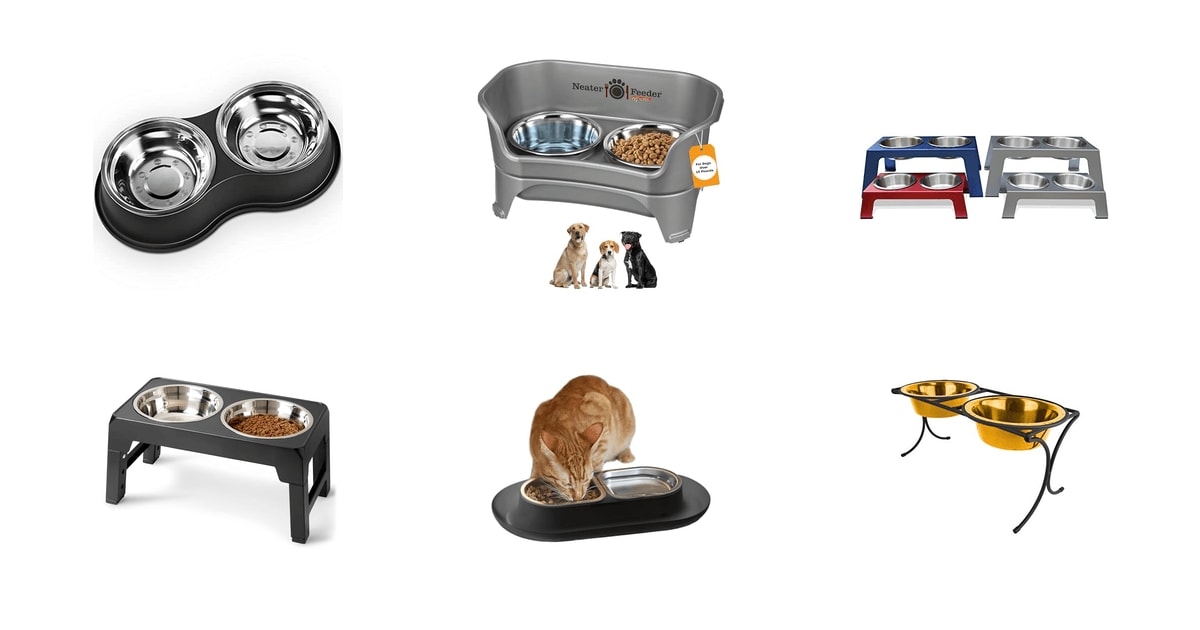
Feeding a dog is a floor-level job, and for plenty of dogs that's fine. But if your dog is tall, stiff in the shoulders, or simply old, dropping the head to the tile twice a day adds up. A raised bowl brings dinner closer to chest height, so the neck stays closer to neutral. It also keeps kibble off the baseboards and water out of a Basset hound's ears. The right height matters far more than the brand name on the stand.
No feeder solves everything, though. Height is the whole point, and most stands are sold in one or two fixed heights, so a station that suits a Corgi is wrong for a Weimaraner. Raised feeders also carry a real and unresolved question about bloat in big deep-chested breeds, which we get into below. And nothing here cleans itself. Bowls need washing daily, and the stand underneath collects slobber and dust whether it's plastic, wood, or metal.
So measure your dog before you shop, not after. The American Kennel Club's veterinary-reviewed guidance puts the starting point at roughly 6 inches below the withers, the bony ridge at the top of the shoulder blades. Go much taller and your dog has to reach up, which defeats the purpose. We think that the Neater Feeder Express is the best elevated dog feeder for most people, and that the SHAINFUN Elevated Dog Bowls with Slow Feeder and Mat is the one to buy if your dog is tall or eats too fast.
Everything we recommend

Mess containment first, at a height that suits medium dogs

Taller, adjustable, and built to slow a gulper down

Five heights and a folding frame, if you can live with plastic

A one-piece metal stand that stays looking new for years
At a glance
| Product | Height | Bowl Capacity | Price | |
|---|---|---|---|---|
 | Epetslove Stainless Steel Dog Bowls Double Non-SlipAlso consider | 3.3 in | 34oz | $16.99 |
| Neater Feeder Express Mess Proof Dog BowlsTop pick | 5.5 in | — | $49.99 |
| PetFusion Elevated Dog BowlsUpgrade pick | 4 in | 7 cups each | $34.96 |
| Amazon Basics Elevated Dog Bowls StandBudget pick | 8.4-33cm | — | $22.93 |
 | Hepper NomNom - Spill Proof Elevated CatAlso in lineup | 2 in | — | $24.99 |
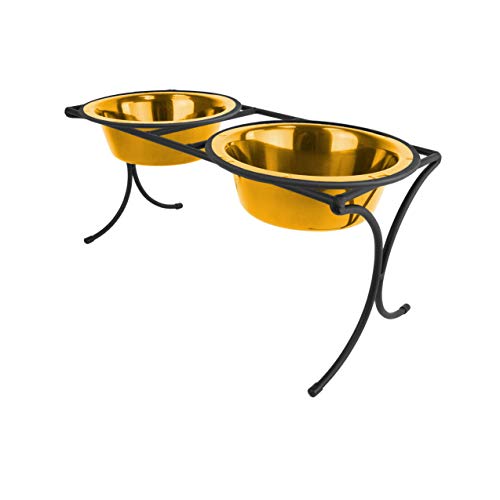 | Platinum Pets 4 Cup Bistro Double RaisedAlso consider | 6.75 in | 28oz | $44 |
| SHAINFUN Elevated Dog Bowls with Slow FeederRunner-up | 8.6-11.8in | 58oz | $29.99 |
How we picked
Height that fits. We started from the American Kennel Club's veterinary-reviewed guidance of roughly 6 inches below the withers, then checked each feeder's stated feeding height against the breeds it's sold for. Stands that only work for one narrow size range had to be excellent in other ways to stay in.
Food-safe materials. We favored removable food-grade stainless bowls, the material NSF International points to for food-contact pet dishes, and treated low-grade plastic bowls as a strike. Ridged and textured plastic drew extra scrutiny, since scratches are where bacteria settle in.
Stability underfoot. We looked for rubberized feet, a wide stance, or enough mass to resist a shove, and we read owner feedback for reports of stands sliding or tipping. Light plastic frames that a puppy can push around the kitchen didn't make the picks.
Cleaning, daily. Dishwasher-safe bowl inserts were close to a requirement, and we checked whether the stand itself wipes down or has seams and channels that trap food. Feeders with a drain basin also had to make emptying that basin straightforward.
Capacity and mess. We compared stated bowl capacity against typical large-breed portions, since a bowl you have to fill twice defeats the purpose. Spill trays, recessed rims, and included mats counted for households with sloppy eaters and drinkers.
Top pick
Mess containment first, at a height that suits medium dogs
Neater Feeder Express Mess Proof Dog Bowls
The Neater Feeder Express is a two-part station. Spilled food stays in the upper tray, and splashed water drains into a sealed basin underneath, where you dump it out later. Both stainless bowls hold 7 cups, so one fill covers a full meal for most dogs.
$49.99fromAmazonIf the floor around the bowls is your real problem, this is the fix. The top deck catches kibble that gets nosed out of the dish. Water that sloshes over the rim runs through channels into a closed basin below, instead of pooling under the stand and creeping toward the wall. You empty the basin when it fills. That's the whole system, and it works because there's nowhere else for the mess to go.
Owners of dogs who shovel and slosh describe the same before-and-after: wiping the floor two or three times a day, then not wiping it at all. Long-eared breeds get a specific benefit, since the ears clear the sides of a recessed bowl instead of dragging through the water. Multi-dog households mention it most often, because one splashy drinker can undo a clean kitchen for everyone.
The bowls are stainless steel, they lift straight out, and both they and the plastic body are top-rack dishwasher safe. That matters more than it sounds. Pet food bowls turn up near the top of NSF International's household germ rankings, with samples testing positive for Salmonella, E. coli, and MRSA. A feeder you can pull apart and run through a wash cycle is a feeder you'll actually keep clean.
Check the height before you check anything else. The feeding surface sits about 5.5 inches up, and Neater sizes this model for dogs over roughly 9 inches at the shoulder and over 15 pounds. That's a good match for a Lab, a Shepherd, an Aussie, a Frenchton. It's too tall for a Chihuahua and not tall enough for a Great Dane. Measure your dog's withers, subtract 6 inches, and see where you land.
Flaws but not dealbreakers
It's big. The footprint is wider and deeper than a plain stand with two bowls in it, and it doesn't tuck neatly into a narrow corner of the kitchen. If floor space is tight, that's a real cost.
The catch basin is a chore you're signing up for. Water drains down there and sits, so it needs dumping and rinsing on a regular schedule or it gets funky. And the body is molded plastic, not metal or wood, which some people won't love in a room where guests can see it.
Runner-up
Taller, adjustable, and built to slow a gulper down
SHAINFUN Elevated Dog Bowls with Slow Feeder
The SHAINFUN stand adjusts to three heights between roughly 8.6 and 11.8 inches, which covers most large dogs. Its two 58-ounce bowls hold a big portion, one of them is a slow-feeder design, and a wide silicone mat sits underneath to catch what escapes.
$29.99fromAmazonHeight is where this one earns its place. Three rung positions let you move the deck up as a puppy grows or dial it back for a shorter dog, and the tallest setting clears most feeders in this guide. If your dog is a Great Pyrenees mix or a big Doberman, the extra couple of inches is the difference between a neutral neck and a dog still craning down.
The bowls are sized for dogs that actually eat a lot. At 58 ounces each, they hold roughly 7 cups, so a large-breed portion goes in once instead of twice. One bowl is a slow feeder, with raised ridges that force a fast eater to work around them. Eating speed is one of the few bloat risk factors nearly everyone in the veterinary literature agrees on, so slowing a gulper down is worth doing regardless of feeder height.
The frame is metal with a wood-look finish, and at a bit over 5 pounds it has enough mass to stay put. Owners with big, pushy dogs report that it doesn't skate across the floor or tip when a dog leans into it. The included mat is generous, about 15.7 by 23.6 inches, which catches the spray from a sloppy drinker without you buying a separate tray.
Assembly takes a minute and needs no tools. The stand wipes clean with a damp cloth, and the stainless bowls come out for washing. It's a simpler design than our top pick, with no basin to empty, and it looks more like furniture and less like equipment.
Flaws but not dealbreakers
Quality control is the weak spot. A recurring theme in owner feedback is boxes arriving with a cracked bowl or, in a few cases, frame holes drilled on the wrong side so the support bar won't mount. Most people get a working replacement, but you may have to ask for one.
The slow-feeder insert is plastic, and ridged plastic is the hardest thing here to get properly clean. Food packs into the grooves and micro-scratches build up over time. Inspect it now and then and replace it when the inside stops feeling smooth.
Budget pick
Five heights and a folding frame, if you can live with plastic
Amazon Basics Elevated Dog Bowls Stand
The Amazon Basics stand adjusts across five positions, from about 3.3 inches to roughly 13 inches, and folds flat when you're done with it. It comes with two dishwasher-safe stainless bowls and a non-slip base, and it goes together without tools.
$22.93fromAmazonAdjustability is rare at this price, and it's the main reason to buy this one. A puppy's correct feeding height changes for the better part of two years, and a fixed stand is wrong for most of that time. Five positions cover a spaniel through a big retriever. In a house with a Shih Tzu and a Shepherd, you can buy two and set each one where it belongs.
The bowls are stainless and dishwasher safe, which is the part that matters for hygiene. NSF International points to 18/8 stainless, also sold as 304-grade, as the standard for food-contact bowls, because it shrugs off repeated wash cycles and doesn't develop the scratched surface where bacteria settle in. Pull them out, run them through the machine, and wipe the frame.
It folds. That sounds like a minor feature until you travel with a dog, crate one for a weekend at a relative's house, or need the kitchen floor clear for an evening. Setup takes seconds, no screws involved, and rubber rims on the base keep it quiet and stop it sliding on tile.
Flaws but not dealbreakers
The frame is plastic, and the listing doesn't lead with that. Owners have been caught out by it. It holds up fine under a medium dog, but it flexes more than metal, and a determined large dog leaning on the edge will move it.
Even at the top setting it's not tall enough for a giant breed, and several owners wished for more height. If your dog measures much over 19 inches at the withers, look at the SHAINFUN instead.
Upgrade pick
A one-piece metal stand that stays looking new for years
PetFusion Elevated Dog Bowls
PetFusion's feeder is a single piece of anodized aluminum with two US food-grade stainless bowls dropped into it. There's nothing to assemble, nothing to warp, and no seams for gunk to hide in. This listing is the short 4-inch version.
$34.96fromAmazonAnodized aluminum is the interesting part. The color is infused into the metal rather than painted on, so it can't chip the way a powder coat does, and it resists corrosion better than many grades of stainless. The stand arrives as one piece with anti-slip feet and recessed insets that hold the bowls still. No screws, no rungs, no wobble to tighten up six months in.
Longevity is what you're paying extra for, and owner reports back it up. People describe running the bowls through the dishwasher several times a week for years and seeing no wear on the frame, no fading, no rust at the bowl rims. That's the pattern that separates metal and hardwood stands from the lightweight injection-molded ones that flex and eventually crack under a big dog.
Each bowl holds 7 cups, which is plenty for a full large-breed portion, and both are US food-grade stainless. The insets stop bowls from skidding out when a dog pushes into one, and the low, wide profile means there's not much leverage to tip it. It also looks like a deliberate object rather than pet gear, which matters if the bowls live in a room you use.
Flaws but not dealbreakers
Height is the catch. This listing is the short 4-inch model, which suits cats, small dogs, and short-legged breeds like Dachshunds and Corgis. For a Lab or a Shepherd it's barely off the floor, and it won't do much for a stiff neck. Check the withers measurement before you commit.
At about 2 pounds it's light for its size. A dog who bats at the bowls can shift it across smooth tile, mat or no mat. And there's no adjustment, so if your puppy grows past it, you're buying another stand.
PetFusion covers any broken part for 12 months.
Who this is for
Buy an elevated feeder if your dog is showing the everyday signs of stiffness: bracing a front leg to reach the bowl, eating in short bursts and standing up between them, or backing off food since an arthritis or disc diagnosis. VCA Animal Hospitals notes that raising the bowl reduces how far the neck and upper spine have to flex during a meal, which is why it comes up so often for osteoarthritis, IVDD, and post-surgical recovery. Cornell's Riney Canine Health Center lists elevated feeding as a supportive change for dogs with Wobbler syndrome, where flexing the neck downward can make symptoms worse. Tall dogs and long-eared breeds get a simpler benefit: less craning, less mess.
Hold off if you have a large deep-chested breed and haven't talked to your vet. A landmark study by Glickman and colleagues in the Journal of the American Veterinary Medical Association linked raised feeders to a 110 percent increase in bloat risk for large breeds and about 200 percent for giant breeds, and the American College of Veterinary Surgeons names Great Danes, Irish Setters, Standard Poodles, Weimaraners, Gordon Setters, and Bloodhounds among the highest-risk dogs. A later controlled study by Raghavan and colleagues in Preventive Veterinary Medicine found no independent association once breed, age, and eating speed were accounted for. The debate is genuinely open, so this is a conversation with your vet, not a decision to make from a product page. This guide also doesn't cover Bailey Chairs. A dog with confirmed megaesophagus needs near-vertical feeding, and no standard feeder here substitutes for that.
How we picked
Height: we checked each feeder's stated height against the roughly 6-inches-below-the-withers guideline and asked which dogs it genuinely fits, not which dogs it's marketed to. Materials: removable food-grade stainless bowls were strongly preferred, and textured plastic that traps food counted against a design. Stability: rubber feet, a wide stance, or real weight, plus owner feedback about stands that slide or tip under an enthusiastic eater. Cleaning: dishwasher-safe inserts, a stand that wipes down, and no hidden channels where kibble collects. Capacity and mess: enough bowl volume for one full meal, and some combination of raised rims, trays, or mats to keep the floor dry.
Other elevated dog bowls and feeding stations worth considering
If you want a low, wide station for a small dog or a cat: The Epetslove Stainless Steel Dog Bowls Double Non-Slip ($16.99) — The Epetslove double bowl set sits about 3.3 inches tall, with two large stainless bowls dropped into a resin tray that has four rubber feet. It's a good match for a Dachshund, a Pug, or a household of cats, and the bowls come out for the dishwasher. The tray keeps splashed water off the floor, which owners of sloppy drinkers notice right away. The trade-off is the stand itself: it's light resin, and at least one owner found a lively puppy treating it as a toy and pushing it around the room. It's also nowhere near tall enough for a big dog.
If you want a compact stand that doesn't look like pet gear: The Platinum Pets 4 Cup Bistro Double Raised ($44) — The Platinum Pets Bistro feeder is a slim raised stand about 6.75 inches tall, with two powder-coated stainless bowls that resist chipping, rust, and fading. The removable rims stop the metal-on-metal rattle, and the whole thing takes up little floor space while looking more like a small piece of furniture than a dog dish. It's sized for medium breeds like Corgis, Shibas, and spaniels. The catch is capacity: at 3.5 cups per bowl it's smaller than several owners expected, and a large dog eating a full portion will need a refill. Read the dimensions closely before you order.
The competition
These are the feeders our research surfaced alongside the picks, not a survey of everything sold. A product here lost on a specific point, usually height, capacity, or what it's actually designed for, and one of them may still be right for your dog.
The Hepper NomNom - Spill Proof Elevated Cat ($24.99) — The Hepper NomNom is sold as a cat feeder, and that's the honest way to think about it. The design is genuinely smart: wide, shallow stainless dishes with flat bottoms, a 360-degree tray that catches crumbs and drips, chew-safe materials, and every part dishwasher safe. Flat-faced pets do better with shallow bowls than deep narrow ones, which is why it comes up in brachycephalic discussions. But it stands about 2 inches tall and the bowls hold cat-sized portions, so it isn't an elevated feeder for a dog in any meaningful sense. If you have a very small flat-faced dog eating small meals and you mainly want to stop food ending up on the floor, it's worth a look. Everyone else should buy one of the picks.
Care and cleaning
Wash both bowls every day, not every few days. Pet food bowls rank near the top of NSF International's household germ list, with samples turning up Salmonella, E. coli, and MRSA, and a raised stand does nothing to change that. Pull the inserts and run them through the dishwasher, then wipe the stand itself, paying attention to the rim where the bowls sit and any channel or basin that collects water. Empty and rinse a catch basin before it starts to smell. Check the inside of each bowl once a month: chips, deep scratches, or a surface that no longer feels smooth mean it's time to replace that bowl, whatever it's made of. And if the stand is wood or has a wood-look finish, wipe it dry rather than letting water sit on it.
Questions we get
Do raised feeders increase the risk of bloat?
Possibly, for some dogs, and the evidence genuinely conflicts. A landmark study by Glickman and colleagues in the Journal of the American Veterinary Medical Association linked raised feeders to a 110 percent higher bloat risk in large breeds and roughly 200 percent in giant breeds. A later controlled study by Raghavan and colleagues in Preventive Veterinary Medicine found no independent association once breed, age, and eating speed were factored in. If you have a Great Dane, Weimaraner, Standard Poodle, Irish Setter, Gordon Setter, or Bloodhound, ask your vet before switching.
What height should the bowls be for my dog?
The American Kennel Club's veterinary-reviewed guidance puts the starting point at roughly 6 inches below your dog's withers, the bony ridge at the top of the shoulder blades. Then adjust based on how your dog stands while eating. If the neck is stretching upward, it's too tall; if your dog is still bending down sharply, it's too low. A neutral, level neck is what you're aiming for.
How do I measure my dog at home?
Stand your dog square on a flat floor, all four feet under the body. Find the withers by running your hand along the spine to the bump between the shoulder blades. Measure straight down to the floor, then subtract about 6 inches for your target bowl height. Do it before you order, since returning a stand is more annoying than measuring twice.
Are elevated feeders good for senior dogs with arthritis?
Often, yes. VCA Animal Hospitals notes that raising the bowl reduces how much the neck and upper spine have to flex during a meal, which is why raised feeding gets recommended for dogs with osteoarthritis, intervertebral disc disease, and orthopedic surgery recovery. Owners of stiff seniors frequently describe more relaxed, longer meals afterward. It's a comfort measure, not a treatment, so keep it alongside whatever your vet has prescribed.
Can an elevated bowl help a dog with megaesophagus?
Not on its own. Dogs with megaesophagus need to eat in a nearly upright vertical position so gravity moves food down, which is what a Bailey Chair is built for. Standard elevated feeders run roughly 4 to 16 inches tall and don't come close to that angle. If your dog has a confirmed diagnosis, follow your vet's feeding protocol rather than substituting a raised bowl.
Stainless steel, ceramic, or plastic?
Stainless steel first. NSF International points to 18/8 stainless, also sold as 304-grade, as the standard for food-contact pet bowls, because it survives repeated dishwasher cycles without leaching and resists the micro-scratches where bacteria take hold. Lead-free ceramic is a reasonable second choice if it isn't chipped. Low-grade plastic is the one to avoid, and any bowl of any material should be replaced once the inside stops feeling smooth.
Why you should trust us
For this guide:
- We read the manufacturer specifications and listing details for every feeder here, including stated feeding height, bowl capacity, and bowl material.
- We compared veterinary guidance from the American Kennel Club, VCA Animal Hospitals, Cornell's Riney Canine Health Center, and the American College of Veterinary Surgeons, along with the published research on raised feeders and bloat.
- We reviewed recurring themes in owner feedback, particularly reports of stands sliding or tipping, bowls arriving damaged, and how easy each design is to keep clean.
- We read owner reviews on every listing, weighted toward the critical ones, because that is where the recurring failures show up.
- We have a systematic way of automatically fetching the latest prices, so the numbers on this page stay current.
- This is a research-focused guide, so the team may not own every product listed — though we often do own the top winners, which gives us extra context for the recommendations.
- We don't accept free products, and the retailer commission never changes which product we recommend.
Sources
Are Elevated Dog Bowls Good or Bad? — American Kennel Club, American Kennel Club (AKC)
Risk Factors for Canine Bloat (GDV) — Glickman et al., JAVMA 2000, Journal of the American Veterinary Medical Association
Gastric Dilatation-Volvulus (Bloat) — American College of Veterinary Surgeons, American College of Veterinary Surgeons (ACVS)
Elevated Dog Bowls: What the Research Really Says — Whole Dog Journal, Whole Dog Journal
Megaesophagus in Dogs — PetMD, PetMD
Osteoarthritis and Mobility Issues in Dogs — VCA Animal Hospitals, VCA Animal Hospitals
Germiest Household Items Study — NSF International, NSF International
Best Elevated Dog Bowls — Wirecutter (New York Times), Wirecutter
Best Elevated Dog Bowls — Good Housekeeping, Good Housekeeping
Elevated Dog Feeder Category — Chewy, Chewy
APPA National Pet Owners Survey — American Pet Products Association, American Pet Products Association (APPA)
Wobbler Syndrome and Cervical Spondylomyelopathy in Dogs — Cornell University College of Veterinary Medicine, Cornell University College of Veterinary Medicine
Amazon product listings and owner reviews for all 7 products
Manufacturer specification pages for each product
Some passages in this guide may be paraphrased with AI help. Prices are refreshed automatically.
More like this.
Continue exploring pet reviews and recommendations.

The Best Slow Feeder Dog Bowls
If your dog inhales a meal in twenty seconds, you already know the sound: a frantic clatter, then silence, then maybe a puddle on the rug. Fast eating…

The Best Automatic Dog Feeders
Your dog knows when dinner is late. A feeder that runs on a schedule takes that pressure off you - the meeting that runs long, the flight that boards at…

The Best Heated Water Bowls for Outdoor Pets
When the temperature drops below freezing, an ordinary water bowl turns into a hockey puck in a couple of hours. A heated bowl fixes that with a…

The Best Stainless Steel Mixing Bowl Sets
A mixing bowl set is something you touch every day and think about almost never. You crack eggs into one, toss a salad in another, and stash leftovers in…

The Best USB-C Hubs and Docking Stations
A laptop with two ports and a desk full of stuff is a daily annoyance. You want your monitor, your keyboard, your mouse, your wired network and your…

The Best Home EV Charging Stations
Home charging is the whole reason an EV feels easy. A 240-volt Level 2 charger adds roughly 25 to 45 miles of range an hour, so you plug in after dinner…