The Best Dog Training Collars
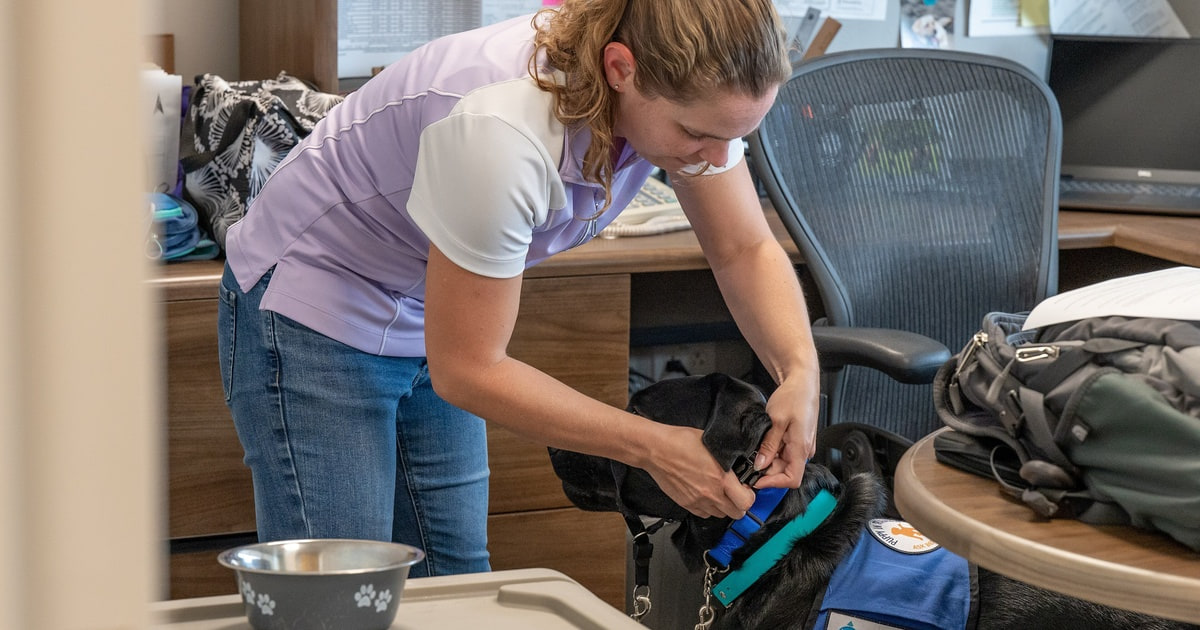
A training collar is really a communication device. You press a button, and your dog gets a signal from the far side of the yard, the field, or the park. Used well, it's how you get a dependable recall on a dog that would otherwise live on a leash. The parts that matter day to day are unglamorous: how the receiver sits on the neck, whether the contact points reach skin through the coat, how finely you can adjust the level, and whether the thing survives a swim.
Here's the honest part. No collar in this category trains your dog for you, and none of them fixes sloppy timing. All of them depend on fit, and fit is where owners get into trouble — contact points riding on fur do nothing, and a strap left cinched down for days causes pressure sores. Battery and pairing complaints turn up for every brand at every price. And none of these belong on a puppy, on a dog with real aggression, or in the hands of someone who hasn't done the groundwork first.
So the choice comes down to your dog and your ground. A soft, small, or previously spooked dog needs levels fine enough that you can find the setting it barely notices. A hard-charging field dog needs reach and a receiver that shrugs off mud. Plenty of people just want tone and vibration for a backyard recall. We think that the Mini Educator ET-300 is the best dog training collar for most people, and that the PetSafe Core Dog Trainer is the one to buy if you want to spend as little as possible.
Everything we recommend

Fine, gentle control if you can live with a shorter reach

Fewer levels and less range, but the basics are all there
Surgical control over stimulation, with a real learning curve
At a glance
| Product | Range | Correction Levels | Price | |
|---|---|---|---|---|
 | Garmin Sport PRO BundleAlso consider | — | 10 Levels | $299.99 |
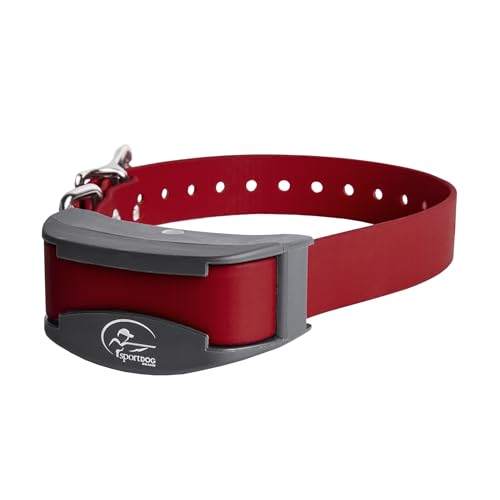 | SportDOG Brand FieldTrainer 425XS Add-A-Dog Collar forAlso in lineup | — | — | $120.99 |
| PetSafe Core Dog Trainer with Remote -Budget pick | 1000 ft | 15 Levels | $71.99 |
| Dogtra 1900S Ergonomic 3/4-Mile IPX9K Waterproof High-OutputUpgrade pick | 3/4 Mile | 127 Levels | $354.99 |
| Mini Educator E-Collar ET-300-1/2 Mile Waterproof RemoteTop pick | 1/2 Mile | 100 Levels | $199.99 |
How we picked
Stimulation control. We compared how many usable levels each system offers and how you move between them, since the goal is a signal your dog barely notices. Anything with fewer than about 15 steps got dropped from consideration for sensitive dogs.
Fit and contact. We read the stated neck ranges, minimum dog weights, strap materials, and receiver dimensions on every listing. Contact points have to touch skin, so a receiver that's oversized for your dog is a safety problem, not a comfort one.
Range that matters. We matched rated distance to where people actually train rather than to the biggest number. A thousand feet is plenty for a yard; open field work needs a half mile or more.
Water and durability. We required at least a genuinely waterproof, submersible receiver, and treated IPX9K certification as a bonus for dogs that get hosed off. Published reviews and manufacturer documentation were our sources here.
Everyday reliability. We weighted recurring themes in owner feedback — dead batteries, pairing trouble, contact points working loose — above spec-sheet claims. A collar that fails once in a field is a collar you stop trusting.
Top pick
Fine, gentle control if you can live with a shorter reach
Mini Educator E-Collar ET-300-1/2 Mile Waterproof Remote
The ET-300 is a half-mile remote trainer with 100 stimulation levels and a tapping sensation that reads to most dogs like a tap on the shoulder, not a jolt. It's the one we'd hand to someone training a sensitive, small, or reactive dog for the first time.
$199.99fromAmazonThe 100-level dial is the whole point. You can set the output anywhere from 1 to 100, with a separate boost of 1 to 60 layered on top. That matters because finding your dog's working level is a hunt for the smallest signal it notices — an ear flick, a head turn. On a collar with a dozen coarse steps, you overshoot. Here you creep up a notch at a time until something registers, then stop.
The tapping sensation is easier on a soft dog. E-Collar Technologies describes the output as a blended signal rather than a single sharp pulse, and the practical effect is a sensation closer to a tap than a shock. Trainers who work with rescues, timid breeds, and dogs that shut down under conventional e-collars keep coming back to this one. If your dog has already had a bad experience with a collar, start here.
It fits dogs that other collars can't. The system is rated for dogs 10 pounds and up with necks between 5 and 22.5 inches, and the mini receiver is small enough not to hang off a little dog's neck. The strap is trimmable three-quarter-inch Biothane, so it doesn't soak up pond water or hold smell, and you cut it to length instead of dealing with a long tail of nylon.
The kit doesn't send you shopping for extras. You get the RX-090 receiver with a night tracking light, the stopwatch-style transmitter, the waterproof strap, and a finger clicker. The whole system is waterproof and rechargeable. The night light sounds like a gimmick until you're standing in a dark backyard at five in the morning trying to see where your dog went.
Flaws but not dealbreakers
Half a mile is short next to the field collars. For a suburban yard, a park, or a training class, it's more than you'll use. For a pointer that ranges out over a ridge, it isn't, and you should be looking at the Dogtra or the Garmin instead.
The transmitter is factory-paired to its receiver. They aren't interchangeable, so if you lose or destroy one half, you can't just replace that half. It also has no bark detection, so if you wanted an automatic bark collar, this isn't it.
A tap may not cut through a dog mid-chase. The boost range helps, but a high-drive working dog locked onto a rabbit is a different problem than a nervous dog in a class. Handlers of hard, distraction-prone dogs generally want the higher output of the Dogtra.
Budget pick
Fewer levels and less range, but the basics are all there
PetSafe Core Dog Trainer with Remote -
The Core covers what a first collar needs to cover: tone, vibration, and 15 levels of static correction, run from a compact remote with about a thousand feet of range. If you mostly want backyard recall and don't want to spend much, this is the sensible starting point.
$71.99fromAmazonIt does the three things you actually need. Tone, vibration, and static, all on one remote. That means you can run the collar as a pure communication tool — a tone for attention, a vibration for recall — and never touch the static side at all. A lot of owners buy an e-collar and end up using it that way. This one supports that without making you pay for hardware you'll ignore.
A thousand feet covers most of the places you train. That's roughly three football fields, which is plenty for a backyard, a fenced field, or a quiet stretch of trail. Be realistic about your own ground before you pay more for reach. If your dog is never more than a hundred yards away, extra range is a spec you'll admire and never use.
It's rechargeable and waterproof, which is the bar. Both are table stakes for anything that goes outside, and plenty of budget collars still run on odd disposable batteries. The strap is a long one-size design you size down to your dog, and the remote is small enough to hold in the same hand as a leash.
PetSafe is easy to live with. The brand has been in pet hardware for decades, sells through the mainstream channels, and is widely recommended by vets and trainers. That matters mostly when something breaks — parts and support are simpler to get than they are with specialist gear.
Flaws but not dealbreakers
Fifteen levels is coarse. Each step covers more ground than a step on a 100- or 127-level dial, so the setting your dog barely notices may sit between two of the options. For a laid-back family dog that's fine. For a sensitive one, it's the reason to spend more.
Build quality is a step below the specialist collars. Owners report the receiver and strap hardware feel lighter-duty than what Dogtra and Garmin ship, and support responses have been hit or miss. It's a reasonable trade at this end of the market, but don't expect it to survive years of duck hunting.
It's the shortest-reaching collar in this guide. A thousand feet is well under the half mile of the ET-300 and nowhere near the three-quarter mile of the 1900S. If your dog gets far enough out to be a dot on the horizon, you've outgrown it.
Upgrade pick
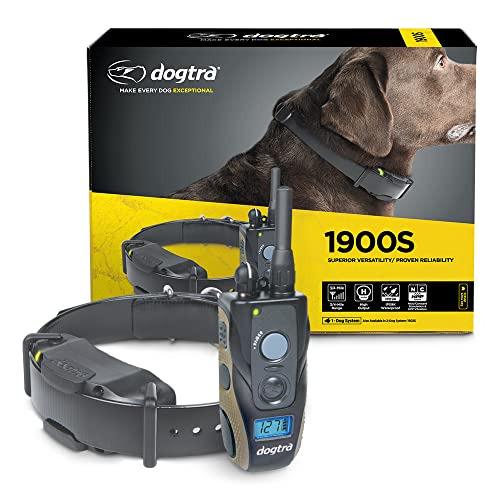
Surgical control over stimulation, with a real learning curve
Dogtra 1900S Ergonomic 3/4-Mile IPX9K Waterproof High-Output
The 1900S pairs a 127-level rheostat dial with IPX9K waterproofing and three-quarters of a mile of range, all in a slim receiver. It's the collar for people who treat finding a working level as precision work: competition obedience, sport handling, and serious field training.
$354.99fromAmazonA rheostat beats a stepped selector. Instead of clicking between fixed settings, you turn a dial through 127 continuous levels and read the number off a backlit screen. That lets you inch up to the exact point your dog acknowledges the signal and stay there, session after session. It's the approach most professional e-collar programs teach, and this is the tool they usually teach it on.
Nick and constant give you two different tools. A nick is a half-second tap you use to mark a moment. Constant holds for up to 12 seconds and is what you use to apply pressure through a behavior, then release. Having both, on separate buttons, is how experienced handlers shape work rather than just interrupt it. There's also a high-performance pager if you'd rather not use static at all.
IPX9K is the toughest water rating here. It means the receiver has been certified against close-range, high-pressure spray from four directions, not just a dunk. In plain terms, you can hose a filthy dog down without babying the collar. If your dog swims, wallows, and comes home covered in whatever it found, that's the spec you want.
The receiver is built to disappear on the dog. The strap wraps around the housing so nothing sticks out to snag on cover, and the whole unit sits slim and flat against the neck. On a medium or large dog you stop noticing it's there, which is most of what you want from a receiver you'll leave on through a long session.
Flaws but not dealbreakers
The dial takes practice. A continuous selector is less forgiving than fixed steps, and a careless thumb can move you further than you meant. Give yourself a few sessions to learn how sensitive it is before you work a dog near its threshold.
It's a one-dog system. Adding a second dog means buying more equipment, and you'll be managing more than one remote. If you're running a pack, the Garmin bundle solves that problem in a way this doesn't.
It's high-output hardware in a heavier package. The receiver weighs more than the ET-300's, which makes it a poor match for small breeds, and the output range is aimed at hard, driven dogs. A soft dog doesn't need any of this.
Who this is for
This guide is for owners who've already taught a behavior and want to reinforce it at a distance, usually off-leash recall. Your dog should be well past puppyhood — six months is the floor most trainers and manufacturers give — and should already know the cue on a long line before a collar enters the picture. If you're trying to fix aggression, separation anxiety, or serious reactivity, skip the hardware and hire a certified trainer. A remote collar can't diagnose anything.
We're only covering handheld remote trainers here: you press a button, your dog gets a signal. That leaves out automatic bark collars, buried-wire fences, and subscription GPS containment systems, which solve different problems and shouldn't be swapped in for each other. If what you actually want is a virtual boundary around your property, none of these picks is the right tool. And if you're uneasy with static stimulation in general, note that every pick in this guide can be run in tone or vibration mode alone.
How we picked
Stimulation control: we favored collars with levels fine enough to land on a dog's working level instead of overshooting it, which in practice means 100 steps or more for sensitive dogs. Fit and contact: we checked stated neck ranges, minimum weights, strap length, and receiver size, because contact points resting on fur do nothing at any level. Range: we matched rated distance to real training grounds rather than rewarding the biggest number on the box. Water and durability: we required a submersible receiver and treated IPX9K certification as a real advantage for dogs that get hosed down. Everyday reliability: we leaned on published reviews and recurring owner complaints about batteries, pairing, and hardware over what the spec sheet promises.
Other dog training collars worth considering
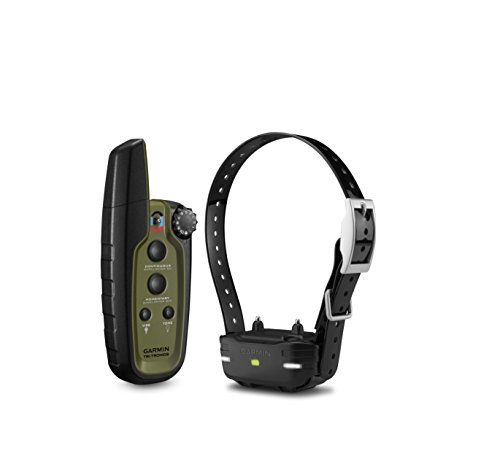
If you're training two or three dogs at once: The Garmin Sport PRO Bundle ($299.99) — The Garmin Sport PRO Bundle runs up to three dogs from one handheld, which no other system here does. The quick-turn dial clicks positively between levels so you can change settings without looking down, and four buttons cover continuous stimulation, momentary stimulation, tone, and vibration. There are remote-controlled LED beacon lights on the dog unit, visible up to about 100 yards, which is genuinely useful at dusk. The bundle ships complete, down to long and short contact points and the wrench to swap them. What you give up is fine control: the dial moves through 10 stimulation levels, far coarser than the ET-300 or the 1900S, so this isn't the tool for dialing in a soft dog. It's also the most expensive option here, and it's a trainer, not a tracker — if you want your dog's position on a map, that's a different Garmin product.
The competition
This is what our research turned up, not a survey of everything sold. The remote-trainer market is cluttered with two things that look like competitors and aren't: add-on receivers meant to expand a system you already own, and subscription GPS fence collars that contain a dog rather than train one. We left both out. Within actual handheld trainers, the four systems above cover the range from a simple backyard collar to a professional precision dial, and the differences between them are mostly about how finely you can adjust output and how far away your dog gets.
Fit and safe use
Fit is where most problems start. The strap should be snug enough that you can just slide two fingers under it, with the contact points sitting against skin on the side of the neck rather than under the throat. On a thick-coated dog, part the hair or switch to the longer contact points. Move the collar to the other side every couple of hours during a long session, take it off when the session ends, and check the skin underneath for redness. Don't leave a receiver on overnight. Before each outing, charge both units and confirm they're still paired, then find your dog's working level again from the bottom — it shifts with distraction and arousal. A yelp means you've gone far too high. Drop back immediately.
Questions we get
Are e-collars the same thing as shock collars?
Not really, though the underlying technology is related. Old shock collars had one harsh setting and no way to soften it. Modern remote trainers like the ET-300 and the 1900S offer 100 or more levels plus tone and vibration modes, and most training with them happens at a level a bystander wouldn't notice. The tool is only as humane as the handler, though — the levels don't make bad timing acceptable.
What's the best training collar for a small dog?
The Mini Educator ET-300 is the one we'd pick. It's rated for dogs 10 pounds and up with necks from 5 to 22.5 inches, the receiver is small enough not to weigh down a little dog, and the 100-level scale gives you room to work at the very bottom. Small dogs have less tissue between the contact points, so a coarse collar is genuinely riskier on them. Always check the manufacturer's minimum weight before you buy.
Can I use a training collar on a puppy?
Wait until at least six months, and even then start with tone and vibration only for several weeks. Younger puppies can't reliably connect a signal to a specific action, so what they learn instead is generalized worry. The American Kennel Club's guidance is that the dog should already know and perform the behavior through positive reinforcement before a collar is introduced. The collar reinforces a cue; it doesn't teach one.
Do vibration modes work for deaf dogs?
Yes, and it's one of the best uses for this hardware. A vibration cue gives a deaf dog a consistent tactile signal that doesn't depend on hearing, and it becomes a reliable attention marker fairly quickly with focused practice. The PetSafe Core and the ET-300 both let you use vibration independently of any static output, and the Dogtra's pager does the same job. You never have to touch the static side.
Are GPS fence collars with a subscription worth it?
They solve a different problem. A GPS fence draws a virtual boundary around your property and warns the dog when it approaches the edge, which is containment, not training. That comes with an ongoing monthly fee, so the long-term cost is higher than any collar here. For off-leash recall, obedience work, and hunting dog management, a remote trainer gives you more direct control and no subscription.
What should I use on a stubborn, high-distraction dog?
The Dogtra 1900S. Its 127-level dial lets you hold a precise threshold that keeps your dog's attention even with birds in the air, and the separate nick and constant modes give you more than one way to apply pressure. If you're also managing several dogs across open ground, the Garmin bundle is the better fit. Avoid the coarse budget collars here — when handlers can't find the right level, they tend to escalate instead.
Why you should trust us
For this guide:
- We read the manufacturer specifications and listing documentation for every collar in this guide and compared stimulation ranges, waterproof ratings, neck and weight limits, and what each box actually contains.
- We drew on published reviews from trainers and hunting-dog publications, plus recurring themes in owner feedback about battery life, pairing, and contact-point fit, to sort real weaknesses from spec-sheet nitpicks.
- We read owner reviews on every listing, weighted toward the critical ones, because that is where the recurring failures show up.
- We have a systematic way of automatically fetching the latest prices, so the numbers on this page stay current.
- This is a research-focused guide, so the team may not own every product listed — though we often do own the top winners, which gives us extra context for the recommendations.
- We don't accept free products, and the retailer commission never changes which product we recommend.
Sources
Best Dog Training Collars, American Kennel Club
Best Remote Training Collars, Wirecutter / The New York Times
Dog Training Collar Reviews & Ratings, Dog Food Advisor
SportDOG 425X Product Page & Specs, SportDOG
Halo Collar 3 Overview, Halo
Mini Educator ET-300 Product Specs, E-Collar Technologies
Best E-Collars for Dog Training, Whole Dog Journal
Garmin Sport PRO GPS Dog Trainer Specs, Garmin
Amazon product listings and owner reviews for all 5 products
Manufacturer specification pages for each product
Some passages in this guide may be paraphrased with AI help. Prices are refreshed automatically.
More like this.
Continue exploring pet reviews and recommendations.

The Best Remote Vibration Dog Training Collars
A vibration collar is a tap on the shoulder from across the yard. You press a button, your dog feels a short buzz on the neck, and you get their attention…

The Best Dog Training Treats
Training treats are less about nutrition than about arithmetic. A ten-minute session can run 80 to 150 rewards, so the size of each one decides whether…

The Best Dog Crates for Crate Training
A crate is the most useful piece of gear you'll buy for a new dog, and it's also the one people get wrong most often. Get the size right and the crate…

The Best Pet GPS Trackers and Smart Collars
Most dogs never need a tracker until the one afternoon they do. A gate gets left open, a thunderstorm hits, a squirrel wins. In that moment you don't want…

The Best Washable Puppy Training Pads
A puppy in the middle of housebreaking goes through pads fast - five, six, eight a day is normal. Washable pads change that math. You buy a handful, run…

The Best Weighted Vests for Strength Training
A weighted vest is the rare piece of gear that makes workouts you already do harder without taking up floor space. Add 20 pounds to pull-ups and the bar…