The Best Dog Training Treats
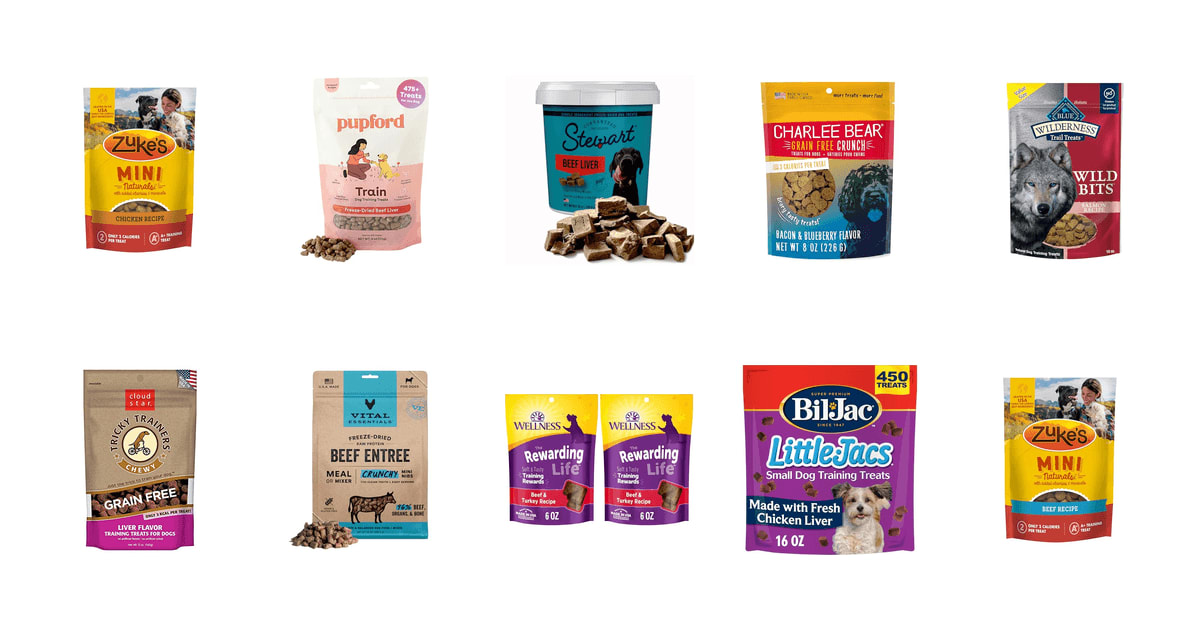
Training treats are less about nutrition than about arithmetic. A ten-minute session can run 80 to 150 rewards, so the size of each one decides whether you're teaching a recall or feeding a second dinner. The treats worth buying land between one and three calories, and they're small enough to swallow in about a second. That second matters. Dogs connect the reward to the behavior in a very short window, and a treat your dog has to stop and chew lands outside it.
No treat here fixes a motivation problem on its own. The strong-smelling ones — freeze-dried liver, mostly — work because they smell like a butcher's counter, and that smell moves onto your hands, your jacket and the inside of your treat pouch. Soft treats stay clean but go hard within a couple of weeks once the bag is open. And every dog habituates. Use one treat for everything and it stops meaning much, which is why most trainers carry two or three.
So think in tiers rather than hunting for one winner. Something small and soft for living-room repetition, something loud-smelling for the park, and a crunchy option for puzzle toys and low-stakes drilling. Most owners end up with two bags open at once, and that's a reasonable way to do it. We think that the Zuke's Mini Naturals Chicken Recipe is the best dog training treat for most people, and that the Pupford Freeze Dried Training Treats are the ones to buy if your dog stops hearing you the moment you step outside.
Everything we recommend

Small, soft and two calories, for hundreds of repetitions

Far more smell and drive, in a bag that empties quickly
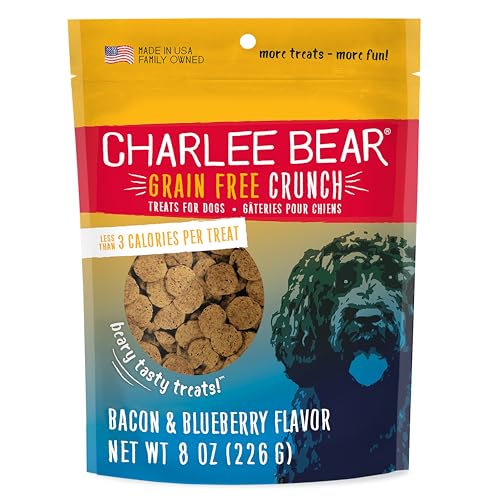
Slower to eat, but you can hand these out all day

The strongest smell here, for when nothing else works
At a glance
| Product | Cal Per Treat | Net Weight | Price | |
|---|---|---|---|---|
| Zuke’s Mini Naturals Dog Training Treats forTop pick | 2 Cal/Treat | 16 oz | Check price |
| Pupford Freeze Dried Training Treats for DogsRunner-up | — | 4 oz | $16.85 |
| Stewart 100% Beef Liver Dog TreatsAlso great | — | 14 oz | $26.99On sale |
| Charlee Bear Crunch Grain Free Dog TreatsBudget pick | <3 Cal/Treat | 8 oz | $8.99 |
 | Blue Buffalo Wilderness Trail Treats Wild BitsAlso consider | — | 10 oz | $11.30 |
 | Cloud Star Tricky Trainers Chewy & GrainAlso in lineup | 3 Cal/Treat | 5 oz | $11.79 |
 | Vital Essentials Freeze Dried Dog FoodAlso in lineup | — | 14 oz | $36.99 |
 | Wellness Rewarding Life Grain-Free Soft Dog TreatsAlso consider | — | 6 oz | $14.38On sale |
 | Bil-Jac Little-Jacs Small Dog Training TreatsAlso in lineup | <3 Cal/Treat | 16 oz | $11.99 |
 | Zuke’s Mini Naturals Soft And Chewy DogAlso consider | 2 Cal/Treat | 6 oz | $5.94On sale |
 | Natural Balance Limited Ingredient Rewards Crunchy BiscuitsAlso consider | — | 8 oz | $8.98 |
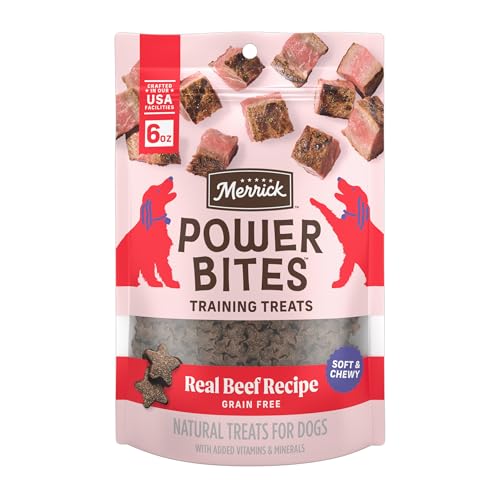 | Merrick Power Bites Natural Soft And ChewyAlso in lineup | — | 6 oz | $7.98 |
How we picked
Calories per treat. We compared nutrition panels and manufacturer specs and kept to treats in the one-to-three-calorie range. Above about five, a long session starts eating into a small dog's entire day of food.
Size and chew time. Anything your dog has to work on breaks the rhythm of a session. We favored pea-sized soft treats, and where a crunchy format made sense we noted the seconds it costs you per rep.
Smell and drive. Owner feedback is the best evidence available here, and it's consistent: freeze-dried liver pulls distracted dogs back, and mild biscuit or chicken smells often don't. We wanted at least one genuinely loud option on the list.
Ingredients and allergens. We read every ingredient panel for a named protein in the first position and short supporting lists. We also flagged the poultry, beef and fish recipes so you can match a treat to a dog on an elimination diet.
Packaging and freshness. Resealable bags and screw-top tubs keep treats usable much longer. Owner complaints about hard, stale, rejected treats cluster around products with weak closures, so packaging carried real weight.
Top pick
Small, soft and two calories, for hundreds of repetitions
Zuke’s Mini Naturals Dog Training Treats for
Zuke's Mini Naturals are pea-sized soft treats made with real chicken, at two calories apiece, so you can run a long session without wrecking your dog's calorie budget. They're the treat to keep in the pouch by default, and the big bag lasts if you train every day.
Check priceatAmazonThese win on the two things that decide a training session: size and speed. Each treat is about as big as a pea, and your dog swallows it without chewing. That keeps the loop tight — cue, behavior, reward, eye contact, again. At two calories, a hundred reps costs about what a small handful of kibble does, so you can drill a hard behavior without doing math the whole time.
The texture is why they work. Zuke's soft-bakes them, so they compress instead of shattering, and they don't leave a pile of crumbs in the bottom of your pouch. You can also pinch one in half for a puppy or a toy breed. Owners of picky dogs and new rescues bring this up constantly — the treats disappear fast enough that a nervous dog doesn't have time to get distracted mid-chew.
Nothing in the recipe gets in the way, and that's the point. Real chicken leads, there's no corn, wheat or soy, and cherries and added vitamins round it out. What matters more for training is that the formula is gentle enough for repetition. Cheaper soft treats lean on grain starch and high-fiber binders, which is a common reason a session ends early with an upset stomach. Owners don't report that here.
Buy the sixteen-ounce bag if you train daily. A small pouch of soft treats vanishes in a week of real work, and reordering constantly gets old. One caveat: the bag isn't a great long-term container. Tip a week's worth into a small airtight jar, leave the rest sealed, and the last handful will be about as soft as the first.
Flaws but not dealbreakers
The chicken recipe is out if your dog reacts to poultry, and chicken is one of the most common protein sensitivities in dogs. The beef version is the obvious swap, and it's the same soft format.
Soft treats dry out. Leave the bag open on the counter for a few days and you'll find hard little pellets your dog is suddenly less interested in — a common and easily misread reason a favorite treat stops working.
The smell is mild. In your kitchen that's a feature. In a park with squirrels and other dogs, chicken doesn't carry, and you'll want something stronger in the other pocket.
Runner-up
Far more smell and drive, in a bag that empties quickly
Pupford Freeze Dried Training Treats for Dogs
Pupford's freeze-dried beef liver is three ingredients, roughly a calorie a bite, and it smells strong enough to pull a distracted dog back to you. The four-ounce bag holds hundreds of pieces, but it's light, and a week of serious outdoor work makes a dent.
$16.85fromAmazonPicture the moment your dog spots another dog across the field and your voice stops existing. That's the job these were made for. Freeze-dried liver smells like nothing else in your pocket, and owners with reactive or easily distracted dogs come back to it for exactly that reason. It buys you a second of attention, which is usually all you need to mark the behavior and pay it.
Three ingredients makes this the easy pick for a dog on a restricted diet. If you're running an elimination trial or working through a plan with a behavior consultant, you want to know precisely what's going in. Owners of chicken-allergic dogs use these as their one novel protein without trouble. The short list also keeps the count around a calorie a bite, the lowest here.
The no-mess claim mostly holds up. Freeze-dried liver has a reputation for leaving fine brown dust on everything, and these stay intact better than most under normal handling. You can keep a few loose in a jacket pocket for a walk. In a group class, where you're juggling a leash, a clicker and a treat at once, that's worth more than it sounds.
Size is adjustable, which helps with small dogs. The bites are already tiny, and they snap cleanly into halves or quarters, so an eight-week-old puppy gets a real reward rather than a real meal. Puppy owners describe stretching a single bite across several repetitions during potty training, which is also how you make a small bag last.
Flaws but not dealbreakers
The smell that makes these work is the same smell you'll be living with. It gets on your hands, and a treat pouch carries it for a long time. If someone in the house is sensitive to it, save these for outdoor sessions.
Not every dog cares. A minority of owners report dogs that shrug at liver entirely, which is a reminder that treat value is your dog's opinion, not the label's. Start with the small bag before you commit.
Freeze-dried pieces get fragile in heat and humidity. Leave the bag in a hot car before a summer walk and you'll come back to more crumbs than bites.
Budget pick
Slower to eat, but you can hand these out all day
Charlee Bear Crunch Grain Free Dog Treats
Charlee Bear Crunch is a small, crunchy, grain-free biscuit under three calories, made with pork and blueberries. It's the one to use when you're rewarding constantly around the house or loading a puzzle toy, and it won't leave a grease mark on your pocket.
$8.99fromAmazonThis is the treat you can be generous with. Under three calories each, in a resealable bag that goes a long way, it takes the anxiety out of rewarding often. Owners of seventy-pound dogs and of twenty-pound dogs describe it the same way — the everyday treat, the one that comes out for a sit at the door or a recall in the yard, dozens of times a day.
Crunchy has real advantages. Nothing sticks to your fingers, nothing melts in a pocket, and the pieces hold their shape in a treat-dispensing ball or a snuffle mat. Owners who lean on enrichment toys tend to keep a bag of these specifically for that job, because soft treats smear and jam in the same toys.
Bacon and blueberry sounds like it was invented in a marketing meeting. It works anyway. Pork carries a genuine smell, and the list stays short — no artificial flavors or colors, no corn, no soy. Owners of dogs with touchy stomachs single these out, partly because the recipe skips the glycerin that sits high in a lot of soft treats.
Flaws but not dealbreakers
Chewing takes time. Two to four seconds a treat doesn't sound like much until you multiply it by a hundred repetitions and watch your dog look away between reps. For rapid drills, or anything competing with outdoor distractions, reach for a soft treat instead.
They crumble when you break them. If you have a four-pound dog and want a quarter of a treat, you'll get fragments and dust rather than a clean piece.
The smell is quiet. Fine indoors, and not the treat to bring to a busy park.
Also greatOn sale
The strongest smell here, for when nothing else works
Stewart 100% Beef Liver Dog Treats
Stewart's tub is one ingredient: freeze-dried beef liver, nothing added. It's what you save for the moments that matter — a first off-leash recall, a dog frozen at the vet's door — and it's potent enough that dogs come in from another room when the lid comes off.
$26.99fromAmazonList priceOpen the tub once and you understand the appeal. The smell fills the room immediately, and it isn't subtle or pleasant to you. To your dog it's a flare going up. Owners describe dogs appearing from other floors of the house, and picky dogs that have refused everything else eating this without hesitation. That reliability is why it stays in so many professional trainers' bags.
Use it as your top tier, not your everyday treat. One ingredient and a heavy aroma is exactly what you want for a hard moment, and exactly what causes habituation if you spend it on every sit. Keep the soft treats for volume work, then bring the liver out when the environment gets difficult. The contrast is most of where the power comes from.
A tub holds a few hundred pieces, and the screw-top lid contains the smell better than any pouch. You'll want to break the larger slabs down for a small dog, which takes a minute before a session. The liver is USDA-certified beef, freeze-dried in small batches in Ohio, with no grain, gluten, soy or corn. Cats will take it too, if you have one lobbying.
Flaws but not dealbreakers
The smell goes everywhere: your hands, your sleeve, the car. Plan on washing up after a session, and don't store the tub next to anything you'd rather not smell like liver.
Piece size is inconsistent. Owners regularly find a mix of big slabs, small bits and powder toward the bottom, which is fine sprinkled over dinner but means some prep before a training session.
It's rich. Liver on an empty stomach can loosen a dog's digestion, so introduce it gradually rather than running your first hundred-rep session on it.
Who this is for
This guide is for anyone doing reward-based training: a new puppy learning to sit, a rescue building confidence, an adult dog brushing up on recall, or a dog who needs something to do on a rainy afternoon. What you need is small, low in calories, fast to eat and appealing enough to compete with whatever else is going on. If you're training more than a few minutes a day, you'll probably want two of these — a soft everyday treat and something stronger for outdoors.
It isn't a guide to dental chews, long-lasting chews, bully sticks or complete foods. Those serve other purposes and are far too big to reward a hundred behaviors. If your dog has a diagnosed allergy, treat this as a starting list and confirm the current label with your vet, since recipes change. And whatever you pick, subtract the treat calories from meals — that's the part most owners skip, and it's the part that shows up on the scale.
How we picked
Calories: we stuck to the one-to-three-calorie range, because a hundred-rep session shouldn't add up to a meal. Size and chew time: pea-sized and swallowed in about a second, with crunchy options judged on how many seconds they cost you between reps. Smell: strong enough to compete with a park, based on consistent owner feedback about which treats hold a dog's attention outdoors. Ingredients: a named protein first, a short supporting list, and clear allergen information for dogs on elimination diets. Packaging: resealable bags and tubs, since stale soft treats are the most common reason a reliable treat suddenly stops working.
Other dog training treats worth considering
If you want a soft treat for a dog with a touchy stomach: The Wellness Rewarding Life Grain-Free Soft Dog Treats ($14.38) — Wellness Rewarding Life is grain-free, made with beef and turkey, and built around whole fruits and vegetables like blueberries and sweet potato, with DHA from salmon oil. Owners of older dogs and dogs that react to everything else keep coming back to it for that reason. Two things to know: the pieces come as squares you tear yourself, so sizing is uneven, and a handful of owners report sharp little shards in the bag and break the pieces up by hand before feeding. It's also quieter-smelling than liver, so it's an indoor treat more than a park treat.
If you're training a puppy and want the DHA: The Blue Buffalo Wilderness Trail Treats Wild Bits ($11.30) — Blue Buffalo Wild Bits lead with real salmon, add omega 3 and 6 fatty acids, and include DHA, which is one of the few functional additions in a training treat that makes physiological sense during a puppy's first year. They're grain-free with no poultry by-product meals, and they're easy to restock almost anywhere. The trade-offs are ordinary: the fish smell transfers to your hands more than chicken does, the pieces run slightly large for a dog under five pounds, and some dogs simply don't care for salmon and will take a session or two to warm up.
If your dog is on a novel-protein diet: The Natural Balance Limited Ingredient Rewards Crunchy Biscuits ($8.98) — Natural Balance Limited Ingredient Rewards use venison as the only animal protein, with sweet potato as the carbohydrate and no grain, soy, gluten or artificial colors. That's a genuinely short list, and the brand tests every batch, which matters when you're trying to isolate a reaction. The catch is format: these are crunchy biscuits, so they're slower to eat than the soft picks, and they're sized for small breeds. A Labrador will inhale two at a time and barely notice, which makes them better suited to a terrier than a working dog.
If you want the Zuke's formula without the poultry: The Zuke’s Mini Naturals Soft And Chewy Dog ($5.94) — The beef recipe is the same two-calorie, soft, easy-to-tear treat as our top pick, with real beef first and cherries for antioxidants, in a resealable pouch that fits a jacket pocket. It's also the sensible way to rotate flavors so your dog doesn't get bored of chicken. The six-ounce pouch is the main limitation — if you train several times a day, you'll be reordering often, and the sixteen-ounce bag is the better habit. Beef is also a fairly common sensitivity, so it isn't automatically the safe choice for an allergic dog.
The competition
This is what our research surfaced — the training treats that come up again and again in published reviews and that owners buy in real volume — not a survey of everything on the shelf. Nothing below is a bad treat. Each one lost to a pick for a specific reason, and for some dogs those reasons won't matter.
The Cloud Star Tricky Trainers Chewy & Grain ($11.79) — Cloud Star Tricky Trainers are soft, chewy, grain-free and about three calories each, baked in the US with no artificial colors or flavors, and small enough for a toy breed. On paper they belong with the picks. In practice, two things hold them back: owners report the recipe changed and now tastes sweeter, with some dogs refusing the new version, and several describe the treats hardening quickly once the bag is open. Stock also comes and goes. If your dog likes them and you can find them, buy a couple of bags at once and store them airtight.
The Bil-Jac Little-Jacs Small Dog Training Treats ($11.99) — Bil-Jac Little-Jacs are well liked in small-dog circles, and it's easy to see why: fresh chicken liver as the first ingredient, under three calories a morsel, a slow-cook process that keeps them soft without crumbling in your pocket, and a size aimed squarely at toy breeds and seniors. The problem is buying them. Availability is unreliable, and a treat you can't reliably restock makes a poor everyday default. The chicken liver base also rules them out for poultry-sensitive dogs. Worth chasing down at a pet store if you have a small or older dog with soft-food preferences.
The Merrick Power Bites Natural Soft And Chewy ($7.98) — Merrick Power Bites start with real deboned beef and come as soft, star-shaped pieces with no artificial flavors, colors or preservatives, and no corn, soy or wheat. Big-dog owners like the chewier bite. But the pieces run larger than the Zuke's format, which means more calories per reward and some tearing before a session, and the star shape has more exposed surface, so the bag dries out faster once it's open. In a six-ounce pouch, that adds up quickly for anyone training a Labrador daily. A good beef-forward option if your dog is unmoved by chicken.
Storage and freshness
Soft treats live and die on moisture. The original bag rarely seals well enough to hold it past about a week, so tip your treats into a small airtight container as soon as you open them, and keep that container in the fridge if you work through a bag slowly. Freeze the rest in portions and thaw a week at a time. Freeze-dried liver has the opposite problem: it's stable for ages but pulls in humidity, so keep the lid screwed on and keep it out of a hot car. If your dog suddenly loses interest in a treat that always worked, check the treat before you blame the dog. Stale is usually the answer.
Questions we get
How many treats can I give during a session without overfeeding?
The common guideline is that treats stay under about ten percent of your dog's daily calories. For a thirty-pound dog eating around 900 calories, that's roughly 90 treat calories — about 45 treats at two calories each. With the one-to-three-calorie treats here, most dogs can finish a full fifteen-minute session comfortably inside that. Just take the difference out of dinner.
What's the difference between a high-value and a low-value treat?
Value is your dog's opinion, not the price or the ingredient list. High-value treats — freeze-dried liver, plain cooked chicken — are for new environments, hard behaviors and the moments that actually matter, like a first off-leash recall. Low-value treats such as kibble or a dry biscuit are plenty for behaviors your dog already knows in a quiet room. Spending your best treat on everything is how it stops working.
Are freeze-dried treats better than soft ones?
They do different jobs. Freeze-dried liver smells far stronger, so it cuts through distraction and works when your dog has tuned you out. Soft treats are faster to eat, which keeps a rapid-fire session moving without pauses for chewing. Most experienced trainers carry both and escalate to the liver when the environment gets hard.
Can I just use my dog's kibble as training treats?
Yes, for easy behaviors in a familiar room, and it has the nice property of being calorie-neutral since you're just moving part of dinner. The limit is smell: kibble has almost no aromatic signal, so it loses badly to a squirrel or another dog. Use it for maintenance work and switch to something soft or freeze-dried when you're teaching something new or training outside.
What can I use if my dog is allergic to chicken?
Skip anything listing chicken, chicken meal, chicken liver, chicken fat or poultry anywhere in the panel. From this guide, Stewart's single-ingredient beef liver, the Natural Balance venison biscuits and the Zuke's beef recipe are the sensible starting points. Introduce one new protein at a time and check the current bag, since recipes get reformulated without much announcement.
How young can a puppy start getting training treats?
Most puppies can start with tiny treats around seven or eight weeks, which is when early socialization and basic manners work usually begins. Keep pieces to half a pea or smaller, soft, and low in calories — the Blue Buffalo, Zuke's and Wellness options all break down well. Hold off on rich freeze-dried treats until digestion has settled, and never give anything with xylitol, grapes, raisins, chocolate or onion powder.
Why you should trust us
For this guide:
- We read the ingredient panels, calorie figures and manufacturer specifications for every treat in this guide and compared them side by side.
- We went through published trainer guidance and review coverage on reward size, reinforcement timing and treat calorie budgeting.
- We read owner feedback for each product, looking for repeated themes around staleness, crumbling, recipe changes and dogs losing interest over time.
- We read owner reviews on every listing, weighted toward the critical ones, because that is where the recurring failures show up.
- We have a systematic way of automatically fetching the latest prices, so the numbers on this page stay current.
- This is a research-focused guide, so the team may not own every product listed — though we often do own the top winners, which gives us extra context for the recommendations.
- We don't accept free products, and the retailer commission never changes which product we recommend.
Sources
How to Choose Training Treats for Your Dog — AKC, American Kennel Club
The Best Dog Treats for Training — Wirecutter, Wirecutter / NYT
Dog Training Treat Reviews & Ratings — Dog Food Advisor, Dog Food Advisor
Positive Reinforcement Training: Using Rewards Effectively — ASPCA, ASPCA
Best Dog Training Treats 2026 — Whole Dog Journal, Whole Dog Journal
Amazon product listings and owner reviews for all 12 products
Manufacturer specification pages for each product
Some passages in this guide may be paraphrased with AI help. Prices are refreshed automatically.
More like this.
Continue exploring pet reviews and recommendations.

The Best Dog Crates for Crate Training
A crate is the most useful piece of gear you'll buy for a new dog, and it's also the one people get wrong most often. Get the size right and the crate…

The Best Remote Vibration Dog Training Collars
A vibration collar is a tap on the shoulder from across the yard. You press a button, your dog feels a short buzz on the neck, and you get their attention…

The Best Dog Training Collars
A training collar is really a communication device. You press a button, and your dog gets a signal from the far side of the yard, the field, or the park.…

The Best Calming Treats and Supplements for Anxious Pets
Anxiety in pets rarely looks dramatic. It's the dog who paces by the door for three hours after you leave, or the cat who licks a bald patch into her…

The Best Pet Cameras With Treat Dispensers
A pet camera earns its spot on your shelf in the small moments. Your dog starts pacing at 2 p.m. and you can tell him he's fine. Your cat knocks something…

The Best Washable Puppy Training Pads
A puppy in the middle of housebreaking goes through pads fast - five, six, eight a day is normal. Washable pads change that math. You buy a handful, run…