The Best Dog Crates for Crate Training
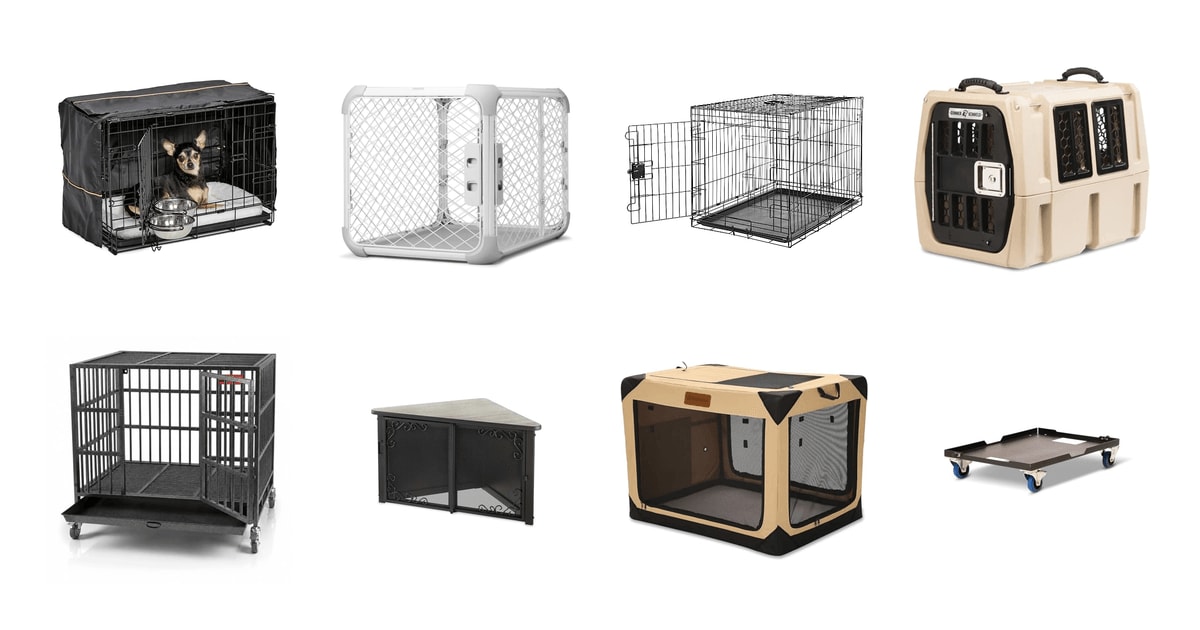
A crate is the most useful piece of gear you'll buy for a new dog, and it's also the one people get wrong most often. Get the size right and the crate becomes a den — a place your dog walks into on his own when the house gets loud. Get it wrong and you've built a very expensive indoor bathroom. The ASPCA's guidance is simple: the crate should be just big enough for your dog to stand without stooping, turn around, and stretch out on his side. Not one inch more.
Here's the honest part. No crate solves anxiety. Veterinary behaviorists at dvm360 warn that crating a dog with moderate-to-severe separation anxiety, without doing the behavior work alongside it, can make the panic worse and lead to real injury — broken teeth, torn nails, bloodied paws. A stronger crate contains the dog. It doesn't calm him. And every crate is a compromise: the ones that fold flat aren't the ones that hold a determined Husky, and the ones that look good in a living room don't travel.
So pick for your dog and your situation, not for the spec sheet. Most people are training a puppy who'll grow, in a house with normal floors and normal neighbors, and a plain wire crate with a divider does that job for the dog's whole life. We think that the Amazon Basics Portable Metal Wire Dog Crate is the best dog crate for most people, and that the MidWest iCrate Starter Kit is the one to buy if you're bringing home a small puppy and want the bed, bowls and cover sorted in one box.
Everything we recommend

Folds flat, grows with the dog, and costs the least to be wrong about

Everything a new small-dog owner needs, in one box

For the dog who's already broken out of something else

The one to buy if your dog rides in the car a lot
At a glance
| Product | Crate Size | Weight | Price | |
|---|---|---|---|---|
| MidWest Homes for Pets XS Double DoorAlso great | 22"L x 13"W x 16"H | 9.5 lbs | $67.99 |
 | Diggs Evolv Modular Dog Crate for DogsAlso consider | 38.1"L x 24.9"W x 25.6"H | 36 lbs | $449 |
| Amazon Basics Portable Metal Wire Dog CrateTop pick | 36"L x 23"W x 25"H | 20.24 lbs | $46.99On sale |
| GUNNER G1 Small Dog Kennel CrateAlso great | 24.5"L x 14.5"W x 15.5"H | 27 lbs | $550 |
| Pro Select Empire Cage - LARGEUpgrade pick | 42.3"L x 30.8"W x 41.3"H | 134 lbs | $579.06 |
 | Richell Accent Corner Table Pet Crate SmallAlso consider | 38"L x 20.5"W x 21"H | 29.1 lbs | $239.99 |
 | Garnpet 36 Inch Collapsible Soft Dog CrateAlso consider | 36"L x 25"W x 25"H | 12.85 lbs | $59.99On sale |
 | Impact Dog Crates Wheel CartAlso in lineup | 48" 2XL | — | $429 |
How we picked
Right-size fit. We started from the ASPCA and AKC sizing guidance — stand without stooping, turn around, lie stretched out, with roughly six inches of headroom and six inches past the nose-to-tail measurement. Any crate that couldn't be sized to a specific dog, by divider or by model range, lost ground.
Escape resistance. We weighed published escape testing, including K9 of Mine's finding that standard wire bent at the door frame under a 70-pound Malinois while heavy steel and aluminum crates didn't. Latch design counted as much as material, since many escapes are a dog working a single-point catch.
Cleaning and trays. We looked for a removable, leak-proof tray that slides out without disassembling the crate, plus surfaces that wipe down. Housetraining accidents are the normal case, not the exception, and a crate that's a chore to clean gets used less.
Ventilation and temperature. Good Housekeeping's lab work showed enclosed plastic retains more warmth while wire moves more air. We treated that as a fit question rather than a ranking, and flagged which format suits heat-prone and brachycephalic dogs.
Travel safety. For anything marketed for the car, we required real crash-test evidence rather than durability claims. The Center for Pet Safety's 5-star certification for the Gunner G1 was the only such result in this lineup.
Top pickOn sale
Folds flat, grows with the dog, and costs the least to be wrong about
Amazon Basics Portable Metal Wire Dog Crate
A plain folding wire crate with a divider panel and a removable tray. It's the setup trainers and vets recommend more than any other, it packs down flat against a wall, and it's cheap enough that buying the wrong size isn't a disaster.
$46.99fromAmazonList priceA divider panel is the single most valuable feature on a puppy crate, and this one has it. You buy the size your dog will need as an adult, then block off the back so the usable space fits him now. Move the panel forward every few weeks as he grows. Without a divider you either buy three crates over eighteen months or hand a nine-week-old puppy a room big enough to sleep at one end and pee at the other — which is exactly how housetraining stalls.
Wire is the format most households actually live with. Rover's network of sitters and walkers reports that wire crates make up the majority of what they see in client homes, and the reasons are boring and practical: you can see your dog, your dog can see you, and air moves through from every side. Good Housekeeping's lab found wire gives noticeably better airflow than enclosed plastic, which matters a lot if you have a Bulldog, a Pug, or any dog that runs hot.
The 36-inch size here fits a Corgi, a Cocker Spaniel, a Brittany, a French Bulldog — dogs up to roughly 32 inches long and 21 inches tall. Other sizes cover most of the range from small to large. Owners describe assembly as a few minutes of unfolding, and several who bought it as a second crate for a Great Dane or a 90-pound Lab specifically wanted the extra room the bigger sizes give.
Cleanup is the part you'll appreciate at 2 a.m. The plastic base tray slides out from the side, so an accident means pulling one panel and hosing it off, not tipping the whole crate over the tub. A metal hook at the bottom holds the tray in place — lock it properly every time, because a dog who learns to nose the tray out will shred it.
When crate season ends, the whole thing collapses flat and slides behind a door or under a bed. There's a top handle for carrying it. That's not nothing: a crate you can put away is a crate you'll actually keep, instead of the one you sell on Marketplace two years later because it ate a corner of the dining room.
Flaws but not dealbreakers
Wire has a ceiling, and a strong dog will find it. K9 of Mine's escape testing found visible bending at the door frame of a standard wire crate after four unsupervised hours with a 70-pound Belgian Malinois. Owner reports follow the same pattern — dogs with real anxiety chew wires loose and collapse the panels. If your dog has already broken out of something, skip this and go heavier.
It's noisy. Wire rattles when a dog shifts, and a puppy who paws at the door will make a racket at 5 a.m. A crate cover damps it a little. Some owners also report the latch mechanism rusting over time in humid climates, even indoors.
Single door only. That's fine against a wall but limits where you can put it in a tight room, and it means one exit if your dog is hesitant about walking in.
Also great
Everything a new small-dog owner needs, in one box
MidWest Homes for Pets XS Double Door
The 22-inch iCrate bundled with a fleece bed, a privacy cover, and two clip-on stainless bowls. If you're bringing home an eight-week puppy this week and don't want four separate orders, this covers the whole first month.
$67.99fromAmazonThe iCrate is the wire crate trainers name most often, and this kit wraps it with the things you'd otherwise buy piecemeal. Double doors, a divider panel, a leak-proof pan, rubber feet that spare your floors, and a carry handle. Then the extras: a fleece bolster bed that fits the footprint, a polyester cover, and two 10-ounce Snap'y Fit bowls that clip to the wire so your puppy can't flip them.
The cover is more useful than it looks. Draping fabric over three sides turns an open cage into something closer to a den, and for a puppy whining through his first nights away from the litter, that visual quiet often does more than anything else you'll try. Buying a cover that actually fits your crate is otherwise a small annoying research project. This one's already the right size.
At 22 inches this is a small crate — right for a Chihuahua, a Yorkie, a Papillon, or a very young puppy of a larger breed. Owners of golden retriever puppies report using it at eight weeks and outgrowing it fast, which is expected and fine if you know it's coming. Just don't buy this size expecting it to be the last crate for a medium or large dog.
Two doors give you placement options a single-door crate doesn't. You can tuck it into a corner and still open the end that faces the room, or set it beside your bed with the door facing you for the first few weeks — which is what most trainers suggest for the early nights anyway.
Flaws but not dealbreakers
It's small, and that's the whole catch. For anything bigger than a toy breed you're buying a crate with a short useful life, and the accessories are sized to it — the bed and cover won't move to a bigger crate later.
Same wire limitations as any wire crate: not for chewers, not for escape artists, and the latch can develop rust in humid air. A few owners note that folding it back down takes longer than setting it up.
Upgrade pick
For the dog who's already broken out of something else
Pro Select Empire Cage - LARGE
Twenty-gauge steel with half-inch tubing, dual slide-bolt latches, and heavy welds at the stress points. It's brutally heavy and it looks like what it is. For a dog who destroys wire crates, it's the one that finally holds.
$579.06fromAmazonThis is the crate people buy after the third failed crate. Owner accounts follow a consistent arc: a wire crate got bent or collapsed, sometimes with a dog hurt in the process, and then the Empire went in and the escaping stopped. K9 of Mine's escape testing puts it in the same category — no deformation where standard wire showed damage. Half-inch steel tubes and welding at the joints do that.
The dual slide-bolt latches matter as much as the steel. Most escapes aren't strength, they're technique — a dog learns to work a single-point latch with his nose or paw and he's out in a minute. Two bolts, top and bottom, take a level of dexterity that dogs don't have. Powerful breeds are the marketing pitch, but the actual buyers are mostly people with anxious dogs.
Large is genuinely large: about 40¾ by 28⅛ inches inside with 31¾ inches of height, enough for a Shepherd, a Lab, or a big pit mix to stand and turn without hunching. Vertical bars leave the same open sightlines as wire, so your dog still sees the room and air moves freely.
Say the quiet part, though — containment isn't treatment. dvm360's behaviorists are direct that crating an anxious dog without concurrent behavior modification can escalate the panic and lead to self-injury. This crate buys you a safe container while you do that work with a trainer or a vet behaviorist. It isn't the work.
Flaws but not dealbreakers
It weighs about 134 pounds. That's not a crate you move between rooms or take to a friend's house — it goes where you build it and stays there. Plan the spot before you assemble.
It looks industrial, because it is. In a small apartment this is a large black cage in your living room, and no cover makes it disappear.
It's the most expensive crate here, several times over what a wire crate costs. Buy it because a wire crate has already failed you, not as a first crate for a normal puppy.
Also great
The one to buy if your dog rides in the car a lot
GUNNER G1 Small Dog Kennel Crate
A double-wall rotomolded shell built for the back of a truck or SUV. Gunner's G1 line carries a 5-star crash-test certification from the Center for Pet Safety, which almost nothing else in the category can say.
$550fromAmazonCrash performance is the entire argument for this crate, and it's a strong one. The Center for Pet Safety awarded the G1 a 5-star rating after a simulated 30 mph barrier collision left the containment structure fully intact. Most crates and most harnesses have never been through that test at all. If your dog rides in the car regularly, that difference isn't a nice-to-have.
Rotomolded double-wall construction is the same idea as a premium cooler: one continuous piece of thick plastic with no seams to split. It handles heat, cold, rain and the general abuse of a truck bed. Built-in airflow channels and a raised interior floor keep air moving and keep your dog off any water that gets in.
This is the small size — 21.75 by 14.5 inches on the floor with 15.5 inches of height inside, about 27 pounds empty. That fits a small dog or a compact medium one. Measure carefully, because a hard-sided crate has no give at all; there's no dividing it down or opening a side flap to buy an inch.
It works at home too, and some dogs prefer the enclosed feel — Good Housekeeping's lab notes that enclosed plastic crates hold warmth better than wire, which suits small or cold-sensitive breeds. But it doesn't fold, it doesn't stack, and it's heavy for its size. This is a travel crate that can pull a second shift indoors, not the reverse.
Flaws but not dealbreakers
Straps aren't included. To get the crash-safety benefit you have to tie the crate down properly to your vehicle's anchor points, and that's a separate purchase you should make at the same time.
It's expensive — by a wide margin the priciest per inch of interior space here. You're paying for the certification and the shell, not for room.
No divider, no fold-flat, and enclosed sides mean less airflow than wire on a hot day. For a brachycephalic breed in a warm climate, think hard about ventilation before you commit.
Who this is for
This guide is for anyone crate-training a dog at home — a new puppy, an adopted adult learning house rules, or a dog on crate rest after surgery. If you're starting from scratch with a puppy, a wire crate with a divider is almost always the right first purchase, and the rest of this guide is about the cases where it isn't: a dog who escapes, a dog who rides in the car constantly, a household where a black cage in the living room is a non-starter.
It isn't for everyone. If your dog has moderate-to-severe separation anxiety, don't treat a crate as the fix — dvm360's behaviorists warn that confinement without concurrent behavior work can escalate panic and cause self-injury, so start with a vet or a certified behaviorist. Keep the hours reasonable too: the AKC advises no more than three to four hours at a stretch for puppies under six months, and most behaviorists cap adult dogs around four to six. We also don't cover airline cargo travel, which has its own IATA container rules, or outdoor kennels and runs.
How we picked
We built the shortlist around the things that decide whether a crate works in a real house. Size and fit: the crate has to let your dog stand, turn and stretch out, with a divider or a model range that lets you match it to the dog you have now. Escape resistance: published testing shows standard wire bends at the door frame under a determined 70-pound dog, so latch design and material had to match the dog's drive. Cleaning: a removable leak-proof tray that comes out without taking the crate apart. Ventilation: wire moves more air, enclosed plastic holds more heat, and the right answer depends on your breed and your climate. Travel safety: for car use we counted only real crash-test certification, not durability language. Living with it: weight, fold-flat storage, noise, and whether you can stand looking at it every day.
Other dog crates for crate training worth considering
If you want a crate that looks like furniture and still works like a crate: The Diggs Evolv Modular Dog Crate for Dogs ($449) — The Diggs Evolv is the nicest-looking crate here that's still a real crate. Diamond-shaped mesh helps prevent paw and jaw entrapment, the corners are rounded rather than sharp, and the dual-lock doors are finger-friendly — Forbes Vetted's veterinary reviewers singled out rounded corners and reinforced hinges as meaningful safety differences over standard wire, especially in homes with young kids. The modular design lets you reposition up to four doors, though only two come in the box. What you give up is money and mobility: it's a premium price, it weighs 36 pounds, and owners who move a crate between rooms find that heft annoying. One buyer also flagged small removable plastic pieces inside as a chewing risk, so check the interior before your dog does. The intermediate size suits dogs 18 to 22 inches tall, roughly 50 to 70 pounds.
If you want the crate to disappear into your living room: The Richell Accent Corner Table Pet Crate Small ($239.99) — The Richell Accent Corner Table crate is a piece of furniture that happens to hold a dog. In antique bronze with a solid top, it reads as an end table, which is the entire point for apartment dwellers who don't want a wire cage in a studio. Furniture-style crates run roughly three to five times the price of a comparable wire crate, and this is that trade in miniature: you're paying for the look. It's also not a training crate in the usual sense — there's no divider to size down for a growing puppy, and wood is a poor match for a chewer or for the accident phase of housetraining. Use it for a calm, already-trained adult dog who mostly wants a quiet corner.
If you need something light for camping trips and hotel rooms: The Garnpet 36 Inch Collapsible Soft Dog Crate ($59.99) — The Garnpet soft crate pops up on a steel frame, weighs under 13 pounds, and folds down to almost nothing. Four zippered doors and mesh windows on every side make it airy and easy to reach into, and the waterproof Oxford fabric wipes clean with a damp cloth. Owners like it for campsites, car back seats and crate rest for small dogs. But fabric is fabric: a dog who wants out will get out, and the most common complaint by far is zippers failing early — sometimes on the first use. Only use a soft crate with a calm dog who's already crate-trained. It's the wrong tool for a puppy learning the rules and a bad idea for an anxious dog.
The competition
This is what our research surfaced on Amazon, not a census of every crate sold. A few well-regarded options — most notably the aluminum Impact crates that behaviorists recommend for destructive separation anxiety — aren't represented here by the crate itself.
The Impact Dog Crates Wheel Cart ($429) — The Impact Dog Crates Wheel Cart is a mobility base, not a crate. It latches onto the top of a 48-inch Impact stationary or high-anxiety crate so you can roll a very heavy aluminum box across a floor, and it stores flat against the crate when you're not using it. If you already own an Impact crate — the aircraft-grade aluminum ones with rounded bolt latches that veterinary behaviorists point to for destructive separation anxiety, and that typically carry a lifetime structural warranty — this is a sensible add-on. But the crate isn't included, and the cart is useless on its own.
Sizing and setup
Measure before you order. Take your dog nose to base of tail while he's standing, then from the top of his head to the floor, and add about four inches to each — roughly six inches of headroom and six past the tail is the industry rule. If he's a puppy, buy for his adult size and use the divider to shrink the space now, moving it back every few weeks. Set the crate somewhere the family actually is, not a basement; isolation is what makes dogs hate crates. Feed meals inside with the door open for the first few days so walking in predicts something good. Drape a cover over three sides at night, leaving one open for air, and keep the crate free of collars with tags or dangling loops that can catch on wire. Wash the tray with plain soap and water after accidents.
Questions we get
What size dog crate do I need for my puppy?
Buy for the adult dog and use a divider panel to size it down for now. Measure your puppy nose to base of tail and head to floor, add roughly four to six inches to each, and set the divider so he can stand, turn around and lie on his side — nothing more. The ASPCA is clear that a crate with extra room lets a puppy sleep at one end and eliminate at the other, which is the fastest way to stall housetraining.
How long can you leave a dog in a crate during the day?
For an adult dog, most veterinary behaviorists cap it around four to six hours at a stretch. The AKC advises no more than three to four hours for puppies under six months, since their bladder and bowel control simply isn't developed yet. The common rule of one hour per month of age, up to about four hours, is a reasonable working guide. If your day runs longer than that, arrange a midday walk or a sitter.
What's the difference between a wire crate and a plastic crate for training?
Wire gives you airflow, visibility, a fold-flat footprint and usually a divider panel, which is why it's the default for training. Enclosed plastic holds warmth better — Good Housekeeping's lab found a clear difference — and feels more den-like, which suits small or cold-sensitive dogs. Wire is the better all-around training crate for most people. Plastic makes more sense for travel and for dogs who settle better in an enclosed space.
What's the best escape-proof crate for a Husky or an anxious dog?
Heavy steel or aluminum, with more than one latch point. K9 of Mine's escape testing found standard wire bending at the door frame under a 70-pound Malinois while heavy-duty steel showed no deformation, and the ProSelect Empire's dual slide-bolt latches defeat the nose-and-paw technique most escape artists use. But if the escaping is driven by anxiety rather than boredom, dvm360's behaviorists warn that a stronger crate alone can escalate panic — pair it with a behavior plan from your vet or a certified behaviorist.
Should I put a blanket over my dog's crate at night?
Usually yes, and it helps more than most people expect. Covering three sides cuts visual stimulation and makes the crate feel like a den, which settles a lot of puppies through the first nights. Leave one side open so air still moves, and skip the cover entirely on warm nights or with a flat-faced breed that overheats easily. If your dog pulls the blanket through the bars and chews it, take it off.
What's the best dog crate for car travel?
A hard-sided crate that's been crash tested and then strapped down to your vehicle's anchor points. The Gunner G1 earned a 5-star certification from the Center for Pet Safety after a simulated 30 mph barrier crash with the structure intact, which very few crates can claim. Note that straps are sold separately and the crate does nothing for you loose in a cargo area. A soft crate is fine for a calm dog on a short trip, but it isn't a safety device.
Why you should trust us
For this guide:
- We compared manufacturer specifications and listing dimensions for every crate here against the sizing guidance published by the ASPCA and the American Kennel Club.
- We read published evaluations from K9 of Mine, Good Housekeeping, Forbes Vetted and The Spruce Pets, along with crash-test results from the Center for Pet Safety and behavior guidance from dvm360.
- We reviewed recurring themes in owner feedback — zipper failures on soft crates, latch corrosion on wire, and repeated escapes from standard wire crates — to shape the flaws and caveats in each write-up.
- We read owner reviews on every listing, weighted toward the critical ones, because that is where the recurring failures show up.
- We have a systematic way of automatically fetching the latest prices, so the numbers on this page stay current.
- This is a research-focused guide, so the team may not own every product listed — though we often do own the top winners, which gives us extra context for the recommendations.
- We don't accept free products, and the retailer commission never changes which product we recommend.
Sources
Best Dog Crates — The Spruce Pets, The Spruce Pets
Best Dog Crates — Wirecutter / New York Times, Wirecutter
Best Dog Crates — Forbes Vetted, Forbes Vetted
Center for Pet Safety Crate Certification — Gunner G1, Center for Pet Safety
Crate Training Your Dog — American Kennel Club, American Kennel Club (AKC)
Dog Crate Training — ASPCA, ASPCA
Best Dog Crates — Good Housekeeping, Good Housekeeping
Separation Anxiety and Crate Use — Veterinary Behavior, dvm360 (Veterinary Professional Journal)
American Pet Products Association (APPA) 2025–2026 National Pet Owners Survey, APPA
Best Dog Crates — Rover.com, Rover
Heavy Duty Dog Crates Review — K9 of Mine, K9 of Mine
Furniture Dog Crate Guide — The Dog People by Rover, Rover / The Dog People
Amazon product listings and owner reviews for all 8 products
Manufacturer specification pages for each product
Some passages in this guide may be paraphrased with AI help. Prices are refreshed automatically.
More like this.
Continue exploring pet reviews and recommendations.

The Best Heavy-Duty Dog Crates for Large Breeds
A crate for a 90-pound dog has a different job than one built for a beagle. It has to hold when your dog throws a shoulder into the door at six in the…

The Best Remote Vibration Dog Training Collars
A vibration collar is a tap on the shoulder from across the yard. You press a button, your dog feels a short buzz on the neck, and you get their attention…

The Best Dog Training Collars
A training collar is really a communication device. You press a button, and your dog gets a signal from the far side of the yard, the field, or the park.…

The Best Dog Training Treats
Training treats are less about nutrition than about arithmetic. A ten-minute session can run 80 to 150 rewards, so the size of each one decides whether…

The Best Washable Puppy Training Pads
A puppy in the middle of housebreaking goes through pads fast - five, six, eight a day is normal. Washable pads change that math. You buy a handful, run…

The Best Soccer Rebounders for Backyard Training
A rebounder turns a patch of grass into a training partner that never gets tired. You strike the ball, it comes back at a predictable angle, and you touch…