The Best Robot Vacuums for Pet Hair
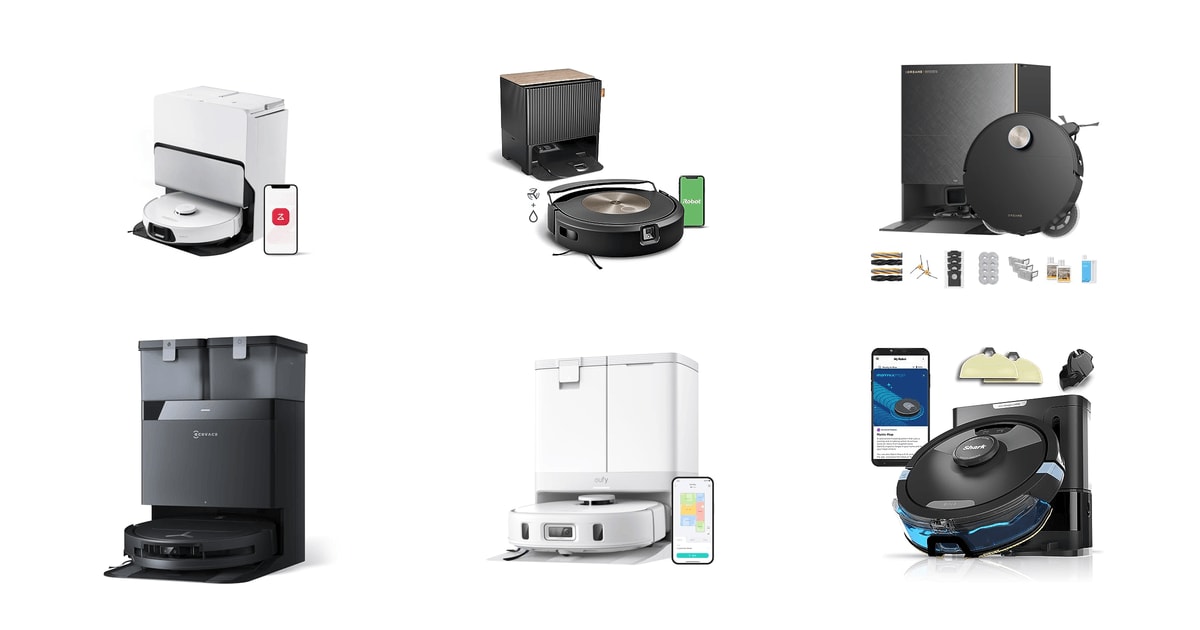
If you live with a shedding dog or a long-haired cat, you already know the problem isn't dirt. It's hair. It drifts into corners, mats into the edge of the carpet, and reappears an hour after you vacuum. A robot vacuum won't make that stop, but it changes the math: instead of one big weekly cleanup, you get a short pass every single day. Frequent light passes keep hair from working its way deep into carpet fibers, which is where a manual vacuum struggles most.
Here's the honest part. No robot vacuum replaces an upright, and none of them handle every mess. Every unit here will eventually need you to pull hair off a wheel axle or a side brush, even the ones that advertise tangle-free rollers. Deep-pile rugs remain hard for all of them, and lightweight throw rugs get shoved around. Mopping pads smear more than they scrub if you don't rinse them. Treat these as maintenance machines that keep the baseline low, not as a one-and-done solution.
We looked at suction ratings, brush design, filtration, dock capacity and how owners describe the units after months of daily shedding. Roborock, Dreame, Ecovacs, Eufy, Shark and iRobot all make a case, and the gap between them comes down to how much automation you want and how much floor you're covering. We think that the roborock S8 Max Ultra is the best robot vacuum for pet hair for most people, and that the dreame X60 Max Ultra Complete is the one to buy if you have thick carpet and want the most aggressive suction available.
Everything we recommend

Strong pickup, a dock that handles itself, few daily chores

The most suction here, and a dock that dries pads with hot air

Better mopping than most, and it fits under low furniture

Nearly the same automation for less, with a huge owner track record

Real LiDAR mapping without the dock, for daily light passes
At a glance
| Product | Suction | Anti-Tangle | Price | |
|---|---|---|---|---|
| roborock S8 Max Ultra Robot Vacuum andTop pick | 8000Pa | — | $469.99 |
 | iRobot Roomba Combo j9+ Self-Emptying & Auto-FillAlso in lineup | 3 Levels | — | $973.32 |
| dreame X60 Max Ultra Complete Robot VacuumUpgrade pick | 35,000Pa | — | $1,499.98On sale |
| ECOVACS DEEBOT T50 PRO Omni Robot VacuumAlso great | 15,000Pa | ZeroTangle 2.0 | $399.99 |
| eufy X10 Pro Omni Robot Vacuum andRunner-up | 8,000 Pa | — | $449.99On sale |
 | Shark Matrix Plus 2-in-1 Robot Vacuum &Also consider | — | — | $299.99 |
| iRobot Roomba 105 Vac Robot Vacuum -Budget pick | 70X Suction | — | $149On sale |
How we picked
Suction and carpet pickup. We prioritized units rated above 5,000 Pa, which published testing suggests is the practical threshold for pulling embedded hair from medium-pile carpet in one pass. RTINGS.com's standardized carpet debris testing shows top performers hitting 95 to 99 percent single-pass pickup on fine debris.
Tangle-free brush design. Rubber or detangling rollers were close to mandatory. Vacuum Wars' teardown comparisons found they need maintenance cleaning about four times less often than traditional bristle brushes in heavy-pet-hair homes.
Filtration for dander. HEPA-grade filtration captures particles down to 0.3 microns at 99.97 percent efficiency, which per Consumer Reports covers the main cat and dog allergens that standard mesh filters recirculate. We gave weight to units that seal the filter in the base.
Dock capacity. Self-emptying bases with larger bags can run 30 to 60 days between manual emptying in a two-pet home, according to Tom's Guide, versus dustbins that need attention after nearly every cycle. We noted stated bag capacity and dust-disposal intervals from each spec sheet.
Navigation in clutter. LiDAR maps a floor accurately in one pass, while camera-only systems typically need several runs and falter in low light, per PCMag's comparative navigation work. In a house strewn with toys and bowls, reliable obstacle handling decides whether a run finishes.
Top pick
Strong pickup, a dock that handles itself, few daily chores
roborock S8 Max Ultra Robot Vacuum and
The S8 Max Ultra pairs 8,000 Pa of suction with a dock that empties the bin, washes the mop in hot water and dries it. For a two-pet home, that means you touch it every few weeks instead of every day.
$469.99fromAmazonThis is the one that asks the least of you. The RockDock Ultra empties the robot's bin, refills the water tank, washes the mop pads with water up to 140°F and dries them. In a house with a shedding dog, the daily bin-dumping ritual is the thing that kills most robot vacuum habits. Take that away and the machine actually stays in service. You'll still swap the dust bag, but that's a monthly-scale job, not a nightly one.
Suction sits at 8,000 Pa, which clears the practical threshold for pulling embedded hair out of medium-pile carpet in one pass. That number matters more than it sounds. Entry-level robots run 600 to 900 Pa, and at that level hair gets skimmed off the surface while the stuff worked down into the pile stays put. If your Golden Retriever has a favorite rug, this is the difference between a rug that looks clean and one that is.
The FlexiArm side brush swings out to reach into corners and along baseboards, which is exactly where pet hair collects. Hair doesn't distribute evenly across a room. It piles at the edges, under the couch, along the wall behind the dog bed. A robot that only cleans the middle of the floor leaves you with a visible gray line at the perimeter, and this one gets closer to it than most.
The mop lifts on carpet, so you're not choosing between vacuuming and mopping. The 20mm auto-lift raises the mop module when the robot crosses onto carpet, and the app lets you set the order — vacuum carpets first, or skip them entirely during a mop run. For a mixed hard-floor-and-rug house, which is most rentals and most first floors, that's the setting that makes a combo unit worth owning.
Flaws but not dealbreakers
This listing is a renewed unit, professionally inspected and tested, and there's very little long-run owner feedback on it. What exists is positive, but it's thin. If you want the reassurance of thousands of owner reports, the Eufy or the Shark below have far deeper track records.
The dock is big. It's roughly 22 inches long and 18 inches tall, and it needs clearance on the sides plus a spot near an outlet. In a small apartment, finding a home for it is a real design problem, and it's not the kind of thing you tuck behind a door.
Self-washing mop pads still need your attention if your pet has accidents. The hot-water wash helps, but pads that soak up organic mess should come off and get a real cleaning rather than a dock cycle.
Upgrade pickOn sale
The most suction here, and a dock that dries pads with hot air
dreame X60 Max Ultra Complete Robot Vacuum
The dreame X60 Max Ultra Complete claims 35,000 Pa and stands just 3.13 inches tall, so it slips under low sofas. Its dock washes pads with near-boiling water and dries them with hot air, which is what keeps odor out.
$1,499.98fromAmazonList priceThe headline spec is 35,000 Pa through Dreame's DuoBrush, which uses a retractable plate to form a semi-sealed chamber under the robot. Suction numbers across brands aren't measured the same way, so treat this as a ceiling rather than gospel. But the design intent is clear: pull hair out of carpet pile, not just off the top of it. Owners with a German Shepherd and cats describe carpet and hard-floor pickup as the strongest thing about it.
If your pet has accidents, hot-air pad drying is the feature that matters most. Mop pads that sit damp after wiping up organic residue grow the bacteria that make a room smell faintly wrong. The X60's dock washes with water up to 212°F and then dries with hot air, which is a meaningful step past docks that only air-dry cold. It also handles dust disposal on a 100-day cycle and holds two cleaning solutions.
At 3.13 inches tall, this is the slimmest robot in the lineup. That sounds like a trivia spec until you consider where hair actually hides. Under the bed. Under the sofa. Under the console table nobody has moved in three years. A robot that fits under low furniture cleans the places you're least likely to reach yourself, and taller units simply bump and turn around.
Dual AI cameras with their own illumination handle obstacle avoidance, and the robot can climb steps up to 3.47 inches. That's useful in a pet house for a specific reason: transition strips, thick rug edges and the low lip into a sunroom are the things that strand a robot mid-run. Owners describe navigation as generally reliable, with the usual caveat about lightweight rugs getting pushed around.
Flaws but not dealbreakers
It's the most expensive and the largest thing here. The dock weighs in at roughly 52 pounds shipped and stands over two feet tall, which is a substantial piece of furniture to give up floor space for.
The app has a lot of settings, and owners consistently note that initial setup takes a while before the machine settles into a routine you can ignore. Budget an evening for mapping and zone configuration.
A minority of owners report failures after several months of use. That's true across this whole category, but it stings more on the priciest unit, so register the warranty and keep the receipt.
Also great
Better mopping than most, and it fits under low furniture
ECOVACS DEEBOT T50 PRO Omni Robot Vacuum
The DEEBOT T50 PRO Omni combines 15,000 Pa suction with an extending mop and side brush that reach into corners. At 3.19 inches tall it slides under beds and cabinets that stop taller robots cold.
$399.99fromAmazonBuy this one if your floors are mostly hard surfaces with a few rugs. The TruEdge 2.0 system pushes both the side brush and the mop pad outward toward walls and furniture edges, which is where hair and tracked-in grit accumulate on tile and hardwood. The Omni station washes pads with water up to 167°F and dries them at 113°F. That's a full hands-off mopping routine rather than a token wet wipe.
ZeroTangle 2.0 is Ecovacs' answer to the hair-wrapping problem, and the design goal is the same as every rubber-roller system here: keep long hair moving into the bin instead of spiraling around the brush. Owners with long-haired pets still report the occasional cleanout, but the interval stretches out considerably compared with old bristle brushes, which want attention roughly weekly.
AIVI 3D 3.0 obstacle avoidance is built around the clutter a pet home actually has. Chew toys, charging cables, a shoe left by the door. Camera-plus-structured-light systems handle these better than bumper-only robots, and in practice that means fewer runs that end early with the robot pinned against a squeaky hedgehog.
Owner feedback skews positive on cleaning and mapping speed, with several describing whole-home coverage on the first run. The pattern in the complaints is worth knowing though: a handful describe debris getting pushed rather than picked up at rug transitions, and one describes a mechanical noise developing over time.
Flaws but not dealbreakers
The model lineup is confusing. Ecovacs sells several T-series variants with overlapping names, and owners have found that accessories and app features don't always match what they expected from a listing. Check the specific model on the box against what you ordered.
Some owners report that the mop keeps a noticeable standoff distance from walls despite the extending arm, so baseboards still need occasional hand attention.
The app doesn't offer camera access, which is a feature several competing units include and a few owners went looking for.
Runner-upOn sale
Nearly the same automation for less, with a huge owner track record
eufy X10 Pro Omni Robot Vacuum and
The eufy X10 Pro Omni brings 8,000 Pa, a detangling roller and a full self-wash, self-dry, self-empty station. Tens of thousands of owners have weighed in, and pet hair pickup is the thing they praise most.
$449.99fromAmazonList priceThis is the value play in the lineup, and the evidence behind it is unusually deep. Eufy's X10 Pro Omni carries tens of thousands of owner ratings with a solidly positive skew, and the recurring theme among pet owners is the same: the bin comes back packed with hair after the first run. Good Housekeeping Institute also gave the X10 Pro Omni its Recommended designation for pet hair pickup on both hard floors and carpet.
You get the same core automation as the top pick. The station washes the dual mop pads, dries them with 45°C heated air, and empties the robot into a 2.5L dust bag that goes about two months between changes. Suction matches the S8 Max Ultra at 8,000 Pa. The mop pads auto-lift 12mm on carpet — less clearance than the S8's 20mm, which matters if your rugs are thick.
The Pro-Detangling roller brush is the reason to consider this specifically for a long-haired breed. Rubber-style rollers need cleaning roughly four times less often than traditional bristle brushes in heavy-shedding homes, according to Vacuum Wars' comparative teardown work. If you've spent Sunday afternoons cutting hair off a brush with scissors, that interval is the whole pitch.
AI.See recognizes over 100 object types, and AI.Map 3.0 handles no-go zones and virtual boundaries. For a pet home, no-go zones around the food and water bowls are the setting to configure first. A robot that clips a water dish creates a bigger mess than it cleans.
Flaws but not dealbreakers
Owners who hit problems tend to hit them hard. A visible minority describe failures within the first year and frustrating support experiences afterward. That's a real risk to weigh, and it's the main reason this lands behind the S8 Max Ultra.
Brushes and filters are consumables here. Owners report replacing brushes periodically and cleaning the filter regularly in heavy-hair homes, which is normal but worth budgeting for.
Like every robot in this guide, it gets tangled on cords and pushes lightweight throw rugs around. You'll do a quick floor sweep before runs until you've trained yourself to keep cables up.
Budget pickOn sale
Real LiDAR mapping without the dock, for daily light passes
iRobot Roomba 105 Vac Robot Vacuum -
The Roomba 105 Vac skips mopping and self-emptying but keeps LiDAR navigation and a multi-surface brush. If you just want hair picked up every day without a giant dock, this covers it.
$149fromAmazonList priceThe single best thing you can do for pet hair is run a robot every day, and this is a simple machine to build that habit around. Wirecutter's survey data found that owners running daily schedules report 40 to 60 percent less visible hair accumulation than owners running the same machines two or three times a week. Frequency beats raw power. A modest robot on a daily schedule outperforms a flagship you run on weekends.
ClearView LiDAR is the surprise here, since mapping used to be a premium-tier feature. It builds a floor plan in a single pass and lets you target specific rooms and set keep-out zones from the app. Camera-only navigation systems typically need two or three mapping runs and struggle in dim rooms, per PCMag's comparative work. LiDAR doesn't care about lighting, which matters if the robot runs while you're at work with the blinds drawn.
The three-stage system pairs a multi-surface brush with an edge-sweeping brush, and iRobot rates suction at 70 times that of the old 600-series. Owners upgrading from older bump-and-go Roombas describe it as a substantial step up in both coverage and reliability. It's small, it's light at roughly six pounds, and the dock tucks under a bench.
You give up mopping and self-emptying, and that's the whole trade. You'll empty the bin after most runs — more often if you have multiple shedding dogs, since a small bin fills fast with hair. If that chore doesn't bother you, the money saved is significant and the daily cleaning outcome is closer to the flagships than the spec gap suggests.
Flaws but not dealbreakers
The bin is small and there's no dock to empty it into. In a heavy-shedding household you're emptying it daily, which is exactly the chore the expensive units exist to remove.
Suction and brush aggression are modest. Owners note it handles hard floors and low-pile carpet well but doesn't dig hair out of thicker pile the way high-suction units do.
There's no mopping and no pet waste detection. If you have a puppy in training or a cat with litter box opinions, the risk of a robot spreading a mess across the floor is real and this unit can't see it coming.
Who this is for
This guide is for people whose floors are losing a daily battle with fur. If you have two or more shedding animals, a long-haired breed, or an allergy sufferer in the house, a robot vacuum on a daily schedule is the single highest-leverage thing you can add to your routine. It's also for renters and apartment dwellers with a mix of hard floors and low-to-medium pile carpet, where a full-size upright feels like overkill for a five-minute job.
It's not for you if your home is mostly deep-pile or shag carpet — no robot in this category extracts hair from long fibers the way a good upright does, and you'll be disappointed. Skip the mopping models if your floors are unsealed wood. And if your household already vacuums thoroughly twice a week and you're happy with the results, a robot adds convenience but not much cleanliness. We covered whole-home robot vacuums with a strong pet-hair case; we didn't look at handheld pet vacuums, stick vacuums, or grooming tools, all of which solve a different part of the problem.
How we picked
We weighed the specs and published testing that actually predict how a robot handles fur. Suction: we looked for ratings above the roughly 5,000 Pa threshold where single-pass extraction from medium-pile carpet becomes realistic. Brush design: rubber and detangling rollers earned a large edge over bristle brushes, which comparative teardowns show need cleaning about four times as often in heavy-shedding homes. Filtration: HEPA-grade filters trap the fine dander that triggers allergies, where mesh filters just recirculate it. Dock capacity: larger self-empty bags stretch manual maintenance from daily to monthly in a two-pet house. Navigation: LiDAR maps in one pass and works in the dark, which matters when the floor is covered in toys and bowls. Mopping: we favored docks that wash and dry pads with heat, since pads that sit damp after a pet accident start to smell.
Other robot vacuums for pet hair worth considering
If you want true HEPA filtration and a bagless base: The Shark Matrix Plus 2-in-1 Robot Vacuum & ($299.99) — The Shark Matrix Plus is built around a different idea. Instead of one powerful pass, Matrix Clean runs a precision grid — multiple perpendicular passes over the same patch — which Shark rates at 30 percent better carpet cleaning than a single-pass run. On carpet with embedded fur, that cross-hatching genuinely helps. It also has a true HEPA filter with an anti-allergen seal in the base, capturing 99.97 percent of particles down to 0.3 microns, which is the spec allergy sufferers should care about most. The base is bagless and holds up to 60 days of debris, so there's no recurring bag cost. What you give up is the sophisticated obstacle avoidance and self-washing mop dock of the picks above. Its sonic mopping is a light hard-floor wipe, not a scrub, and owners report the software and app can be fussy.
The competition
Here's what the research turned up, not everything sold. The robot vacuum market moves fast and every brand ships several near-identical variants a year, so treat this as a snapshot of the models we could verify rather than a complete survey. One unit came up repeatedly in pet-hair discussions and didn't make the cut.
The iRobot Roomba Combo j9+ Self-Emptying & Auto-Fill ($973.32) — The iRobot Roomba Combo j9+ has the most interesting hardware story here. Its mop fully retracts to the top of the robot, so carpets stay dry without any of the compromise other combos make, and the auto-fill dock empties debris for 60 days and refills mop water for 30. The Verge's obstacle testing found the j9+ Combo avoided pet waste in 97 percent of encounters, the best result they've recorded — which is the single most valuable safeguard in a house with a puppy. But owner feedback on this listing is rough, and the pattern is consistent: cryptic error codes, mopping that doesn't deploy, navigation that wanders into the wrong room, and a small bin. Several long-term owners lowered their ratings over time. If pet waste avoidance is your non-negotiable, it's still the class leader on that one metric, and you should go in knowing the reliability reports.
Care and maintenance
Even a tangle-free roller needs a look every few weeks in a shedding house. Pull the brush out, check both end caps, and cut away the hair that's wound onto the axle — that's where it collects even on rubber rollers. The side brush and the front caster wheel are the other two spots that quietly seize up, and the caster is the one most people never think to check. Rinse or tap out the filter often; a hair-clogged filter kills suction long before you notice the floors looking worse. If your unit self-washes its mop pads, still pull them off periodically and wash them properly, especially after cleaning up an accident. And before each run, do a ten-second sweep for charging cables, socks and chew toys. That habit prevents most failed runs.
Questions we get
Can a robot vacuum pick up long dog hair without getting tangled in the brush?
Mostly, yes — if it uses a rubber or detangling roller rather than a bristle brush. Comparative teardown testing from Vacuum Wars found rubber rollers need cleaning roughly four times less often in heavy-pet-hair homes. But no design is tangle-proof. Expect to pull hair off the brush ends and the axle every few weeks.
Do robot vacuums actually help with pet allergies?
They help if the filtration is good. HEPA-grade filters capture 99.97 percent of particles down to 0.3 microns, which per Consumer Reports covers the main cat allergen (Fel d 1) and dog allergen (Can f 1). Standard mesh filters let those recirculate into the air. Running daily also matters, since it removes dander-carrying hair before it accumulates.
How often should I run one if I have two or more shedding dogs?
Every day. Wirecutter's survey data found owners on daily schedules report 40 to 60 percent less visible hair than owners running the same machine two or three times a week. Frequent light passes stop hair from working down into carpet fibers, where it's much harder to extract. Schedule it for when you're out of the house.
What suction rating do I need for hair embedded in carpet?
Above roughly 5,000 Pa is the practical threshold for single-pass extraction from medium-pile carpet. Entry-level robots run 600 to 900 Pa and mostly skim the surface. Be a little skeptical of the very high numbers though — brands don't measure the same way, so a 35,000 Pa claim and a 15,000 Pa claim aren't directly comparable.
Is a self-emptying base worth it for pet owners?
In a multi-pet home, it's the feature that keeps the robot in service. Bases with 4L or larger bags run 30 to 60 days between manual emptying, according to Tom's Guide, while a standard bin needs dumping after nearly every cycle. Hair fills a small bin fast. If daily bin-dumping is what stopped you using a robot before, the dock solves it.
Do any robot vacuums detect and avoid pet waste?
The premium models with camera-based AI obstacle recognition do, and it's the failure mode worth insuring against. The Verge's testing found the Roomba Combo j9+ avoided pet waste in 97 percent of encounters, the highest rate they've recorded. No system is perfect, so if you have a puppy in training, keep the robot out of that room until housebreaking is done.
Will a robot vacuum scare my dog or cat?
Often at first, and the self-emptying dock is usually the bigger culprit — that emptying cycle is loud and abrupt. Owners describe pets bolting the first few times and then ignoring the robot within a couple of weeks. Let your pet investigate it while it's powered off, run the first few cycles while you're home, and schedule dock emptying for a time when the animals aren't nearby.
Why you should trust us
For this guide:
- We compared manufacturer specifications across every unit here, focusing on suction ratings, brush roll design, filtration grade and stated dock capacity.
- We read published evaluations from RTINGS.com, PCMag, The Verge, Vacuum Wars, Tom's Guide, Consumer Reports and the Good Housekeeping Institute, and we drew on APPA survey data for category context.
- We read through owner feedback for each listing and looked for repeated themes — tangling, dock noise, mid-run failures — rather than isolated complaints.
- We read owner reviews on every listing, weighted toward the critical ones, because that is where the recurring failures show up.
- We have a systematic way of automatically fetching the latest prices, so the numbers on this page stay current.
- This is a research-focused guide, so the team may not own every product listed — though we often do own the top winners, which gives us extra context for the recommendations.
- We don't accept free products, and the retailer commission never changes which product we recommend.
Sources
Best Robot Vacuums 2026 — Wirecutter, Wirecutter / NYT
Best Robot Vacuums for Pet Hair — RTINGS.com, RTINGS.com
Best Robot Vacuums — PCMag, PCMag
Best Robot Vacuums for Pet Hair — Tom's Guide, Tom's Guide
Robot Vacuum Ratings and Reviews — Consumer Reports, Consumer Reports
Best Robot Vacuums for Pet Hair — Good Housekeeping Institute, Good Housekeeping
Best Robot Vacuums — TechRadar, TechRadar
Robot Vacuum Brush Roll Comparison — Vacuum Wars, Vacuum Wars
iRobot Roomba j9+ Combo Review — The Verge, The Verge
2025–2026 National Pet Owners Survey — APPA, American Pet Products Association
Dreame L20 Ultra Complete Full Review — ZDNet, ZDNet
Best Robot Vacuums for Pet Hair — The Spruce, The Spruce
Amazon product listings and owner reviews for all 7 products
Manufacturer specification pages for each product
Some passages in this guide may be paraphrased with AI help. Prices are refreshed automatically.
More like this.
Continue exploring appliances reviews and recommendations.

The Best Handheld Vacuums for Car and Pet Hair
Pet hair in a car doesn't behave like pet hair on a floor. It works down into the seams of a bench seat, wraps around the fibers of a rubber-backed mat,…

The Best Handheld Vacuums for Car and Pet Hair
Pet hair doesn't sit on car upholstery. It works its way into the weave, and a plain suction nozzle glides right over the top of it. That's the whole…

The Best Upright Vacuums for Pet Hair
If you live with a shedding dog or a long-haired cat, you already know the drill. Hair works its way into carpet pile, wraps around a brush roll, and…

The Best Vacuums for Pet Hair
Pet hair is the hardest thing you can ask a vacuum to do. Long strands wind around a brush roll until it barely spins. Dander is small enough to slip out…

The Best Robot Vacuum Mop Combos
A robot vacuum mop combo earns its keep in the boring middle of the week. You're not deep-cleaning. You're dealing with cereal under the high chair, dog…

The Best Robot Mops And Floor Scrubbers
A robot mop earns its keep on the floors you walk on barefoot. Kitchen tile picks up grease and crumbs. Entryway plank floors collect grit that gets…