The Best Pizza Stones and Baking Steels
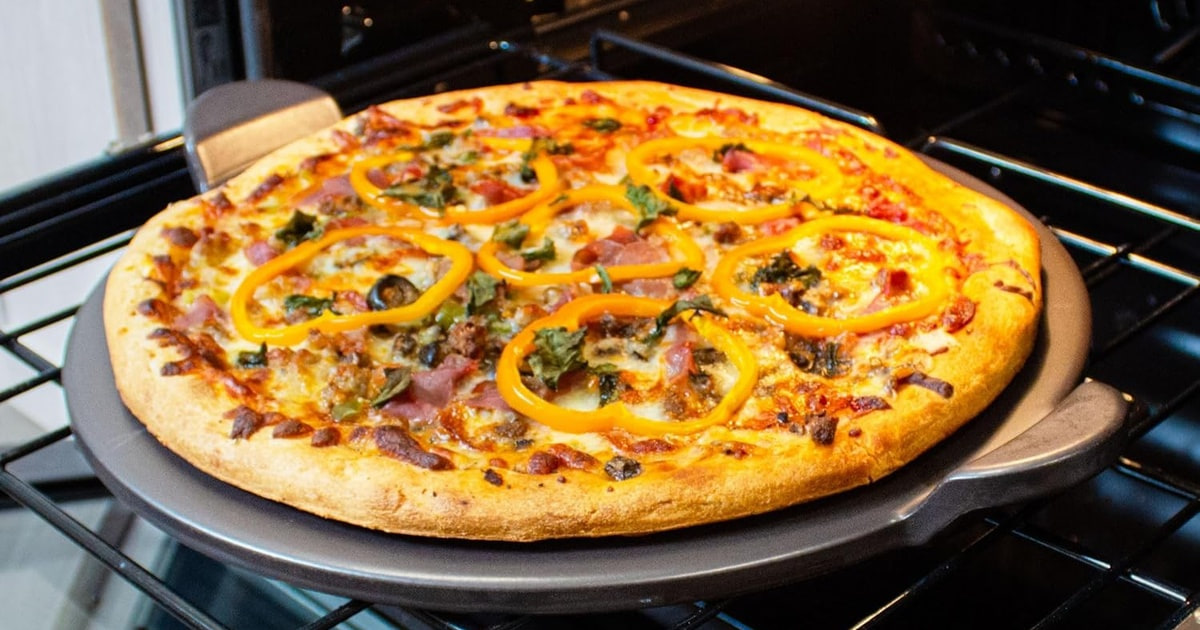
Home ovens are lousy pizza ovens. They top out around 500 or 550°F, and a bare oven rack does nothing to crisp the bottom of a crust. A slab of steel or stone fixes that. It sits in your oven soaking up heat for an hour, then dumps that heat straight into the dough the moment the pizza lands. That's how you get a crust with real snap instead of a pale, floppy underside. The same slab does good work on sourdough, baguettes and even a batch of cookies.
Here's the honest part: none of these is a pizza oven. You can't get a true Neapolitan pie at 900°F in 90 seconds on any of them, because your oven won't go there. Steel comes closest, but it also weighs a lot and can make your oven a hassle to use for anything else. Stones are lighter and cheaper, and they crack — sometimes for no reason you'll ever figure out. Every one of these also demands patience: a full hour of preheating before the first pizza goes in.
You'll also want a peel, or at least a rimless sheet pan, because launching dough onto a screaming-hot surface is the hardest part of the whole exercise. We think that the Original Baking Steel is the best pizza-baking surface for most people, and that the Hans Grill Rectangular Pizza Stone with Peel is the one to buy if you want a stone, a peel and a set of instructions in one inexpensive box.
Everything we recommend
Crispier crusts and faster bakes, if you can lift it

More thermal mass for back-to-back pizzas

A stone, a peel and instructions in one cheap box

The one ceramic stone made for open flame
At a glance
| Product | Material | Thickness | Price | |
|---|---|---|---|---|
| The Original Baking Steel®Top pick | Steel | 1/4" | $139 |
 | FibraMent® Premium 3-Piece Pizza Stone SetAlso in lineup | — | 0.75" | $156.99 |
| NerdChef Steel Stone - High Performance PizzaUpgrade pick | Steel | .375" | $103.96On sale |
| Emile Henry Flame Top 14.5" Pizza StoneAlso great | — | 1.5" | $83.95 |
 | Old Stone Pizza Kitchen Glazed Round PizzaAlso in lineup | Cordierite | 1.5" | $64.95 |
 | Unicook 15" Round Pizza Stone for OvenAlso consider | Cordierite | 0.6" | $39.99On sale |
 | Lodge Pre-Seasoned Cast Iron Baking PanAlso consider | Cast Iron | — | $39.88 |
| Hans Grill Rectangular Pizza Stone with PeelBudget pick | Cordierite | 0.59" | $59.99On sale |
How we picked
Material and conductivity. We compared published thermal conductivity figures for carbon steel, cast iron and cordierite, since that number largely determines how fast a crust browns. Anything with the heat-transfer behavior of ordinary ceramic was a hard pass.
Thickness and mass. We favored surfaces with enough stored heat to bake more than one pizza without fading. That meant at least 1/4 inch in steel and roughly 1/2 inch or more in stone.
Crack resistance. Published reviews and owner feedback both point to thermal shock as the top reason stones die. We looked for cordierite rather than plain ceramic, and we weighted breakage reports heavily.
Oven and grill fit. We checked listed dimensions against standard 30-inch ovens, allowing roughly an inch of clearance on each side for airflow. Anything rated only for indirect oven heat lost points for outdoor cooks.
Cleaning and upkeep. We noted which surfaces tolerate soap, which need oiling to prevent rust, and which stain permanently. Owner feedback made clear that upkeep is where enthusiasm goes to die.
Top pick
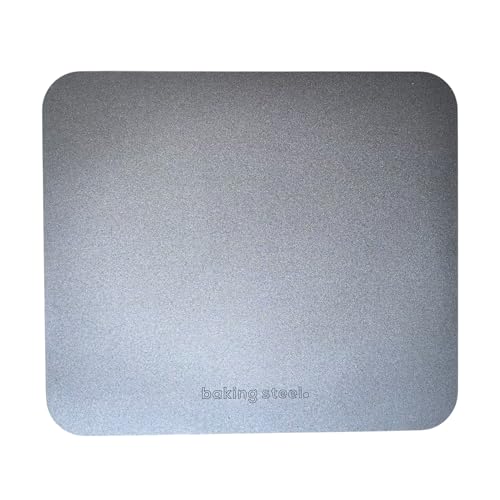
Crispier crusts and faster bakes, if you can lift it
The Original Baking Steel®
This quarter-inch slab of American steel is the product that started the whole baking-steel category. It transfers heat to dough far faster than any ceramic stone, which means browner, blistered bottoms and pizzas that finish in six to eight minutes instead of twelve.
$139fromAmazonSteel wins on physics, not marketing. Carbon steel conducts heat at roughly 45 to 50 W/m·K. Cordierite, the ceramic in most pizza stones, sits around 2 to 4. That's a 13- to 18-fold difference in how fast heat moves into your dough. In practice it means a bottom crust that browns and blisters before the toppings overcook. Manufacturer figures and Serious Eats comparisons both put a steel-baked pizza at 6 to 8 minutes where a stone takes 10 to 14.
In Wirecutter's blind taste panel, steel-baked pizzas beat cordierite-baked ones in most head-to-head rounds — crispier bottoms, more even charring. Owner feedback lines up with that. The people who report the biggest jump in quality are the ones coming off a sheet pan or a thin stone, and they describe the change as immediate rather than something they had to learn to coax out.
It won't crack. Ever. That matters more than it sounds. Stones break — sometimes on the first use, sometimes years in, sometimes while you're just lifting one out of the oven. This is a solid piece of steel from a Massachusetts mill, and Baking Steel says customers are still cooking on units bought over a decade ago. Buy it once and the question is settled.
It's also not just for pizza. The same surface sears smash burgers, bakes sourdough with a proper bakery crust, and turns out English muffins with actual nooks. It ships pre-seasoned, so you can preheat and cook on day one without a break-in ritual.
Flaws but not dealbreakers
At about 15 pounds, this is heavy enough that you'll think twice before pulling it out. Most people just leave it on a rack permanently, which costs you a rack and slows down your oven's preheat for everything else you bake.
It's the most expensive surface here by a wide margin, and one skeptical owner made a fair point: a stone at a third of the weight and a fraction of the cost gets you most of the way there. If you make pizza three times a year, that argument holds.
Steel needs a light coat of oil after cleaning or it'll rust, especially if your kitchen is humid. It's not much work, but it's more than a cordierite stone asks of you.
Upgrade pickOn sale
More thermal mass for back-to-back pizzas
NerdChef Steel Stone - High Performance Pizza
The NerdChef is 3/8 inch thick instead of 1/4, which means it stores noticeably more heat and recovers faster between pies. If you're making four pizzas for a group rather than one on a Friday night, that extra mass is the difference.
$103.96fromAmazonList priceThe reason to go thicker isn't the first pizza — it's the third. Every pizza you launch pulls heat out of the surface. A thinner steel drops in temperature and the crusts get progressively paler. NerdChef claims twice the heat capacity of a ceramic stone and 20 times the conductivity, and the practical upshot is a slab that stays hot through a run of pies.
It's built for high-hydration dough. Hobbyist pizza communities gravitate to the 3/8-inch steel for Neapolitan-style wet doughs, where you need the bottom to set fast before the whole thing goes slack. The surface is sanded smooth and seasoned with flaxseed oil, so dough releases instead of grabbing.
It's guaranteed for life, which is an easy promise to make about a solid slab of steel and a nice one to have anyway. Owners who describe going through three ceramic stones before switching tend to frame this as the last one they'll buy.
At 16 by 14.25 inches, it covers most of a standard oven rack — enough for a 14-inch pie with room to spare, or two loaves of bread side by side.
Flaws but not dealbreakers
It weighs 23 pounds. Owners with small ovens report that it genuinely changes how the oven behaves, and moving it is a two-hand, don't-drop-it operation. Check that your rack and your back are up for it.
The extra thickness also means a longer preheat than the 1/4-inch steel. Plan on the full hour and then some if you want the core fully up to temperature.
NerdChef guarantees the Steel Stone for life.
Budget pickOn sale
A stone, a peel and instructions in one cheap box
Hans Grill Rectangular Pizza Stone with Peel
This rectangular cordierite stone comes with a wooden peel and a recipe guide, so a first-time pizza maker has everything needed on day one. It's rated to 1112°F, which covers oven, broiler and grill use without drama.
$59.99fromAmazonList priceIf you've never made pizza at home, buying a bare stone leaves you one crucial item short. Getting a topped, raw pizza off the counter and onto a 500°F surface is the single hardest step, and a peel is what makes it possible. This set hands you both for less than most steels cost on their own.
The cordierite here is rated to 1112°F, well past anything a home oven can do, and it works on a gas or charcoal grill too. Owners report the biggest gains on frozen pizza, where a hot porous surface turns a soggy supermarket crust into something with actual crunch.
Staining is normal and Hans Grill says so up front. That's a small thing, but it saves new owners a panic. Cordierite darkens with use because it's pulling grease and moisture out of your dough — the exact mechanism that crisps the bottom. Good Housekeeping's testing found bare cordierite wicks measurably more moisture than glazed ceramic.
At 15 by 12 inches it fits comfortably in a standard oven with air space on the sides, and at under 8 pounds you can lift it out one-handed when you want your oven back.
Flaws but not dealbreakers
The included peel is the weak link. Its slotted design catches soft dough, and several owners report pizzas sticking to it no matter how much flour or cornmeal they use. The stone is the reason to buy this; treat the peel as a starter you may replace.
The handle on that peel is also short, which puts your knuckles closer to a hot oven than you'd like.
As with any cordierite stone, thermal shock will crack it. Never put it into a hot oven cold, and never run cold water over it while it's warm.
Also great
The one ceramic stone made for open flame
Emile Henry Flame Top 14.5" Pizza Stone
Emile Henry's Flame Top handles direct fire on a gas, charcoal or wood grill up to 900°F, which no ordinary cordierite stone is rated for. The glazed top also cleans with soap and water, and you can cut pizza right on it.
$83.95fromAmazonThis is the stone to buy if you cook outside. Most ceramic stones are oven-and-indirect-heat only. This one is rated for direct flame up to 900°F on gas, charcoal and natural wood grills, which turns a covered kettle grill into a passable pizza oven. It's also broiler-safe indoors, so you can blast the top of a pie while the bottom finishes.
The glaze changes the ownership experience more than you'd expect. Bare cordierite can't touch soap and stains permanently. This surface is dishwasher-safe on top, scratch-resistant enough to cut on, and doesn't hold onto grease or odors. Owners who've been through several stones tend to mention the cleaning as the thing that finally stuck.
The micro-crazed glaze is Emile Henry's answer to the moisture problem — it's textured rather than glassy, so it still crisps a crust. Bon Appétit's kitchen noted that stones bake more evenly top-to-bottom than steel does, which makes ceramic the better choice for thick-crust, Sicilian and deep-dish styles.
At 5.7 pounds with molded handles, it's the easiest surface here to move in and out of an oven. If you'd rather not surrender a rack permanently, that counts.
Flaws but not dealbreakers
Grilling on it takes practice. Owners describe a first attempt that came out burnt on the bottom and undercooked on top, which is a heat-management problem rather than a stone problem — but you should expect a learning curve.
Cleanup is easier than bare cordierite, not effortless. Baked-on cheese still needs a scraper and some patience.
It's expensive for a ceramic stone, and if you never plan to grill on it, you're paying for a capability you won't use.
Emile Henry backs the Flame Top pizza stone with a 10-year guarantee against manufacturing defects in household use.
Who this is for
Buy one of these if your homemade or frozen pizza keeps coming out with a pale, limp bottom. That's the specific problem a hot slab solves, and it solves it completely. Bread bakers get the same benefit — a preheated surface gives sourdough and baguettes the oven spring and bottom crust a sheet pan never will. If you already own a dedicated outdoor pizza oven that hits 800°F or more, you don't need any of this.
This guide covers flat baking surfaces for conventional home ovens and grills: steel plates, cordierite and ceramic stones, and cast iron pans used the same way. We're not covering countertop pizza ovens, perforated pizza pans or dough-making equipment. Everything here needs a peel or a rimless sheet pan to load, and every one of them wants a full hour of preheating at your oven's maximum setting.
How we picked
We weighed five things. Material and conductivity: carbon steel moves heat into dough roughly 13 to 18 times faster than cordierite, and cast iron sits close to steel, so material choice sets the ceiling on crust quality. Thickness and mass: thicker surfaces hold their temperature through a run of pizzas, which is why we favored 3/8-inch steel and stones near 5/8 inch or more. Crack resistance: cordierite's very low thermal expansion is what lets it survive cold dough on a 500°F surface, and plain ceramic often doesn't. Oven and grill fit: we checked dimensions against standard ovens and flagged which surfaces are rated for direct flame. Cleaning and upkeep: glazed surfaces take soap, bare cordierite never does, and steel needs a wipe of oil to stay rust-free.
Other pizza stones and baking steels worth considering
If you want steel-like results without the steel price: The Lodge Pre-Seasoned Cast Iron Baking Pan ($39.88) — Cast iron conducts heat at roughly 40 to 50 W/m·K — essentially the same as carbon steel — so a preheated Lodge baking pan crisps a crust much the way a baking steel does, at a fraction of the cost. This 15.5-by-10.5-inch pan ships pre-seasoned, weighs a manageable 7.5 pounds, and doubles as a roasting tray, a griddle for pancakes and a cookie sheet. What you give up is surface area and a flat launch: the raised sides make sliding a pizza off a peel trickier than onto a bare slab, and a 15.5-inch pan won't take a full 14-inch round pie. Owners also note it needs re-seasoning after a wash if you want food to stop sticking.
If you want a plain, proven stone and nothing else: The Unicook 15" Round Pizza Stone for Oven ($39.99) — The Unicook is a 15-inch round of natural cordierite, 0.6 inch thick and kiln-sintered at 2100°F, and it's one of the most widely bought pizza stones anywhere. It comes with a plastic scraper, works in the oven or on a grill, and its micro-pores pull moisture out of dough for a crisper base. Owners fitting it into camper ovens and toaster ovens report it does the job. Where it falls short of our picks: it's round, so you lose usable corners for bread, and its rules are strict — no soap, no oil, no seasoning, ever. Break those and the stone absorbs what you put on it permanently.
The competition
Here's what else our research turned up. This isn't every pizza stone or steel sold — it's the set that kept surfacing across published reviews, manufacturer catalogs and Amazon listings, compared against the picks above.
The FibraMent® Premium 3-Piece Pizza Stone Set ($156.99) — The FibraMent-D set is the professional-grade stone in this group: 3/4 inch thick, 17.5 by 13.875 inches, made in the USA, and packaged with a peel and a rocker cutter. FibraMent stones are rated to withstand extremely high temperatures and have been named a best overall stone by several major outlets. Two things kept it out of the picks. It weighs 35 pounds, which is more than either steel here and a lot to wrestle into an oven, and its footprint needs a genuinely large oven with clearance on each side. Early owner feedback also flags the included cutter as underwhelming. If you bake bread in volume and want the thickest stone you can get, it's a serious option — measure your oven first.
The Old Stone Pizza Kitchen Glazed Round Pizza ($64.95) — The Old Stone 15-inch glazed round is a long-running name in pizza stones, and the glazed top does what glazing is supposed to do: it wipes clean, doesn't soak up grease, and doesn't smell during preheat. Owners consistently like how it crisps. But the reliability picture is weaker than the rest of this group — breakage reports include a stone that split during a normal 475°F bake after a handful of uses, and the listing's mention of handles doesn't match what some buyers received. The Emile Henry costs more but is better documented and better backed. Choose the Old Stone if you specifically want a glazed round at a lower price and accept the risk.
Care and preheating
Preheat for a full hour at your oven's highest setting, whatever surface you buy. America's Test Kitchen recommends at least that long so the core temperature catches up with the surface, and it's the step beginners skip most often. Never put a cold stone into a hot oven or run water on a warm one — that's thermal shock, and it's how most stones die. For bare cordierite, skip soap entirely: scrape off debris with a plastic scraper once the stone is cool, and let stains be, since they don't affect performance. Glazed surfaces tolerate soap and water. Steel gets scraped, wiped and given a thin coat of neutral oil to keep rust off. Many owners simply leave their slab on a lower rack full-time, which works fine but slows your oven's preheat for everything else.
Questions we get
What's the difference between a pizza stone and a baking steel?
A stone is ceramic, usually cordierite, and it's porous — it pulls moisture out of dough while it bakes. A steel is a solid metal plate that conducts heat 13 to 18 times faster. The practical difference is speed and browning: steel gives you a crispier, more blistered bottom in about half the time, while stone bakes a bit more evenly from top to bottom.
Is a baking steel worth the extra cost over a stone?
If you make pizza regularly, yes. Steel bakes faster, browns better and won't crack, so it's a one-time purchase rather than a consumable. If you make pizza a few times a year, a good cordierite stone gets you most of the result for a lot less money — CNET's review panel put budget stones within roughly 10 to 15% of premium steels for typical home use.
How long do I need to preheat?
At least 45 to 60 minutes at your oven's maximum temperature, usually 500 to 550°F. The surface hits temperature long before the core does, and an under-heated core is why a pizza comes out pale on the bottom. Set a timer and resist the urge to rush it. Thicker surfaces need the full hour or more.
Why did my pizza stone crack?
Almost always thermal shock — a sudden temperature swing the ceramic can't absorb. Putting a cold stone into a preheated oven, setting something frozen on a hot stone, or washing a warm stone with cold water will all do it. Cordierite handles these swings far better than plain ceramic because it barely expands when heated, but it isn't immune. Heat it up with the oven from cold, and let it cool in the oven afterward.
Can I use a stone or steel on a gas or charcoal grill?
Steel works on a grill without qualification. Most cordierite stones can too, but only over indirect heat, and you should confirm the temperature rating first. The Emile Henry Flame Top is the exception here — it's rated for direct flame up to 900°F, which is why it's the one we'd pick for kamado or open-fire cooking.
How do I clean a stone without soap?
Let it cool completely, then scrape off stuck-on food with a plastic scraper or a stiff brush. Wipe with a barely damp cloth if you need to. Never use soap on bare cordierite — the porous surface absorbs it and you'll taste it in the next pizza. Stains are cosmetic and permanent, and they don't hurt anything. Glazed stones and steel are more forgiving.
Why you should trust us
For this guide:
- We compared manufacturer specifications for every product here against published equipment reviews from Serious Eats, America's Test Kitchen, Wirecutter, Bon Appétit, CNET and the Good Housekeeping Institute.
- We read through owner feedback across all eight listings, paying particular attention to recurring themes around breakage, weight and cleaning.
- We relied on published thermal conductivity and thermal expansion figures for steel, cast iron and cordierite to explain why these surfaces behave differently.
- We read owner reviews on every listing, weighted toward the critical ones, because that is where the recurring failures show up.
- We have a systematic way of automatically fetching the latest prices, so the numbers on this page stay current.
- This is a research-focused guide, so the team may not own every product listed — though we often do own the top winners, which gives us extra context for the recommendations.
- We don't accept free products, and the retailer commission never changes which product we recommend.
Sources
Best Pizza Stone — Wirecutter / The New York Times, Wirecutter
The Pizza Lab: On the Importance of Baking Surfaces — Serious Eats, Serious Eats / J. Kenji López-Alt
Best Pizza Stones Tested — Good Housekeeping Institute, Good Housekeeping
Pizza Stone and Baking Steel Equipment Reviews — America's Test Kitchen, America's Test Kitchen
Best Pizza Stones of 2026 — The Spruce Eats, The Spruce Eats
Best Pizza Stones — Cook's Illustrated Equipment Reviews, Cook's Illustrated
Best Pizza Stones and Baking Steels — CNET Home & Kitchen, CNET
Pizza Stone vs. Baking Steel: Which Makes Better Pizza? — Bon Appétit, Bon Appétit
FibraMent-D Baking Stone — Manufacturer Specifications, FibraMent (Manufacturer)
Emile Henry Flame Top Pizza Stone — Manufacturer Specifications, Emile Henry (Manufacturer)
Amazon product listings and owner reviews for all 8 products
Manufacturer specification pages for each product
Some passages in this guide may be paraphrased with AI help. Prices are refreshed automatically.
More like this.
Continue exploring appliances reviews and recommendations.

The Best Pizza Ovens for Home Use
A home oven tops out around 500°F. That's the whole problem. At that heat the dough dries out before the top browns, and you get a cracker with toppings…

The Best Pizza Ovens
A pizza oven solves one problem, and it solves it completely. Your kitchen oven tops out around 550°F, and at that temperature a pizza takes eight or ten…

The Best Stand Mixers for Baking
A stand mixer earns its counter space by taking over the jobs your arms hate. Creaming butter and sugar until it's genuinely pale and fluffy. Kneading a…

The Best Digital Kitchen Scales for Precision Baking
Baking by volume is the reason your cookies come out different every time. King Arthur Baking found that a cup of all-purpose flour can weigh anywhere…

The Best Nonstick Cake Pans and Baking Sets
A cake pan does one job, and it's easy to take for granted until it fails you. The batter sticks to the bottom, the edges brown three shades darker than…

The Best Baking Sheets and Cookie Pans
A baking sheet is the pan you reach for more than any other. Cookies on Sunday, salmon on Tuesday, a tray of potatoes and onions on a weeknight when…