The Best Cutting Boards
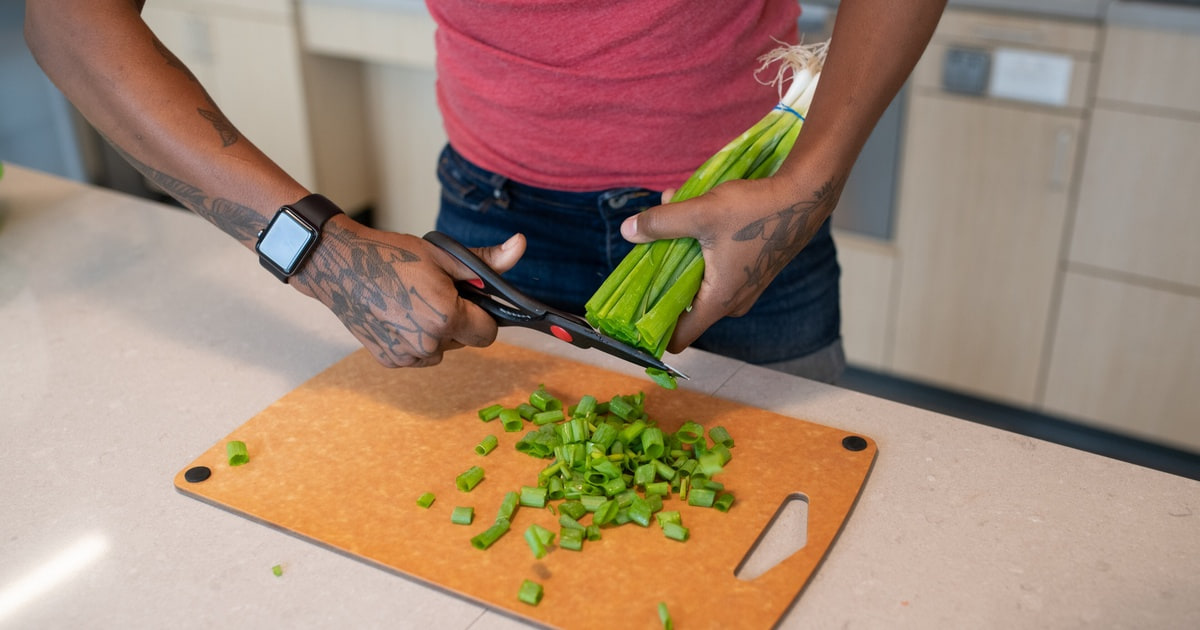
The cutting board is the surface you touch most in a kitchen, and it's usually the one you think about least. It sits under every onion, every chicken thigh, every loaf you saw through. A good one absorbs that abuse for years and keeps your knives sharp along the way. A bad one dulls a nice blade in a few months, slides around while you chop, and picks up a smell you can't wash out. It's a small purchase that quietly shapes how cooking feels.
No board does everything. Wood is kind to knives and pleasant to work on, but it can't go in the dishwasher, and it needs oil every few weeks or it dries out and cracks. Plastic can be sanitized at dishwasher temperatures, which is exactly what you want after raw poultry. But it scars, and once those grooves get deep, scrubbing doesn't reach what's hiding in them. Composite splits the difference and picks up stains from tomatoes and lemons. Choose the compromise you can live with.
That's why most cooks end up with two boards: a nice one for produce, bread and cooked food, and a plain, sanitizable one reserved for raw meat. It's the setup we'd steer you toward, and it changes what any single board has to do. Our picks cover both jobs, from a hardwood board you'll hand-wash and keep for a decade to a plastic board you replace every couple of years. We think that the Teakhaus Teak Cutting Board is the best cutting board for most people, and that the Epicurean Gourmet Series is the one to buy if you'd rather run your board through the dishwasher.
Everything we recommend

Kind to knives and easy to live with, if you'll hand-wash it

Dishwasher convenience without punishing your knives

A plain, sanitizable board to keep just for raw meat

A heavy butcher block that never moves while you work
At a glance
| Product | Material | Board Size | Price | |
|---|---|---|---|---|
| Teakhaus Teak Cutting Board - Rectangle EdgeTop pick | Teak | 16"L x 12"W | $36.87On sale |
| John Boos CB Series Rectangular Wooden MapleUpgrade pick | Maple | 20"L x 15"W | $105.99On sale |
 | OXO Good Grips Plastic Carving & CuttingAlso consider | Plastic | 21"L x 14.5"W | $37.95 |
| Epicurean Gourmet Series Cutting Board with JuiceRunner-up | Richlite | 14.5"L x 11.3"W | $61.99 |
| Dexas NSF Polysafe Cutting Board with HandleBudget pick | Polysafe | 11"L x 14.5"W | $13.99 |
How we picked
Knife friendliness. We favored surfaces that give slightly under a blade — edge-grain hardwood and paper composite — over glass, bamboo and hard plastic. Published reviews and material hardness data both point the same direction, and knife wear is the cost most buyers don't notice until their edges are gone.
Hygiene and cleanup. We looked for boards that are either non-porous and dishwasher safe, or naturally resistant enough to work as a produce-and-bread board. NSF or FDA compliance was a meaningful tiebreaker for anything we'd recommend for raw meat.
Size and stability. We treated 12 by 18 inches as the target for a primary board and anything smaller as a secondary one. A board that slides while you chop is a safety problem, so we weighted feet, mass and grippy edges heavily.
Upkeep you'll do. We asked how much maintenance each board actually demands and whether a normal household will keep up with it. Owner feedback about warping, cracking and staining told us where good intentions tend to break down.
Longevity. We compared construction, thickness and manufacturer care guidance to estimate how many years each board realistically has in it. Plastic gets replaced; wood and composite should not.
Top pickOn sale
Kind to knives and easy to live with, if you'll hand-wash it
Teakhaus Teak Cutting Board - Rectangle Edge
This edge-grain teak board is the one we'd put on most counters. It's gentle on knife edges, it handles moisture better than most hardwoods, and the juice canal and corner hole make it easy to carve on and easy to stash when you're done.
$36.87fromAmazonList priceTeak puts up with a wet kitchen better than most hardwoods. The wood is full of natural oils, which is why it's been used on boats for centuries, and Teakhaus sells it unfinished — no coating, no plastic, no sealant. That matters for a board that gets rinsed and wiped down several times a day. It dries out more slowly than an untreated maple or walnut board, so it's more forgiving if you're not perfect about upkeep.
Edge grain is the sweet spot for everyday chopping. The planks are glued so the long grain faces up, which lets shallow knife marks close back over instead of staying as open scars. Your blade sinks in slightly rather than skidding off, so edges hold up far better than they do on bamboo, glass or hard plastic. It's the orientation published reviews keep landing on for home kitchens, and it costs a fraction of what a true butcher block does.
The juice canal and corner hole aren't decoration. Carve a chicken and the canal catches the runoff instead of letting it sheet onto your counter. Slice a tomato and it does nothing at all, which is fine. The hole in the corner means you can hang the board on a hook, and if you cook in a small kitchen, that's the difference between using this board daily and leaving it buried behind a stack of sheet pans.
At 16 by 12 inches, it's big enough to work on and small enough to handle. You can lift it one-handed, carry it to the stove and scrape a pile of diced onion straight into the pan. It fits in a standard sink for washing, which the heavyweight blocks don't. Teakhaus also sells it FSC certified, so the wood is traceable to managed forests — a nice bonus if that's something you weigh.
Flaws but not dealbreakers
It can't go in the dishwasher, and it needs oil. Hand-wash it with regular dish soap, rinse fast, and stand it upright to dry — never flat, never soaking in the sink. Then rub in food-grade mineral oil every few weeks, or whenever the surface starts looking pale and thirsty. That's maybe five minutes of attention a month. If you know you won't do it, buy a composite board instead.
Half an inch is thin for a wood board. The thick blocks resist bowing largely because of mass, and this one doesn't have much. Store it flat on a damp counter or let it dry on one side only, and it can cup slightly over time. Owners also note that grain and color vary quite a bit board to board, so yours may look darker or stripier than the photos.
It's the wrong board for raw chicken. Because you can't sanitize it at dishwasher temperatures, we'd keep this one for produce, bread, cheese and cooked meat, and use a plastic board for raw poultry and fish. That's not a knock on teak so much as the reality of any wood board.
Runner-up
Dishwasher convenience without punishing your knives
Epicurean Gourmet Series Cutting Board with Juice
The Epicurean Gourmet is made of compressed paper composite, so it goes in the dishwasher like plastic but treats knife edges better. If you want one board that handles raw meat and salad greens and gets properly sanitized in between, this is the one.
$61.99fromAmazonIt's the rare board you can sanitize without wrecking your knives. The Richlite-style material is layers of paper compressed with a food-safe resin, and the result sits between plastic and wood in feel. Your blade bites in a little instead of clicking off a hard surface. Published reviews consistently place it as noticeably easier on edges than polypropylene, which is the whole reason to pay more than a basic plastic board costs.
Non-porous means cleanup is genuinely simple. Raw chicken, then a hot dishwasher cycle, then chopped parsley — that sequence is fine here and isn't fine on any wood board. It won't absorb garlic or onion smells, and it doesn't need oiling, ever. For anyone who cooks a lot of meat during the week and doesn't want to think about maintenance, that's worth a lot.
It's dual-sided and heat resistant to 350 degrees. One face has a juice groove for carving; flip it for a flat prep surface. Because it tolerates heat, you can set a hot pan or a dish straight from the oven on it in a pinch without leaving a scorch ring on your counter. There's a built-in hole for hanging, and at a little over two pounds you can move it around one-handed.
The material is a real point of difference if sustainability matters to you. It's made in the USA from recycled paper stock rather than petroleum-based plastic, and it lasts far longer than the plastic boards you'd otherwise be replacing every year or two. Owner feedback backs that up: people tend to keep these for years, and the common complaint is cosmetic rather than structural.
Flaws but not dealbreakers
It stains. Tomatoes, turmeric, beets and citrus leave marks that don't scrub out, and the natural finish shows them clearly. It's purely cosmetic and doesn't affect food safety, but if a board that looks blotchy will bother you, pick the slate color or go with wood.
At 14.5 by 11.25 inches, it's small for a primary board. Break down a whole chicken on it and you'll be crowding the edges. Most cooks want at least 12 by 18 inches for main prep work, so consider this a very capable secondary board or the right size for a tight galley kitchen.
It's thin and has no feet. It can slide on a slick counter, so put a damp paper towel or a thin dish cloth underneath before you start chopping. And it's still harder than a good wood board — kinder than plastic, not equal to teak or maple.
Budget pick
A plain, sanitizable board to keep just for raw meat
Dexas NSF Polysafe Cutting Board with Handle
The Dexas Polysafe is a no-frills white plastic board built to commercial hygiene standards, with a handle so you can carry it to the sink without touching the surface. Buy it as the second board in a two-board setup, not as your only one.
$13.99fromAmazonIt's built to the standard restaurants have to meet. Dexas makes the Polysafe in compliance with FDA regulations and NSF standards, which covers material safety, surface durability and how the board holds up to repeated sanitizing. Most inexpensive plastic boards make no such claim. If you're prepping raw chicken for a household that includes a toddler, a pregnant person or anyone immunocompromised, that verification is worth having.
The handle solves a genuinely annoying problem. Picture moving a wet board covered in raw chicken juice across the kitchen with two hands pinching the edges. Now picture picking it up by a handle. That's the whole pitch, and it works. It also means the board hangs neatly on a hook instead of taking up drawer space.
Non-porous, reversible and dishwasher safe. Use one face for poultry and flip it for beef, then run it through a hot cycle. The white surface makes it obvious when something's still on there, which sounds trivial until you compare it to a dark board. It's light, it's made in the USA, and it stacks flat with other boards.
It's an easy way into a color-coded system. The Polysafe comes in several colors, so you can assign one to raw poultry, one to raw beef and one to produce — the same discipline commercial kitchens use to stop cross-contamination. Buying two or three of these still costs a fraction of one hardwood block, and it eliminates the most common way home kitchens spread bacteria.
Flaws but not dealbreakers
It's the hardest surface here on a knife edge. Dense polyethylene doesn't give, so your blade takes the impact instead. Use this board for everything and you'll be sharpening far more often. That's an acceptable trade for a board dedicated to raw meat, and a bad one for a board you dice vegetables on all week.
No juice groove, and it's small. Carve a roast on it and the juices run straight off the edge onto your counter. At 11 by 14.5 inches, it's fine for a couple of chicken breasts and cramped for anything larger. It also looks exactly like what it is — a utility board, not something you'd set on the table with cheese.
Plastic wears out. Once the surface develops grooves deep enough to catch a fingernail, bacteria settle in where scrubbing can't reach, and it's time for a new one. Plan on replacing it every year or two. Budget accordingly and don't get sentimental about it.
Upgrade pickOn sale
A heavy butcher block that never moves while you work
John Boos CB Series Rectangular Wooden Maple
The John Boos CB Series is 20 by 15 inches and an inch and a half thick, with a juice groove on one side and finger grips cut into the edges. If you cook big and want a board that outlives your kitchen, this is the one to spend on.
$105.99fromAmazonList priceThe mass changes how it feels to chop. This board simply doesn't move. There's no skidding, no rocking, no chasing it back into position between cuts, and nothing to put underneath it. Thickness also fights warping, which is the failure mode that eventually kills thinner wood boards. The heft is the product, not a side effect of it.
The surface is big enough for the jobs that defeat other boards. Spatchcock a chicken, break down a rack of ribs, or prep an entire week of vegetables into piles without running out of room. Twenty by fifteen inches is roughly double the working area of the compact boards here. If you've ever pushed diced onion into a crowded corner to make space, you already know why that matters.
It's edge-grain hard maple, finished with oil and reversible. Maple is dense enough to resist deep scarring but still soft enough to spare your knife edges, and the edge-grain construction lets shallow marks close over. Flip it and you effectively double the board's life. The recessed finger grips make a heavy block possible to lift and carry without dropping it.
John Boos has been making these since 1887, and it shows. The company's blocks are a fixture in professional kitchens, and the CB Series carries the same joinery and flat, level surface. Owners routinely report keeping these for decades, sanding and re-oiling them rather than replacing them. Spread the cost over that kind of lifespan and the math looks very different than it does at checkout.
Flaws but not dealbreakers
It's heavy and awkward. Lifting it out of a low cabinet, carrying it to the sink and holding it upright to dry is a real chore, and it may not fit in a small sink at all. Most owners leave it out on the counter permanently, which only works if you have the counter to spare.
Hand-wash only, plus oil and board cream. Same routine as any wood board, with more surface to cover. Boos sells its own oil and cream separately, though ordinary food-grade mineral oil does the job. Let this board sit wet or soak it, and you risk cracking and splitting along the glue lines.
It's the most expensive board here by a wide margin. For a household that cooks a few nights a week on decent-but-not-precious knives, the top pick does nearly everything this does. Buy the Boos because you want the size and permanence, not because you expect it to make you a better cook.
Who this is for
This guide is for anyone setting up a kitchen, replacing a board that's gone grooved and smelly, or finally buying a decent surface to protect knives they spent real money on. If you cook most nights, you want at least one board with some give to it and one you can sanitize after raw poultry. If you cook occasionally and own inexpensive knives, a single composite or plastic board will serve you fine, and you can skip the hardwood entirely.
We cover full-size boards for general prep: hardwood, plastic and paper composite. We're not covering bamboo, glass or ceramic, all of which are hard enough to wreck a knife edge quickly, and we're skipping tiny bar boards, flexible cutting mats and decorative serving platters. If you already own a board you like and it's free of deep grooves, cracks and lingering odor, you don't need a new one — you probably just need oil.
How we picked
We weighed five things. Knife friendliness: surfaces that give a little under the blade beat hard ones, which ruled out bamboo and glass and put edge-grain wood and paper composite at the top. Hygiene: anything we'd recommend for raw meat had to be non-porous and dishwasher safe, with NSF or FDA compliance as a tiebreaker. Size and stability: roughly 12 by 18 inches for a primary board, plus feet, mass or grippy edges so it stays put while you chop. Upkeep: we asked how much maintenance each board demands and whether a busy household will keep up with it. Longevity: thickness, construction and care guidance, because a plastic board is a two-year purchase and a hardwood block should be a twenty-year one.
Other cutting boards worth considering
If you carve a lot of roasts: The OXO Good Grips Plastic Carving & Cutting ($37.95) — The OXO Good Grips Plastic Carving & Cutting Board is the biggest plastic board here at roughly 21 by 14.5 inches, which means a whole turkey or a pork shoulder actually fits. One side is grooved with a drip catcher and pour-friendly corners for carving; flip it for a flat produce side. Non-slip feet keep it planted, the tapered edges work as handles, and the whole thing goes in the dishwasher. What you give up is knife friendliness — it's plastic, so it'll scar over time and dull edges faster than the teak or the composite. Treat it as a carving and raw-meat specialist rather than your everyday chopping surface, and it's excellent at that job.
The competition
This is what our research surfaced across the main board materials — hardwood, plastic and paper composite — not a survey of everything on the market. Cutting boards are a crowded category full of near-identical products, and plenty of good boards never make a shortlist simply because nobody has written seriously about them. Every board in this guide earned a recommendation for a specific job, which is the useful way to think about the category: one board rarely handles raw chicken, delicate knife work and a cheese course equally well.
Care and maintenance
Wood boards need three habits. Wash by hand with mild soap and rinse quickly — never soak, never dishwasher. Dry standing upright so air reaches both faces, because a board that dries on one side only will cup. And rub in food-grade mineral oil roughly once a month, or whenever the surface looks dry and pale. Pour it on, spread it with a cloth along the grain, leave it overnight, then wipe off what didn't soak in. Skip olive, vegetable and coconut oil; they go rancid and the board will start to smell. For plastic and composite, the dishwasher does the work. Replace a plastic board once grooves get deep enough to catch a fingernail, and retire a wood board only if it cracks through or holds an odor after washing.
Questions we get
Wood, plastic, or composite — which should I buy?
For general prep, wood is the most pleasant surface and the kindest to knives. Composite is the best single-board answer if you want dishwasher convenience without beating up your blades. Keep plastic for raw meat, poultry and fish, where the ability to sanitize at high heat matters more than edge preservation.
Are wood boards really more hygienic than plastic?
In many everyday situations, yes. Food-safety research has found that bacteria on wood boards migrate down into the grain and die off, while bacteria in scarred plastic grooves survive repeated washing. A brand-new plastic board is easy to sanitize, but that advantage fades as knife scars accumulate. A cracked or bone-dry wood board is its own hazard, which is why oiling isn't optional.
What's the difference between edge grain and end grain?
Edge grain means the long sides of the wood planks face up; end grain means the cut ends of the fibers do. End grain is the gentlest surface for a knife because the edge slips between fiber tips rather than across them, but it's expensive to build and heavy. Edge grain is nearly as forgiving and far more affordable, which makes it the better buy for most homes. Avoid face-grain boards, which scar and warp fastest.
What size cutting board do I need?
Aim for at least 12 by 18 inches as your primary board. If you batch cook or roast whole birds, go bigger. Anything around 11 by 14 inches is best treated as a secondary board for raw meat, bread or a quick job. If counter space is tight, prioritize a board that sits securely in your usable cutting zone over one that's technically larger.
Can a wood board go in the dishwasher?
No. Heat, steam and prolonged moisture will swell, warp and crack a wood board, sometimes in a single cycle, and it usually voids the warranty. Hand-wash it, rinse fast, and dry it standing upright. Never leave it sitting in a puddle in the sink.
Are bamboo boards a good choice?
Not if you care about your knives. Bamboo is harder than most hardwoods and contains silica that accelerates edge wear, despite how often it gets marketed as the eco-friendly option. It also tends to splinter along the glue lines over time. If sustainability is what's driving you toward bamboo, a paper-composite board like the Epicurean is a better answer.
Why you should trust us
For this guide:
- We read published reviews and buying guides across wood, plastic and composite boards, then checked their claims against each manufacturer's own specifications and care instructions.
- We compared construction details that determine how long a board lasts — grain orientation, thickness, finish and certification — rather than relying on marketing copy.
- We looked through owner feedback for patterns that show up again and again, like warping, staining and boards that slide on the counter, and we weighted those over one-off complaints.
- We read owner reviews on every listing, weighted toward the critical ones, because that is where the recurring failures show up.
- We have a systematic way of automatically fetching the latest prices, so the numbers on this page stay current.
- This is a research-focused guide, so the team may not own every product listed — though we often do own the top winners, which gives us extra context for the recommendations.
- We don't accept free products, and the retailer commission never changes which product we recommend.
Sources
The Best Cutting Boards — Wirecutter, New York Times, Wirecutter / New York Times
Best Cutting Boards of 2026 — Serious Eats, Serious Eats
Best Cutting Boards — Good Housekeeping Institute Testing, Good Housekeeping
Cutting Board Bacteria Study — UC Davis Food Safety Research, UC Davis / University of California
Best Cutting Boards Tested — America's Test Kitchen, America's Test Kitchen
Best Cutting Boards — Consumer Reports Ratings, Consumer Reports
Food Safety — Cutting Boards and Cross-Contamination, U.S. Food and Drug Administration
Best Cutting Boards 2026 — Food & Wine, Food & Wine
Amazon product listings and owner reviews for all 5 products
Manufacturer specification pages for each product
Some passages in this guide may be paraphrased with AI help. Prices are refreshed automatically.
More like this.
Continue exploring appliances reviews and recommendations.

The Best Wood Cutting Boards
A wood cutting board is the one tool on your counter that touches almost every meal. The good ones are heavy enough to stay put when you rock a knife…

The Best Cutting Boards
A cutting board is the one tool you touch every single time you cook. It takes the beating your knives would otherwise give your countertop, and it…

The Best Manual Tile Cutters
If you're tiling a bathroom floor or a kitchen backsplash, most of your cuts are straight lines. A manual tile cutter handles those with a scoring wheel…

The Best Balance Boards for Core Training
A balance board works because it never lets you settle. Stand on one and your feet make dozens of small corrections a minute, and the muscles doing that…

The Best Off-Road Recovery Boards
Getting stuck isn't really an if. Drop a tire into a sand wash, sink into spring mud on a forest road, or spin out on a snowed-in trailhead approach, and…

The Best Inflatable Paddle Boards for Beginners
Your first hour on a paddle board is mostly about not falling in. That's why width matters more than length when you're starting out, and why a 32-inch…