The Best Food Processors
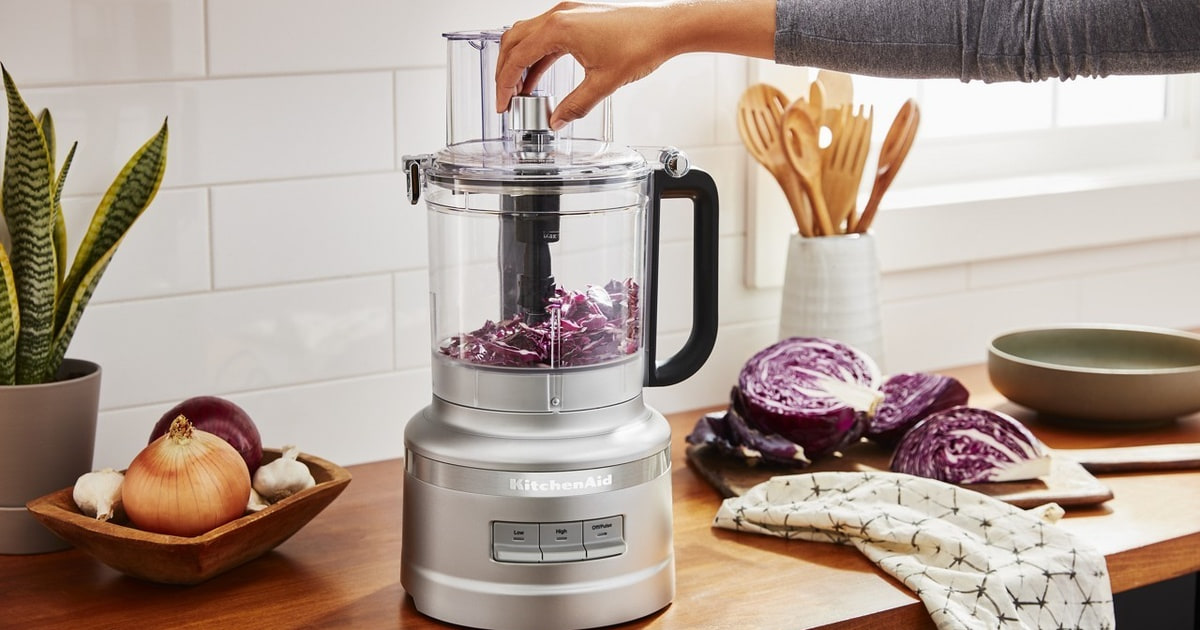
A food processor pays for its counter space in ten-minute chunks. It shreds a block of cheddar before your pan is hot. It turns a pile of onions, carrots and celery into an even dice while you read the next line of the recipe. It cuts cold butter into flour for pie dough in about four pulses, without warming it in your hands. If you cook from scratch most weeknights, or you batch-prep on Sundays, that time adds up fast.
No food processor is a joy to own, though. They're loud, they're tall, and every one of them turns into a bowl, a lid, a pusher and two or three sharp discs that have to go somewhere. Small jobs aren't their strength either — a quarter cup of parsley just skitters around the bowl. And while most can knead a soft dough, none of them replaces a stand mixer for stiff bread dough you plan to make every week.
So the right pick comes down to how much you cook, how much counter you can spare, and how many attachments you'll actually use. We looked at capacity, motor strength, feed chute width, cleanup and warranty across the machines our research surfaced. We think that the KitchenAid 13-Cup Food Processor is the best food processor for most people, and that the Cuisinart Elemental 13-Cup is the one to buy if you want a spiralizer and a dicer in the box.
Everything we recommend
Thirteen cups, easy setup, and blades that store in the bowl
A gentler motor, but more ways to slice, spiralize and dice

Fewer parts and less power, for cooks who chop now and then

Real power and a huge chute, if you've got the counter space
At a glance
| Product | Capacity | Wattage | Price | |
|---|---|---|---|---|
| Breville BFP810 Sous Chef 16 Cup FoodUpgrade pick | 16 Cup | 1450W | $499.95 |
| KitchenAid 13-Cup Food ProcessorTop pick | 13 Cup | — | $179.99 |
 | Ninja Professional Plus Kitchen SystemAlso in lineup | 8-Cup Bowl | 1400 Peak Watts | $169.97On sale |
| Hamilton Beach Food Processor & Vegetable ChopperBudget pick | 10 Cups | 450W | $50.30On sale |
 | Magimix CS 5200 XL Premium Multifunction RobotAlso consider | — | — | $900.82 |
| Cuisinart Elemental 13-Cup Food ProcessorRunner-up | 13-Cup | 550W | $299.99 |
How we picked
Capacity for real batches. We looked for bowls big enough to finish a job in one pass. Good Housekeeping Institute testing showed that processors under 8 cups gave uneven results on dips once batches grew, so we treated roughly 10 cups as the floor for a family kitchen.
Motor strength. Published reviews and manufacturer specs suggest a 600- to 720-watt motor handles nearly all home cooking, and Consumer Reports has found direct-drive designs hold blade speed better in dense mixtures. We favored machines with headroom for thick dips and raw root vegetables.
Feed chute width. A chute of about 3.5 inches or more spares you from quartering everything first. Serious Eats found Breville's 5.5-inch chute took whole tomatoes and onions, which is the clearest time saving in the category.
Cleanup and assembly. Epicurious found that dishwasher-safe blade assemblies cut roughly four minutes off cleanup versus hand-wash-only designs. We gave credit for latching lids, one-click bowls and any feature that keeps you from digging around a sharp blade at the sink.
Attachments and warranty. We counted what actually ships in the box rather than what's sold separately, and we read warranty terms closely. Motor coverage varies from a year or two up to 30 years, and it's a fair proxy for how a brand rates its own build.
Top pick
Thirteen cups, easy setup, and blades that store in the bowl
KitchenAid 13-Cup Food Processor
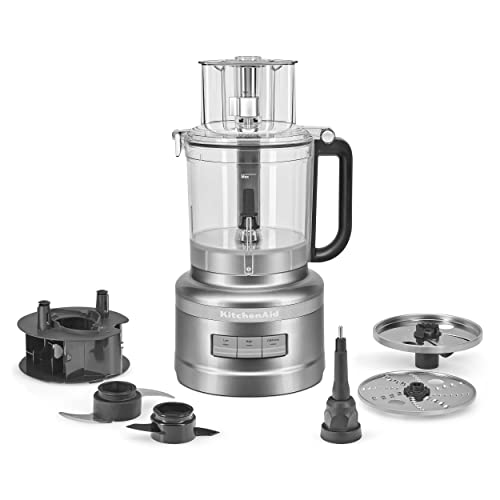
The KitchenAid 13-Cup is the one we'd hand to most home cooks. It's big enough for a family batch of soup base, the feed tube swallows whole tomatoes and potatoes, and the bowl clicks on without the twist-and-swear routine older processors are known for.
$179.99fromAmazonThirteen cups is the size most kitchens actually need. Good Housekeeping Institute testing found that processors under 8 cups turned out uneven hummus once a batch got past a cup of dried chickpeas, forcing you to run it again in halves. Thirteen cups clears that bar with room left over. You can shred a whole block of cheese, build a double batch of salsa, or prep vegetables for the week without stopping to empty the bowl.
The 3-in-1 feed tube cuts out most of the pre-cutting. KitchenAid sizes it for tomatoes, cucumbers, potatoes and the other awkward round things that usually need a knife first. That matters more than it sounds. Pre-cutting is the part of processor prep that eats your time and dirties a cutting board, and skipping it is the difference between grabbing the machine and deciding it isn't worth the trouble.
You can change slice thickness without shutting it down. The ExactSlice lever sits on the outside of the housing and adjusts from thick to thin while the machine runs. So you can start with thick potato rounds for a gratin and dial down to shaved fennel without pulling the lid, swapping a disc and washing anything in between. It's a small convenience you'll use constantly.
Setup and cleanup don't fight you. The bowl goes on with one click, no twisting, and the lid latches. All the blades and discs live in an in-bowl storage caddy, so you're not hunting through a drawer for the shredding disc. For a quick clean, KitchenAid says to add warm water and a drop or two of dish soap to the leak-resistant bowl and run it, which knocks the worst of the mess off the blade.
Flaws but not dealbreakers
It's too tall to hide. At more than 17 inches assembled, it won't slide under standard upper cabinets, so it either lives out on the counter or you break it down every time. That's true of nearly every full-size processor here, but it's worth knowing before you clear a spot.
KitchenAid doesn't publish a wattage for it. For chopping, shredding, slicing and soft doughs, published reviews and owner feedback don't flag it as underpowered. But if you plan to knead stiff dough or grind hard nuts week after week, a bigger, spec'd motor like the Breville's is the safer bet.
Runner-up
A gentler motor, but more ways to slice, spiralize and dice
Cuisinart Elemental 13-Cup Food Processor
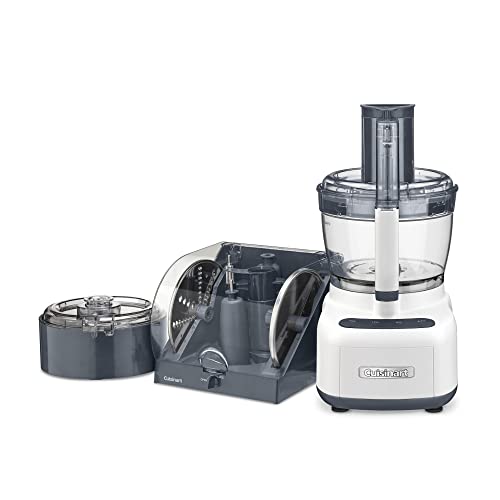
The Cuisinart Elemental 13-Cup matches our top pick on capacity and adds a spiralizer and a dicer. It's the pick if you want zucchini noodles and even cubes of potato without buying a second gadget, and you're not asking the motor to do heavy work.
$299.99fromAmazonIt comes with more cutting options than anything near it. Along with the usual chopping and mixing blade, you get a dough blade, small and large S blades, a spiralizer and a dicer. Spiralized squash and neatly diced onion are jobs most processors simply can't do. If you've been eyeing a separate spiralizer, this covers it and takes up no extra cabinet space.
It handles dips and spreads cleanly. Tom's Guide clocked the Elemental finishing a four-cup batch of hummus in under 90 seconds with no whole chickpeas left sitting at the base of the bowl. That's the failure mode that ruins homemade hummus — a smooth top layer hiding grit underneath. If dips and nut-based spreads are why you want a processor, this one earns its spot.
The wide-mouth feed tube comes with three pushers. Small, medium and large pushers let you match the opening to what you're feeding it, so a single carrot doesn't rattle sideways and a whole potato still fits. You get straighter slices and less waste at the end of each piece, and you skip most of the knife work before you start.
The controls are simple and the machine is quiet. It's a touch panel — high, low, off and pulse, lit in blue — instead of a row of stiff mechanical buttons. Owners consistently describe it as one of the calmer full-size processors to run, which matters if you're prepping early while someone's still asleep down the hall.
Flaws but not dealbreakers
The motor is rated at 550 peak watts, and peak isn't continuous. That's fine for vegetables, cheese, dips and soft dough. It's less reassuring for stiff bread dough or a long run through dense root vegetables, where a stronger motor holds its speed better. Keep batches moderate and it'll hold up.
More attachments mean more to wash and store. The spiralizer and dicer are the reason to buy this one, but they're also two more sharp assemblies to clean and find a home for. If you know you'd never use them, our top pick gives you the same bowl size with less clutter.
Budget pickOn sale
Fewer parts and less power, for cooks who chop now and then
Hamilton Beach Food Processor & Vegetable Chopper
The Hamilton Beach 10-Cup does the two jobs most people actually want — chopping and shredding — for a fraction of what the others cost. It's light, it's simple, and the built-in scraper spares you from prying the lid off mid-recipe.
$50.30fromAmazonList priceIt's fast at the everyday jobs. The Spruce Eats named it their top budget pick after it shredded 8 ounces of cheddar and finely chopped a whole onion in under 30 seconds each. That's the bulk of home processor work right there. If you bought a processor mainly to stop grating cheese by hand, the 450-watt motor is enough.
The built-in bowl scraper saves you the lid-off shuffle. Slide the lever side to side and it pushes food off the bowl wall, running or not. Anyone who's made pesto knows the routine: stop, unlock, scrape with a spatula, reassemble, repeat. This skips all of it, and it's the feature owners bring up most often.
It's small and light enough to put away. At about 6 pounds and 16 inches tall, you can lift it out of a lower cabinet one-handed and put it back after. That's a real advantage over the 20- and 30-pound machines here, which effectively become permanent counter residents.
Two speeds plus pulse give you enough control. Use high for hard vegetables and cheese, low for softer mixing, and pulse when you want a coarse chop instead of mush. The 10-cup bowl and wide feed chute mean you're still skipping most of the pre-cutting on a weeknight.
Flaws but not dealbreakers
You only get two attachments. There's a reversible slicing and shredding disc and a chopping and pureeing blade — no dough blade, no French fry disc, no mini bowl. For most people that covers it, but bakers who want to pulse pastry dough or knead in the bowl should look at the picks above.
The motor is the weakest here. Consumer Reports has found that motors bog down in dense mixtures like thick dips and raw root vegetables, and a 450-watt machine has the least headroom of anything on this list. Work in smaller batches and it's fine. Load it to the brim with raw beets and you'll hear it complain.
Upgrade pick
Real power and a huge chute, if you've got the counter space
Breville BFP810 Sous Chef 16 Cup Food
The Breville Sous Chef 16 is the machine for people who process a lot and hate pre-cutting. Its 5.5-inch chute takes whole tomatoes and onions, the 1450-watt induction motor doesn't flinch at dense loads, and the disc set covers jobs the others can't.
$499.95fromAmazonThe 5.5-inch feed chute changes how you prep. Serious Eats found it wide enough to take whole tomatoes, onions and most hard vegetables with no knife work first. The 3-in-1 chute narrows to 1.7 inches when you want a single carrot held straight. Over a big prep session, skipping the cutting board is the difference between twenty minutes and forty.
A 1450-watt direct-drive induction motor holds its speed under load. Consumer Reports has found that direct-drive machines keep blade speed steadier in heavy mixtures than belt-driven ones, which visibly drop RPM in thick dips and raw root vegetables. This is the pick if you shred pounds of cheese at a time, grind nuts into butter, or knead dough more than once in a while.
The attachment set is the deepest here. You get a 24-position adjustable slicer, a reversible shredding disc, a French fry disc, a micro-serrated S-blade, a dough blade, and a nested mini bowl and blade. The mini bowl matters more than it sounds — small jobs like a garlic-and-herb paste get lost in a 16-cup bowl and come out fine in the little one.
Breville backs the induction motor for 30 years. That's as long as any term in this category. Induction motors run cooler than the brush motors most processors use, which is why the brands that build them are comfortable warranting them for decades. If you want to buy one processor and stop thinking about it, that's the argument.
Flaws but not dealbreakers
It's the biggest and heaviest thing here. At over 30 pounds and nearly 18 inches tall, this isn't a machine you lift into a cabinet after brunch. Plan on giving it permanent counter space, and check that it clears your upper cabinets before you commit.
It's the most expensive unit in this guide. You're paying for power, the chute and the disc set. If you mostly chop vegetables and shred cheese in normal home quantities, our top pick does that job well and costs a fraction as much.
All those attachments need somewhere to live. Six discs and blades plus a mini bowl is a lot of sharp hardware. Breville includes storage, but it's another box on your counter or another shelf given up.
The Sous Chef 16 carries a 30-year warranty on its induction motor.
Who this is for
Buy a food processor if you cook from scratch and the knife work is what stops you. Weekly meal preppers, bakers who make pastry dough, and anyone making hummus or nut butters at home will use one constantly. Large families get the most out of it — a 13-cup bowl turns a mountain of vegetables into a bin of prepped mirepoix in one pass. If you cook for one or two and chop an onion twice a week, you'll probably resent the cleanup more than you enjoy the speed.
This guide covers full-size countertop processors for home kitchens. It doesn't cover manual hand-crank choppers, immersion blender attachments, or commercial machines. And it isn't a stand mixer replacement: most of these can knead a soft dough, but if you bake bread regularly, keep the mixer. If you already own a high-powered blender, know that the two aren't interchangeable — a blender purées liquids and a processor slices, shreds and chops dry food, and neither does the other's job well.
How we picked
We weighed five things against published reviews, manufacturer specs and owner feedback themes. Capacity: at least 10 cups for a family, since smaller bowls force you to process dips in multiple passes. Motor: enough torque to hold speed in thick mixtures, with direct-drive designs getting the benefit of the doubt. Feed chute: wide enough to take a whole tomato or potato, because pre-cutting is the step that makes people leave the machine in the cabinet. Cleanup: dishwasher-safe bowls and blades, latching lids and assembly that doesn't require a wrestling match. Attachments and warranty: what's included in the box, and how long the maker stands behind the motor.
Other food processors worth considering
If you want one that outlasts the kitchen: The Magimix CS 5200 XL Premium Multifunction Robot ($900.82) — The Magimix CS 5200 XL Premium is built around a commercial-style induction motor, and Magimix backs it for 30 years — as long as any term in the category. The company credits that to the motor running far cooler than the brush motors most competitors use, which is also why owners describe it as unusually quiet. It ships with nested bowls, so you can drop down to a small one for a garlic paste instead of chasing it around a big bowl. What you give up is convenience features: there's no adjustable slicer lever, no touch panel, and it costs as much as any machine here. It's a buy-it-once proposition, not a bargain.
The competition
This is what our research surfaced, not a survey of everything on the market. A machine landing here isn't necessarily bad — it just lost to a pick on capacity, precision or value for the kind of cooking most people do.
The Ninja Professional Plus Kitchen System ($169.97) — The Ninja Professional Plus Kitchen System is a blender first and a processor second. You get 1400 peak watts, an 8-cup Precision Processor bowl, five Auto-iQ preset programs, a dough function that folds up to 2 pounds in about 30 seconds, and two 24-ounce cups for smoothies. CNET rated it the top multi-use appliance for small kitchens, and that's the honest case for it: one footprint instead of two. But the processor bowl handles chopping and puréeing only — there's no slicing or shredding disc — and combo systems generally don't match dedicated processors on fine, even chopping. If counter space is your binding constraint and you'd use the blender daily, it's a reasonable trade. If you want neat slices and shredded cheese, it isn't the machine.
Care and cleaning
Rinse the bowl and blade right after you use them. Dried hummus and cheese fat set like glue, and Epicurious found that dishwasher-safe blade assemblies cut cleanup by about four minutes per use compared with hand-wash-only designs — a gap that mostly disappears if you let everything sit in the sink. Wash discs with the sharp edge facing away from your hand, and store them in the machine's caddy rather than loose in a drawer. Wipe the motor base with a damp cloth; never put it in water. If the machine won't start, the safety interlock is usually the culprit — reseat the bowl and make sure the lid is latched all the way, rather than forcing anything. And don't run it continuously past the maker's stated limit, since heat is what kills these motors.
Questions we get
What's the difference between a food processor and a blender?
A blender uses a narrow jar and a vortex to purée liquids — smoothies, soups, sauces. A food processor uses a wide, shallow bowl and interchangeable discs to chop, slice, shred and knead mostly dry food. Put a pound of carrots in a blender and you'll get uneven mush at the bottom and whole chunks on top. They overlap on dips and pesto, and almost nowhere else.
How many cups do I need for a family of four?
Ten to 13 cups covers nearly everything a family of four cooks. Good Housekeeping Institute testing found that processors under 8 cups produced uneven hummus once a batch went past a cup of dried chickpeas, which means a second pass. Go to 16 cups only if you regularly cook for a crowd or freeze big batches — the bigger bowl also makes small jobs harder.
Can a food processor replace a stand mixer for bread dough?
Not really. Most full-size processors include a dough blade and can bring together a soft dough in under a minute, which is genuinely useful for pizza or focaccia. But stiff, high-hydration bread dough strains the motor, and processors knead by brute force rather than the slow gluten development a mixer gives you. If you bake bread weekly, keep the mixer.
What's the best food processor for pie crust and pastry dough?
Any of our picks will do it, since the trick is pulsing rather than power — you want pea-sized bits of cold butter, not a paste. The Breville Sous Chef 16 has an edge because its bigger bowl keeps a double-crust batch from packing against the walls, and its micro-serrated blade cuts cleanly through cold fat. Keep the butter and water very cold, and stop pulsing sooner than feels right.
Do I need a food processor if I already have a high-powered blender?
If you only make smoothies, soups and purées, no. If you want sliced potatoes, shredded cheese, evenly diced onion or pastry dough, yes — a blender can't do any of those well. The clearest test is whether your knife work is the slow part of your cooking. If it is, the processor earns its space.
How long do food processors usually last?
A well-treated mid-range machine typically runs for many years of normal home use, and heat is what finally kills the motor. Overloading the bowl and running it continuously are the two habits that shorten its life fastest. Warranty terms are a useful signal: brands using induction motors, like Breville and Magimix, cover them for 30 years, while most brush-motor machines carry far shorter terms.
Why you should trust us
For this guide:
- We read published testing and reviews from America's Test Kitchen, Wirecutter, Serious Eats, Consumer Reports, Good Housekeeping Institute, Epicurious, Tom's Guide, The Spruce Eats and CNET to see which machines came out ahead and why.
- We compared manufacturer specifications for every model here — bowl capacity, motor type and wattage, feed chute width, included attachments and warranty terms — rather than relying on marketing summaries.
- We read owner feedback across these listings for recurring themes about noise, cleanup, assembly and long-term motor reliability.
- We read owner reviews on every listing, weighted toward the critical ones, because that is where the recurring failures show up.
- We have a systematic way of automatically fetching the latest prices, so the numbers on this page stay current.
- This is a research-focused guide, so the team may not own every product listed — though we often do own the top winners, which gives us extra context for the recommendations.
- We don't accept free products, and the retailer commission never changes which product we recommend.
Sources
Best Food Processors of 2026 — Wirecutter, Wirecutter (NYT)
The Best Food Processors, Tested in Our Kitchen — Serious Eats, Serious Eats
Best Food Processors Equipment Review — America's Test Kitchen, America's Test Kitchen
Best Food Processors Tested by the Good Housekeeping Institute, Good Housekeeping Institute
Best Food Processors Tested in 2026 — CNET, CNET
Food Processor Ratings, Reviews & Comparisons — Consumer Reports, Consumer Reports
Best Food Processors of 2026, Tested and Reviewed — Tom's Guide, Tom's Guide
The Best Food Processors We Tested — The Spruce Eats, The Spruce Eats
The Best Food Processors for Home Cooks — Epicurious, Epicurious
Cuisinart Custom 14 DFP-14BCWN — Full Product Specifications, Cuisinart (Manufacturer)
Amazon product listings and owner reviews for all 6 products
Manufacturer specification pages for each product
Some passages in this guide may be paraphrased with AI help. Prices are refreshed automatically.
More like this.
Continue exploring appliances reviews and recommendations.

The Best Food Dehydrators
A dehydrator is a slow appliance that quietly saves you money. It pulls 80 to 95 percent of the moisture out of food, which drops water activity below the…

The Best Dry Dog Food
Your dog eats the same thing twice a day, every day, for years. That makes dry food one of the few purchases where consistency matters more than novelty.…

The Best Baby Food Makers
Making your own baby food sounds ambitious until you do it once. You steam a sweet potato, blend it smooth, spoon it into a tray, and freeze it. That's…

The Best Probiotics and Fermented Foods for Gut Health
Your gut doesn't care much about marketing. It responds to what you feed it, most days, over months. So the useful question isn't which probiotic is…

The Best Dry Dog Food
Feeding a dog is the chore you do twice a day, every day, for a decade or more. The bag you pick shapes your dog's stools, their coat, their energy at the…

The Best Dry Dog Food
Dog food is the one purchase you make over and over, and your dog eats nothing else. So the small stuff compounds. A bag that's a little too rich can mean…