The Best Bread Machines
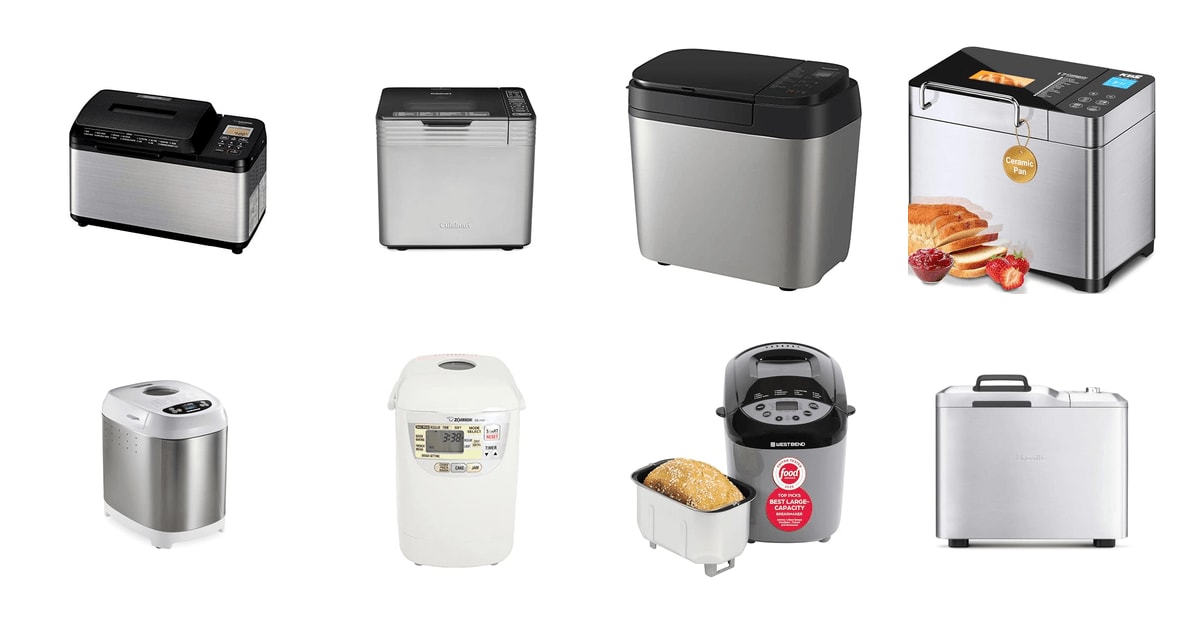
Fresh bread from a machine is really about mornings. You load flour, water, salt and yeast the night before, set the timer, and wake up to a warm loaf and a kitchen that smells like a bakery. Active work is about five minutes. You also know exactly what's in the bread, which matters if you're avoiding preservatives or watching sodium. A good machine does this the same way every time, and you never have to learn to knead or shape anything.
No bread machine makes true artisan bread. The pan gives you a tall rectangle, the kneading paddle leaves a hole in the bottom of every loaf, and you won't get the open crumb or crackly ear of a Dutch-oven sourdough. Homemade loaves also go stale in a couple of days, because there's nothing in them to stop it. And most machines heat only from below, so the top of the loaf comes out paler than the sides. That's the category, not a flaw in one model.
So the question isn't whether a machine beats a skilled baker. It's which one bakes you a dependable sandwich loaf with the least fuss, in a size that suits your household. We compared heating designs, program lists and capacities, and read what owners say after a year of weekly baking. We think that the Zojirushi BB-PDC20BA Home Bakery Virtuoso Plus is the best bread machine for most people, and that the Neretva 15-in-1 is the one to buy if you want dual-heater crust for a lot less.
Everything we recommend

Even crust all the way around, if you bake often
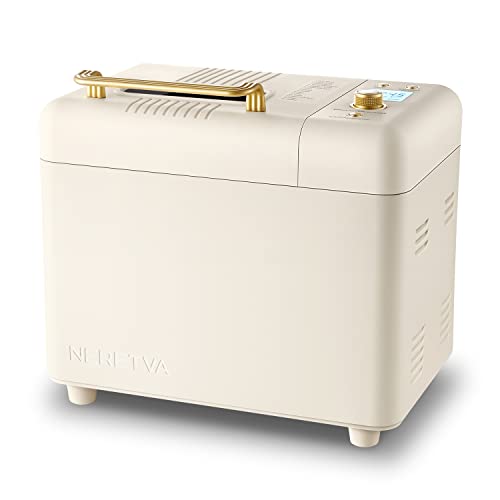
The same dual-heater trick, for a fraction of the cost

A plain, dependable everyday loaf with no extras

A one-pound horizontal loaf sized for one or two people
At a glance
| Product | Capacity | Wattage | Price | |
|---|---|---|---|---|
| Zojirushi BB-PDC20BA Home Bakery Virtuoso Plus BreadmakerTop pick | 2 lb | 700W | $454 |
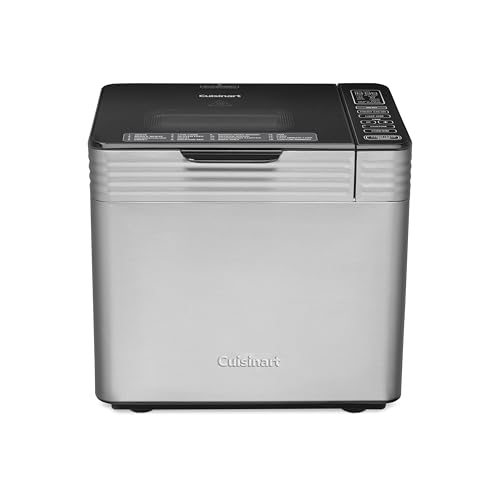 | Cuisinart Bread Maker MachineAlso in lineup | Up to 2 lb | — | $231.34On sale |
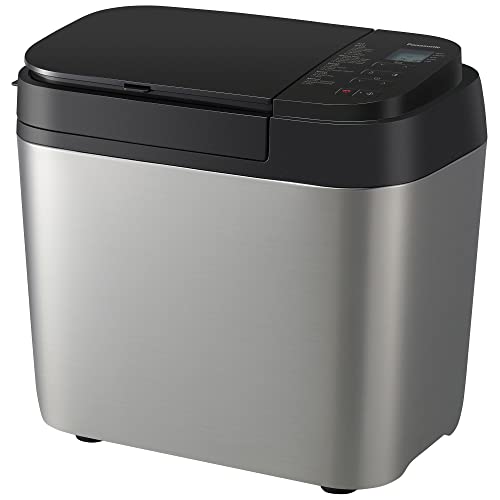 | Panasonic Bread MachineAlso consider | — | — | $294.71On sale |
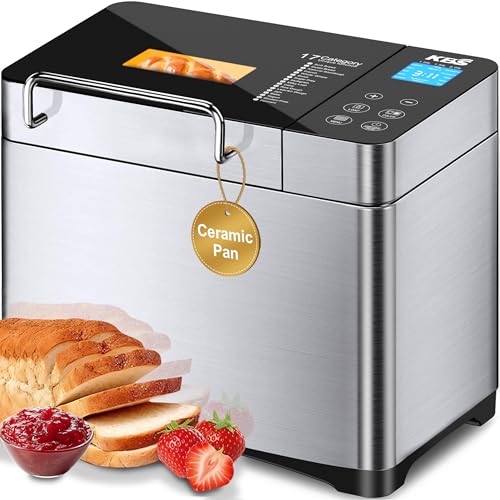 | KBS Pro 710W 2LB Bread MakerAlso consider | 2 lb | 710W | $135.99On sale |
| Hamilton Beach Digital Electric Bread Maker MachineBudget pick | 2 lbs | — | $100.05 |
| Zojirushi BB-HAC10 Home Bakery 1-Pound-Loaf Programmable MiniAlso great | 1 lb | 450W | $202.13On sale |
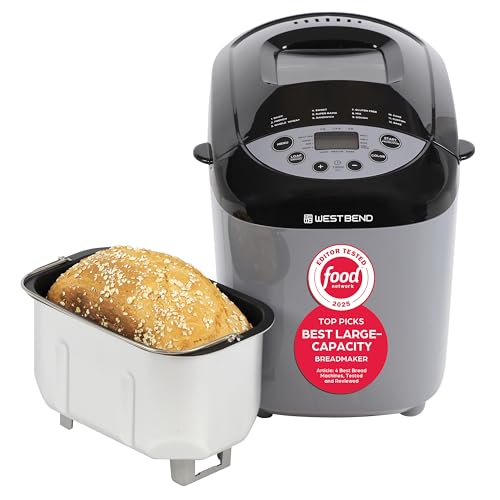 | West Bend Hi-Rise Bread Maker Machine ProgrammableAlso consider | 3 lb | — | $105.99On sale |
 | Breville BBM800XL Custom Loaf Bread Maker MachineAlso in lineup | — | — | $373.13On sale |
| Neretva Bread MachineRunner-up | 2.2 lb | 600W | $149.99On sale |
How we picked
Heating design. We treated the heating configuration as the biggest divider in the category, since published reviews and owner photos both keep showing pale tops on single-element machines. Dual heaters ranked highest, convection next, a static bottom element last.
Loaf size and shape. We matched capacity to household size using the manufacturer specs: 1 pound for one or two people, 2 pounds for three or four, 3 pounds beyond that. Horizontal pans got credit for producing slices that fit a normal sandwich.
Programs worth having. We counted the cycles most households run — basic, whole wheat, gluten-free, dough only and a rapid setting — instead of rewarding the longest program list. A dedicated gluten-free cycle mattered because that dough needs its own mixing and rising sequence.
Hands-off features. We looked for delay timers of at least twelve hours and automatic fruit-and-nut dispensers, which are the two features that turn a bread machine into something you set and walk away from.
Cleanup and materials. We compared pan coatings and paddle designs, giving weight to ceramic pans for buyers avoiding PTFE and to collapsible paddles that leave a smaller hole. Owner feedback on dough drying in the paddle shaft informed the care advice below.
Top pick
Even crust all the way around, if you bake often
Zojirushi BB-PDC20BA Home Bakery Virtuoso Plus Breadmaker
This is the machine that browns the top of the loaf as well as the bottom, thanks to heating elements in both the base and the lid. Fifteen programs cover white, whole wheat, multigrain, gluten-free and a few restricted diets, so you rarely have to improvise.
$454fromAmazonTwo heaters are the whole argument here. Nearly every bread machine puts a single element under the pan, which is why so many loaves come out with a pale, soft top. Zojirushi adds a second element inside the lid, so heat wraps the loaf from every side. Owners who've owned other machines notice the difference immediately: the top crust looks and crunches like the bottom. If you serve bread to other people, that's the upgrade you'll actually see.
Two kneading blades develop the dough more thoroughly. Most machines drive one paddle, which leaves pockets of under-worked flour along the pan walls. The Virtuoso Plus turns a pair of them, and the payoff is a tighter, more even crumb that holds together when you slice it thin. It also handles heavier whole-grain doughs without the stalling and dense corners you get from a single blade.
Fifteen programs cover the diets people actually bake for. Along with the basics, you get Multigrain, Whole Wheat, Rapid Whole Wheat, Gluten Free, Salt Free, Sugar Free and Vegan. Gluten-free baking is the one that matters most, since that dough needs its own mixing and rising sequence rather than a wheat cycle. If someone in your house is on a restricted diet, you can just pick a setting instead of hunting for workarounds.
You don't have to plan a whole day around it. The rapid courses turn out a white or whole wheat loaf in two hours and twenty-five minutes, which is fast enough for a same-day dinner decision. The lid has a key code printed on it, so you're not digging out the manual to remember which number is French. The LCD is large and readable from across the counter.
Flaws but not dealbreakers
There's no automatic dispenser, which is odd on a machine this expensive. Cheaper machines here drop raisins and nuts in for you at the right moment. With this one, you wait for the beep and add them by hand. That's fine for plain sandwich bread and mildly annoying for anything with inclusions, especially if you were planning to run it overnight.
It's big and heavy. At around 24 pounds and roughly a foot and a half wide, it claims real counter space and it isn't something you'll cheerfully lift into an upper cabinet. In a small kitchen, plan on leaving it out permanently or picking something smaller.
Runner-upOn sale
The same dual-heater trick, for a fraction of the cost
Neretva Bread Machine
The Neretva is the only other machine here with heating elements at both the top and bottom of the pan, and it costs a small share of what our top pick does. You also get a ceramic pan, an automatic nut dispenser and a 2.2-pound capacity.
$149.99fromAmazonList priceYou get the even-browning feature without the flagship price. Dual heaters at the bottom and top of the pan are the single biggest quality difference in this category, and this is the cheap way in. The crust comes out consistent across the top, not just the sides. If you looked at our top pick and winced, start here instead.
The ceramic pan is a real draw if you've moved away from nonstick coatings. The pan and paddle are ceramic rather than PTFE-based, and they release the loaf without much coaxing. Plenty of people have swapped out their skillets and pots and assumed bread machines were a lost cause. They aren't. Cleanup is a rinse and a wipe, as long as you don't let dough dry in the shaft.
Fifteen programs stretch past bread. Basic, quick, French, sweet, whole wheat, gluten-free, sugarless, cake, knead, dough, jam, yogurt and defrost, plus three crust shades and two loaf sizes. The yogurt and jam cycles sound like filler until the week you use them. Sourdough is on the menu too, though you still need to keep a starter alive yourself.
It's quiet and patient enough for overnight baking. The motor is rated under 40 decibels during kneading, so it won't wake anyone through a wall. The 15-hour delay timer is one of the longest here, which gives you room to load it after dinner and still have bread at breakfast. Just keep perishables like eggs and milk out of delayed recipes.
Flaws but not dealbreakers
The brand doesn't have decades of service history behind it. Zojirushi, Breville and Panasonic have long track records and easy parts support. Neretva doesn't yet, and owner reports on longevity are mixed after heavy use. If you want a machine you'll hand down, that's a genuine reason to spend more.
The 600-watt motor is adequate, not strong. Stiff whole-grain and low-hydration doughs work it harder than the more powerful machines here, and a few owners report the paddle struggling with very dry dough. Adding a splash more water usually solves it.
Some of the fifteen programs overlap. A few settings produce results close enough that you'll never tell them apart, so treat the number as marketing rather than fifteen distinct tools.
Budget pick
A plain, dependable everyday loaf with no extras
Hamilton Beach Digital Electric Bread Maker Machine
The Hamilton Beach 29987 does the three things most people want: add ingredients, pick a cycle, press start. Fourteen settings include a dedicated gluten-free program and three express cycles, and it's the most approachable machine here for a first-time buyer.
$100.05fromAmazonThe whole machine is built around not confusing you. Three steps, one button, done. The control panel doesn't bury the basics under submenus, and the manual is short. If you've been talked out of bread machines by a friend's complicated one, this is the one to start with.
Fourteen settings hit everything a normal week needs. Basic, French, Gluten-Free, Whole Grain, Sweet, Dough, Cake, Jam and Artisan Dough, plus express cycles at 1, 1.5 and 2 pounds. The express settings matter more than they sound: a same-day loaf when you forgot to plan is the feature you'll use most.
You can size the loaf to the week. Three loaf sizes and three crust shades mean a small loaf for two people and a full 2-pound loaf when there's company. Baking down in a bigger machine works fine; you can't go the other way.
It's light and easy to store. At a bit over nine pounds, you can lift it out of a cabinet with one hand and put it away after baking. The pan and paddle pop out for washing, which keeps the cleanup honest at about a minute.
Flaws but not dealbreakers
The top of the loaf comes out pale. One static element at the bottom, no fan, no lid heater. Owners consistently mention a soft, light-colored top even on the dark crust setting. It toasts fine and it tastes fine, but it doesn't look like the bread in the photos.
No automatic dispenser, so you're on paddle duty. For raisin or walnut bread you need to be within earshot when it beeps. If you bake add-in loaves regularly, that alone is a reason to move up.
The build feels like what it costs. More plastic, more flex in the lid, a louder knead cycle. It's fine on a shelf and less lovely on display.
Also greatOn sale
A one-pound horizontal loaf sized for one or two people
Zojirushi BB-HAC10 Home Bakery 1-Pound-Loaf Programmable Mini
The Zojirushi BB-HAC10 bakes a 1-pound loaf in a horizontal pan, which is the right amount of bread for a couple eating fresh a few times a week. It's small enough to leave on the counter and built to the same standard as the bigger Zojirushi.
$202.13fromAmazonList priceA 2-pound loaf is too much bread for two people. That's the real problem this solves. A 1-pound loaf gives you eight to ten slices, which you'll finish before it stales instead of throwing out the heel end on Thursday. If you live alone or cook for two, buying smaller isn't a compromise.
The horizontal pan makes a better-looking loaf. Most machines bake a tall, narrow tower that produces oddly shaped slices. This one lies down, so the shape is closer to a bakery loaf and sandwiches look normal. It's a small thing that you notice at every meal.
It's compact enough to keep out. Roughly eight inches wide with a carrying handle, so it tucks between the toaster and the wall rather than taking over a counter. A machine you can see is a machine you'll actually use.
You still get the useful extras. A 13-hour delay timer, an LCD panel, a viewing window and cycles for cookie and pasta dough plus fresh fruit jam. The quick-bake cycle covers same-day loaves. It's a small machine, not a stripped one.
Flaws but not dealbreakers
You pay Zojirushi money for a small machine. It costs more than several 2-pound machines here, and more than some of them combined. You're buying the build quality and the footprint, not the capacity.
One pound is a hard ceiling. Three or more people will run out of bread mid-week, and you can't bake up. Households of four should look at a 2-pound machine instead.
The program list is shorter than the flagship's. No salt-free, sugar-free or vegan courses, and no dedicated gluten-free cycle. If someone in the house has a restricted diet, this isn't the machine.
The BB-HAC10 comes with a one-year warranty.
Who this is for
Buy one of these if you eat sandwich bread most days and would rather control the ingredients than read a label. The math works out fastest for people who bake at least once a week; below that, the machine mostly takes up counter space. It's also the easiest path for anyone baking gluten-free, since a dedicated cycle removes most of the guesswork. And if you've been curious about baking but put off by kneading and shaping, this is a genuinely low-stakes way in.
Skip these if what you want is a boule with an open crumb and a blistered crust — that's an oven and a Dutch oven, not a machine, though every model here has a dough-only mode that handles the mixing and first rise for you. This guide covers countertop bread machines for home use, from 1 to 3 pounds. It doesn't cover stand mixers, commercial equipment, or replacement pans and paddles.
How we picked
Heating design: we ranked dual heaters above convection and convection above a single static bottom element, because that's what determines whether the top of your loaf browns. Capacity: we matched loaf size to household — 1 pound for one or two people, 2 pounds for three or four, 3 pounds for a crowd — and gave credit to horizontal pans that produce normal-shaped slices. Programs: we cared about basic, whole wheat, a real gluten-free cycle, dough only and a rapid bake, not the total count. Hands-off use: a delay timer of twelve hours or more, and an automatic dispenser if you bake with nuts or dried fruit. Cleanup: removable pans, ceramic or well-reviewed nonstick coatings, and paddles that come out without a fight.
Other bread machines worth considering
If you want a ceramic pan and a dispenser in one machine: The KBS Pro 710W 2LB Bread Maker ($135.99) — The KBS Pro packs in more features than anything else near its price: a ceramic pan and paddle instead of Teflon, an automatic stainless dispenser for nuts and dried fruit, a 710-watt motor that beats the 600-watt norm, and seventeen programs including sourdough, yogurt and jam. It comes with a stack of recipes, which makes it unusually friendly for a first machine. What you give up is the dual-heater crust — 360-degree convection browns more evenly than a static element, but not as evenly as heat from the lid. The brand is also newer than Zojirushi or Breville, so long-term reliability is less proven.
If you want the machine to make the decisions: The Panasonic Bread Machine ($294.71) — The Panasonic SD-R2550 is the most automated machine here. One sensor reads the dough temperature and another reads the room, and the machine adjusts rest and rise time on its own — so a cold January kitchen and a hot July one produce a similar loaf without you touching a setting. Twenty presets is the longest list in this lineup, covering brioche, sourdough, cakes, pizza and pasta dough, and the shaped kneading blade works with ribs in the pan to handle stiff doughs. It costs nearly as much as our top pick and still heats from the bottom only, so the crust doesn't match. That's the trade: consistency over browning.
If you're feeding five or six people: The West Bend Hi-Rise Bread Maker Machine Programmable ($105.99) — The West Bend Hi-Rise goes up to 3 pounds, which is about as large as residential bread machines get, and it steps down to 2 or 2.5 pounds when you need less. The horizontal pan is the underrated part: loaves come out shaped like store bread, so they fit a standard bread bag without you sawing off an end. Dual knead blades give it a lighter, higher rise than single-blade machines at this size. Twelve programs is a short list, there's no dispenser, and the service network is smaller than Hamilton Beach's. But for pure volume per dollar, nothing else here is close.
The competition
These are the machines our research surfaced alongside the picks, not a survey of everything on the market. Both are capable, and both lost to something specific rather than being bad.
The Breville BBM800XL Custom Loaf Bread Maker Machine ($373.13) — The Breville BBM800XL is the most customizable machine here, and if you're the kind of baker who iterates on a formula, it's tempting. Nine custom slots store your own knead durations, rise times and bake temperatures, so a recipe you spent months tuning becomes one button. The collapsible paddle folds flat before baking and leaves a dent rather than a tunnel in the finished loaf, which is the neatest solution to the paddle-hole problem in this lineup. It also has an automatic fruit-and-nut dispenser and sixty minutes of backup power for outages. But it's nearly as expensive as our top pick with a single bottom element, so the top crust browns less evenly, and it takes up a lot of counter. Buy it if custom programs and the paddle design are worth more to you than crust.
The Cuisinart Bread Maker Machine ($231.34) — The Cuisinart CBK-210 is a solid mid-range machine from a brand you can get parts and service for almost anywhere. A convection fan circulates air around the loaf, which browns more evenly than a static element even if it can't match a lid heater, and there's an automatic fruit-and-nut dispenser plus sixteen programs and three loaf sizes up to 2 pounds. The problem is where it lands: close enough to better machines that the value case gets thin, and the fan is audibly noisy during the bake. It's a reasonable pick if Cuisinart's support network and easy replacement parts are what you're optimizing for.
Care and maintenance
Wash the pan and paddle by hand as soon as the loaf comes out, while the dough residue is still soft — don't submerge the pan or let water sit around the drive shaft, since that's where seals fail first. Use the hook tool to pull a stuck paddle out of the loaf rather than digging with a knife. Ceramic pans are easy to clean but chip if you knock them against the sink, so set them down gently. Even on machines with a dispenser, add sticky mix-ins like dried cranberries or candied ginger by hand at the second-knead beep, because they clump. And plan for a short shelf life: slice the cooled loaf, freeze it in a bag, and toast slices straight from frozen. Never refrigerate homemade bread — it stales faster there than on the counter.
Questions we get
Is a bread machine actually worth buying?
For everyday sandwich bread, yes. Active time drops to about five minutes, you control every ingredient, and the results are consistent without any of the skill hand-baking demands. If you bake more than a few times a month, it earns its counter space quickly. If you bake twice a year, it won't.
Can you make sourdough in a bread machine?
Yes, with caveats. Machines with a sourdough program, like the KBS Pro and the Neretva, use longer rise times suited to a wild-yeast starter — but you still have to keep the starter alive yourself. You'll get a fully baked sourdough loaf in the usual machine rectangle. For an open crumb and a crackly ear, use dough-only mode, then shape and bake it in a Dutch oven.
What size machine do I need?
Match it to your household. A 1-pound loaf gives you eight to ten slices, right for one or two people. A 2-pound machine suits three or four, and the 3-pound West Bend makes sense for five or more. Most machines let you bake a smaller loaf than their maximum, so sizing up buys flexibility; sizing down doesn't.
Are these safe for celiac baking?
Only if the machine has a dedicated gluten-free program and you use it exclusively for gluten-free baking. That cycle uses a different mixing and rising sequence, since gluten-free dough doesn't need the same kneading development — run it on the basic setting and you'll get a dense brick. A machine that also bakes wheat bread holds trace gluten in the paddle mechanism and pan seam, so a dedicated machine is the safe approach.
Why is there a hole in the bottom of my loaf?
That's the kneading paddle. It stays in the pan through baking, and the dough rises around it. Every bread machine does this — the size just varies, and the Breville's collapsible paddle leaves the smallest divot here. If it bothers you, use dough-only mode, pull the paddle out, put the dough back and run the bake stage.
Can I just use it to make dough and bake in the oven?
Yes, and it's a great way to work. Every machine here has a dough-only mode that kneads and proofs, then stops. Shape the dough by hand, let it proof another 30 to 60 minutes, and bake it in a hot oven with steam for the first stretch. You get machine convenience with oven crust, which is the right approach for focaccia, enriched doughs and anything where shape matters.
Why you should trust us
For this guide:
- We read published reviews and manufacturer specifications for all nine machines, and compared heating designs, program lists, pan materials and loaf capacities side by side.
- We went through owner feedback looking for repeat complaints — pale tops, clumping dispensers, paddles stuck in the loaf — rather than isolated bad luck.
- We carried over the findings from the previous version of this guide and rechecked them against each product's current listing details.
- We read owner reviews on every listing, weighted toward the critical ones, because that is where the recurring failures show up.
- We have a systematic way of automatically fetching the latest prices, so the numbers on this page stay current.
- This is a research-focused guide, so the team may not own every product listed — though we often do own the top winners, which gives us extra context for the recommendations.
- We don't accept free products, and the retailer commission never changes which product we recommend.
Sources
The Best Bread Machines — Wirecutter, New York Times, Wirecutter
Best Bread Machines of 2026 — Good Housekeeping, Good Housekeeping
Best Bread Machines Tested and Reviewed — Serious Eats, Serious Eats
Bread Machine Reviews and Ratings — Cook's Illustrated, Cook's Illustrated / America's Test Kitchen
Best Bread Makers 2026 — Tom's Guide, Tom's Guide
Amazon product listings and owner reviews for all 9 products
Manufacturer specification pages for each product
Some passages in this guide may be paraphrased with AI help. Prices are refreshed automatically.
More like this.
Continue exploring appliances reviews and recommendations.

The Best Bread Machines
A bread machine turns baking into a chore you can ignore. You dump in flour, water, yeast, salt and a little oil, press a button, and walk away. Three…

The Best Bread Machines
A bread machine earns its counter space by removing every step you don't enjoy. You dump in flour, water, salt and yeast, press a button, and walk away.…

The Best Bread Makers
A bread maker earns its counter space by making one thing easy: a warm loaf you didn't have to think about. You dump in flour, water, salt, and yeast,…

The Best Espresso Machines for Home Baristas
Good espresso at home comes down to three things happening at once: water at the right temperature, pressure that holds steady through the shot, and…

The Best Nespresso Machines and Accessories
A pod machine earns its counter space by being faster than your patience. You want coffee before you've finished finding your keys, and you don't want to…

The Best Portable Washing Machines for Apartments
If your apartment has no laundry hookups, you already know the drill. You haul a bag down three flights, feed quarters into a machine somebody else just…