The Best Bread Machines
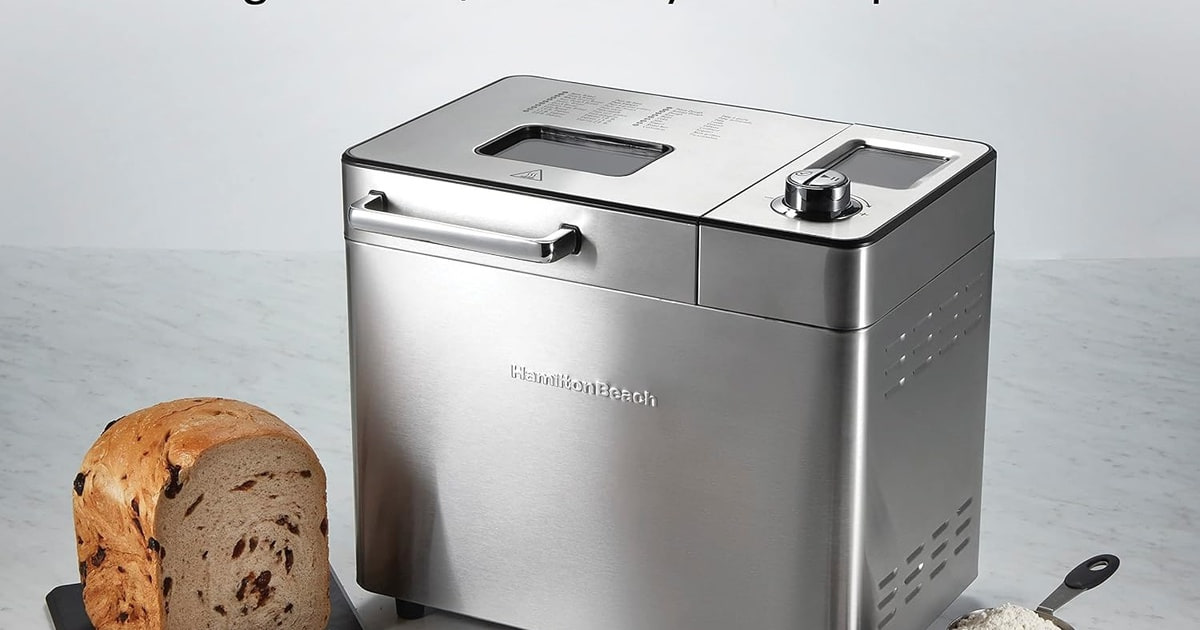
A bread machine earns its counter space by removing every step you don't enjoy. You dump in flour, water, salt and yeast, press a button, and walk away. No kneading, no proofing box, no watching the oven. The reward shows up three or four hours later: a warm loaf with a short ingredient list you wrote yourself. For gluten-free households, that control isn't a nice-to-have. It's the whole reason the machine exists.
Here's the honest part. No bread machine makes a loaf that looks like the one from a good bakery. The pans are tall and boxy, so your slices come out square and oddly proportioned. Nearly every machine leaves a hole in the bottom where the paddle sat. Crusts run softer than oven-baked bread because there's no steam and no stone. And the kneading cycle is loud enough that you'll hear it from the next room. These are category-wide limits, not defects.
What separates a great machine from a mediocre one is consistency across cycles and how well it handles dough that isn't plain white bread. Whole wheat, gluten-free and sourdough all ask more of the motor and the heating element. We think that the Zojirushi Home Bakery Virtuoso Plus is the best bread machine for most people, and that the Breville Custom Loaf is the one to buy if you want the cleanest-looking loaf bottom and room for a bigger bake.
Everything we recommend
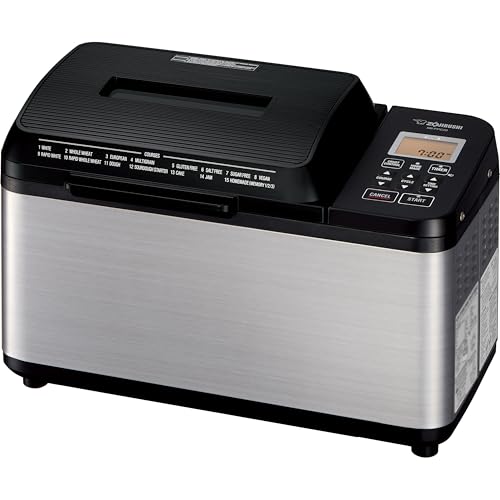
Even browning and the widest program list, at a real cost

A nearly seamless loaf bottom and room for a bigger bake
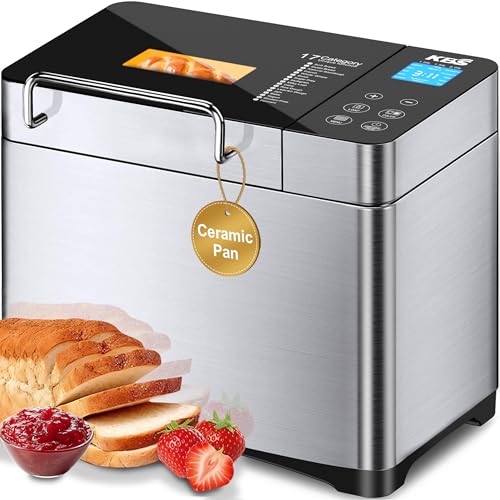
Most of the features for a fraction of the outlay
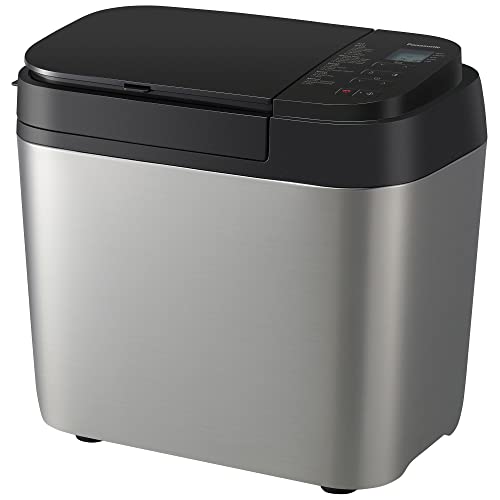
The one to get if gluten-free bread is the point

Zojirushi quality in a footprint that fits a small kitchen
Prices as of Oct 27, 8:28 AM PT · Details
At a glance
| Product | Capacity | Wattage | Price | |
|---|---|---|---|---|
| Zojirushi BB-PPC20BA Home Bakery Virtuoso Plus BreadmakerTop pick | 2 lb | — | $499.95 |
| Breville BBM800XL Custom Loaf Bread Maker MachineRunner-up | — | — | $399.95 |
| Panasonic Bread MachineAlso great | — | — | $257.21 |
| Zojirushi Bb HAC10 Home Bakery Mini BreadmakerAlso great | 1 lb | 450W | $293.97 |
| KBS Pro 710W 2.2LB Bread MakerBudget pick | 2.2 LB | 710W | $139.98 |
 | Hamilton Beach Premium Dough & Bread MakerAlso consider | 1/1.5/2 lb | — | $177.45 |
Prices as of Oct 27, 8:28 AM PT · Details
How we picked
Even baking. We looked for evidence of consistent browning across the whole loaf, not just the bottom. Published testing from America's Test Kitchen and Wirecutter consistently separated dual-element machines from single-element ones on this point.
Kneading power. Whole-grain and gluten-free doughs are stiff, and weak motors leave them under-developed. We favored machines at or above 600 watts and gave extra credit to dual-paddle designs that reach the corners of a full-size pan.
Program range. We compared preset lists across spec sheets, prioritizing gluten-free, whole wheat and dough cycles over novelty settings. A machine needed a real gluten-free program — slower kneading and longer rise — not just a relabeled basic cycle.
Hands-off operation. A delay timer of 13 hours or more turns a bread machine into an overnight appliance, and an automatic dispenser means add-ins go in without you. We treated both as meaningful differentiators.
Longevity signals. We weighed Consumer Reports ownership data on multi-year use alongside recurring themes in owner feedback about motors, pan coatings and manufacturer support.
Top pick
Even browning and the widest program list, at a real cost
Zojirushi BB-PPC20BA Home Bakery Virtuoso Plus Breadmaker
The Virtuoso Plus has two heating elements and two kneading paddles, which is why its loaves brown evenly on every side instead of just the bottom. Fifteen preset programs cover everything from gluten-free to sourdough starter, plus three memory slots for your own recipes.
$499.95fromAmazonPrices as of Oct 27, 8:28 AM PT · Details
The second heating element in the lid is the whole argument for this machine. Most bread makers heat only from below, so the top of the loaf pales while the bottom darkens. America's Test Kitchen credited Zojirushi's dual elements and dual paddles for producing more evenly browned crusts than any single-paddle competitor it tested. Wirecutter found the same thing: even browning on all four sides, which no single-paddle machine in its group managed.
Two paddles matter more than they sound like they should. A single paddle in a 2-pound pan leaves the corners under-kneaded, and you taste it as a dense streak near the ends. The Virtuoso Plus runs a horizontal pan with a paddle at each end, so the dough gets worked evenly across its full length. That's the difference between a loaf that slices well all the way through and one you eat around.
The program list is the broadest here. White, whole wheat, European, multigrain, gluten-free, salt-free, sugar-free, vegan, two rapid cycles, dough, sourdough starter, cake and jam — CNET counted fifteen and called it the widest single-machine library in its roundup. Three homemade memory settings let you change the knead, rise and bake times and save the result. If you're the sort of person who tinkers with hydration, that's the feature you'll actually use.
Zojirushi machines tend to stick around. Consumer Reports found that more than two-thirds of bread maker owners still used their machine weekly after five years, with Zojirushi and Panasonic accounting for most of the reported seven-year-plus lifespans. Owner feedback here echoes that — people replacing decade-old Zojirushis with newer ones rather than switching brands. This version also drops PFAS and BPA from every food-contact surface, which is worth something if that's on your mind.
Flaws but not dealbreakers
It's the most expensive machine here by a wide margin, and it skips a fruit-and-nut dispenser that much cheaper models include. You'll get a beep partway through the cycle and have to add your raisins by hand. Owners who want hands-off raisin bread find that annoying.
The homemade memory settings sound more flexible than they are. You can adjust knead, rise and bake times, but within limits, and some owners hit those ceilings on unusual recipes. There's also no interior light, so checking the dough means opening the lid and letting heat out.
The footprint is large — this is a wide, horizontal machine, and it won't tuck under a standard upper cabinet without measuring first.
Runner-up
A nearly seamless loaf bottom and room for a bigger bake
Breville BBM800XL Custom Loaf Bread Maker Machine
The Custom Loaf folds its kneading paddle down flat before baking starts, so the finished loaf has barely any hole in the bottom. It also handles a 2.5-pound loaf and dispenses fruit and nuts on its own, which the top pick can't do.
$399.95fromAmazonPrices as of Oct 27, 8:28 AM PT · Details
That hole in the bottom of every machine loaf is the category's most-complained-about flaw, and Breville is the one company that actually solved it. The paddle sits on a platform that collapses flat once kneading ends. Serious Eats found this cut the size of the post-bake hole by roughly 80% compared with the fixed blades it tested alongside. You still see a mark. You just don't lose a slice to it.
If you're feeding a crowd, the extra half-pound of capacity is the reason to choose this one. At 2.5 pounds it makes the biggest loaf here, and thirteen automatic programs cover gluten-free, yeast-free, crusty loaf, dough and pasta, and jam. Nine custom settings store your own recipes. There's also an automatic fruit-and-nut dispenser, so cinnamon raisin bread genuinely runs unattended.
Power interruption protection gives you sixty minutes of backup. A brief outage mid-cycle doesn't cost you the loaf. That sounds like a niche feature until it saves an overnight bake during a summer storm, and owners in flicker-prone areas mention it often.
Owner reports on quietness are mixed but lean positive, and several people who moved here from other brands cite the crust control as the reason they stayed. The smart LCD walks you through each stage, which helps if you're new to this.
Flaws but not dealbreakers
Reliability is the real question mark. A meaningful share of owners report motors that run rough or fail within the first year, and some describe the machine walking across the counter during kneading. Others have used theirs for years without trouble. It's inconsistent enough that you should buy where returns are easy.
The brushed steel housing feels thinner than the price suggests, and a few owners note uneven baking on darker crust settings. Between this and the Zojirushi, you're trading some long-term confidence for a better-looking loaf.
Budget pick
Most of the features for a fraction of the outlay
KBS Pro 710W 2.2LB Bread Maker
The KBS Pro packs 17 programs, a 710-watt motor, an automatic nut dispenser and a 15-hour timer into a machine that costs a small fraction of the top pick. Its ceramic-coated pan and paddle avoid the nonstick coatings some buyers want to skip.
$139.98fromAmazonPrices as of Oct 27, 8:28 AM PT · Details
On paper this machine gives up almost nothing to units costing several times as much. Seventeen automatic programs plus a custom setting, three crust shades, a 2.2-pound capacity, a 15-hour delay timer and keep-warm. CNN Underscored's side-by-side comparison of nine machines rated its loaves good or very good in nine of ten consecutive bakes and gave it the highest value score in its tier.
The 710-watt motor is the spec that matters most at this price. Whole-grain and gluten-free doughs are stiff, and underpowered machines struggle to develop them. That extra wattage over the common 600-watt baseline is why dense doughs come out better here than on most budget machines.
You get an automatic nut and fruit dispenser — something the far pricier Zojirushi skips. Add-ins drop in on their own at the right point in the knead. The pan and paddle use a ceramic coating rather than Teflon, and owners who bought specifically to avoid nonstick chemistry are the loudest fans of this machine.
It's the most popular machine in this guide by a distance, which cuts both ways but does mean recipes, troubleshooting threads and replacement pans are easy to find.
Flaws but not dealbreakers
Build quality doesn't match the Japanese machines. The stainless housing is thinner, the touch panel is more fragile than physical buttons, and the machine is noticeably louder during kneading. Expect a shorter life than a Zojirushi — plan on years, not a decade.
Results are less consistent on specialty loaves. Sourdough and gluten-free come out fine but not remarkable, and some owners find they need to dial in their own recipes rather than trusting the included ones.
KBS backs this machine with two years of after-sales support.
Also great
The one to get if gluten-free bread is the point
Panasonic Bread Machine
The Panasonic's automatic yeast dispenser holds yeast separately and releases it once the dough temperature settles, which prevents the premature activation that collapses so many gluten-free loaves. Twenty programs cover brioche, sourdough, cake, pizza and pasta dough.
$257.21fromAmazonPrices as of Oct 27, 8:28 AM PT · Details
Premature yeast activation is the single most common reason gluten-free machine loaves collapse, and Serious Eats confirmed that Panasonic's separate dispenser eliminates it. The yeast sits apart from the wet ingredients and drops in mid-cycle, after the dough has rested and stabilized. If you've had gluten-free loaves rise beautifully and then sink, this is the mechanism that fixes it.
A double temperature sensor reads both the dough and the room, then adjusts rise and rest times accordingly. Kitchens swing a lot between a January morning and a July afternoon, and most machines run the same fixed schedule regardless. This one compensates, which is why owners report consistent results year-round rather than a good winter loaf and a mediocre summer one.
Twenty settings is a lot of range for one appliance — whole wheat, sourdough, brioche, cake, pizza and pasta dough among them. A dedicated raisin and nut dispenser drops add-ins at timed intervals. Manual controls let you set kneading and fermentation times yourself if the presets don't fit your recipe.
Panasonic shares the long-life reputation Consumer Reports data points to, and several owners here are replacing Panasonic machines that lasted fifteen or twenty years.
Flaws but not dealbreakers
Customer support is the recurring complaint. Owners describe having nowhere to call with recipe or function questions, and that shows up repeatedly in low ratings that have nothing to do with the bread itself. A handful also report dented units on arrival.
It's not flexible with unusual flours. Owners working with spelt and other ancient grains find no preset knead short enough, and the manual controls don't fully close that gap. If you bake mostly with specialty flours, look elsewhere.
Overall owner satisfaction runs lower here than for the Zojirushi machines, driven more by service and shipping experience than by baking performance.
Also great
Zojirushi quality in a footprint that fits a small kitchen
Zojirushi Bb HAC10 Home Bakery Mini Breadmaker
The Home Bakery Mini makes 1-pound loaves and takes up about 8.5 inches of counter width, roughly a third narrower than a standard 2-pound machine. It's the sensible choice for one or two people who don't want half a loaf going stale.
$293.97fromAmazonPrices as of Oct 27, 8:28 AM PT · Details
A 2-pound loaf is too much bread for a household of one or two. You eat it for three days and throw out the end. This machine makes a 1-pound loaf instead — enough for a few days of toast and sandwiches, gone before it dries out. That's a better outcome than a bigger machine you run half as often.
At about 8.5 inches wide, it's the only machine here that genuinely disappears into a small kitchen. It's roughly a third narrower than standard 2-pound machines and has a carrying handle, so stashing it in a cabinet between bakes is realistic. It's the machine that comes up most often in apartment and small-kitchen discussions for exactly that reason.
You still get the essentials: a 13-hour delay timer, an LCD panel, a viewing window, quick-bake, and settings for cookie and pasta dough and fresh jam. The nonstick pan and blade clean easily. This is a simpler machine than the Virtuoso Plus, but it's built to the same standard, and owners routinely describe theirs running well after a decade or more.
Flaws but not dealbreakers
The program list is short. There's no dedicated gluten-free cycle, no sourdough setting and no fruit-and-nut dispenser, so specialty baking means working around the machine rather than with it.
It costs more than several larger, more featured machines here, which is a hard sell until you understand you're paying for durability and size, not capability. And 1 pound is genuinely small — if you have kids, you'll run it constantly.
The Mini comes with a one-year warranty.
Who this is for
Buy a bread machine if you want to control what's in your bread, you eat enough of it to justify the counter space, and you'd rather not knead by hand. It pays off fastest for gluten-free households, where store-bought options are expensive and often disappointing, and for families who go through several loaves a week. Beginners do well here too — the machine handles the timing and temperature judgment that makes hand-baked yeast bread intimidating.
Skip it if you want bakery-style loaves with an open crumb and a crackling crust. No machine in this guide does that, and a Dutch oven and a bag of flour will get you closer for less money. This guide covers automatic bread makers only — countertop machines that mix, knead, proof and bake in one pan. We didn't consider stand mixers, dough-only appliances or countertop ovens.
How we picked
We built this guide from published testing, manufacturer specifications and recurring themes in owner feedback, weighing five things. Even baking: whether the machine browns the whole loaf or just the bottom, which is where dual heating elements separate themselves. Kneading power: motor wattage at or above 600 watts, plus dual-paddle designs that reach the corners of a full-size pan. Program range: a genuine gluten-free cycle with slower kneading and a longer rise, plus whole wheat and dough settings, rather than a long list of novelty modes. Hands-off operation: a delay timer of 13 hours or more and an automatic dispenser for fruit and nuts. Longevity: ownership survey data on multi-year use, plus what owners say about motors, pan coatings and manufacturer support after the first year.
Other bread machines worth considering
If you want the most programs for the least money and you're new to this: The Hamilton Beach Premium Dough & Bread Maker — The Hamilton Beach Premium runs 21 settings, including keto and three express cycles, and its automatic fruit-and-nut dispenser handles add-ins for you. Three loaf sizes and three crust shades cover most of what a beginner needs, and the countdown display plus automatic keep-warm makes the process hard to get wrong. Allrecipes named an earlier Hamilton Beach its top pick for beginners on roughly this feature set. What you give up is refinement: owners report one corner of the rectangular pan that doesn't mix cleanly, leaving a streak of unincorporated flour or butter in the loaf. Several people who tried this alongside a KBS or Zojirushi went back to those. It's an easy machine to learn on, not one you'll keep for a decade.
The competition
Here's what our research surfaced, which isn't every bread machine on the market. We focused on models that show up repeatedly in published testing and have enough owner history to say something useful about how they hold up. A few well-regarded machines are hard to find or have been replaced by newer versions, and we left those out.
Care and maintenance
Take the pan out of the machine before adding ingredients, so spilled flour doesn't land on the heating element and burn. After baking, let the pan cool before washing, and never soak it — water gets past the shaft seal at the bottom and kills the bearing, which is how most pans die. A damp cloth handles most of the cleanup; a plastic scraper takes care of stuck dough. If the paddle sticks in the loaf, the little hook that came with your machine pulls it out. Wipe the interior and the lid window after every few bakes, since flour dust and steam build a film that's harder to remove later. Measure flour by weight rather than by cup if you can — inconsistent flour is behind most bad loaves, not the machine.
Questions we get
Are bread machines worth it?
If you eat bread regularly, yes. A 2-pound bake cycle uses about 0.36 kWh of electricity, so the running cost per loaf is a small fraction of what an artisan or whole-grain loaf costs at retail — and you control every ingredient. The bigger payoff is for gluten-free households, where store-bought bread is expensive and inconsistent. If you buy a loaf every couple of weeks, the machine will mostly collect dust.
What's the best bread machine for gluten-free bread?
The Panasonic SD-R2550, because of how it handles yeast. It holds yeast in a separate dispenser and releases it mid-cycle once the dough temperature has stabilized, which prevents the premature activation that Serious Eats identified as the top cause of collapsed gluten-free loaves. Gluten-free programs also use slower kneading and longer rises, so a machine without a real gluten-free cycle isn't a substitute.
Can a bread machine make sourdough?
Partly. The Zojirushi Virtuoso Plus has a sourdough starter cycle that maintains and feeds a starter, and several machines here include a sourdough bread setting. But a machine can't replicate the long, cool fermentation that gives real sourdough its flavor and open crumb. Most people use the machine to build the starter and knead the dough, then shape and bake in an oven.
How do you avoid the hole in the bottom of the loaf?
Two ways. Buy a machine with a collapsible paddle — Breville's folds flat before baking and shrinks the hole by roughly 80% compared with fixed blades. Or listen for the beep at the end of the kneading cycle, pull the paddle out by hand, and let the dough rise and bake without it. The second method works on any machine and costs nothing.
How long does a loaf take?
A standard white cycle runs three to four hours from start to finish on most machines. Whole wheat and gluten-free cycles take longer because the rise times are extended. Rapid or express cycles can finish a 1.5-pound loaf in under an hour, but the crumb comes out denser — fine for sandwiches, less good for anything you want to eat plain.
What size machine do I need for a family of four?
A 2-pound machine. That's roughly the size of a standard store loaf and gives you a few days of sandwiches and toast for four people. Most of our picks make 2 pounds; the Breville goes to 2.5 if you want a buffer. A 1-pound machine like the Zojirushi Mini is really built for one or two people.
Why you should trust us
For this guide:
- We read published testing from America's Test Kitchen, Wirecutter, Serious Eats, Good Housekeeping, CNET, CNN Underscored, Allrecipes and The Spruce Eats, and compared their findings on crust evenness, kneading and program range.
- We compared manufacturer specifications across every machine here — motor wattage, capacity, program lists, delay timer length and pan materials.
- We looked for recurring themes in owner feedback, particularly around motor reliability, pan coating wear and what manufacturer support is like after the first year.
- We read owner reviews on every listing, weighted toward the critical ones, because that is where the recurring failures show up.
- We have a systematic way of automatically fetching the latest prices, so the numbers on this page stay current.
- This is a research-focused guide, so the team may not own every product listed — though we often do own the top winners, which gives us extra context for the recommendations.
- We don't accept free products, and the retailer commission never changes which product we recommend.
Sources
Best Bread Machines — America's Test Kitchen, America's Test Kitchen
The Best Bread Machine — Wirecutter (New York Times), Wirecutter
The Best Bread Machines, According to Our Tests — Serious Eats, Serious Eats
Best Bread Machines Tested by Kitchen Experts — Good Housekeeping, Good Housekeeping
Best Bread Machines 2026 — CNET, CNET
Best Bread Machines — CNN Underscored, CNN Underscored
Bread Maker Buying Guide — Consumer Reports, Consumer Reports
Best Bread Machines — The Spruce Eats, The Spruce Eats
Zojirushi BB-PDC20BA Home Bakery Virtuoso Plus — Official Product Specifications, Zojirushi (Manufacturer)
Best Bread Machines, Tested and Reviewed — Allrecipes, Allrecipes
Average Retail Price of Electricity — U.S. Energy Information Administration, U.S. Energy Information Administration
Amazon product listings and owner reviews for all 6 products
Manufacturer specification pages for each product
Some passages in this guide may be paraphrased with AI help.
Product prices and availability are accurate as of the date/time indicated and are subject to change. Any price and availability information displayed on Amazon.com at the time of purchase will apply to the purchase of this product.
More like this.
Continue exploring home reviews and recommendations.

The Best Bread Machines
Fresh bread from a machine is really about mornings. You load flour, water, salt and yeast the night before, set the timer, and wake up to a warm loaf and…

The Best Bread Machines
A bread machine turns baking into a chore you can ignore. You dump in flour, water, yeast, salt and a little oil, press a button, and walk away. Three…

The Best Bread Makers
A bread maker earns its counter space by making one thing easy: a warm loaf you didn't have to think about. You dump in flour, water, salt, and yeast,…

The Best White Noise Machines
A white noise machine earns its spot on your nightstand by doing one thing well: covering the sounds that wake you up. That's the garbage truck at 5 a.m.,…

The Best Halloween Animatronics and Fog Machines
A yard haunt lives or dies on two things: something big enough to see from the sidewalk, and something atmospheric enough to make the walk up your…

The Best Leg Stretching Machines
A leg stretching machine does one job. It holds your legs apart at an angle you pick, and it lets you widen that angle a little at a time without a…