The Best Leg Stretching Machines
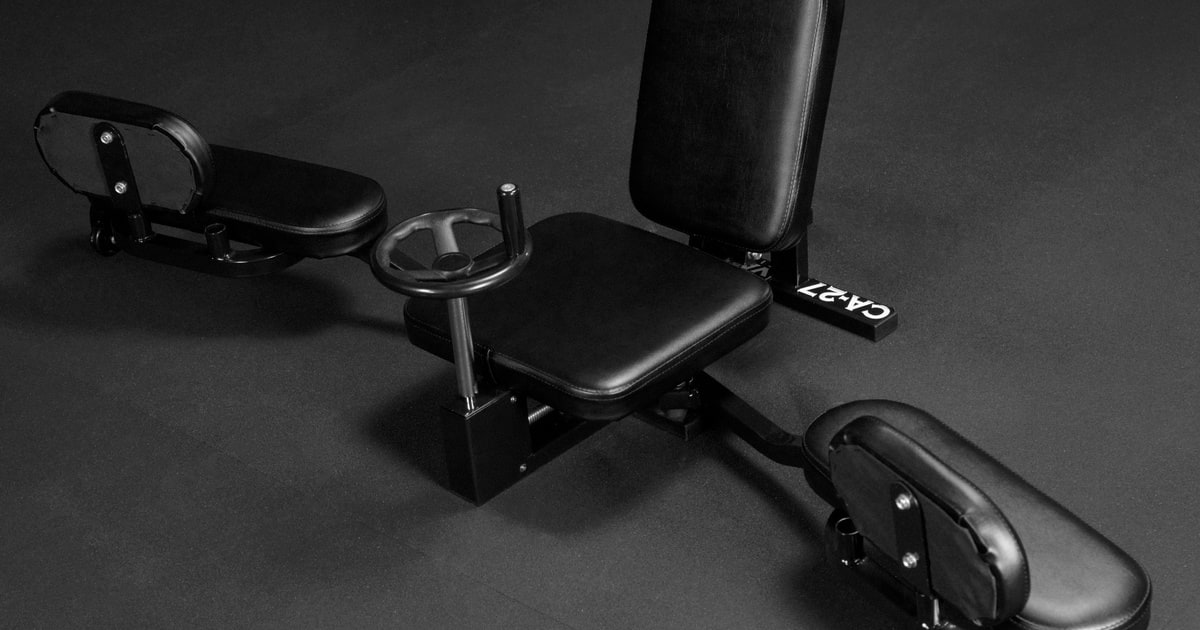
A leg stretching machine does one job. It holds your legs apart at an angle you pick, and it lets you widen that angle a little at a time without a partner leaning on you. That matters more than it sounds. Most people stall out on the splits because they can't reproduce yesterday's stretch, so every session starts over from scratch. A machine with numbered settings turns a vague feeling into a position you can come back to. It also frees your hands, so you can breathe and relax instead of bracing.
None of these will make you flexible on their own. Progress comes from showing up three to five times a week for weeks on end, and no crank shortcuts that. They're also single-purpose, awkward objects that live on your floor. And budget frames share a real hazard: a clamp or lever that slips under load can drop you into a wider split than your groin is ready for. Published reviews and owner feedback in this category circle back to that one failure again and again.
So we focused on how each machine holds its position, whether it supports your lower back, and how much frame it gives you for your body weight. The lineup runs from an eleven-pound floor frame you can slide under a bed to a steel chair built for a martial arts school. We think that the Valor Fitness Adjustable Leg Stretcher is the best leg stretching machine for most people, and that the seanleecore Split Machine with Seat & Backrest is the one to buy if you want back support in something you can store in a closet.
Everything we recommend
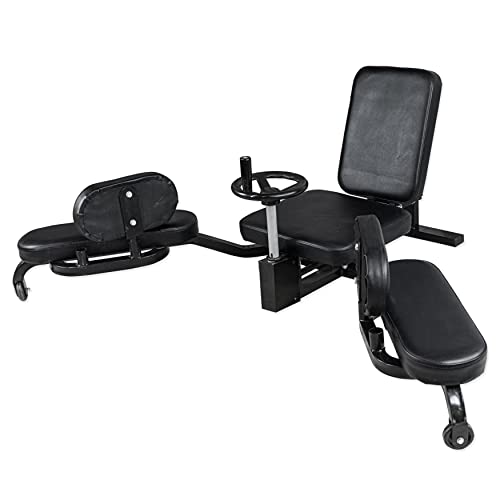
Precise crank control and a real backrest, if you have the space
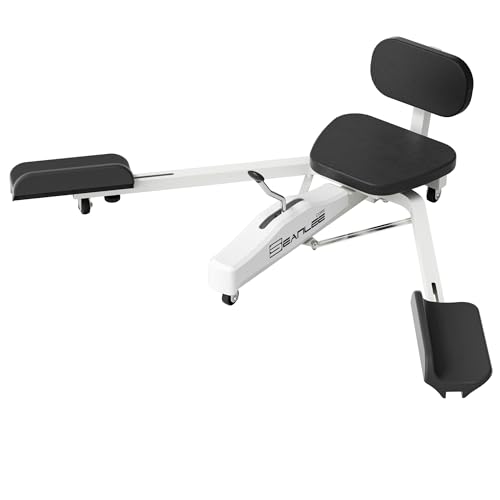
Back support and a real seat, in something you can put away
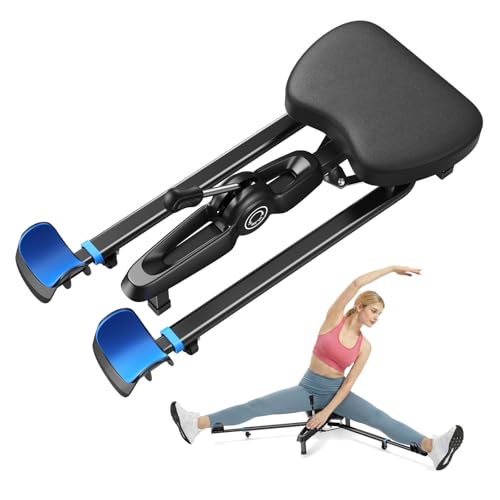
A safe, featherweight starter frame, with no back support

Dojo-grade steel and a full backrest, if you train most days
At a glance
| Product | Max Angle | Weight Capacity | Price | |
|---|---|---|---|---|
| Valor Fitness Adjustable Leg Stretcher - 180°Top pick | 180° | 300 lb | $265.98 |
| Century Versaflex 2.0 Stretching Machine BlackUpgrade pick | — | — | $289.99 |
| Split MachineRunner-up | 0°–180° | 300 lbs | $109 |
 | Split MachineAlso in lineup | 0–180° | 300 lbs | $79 |
 | Lifepro Hip Thrust MachineAlso in lineup | — | 220 lbs | $159.99 |
| MERACH Split MachineBudget pick | 180° | 300 lbs | $59.39On sale |
 | Body-SolidAlso in lineup | — | 210 lb stack | $1,665On sale |
How we picked
Adjustment mechanism. We read the specifications for how each machine widens and holds its angle, and treated gear, ratchet and handbrake systems as a floor requirement. Bare friction clamps can release under load, and that's the failure owners describe most often.
Range of motion. Every dedicated stretcher here opens to a full 180 degrees. So we looked at how finely you can adjust within that range rather than at the headline number.
Back support. We separated seated machines with a backrest from floor frames without one, since a wide straddle on the floor rounds your lower spine. Anyone with back trouble needs the former.
Rated capacity. We wanted a frame rated well past body weight, since a deep split loads the joints far harder than just sitting there does. Three hundred pounds was the threshold.
Footprint and weight. We compared assembled dimensions and shipping weights against the reality of a home. A machine you have to wrestle out of a closet is a machine you'll skip.
Top pick
Precise crank control and a real backrest, if you have the space
Valor Fitness Adjustable Leg Stretcher - 180°
The Valor Fitness is a seated adductor machine with a wheel crank instead of a lever, so you widen your split by turning a handle rather than shoving your legs apart. The back pad adjusts, the frame is rated to 300 pounds, and it gives you the most controlled stretch here.
$265.98fromAmazonThe crank is the safety feature you're actually paying for. You turn a wheel, the leg pads move apart, and they stay exactly where you left them. There's no lever to release under load and no clamp to let go. So you can take the stretch to the edge of uncomfortable, hold it, back off a quarter turn, and go again. With budget lever machines, owners describe the opposite: a sudden give that turns a stretch into a strain.
The adjustable back pad changes where the stretch lands. You can set it at 105 or 110 degrees. Five degrees sounds trivial. It isn't. The more upright setting pulls the stretch into your hamstrings and loads your lower back, while leaning back shifts it toward your inner thighs and takes pressure off your spine. If you sit at a desk all day and your back complains first, that second setting is the one you'll live in.
The 300-pound rating isn't really about your body weight. Get your legs near a full split and the frame joints take on far more than you weigh. A machine rated close to your weight is working at its limit every session. This one leaves headroom, which is why it's the pick for bigger users and for anyone who plans to still be using it in two years.
You can outgrow the leg pads before you outgrow the machine. Valor lets you pull the wheel crank off and fold forward over the frame, which adds a hamstring and lower-back stretch on top of the hip opening. It's a small design choice with a big payoff. Your straddle and your forward fold progress on the same piece of equipment, in the same session.
Flaws but not dealbreakers
It takes up a corner of the room and stays there. The frame runs about six feet across and weighs close to fifty pounds. It arrives in pieces, so plan an evening with a wrench before your first session. If your gym is the rug in front of the TV, one of the lighter machines here will fit your life better.
The crank is slower than a lever. Widening the stretch takes a dozen turns of a handle instead of one push. If you like to get in, get low, and get out, that deliberateness will feel like fuss at first. It's the trade you make for a mechanism that can't let go, and most people stop noticing after a week or two.
The owner record is thin. This is a newer listing, and there isn't much accumulated feedback about how the crank threads and welds hold up after a couple of years of hard use. Valor has been making home gym gear for a long time, which counts for something. But you're buying partly on brand reputation rather than a long trail of owner reports.
Runner-up
Back support and a real seat, in something you can put away
Split Machine
The seanleecore seated model puts you in a cushioned chair with a backrest instead of flat on the floor, and an internal gear system walks the leg pads from zero to a full 180 degrees. It's the compromise pick: most of the support of a big machine, in a 33-inch frame.
$109fromAmazonA backrest changes who can use a stretching machine. Sitting flat on the floor in a wide straddle tips your pelvis backward and rounds your lower spine, which is exactly where people with cranky backs feel it. This model braces you upright instead. If your back is the reason you've avoided floor stretching, this is the smallest, simplest way around that problem.
The gear system holds every position you reach. You rock the handle, the pads step outward, and they lock. Nothing springs back when you relax, and that's what lets you breathe at the bottom of a stretch instead of holding tension just to stay in place. The zero-to-180 range means you won't outgrow it, whether you're starting stiff or chasing a full side split.
The one-piece leg divider is a small thing you'll appreciate. Cheaper frames use two separate pads with a gap in the middle, and that gap lands right under the back of your thigh. Sit there for fifteen minutes and you'll know about it. The continuous divider spreads the pressure out, and the curved pads keep your legs from rolling outward as the angle widens.
It suits a household, not just a person. The listing spans users from about 3 feet 7 inches to 6 feet 5 inches, so a kid in gymnastics and an adult with desk-tight hips can share it. It shows up nearly assembled, with two parts and a few minutes of work, and it rolls on protective wheels. Moving it out of the living room before company arrives isn't a project.
Flaws but not dealbreakers
It's still a low seat. The frame sits about a foot off the ground, so you're lowering yourself down and pushing yourself back up every session. Anyone with stiff knees or a hip replacement should think that through before the backrest sells them. The support is real once you're in it. Getting in and out is the hard part.
It isn't built for a studio. The steel is rated to 300 pounds and the build is fine for home use, but nothing here is commercial-grade, and the brand doesn't have a long durability record behind it yet. If the machine will see several people a day, five days a week, buy the Century instead and stop worrying about it.
Budget pickOn sale
A safe, featherweight starter frame, with no back support
MERACH Split Machine
The MERACH is a floor-level leg stretcher with a handbrake: squeeze, widen, release, and it holds where you stopped. At around eleven pounds it's the one you can carry to a hotel room or slide under the bed, and it still carries a 300-pound frame rating.
$59.39fromAmazonList priceThe handbrake does what a friction clamp can't. You control the angle with one hand, in small steps, while staying seated. Nothing releases on its own. That's the single feature separating a budget frame worth owning from one that trains you to be afraid of it, and it's unusual at this end of the market. For a beginner stretching alone, it's the whole argument.
Six length settings let you fit it to your legs. The frame adjusts from 27.5 to 36.2 inches in steps of roughly 1.75 inches, using hidden locking holes rather than a knob sticking out of the side. Set it once for your height and forget it. Get this wrong and the ankle pads sit in the wrong place, which quietly caps how wide you can safely go.
It weighs about as much as a full grocery bag. Just under eleven pounds means a kid can drag it out and a parent can hang it in a closet. Without a dedicated training space, that portability is the difference between stretching most days and stretching when you happen to remember. The wide seat cushion and thick leg pads make the floor position tolerable for a long session.
The frame is rated well above what the price suggests. Heavy-duty steel and a 300-pound capacity put it level with machines several times its size on the spec that matters most for safety. Assembly comes down to attaching the ankle pads, so it's usable within minutes of opening the box. Nothing about the build feels like a corner was cut where it counts.
Flaws but not dealbreakers
There's no back support at all. You sit on the floor, and in a wide straddle your pelvis tips back and your lower spine rounds. If you have disc trouble, or your back is what hurts after a long day, this isn't your machine. Everyone else adapts to it fine, but it's the honest reason to spend more on a seated model.
Tall users run out of frame. The longest setting is 36.2 inches, which covers most adults but leaves anyone over six feet reaching for the pads. If the pads sit above your ankle instead of on it, you'll lose leverage and you won't be able to control the stretch. Check your inseam against that range before you order.
Upgrade pick
Dojo-grade steel and a full backrest, if you train most days
Century Versaflex 2.0 Stretching Machine Black
The Century Versaflex 2.0 is the machine you find in martial arts schools: a heavy steel frame with a large contoured backrest, built to survive several athletes a day. If you're training for high kicks or competitive splits, the stability is worth the bulk.
$289.99fromAmazonThe frame doesn't move, and that's the point. Heavy-gauge steel means no flex and no wobble at wide angles. That matters most with contract-and-relax methods, where you push hard against the pads for several seconds before going deeper. On a springy frame, that push gets absorbed by the machine. On this one it goes into your muscles, which is where you wanted it.
The backrest wraps you instead of just propping you up. The redesigned support is larger and contoured, so it holds your torso rather than pressing a single bar into your lumbar spine. That's the difference between a five-minute session and a twenty-minute one. Long holds are where flexibility actually comes from, and comfort is what makes long holds happen at all.
Century knows this specific customer. They're one of the largest martial arts equipment makers around, and the Versaflex line exists because kickers and dancers kept outgrowing lighter frames. The adjustable settings span beginners through elite athletes, which is what a school needs when one machine serves a ten-year-old and a black belt in the same hour.
Flaws but not dealbreakers
It's the heaviest stretching machine here, and it stays put. At about fifty-two pounds, this is furniture. If you need to stash your gear between sessions, look at the MERACH or either seanleecore model instead. The footprint is reasonably compact, but nobody is carrying this up a flight of stairs on a whim.
The listing is vague about how the adjustment works. Century describes adjustable settings and a heavy frame, but not the mechanism or its increments, and that's the detail separating a safe stretcher from a scary one. The brand's track record makes us comfortable recommending it. Still, if you want to picture exactly how your angle locks before you buy, the Valor's crank is easier to understand.
Most people don't need this much machine. If you stretch twice a week in your living room, you're paying for daily-use durability you'll never come close to using. Buy it because you train nearly every day, or because the machine has to serve a class. Otherwise the Valor gives you a backrest and finer control for less bulk.
Who this is for
Buy one of these if you're working toward a specific flexibility goal and you've stalled without one. A full side split, a head-height kick, straddle work for ballet or gymnastics, or hips that stop locking up after a day in a chair. The value is repeatability: the machine gives you a position you can return to and hold without a partner. If you stretch when the mood strikes and don't much care whether you improve, a strap and a doorway do the same job.
This guide covers seated and floor-level leg stretchers built for hip abduction, hamstring and adductor work. It doesn't cover strength machines, foam rollers, massage guns or stretching straps, and it isn't medical advice. If you have a herniated disc, active sciatica, a hip replacement, or a recent groin or hamstring strain, talk to a physician or physical therapist before you buy anything here. Several of these machines put you in positions that are fine for a healthy body and a bad idea for an injured one.
How we picked
Mechanism: the machine has to widen in controlled steps and hold where you leave it, which rules out plain friction clamps and bare levers. Range: a full 180 degrees is the target, but fine adjustment within that range matters more than the top number. Back support: a real backrest is what makes this equipment usable for the people whose lower backs are the problem in the first place. Capacity: we set 300 pounds as the bar, since a deep split loads the frame well past what you weigh. Footprint: weight and assembled size decide whether the thing lives in your room or in your way.
The competition
This is what our research surfaced in a category crowded with near-identical frames, not a census of everything for sale. Plenty of unbranded leg stretchers ship from the same factories under different names, and we left those alone. Here's the machine in our lineup that didn't quite make the picks, and why.
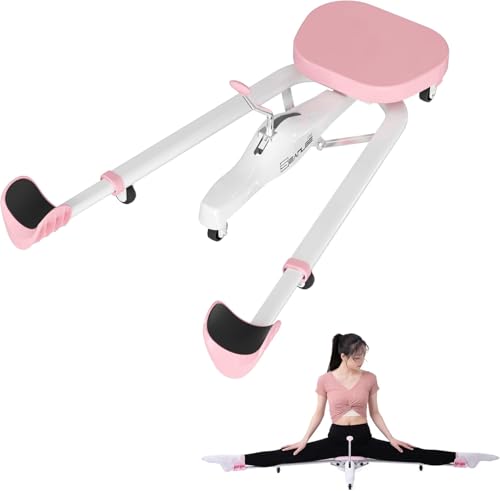
The Split Machine ($79) — The seanleecore floor model is the seated version with the chair removed. You get the same internal gear and ratchet running zero to 180 degrees, a stainless steel frame rated to 300 pounds, leather cushioning, foam head pads, and silent wheels that won't chew up hardwood. It weighs about eleven pounds and shows up nearly assembled. It lost to the MERACH on control, since a handbrake you can work one-handed mid-stretch is easier to trust than a rocker you have to reach for. Choose it anyway if you like a ratchet that holds while you read your phone, or if you want stainless steel for a damp garage or basement. Skip it if your lower back is the reason you're stretching, because there's no backrest here either.
Care and safe use
Warm up before you touch the crank. Five to ten minutes of walking, cycling or easy bodyweight movement makes tissue more willing to lengthen, and it's the simplest injury prevention there is. Take the angle to discomfort and stop there. Sharp pain means you've passed your working range for the day, and forcing a mechanism past it is how people strain a groin. Stay out of the machine for a couple of days after any hamstring or adductor strain. Between sessions, wipe the pads down, since sweat sits in foam and vinyl and shortens their life. Every month or so, check the bolts at the pivot and the leg arms. Those loosen first on any frame that gets folded, rolled or dragged around.
Questions we get
What is the best leg stretching machine for a beginner working toward the splits?
Start with the MERACH Split Machine or the seanleecore floor model. Both give you the full zero-to-180-degree range, a controlled mechanism that holds under load, and a 300-pound frame rating, without the bulk or setup of a bigger machine. If your lower back is at all sensitive, skip both and get the seanleecore seated model for the backrest.
Are these machines safe if I have lower back pain or a herniated disc?
Only with clearance from your physician or physical therapist, and only on a machine with a proper backrest. The Valor Fitness and the Century Versaflex 2.0 both seat you upright with lumbar support, which keeps your pelvis from tipping backward in a wide straddle. Floor models like the MERACH and the seanleecore floor version increase the load on your spine and aren't appropriate for disc problems.
How long does it take to see results?
Published guidance from the American College of Sports Medicine points to measurable range-of-motion gains within three to four weeks at three sessions a week. Most people notice their hips opening functionally within four to six weeks. A true 180-degree split usually takes three to six months, and where you start matters enormously. Contract-and-relax work, where you push against the pads for five to ten seconds before widening, moves things along faster than just sitting there.
Which one should a senior buy for hip mobility?
Look for a backrest, a smooth incremental mechanism, and a frame that doesn't wobble. The Valor Fitness and the Century Versaflex 2.0 both qualify, and the Valor's crank is easier to operate slowly than a rocker handle. The MERACH works too if getting down to and up off the floor isn't an issue, since its light frame is easy to reposition, but the lack of back support limits how long a session can comfortably run.
Is a gear-driven machine really safer than a basic friction stretcher?
Yes. Gear, ratchet and handbrake mechanisms lock the position mechanically, so the pads can't travel backward while you're loaded up in a stretch. Friction clamps rely on pressure alone and can let go all at once, which is the failure behind most machine-related groin strains. The Valor Fitness, Century Versaflex 2.0, MERACH and both seanleecore models all use mechanisms that hold rather than grip.
Do I need one of these if I already do yoga?
Not necessarily, but they do different things. Yoga builds flexibility through loaded positions and body awareness across the whole body. A stretching machine gives you one measurable, repeatable variable to push, which is why it works better for a specific goal like a side split. If you want your hips to open on a schedule rather than eventually, the machine gives you feedback that yoga doesn't.
Why you should trust us
For this guide:
- We read the manufacturer specifications and listing details for every machine here, comparing adjustment mechanisms, rated frame capacities, adjustment ranges and assembled dimensions against each other.
- We reviewed published buying advice and flexibility-training guidance to understand which design failures come up repeatedly in this category, particularly mechanisms that slip under load.
- We weighed recurring themes in owner feedback, including back strain from floor-level seating and pads that sit wrong on taller users, against what each listing claims.
- We read owner reviews on every listing, weighted toward the critical ones, because that is where the recurring failures show up.
- We have a systematic way of automatically fetching the latest prices, so the numbers on this page stay current.
- This is a research-focused guide, so the team may not own every product listed — though we often do own the top winners, which gives us extra context for the recommendations.
- We don't accept free products, and the retailer commission never changes which product we recommend.
Sources
Best Stretching Machines Tested — Garage Gym Reviews, Garage Gym Reviews
Stretching: Focus on Flexibility — Mayo Clinic, Mayo Clinic
ACSM Guidelines on Flexibility and Stretching, American College of Sports Medicine
Best Leg Stretching Machines for Flexibility — Healthline, Healthline
How to Improve Flexibility: Evidence-Based Guide — Verywell Fit, Verywell Fit
Amazon product listings and owner reviews for all 7 products
Manufacturer specification pages for each product
Some passages in this guide may be paraphrased with AI help. Prices are refreshed automatically.
More like this.
Continue exploring health reviews and recommendations.

The Best Cable Machines for Home Gyms
A cable machine is the piece that finally makes a home gym feel complete. Dumbbells and a barbell cover the heavy stuff, but cables give you the angles - …

The Best Pickleball Ball Machines
A ball machine is the only practice partner that never gets tired, never checks its phone, and never wants to just play games instead of drilling. That's…

The Best Compact Rowing Machines
Rowing is the rare cardio machine that doesn't punish you for using it. One stroke pulls in your legs, back, core and arms at once, and your knees never…

The Best Tennis Ball Machines
A ball machine is the only practice partner that never cancels on you. It'll feed the same wide slice to your backhand 200 times while you figure out your…

The Best Home Cardio Machines
A cardio machine at home earns its floor space by being the one you'll actually use. No drive, no parking, no waiting on a stranger to finish. Ellipticals…

The Best Magnetic Resistance Rowing Machines
A rowing machine only helps if you actually get on it, and the thing that most often stops people is noise. Air rowers roar. Water rowers slosh. A…