The Best Home Cardio Machines
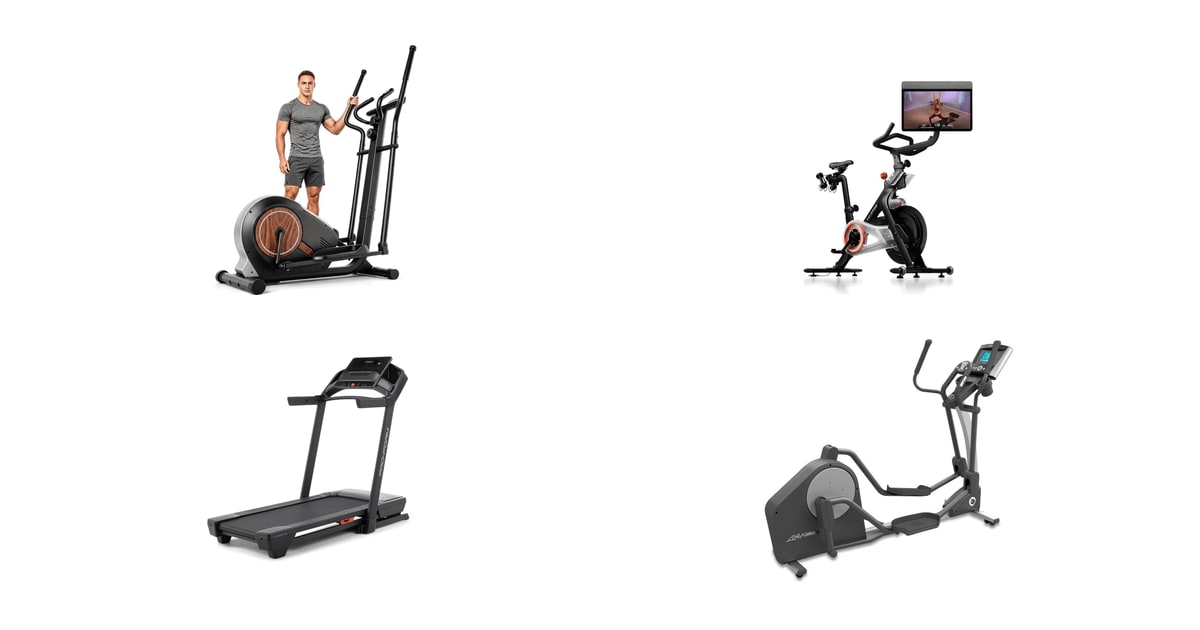
A cardio machine at home earns its floor space by being the one you'll actually use. No drive, no parking, no waiting on a stranger to finish. Ellipticals keep your feet on the pedals, so your knees skip the pounding they take from running. A study in the Journal of Strength and Conditioning Research found roughly 27% less peak impact force at the knee than treadmill running at matched intensity. Treadmills give you real running. ACE Fitness puts an hour of elliptical work at 450 to 600 calories for a 155-pound person.
Here's the honest part: none of these feel like moving outdoors. The path is fixed, the air doesn't move, and it takes a few sessions before that stops feeling odd. The machines that feel best are heavy, and once they're assembled they don't move. Folding models trade some of that steadiness for the ability to disappear. And the big screens people fall in love with almost always carry a monthly fee, so budget for that before you call any of this a gym replacement.
So start with two questions. What motion do your joints tolerate, and how much room can you give up permanently? Ellipticals suit most people over the long haul, and a treadmill matters if you're training to run. After working through spec sheets, published reviews and owner feedback for this lineup, we think that the Life Fitness X3 Elliptical Cross-Trainer is the best home cardio machine for most people, and that the ANCHEER Elliptical Exercise Machine is the one to buy if you need a high weight capacity without a health-club budget.
Everything we recommend

Club-grade smoothness and a frame warranty that outlasts you
Quiet and rated for much heavier users, with a short stride

Real running and it folds away, but the impact comes back
At a glance
| Product | Weight Capacity | Product Weight | Price | |
|---|---|---|---|---|
| ANCHEER Elliptical Exercise MachineBudget pick | 500 Lbs | 66.1 Lbs | $329.30 |
 | Peloton Exercise BikeAlso consider | 297 Lbs | 178 Lbs | $1,695 |
| ProForm Carbon TLSAlso great | — | 205 Lbs | $749.38On sale |
| Life Fitness X3 Elliptical Cross-Trainer with AdvancedTop pick | 300 Lbs | — | $2,295 |
How we picked
Stride length. We treated stride as the make-or-break spec, since a cramped path ruins the motion no matter how good the rest is. Spec sheets had to show 18 inches or more to suit most adults, and 20-plus for anyone over six feet.
Drive type and noise. We compared front-drive, rear-drive and center-drive layouts against published reviews of how each feels and sounds. Rear-drive designs generally run quieter and track more naturally, which matters in apartments and shared walls.
Frame and capacity. We looked at frame weight and stated user capacity together, because a high number on a light frame doesn't add up. Machines had to be steady at a hard effort, not just standing still.
Console and subscriptions. We checked what the machine does with no subscription attached, then what a platform adds on top. Connected programming improves long-term adherence, but a machine shouldn't be crippled without it.
Warranty and support. Warranty length is the clearest quality signal a spec sheet gives you, so we looked for at least three years on parts and one on labor for home use. Owner feedback about service and replacement parts carried weight here too.
Top pick
Club-grade smoothness and a frame warranty that outlasts you
Life Fitness X3 Elliptical Cross-Trainer with Advanced
The X3 is a rear-drive cross-trainer built on the same design language Life Fitness sells to gyms. Its WhisperStride system keeps the motion quiet and even, and the frame is covered for life, which is unusual for a machine you keep at home.
$2,295fromAmazonThis is health-club hardware sitting in your basement, and you notice it in the first minute. The WhisperStride drive is designed for a smooth, gliding path rather than the bouncy step you get from lighter machines. The pedals are spaced to keep your hips stacked instead of splayed, which matters a lot if you're doing 40 minutes at a stretch. There's an ErgoGrip stationary handlebar too, so you can steady yourself when you want to load your legs alone.
Noise is the reason most home ellipticals end up as coat racks. If yours groans through a shared wall, you'll quietly stop using it. Rear-drive machines like this one generally run quieter than front-drive designs, and the WhisperStride system is built around that. For reference, published sound checks on other quiet home ellipticals land near 48 dB, which is below normal conversation. This is the kind of machine you can run early without waking the house.
The console isn't flashy, but it covers what you'll actually look at: distance, speed, calories, resistance level, time and heart rate. It adds sport-specific training programs and interactive heart rate monitoring, so you can hold a target zone instead of guessing. If you use the handles at full engagement, biomechanics work from Verywell Fit found upper-body muscles firing at 40 to 60% of maximum voluntary contraction. That turns a leg session into a real full-body one.
The lifetime frame warranty is the most honest spec on the page. A company writes that only when it expects the frame to outlive the buyer's interest in it. Capacity is 300 pounds, and the machine measures 65 by 62 by 27 inches, so it's built like furniture rather than a folding gadget. Owners who've kept these for years consistently describe them as easy on the knees and hips and still going.
Flaws but not dealbreakers
There's no touchscreen and no connected fitness platform here. If you want instructor-led classes, scenic routes or a leaderboard, this machine won't give you any of it, and you'll be propping a tablet on the console like everyone else. That's a real gap if class programming is what keeps you consistent.
It's big and it's heavy, and at 65 inches wide it wants a dedicated corner. Plan the spot before delivery, because you won't be sliding this around casually. The listing also doesn't state a stride length, so if you're tall, confirm the figure with the seller before you commit.
Owner feedback isn't spotless. Some report pedal plastics that chip or crack early, and a few describe frustrating service experiences on older units. The 300-pound capacity is also lower than what a couple of budget machines claim, which is worth checking against your own numbers.
The X3 comes with a lifetime frame warranty.
Budget pick
Quiet and rated for much heavier users, with a short stride
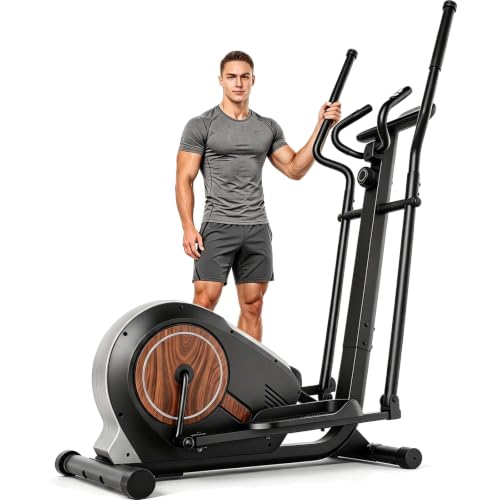
ANCHEER Elliptical Exercise Machine
The ANCHEER uses magnetic resistance for near-silent pedaling and claims a 500-pound weight capacity, which is far beyond what most home ellipticals handle. The catch is a 16-inch stride that's shorter than what taller riders need.
$329.30fromAmazonMagnetic resistance is the reason this thing is so quiet. Nothing rubs against anything, so there's no friction pad wearing down and no whine building up over the months. Owners consistently describe it as near-silent and steadier than they expected for the money. If you live above someone, or you want to work out while a kid naps down the hall, that quiet is worth more than any feature on the console.
The 500-pound capacity is the headline, and it's a genuinely rare number. Most home ellipticals top out somewhere around 250 to 300 pounds, which quietly rules them out for a lot of people. ANCHEER builds this one on a reinforced steel frame with the weight distributed for stability, and larger owners report it holding up without the flex and creak they'd found elsewhere. If you've been struggling to find equipment rated for you, start here.
It's compact enough to live in a normal room. The footprint is about 44 by 21 inches, and the whole machine weighs roughly 66 pounds, so one determined person can reposition it. Assembly runs well under an afternoon by most accounts, even for people who don't enjoy hex keys. That combination — small, light, quiet — is exactly what apartment dwellers keep asking for and rarely get.
The console keeps it simple: an LCD showing time, speed, distance and calories, plus hand pulse sensors for a rough heart rate read. There's no app subscription attached and nothing to renew. Some people will miss the classes. Others will be relieved that the machine works fully on day one and keeps working without a login.
Flaws but not dealbreakers
The 16-inch stride is the real limitation. That sits below the 18-to-22-inch range most adults want, and well below the 20-plus inches recommended for anyone over six feet. Shorter riders will be fine. If you're tall, the motion will feel cramped and choppy, and no amount of resistance fixes that.
At 66 pounds, the frame is light for a machine rated to 500 pounds. It's stable enough for steady-state work, but push into hard intervals and you may feel it shift. A lot of the owner feedback comes from people using it for gentle rehab and daily movement rather than sprint work, which is a fair signal about where it's happiest.
The lifetime warranty and free replacement parts sound generous, but a promise like that is only as good as the company standing behind it. Weigh it differently than you would the same words from a brand that's been servicing gym floors for decades.
ANCHEER backs the machine with a lifetime warranty and free replacement parts.
Also greatOn sale
Real running and it folds away, but the impact comes back
ProForm Carbon TLS
The ProForm Carbon TLS is a folding treadmill, which makes it the only machine here that lets you actually run rather than glide. It tips up when you're done, so a spare room can go back to being a spare room between sessions.
$749.38fromAmazonList priceNothing on an elliptical teaches your legs to run. If you're training for a 10K, or you just like running and the weather where you live is hostile for four months a year, a treadmill is the tool. You get real gait, real cadence and real hill work when you raise the incline. That's the whole argument for this machine, and it's a good one.
Folding is the feature that decides whether a treadmill survives in your house. A full-size cardio machine is furniture, and furniture in a spare bedroom starts arguments. The Carbon TLS tips up between sessions, so the room stays usable. You give up a little rigidity underfoot compared with a fixed deck, but for walking and easy running you probably won't notice the difference.
It's the least joint-friendly machine we're recommending, and that's not really a knock — it's the point. Running is impact, and impact is what builds bone and tendon. But if your knees are the reason you're shopping, the X3 is the better call. Use a treadmill for walking at an incline instead, which is gentle and quietly one of the best workouts going.
Check the console before you commit. ProForm attaches connected training programming to its treadmills, and how much the machine does without a subscription varies by model, so ask the seller what's unlocked out of the box. If classes keep you consistent, that fee is money well spent. If you just want to run for 30 minutes and get off, make sure you can.
Flaws but not dealbreakers
Treadmills are the loudest machines you can put in a home gym. A motor plus your feet hitting a deck carries through floors in a way a magnetic elliptical never does. If you're above a neighbor, this is the wrong choice, and no amount of rubber matting fully fixes it.
A folding deck adds hinges, and hinges develop play over time, so expect it to feel less planted after a few years than a fixed frame. The listing also doesn't spell out motor rating or belt dimensions. If you're tall or fast, confirm both with the seller before you order, because a short belt makes a natural stride impossible.
Who this is for
Buy a home cardio machine if you want daily exercise your knees will forgive. That covers runners cross-training through a niggle, anyone over 50 who wants to keep moving without impact, people rebuilding after injury, and beginners who'd rather not learn a new skill before they can get a workout in. It also suits anyone whose gym membership mostly funds a cardio machine they could own outright.
Skip an elliptical if you're training for a race where running form matters — a treadmill is the better tool, which is why one is in the picks. Skip a treadmill if you live above a neighbor or your knees are the reason you're shopping. Check your ceiling height too, since an elliptical lifts you several inches off the floor and tall riders can clip a joist. This guide covers full-size home cardio machines: ellipticals, treadmills and stationary bikes. We're not covering under-desk pedalers, replacement parts or accessories, even when a search turns them up alongside the real thing.
How we picked
We built the shortlist around five things. Stride: at least 18 inches for most adults, 20 or more if you're over six feet, because a short stride makes the motion choppy no matter what else is right. Drive and noise: rear-drive layouts generally feel more natural underfoot and run quieter than front-drive ones, which decides whether the machine survives in an apartment. Frame and capacity: stated user weight limits only mean something alongside a frame heavy enough to stay planted under hard effort. Console: the machine has to be fully usable with no subscription, with any connected platform counting as a bonus rather than a requirement. Warranty: three years on parts and one on labor is the floor for home use, and a lifetime frame term is a strong signal.
Other home cardio machines worth considering
If you want instructor-led classes: The Peloton Exercise Bike ($1,695) — The Peloton bike is the machine to beat when class programming is the thing that gets you moving. A stationary bike is the gentlest option here for knees, and the seated position lets you push hard without your form falling apart. What you give up is variety of motion — you're sitting, and it's mostly your legs working — and the classes that make it worth owning live behind a monthly membership. Treat that fee as part of the machine rather than an extra. If you'd stop paying it within a year, one of the picks will serve you better.
The competition
This is what our research turned up for this lineup, not a census of everything sold. Plenty of well-regarded home cardio machines — adjustable-stride ellipticals, hybrid stair-climber designs, air bikes, other commercial-grade models — weren't part of the set we could confirm here. If a machine you're considering isn't mentioned, that's not a verdict against it. Judge it against the same criteria: the motion your joints tolerate first, then noise and footprint, then whether the frame weight supports the capacity on the box.
Assembly and placement
Decide where the machine lives before it arrives, because the good ones don't move once they're built. Leave a couple of feet of clearance behind and beside it, and check your ceiling — an elliptical raises you several inches, so a tall rider in a basement can clip a joist. Budget an afternoon for assembly and recruit a second person; published assembly checks on similar machines have run from a bit over two hours to nearly four with two adults working. After that, upkeep is light. Wipe sweat off the console and rails after each session, since salt is what actually kills electronics, and retighten pedal, deck and handlebar bolts after the first few weeks. Rollers and pedal hardware are the parts that wear first, and both are usually cheap to replace.
Questions we get
What elliptical stride length do I need for my height?
Most adults are comfortable somewhere between 18 and 22 inches. If you're under about 5-foot-6, 16 to 18 inches usually feels fine. Over six feet, look for 20 inches or more, or the motion will feel like you're shuffling. Stride is the one spec that can't be fixed with settings, so check it before anything else.
Is a front-drive or rear-drive elliptical better for home use?
Rear-drive machines generally feel more natural underfoot and run quieter, which is why they dominate gym floors. Front-drive designs take up less room and cost less, but the path can feel slightly less smooth. If you have the space and care about noise, go rear-drive. If you're squeezing into a small apartment, front-drive is a reasonable trade.
What's the best cardio machine for bad knees or joint pain?
An elliptical beats running for joint stress, since your feet never leave the pedals. Research in the Journal of Strength and Conditioning Research found roughly 27% less peak impact force at the knee compared with treadmill running at matched intensity. Prioritize a smooth, heavy machine with correctly spaced pedals, because side-to-side splay is what tends to irritate hips and knees over long sessions. A stationary bike is the other gentle option.
Do I need a subscription to use these machines?
Not for either elliptical. Both work completely on their own, showing time, distance, speed, calories and heart rate without any account. Subscriptions matter on connected machines, where a monthly fee unlocks classes and scenic routes, so check what a treadmill or bike console does out of the box. Those platforms do help people stay consistent, but treat the fee as part of the real cost.
How long do home cardio machines typically last?
Mid-range machines commonly run five to ten years with basic upkeep, and commercial-grade builds go much longer. Long-term reporting from Wirecutter found that the least expensive machines needed repairs or replacement parts at a 34% higher rate than mid-range ones. Warranty length is your best proxy: a lifetime frame term signals a company that expects the machine to stay standing.
How do ellipticals compare to treadmills for weight loss?
The calorie burn is close. ACE Fitness figures put elliptical work at roughly 450 to 600 calories per hour for a 155-pound person, comparable to running with far less joint stress. Ellipticals also engage your upper body if you use the handles, with published biomechanics work showing arm and torso muscles at 40 to 60% of maximum voluntary contraction. The machine you'll use four times a week beats the one that's theoretically better.
Why you should trust us
For this guide:
- We read manufacturer spec sheets for every machine in this lineup and compared stride length, drive layout, frame weight, stated user capacity and warranty terms side by side.
- We reviewed published findings from ACE Fitness, the Journal of Strength and Conditioning Research and Verywell Fit on impact forces, calorie expenditure and upper-body engagement during elliptical work.
- We read through owner feedback for each listing, looking for repeated themes about noise, stability, assembly and long-term parts problems rather than isolated complaints.
- We read owner reviews on every listing, weighted toward the critical ones, because that is where the recurring failures show up.
- We have a systematic way of automatically fetching the latest prices, so the numbers on this page stay current.
- This is a research-focused guide, so the team may not own every product listed — though we often do own the top winners, which gives us extra context for the recommendations.
- We don't accept free products, and the retailer commission never changes which product we recommend.
Sources
Best Elliptical Machines of 2026 – Wirecutter, Wirecutter
Best Elliptical Machines 2026 – Forbes Health, Forbes Health
Best Ellipticals for Home – Garage Gym Reviews, Garage Gym Reviews
Elliptical Machine Reviews & Ratings – Consumer Reports, Consumer Reports
Sole E35 Elliptical In-Depth Review – Healthline, Healthline
Bowflex Max Trainer M9 Review – SELF Magazine, SELF
NordicTrack FS14i Review – Verywell Fit, Verywell Fit
Elliptical Trainer Biomechanics – Journal of Strength and Conditioning Research, NSCA Journal of Strength and Conditioning Research
Home Gym Equipment Market Report 2025–2026 – IBISWorld, IBISWorld
Cardio Equipment Comparison: Elliptical vs. Treadmill – ACE Fitness, ACE Fitness
Schwinn 470 Elliptical Review – Tom's Guide, Tom's Guide
ProForm Carbon EL Elliptical Review – Good Housekeeping, Good Housekeeping
Amazon product listings and owner reviews for all 4 products
Manufacturer specification pages for each product
Some passages in this guide may be paraphrased with AI help. Prices are refreshed automatically.
More like this.
Continue exploring health reviews and recommendations.

The Best Treadmills for Home Cardio
A treadmill is the rare piece of home equipment you either use four times a week or hang laundry on. What separates the two outcomes usually isn't the…

The Best Pickleball Ball Machines
A ball machine is the only practice partner that never gets tired, never checks its phone, and never wants to just play games instead of drilling. That's…

The Best Magnetic Resistance Rowing Machines
A rowing machine is one of the few pieces of home cardio gear that works your legs, back, core and arms in the same motion. Rowing engages up to 86% of…

The Best Tennis Ball Machines
A ball machine is the only practice partner that never cancels on you. It'll feed the same wide slice to your backhand 200 times while you figure out your…

The Best Indoor Rowing Machines
Rowing is the rare cardio machine that works almost your whole body at once. One stroke pulls in your legs, core, back and arms, so twenty minutes does…

The Best Cable Machines for Home Gyms
A cable machine is the piece that finally makes a home gym feel complete. Dumbbells and a barbell cover the heavy stuff, but cables give you the angles - …