The Best Inversion Tables for Back Relief
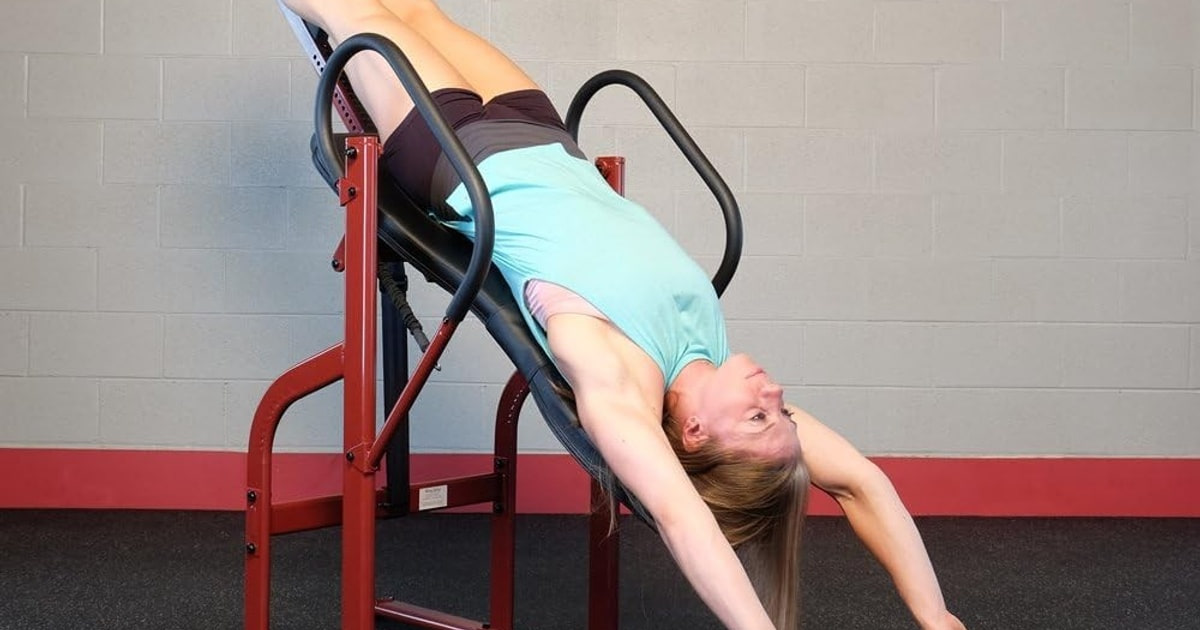
If your lower back aches by mid-afternoon, an inversion table is one of the simplest things you can try at home. You strap in your ankles, tip backward, and let gravity pull some of the load off your spine. Most people use one for a few minutes at a time, a couple of times a day. The good ones make that easy: you can get in and out without a wrestling match, the angle stays where you set it, and the frame doesn't creak or shift when you rotate. The bad ones make you dread the whole thing.
Here's the honest part. No inversion table cures a herniated disc, and none of them replaces physical therapy or a doctor's advice. Relief tends to be temporary, which is why short daily sessions beat one long one. Inversion also raises blood pressure and pressure inside your eyes, so it's off the table if you have hypertension, glaucoma, heart disease, or you're pregnant. Ankle pressure is the other universal complaint. Even padded cups pinch when you hang near full inversion, and no brand has fully solved that.
We looked at nine tables, from a seven-pound floor stretcher to a commercial-grade steel frame that never folds away. The differences that actually matter day to day are ankle comfort, how confidently the frame sits on the floor, and whether you have to bend double to lock in. We think that the Teeter FitSpine LX9 is the best inversion table for most people, and that the Teeter EP-560 Ltd. is the one to buy if you want the same medical-device pedigree without paying for the top-tier ankle system.
Everything we recommend

The easiest one to get into, and the safest bet overall

Same medical-device pedigree, simpler ankle hardware

Headrest and lumbar cushion at a fraction of the cost

Built like gym equipment, and it never leaves the room

Heat and massage that cover the whole spine, not just the waist
Prices as of Oct 27, 8:28 AM PT · Details
At a glance
| Product | Weight Capacity | Height Range | Price | |
|---|---|---|---|---|
| Teeter FitSpine LX9 Inversion TableTop pick | — | — | $549 |
| Teeter EP-560 Ltd. Inversion Table for BackRunner-up | 300 lbs | — | $269.99 |
 | YOLEO Gravity Inversion Table for Back PainAlso in lineup | 300 lbs | 4.92-6.06 ft | $134.99On sale |
 | Mini Inversion Table with Back Massage RollerAlso in lineup | 297 lbs | — | $59.99On sale |
 | Teclor Inversion TableAlso consider | 350 lbs | — | $199.99 |
| YOLEO Gravity Heavy Duty Inversion Table withBudget pick | — | 4'1"-6'2" | $144.40 |
| INNOVA HEALTH AND FITNESS ITM5900 Advanced HeatAlso great | 300 lbs | 4'10"-6'6" | $207.14 |
 | YOLEO Inversion Table Massage & Heat 2025Also consider | 320 lbs | 4.75-6.4 ft | $186.29On sale |
| Body-SolidUpgrade pick | — | — | $395 |
Prices as of Oct 27, 8:28 AM PT · Details
How we picked
Getting in and out. We compared ankle-lock designs across the spec sheets and looked at what owners say about pinching and awkward bending. Anything that required stooping deep at the waist to lock in lost ground, since that's the motion painful backs avoid.
Frame stability. We looked for heavy-gauge steel, a wide A-frame stance and non-slip rubber feet, since owner feedback about tables shifting or feeling flexy nearly always traces back to a narrow base or thin tubing.
Angle control. Tether straps, pin systems and adjustable crossbars all cap how far you tip. We favored designs you can preset before climbing on, because that's what keeps beginners from over-inverting.
Fit range. We checked stated height and weight limits against real bodies. A table rated close to your weight, or that tops out below your height, is one you'll never fully trust.
Safety credentials. FDA 510(k) registration and UL certification are rare in this category, so we treated them as a meaningful tiebreaker rather than a baseline expectation.
Top pick
The easiest one to get into, and the safest bet overall
Teeter FitSpine LX9 Inversion Table
The FitSpine LX9 is Teeter's flagship, and it's the rare inversion table registered with the FDA as a 510(k) medical device. Its long-handled ankle system and boarding platform mean you barely have to bend over to strap in, which is the difference between using it daily and letting it collect dust.
$549fromAmazonPrices as of Oct 27, 8:28 AM PT · Details
The ankle system is the reason to buy this one. Most tables ask you to bend forward at the waist and fumble with a bar down by your feet. That's exactly the motion your back hates. The LX9's EZ-Reach system uses an extra-long stainless-steel handle so you can secure your ankles standing much closer to upright, and a secondary gravity-activated lock catches behind it. If bending over is already painful, this feature alone changes how often you'll use the thing.
Getting on and off is genuinely easier than on the competition. The LX9 adds a boarding platform with an arched frame, so you step up and settle back rather than climbing awkwardly over a crossbar. Wrap-around ankle cups and a two-position foot platform let you dial in the fit instead of accepting whatever the table gives you. Small stuff, but it's the small stuff that decides whether inversion becomes a habit.
The FDA registration isn't marketing fluff. Teeter is the only brand here registered with the FDA as a 510(k) medical device, indicated for back pain, muscle spasm, herniated disc, sciatica, degenerative disc disease and spinal stenosis. That doesn't mean it'll fix your back. It does mean the safety and manufacturing claims have been through a regulatory process nobody else on this list has bothered with, which matters when you're hanging upside down on it.
The bed and accessories do more than pad your back. The FitSpine backrest uses a patented eight-point floating suspension so your body slides as you rotate, which is where the actual stretch comes from. Eight acupressure nodes at varied heights let you target a sore spot, and an adjustable lumbar bridge concentrates traction on your lower back. Grip-and-stretch handholds give you something to pull against once you're inverted.
Rotation is controlled by shifting your arms, not by hauling on a lever. Teeter calls it precision balance, and in practice it means you tip back and come upright with small movements instead of a lurch. You preset your maximum angle with the tether strap, which is how beginners should start anyway. Remove the tether later if you want full inversion. There's also a free training app with guided sessions, no subscription attached.
Flaws but not dealbreakers
It's the most expensive table here, and it doesn't have heat or massage. Several tables costing a fraction of this one include a vibrating, heated lumbar pad. Teeter sells those as separate accessories. If muscle tension is your main complaint rather than disc pressure, you may get more relief from a cheaper table with heat built in.
Assembly takes a while and goes better with two people. Plan on the better part of an hour, and expect to reread the instructions. It's also a big, heavy unit at over 70 pounds, so pick where it lives before you build it.
The size caps out at 300 pounds. That's standard for the category, but a couple of budget tables here are rated higher. If you're near the limit, check the number before you buy.
Teeter's coverage terms come with the unit; check the included paperwork for the frame and component periods.
Runner-up
Same medical-device pedigree, simpler ankle hardware
Teeter EP-560 Ltd. Inversion Table for Back
The EP-560 Ltd. is the LX9's less expensive sibling. You get the same FDA registration, the same acupressure nodes and lumbar bridge, and the same precision-balanced rotation — you just give up the boarding platform and the long-handled ankle release.
$269.99fromAmazonPrices as of Oct 27, 8:28 AM PT · Details
You're getting Teeter's safety credentials for less. The EP-560 carries the same FDA 510(k) registration as the LX9, plus UL safety certification. Same indications, same regulatory paperwork, same patented wrap-around ankle cups and easy-dial foot platform. If the LX9's price made you close the tab, this is the table to look at next.
The stretch mechanism is nearly identical. The ComforTrak backrest lets your body slide as you rotate and flexes under you for comfort. You still get eight acupressure nodes at varied heights and the adjustable lumbar bridge that focuses traction low in your back. Grip-and-stretch handholds are here too. Day to day, the therapeutic experience is close to the flagship's.
Angle control is beginner-friendly. Set the tether strap to cap your maximum angle before you ever climb on, so you can't accidentally tip past where you're comfortable. That's the single most useful safety feature for anyone new to inversion. When you're ready for more, you loosen the tether or remove it for full lock-out.
It folds, and it's lighter than the LX9. At 65 pounds it's still not something you'll carry upstairs casually, but the A-frame collapses for storage against a wall or in a closet. You also get the same free Teeter Move app with guided programs, which is more useful than it sounds if you have no idea what to do once you're upside down.
Flaws but not dealbreakers
The ankle lock is the compromise. No long stainless handle, no boarding platform. You'll bend further forward to secure and release your ankles than you would on the LX9. For most people that's a minor annoyance; if bending is what hurts, spend up.
Heat and massage are add-ons. Teeter sells compatible accessories, but they cost extra and you'll be shopping for them separately. Budget accordingly if that's a feature you want.
The bed padding is thinner than the flagship's. Long sessions are less plush. Since short sessions are what's recommended anyway, this bothers fewer people than you'd expect.
Budget pick
Headrest and lumbar cushion at a fraction of the cost
YOLEO Gravity Heavy Duty Inversion Table with
The YOLEO Heavy Duty covers the basics without extras you may not need. Its ratchet ankle lock, safety pin system and adjustable rear crossbar handle the important jobs, and it includes a headrest and a padded belt that most cheap tables leave off.
$144.40fromAmazonPrices as of Oct 27, 8:28 AM PT · Details
It includes cervical and lumbar support, which budget tables usually skip. You get a headrest and an adjustable protective back cushion that sits at your waist. On most inexpensive tables, one or both are missing, so your head hangs unsupported and your lower back rests on flat vinyl. Having both means you can actually relax into the position instead of holding tension in your neck.
The angle system uses a crossbar, not a strap. An adjustable rear crossbar sets your inversion angle in fixed positions, which is easier to repeat than eyeballing a tether. Combine that with the adjustable safety belt and you have two independent limits on how far you go. Beginners should use both and start shallow.
Safety hardware is layered. YOLEO uses a ratchet ankle locking system plus a separate safety lock pin, on an integrated steel frame with non-slip feet on a wide base. That's the combination that keeps a table from creeping across the floor when you rotate. The memory-foam backrest is shaped to follow the curve of your lower back.
The height range is generous for the money. It fits users from about 4'1" to 6'2", which covers most households, and it folds flat for a closet or a wall. If you're storing it between sessions rather than leaving it out, that matters more than any spec on the box.
Flaws but not dealbreakers
No heat, no massage, no frills. This is a plain gravity table. If you want a vibrating heated pad, look at the Innova or the Teclor instead.
Ankle comfort is the weak spot. Ratchet-style locks with foam rollers pinch sooner than Teeter's wrap-around cups, and that's the complaint owners raise most often about budget tables generally. Keep early sessions short and wear socks or shoes.
Taller users will run out of room. The height adjustment range is narrower than Teeter's, so if you're over about 6'2" this isn't the one.
Upgrade pick
Built like gym equipment, and it never leaves the room
Body-Solid
The Body-Solid GINV50 is the choice if your inversion table lives in a home gym and stays there. Heavy-gauge steel, thick padding on the backrest and headrest, molded ankle cushions, and a 350-pound capacity that's the highest of any name-brand table here.
$395fromAmazonPrices as of Oct 27, 8:28 AM PT · Details
The frame is the whole argument. Body-Solid has been building home gym equipment for over 30 years, and the GINV50 uses extra heavy-gauge steel with rubber feet designed to keep the base planted through a full rotation. It supports up to 350 pounds. If you've had a flexy, creaky table before and lost confidence in it, this is the antidote.
The padding is built for longer sessions. You get a padded backrest and headrest plus ergonomically molded ankle cushions. Thin vinyl over a steel plate is what makes cheap tables uncomfortable after two minutes; this isn't that. It also works with add-on massage accessories if you decide you want them later.
Angle adjustment is straightforward and the base is wide. You set the inversion angle to whatever position suits your back that day. Combined with the wide stance and grippy feet, it feels less tippy at steeper angles than lighter frames do — which is exactly when stability matters most.
It's the one to buy if you'll use it for a decade. This is fitness infrastructure, not a wellness gadget. Serious lifters using it for post-training decompression, or anyone with a dedicated gym room, will get more out of the build quality than someone inverting twice a week in a spare bedroom.
Flaws but not dealbreakers
It's big and it's heavy. At 55 pounds with a wide footprint, dragging it between rooms isn't realistic. Even though the design folds, you should plan on giving it permanent floor space.
No heat, no massage, no motor. Every therapeutic feature here is mechanical. Buyers who want a heated vibrating pad have to add accessories or shop elsewhere.
It's expensive for what it doesn't do. You're paying for steel and padding, full stop. If durability isn't your priority, the money buys more features elsewhere.
Also great
Heat and massage that cover the whole spine, not just the waist
INNOVA HEALTH AND FITNESS ITM5900 Advanced Heat
The Innova ITM5900 pairs decompression with a vertical massage pad that runs the length of your spine, plus a contoured lumbar section for your lower back. If tight, knotted muscles are as much your problem as disc pressure, this treats both at once.
$207.14fromAmazonPrices as of Oct 27, 8:28 AM PT · Details
The massage pad covers your whole back, not a strip. Most heated tables put a small pad at your waist. Innova's vertical pad spans the entire spine area with an integrated contour lumbar section for close-up heat where you need it most. Multi-mode heat and massage settings run on auto or manual, so you can leave it alone or target one area.
Warm muscles and a decompressing spine work together. Heat relaxes the contracted muscles pulling on your lower back while gravity opens up the space between vertebrae. Doing both in one session saves you from buying a separate heating pad and finding time for it. For pain that's more muscular than structural, this combination does more than a plain table.
The pin system beats a strap for repeatability. Six adjustable pin positions with a protective cover let you set the same angle every time, which a fabric tether can't quite manage. Once you find the angle your back likes, you stop guessing. Innova also uses a large front ankle holder and a smaller rear one to spread pressure across your ankle instead of concentrating it.
It fits a wide range of bodies. Users from 4'10" to 6'6" with a 300-pound capacity — the tallest accommodation of any table here. If someone in your house is over six feet, that's a short list.
Flaws but not dealbreakers
The vibration motor is audible. It's not loud, but it's a motor humming under your back. If you were hoping for a silent wind-down, this isn't it.
Assembly instructions are the weak point. Owners of tables in this class routinely report vague diagrams and steps that need rereading. Set aside more time than the box suggests.
Heat is warm, not hot. It relaxes muscles; it doesn't penetrate deeply. Treat it as a nice addition rather than the reason to buy.
Who this is for
Buy an inversion table if you have ongoing lower back tightness, you sit for most of the day, or you lift and want a way to decompress afterward. It works best as one part of a routine that also includes stretching and, ideally, guidance from a physical therapist. A few minutes a day, two or three times, does more than one long session on Sunday. If you're new to it, start shallow — around 20 to 30 degrees for a minute or two — and build up over several weeks.
Skip it entirely if you have high blood pressure, glaucoma, heart disease, or you're pregnant. Inversion raises both blood pressure and pressure inside your eyes, and that's not a risk worth taking for temporary relief. Talk to your doctor first if you've had spinal surgery, a diagnosed herniated disc, or you're an older adult with any cardiovascular history. This guide covers full-size gravity tables plus one compact floor stretcher; it doesn't cover motorized traction machines, inversion boots, or clinical decompression equipment.
How we picked
Getting in and out: we favored ankle systems you can reach without folding at the waist, since that's the motion a painful back resists, and we weighed owner reports of pinching over marketing claims about padding. Frame stability: heavy-gauge steel, a wide stance and non-slip feet separate tables that stay put from ones that creep across the floor. Angle control: tethers, pins and crossbars all work, but we preferred designs you preset before climbing on. Fit range: stated height and weight limits had to leave real headroom, not just barely cover you. Safety credentials: FDA registration and UL certification are uncommon here, so we treated them as a genuine tiebreaker.
Other inversion tables for back relief worth considering
If you want the highest weight capacity with heat and massage: The Teclor Inversion Table — The Teclor is rated to 350 pounds, matching the Body-Solid, and it still includes a removable remote-controlled pad with full-back heat and vibration. It also has a wider, thickened backrest and a hand-independent gear system that goes to a full 180 degrees, plus attachment points for resistance bands if you want to do light core work while inverted. What you give up is track record — Teclor is a newer name without the long reliability history of Teeter, Innova or Body-Solid, and the heat runs milder than the Innova's. The company states a one-year frame guarantee and 60 days on the mat.
If you want heat and massage with a remote and an adjustable headrest: The YOLEO Inversion Table Massage & Heat 2025 — The YOLEO ITM280 pairs a removable vertical massage pad with an adjustable headrest pad, so taller and shorter users can both get the pad where their spine actually needs it. A remote handles the multi-mode settings, and a safe angle pin system locks your position consistently rather than relying on a strap. It's rated to 320 pounds and fits users from about 4'9" to 6'5". The trade-off is refinement: the heat and massage are less polished than the Innova's, ankle cushioning could be firmer for longer sessions, and it's a recent enough model that long-term durability is still an open question.
The competition
These are the tables our research surfaced alongside the picks, not a census of everything sold. Each one is a reasonable machine that lost out on a specific point — fit range, feature set, or how much is actually known about how it holds up. If one of them matches your situation better than a pick does, that's a fine reason to buy it.
The YOLEO Gravity Inversion Table for Back Pain — The YOLEO ITX311 is the newer of YOLEO's two plain gravity tables, with an adjustable lumbar pad, an improved ankle-holding system meant to ease pressure during inversion, and a 300-pound capacity across a 4'11" to 6'1" height range. YOLEO also offers free return and exchange service, which takes some risk out of trying inversion for the first time. We chose its heavy-duty sibling as the budget pick because that one includes a proper headrest and a separate adjustable protective belt, and it fits a slightly wider range of heights. If you prefer the lumbar pad and the more recent ankle design, this is a close call rather than a downgrade.
The Mini Inversion Table with Back Massage Roller — The Lerpio Mini isn't really an inversion table — it's a compact floor stretcher. You sit on the floor and lean back against a curved backrest with eight foam rollers positioned along your spine, neck and lumbar area, tipping to about 135 degrees with your feet still on the ground. That design sidesteps the dizziness and ankle pinching that put people off full-size tables, and at seven pounds it stores anywhere. But it can't produce the traction a hanging table does. It's rated to 297 pounds and won't suit anyone much over six feet. Consider it if you want gentle daily spinal care at a desk-worker level, or if you're curious about stretching your back but not ready to hang upside down.
Getting started safely
Don't start at full inversion. Set your tether or pin to about 20 to 30 degrees, stay there for a minute or two, and come up slowly — even shallow angles decompress your spine, and going straight to vertical is how people end up dizzy and put the table in the garage. Build up angle and duration over two to four weeks. Two or three short sessions a day beat one long one. Wear socks or thin shoes to soften the ankle cups, and check that the frame's feet are on hard flat floor rather than thick carpet, which lets the base rock. Retighten the assembly bolts after your first week and every couple of months after that. Stop immediately if you feel dizzy, get a headache, or your pain increases.
Questions we get
Do inversion tables actually work for back pain?
Many people get real, if temporary, relief. Hanging at an angle takes compressive load off your spinal discs, which can ease pressure on nerves and reduce muscle tension. Published research on inversion therapy has linked it to lower rates of lumbar surgery among people with disc problems, though it works best alongside stretching and physical therapy rather than instead of them. Don't expect a cure.
Which one is best for a herniated disc?
The Teeter FitSpine LX9 is the one we'd point you to, mainly because it's registered with the FDA as a 510(k) medical device with herniated disc among its listed indications, and its ankle system lets you control entry and exit carefully. Talk to your doctor before you start, though. Disc problems vary enormously from person to person, and inversion isn't right for all of them.
How long should each session be?
Start with one to two minutes at a shallow 20 to 30 degree angle. Once your body adapts over a few weeks, you can work up to five or ten minutes at steeper angles. Two or three short sessions a day tend to help more than one long one. If you feel dizzy or your head pounds, come up.
Can you use one every day?
Yes, daily use is generally fine for healthy adults, and short daily sessions of three to five minutes usually beat occasional long ones. Consistency is what produces the benefit. Stop right away if you get dizzy, develop a headache, or your pain gets worse, and dial back the angle or time before your next try.
Are inversion tables safe for older adults?
It depends entirely on cardiovascular health. Inversion raises blood pressure and pressure inside the eyes, so anyone with hypertension, glaucoma or heart disease should avoid it. Older adults in good health who get a doctor's clearance should start at very shallow angles, keep sessions under two minutes at first, and have someone nearby for the first several sessions.
Do I need the heat and massage features?
Only if your pain is muscular. Heat and vibration relax tight muscles, which helps if your back seizes up after sitting or lifting. If your problem is disc pressure or nerve compression, the decompression itself is doing the work and the pad is a comfort feature. Tables with heat tend to be less refined mechanically than plain ones at the same price.
Why you should trust us
For this guide:
- We read the manufacturer spec sheets and listing details for all nine tables, comparing ankle systems, angle-control mechanisms, frame construction, and stated height and weight limits.
- We reviewed published coverage of inversion therapy and safety guidance on who should avoid it, and we weighed recurring themes in owner feedback — especially ankle pressure, frame stability and assembly difficulty — when assigning awards.
- We read owner reviews on every listing, weighted toward the critical ones, because that is where the recurring failures show up.
- We have a systematic way of automatically fetching the latest prices, so the numbers on this page stay current.
- This is a research-focused guide, so the team may not own every product listed — though we often do own the top winners, which gives us extra context for the recommendations.
- We don't accept free products, and the retailer commission never changes which product we recommend.
Sources
The 8 Best Inversion Tables of 2025, Tested and Reviewed, Verywell Fit
10 Best Inversion Tables for Back Pain 2025, Forbes Health
Best Inversion Tables for Back Pain, Healthline
Inversion Therapy for Back Pain — Expert Answers, Mayo Clinic
Inversion Therapy, Spine-Health.com
Effect of Inversion Therapy on Lumbar Surgery Rates, Physical Therapy Journal — Newcastle University
Inversion Therapy and Lower Back Pain Reduction — 2024 Review, Healthline / Journal of Orthopaedic Research
Low Back Pain Statistics, Spine-Health.com
Amazon product listings and owner reviews for all 9 products
Manufacturer specification pages for each product
Some passages in this guide may be paraphrased with AI help.
Product prices and availability are accurate as of the date/time indicated and are subject to change. Any price and availability information displayed on Amazon.com at the time of purchase will apply to the purchase of this product.
More like this.
Continue exploring health reviews and recommendations.

The Best Products for Wrist Pain Relief in 2026
Wrist pain sneaks up on you. It starts as a dull ache after a long day at the keyboard, then it's pins and needles at 3 a.m., and eventually you're…

The Best Allergy Relief Medications
Seasonal allergies wreck ordinary days. You wake up with a nose that won't stop running, eyes that itch through your morning meeting, and a head that…

The Best Changing Tables
A changing table is a piece of furniture you use half-asleep. At 3 a.m., with one hand on a squirming baby, you want the wipes where your fingers already…

The Best Posture Correctors and Back Braces
Your back usually starts complaining at the worst time - hour six at a desk, the third trip up the stairs with boxes, the long drive home. A brace isn't a…

The Best Percussion Massagers for Back Pain
A knot between your shoulder blades has a way of taking over your whole day. You reach for it, your arm gives out halfway, and you end up mashing a tennis…

The Best Heating Pads for Back Pain
A heating pad is the rare pain remedy that asks almost nothing of you. You plug it in, you lie down, and 20 minutes later the knot between your shoulder…