The Best Heating Pads for Back Pain
A heating pad is the rare pain remedy that asks almost nothing of you. You plug it in, you lie down, and 20 minutes later the knot between your shoulder blades has loosened enough that you can sit at a desk again. A Cochrane review found continuous low-level heat wraps beat oral ibuprofen and acetaminophen for acute low-back pain over five days, and the American Physical Therapy Association gives superficial heat a Grade B recommendation as a first-line adjunct before therapeutic exercise. Heat isn't folk medicine. It's one of the few evidence-backed things in your medicine cabinet.
But no heating pad fixes anything. Heat relaxes muscle and increases local blood flow for the length of a session plus a little while after, and that's the whole mechanism. If your pain comes from a disc, a nerve, or a joint that's genuinely damaged, a warm pad makes the next hour tolerable and does nothing for the cause. There's also a real safety ceiling. Cleveland Clinic warns that surface temperatures above 113°F risk contact burns, and Consumer Reports found pads without auto shut-off exceeding 140°F after two hours. Falling asleep on one is how people get hurt.
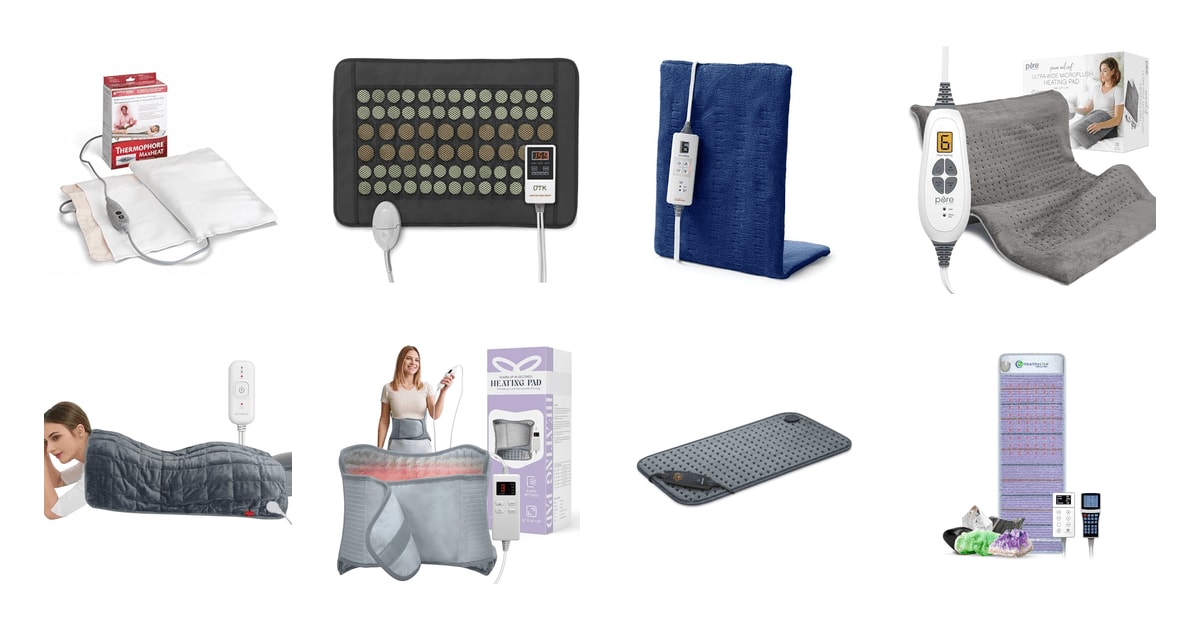
So we looked for pads big enough to actually cover a lower back, hot enough to feel therapeutic, and safe enough that dozing off isn't a trip to urgent care. We think that the Pure Enrichment PureRelief Ultra-Wide is the best heating pad for back pain for most people, and that the Battle Creek Thermophore MaxHEAT is the one to buy if you want the moist heat physical therapists have been using for decades.
Everything we recommend

Covers your whole back, heats fast, and won't cook you

Real moist heat, clinic-grade, and it lasts for decades

Wraps around your waist so you can move around

Deeper infrared heat, if chronic pain is your daily reality
At a glance
| Product | Pad Size | Heat Settings | Price | |
|---|---|---|---|---|
| Battle Creek Equipment Thermophore MaxHEAT PadUpgrade pick | 14x27 Inch | — | $71.28 |
| UTK Far Infrared Heating Pad for BackAlso great | 23.5x16" | 103-159°F | $130.31On sale |
 | Sunbeam Wrapping Heating Pad with XpressHeat TechnologyAlso consider | 12x24 in | 6 Settings | $64.99 |
| Pure Enrichment PureRelief Ultra-Wide Microplush Heating PadTop pick | 20"x24" | 6 Settings | $49.99 |
 | Comfytemp Weighted Large Heating Pad 17"×33"Also consider | 17"x33" | 3 Levels | $37.99On sale |
| Heating Pad for BackAlso great | 12x24+26" | 6 Settings | $37.89 |
 | Beurer HK 123 Cosy Grey Green PlanetAlso in lineup | 60x30 cm | 6 Settings | $71.67 |
 | HealthyLine Platinum Full Body Heating Mat forAlso in lineup | 72"x24" | — | $1,995 |
How we picked
Coverage that fits a back. We treated 12 by 15 inches as the floor, since anything smaller leaves most of an average adult's lumbar region uncovered. Pads that reach from the sacrum toward the mid-thoracic spine ranked highest.
Safe temperature ceiling. We required an auto shut-off after Consumer Reports found pads without one exceeding 140°F after two hours of continuous use. We also favored pads whose low setting stays under the 113°F burn threshold Cleveland Clinic flags.
Even heat, no cold spots. Good Housekeeping Institute lab tests measured ±15°F variance in budget pads versus ±3–5°F in premium ones. We weighed published temperature-stability findings and owner reports of dead patches heavily.
Moist heat capability. Physical therapy settings default to moist heat, and clinical work cited by Healthline shows it outperforms dry heat for muscle spasm. We favored pads offering it, whether through a spray-dampened cover or automatic humidity draw.
Durability and warranty. Electric pads fail suddenly and usually electrically. We read owner feedback for failure timing and gave weight to manufacturers with multi-year terms and a documented record of honoring them.
Top pick
Covers your whole back, heats fast, and won't cook you
Pure Enrichment PureRelief Ultra-Wide Microplush Heating Pad
At 20 by 24 inches, this pad covers your lumbar spine and both shoulder blades at once, so you're not shuffling it around mid-session. Six settings run 105 to 140°F, it does moist heat with a spray bottle, and it shuts itself off after two hours.
$49.99fromAmazonSize is the thing most people underestimate, and this one solves it. Standard pads run about 10 by 12 inches. That's a placemat. Your lower back is wider than that, and if the ache runs from your sacrum up toward your shoulder blades, you'll spend the session inching a small pad around. The PureRelief's 20-by-24-inch surface covers the lumbar-to-mid-back stretch in one go. Lie on your back and it reaches the sacroiliac joints on both sides, which is exactly where most low-back pain concentrates.
The moist-heat option is a spray bottle and thirty seconds of your time. You mist the microplush cover, plug it in, and the damp fabric carries heat deeper into the tissue than dry contact heat does. Clinical work summarized by Healthline suggests moist heat reduces muscle-spasm pain intensity by up to 25% more than dry heat in equivalent 20-minute sessions. It's not as thorough as a dedicated moist-heat pad, but it costs you nothing.
The temperature range is the well-behaved part. Six settings from 105 to 140°F means the low end sits below the 113°F threshold Cleveland Clinic flags for burn risk — useful if you have neuropathy, diabetes, or skin that's lost some sensitivity. The two-hour auto shut-off is standard but non-negotiable, given what Consumer Reports found happens to pads without one. The LCD controller detaches, which matters because it's the part you'll want off the pad before washing.
Two practical touches that sound minor until you're on the couch. The cord is nine feet, so you can reach an outlet across the room without dragging the pad off your back. And the microplush cover goes in the washing machine — which you'll appreciate the first time you use it after a workout, or after the dog decides it's the warmest spot in the house.
Flaws but not dealbreakers
Longevity is the soft spot. Owner feedback splits sharply: plenty of people are on their second or third one after years of daily use, but a meaningful cluster report pads that stopped heating within weeks or months. That's the pattern across most consumer electric pads in this range, not a defect unique to Pure Enrichment, and the five-year warranty is genuinely useful cover. Still, buy expecting to file a claim eventually rather than expecting a heirloom.
At 20 by 24 inches this is a lie-down-with-it pad, not a wear-it-around pad. There's no strap. If you want heat while you cook dinner or sit through a meeting, look at a wrap-style option instead.
The PureRelief Ultra-Wide comes with a five-year manufacturer's warranty.
Upgrade pick
Real moist heat, clinic-grade, and it lasts for decades
Battle Creek Equipment Thermophore MaxHEAT Pad
The Thermophore pulls moisture out of the air and turns it into deep, wet heat — no towels, no spray bottle. It's the pad physical therapists have used for generations, it's made in the USA, and owners routinely report a decade or more of service.
$71.28fromAmazonMoist heat is the standard in physical therapy clinics for a reason, and the Thermophore is the version of it that clinics actually use. The fleece cover draws humidity from the room, so the heat that reaches your skin is genuinely damp rather than dry heat with an optional mist. Owners describe the difference as a fundamentally different sensation — heat that gets into the muscle rather than sitting on it. If you've only ever used a dry electric pad, this is a noticeable step up.
It gets very hot, very fast, and that's the point. The pad reaches therapeutic temperature in well under a minute, and owners consistently describe starting on high and stepping down to medium or low because the heat becomes too much to sustain. That intensity is what makes short sessions effective — 15 to 20 minutes is the window most physical therapists recommend, and this pad hits its stride inside that window. It also means you must respect the switch.
The 14-by-27-inch size covers a full adult back with room to spare, and the pad has real weight to it. That weight is functional: it presses the fabric against the contours of your spine so heat transfers evenly instead of tenting over the curve of your lower back. Owners who use it for arthritis and for post-surgical stiffness single out the coverage as the reason they replaced a smaller pad with this one.
The durability story here is genuinely unusual. Multiple long-term owners report a decade or more of service, and some describe first units lasting twenty-plus years before a plastic switch component finally gave out. That kind of lifespan is rare in any consumer electric product. It also reframes the cost: this is the most expensive corded pad here, but averaged across the years people actually get out of it, the math looks very different.
Flaws but not dealbreakers
It runs on a hand switch you hold down, which is the design's most divisive feature. There's no set-and-forget mode and no timer in the conventional sense — you press for heat and release to stop. Some owners love it as an inherent safety mechanism. Others rig workarounds to keep it engaged, which defeats the safety logic entirely. If you want to nap under a heating pad, this isn't your pad.
The heat can genuinely burn you. Owners describe it as hotter than anything else they've used, and that's a hazard if you have diabetes, neuropathy, or reduced skin sensation. Use a layer of fabric between the pad and bare skin, and stay awake.
It's plain. Beige fleece, a switch on a cord, no digital display or app. You're paying for the heat and the build, not the presentation.
Also great
Wraps around your waist so you can move around
Heating Pad for Back
This one straps on with Velcro and stays put, so you can get heat while you cook, work, or walk the hallway. Six settings run 104 to 149°F, four timer presets go from one hour to six, and it supports moist heat.
$37.89fromAmazonIf you can't spend twenty minutes lying down, a wrap changes what heat therapy can do for you. Most pads pin you to a couch. This one belts around your waist and holds with Velcro, so you can stand at the stove, sit through a call, or move between rooms without losing contact. Owners who bought it for pregnancy back pain, period cramps, or post-surgical recovery come back to the same point: they wore it for hours while doing other things.
The timer options are more generous than most. You can set one, two, four, or six hours, which suits people who genuinely want long low-heat sessions rather than the standard 20-minute protocol. It also has overheat protection that cuts power if the internal temperature goes wrong, independent of the timer. Worth knowing: physical therapists generally recommend the shorter sessions, so the six-hour setting is a convenience, not an endorsement.
Heat range runs 104 to 149°F across six settings, and the pad reaches usable warmth in about 30 seconds. The top end is hot — well above the 113°F burn threshold — so treat the upper settings as short-session only, particularly against bare skin. The low end is mild enough for extended wear. Moist therapy works here too, and the controller detaches for machine washing.
Flaws but not dealbreakers
Sizing is the real limitation. The strap adjusts, but owners above roughly a size 14 report that it doesn't wrap comfortably. If you're between sizes or on the larger end, check the strap dimensions before you commit — a wrap that doesn't close is just an awkward pad.
The cover doesn't appear to be removable, so washing means washing the whole thing with the controller detached. That's more fuss than a pad with a zip-off cover, and it makes you more careful about when you use it.
Also greatOn sale
Deeper infrared heat, if chronic pain is your daily reality
UTK Far Infrared Heating Pad for Back
Jade and tourmaline stones emit far-infrared heat that penetrates 2 to 3 cm into tissue — roughly twice the depth of standard contact heat. It holds temperature within a degree, shields against EMF, and carries a three-year warranty.
$130.31fromAmazonList priceFar-infrared works differently from a conventional pad. Instead of warming your skin and letting conduction carry heat inward, infrared energy penetrates 2 to 3 centimeters into subcutaneous tissue, according to work published in the Journal of Photochemistry and Photobiology. Standard contact heat reaches about a centimeter. For deep, persistent muscle pain that never quite responds to surface warmth, that difference is the entire argument for spending several times more.
Temperature stability is where this pad separates itself. It adjusts from 103 to 159°F in one-degree increments, and Medical News Today's evaluation found the UTK held stable output across a two-hour continuous session while two standard electric pads drifted by about 10°C. That matters more than it sounds. Good Housekeeping Institute lab work measured ±15°F variance across budget pads versus ±3–5°F in premium ones, and uneven heat means a cold spot right over the sacroiliac joint.
The design details reflect who buys it. Near-zero EMF in the heating area, five layered safety protections, a four-hour auto-off timer with a memory function that recalls your last setting, and 72 stones spread across a 23.5-by-16-inch surface. The stones add weight, which helps it drape and press against the curve of your back. It also comes with an adjustable strap and a storage case.
Support is a recurring theme in owner feedback, and it's worth weighing. Multiple people describe pads that failed after a year of near-daily use and were replaced free under the three-year warranty, with quick turnaround. For a product where the failure mode is usually electrical and sudden, a company that actually honors the term is part of what you're buying.
Flaws but not dealbreakers
It's expensive — several times the cost of a good conventional pad — and the case for infrared rests on tissue-penetration research rather than head-to-head trials against a plain heating pad for back pain specifically. If your pain is occasional or responds fine to ordinary heat, you won't get your money's worth.
The stones make it heavy and stiff. At 4.5 pounds it doesn't drape like fleece, and it's not something you'll casually toss in a bag. Owner reports of units failing inside the warranty window are common enough that you should register it and keep the receipt.
The jade-and-tourmaline wellness framing — negative ions, calming energy — outruns the evidence. The far-infrared mechanism is real. The gemstone metaphysics are marketing.
Who this is for
Buy a heating pad if your back pain is muscular, recurring, and the kind that eases when something warm presses against it. That covers most people with chronic low-back stiffness, office workers who tighten up after six hours in a chair, athletes nursing a strain, and older adults managing arthritis. A Forbes Health survey of 500 chronic pain patients found 68% ranked heating pads as their most-used at-home tool, ahead of OTC medication. If you're in that group, a good large pad is one of the highest-return purchases you can make.
Don't buy one expecting a cure. Heat is symptomatic relief for the length of a session and a bit after — the APTA positions it as an adjunct before therapeutic exercise, not a substitute for it. Skip it entirely, or ask a doctor first, if you have diabetes, neuropathy, or any condition that dulls skin sensation, because you may not feel a burn forming. New or worsening pain, numbness down a leg, or pain following an injury needs a clinician, not a pad. This guide covers corded electric pads and infrared mats sized for the back. It doesn't cover microwavable wraps, TENS units, or single-use adhesive heat wraps.
How we picked
Coverage: We set 12 by 15 inches as the minimum and preferred pads that reach from the sacrum toward the mid-thoracic spine, since anything smaller means shuffling the pad around mid-session. Safety: Auto shut-off was mandatory — Consumer Reports found pads without it exceeding 140°F after two hours, well past the 113°F burn threshold Cleveland Clinic flags. Heat consistency: We weighed published temperature-stability findings and owner reports of cold spots, since Good Housekeeping Institute measured ±15°F variance in budget pads. Moist heat: Physical therapy defaults to it, and clinical work cited by Healthline shows it beats dry heat for muscle spasm, so pads offering it ranked higher. Durability: We read owner feedback for how and when pads fail, and gave credit to brands with multi-year warranties and a record of honoring them.
Other heating pads for back pain worth considering
If you want weight along with heat: The Comfytemp Weighted Large Heating Pad 17"×33" ($37.99) — The Comfytemp is 17 by 33 inches and 3.8 pounds, filled with ceramic beads that add a weighted-blanket press while emitting far-infrared warmth. That weight does real work — it keeps the pad flush against the curve of your lower back instead of tenting over it, and owners recovering from lumbar surgery single it out. It's also FSA and HSA eligible. The trade-off is heat: it tops out at 145.4°F on paper, but a recurring owner complaint is that it doesn't get as hot as expected, and there are only three settings. Also worth flagging — at least one owner reported the pad smoking during use, which is rare but not something to ignore.
If you want a known brand at a lower price: The Sunbeam Wrapping Heating Pad with XpressHeat Technology ($64.99) — Sunbeam has been making heating pads for generations, and this king-size wrapping version covers 12 by 24 inches with six heat settings and a backlit digital controller you can read in a dark bedroom. XpressHeat gets it warm in about 30 seconds. It's a solid, conventional pad from a company that isn't going anywhere. We didn't make it a pick because it's a newer listing without much accumulated owner history, and the PureRelief gives you noticeably more surface area plus a longer warranty for a comparable outlay.
The competition
Here's what our research surfaced — not a census of every heating pad sold. We started from the models that show up repeatedly in published reviews and clinical roundups, then narrowed to what was actually available. Several good pads exist outside this set.
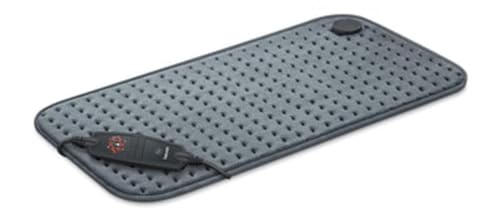
The Beurer HK 123 Cosy Grey Green Planet ($71.67) — The Beurer HK 123 is the safety-first European option, and on paper it's appealing: TÜV-aligned Beurer safety system, six temperature levels including two low eco settings, automatic shut-off after 90 minutes, and a top and bottom made from recycled material that machine-washes at 30°C. At 60 by 30 cm it's roughly 24 by 12 inches, which clears our coverage bar. Owner sentiment is the sticking point — ratings skew noticeably lower than the picks, with a meaningful share of one-star reports. It's a reasonable choice if recycled construction and a conservative 90-minute cutoff matter more to you than raw heat, but the PureRelief covers more back for similar money.
The HealthyLine Platinum Full Body Heating Mat for ($1,995) — The HealthyLine Platinum Full Body mat is a different animal: 72 by 24 inches, roughly 34 pounds, layered with tourmaline, amethyst, jade, obsidian, and quartz plus photon lights. It's built to lie on head-to-toe, not to press against a sore spot. The PEMF evidence base is the strongest in this guide — a meta-analysis of ten randomized controlled trials found a mean 2.1-point reduction on a 10-point pain scale, with effects persisting four weeks. But it's dramatically more expensive than everything else here, the owner record on this particular listing is too thin to draw conclusions from, and 34 pounds means it lives in one room permanently. If you have severe chronic musculoskeletal pain, the budget for it, and space to leave it set up, it's worth researching further. For back pain specifically, a large infrared pad gets you most of the way for a fraction of the commitment.
How to use a heating pad safely
Stick to 15 to 20 minutes per session — that's the window physical therapists recommend, and longer doesn't help more. Always put a layer of fabric between the pad and bare skin, especially on high settings, since most pads here can exceed 140°F. Don't sleep on one. Even with auto shut-off, lying on a pad traps heat against your skin and concentrates it, and the burn risk starts around 113°F. If you have diabetes, neuropathy, or any reduced skin sensation, use the lowest setting and check your skin every few minutes, because you may not feel damage happening. Before washing, always detach the controller and confirm your model is machine-washable. Store pads loosely folded or rolled; sharp creases break the internal wires, which is how most of these fail.
Questions we get
Is moist heat or dry heat better for back pain?
Moist heat generally works better. Clinical work cited by Healthline shows it reduces muscle spasm pain intensity by up to 25% more than dry heat in equivalent 20-minute sessions, because water conducts heat deeper and improves tissue hydration. It's also the default in physical therapy clinics. Most large pads now offer a moist option — you dampen the cover with a spray bottle before use.
How long should you use a heating pad on your back?
Fifteen to 20 minutes per session is the standard recommendation, and the APTA cites that window in its guidance on superficial heat for chronic low-back pain. You can repeat it several times a day with breaks in between. Longer sessions don't add benefit and raise the burn risk, since surface temperatures climb the longer a pad stays on.
Can you sleep with a heating pad on your back overnight?
No. Consumer Reports found pads without auto shut-off exceeding 140°F after two hours of continuous use, and Cleveland Clinic puts the contact-burn threshold around 113°F. Lying on a pad also traps heat against your skin instead of letting it dissipate. Even with an auto shut-off timer, use a heating pad while you're awake.
Are infrared heating pads worth the extra cost for chronic back pain?
For daily chronic pain, possibly. Far-infrared penetrates 2 to 3 cm into subcutaneous tissue versus roughly 1 cm for conventional contact heat, and infrared pads hold temperature far more steadily. But they cost several times more, and the case rests on penetration research rather than head-to-head trials against standard pads. If your pain is occasional, a good large electric pad does the job.
Can a heating pad help with sciatica nerve pain?
Often, yes — indirectly. Heat relaxes the surrounding muscles that may be compressing or irritating the nerve, which can ease the radiating pain even though it doesn't address the nerve itself. Use a pad large enough to cover the lower back and upper glute area, since that's where the compression usually originates. If you have numbness, weakness, or pain that keeps worsening, see a doctor.
Should I use ice or heat for a herniated disc?
Ice generally comes first, in the initial day or two when inflammation is peaking. Heat is better after that, once the acute swelling settles and stiffness becomes the main problem. A Cochrane review supports heat for acute low-back pain over a five-day period. For a confirmed disc issue, follow your clinician's guidance rather than a general rule.
Do physical therapists still recommend heating pads, or is that outdated advice?
They still recommend them. APTA clinical practice guidelines assign superficial heat a Grade B evidence recommendation as an adjunctive first-line treatment for non-specific chronic low-back pain, specifically before therapeutic exercise. The key word is adjunctive — heat loosens things up so you can do the movement that actually helps. It's not meant to work on its own.
Why you should trust us
For this guide:
- We read manufacturer specifications for every pad here, comparing surface dimensions, temperature ranges, timer behavior and warranty terms line by line.
- We drew on published lab findings and clinical literature from Consumer Reports, the Good Housekeeping Institute, Medical News Today, Cochrane, the APTA and Cleveland Clinic to set our safety and heat-consistency thresholds.
- We reviewed owner feedback across each listing for recurring themes — how and when pads fail, whether heat output matches the spec, and how manufacturers handle warranty claims.
- We read owner reviews on every listing, weighted toward the critical ones, because that is where the recurring failures show up.
- We have a systematic way of automatically fetching the latest prices, so the numbers on this page stay current.
- This is a research-focused guide, so the team may not own every product listed — though we often do own the top winners, which gives us extra context for the recommendations.
- We don't accept free products, and the retailer commission never changes which product we recommend.
Sources
Best Heating Pads 2026 — Wirecutter (NYT), Wirecutter
Heat or Ice for Back Pain? — Cleveland Clinic, Cleveland Clinic
Thermotherapy for Chronic Low-Back Pain — Cochrane Systematic Review, Cochrane Library
Best Heating Pads for Back Pain — Good Housekeeping, Good Housekeeping Institute
Heating Pads for Back Pain — Healthline, Healthline
Far-Infrared Radiation: Biological Effects and Medical Applications — NIH/PubMed, National Institutes of Health / PubMed
PEMF Therapy for Musculoskeletal Pain: Meta-Analysis — PubMed, PubMed / NCBI
Best Heating Pads — Forbes Health, Forbes Health
Heating Pad Safety — Consumer Reports, Consumer Reports
Clinical Practice Guidelines for Low-Back Pain — American Physical Therapy Association, American Physical Therapy Association (APTA)
Best Heating Pads for Back Pain 2026 — Medical News Today, Medical News Today
Global Heating Pad Market Report 2025–2030 — Grand View Research, Grand View Research
Amazon product listings and owner reviews for all 8 products
Manufacturer specification pages for each product
Some passages in this guide may be paraphrased with AI help. Prices are refreshed automatically.
More like this.
Continue exploring health reviews and recommendations.

The Best Percussion Massagers for Back Pain
A knot between your shoulder blades has a way of taking over your whole day. You reach for it, your arm gives out halfway, and you end up mashing a tennis…

The Best Mattresses for Side Sleepers With Back Pain
Most adults sleep on their side, and if your lower back hurts, that position asks a lot of a mattress. Your shoulder and hip press in hard while your…

The Best Ergonomic Office Chairs for Back Pain
Your chair decides how your lower back feels at 4 p.m. If you sit six to ten hours a day, that's not a small thing. The spine has a natural inward curve…

The Best Mattress Toppers for Back Pain
Back pain rarely announces itself at bedtime. It shows up at 6 a.m., when you roll over and your lower back feels like it's been clenched for hours. A lot…

The Best Inversion Tables for Back Relief
If your lower back aches by mid-afternoon, an inversion table is one of the simplest things you can try at home. You strap in your ankles, tip backward,…

The Best Products for Wrist Pain Relief
Wrist pain sneaks up on you. It starts as a dull ache after a long day at the keyboard, then it's pins and needles at 3 a.m., and eventually you're…