The Best Mattress Toppers for Back Pain
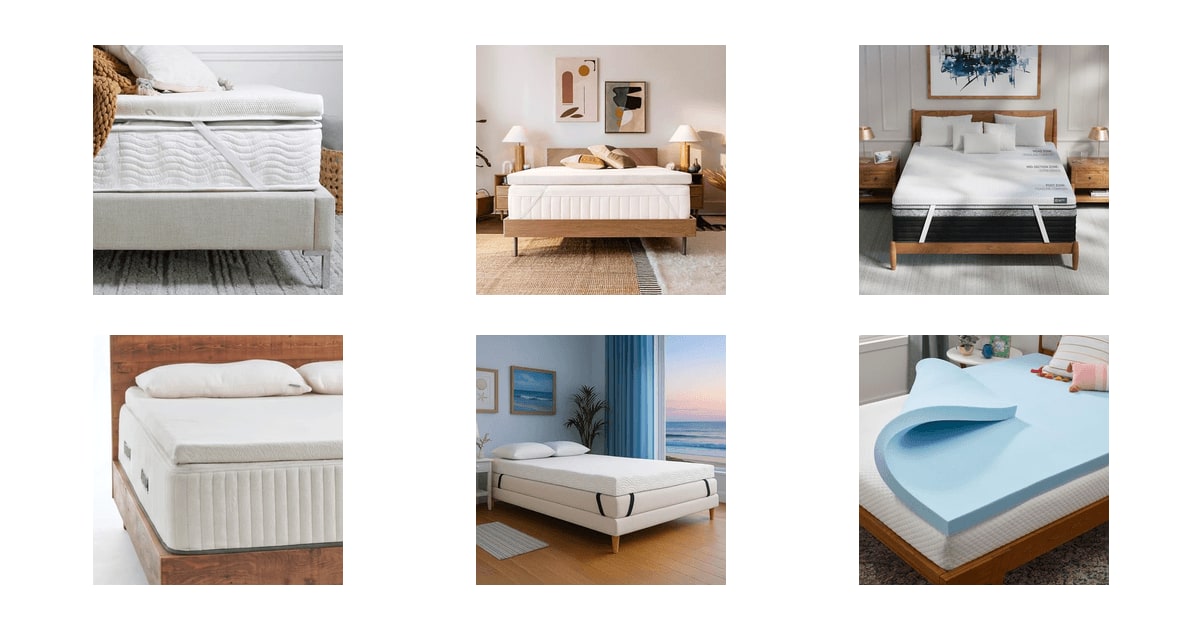
Back pain rarely announces itself at bedtime. It shows up at 6 a.m., when you roll over and your lower back feels like it's been clenched for hours. A lot of that comes down to the surface under you. If your mattress lets your hips sink below your ribs, your spine spends the whole night in a shape it doesn't like. A topper is the smaller lever you can pull before replacing the entire bed, and for plenty of people it's enough to stop the morning stiffness.
Here's the honest part: no topper fixes a broken mattress. If you can see a body-shaped trench in yours, roughly an inch and a half deep or more, foam laid on top just follows the dip. Toppers aren't medical devices either. Firmness is personal, and the same medium-firm foam that rescues your back can leave your partner's shoulder aching. Every one of these is a gamble on feel, which is why a return window matters as much as the material does.
So we leaned on what can actually be checked: published lab findings and review-site reporting, spec sheets and certifications, and the themes that repeat across owner feedback. Spine-Health's orthopedic contributor panel puts the sweet spot for most lower-back-pain sleepers at medium to medium-firm, around a 5 to 7 on a 10-point scale, and that's the band we favored. We think that the Helix ErgoAlign is the best mattress topper for back pain for most people, and that the Tempur-Pedic TEMPUR Supreme is the one to buy if you want deeper pressure relief from a long-established material.
Everything we recommend

Zoned firmness under your hips, plus a genuinely cool cover
Deeper pressure relief, if you can live with a softer feel
Plush cushioning for a too-firm bed, with limited staying power

Certified organic latex that should outlast foam by years

Four inches of medium-firm foam for heavier sleepers
At a glance
| Product | Thickness | Firmness Feel | Price | |
|---|---|---|---|---|
 | Saatva Graphite Memory Foam Mattress TopperAlso in lineup | 3 Inches | — | $305 |
| Tempur-Pedic TEMPUR Supreme TopperRunner-up | 3 Inches | Medium | $269 |
| Helix ErgoAlign Mattress Topper with GlacioTex™ -Top pick | 3 Inches | Firm | $389On sale |
| Avocado Eco Organic Latex Mattress Topper -Upgrade pick | 3 Inches | Plush | $499 |
| Viscosoft Active Cooling 4 Inch Memory FoamAlso great | 4 Inches | Medium-Firm | $299.99 |
| Linenspa Memory Foam Mattress TopperBudget pick | 3 Inches | Plush | $89.99 |
 | Pure Green Natural Latex Mattress Topper -Also consider | 3 Inches | Soft | $269 |
How we picked
Firmness for back pain. We favored toppers that land in the medium to medium-firm range, which Spine-Health's orthopedic contributor panel identifies as roughly 5 to 7 on a 10-point scale for most lower-back-pain sleepers. Anything described as plush had to earn its place on a specific sleep position.
Thickness and support. We compared 2-, 3- and 4-inch profiles against published findings on how much each shifts perceived firmness. Three inches is the safe default; four is for heavier sleepers or badly mismatched mattresses.
Material longevity. Lab compression findings and long-term review-site reporting both point the same way: latex holds its firmness far longer than memory foam, and low-density foam under about 2.5 lb/ft³ softens within a year or two. We weighted material and density heavily.
Heat and airflow. Back pain and night sweats often travel together, so we looked for cooling covers, gel or graphite infusions, and open-cell latex — then checked owner feedback to see whether the cooling claims survived contact with a real bedroom.
Certifications and fit. We required CertiPUR-US for foams and GOLS or GOTS for latex and covers, and we noted whether a topper has straps or a grippy backing, since a topper that slides toward the foot of the bed stops supporting anything.
Top pickOn sale
Zoned firmness under your hips, plus a genuinely cool cover
Helix ErgoAlign Mattress Topper with GlacioTex™ -
The ErgoAlign puts dense, supportive foam under your midsection and softer foam under your shoulders, which is the exact split most back-pain sleepers need. A cool-to-the-touch cover keeps it from turning into a heat trap the way plain memory foam often does.
$389fromAmazonList priceMost toppers are one uniform slab of foam. This one isn't. The ErgoAlign is built in three zones, with ultra-dense foam beneath your midsection and more contouring foam at the head and foot. That's the geometry a sore lower back wants: lift where your hips try to sink, give where your shoulders need to press in. If your mattress has gone soft through the middle, this is the shape of the fix.
Owners with long-running lower-back trouble describe a similar arc. An old bed had turned into a hammock, they added this, and the middle came back up. Several of them switched from other memory foam toppers and stayed. Side sleepers with disc problems report the same thing from the other direction: enough give at the shoulder without losing the waist. The feedback pool is still small, so treat it as encouraging rather than settled.
The cooling cover isn't just marketing garnish. GlacioTex is a cool-to-the-touch knit, and that matters more than it sounds if your back pain and your night sweats are tangled together. You sleep shallower when you're overheating, and shallow sleep makes pain worse. The foam is CertiPUR-US certified and the topper is GREENGUARD Gold certified and fiberglass-free, so off-gassing should stay well under the half-part-per-million VOC threshold CertiPUR-US sets.
Three inches is usually the right dose. Mattress Clarity's testers found a 4-inch topper can shift how firm a mattress feels by as much as two full points on a 10-point scale, which is a bigger change than most people want. Three inches moves you about half that far. It's enough to rescue a too-firm bed or a slightly sunken one, without floating you so far off the mattress that the support underneath stops doing anything.
Flaws but not dealbreakers
The top surface is slick, and owners consistently mention fitted sheets sliding around on it. A couple describe the whole topper feeling slippery when they first sit on the edge of the bed. Deep-pocket sheets and a tight fitted sheet over the top help, but plan on some fussing during the first week.
It's heavy and awkward to unpack — the California King runs over 30 pounds — and the plastic wrap is thick enough that people are tempted to reach for a knife. Don't. Cutting into the foam is an easy, permanent mistake. And this is still foam, not latex, so expect it to soften over years rather than hold its shape indefinitely.
Runner-up
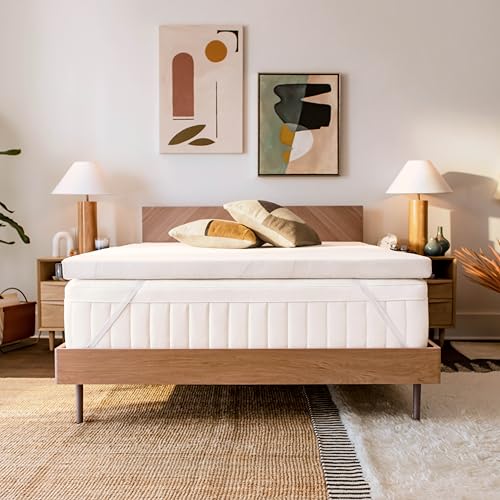
Deeper pressure relief, if you can live with a softer feel
Tempur-Pedic TEMPUR Supreme Topper
TEMPUR foam melts under your hips and shoulders in a way ordinary memory foam doesn't quite match, which makes this the pick for side sleepers whose back pain starts at the hip. It runs softer than medium-firm, so back and stomach sleepers should think twice.
$269fromAmazonThis is the material that made memory foam a household phrase, and the topper uses the same formulation as the mattresses. It responds to your weight and your body heat, so it keeps softening for the first few minutes after you lie down. For a side sleeper whose hip goes numb on a firm bed, that slow give is the whole point. Owners who bought firm mattresses and regretted it describe this as the correction.
The three-inch height is doing real work here. Two-inch toppers add a cushion; three inches actually changes the bed. That's the difference between taking the edge off a hard mattress and making it feel like a different one. Tempur-Pedic rates this as a medium, and paired with a firm mattress underneath, medium is right in the 5-to-7 range orthopedic panels point back-pain sleepers toward.
Small things make it easier to live with. The cover unzips and goes in the washing machine, which matters if you sweat at night or share the bed with a dog. Staytight corner straps grip the mattress so the topper doesn't creep toward the foot of the bed, a problem that plagues cheaper foam. Owner reports going back several years suggest the foam holds its shape longer than budget toppers do.
It's also the most conservative choice here. Tempur-Pedic has been selling this material for decades, physical therapists routinely point chronic-pain patients toward it, and there's an enormous body of owner feedback to read before you commit. When you're spending real money on a guess about firmness, a long track record is worth something.
Flaws but not dealbreakers
It's soft. Several owners describe it as softening a firm bed more than they expected, and that's exactly the direction stomach sleepers should avoid. Healthline's medically reviewed guidance notes that a too-soft surface can push a stomach sleeper's lumbar spine into 15 to 20 degrees more extension, which is how you turn a decent night into a worse morning.
Dense foam holds heat, and this has less cooling engineering than the Helix or the ViscoSoft. If you already sleep hot, that's a real trade. Quality also seems to vary between units — a minority of owners report receiving one that felt noticeably different from a previous Tempur-Pedic topper they'd owned. Buy where returns are easy.
Budget pick
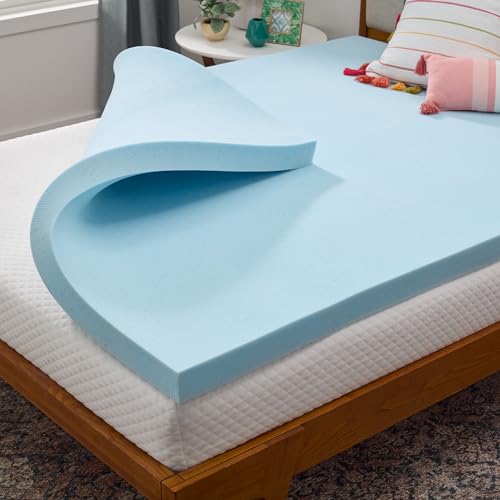
Plush cushioning for a too-firm bed, with limited staying power
Linenspa Memory Foam Mattress Topper
If your mattress feels like a stack of cardboard and you mainly need cushioning, this gel-infused foam is the low-risk way to find out whether a topper helps at all. It's plush rather than supportive, and it won't hold up for years.
$89.99fromAmazonThis is the one to try first if you're not sure a topper is your answer. It costs a fraction of what the picks above do, it comes in a 2-inch or 3-inch profile, and it does the single thing most people want: it softens a punishingly firm mattress. Owners who'd been sleeping badly for years on a hard bed describe the change as immediate. Get the 3-inch version — the 2-inch is barely more than a mattress pad.
The foam is CertiPUR-US certified, so off-gassing should be minimal, and owners frequently note there was little or no smell out of the box. It arrives compressed and needs a full day or two to expand, which is normal. It's light, around 15 pounds in a queen, so unlike the latex and TEMPUR options you can wrestle it onto the bed by yourself.
Just be clear about what it is. This is cushioning, not lumbar support. On a firm mattress that's still structurally sound, that combination works well and a lot of back-pain sleepers do fine with it. On a bed that's already sagging, plush foam follows the sag and can make the hip-drop problem worse. Match it to the right mattress and it earns its keep.
Flaws but not dealbreakers
Density is the catch. Wirecutter's reporting found that foam under about 2.5 lb/ft³ typically softens and stops offering meaningful back support within 12 to 18 months of nightly use, and the Good Housekeeping Institute has flagged visible compression in sub-3 lb/ft³ foam within six months. A topper this light and this inexpensive sits in that risk zone. Treat it as a two-to-three-year purchase.
The cooling gel doesn't do much. A recurring theme in owner feedback is that the topper traps heat regardless of how cool the room is. Heavier sleepers are also more likely to bottom out on it — one owner around 280 pounds reported compressing straight through to the mattress.
Linenspa backs this topper with a three-year limited warranty.
Upgrade pick
Certified organic latex that should outlast foam by years
Avocado Eco Organic Latex Mattress Topper -
Talalay latex pushes back instead of swallowing you, and it lasts far longer than memory foam. Get this if you want a genuinely organic bedroom and a topper you won't be replacing before the end of the decade.
$499fromAmazonLatex feels nothing like memory foam. It responds instantly, so you roll over without fighting your way out of a divot, and it never gets that sunk-in, stuck feeling. For back pain the practical benefit is buoyancy — it holds your hips at the surface rather than letting them settle. If you've tried memory foam and hated the sensation, this is the material to try next.
Longevity is the real argument for spending more here. Sleepopolis's long-term evaluations put natural latex toppers at roughly 8 to 10 years of useful life against 3 to 5 for gel memory foam of the same thickness, and Consumer Reports lab compression testing found latex holds its original firmness rating about 40% longer than comparable foam. You're paying once instead of three times.
The certifications are the other reason to pick this one. The Talalay latex is GOLS certified organic, the cotton cover is GOTS certified, and the whole thing carries GREENGUARD Gold for low chemical emissions. If someone in the house has asthma or chemical sensitivities, or you just don't want a petroleum product six inches from your face all night, that stack of certifications is the thing to look for.
It comes in 2-inch and 3-inch profiles. Three inches gives you a real comfort layer and meaningfully changes how the bed feels; 2 inches adds a light cushion while leaving your mattress mostly as it is. If your mattress is close to right and you're just chasing the last bit of hip pressure, the thinner one is often the smarter buy.
Flaws but not dealbreakers
This listing is the plush version, and plush is the wrong direction for a lot of back-pain sleepers. If you sleep on your back or stomach, or you're over roughly 230 pounds, a soft topper will let your hips drop and undo the point of buying it. Look for the firmer option in Avocado's range instead, or choose one of the foam picks above.
It's expensive relative to everything else here, it's heavy enough that you'll want a second person to position it, and there's very little owner feedback on this particular listing to sanity-check the spec sheet against. Natural latex also has a faint rubbery smell for the first few days.
Also great
Four inches of medium-firm foam for heavier sleepers
Viscosoft Active Cooling 4 Inch Memory Foam
Two layers of foam stacked four inches deep give heavier sleepers something to sink into without hitting the mattress underneath. The cover uses a heat-reflective textile, so it runs cooler than most thick foam toppers.
$299.99fromAmazonThickness is not a luxury if you're a bigger sleeper. On a 2- or 3-inch topper, heavier bodies compress the foam completely and end up feeling the mattress through it, which erases the benefit entirely. Four inches with a denser support layer underneath gives you room to sink and still be held. Owners in the 200-pound range consistently describe it as supportive rather than mushy.
The cover is the unusual part. ViscoSoft lines the underside with a heat-reflective textile borrowed from firefighting gear, aimed at bouncing radiant body heat back rather than storing it. Owners repeatedly single out the cooling as the standout feature, especially through summer. It's not air conditioning, but for a thick foam topper — the kind that normally cooks you — running neutral is a genuine win.
The four-inch height is also the biggest thing to think through before you order. Mattress Clarity found that a topper this thick can shift a bed's perceived firmness by as much as two points on a 10-point scale. That's a large change. It's the right call if your mattress is far too firm or sagging noticeably, and too much if your bed is only slightly off.
Flaws but not dealbreakers
It raises your bed substantially. Owners report having to pull the box spring out or buy deeper fitted sheets, and getting in and out of a bed that's suddenly four inches taller is a real consideration if you have mobility issues. Measure your headboard and your sheets first.
Firmness feedback splits. Most owners find it medium-firm as advertised, but a minority say they sink in more than they expected, and a few report the plastic strap clips arriving cracked. And it's still memory foam, so plan on a shorter useful life than latex.
Who this is for
Buy a topper if your mattress is structurally sound but feels wrong — too firm, or slightly too soft in the middle — and you wake up with a stiff lower back. That's the situation a topper actually solves, often for a small fraction of what a new mattress costs. It's also the right move if you're stuck with a bed you can't replace: a guest room mattress, a dorm bed, a rental, a sleeper cab. Side sleepers with hip and lumbar pain tend to get the fastest relief, because a topper can unload the hip without changing the support underneath.
Don't buy one if your mattress has a visible body-shaped trench, roughly an inch and a half deep or more. Foam laid over a sag follows the sag, and you'll have spent money to sleep in the same hole. Skip it too if your pain is new, sharp, radiating down a leg, or waking you every night — that's a conversation with a doctor, not a bedding purchase. This guide covers foam and latex toppers only. It doesn't cover mattresses, adjustable bases, wedge pillows or mattress pads, and it can't tell you which firmness your particular back will like, which is why we weighted return policies as heavily as we did.
How we picked
We started with the evidence that generalizes and worked down to the individual listings. Firmness: we favored the medium to medium-firm band, around 5 to 7 on a 10-point scale, which orthopedic panels recommend for most lower-back-pain sleepers, and treated plush options as position-specific rather than general-purpose. Thickness: three inches is the safe default, two inches is cushioning only, and four inches is for heavier sleepers or a badly mismatched bed. Longevity: we weighted latex over foam and flagged any foam likely to fall below about 2.5 lb/ft³ in density, since low-density foam loses meaningful support within a year or two. Cooling: covers, gel and graphite infusions and open-cell latex all counted, but only if owner feedback backed the claim. Certifications: CertiPUR-US for foams, GOLS and GOTS for latex and covers, with GREENGUARD Gold as a bonus. Fit: straps or a grippy backing, because a topper that migrates overnight isn't supporting your spine.
Other mattress toppers for back pain worth considering
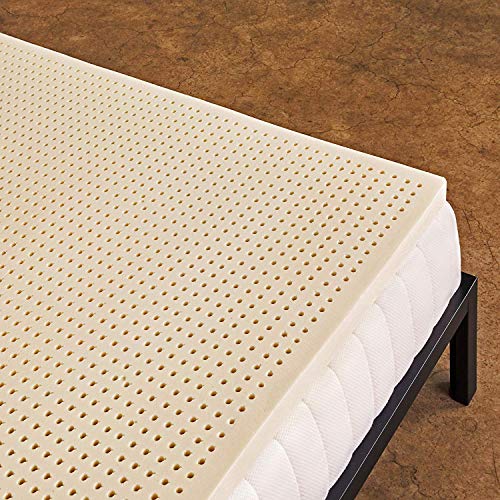
If you want natural latex without the organic-cotton premium: The Pure Green Natural Latex Mattress Topper - ($269) — Pure Green's topper is GOLS certified organic natural latex and Fair Trade certified, and it's built on the same principle as the Avocado — instant response, no sinking, a lifespan measured in years rather than seasons. It costs noticeably less, and there's a deep well of owner feedback behind it going back a long time. The catch is that this listing is the soft version, which is the wrong firmness for most back-pain sleepers on their back or stomach; lighter side sleepers are the ones who consistently love it. Sleep On Latex sells firmer versions, and if your back pain comes from a too-firm bed rather than a sagging one, the medium is the one to look for. The cover is a plain latex encasement, so you'll want a fitted sheet with deep pockets to hold everything together.
The competition
This is what our research surfaced, not a census of the category. Toppers come and go constantly, and a good one can be missing from this list simply because it wasn't among the listings we could verify.
The Saatva Graphite Memory Foam Mattress Topper ($305) — The Saatva Graphite topper is the closest thing here to our top pick, and on paper it's excellent: three inches of graphite-infused memory foam, CertiPUR-US certified, with good motion isolation if you're woken by a restless partner. Tom's Guide reviewers recorded a surface temperature roughly three degrees cooler on the graphite topper than on standard memory foam after an hour of contact, so the cooling claim has some support behind it. What kept it out of the picks is durability. Owner feedback is more polarized than any other topper here, and a recurring complaint is foam breaking down fast — losing height and developing a ridge along the unslept middle within weeks. Plenty of owners are delighted, particularly ones who put it on a decades-old mattress and got their bed back. But it's a single uniform slab, so it doesn't offer the zoned lumbar support the Helix does, and the split verdict on longevity is hard to ignore. Consider it if you want a name-brand cooling foam topper and you're buying somewhere with a forgiving return window.
Fit and setup
Give a compressed topper a full 24 to 48 hours to expand before you judge it, and open the plastic with your hands or blunt scissors rather than a blade — cutting the foam is an easy, permanent mistake. Once it's on, the fitted sheet is what holds everything together, so measure your mattress plus the topper and buy deep-pocket sheets to match. A 4-inch topper can push your bed high enough that you need to rethink the box spring. Rotate the topper head to foot every few months to spread the wear, and don't fold or bend latex, which can crack it. Most covers unzip for machine washing; the foam or latex core itself never goes in the wash. Spot-clean it and let it dry fully before you put the cover back on.
Questions we get
Is memory foam or latex better for back pain?
Latex is the better long-term buy for most back-pain sleepers. It pushes back instead of letting you sink, which keeps your hips level with your spine, and Consumer Reports lab compression testing found it holds its original firmness rating about 40% longer than comparable memory foam. Memory foam wins on contouring, so side sleepers with sharp hip and shoulder pressure often prefer it. If you've tried foam and disliked the stuck-in-place feeling, latex is the one to try next.
How thick should a mattress topper be for back pain?
Three inches is the right answer for most people. Two inches adds cushioning but won't change how a mattress actually supports you, and four inches shifts the feel dramatically — Mattress Clarity found a 4-inch topper can move perceived firmness by up to two full points on a 10-point scale. Go with four inches only if you weigh more than about 230 pounds or your mattress is far firmer than you want. Otherwise three inches gives you real change without erasing the support underneath.
What firmness should I choose?
Medium to medium-firm, roughly 5 to 7 on a 10-point scale, is what Spine-Health's orthopedic contributor panel recommends for most lower-back-pain sufferers. A randomized controlled trial published in the Journal of Chiropractic Medicine found participants on medium-firm surfaces reported a 57.5% reduction in low back pain intensity over 90 days compared with those on soft surfaces. Side sleepers can go a little softer for hip relief. Stomach sleepers should stay firm — Healthline's medically reviewed guidance notes that too-soft surfaces can add 15 to 20 degrees of lumbar extension.
Can a topper fix a sagging mattress?
Only a mild one. If your mattress has a body impression deeper than about an inch and a half, a topper just conforms to the dip and you'll keep sleeping in the same misaligned position. A firm or zoned topper can compensate for a bed that's gone slightly soft in the middle, and plenty of owners report exactly that outcome. But if you can see the trench from across the room, it's time for a new mattress.
What should heavier sleepers look for?
Thickness and density, in that order. If you're over roughly 230 pounds, a 2- or 3-inch topper often compresses completely and you end up feeling the mattress through it — which defeats the purpose. Look for four inches of dense foam, like the ViscoSoft, or a firm latex topper that resists compressing. Avoid anything sold as plush; owner feedback consistently shows heavier sleepers bottoming out on soft, low-density foam.
How long will a memory foam topper last?
Three to five years for a decent one, and considerably less for a cheap one. Wirecutter's reporting found that foam under about 2.5 lb/ft³ density typically softens enough to lose meaningful back support within 12 to 18 months of nightly use, and the Good Housekeeping Institute has documented visible compression deformation in sub-3 lb/ft³ foam within six months. Natural latex is the outlier — Sleepopolis puts its useful life at 8 to 10 years. If a topper starts feeling flat under your hips, it's done.
Why you should trust us
For this guide:
- We read manufacturer spec sheets and certification listings for every topper here, checking foam density claims, latex type and whether CertiPUR-US, GOLS, GOTS or GREENGUARD Gold certification was documented.
- We compared published findings from Consumer Reports, Sleepopolis, Mattress Clarity, RTINGS, Tom's Guide, the Good Housekeeping Institute and Wirecutter on topper durability, firmness shift and cooling, alongside medically reviewed guidance from Spine-Health, Healthline and the Sleep Foundation.
- We read through owner feedback for each listing looking for repeated themes — sagging, heat retention, slippage and firmness that didn't match the description — rather than isolated complaints.
- We read owner reviews on every listing, weighted toward the critical ones, because that is where the recurring failures show up.
- We have a systematic way of automatically fetching the latest prices, so the numbers on this page stay current.
- This is a research-focused guide, so the team may not own every product listed — though we often do own the top winners, which gives us extra context for the recommendations.
- We don't accept free products, and the retailer commission never changes which product we recommend.
Sources
Best Mattress Toppers — Wirecutter / NYT, Wirecutter
Best Mattress Toppers for Back Pain — Sleep Foundation, Sleep Foundation
Mattress Topper Reviews and Ratings — Consumer Reports, Consumer Reports
Best Mattress Toppers 2026 — RTINGS.com, RTINGS.com
Mattress Toppers for Back Pain — Spine-Health, Spine-Health
Effect of Sleep Surface on Low Back Pain — Journal of Chiropractic Medicine, Journal of Chiropractic Medicine
Latex vs. Memory Foam Topper Comparison — Sleepopolis, Sleepopolis
Best Mattress Toppers — Healthline, Healthline
Mattress Topper Buying Guide — Mattress Clarity, Mattress Clarity
CertiPUR-US Certification Overview, CertiPUR-US
Saatva Graphite Topper Review — Tom's Guide, Tom's Guide
Best Mattress Toppers — Good Housekeeping, Good Housekeeping
Amazon product listings and owner reviews for all 7 products
Manufacturer specification pages for each product
Some passages in this guide may be paraphrased with AI help. Prices are refreshed automatically.
More like this.
Continue exploring home reviews and recommendations.

The Best Mattress Toppers
A mattress topper is the quickest way to change how your bed feels. If your mattress is too firm, a plush layer of foam or latex softens it in a night. If…

The Best Mattresses for Side Sleepers With Back Pain
Most adults sleep on their side, and if your lower back hurts, that position asks a lot of a mattress. Your shoulder and hip press in hard while your…

The Best Ergonomic Office Chairs for Back Pain
Your chair decides how your lower back feels at 4 p.m. If you sit six to ten hours a day, that's not a small thing. The spine has a natural inward curve…

The Best Heating Pads for Back Pain
A heating pad is the rare pain remedy that asks almost nothing of you. You plug it in, you lie down, and 20 minutes later the knot between your shoulder…

The Best Percussion Massagers for Back Pain
A knot between your shoulder blades has a way of taking over your whole day. You reach for it, your arm gives out halfway, and you end up mashing a tennis…

The Best Dual-Zone Heated Mattress Pads
Most bedroom fights about temperature are really fights about one thermostat and two bodies. A dual-zone heated mattress pad settles that at the mattress…