The Best Mattress Toppers
A mattress topper is the quickest way to change how your bed feels. If your mattress is too firm, a plush layer of foam or latex softens it in a night. If it's gone a little soft in the middle, a dense topper can firm the surface back up. And if you wake with a sore hip or a numb shoulder, an inch or three of cushioning between you and the springs often helps more than a new pillow does. Most people buy one to stretch a few more years out of a mattress they aren't ready to replace.
Here's the honest limit: a topper can't fix a broken bed. If the springs have collapsed or there's a trench down the middle, adding foam just gives you a softer trench. Toppers work on a mattress that's still structurally sound but wrong for you. Foam ones also arrive compressed in a box and smell for a day or three while they air out — normal, but real. And no foam topper sleeps as cool as no topper at all. Cooling features slow heat buildup; they don't eliminate it.
We looked at published lab work from Consumer Reports, Tom's Guide and the Sleep Foundation, at manufacturer spec sheets and certifications, and at the themes that come up again and again in owner feedback. We think that the Tempur-Pedic TEMPUR Supreme Topper is the best mattress topper for most people, and that the Lucid 3 Inch Memory Foam Mattress Topper is the one to buy if you want most of that pressure relief for a fraction of the outlay.
Everything we recommend
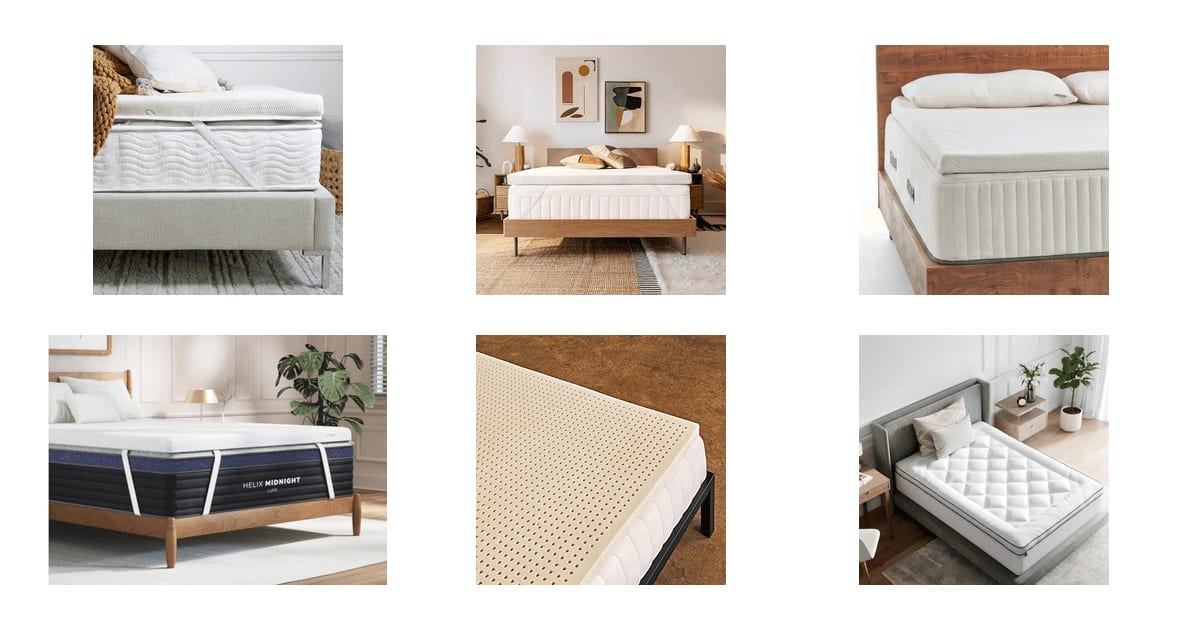
Deep pressure relief and a track record that holds up
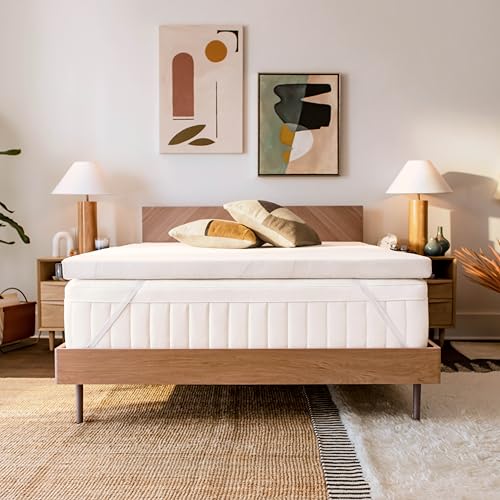
Most of the plush foam feel, a fraction of the outlay
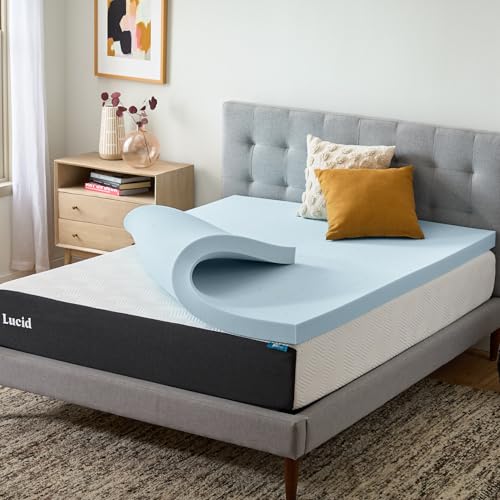
Bouncy, breathable latex that should outlast three foam toppers

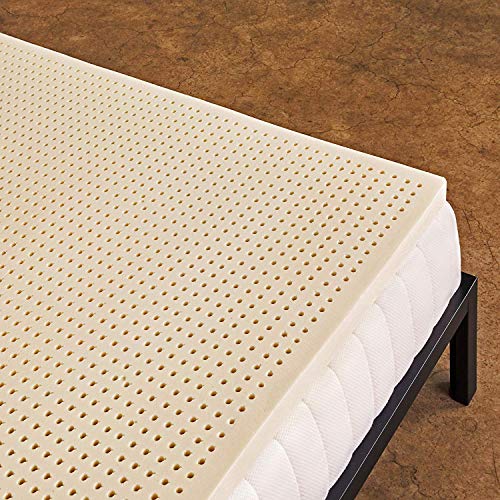
Graphite-infused foam for people who want cradling but sleep warm
At a glance
| Product | Thickness | Material | Price | |
|---|---|---|---|---|
| Saatva Graphite Memory Foam Mattress TopperAlso great | 3 in | Memory Foam | $305 |
| Tempur-Pedic TEMPUR Supreme TopperTop pick | 3 in | Memory Foam | $269 |
 | Avocado Eco Organic Latex Mattress Topper -Also consider | 3 in | Talalay Latex | $499 |
 | Helix Premium Memory Foam Mattress Topper withAlso consider | 3 in | Memory Foam | $255 |
| Pure Green Natural Latex Mattress Topper -Upgrade pick | 3 in | Natural Latex | $269 |
 | Novilla Queen Mattress TopperAlso in lineup | 2 in | Down Alternative | $43.25 |
| Lucid 3 Inch Memory Foam Mattress TopperBudget pick | 3 in | Memory Foam | $89.99 |
How we picked
Material and feel. We compared memory foam, latex and down alternative against published durability and pressure-relief data, since material determines whether you sink in, float on top, or just get a soft pad. Each of our picks had to be clearly best-in-class for one of those feels rather than a compromise across all three.
Thickness that matters. We prioritized three-inch toppers because that's the depth where published pressure mapping shows a real reduction in pressure on hips and shoulders. Two-inch options had to earn their place by doing something else well, like washability.
Honest cooling. We treated gel infusion alone as insufficient and looked for open-cell structure, ventilation, breathable covers or conductive infusions, cross-checked against lab temperature comparisons from Tom's Guide. We also weighed owner feedback, which is blunt about which cooling claims don't hold up.
Certifications. Every foam pick had to carry CertiPUR-US certification, which confirms total VOC emissions under 0.5 ppm — more than 97% below uncertified polyurethane foam. For latex we looked for GOLS or GOTS, and we noted GREENGUARD Gold where it applied.
Longevity signals. We weighted long-term owner reports over first-week enthusiasm, and gave credit to materials with published retention data, like latex holding 94% of its thickness at five years. Warranty length was a tiebreaker, not a headline.
Top pick
Deep pressure relief and a track record that holds up
Tempur-Pedic TEMPUR Supreme Topper
Three inches of Tempur-Pedic's signature foam, the same material that goes into its mattresses. It softens a too-firm bed, cushions hips and shoulders for side sleepers, and comes with a washable cover and corner straps so it stays put.
$269fromAmazonIf your hips and shoulders ache on a firm mattress, this is the one to try first. TEMPUR material responds to body heat and weight rather than just squashing down, so it forms a cradle around bony spots instead of pushing back at them. Tempur-Pedic says the material spreads pressure over 67% more surface area than standard foam. Owner feedback lines up: the most common story is someone who bought a firm mattress, regretted it, and salvaged it with this.
The three-inch profile is the sweet spot for a real change in feel. Two inches takes the edge off; four inches can leave you swimming. Wirecutter's in-house pressure mapping found three-inch memory foam toppers cut pressure on bony prominences by up to 30% versus the bare mattress. That's the range where a topper stops being a comfort tweak and starts doing the work of a proper comfort layer.
The details are better thought through than on cheaper foam. The cover unzips and goes in the washing machine, which matters more than you'd think after a couple of years. Staytight corner straps anchor it to the mattress, so it doesn't creep toward the footboard every night. Memory foam also isolates motion well, so if your partner gets up at five, you're less likely to notice.
Reputation counts for something in a category full of anonymous foam. Tempur-Pedic has been making this material for decades, and the long-term owner reports are the useful part — people writing back after three or more years of nightly use, still happy. That's a harder claim to find for most toppers, which tend to accumulate glowing first-week reviews and then go quiet.
Flaws but not dealbreakers
It's the heaviest topper here at roughly 32 pounds, and wrestling it onto a bed alone is genuinely awkward. Plan on a second set of hands.
It sleeps warm. There's no gel, no grid, no cooling cover — just dense foam that hugs you, and dense foam that hugs you holds heat. Owner feedback is split, with some people reporting it's fine and others finding it noticeably hotter than their bare mattress. If you already sleep hot, look at the Purple-style grid or gel options instead.
A minority of owners describe softening or a permanent body impression after a year or two, which is disappointing at this price tier. It's not the majority experience, but it's frequent enough that you should register the topper and keep your paperwork.
Budget pick
Most of the plush foam feel, a fraction of the outlay
Lucid 3 Inch Memory Foam Mattress Topper
A three-inch gel-infused memory foam topper with ventilation channels cut through it. It's the default recommendation for a dorm room, a guest bed, or a firm mattress you want softer without spending much.
$89.99fromAmazonThis is the topper that shows up on nearly every budget list, and the reason is simple: the basics are right. Three inches of memory foam, CertiPUR-US certified, plush enough to change how a firm mattress feels. Bob Vila's panel testing found this topper cut pressure-point pain ratings by 2.1 points on a 10-point scale — a result competitive with toppers costing several times as much.
For a guest room or a first apartment, the math is hard to argue with. You're not buying a lifetime product. You're buying a few years of much better sleep on a mattress you didn't choose. Owner feedback overwhelmingly reflects that use: old hand-me-down mattress, sore back, problem largely solved. It's the most-bought topper in this lineup by a wide margin.
Gel infusion and the punched ventilation channels help airflow a little, but set expectations. Our research is clear that gel alone doesn't make foam sleep cool; open-cell structure and a breathable cover matter just as much. Owners who describe this one as cool tend to be comparing it with a foam topper that had no ventilation at all.
It ships compressed and needs 24 to 48 hours to fully decompress, plus some airing time for the new-foam smell. That's true of every boxed foam topper, but worth planning around if you're setting up a bed the day someone arrives.
Flaws but not dealbreakers
The three-inch plush version is soft, and if you're heavier or sleep on your stomach you may bottom out through it. Some owners describe a sinkhole feeling. The two-inch profile is the safer choice if you mostly want a slight softening rather than a new feel.
Durability is the trade-off you're making. Cheaper foam compresses faster, and body impressions tend to show up sooner here than on the Tempur-Pedic or either latex topper. Think of it as a three-to-five year purchase, not a decade.
Lucid backs this topper with a three-year limited warranty.
Upgrade pick
Bouncy, breathable latex that should outlast three foam toppers
Pure Green Natural Latex Mattress Topper -
Three inches of GOLS-certified organic Dunlop latex, sold in soft, medium and firm. It sleeps cooler than memory foam, springs back instead of sinking, and holds its shape for years longer than foam does.
$269fromAmazonLatex is the durability answer in this category, and the numbers back it up. The Sleep Doctor puts average latex topper lifespan at seven to nine years against three to five for comparable memory foam. Consumer Reports found latex retained 94% of its original thickness after five years, versus 78% for polyfoam. Given that most people buy a topper to stretch out an aging mattress, that gap is the whole argument.
Latex feels different from memory foam, and you should know which you want. Memory foam sinks slowly and holds you. Latex pushes back — it's buoyant and responsive, and you move on top of it rather than in it. If you change position a lot during the night, or you've ever felt stuck in memory foam, latex is the more comfortable surface. It also runs cooler, since the open-cell structure breathes rather than trapping body heat.
You pick your firmness, which is unusual and useful. Soft adds real plushness to a hard mattress. Medium and firm are for people who want support restored rather than cushioning added. That 2024 clinical review finding that medium-firm surfaces reduced lower back pain in 63% of participants is worth keeping in mind — going as soft as possible isn't automatically the right call for a sore back.
The certifications are the real thing rather than marketing language. GOLS covers the organic latex itself, and the company also holds Fair for Life fair trade certification. If you're buying partly on materials and sourcing, this is among the more transparent options here.
Flaws but not dealbreakers
Latex is heavy and dense, and a queen runs about 34 pounds in a tightly compressed package. Unrolling and positioning it is a two-person job, and it needs time to fully expand.
Firmness is subjective and a handful of owners report that even the soft version arrived firmer than they expected, particularly lighter sleepers who wanted to sink in. Latex simply doesn't contour the way memory foam does, so if deep cradling is what you're after, this isn't it.
There's no cover included in the way you'd get on the Tempur-Pedic or Helix, so you'll want a topper protector or at least a fitted sheet deep enough to hold it.
Also great
Graphite-infused foam for people who want cradling but sleep warm
Saatva Graphite Memory Foam Mattress Topper
Saatva's three-inch memory foam topper is infused with graphite to pull heat away from the surface. It's aimed at side sleepers who want the deep contouring of memory foam without quite as much of its heat.
$305fromAmazonGraphite is a better conductor than the gel beads used in most cooling foam, and the idea is straightforward: give the heat somewhere to go. Saatva pairs it with the usual memory foam contouring, so you get the pressure relief side sleepers want plus a surface that doesn't warm up as fast. It's CertiPUR-US certified, which is the baseline safety filter we'd insist on for any foam topper.
Where this one earns its spot is pressure relief. The Good Housekeeping Institute scored Saatva's graphite topper 4.8 out of 5 for pressure relief — the top result in an evaluation of 22 toppers. Owner feedback echoes it: the recurring theme is hip and shoulder pain easing on a bed that was previously too firm, often a mattress well past its prime.
If you're specifically trying to rescue an aging mattress rather than replace it, this is a strong candidate. Three inches is enough to change the top layer of feel entirely. Several owners describe putting it on beds two decades old and getting something usable back. That's the single most common reason people shop for toppers at all — 68% of Sleepopolis readers surveyed said extending mattress life was their motivation.
Flaws but not dealbreakers
The cooling claim doesn't land for everyone. A meaningful share of owner feedback says they noticed no temperature difference at all, and graphite-infused foam is still memory foam. Treat it as warm-but-less-warm, not actually cool.
More concerning, a minority of owners report the foam breaking down quickly — softening, thinning, or developing a ridge where nobody sleeps within the first months. That's a real risk at this price level, and it's the main reason this sits below the Tempur-Pedic rather than above it. Keep your receipt and check the topper's loft after the first few weeks.
Who this is for
Buy a topper if your mattress is structurally fine but wrong for you — too firm, slightly too soft, or just tired. It's also the right move if you're not ready to spend on a mattress, if you're furnishing a guest room, or if you and your partner disagree about firmness and one side needs softening. Side sleepers with hip and shoulder pain get the most out of a three-inch foam or latex topper. So do people on a hand-me-down bed in a dorm or first apartment.
Skip it if your mattress has a visible sag, a broken spring, or a valley you roll into. Foam over a hole is still a hole. Skip it too if you run very hot and expect a topper to fix that — every option here sleeps warmer than a bare mattress, some just less so. This guide covers toppers that change how your bed feels. It doesn't cover mattress protectors, pads sold mainly for waterproofing, or full mattresses.
How we picked
We built the shortlist around a handful of things that actually change how you sleep. Material and feel: memory foam cradles, latex bounces, fiberfill just softens — we picked a clear best for each rather than a middling all-rounder. Thickness: we favored three inches, the depth where published pressure mapping shows real relief at the hip and shoulder. Cooling: gel alone isn't enough, so we looked for open-cell structure, ventilation, breathable or conductive covers, and checked claims against lab comparisons and owner feedback. Certifications: CertiPUR-US for every foam pick, GOLS or GOTS for latex, GREENGUARD Gold noted where it applies. Longevity: we weighted multi-year owner reports and published thickness-retention data over first-week enthusiasm.
Other mattress toppers worth considering
If you want organic materials from top to bottom: The Avocado Eco Organic Latex Mattress Topper - ($499) — Avocado's three-inch Talalay latex topper wraps GOLS-tier latex in a GOTS-certified organic cotton cover and adds GREENGUARD Gold certification for low chemical emissions. Talalay is a slightly airier, more consistent latex than the Dunlop used in our upgrade pick, and it gives a plusher, more even feel edge to edge. It should last as long as any topper here. What it gives up is track record — there's very little owner feedback to draw on yet, so you're buying largely on certifications and materials. It's also sold in 2-inch and 3-inch profiles, and the 2-inch is a firmness tweak rather than a new comfort layer.
If your mattress has gone too soft rather than too firm: The Helix Premium Memory Foam Mattress Topper with ($255) — Most toppers add plushness. Helix's Premium topper does the opposite — it's a firm, high-density foam meant to put a supportive surface back on a bed that's sagging or sinking. The GlacioTex cooling cover is a genuine cool-to-the-touch fabric rather than a gel gimmick, and the corner straps hold it in place. It's CertiPUR-US and GREENGUARD Gold certified and fiberglass-free. The catch is that slick cover: at least one owner reports fitted sheets sliding around on it all night. And with very few reviews so far, the long-term picture is thin.
The competition
This is what our research surfaced, not a map of every topper on the market. The category is enormous and turns over constantly. These are the remaining products from our lineup and why they didn't make the main list.
The Novilla Queen Mattress Topper ($43.25) — Novilla's pillow-top pad is a two-inch down alternative topper with baffle-box stitching and a deep elastic skirt that fits mattresses from 8 to 21 inches. It's the plushest-feeling option here in the first minute and the only one you can throw in the washing machine whole, which makes it a sensible pick for a kid's bed or a guest room. But fiberfill compresses under you rather than supporting you, it does the least for motion isolation, and at two inches it won't meaningfully help hip or shoulder pain. Several owners note it's less thick than the listing suggests. Choose it if you want softness and easy laundering, not pressure relief.
Care and setup
Give a boxed foam or latex topper 24 to 48 hours to decompress before you sleep on it, with a window open if you can — the off-gassing smell is normal and usually fades within one to three days. Foam toppers are almost always spot-clean only, so use a mattress protector over the top; it's far easier to wash a protector than to rescue soaked foam. If your topper has corner straps, use them, and if it doesn't, a deep-pocket fitted sheet stretched over both topper and mattress is the simplest way to stop it wandering. Rotate the topper end to end every few months to even out body impressions. And check the loft every so often — once a foam topper has permanently thinned, no amount of fluffing brings it back.
Questions we get
Should I get a 2-inch or a 3-inch topper?
Get 2 inches if you want to nudge the feel of your mattress slightly — a little softer, a little more cushioned, without changing its character. Get 3 inches if you want a genuinely different bed. That's the depth where published pressure mapping shows real reductions at the hip and shoulder, and it's what we'd recommend for side sleepers or anyone with pressure pain. Four inches exists, but it can feel like sinking into a hole.
Can a topper fix a sagging mattress?
No. A topper can only improve a mattress that's still structurally sound. If yours has a visible dip, a collapsed spring, or a ridge you roll off, adding foam gives you a softer version of the same problem. A firm, high-density topper like the Helix can help a bed that's merely gone too soft overall. But once the support core is broken, you need a new mattress.
Is latex or memory foam better?
It depends on how you like to sleep. Memory foam sinks and cradles, which is why it wins for hip and shoulder pressure relief, but it holds heat and doesn't move with you easily. Latex is bouncy and responsive, sleeps cooler, and lasts much longer — roughly seven to nine years versus three to five, according to The Sleep Doctor. If you shift positions a lot or run warm, choose latex. If you want to be held, choose memory foam.
What's the best option for hot sleepers?
Latex, in most cases. Its open-cell structure breathes in a way that dense memory foam can't, and it doesn't wrap around you and trap heat. If you want foam contouring anyway, look for a conductive infusion like graphite plus a genuinely breathable cover, and set your expectations accordingly. Tom's Guide lab measurements found a polymer grid ran about 6°F cooler at the sleep surface than the best gel memory foam topper after 30 minutes. Gel infusion by itself doesn't do much.
How do I keep the topper from sliding around?
Use corner straps if your topper has them — the Tempur-Pedic and Helix both do. If it doesn't, buy a deep-pocket fitted sheet and stretch it over the topper and mattress together, which locks both in place. A grippy mattress protector underneath helps too. Toppers with an elastic skirt, like the Novilla, stay put on their own.
What certifications should I look for?
For any foam topper, CertiPUR-US is the minimum. It confirms total VOC emissions under 0.5 ppm, more than 97% lower than uncertified polyurethane foam, and rules out several harmful chemicals. For latex, look for GOLS on the latex itself and GOTS on an organic cotton cover. GREENGUARD Gold is a useful extra signal for low chemical emissions across the finished product.
Why you should trust us
For this guide:
- We read published lab work and evaluations from Consumer Reports, Tom's Guide, the Good Housekeeping Institute, the Sleep Foundation and Bob Vila alongside manufacturer spec sheets and certification documentation.
- We compared thickness, foam density, certifications, cover materials and warranty terms across every topper in this lineup.
- We read through owner feedback for recurring themes — heat retention, foam breakdown timelines, slipping, and off-gassing — and weighted long-term reports more heavily than first-week impressions.
- We read owner reviews on every listing, weighted toward the critical ones, because that is where the recurring failures show up.
- We have a systematic way of automatically fetching the latest prices, so the numbers on this page stay current.
- This is a research-focused guide, so the team may not own every product listed — though we often do own the top winners, which gives us extra context for the recommendations.
- We don't accept free products, and the retailer commission never changes which product we recommend.
Sources
Best Mattress Toppers of 2026 – Wirecutter, Wirecutter (NYT)
Best Mattress Toppers 2026: Expert Reviews – Sleep Foundation, Sleep Foundation
Mattress Topper Ratings and Reviews – Consumer Reports, Consumer Reports
Best Mattress Toppers Tested in 2026 – Tom's Guide, Tom's Guide
Best Mattress Toppers 2026 – Good Housekeeping Institute, Good Housekeeping Institute
Mattress Topper Reviews & Ratings – Sleepopolis, Sleepopolis
Best Mattress Toppers for Back Pain – Healthline, Healthline
Memory Foam vs. Latex Toppers: A Comparative Analysis – The Sleep Doctor, The Sleep Doctor
Mattress Topper Market Report 2025–2026 – Grand View Research, Grand View Research
VOC Emissions and Off-Gassing in Foam Sleep Products – Ecology Center, Ecology Center
Avocado Green Mattress Topper Review – Forbes Vetted, Forbes Vetted
Best Budget Mattress Toppers – Bob Vila, Bob Vila
Amazon product listings and owner reviews for all 7 products
Manufacturer specification pages for each product
Some passages in this guide may be paraphrased with AI help. Prices are refreshed automatically.
More like this.
Continue exploring home reviews and recommendations.

The Best Mattress Toppers for Back Pain
Back pain rarely announces itself at bedtime. It shows up at 6 a.m., when you roll over and your lower back feels like it's been clenched for hours. A lot…

The Best Waterproof Mattress Protectors
A mattress protector is about the least expensive insurance you'll ever buy for a big purchase. One spilled glass of wine, one sick kid, one dog who…

The Best Dual-Zone Heated Mattress Pads
Most bedroom fights about temperature are really fights about one thermostat and two bodies. A dual-zone heated mattress pad settles that at the mattress…

The Best Closet Organization Systems
You open your closet more times a day than you open the oven. Most closets ship with one rod and one shelf, which wastes the three feet of air above the…

The Best Storage Ottomans
A storage ottoman earns its spot by doing two jobs at once. It's a footrest when you're on the couch, a seat when a friend drops by, and a place to stuff…

The Best Under-Sink Water Filtration Systems
The water coming out of your kitchen tap is probably safe to drink. It also might taste like the shallow end of a pool, and it may be carrying lead from…