The Best Mattresses for Side Sleepers With Back Pain
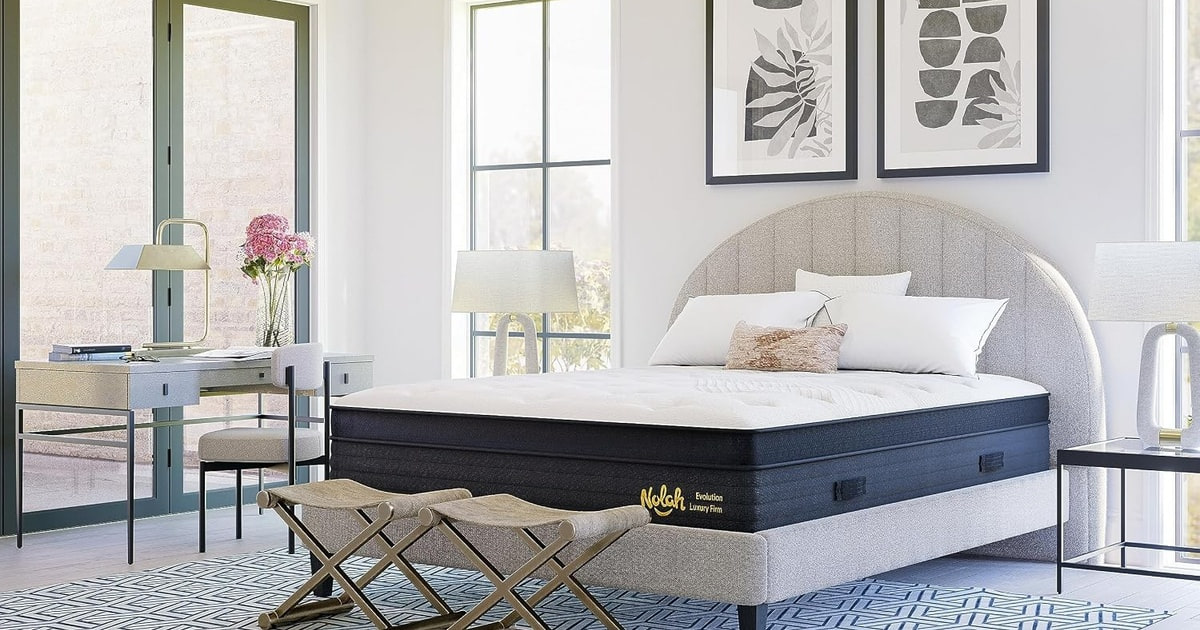
Most adults sleep on their side, and if your lower back hurts, that position asks a lot of a mattress. Your shoulder and hip press in hard while your waist needs to be held up. Get that balance wrong and your spine bends sideways all night. You wake up stiff, you roll over a dozen times, and you blame the pillow. The right mattress won't cure anything, but it can stop making things worse — and for a lot of people that's the difference between a rough morning and a normal one.
Here's the honest part. No mattress in this guide, or any other, is a treatment. Back pain has many causes and a bed only touches one of them. Firmness numbers are slippery too: a 6 out of 10 feels different at 140 pounds than it does at 250, and every brand grades its own homework. Owner feedback across this whole category tells the same story over and over — one person calls a mattress too firm while their partner calls the same bed too soft. Plan on a trial period, not a leap of faith.
The research points in a consistent direction. A randomized trial published in The Lancet followed 313 adults with chronic low-back pain and found that medium-firm mattresses beat firm ones on pain and disability scores over three months. Consumer Reports found hybrids outperformed all-foam beds on spinal alignment for side sleepers over 180 pounds. So we looked for medium-firm hybrids with zoned coils. We think that the Helix Midnight Luxe is the best mattress for side sleepers with back pain for most people, and that the Nolah Evolution Hybrid Luxury Firm is the one to buy if you're heavier or you want more cushion up top.
Everything we recommend

Zoned support that keeps your hips from sinking too far

More foam and taller coils, if a firm bed hurts you

Deep contouring and a year-long trial, with durability doubts
At a glance
| Product | Firmness | Height | Price | |
|---|---|---|---|---|
| Helix Midnight Luxe MattressTop pick | 6/10 Medium | 13.5 in | $1,999 |
| Nolah Evolution Hybrid Luxury Firm MattressUpgrade pick | Luxury Firm | 14 in | $1,593.90 |
| Nectar Premier Copper Hybrid Twin Mattress 14Budget pick | 6.5/10 Med Firm | 14 in | $1,199 |
How we picked
Medium-firm, not firm. The Lancet trial found medium-firm beds beat firm ones for chronic low-back pain, so we ruled out anything a manufacturer rates above roughly 7 out of 10. Every pick sits between 5 and 6.5 on its brand's own scale.
Zoned lumbar support. Good Housekeeping Institute reviewers flagged zoning as one of two features most predictive of relief for side sleepers. We required coils or foam that go softer at the shoulder and firmer under the hips.
Coils under the foam. Consumer Reports found hybrids beat all-foam beds on spinal alignment for side sleepers over 180 pounds. We limited the picks to hybrid construction, since over-sinkage is the main driver of the lateral spine bend that hurts.
A stable edge. Spec sheets that mention reinforced perimeter coils got priority, because sitting on the side of the bed is the hardest moment of the day when your back hurts.
Trial and warranty. Research cited by WebMD suggests sleep improvements take about four weeks to measure, so we set a floor of 100 nights on the trial and treated anything approaching a year as a real advantage.
Top pick
Zoned support that keeps your hips from sinking too far
Helix Midnight Luxe Mattress
The Midnight Luxe is a medium-firm hybrid built around side sleeping, with up to 1,000 wrapped coils zoned to sit softer under your shoulders and firmer under your hips. That split is what keeps your spine straight instead of bowed.
$1,999fromAmazonThe zoning is the reason to buy this bed. Helix builds the coil layer so it gives under your shoulder and pushes back under your hips and lower back. That's the exact geometry side sleeping needs. Your shoulder is the widest point and has to sink in; your waist is a gap that has to get filled. A bed with one uniform feel makes you choose which of those two you'd rather get wrong.
RTINGS.com's pressure-mapping put numbers behind that idea. Their measurements of the Midnight Luxe showed lower peak pressure at both the shoulder and the hip than the non-zoned hybrids they compared it against. Peak pressure is what wakes you at 3 a.m. with a dead arm. It's also what flips you onto your back, which is where a lot of side sleepers with lumbar trouble start hurting.
The rest of the build is sensible rather than flashy. A quilted Tencel pillow top sits over three foam layers, and the coils underneath move air in a way solid foam can't. Those coils are wrapped individually, so a partner's midnight trip to the bathroom doesn't travel across the bed. Helix rates the Midnight feel at 6 out of 10 on its firmness scale, right in the medium-firm band the clinical work keeps landing on.
Getting out of bed matters more than people expect. If your back is bad, sitting on the edge and standing up is the worst moment of your day, and a mattress that caves under you makes it worse. This one has a reinforced perimeter, so the side keeps its shape when you perch on it. You also get to use those outer few inches for sleeping, which matters when two people share a queen.
Flaws but not dealbreakers
Owner feedback points to one consistent mismatch, and it's lighter sleepers. If you're under roughly 150 pounds, you may not press far enough into the comfort layers to reach the softer shoulder zone, and the firmer lumbar section can read as a hard ridge instead of support. Helix sells softer models for exactly this reason. If you're small-framed and you want a deep cradle, look elsewhere in the line.
It's a tall mattress at 13.5 inches, so deep-pocket sheets are basically mandatory and a high frame turns into a climb. And medium here really does mean medium. Coming off a plush pillow-top, expect a couple of weeks where the bed feels firmer than you thought you ordered.
Upgrade pick
More foam and taller coils, if a firm bed hurts you
Nolah Evolution Hybrid Luxury Firm Mattress
The Evolution Hybrid stacks seven layers, including graphite-infused AirFoamIce over eight-inch tri-zone coils, into a roughly 15-inch bed. It's aimed at side sleepers who need serious cushion at the shoulder without dropping through to the support layer.
$1,593.90fromAmazonHeavier side sleepers get the hardest version of this problem. You need enough soft material for a shoulder and hip to settle in, but not so much that your midsection sags and your spine bends. Consumer Reports found hybrids beat all-foam beds on spinal alignment for side sleepers over 180 pounds, and this is the most committed hybrid of the three: eight inches of coil under several inches of foam.
The tri-zone coil unit is what keeps you level. Nolah splits the coils so the middle section pushes back harder than the ends. Pair that with the thick comfort layers and you get cradle at the shoulder and lift at the waist at the same time. Thinner all-foam beds tend to do the opposite — they feel wonderful for ten minutes and then let your hips drift down while your ribs stay put.
Cooling gets real attention here. The cover pairs organic cotton with ArcticTex, the Euro topper is built to pull heat away, and the AirFoamIce is graphite-infused. Foam this thick usually turns into a heat trap, so the effort isn't decoration. A gusseted border keeps air moving along the sides, which is where a tall mattress normally gets stuffy on a summer night.
Edge support comes from heavier-gauge perimeter coils, with a recycled plant fiber layer stabilizing the base. In practice that means the side of the bed holds up when you sit down to put your socks on. If you share the bed and one of you sleeps near the edge, that usable perimeter is worth more than the spec sheet makes it sound.
Flaws but not dealbreakers
This is the most expensive mattress here, and a good chunk of what you're paying for is sheer height and material. If you're a lighter side sleeper, you may never compress far enough to feel the tri-zone coils do their job, which means you're buying a lot of foam you won't use.
It's also heavy and roughly 15 inches tall. That makes it awkward to move, fussy about sheets, and worth checking against your frame before you order. There's less accumulated owner feedback on this configuration than on our top pick too, so you're leaning harder on specs and lab findings and less on other people's experience.
Budget pick
Deep contouring and a year-long trial, with durability doubts
Nectar Premier Copper Hybrid Twin Mattress 14
The Premier Copper Hybrid puts thick memory foam and a copper-fiber cover over wrapped coils, for a fraction of what our other picks cost. It contours deeply at the shoulder and hip, which is what most side sleepers are actually after.
$1,199fromAmazonIf budget is your constraint, this gets you closest to the beds above. You get a memory foam Euro top over ActiveLift foam and individually wrapped coils, rated 6.5 out of 10 on Nectar's scale — medium-firm, right where the research points. The give at the shoulder is generous, and if you're coming off an old firm mattress, you'll feel the difference the first night.
The trial period is the quiet reason to take this seriously. Nectar gives you 365 nights from delivery, and that matters more here than any material does. Clinical guidance says back pain changes from a new mattress usually take four to six weeks to show up, and sometimes longer. A short return window forces you to guess. A full year lets the bed prove itself through a hot stretch and a cold one.
The copper does less than the marketing implies, but it isn't nothing. The cover blends copper fibers with heat-absorbent polyethylene, and the coils move air in a way an all-foam bed can't. Owner feedback on temperature is genuinely split — plenty of people sleep fine, others run hot on it. If you're a serious hot sleeper, the Nolah's cooling stack is the safer bet.
For couples, thick memory foam over wrapped coils is the classic recipe for quiet. Movement gets absorbed instead of transmitted, so you're less likely to feel someone shift. The trade-off is the classic memory foam one too: you sink in, and changing position takes a bit more effort. Worth thinking about if you're really a combination sleeper who moves all night.
Flaws but not dealbreakers
Durability is the real worry. Owner feedback includes a recurring pattern of body impressions and lost support showing up within a couple of years, and reports of one side softening faster than the other. That's the known weak point of thick memory foam over coils, and it's the single reason this is the budget pick rather than the top one.
Firmness complaints run in both directions, which tells you it sits close to the line for a lot of people. Heavier couples describe sinking in too far; others find it firmer than they expected out of the box. Give it the full break-in before you judge, and don't buy it for the copper alone.
Nectar covers the Premier Copper Hybrid for as long as you own it, and the sleep trial runs 365 nights from delivery.
Who this is for
This guide is for people who sleep mostly on their side and wake up with lower back, hip or shoulder pain. That's a big group — the National Sleep Foundation puts habitual side sleepers at roughly 60 to 70 percent of adults, and the American Chiropractic Association counts 31 million Americans dealing with low-back pain at any moment. If your current mattress is more than eight to ten years old, or you feel worse in the morning than you did at bedtime, you're the reader we wrote this for.
Skip it if your pain is new, sharp, or comes with numbness or leg weakness — that's a doctor's problem, not a shopping problem. We're also only looking at mattresses here, not adjustable bases, toppers or pillows, though a pillow is genuinely half the fix. Most side sleepers need about 4 to 6 inches of loft to keep the neck in line with the spine, and no mattress will make up for a flat one.
How we picked
We started from the clinical evidence and worked outward. Firmness: medium to medium-firm only, since firm beds performed worse in the Lancet trial and create the bridging gap at the waist that Spine-Health warns about. Zoning: a softer shoulder section and a firmer hip and lumbar section, the feature Good Housekeeping's reviewers found most predictive of relief. Construction: hybrid, because Consumer Reports found coils beat all-foam for alignment in heavier side sleepers. Edge support: reinforced perimeter coils, so the side of the bed holds when you sit on it. Temperature: a cooling cover, a grid, or open coils, because dense memory foam runs hot. Trial and warranty: at least 100 nights, with a decade of coverage as the baseline.
The competition
This is what our research surfaced, not a map of the whole mattress market. Plenty of well-reviewed beds for side sleepers with back pain aren't sold in a form we could confirm here, and a couple of the listings that turned up weren't mattresses at all. Everything that met our criteria ended up as a pick above, so there's nothing parked in this section this time. If a bed you're considering isn't here, that's not a verdict on it — check whether it's medium-firm, zoned, hybrid, and backed by a trial long enough to matter, and you'll have most of your answer.
Setup and break-in
None of these beds need a box spring. A platform frame with slats no more than about three inches apart, or a solid foundation, is what you want — wide gaps let foam sag between them and void most warranties. Give a boxed mattress a full day to expand and about 30 days before you judge the feel, since new foam softens as it breaks in and your body needs time to stop bracing against the old bed. Rotate it head to foot every few months to spread out body impressions, especially on the softer foam beds. And pair it with a pillow tall enough to fill the gap between your ear and shoulder. Plan on replacing a mattress at eight to ten years whether or not it looks worn.
Questions we get
What firmness is best for a side sleeper with lower back pain?
Medium to medium-firm, roughly 5 to 6.5 on a 10-point scale. The Lancet randomized trial found medium-firm mattresses produced better pain and disability outcomes than firm ones over three months. Too firm and your waist never makes contact, which bends the spine sideways; too soft and your hips drop. All three picks here sit inside that band.
Memory foam or hybrid for side sleeping with back pain?
Hybrid, for most people. Consumer Reports found coil-and-foam beds beat all-foam ones on spinal alignment for side sleepers over 180 pounds, and the extra support keeps your midsection from sinking too far. Memory foam still wins on pressure relief and motion isolation, which is why our budget pick uses a lot of it over coils.
How long before a new mattress actually helps my back?
Longer than you'd like. Research cited by WebMD suggests sleep quality improvements are usually measurable within about 28 days, and back pain symptoms can take four to six weeks or more to settle. Expect a rough first week while your body adapts. That's why a 100-night minimum trial matters, and why a full year is better.
I'm plus-size. Does that change what I should buy?
Yes. Over about 230 pounds you compress the comfort layers much further, so thin foam over short coils bottoms out and your spine ends up flexed sideways. Look for a tall hybrid with substantial coils and several inches of comfort foam — the Nolah Evolution Hybrid is built for exactly this. Reinforced perimeter coils matter more for you too.
Do I need a box spring with a hybrid mattress?
No. A hybrid needs a firm, evenly supported base, which means a platform bed with closely spaced slats, a solid foundation, or an adjustable base. An old sagging box spring will transmit its dip straight through the mattress and undo the support you paid for. Check the slat spacing before you buy, since most warranties specify it.
Can a topper fix my back pain instead of a new mattress?
Sometimes, but only for one specific problem: a mattress that's too firm but still structurally sound. A topper adds cushion at the shoulder and hip, which can help a side sleeper a lot. It can't fix a sagging bed, though, because the dip comes through. If your mattress has a visible valley or is past eight to ten years old, a topper is a delay, not a solution.
Why you should trust us
For this guide:
- We read the clinical literature this category rests on, including the Lancet randomized trial on medium-firm versus firm mattresses and clinician-curated guidance from Spine-Health on how an overly firm bed bridges the gap at a side sleeper's waist.
- We compared manufacturer spec sheets for every mattress here — coil counts, zoning, foam depth, firmness ratings, cover materials, trials and warranties — against published findings from RTINGS.com's pressure-mapping, Consumer Reports and the Good Housekeeping Institute.
- We read through owner feedback on each listing for recurring themes rather than one-off complaints, particularly around firmness mismatch by body weight, heat retention and sagging over the first couple of years.
- We read owner reviews on every listing, weighted toward the critical ones, because that is where the recurring failures show up.
- We have a systematic way of automatically fetching the latest prices, so the numbers on this page stay current.
- This is a research-focused guide, so the team may not own every product listed — though we often do own the top winners, which gives us extra context for the recommendations.
- We don't accept free products, and the retailer commission never changes which product we recommend.
Sources
Best Mattresses for Back Pain — Sleep Foundation, Sleep Foundation
Best Mattresses for Side Sleepers — Wirecutter (NYT), Wirecutter
Mattress Firmness and Chronic Non-Specific Low-Back Pain — The Lancet, The Lancet (Kovacs et al., 2003)
Best Mattresses for Back Pain — Consumer Reports, Consumer Reports
Helix Midnight Luxe Mattress Review — RTINGS.com, RTINGS.com
Choosing the Best Mattress for Lower Back Pain — Spine-Health, Spine-Health
Back Pain Facts and Statistics — American Chiropractic Association, American Chiropractic Association
Bear Elite Hybrid Mattress Review — Tom's Guide, Tom's Guide
Best Mattresses of 2026 — Forbes Health, Forbes Health
Purple Hybrid Premier 4 Review — Sleepopolis, Sleepopolis
Best Mattress for Back Pain — Good Housekeeping, Good Housekeeping
Mattress Guidance for Chronic Pain Patients — WebMD, WebMD
Amazon product listings and owner reviews for all 3 products
Manufacturer specification pages for each product
Some passages in this guide may be paraphrased with AI help. Prices are refreshed automatically.
More like this.
Continue exploring home reviews and recommendations.

The Best Pillows for Side Sleepers
When you sleep on your side, your pillow has one job: fill the gap between your ear and the mattress so your neck stays level with your spine. That gap is…

The Best Mattress Toppers for Back Pain
Back pain rarely announces itself at bedtime. It shows up at 6 a.m., when you roll over and your lower back feels like it's been clenched for hours. A lot…

The Best Ergonomic Office Chairs for Back Pain
Your chair decides how your lower back feels at 4 p.m. If you sit six to ten hours a day, that's not a small thing. The spine has a natural inward curve…

The Best Percussion Massagers for Back Pain
A knot between your shoulder blades has a way of taking over your whole day. You reach for it, your arm gives out halfway, and you end up mashing a tennis…

The Best Heating Pads for Back Pain
A heating pad is the rare pain remedy that asks almost nothing of you. You plug it in, you lie down, and 20 minutes later the knot between your shoulder…

The Best Memory Foam and Hybrid Mattresses
You spend a third of your life on a mattress, and you notice a bad one within a week. The wrong firmness leaves your lower back sore by morning. A foam…