The Best Memory Foam and Hybrid Mattresses
You spend a third of your life on a mattress, and you notice a bad one within a week. The wrong firmness leaves your lower back sore by morning. A foam that traps heat turns July into a nightly negotiation with the sheets. And if you share a bed, a mattress that passes along every roll and shift means your partner's insomnia becomes yours. Memory foam and hybrids are the two dominant answers to those problems, and they solve them in different ways.
Here's the honest caveat: nobody can tell you which mattress will feel right to your body. Firmness ratings are marketing numbers, not measurements, and the same medium-firm bed reads soft to one person and punishing to another. Reviews for every mattress in this guide include people who slept better than they had in years and people who returned it in the first month. That's the category, not a defect. The trial period is the only real test, which is why we weight it heavily.
So we focused on what research can actually settle: construction quality, certifications, cooling design, edge support, warranty terms, and the durability patterns that show up in owner feedback after a year or two. We think that the Helix Midnight Luxe is the best mattress for most people, and that the Purple Restore is the one to buy if you run hot at night.
Everything we recommend

Zoned coils that hold your hips up without punishing your shoulders

The one that actually stays cool, if you can live with the feel
A decent medium-firm foam bed for a spare room or a first apartment

The foam that holds its shape when everything cheaper doesn't
At a glance
| Product | Firmness | Foam vs Hybrid | Price | |
|---|---|---|---|---|
 | Saatva Graphite Memory Foam Mattress TopperAlso consider | — | Memory Foam | $305 |
 | Nectar Premier Copper Hybrid Twin Mattress 14Also consider | Medium Firm | Hybrid | $1,199 |
| Purple Restore MattressAlso great | Soft | — | $2,399On sale |
| Helix Midnight Luxe MattressTop pick | Medium | — | $1,874 |
| Tempur-Pedic TEMPUR-ProAdapt 12-Inch Soft Cooling Foam MattressUpgrade pick | Soft | Foam | $3,699.99 |
| Zinus 12 Inch Full Green Tea MemoryBudget pick | Medium Firm | Memory Foam | $239.99 |
 | Wolf Full Mattress - 14-Inch Elite PlushAlso in lineup | Plush | Hybrid | $1,449.99 |
How we picked
Support and alignment. We looked for medium-firm feels and zoned or reinforced support, since the American Chiropractic Association recommends medium-firm for most back pain sufferers. Uniform-density foam that lets hips sink below shoulders was a mark against a mattress.
Cooling design. We compared cover materials, foam infusions and airflow construction against published thermal measurements, including RTINGS' surface-temperature work. Open-grid and coil-based designs outrank solid foam slabs here, and we weighted that.
Edge and durability. We prioritized reinforced perimeters and coil edges, and we read owner feedback specifically for sagging and body impressions after a year or more. Consumer Reports found hybrids score about 18% higher in owner satisfaction past five years, largely on these two points.
Trial and warranty. A 365-night trial is now the standard among direct-to-consumer brands, and anything under 100 nights is a warning sign. We checked stated trial length and warranty terms against each manufacturer's listing.
Certifications. CertiPUR-US is the floor — it caps formaldehyde below 0.5 ppm and bans PBDE flame retardants, TDCPP, TCEP, mercury and lead above defined thresholds. OEKO-TEX on the cover and a fiberglass-free build earned extra credit.
Top pick
Zoned coils that hold your hips up without punishing your shoulders
Helix Midnight Luxe Mattress
The Helix Midnight Luxe pairs up to 1,000 wrapped coils with zoned lumbar support and three foam layers under a quilted TENCEL pillow top. It's built around side sleepers, but the medium feel works for people who switch positions all night.
$1,874fromAmazonZoned support is the single most useful thing a mattress can do for a side sleeper. Uniform foam forces a compromise: soft enough for your shoulder means your hips sink and your spine bows. The Midnight Luxe firms up the coils under your lumbar region and softens the shoulder zone, so you get both. Owners with hip pain and arthritis are the ones who sound most relieved in their feedback, and that lines up with what the zoning is designed to do.
The medium feel — Helix rates it 6 out of 10 — is the safest place to land if you're not sure what you want. The American Chiropractic Association recommends medium-firm for most people with back pain, because a mattress that's too soft lets the spine drift out of alignment overnight. If you're a combination sleeper who starts on your side and ends up on your back, this is the firmness that doesn't fight you either way.
At 13.5 inches, it's one of the thicker beds here, and the reinforced perimeter matters more than it sounds. Edge support is what lets you sit on the side to put your socks on without feeling like you're sliding off. It's also what keeps a queen usable as a real queen — you can sleep near the edge instead of clustering toward the middle. Consumer Reports found hybrids beat all-foam models on exactly this over five-plus years.
The certifications are thorough. The foams are CertiPUR-US certified, the mattress is GREENGUARD Gold certified for low emissions, and it's fiberglass-free — which matters if you've read the horror stories about fiberglass fire socks escaping a torn cover. Helix assembles these in its own Arizona facility rather than outsourcing, which is a small thing, but it's one fewer link in the chain where quality drifts.
Flaws but not dealbreakers
If you're on the lighter side, this bed may read as too firm. Owner feedback includes lighter side sleepers who found the hip area unyielding and suspected the lumbar zoning was working against them rather than for them. Zoned support assumes a body weight range, and if you fall below it, you sit on top of the firm zone instead of settling into it. Use the trial period seriously.
It's heavy and tall. A 13.5-inch hybrid queen is genuinely awkward to move up a staircase alone, and deep-pocket sheets are close to mandatory. Plan on a second person for setup.
Also greatOn sale
The one that actually stays cool, if you can live with the feel
Purple Restore Mattress
Purple's GelFlex Grid is a hyper-elastic polymer lattice instead of foam, so air moves through it and body heat doesn't build up. It sits over a coil core, and it springs back instantly when you shift position.
$2,399fromAmazonList priceIf heat is the reason you're shopping, start here. RTINGS measured a Purple RestorePlus Hybrid at 87.4°F after an hour, about 4.2°F cooler than the average gel memory foam mattress under the same conditions. The mechanism is simple: the grid is mostly open space, so air circulates instead of getting trapped against your skin the way it does in a solid foam slab. The coil core underneath keeps that airflow going.
The grid does something memory foam can't. It buckles under concentrated pressure — your hip, your shoulder — and stays supportive everywhere else. Memory foam contours by slowly softening around you, which is why it feels like sinking. The grid feels more like floating on something springy. Combination sleepers benefit most: it snaps back the instant you move rather than holding the imprint of where you just were.
Edge support comes from durable foam rails working with edge-to-edge coils, so the usable surface goes right out to the sides. This is the Soft version, which sounds like a warning for anyone worried about sagging, but the grid's support doesn't work like foam softness. Even in Soft, the polymer resists bottoming out under your hips in a way that a plush foam comfort layer doesn't.
Flaws but not dealbreakers
The feel is polarizing, and no amount of description prepares you. Some owners describe it as unmatched; others say it never felt plush the way the Soft label implied, and a few added a topper to make it work. If you've only ever slept on foam or innerspring, budget the full trial period to decide.
There's also durability feedback worth taking seriously. Some owners report sagging in the middle after a year or so, along with the back pain that comes with it. That's not universal, and it isn't unique to Purple, but it's a real pattern in the reviews.
It's the heaviest mattress here at 114 pounds for a queen. Moving it into place is a two-person job, and shipping complaints — rescheduled deliveries, curbside drops — come up often enough to plan around.
Budget pick
A decent medium-firm foam bed for a spare room or a first apartment
Zinus 12 Inch Full Green Tea Memory
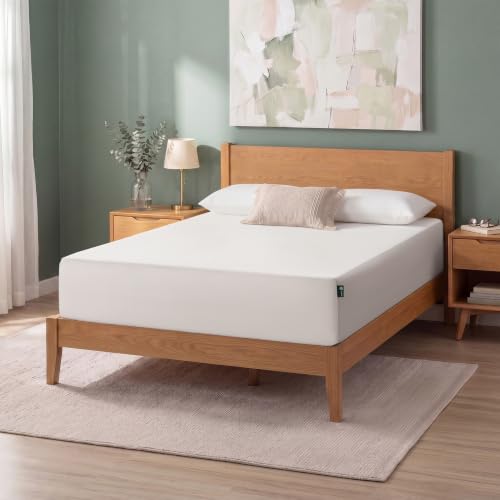
The Zinus Green Tea is 12 inches of zoned memory foam with a breathable knit cover, and it costs a fraction of everything else here. Green tea extract and charcoal cut the off-gassing smell that plagues cheap foam.
$239.99fromAmazonCheap foam mattresses usually announce themselves by smell. The green tea extract and purified charcoal in this one address that directly, and Zinus says any mild odor clears within 24 to 48 hours. That's the honest window for most foam beds regardless of price — you want to let it expand and air out for a day or two before you sleep on it, not unbox it at bedtime.
For a guest room, a kid's first real bed, or a place you're renting for a year, this is the sensible amount to spend. Apartment Therapy found that 78% of Zinus Green Tea buyers still rated it well after six months, the strongest satisfaction rate among the budget foam mattresses it looked at. It's zoned rather than uniform-density, so the pressure relief isn't as crude as the price suggests.
The safety credentials are better than the price implies. The foams are CertiPUR-US certified — no formaldehyde, no ozone depleters, no heavy metals above threshold — and the cover meets OEKO-TEX Standard 100. If you're specifically avoiding fiberglass and mystery chemistry in a budget bed, those two marks are the ones that matter.
Flaws but not dealbreakers
Owner feedback on this one splits hard, and you should read that as a real signal. A large share of buyers report a comfortable, supportive bed that held up past a year. Another meaningful share found it uncomfortably firm from day one or watched it lose support within months. Foam at this price is where quality control gets thin, and you may land on either side.
It's medium-firm and it means it. Several owners expecting a plush memory foam feel described it as closer to firm, and returned it. If you're a light side sleeper who wants to sink in, this isn't the bed.
All-foam means no coils, so edge support is limited and airflow is worse than any hybrid here. If you sleep hot, spend the money elsewhere.
Upgrade pick
The foam that holds its shape when everything cheaper doesn't
Tempur-Pedic TEMPUR-ProAdapt 12-Inch Soft Cooling Foam Mattress
Tempur-Pedic invented this category, and the TEMPUR-ProAdapt is the version most people should consider. It's 12 inches of proprietary viscoelastic foam under a zip-off, cool-to-touch cover, backed by a 10-year warranty.
$3,699.99fromAmazonDurability is what you're actually buying. Forbes Home's 12-month durability evaluation found the Tempur-ProAdapt retained 97.3% of its original height and firmness with nightly use, against an industry average of 91%. That gap sounds small until you remember what mattress failure feels like: a body-shaped trough that you can't sleep out of. Tempur's material resists taking a permanent impression better than the foam in cheaper beds.
The pressure relief is the reason physical therapists and orthopedic lists keep naming this brand. TEMPUR material responds to body heat and weight, so it redistributes load across your whole contact area rather than concentrating it at your hips and shoulders. If you wake up with a sore shoulder from side sleeping, or you have a joint that objects to being pressed on for eight hours, that's the specific problem this solves.
It's all-foam, and for couples that's a genuine advantage. Healthline's medical review team notes that all-foam beds cut motion transfer by 85 to 95%, versus 60 to 75% for hybrids. If your partner gets up at 5 a.m. or reads with a laptop while you sleep, foam beats coils here. You trade some airflow and edge support for it — that's the deal.
The dual cover is more practical than it sounds. The outer layer zips off, so you can actually wash it, and it's built with a cool-to-touch finish. Foam beds live and die by their covers on heat, and a removable one also means a spill isn't a catastrophe.
Flaws but not dealbreakers
This is the most expensive mattress in the guide by a wide margin, and Good Housekeeping's finding that a DreamCloud hybrid hit 94% of the pressure-relief satisfaction of Tempur's equivalent model — at a fraction of the outlay — is worth sitting with. You're paying a real premium for the last few percent.
Firmness expectations are the main complaint. This is the Soft version, and some owners found it far firmer than a showroom sample led them to believe, with the softening they were promised never arriving. Others reported the opposite: sinking in so deeply that their back objected. Soft foam is a narrow target, and a showroom lie-down won't tell you enough.
Warranty service comes up in negative feedback. Some owners describe difficulty getting a firmness complaint recognized as a covered defect — which it generally isn't, under any brand's terms. Comfort disappointment is a trial-period issue, not a warranty one.
The TEMPUR-ProAdapt comes with a 10-year warranty.
Who this is for
Buy now if your current mattress is sagging, if you wake up sore, or if you're setting up a bed from scratch. This guide covers memory foam and hybrid mattresses sold online in a box — the format that now accounts for the majority of mattress sales, according to the International Sleep Products Association. If you want a traditional innerspring, a natural latex bed, or an adjustable air mattress, look elsewhere. We also don't cover adjustable bases, though several of these beds work on one.
Don't buy if your mattress is under five years old and still holding its shape. Most memory foam lasts seven to ten years, and a topper is a cheaper way to change the feel of a bed that's structurally fine. And if you're between firmness levels, don't agonize — pick the mattress with the longest trial and let your body decide. That's what the trial is for, and it's the only test that counts.
How we picked
We built our shortlist around the things that separate a mattress you keep from one you return. Support: medium-firm feels and zoned or reinforced construction, following the American Chiropractic Association's guidance for back pain. Cooling: cover materials, foam infusions and airflow measured against published thermal data rather than marketing language. Edge and durability: reinforced perimeters, coil edges, and owner reports of sagging after a year or more. Trial and warranty: 365 nights is the standard now, and under 100 is a red flag. Certifications: CertiPUR-US as the minimum, with OEKO-TEX covers and fiberglass-free builds preferred.
Other memory foam and hybrid mattresses worth considering
If you want the longest possible safety net: The Nectar Premier Copper Hybrid Twin Mattress 14 ($1,199) — The Nectar Premier Copper Hybrid pairs a 365-night trial with a warranty that lasts as long as you own it — the most forgiving terms in this guide by a distance. The build is legitimate: seven layers of memory foam and ActiveLift foam over individually wrapped Infinity coils, with a cover that combines copper fibers and heat-absorbent polyethylene. Sleepopolis measured motion transfer at just 0.2G across the surface, matching leading all-foam beds, which makes it a strong option for couples. What gives us pause is the owner feedback: a meaningful number of buyers report body impressions and lost support inside two years, and some hot sleepers say the copper cooling didn't deliver. The warranty is what makes it worth the risk.
If your mattress is fine but too firm: The Saatva Graphite Memory Foam Mattress Topper ($305) — The Saatva Graphite topper adds 3 inches of graphite-infused memory foam on top of what you already own, which is a far cheaper fix than a new bed when the problem is feel rather than structure. Owners with older mattresses describe it reviving beds well past their prime, and the CertiPUR-US certified foam cuts motion transfer between partners. Two caveats: this only works on a mattress that still supports you — a topper over a sagging bed just follows the sag. And the cooling is subtle. Some owners noticed no temperature difference at all, so don't buy it to solve a heat problem.
The competition
Here's what our research surfaced, not everything on the market. The mattress category is enormous, and plenty of good beds aren't sold on Amazon at all. These are the listings we compared against our picks and the reasons they didn't make the cut.
The Wolf Full Mattress - 14-Inch Elite Plush ($1,449.99) — The Wolf Elite Plush Pillow Top is a 14-inch, nine-layer hybrid with wrapped coils, gel memory foam and a cooling stretch-knit cover, built in the USA and shipped straight from the factory. On paper it competes directly with our top pick, and the small pool of owner feedback is unusually positive — people mention fast delivery, a genuinely cool surface and a soft-but-supported feel. What keeps it out of the picks is the 101-night trial. That's barely above the threshold where we start worrying, and it's a quarter of what Nectar and DreamCloud-tier brands offer. Sagging and firmness regret often surface after month four, which is exactly when this window closes. Choose it if the construction and the price appeal and you're confident you'll know within three months.
Setup and care
Give a new foam or hybrid mattress 24 to 72 hours to fully expand and off-gas before you sleep on it. Unbox it in the room where it'll live — a queen hybrid can top 100 pounds, and you won't want to move it once it's open. Crack a window for the first day. You don't need a box spring; foam and hybrids want a solid platform or a slatted base with gaps no wider than about three inches, or the foam will sag between the slats and the warranty won't cover it. Rotate the mattress head to foot every three to six months so you're not always loading the same spots. Use a washable protector from night one, since almost every warranty voids on staining. And mark your trial-period end date somewhere you'll see it.
Questions we get
Is a hybrid or a memory foam mattress better for back pain?
For most people, a medium-firm hybrid. A 2024 Journal of Orthopaedic Research study found people on medium-firm hybrids reported a 57% reduction in lower back pain after 90 days compared with traditional innerspring sleepers. The American Chiropractic Association points to the same firmness range, because too-soft beds let the spine fall out of alignment. All-foam still wins on pure pressure relief if a specific joint is the problem.
What's the best mattress for a couple when only one of you sleeps hot?
Go with a hybrid that has an open grid or strong airflow, then let the cold sleeper add blankets. Cooling a hot sleeper is hard; warming a cold one takes a duvet. The Purple Restore is the strongest cooling option here. Also consider motion isolation separately — Healthline's medical reviewers note all-foam cuts motion transfer 85 to 95% versus 60 to 75% for hybrids, so if one of you is a light sleeper, that's a competing priority.
How long does a memory foam mattress last before it sags?
Plan on seven to ten years. Hybrids generally hold up better — Consumer Reports found they score about 18% higher in owner satisfaction after five-plus years, mostly because coils resist body impressions and keep edges from collapsing. Heavier sleepers should expect the shorter end of that range and look for at least 12 inches of thickness with coil-reinforced edges.
What's the difference between gel memory foam and copper-infused foam?
Both are attempts to fix memory foam's heat problem, and both help. Gel infusions absorb and disperse body heat; copper conducts it away and has some antimicrobial properties. In practice the difference between them is small, and neither sleeps as cool as an open grid or a coil-based hybrid. If heat is your main complaint, the construction matters more than the infusion.
Do I need a box spring with a memory foam mattress?
No. Foam and hybrid mattresses need a solid, flat surface — a platform bed, a bunkie board, or a slatted frame with gaps under about three inches. A traditional box spring flexes, which lets the foam sag unevenly and can void the warranty. Check your manufacturer's foundation requirements before you buy a frame.
What certifications should I look for to avoid off-gassing?
CertiPUR-US is the minimum. It requires certified foams to hold formaldehyde below 0.5 ppm and prohibits PBDE flame retardants, TDCPP, TCEP, mercury, lead and heavy metals above set thresholds. OEKO-TEX Standard 100 on the cover adds testing for over 100 more substances. A fiberglass-free build is worth confirming too — some cheap foam beds use a fiberglass fire barrier that's miserable if the cover tears.
Why you should trust us
For this guide:
- We read manufacturer spec sheets and listing details for every mattress here, comparing construction layers, coil counts, thickness, certifications, trial length and warranty terms side by side.
- We reviewed published findings from RTINGS, Consumer Reports, Forbes Home, Sleepopolis, Good Housekeeping, Sleep Foundation, Healthline and Apartment Therapy, along with guidance from the American Chiropractic Association and peer-reviewed orthopedic research.
- We read owner feedback across all of these listings looking for repeated themes — sagging timelines, heat complaints, firmness surprises and warranty experiences — rather than individual opinions.
- We read owner reviews on every listing, weighted toward the critical ones, because that is where the recurring failures show up.
- We have a systematic way of automatically fetching the latest prices, so the numbers on this page stay current.
- This is a research-focused guide, so the team may not own every product listed — though we often do own the top winners, which gives us extra context for the recommendations.
- We don't accept free products, and the retailer commission never changes which product we recommend.
Sources
Best Mattresses 2026 — Wirecutter (NYT), Wirecutter
Best Mattresses of 2026 — Sleep Foundation, Sleep Foundation
Best Mattresses — Consumer Reports, Consumer Reports
Mattress Reviews & Ratings — RTINGS.com, RTINGS.com
Best Mattress 2026 — Good Housekeeping, Good Housekeeping
Best Mattresses of 2026 — Tom's Guide, Tom's Guide
Memory Foam vs. Hybrid Mattress: Which Is Better? — Healthline, Healthline
Saatva Classic Mattress Review — Sleep Foundation, Sleep Foundation
CertiPUR-US Certified Foams Program, CertiPUR-US
Tempur-Pedic TEMPUR-ProAdapt Review — Forbes Home, Forbes Home
2025 Mattress Industry Report — International Sleep Products Association, ISPA
Nectar Premier Copper Mattress Review — Sleepopolis, Sleepopolis
Amazon product listings and owner reviews for all 7 products
Manufacturer specification pages for each product
Some passages in this guide may be paraphrased with AI help. Prices are refreshed automatically.
More like this.
Continue exploring home reviews and recommendations.

The Best Memory Foam Pillows for Neck Pain
Wake up with a stiff neck often enough and you start blaming your mattress. Usually it's the pillow. Your neck has a natural curve, and a pillow's job is…

The Best Mattresses for Side Sleepers With Back Pain
Most adults sleep on their side, and if your lower back hurts, that position asks a lot of a mattress. Your shoulder and hip press in hard while your…

The Best Crib Mattresses
Your baby will spend more hours on this mattress than anywhere else in the house. So the job it has to do is narrow and strict. It has to stay firm, sit…

The Best Spray Foam Insulation Cans
A can of foam is a small fix for one of the biggest problems in your house. Air leakage accounts for 25 to 40 percent of heating and cooling losses in a…

The Best Foam Surfboards for Beginners
A foam surfboard is the closest thing surfing has to an insurance policy. The deck is soft, the rails are soft, and when the board comes back at you in…

The Best Snow Foam Cannons
A foam cannon is the simplest insurance you can buy for your paint. It bolts onto a pressure washer, mixes soap into a thick lather, and lays that lather…