The Best Percussion Massagers for Back Pain
A knot between your shoulder blades has a way of taking over your whole day. You reach for it, your arm gives out halfway, and you end up mashing a tennis ball against a doorframe. That's the problem a percussion massager solves. It puts real pressure on a muscle you can't otherwise get to, without needing a second person or an appointment. The good ones do it quietly, hold their power when you lean in, and have a handle shaped so your shoulder doesn't cramp before the muscle loosens.
None of these will fix a bad back. Percussive therapy works on soft tissue, and the research supporting it is modest. A 2023 systematic review in the Journal of Clinical Medicine found consistent use improved lower-back range of motion by 4 to 6 percent over two weeks. Harvard Health notes it can temporarily cut post-workout soreness by up to 30 percent in small studies. That's real, but it's short-term relief for tight muscles. If you have a diagnosed disc problem, sciatica, or pain that wakes you up, see a clinician first.
We also want to be clear about reach. Most massage guns are built like a power drill, and a power drill is not shaped for your own lumbar spine. Wirecutter's testers found that 90 percent of people could reach their lower back with the Theragun's angled grip, versus under 60 percent with straight-handle designs. That gap matters more than any spec on the box. We think that the Theragun Prime 6th Gen is the best percussion massager for back pain for most people, and that the Opove M3 Pro 2 is the one to buy if you want serious power without paying premium prices.
Everything we recommend

The easiest one to actually reach your own back with
More raw power and battery, less polish on the software

Most of the power and all of the app, for a lot less
The quiet one, with an angled handle and an all-day battery

Pocket-sized and quiet, strong enough for upper-back tension
Prices as of Oct 24, 6:27 AM PT · Details
At a glance
| Product | Stall force | Amplitude | Price | |
|---|---|---|---|---|
| TheraGun Therabody Prime 6th Gen Deep TissueTop pick | — | — | $329.99 |
 | Hyperice Hypervolt 2 Pro Handheld Percussion MassageAlso consider | — | — | $349 |
| RENPHO Active+ Massage GunBudget pick | 45 lbs | 10mm | $79.98 |
 | TheraGun Therabody Mini 3rd Gen Massage GunAlso consider | — | — | $219.99 |
| BOB AND BRAD Q2 Mini Massage GunBudget pick | 35 lbs | — | $59.99 |
| Ekrin Athletics B37v2 Massage Gun - DeepAlso great | — | — | $224.99 |
| Opove M3 Pro 2 Massage Gun DeepRunner-up | 70 lbs | 12mm | $129.99 |
Prices as of Oct 24, 6:27 AM PT · Details
How we picked
Reach and ergonomics. We prioritized angled grips, multi-position handles and long bodies over straight power-drill shapes, since most people can't reach their own lumbar spine with a conventional handle. Published testing found the gap between designs was roughly 90 percent versus under 60 percent of users reaching unassisted.
Stall force. We looked for at least 40 pounds of stall force in manufacturer specs and independent lab measurements, the point where a gun stops bogging down under normal pressure. Higher numbers mainly benefit larger athletes working dense tissue.
Amplitude. Physical therapists writing for Men's Health recommend 12mm or more of head travel for effective work on lumbar and thoracic muscles. We noted where a device falls short and what that costs you.
Noise. Consumer Reports engineers measured devices from 38 to 65 decibels, a range wide enough to determine whether you can use one in the evening. We favored models with documented sound insulation and quiet-motor designs.
Battery and heads. We compared published runtimes, charging standards and included attachments, favoring USB-C and at least a flat or large-ball head suited to broad back muscles. Bullet heads matter less, since they shouldn't go near the spine.
Top pick
The easiest one to actually reach your own back with
TheraGun Therabody Prime 6th Gen Deep Tissue
The Prime's triangle grip lets you hold it three different ways, so you can get behind your shoulder blade or down to your lower back without contorting. Five speeds, real-time pressure feedback, and a Therabody app full of guided routines for sciatica and back massage.
$329.99fromAmazonPrices as of Oct 24, 6:27 AM PT · Details
The grip is the whole reason this wins. Percussion massagers live or die on whether you can point them at your own back. Therabody's patented triangle handle gives you three grip positions, and the 6th Gen widened the opening. That sounds like a small change. It isn't. Wirecutter's testers found 90 percent of people could reach their lower back unassisted with this design, compared to fewer than 60 percent using a straight handle. If you live alone, that's the difference between a useful tool and an expensive paperweight.
Pressure feedback is the other thing you won't find on most of the field. LED indicators on the body show how hard you're pressing in real time, which sounds like a gimmick until you use it on a tender spot. Most people either barely graze the muscle or lean in far too hard. The light tells you when you're in the useful middle. For anyone nervous about a device that hammers 2,400 times a minute near their spine, that's genuine reassurance.
The app is not filler. Therabody's library includes routines built specifically for sciatica relief, back massage, and tech neck, and Coach by Therabody adapts recommendations to what you tell it. If you've never used one of these and don't know how long to spend on a muscle, guided routines answer that. Runner's World testers reported roughly 120 minutes of continuous runtime per charge, which is far more than you'll ever use in one session.
Build quality is the quiet argument here. The rugged TPU rubber shell and reinforced corners are rated for drops from 10 feet, and these things get dropped constantly. You're using it half-blind, behind your back, often with one hand. The Prime also carries an FDA registration and Therabody's clinical research program behind it, which won't change how it feels but does mean the claims went through something.
Flaws but not dealbreakers
It's heavy. At 3.3 pounds, this is the bulkiest device we're recommending, and you feel that weight most in the exact position you bought it for. Holding it overhead behind your shoulder for two minutes is a workout in itself. Smaller people and older adults with shoulder trouble should look hard at the Ekrin or the Bob and Brad instead.
You get two attachments. That's it. The Hypervolt 2 Pro ships with five and the Renpho with five, and while a flat head and a ball cover most back work, the fork head that straddles either side of the spine is genuinely useful and not included here. Buying extras adds up on a device that already sits at the top of the price range.
Runner-up
More raw power and battery, less polish on the software
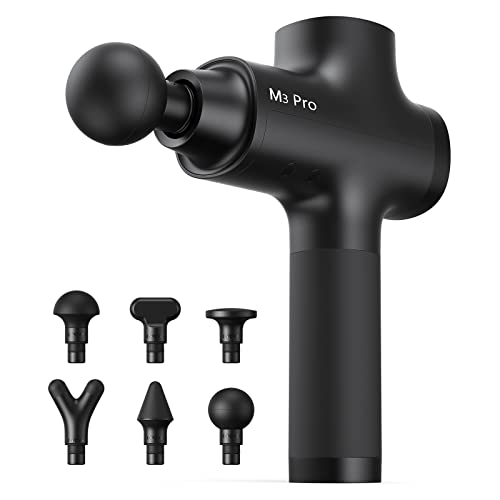
Opove M3 Pro 2 Massage Gun Deep
The M3 Pro 2 claims 70 pounds of stall force and 12mm of amplitude, which puts it past most premium guns on the two specs that matter for deep back work. Battery runs 4 to 8 hours, and the long-arm body reaches most of your back on its own.
$129.99fromAmazonPrices as of Oct 24, 6:27 AM PT · Details
On paper, this out-muscles every device here. Opove lists 70 pounds of stall force and 12mm of amplitude, and both numbers land where you want them for back muscles. Stall force is how hard you can press before the head stops moving. Anything above 40 pounds handles a typical knot, so 70 means it simply won't quit on you. Amplitude is how far the head travels, and physical therapists writing for Men's Health recommend 12mm or more for real work on lumbar and thoracic muscles. This hits that floor exactly.
Battery life runs 4 to 8 hours depending on speed. Most people use one of these for 10 minutes at a stretch, so you're charging it once a month rather than once a week. That matters more than it sounds. The single most common reason a recovery tool ends up in a drawer is that it's always dead when you want it.
The body is long enough to work as its own extension. It's not the angled Theragun grip, and you'll still find the middle of your back awkward. But at just under 10 inches with a slim profile, you can hook it over your shoulder and get most of the way there. Opove wrapped the shell in sound-absorbing material and moved the vents inside the body, so it runs quieter than the size suggests and dissipates heat better on long sessions.
What you give up is software. There's no app, no Bluetooth, no guided routine telling you when to move on. You get five speeds and a button. For a lot of people that's a feature, not a flaw. But if you want a program to follow, the Prime and the Hypervolt both give you one and this doesn't.
Flaws but not dealbreakers
At 2.4 pounds it's still substantial, and the shape is closer to a drill than to the Theragun's triangle. Reaching your own lower back means rotating your wrist into a position that gets old fast. It's manageable for most people. It's not comfortable.
Opove is a smaller brand than Therabody or Hyperice, and the support infrastructure reflects that. If something breaks in year two, you have fewer options than you would with a major label.
Budget pick
Most of the power and all of the app, for a lot less
RENPHO Active+ Massage Gun
The Renpho Active+ puts out 45 pounds of force with five speeds and connects to an app with video-guided courses, which almost nothing at this price does. Charges fully in 90 minutes over USB-C and comes with five attachment heads.
$79.98fromAmazonPrices as of Oct 24, 6:27 AM PT · Details
Forty-five pounds of stall force is plenty for a back knot. That's the number Renpho lists, and it clears the threshold where a device stops bogging down under normal pressure. You'd only want more if you're a large athlete working through dense glute and lower-back tissue. For a desk worker with a tight trapezius or someone with chronic lumbar tightness, this has more force than you'll comfortably use.
The app connection is the surprise. Video-guided courses walk you through which muscle group to target and how long to stay there, and that's usually reserved for devices costing several times as much. If you've never used a massage gun and you're worried about doing something wrong, having a video to follow is worth more than another 20 pounds of force you'd never apply anyway.
It charges over USB-C in about 90 minutes at 18 watts and runs for roughly 3 hours. That's shorter than the Opove or the Ekrin, but the fast top-up mostly cancels out the difference. Plug it in while you shower and it's ready. It's also the lightest full-size gun here at 1.49 pounds, which matters when you're holding it behind your head.
Five heads come in the box, including a ball for broad muscle, a crescent for wider coverage, and a bullet for tight knots. Healthline's physical therapist reviewer notes that flat and large-ball heads suit the broad muscles of the back, while bullet heads should stay away from the spine. Follow that and you've got the right tool for most of what your back needs.
Flaws but not dealbreakers
Amplitude is 10mm, below the 12mm that therapists recommend for deep lumbar work. In practice you'll feel it as a shallower, buzzier sensation than the Opove or the Theragun deliver. For surface tension and general soreness that's fine. For a stubborn deep knot, it's the one real compromise.
Three hours of battery is the shortest of the full-size guns here. If you're sharing it with a partner or using it a few times a day, expect to charge it a couple of times a week.
Also great
The quiet one, with an angled handle and an all-day battery
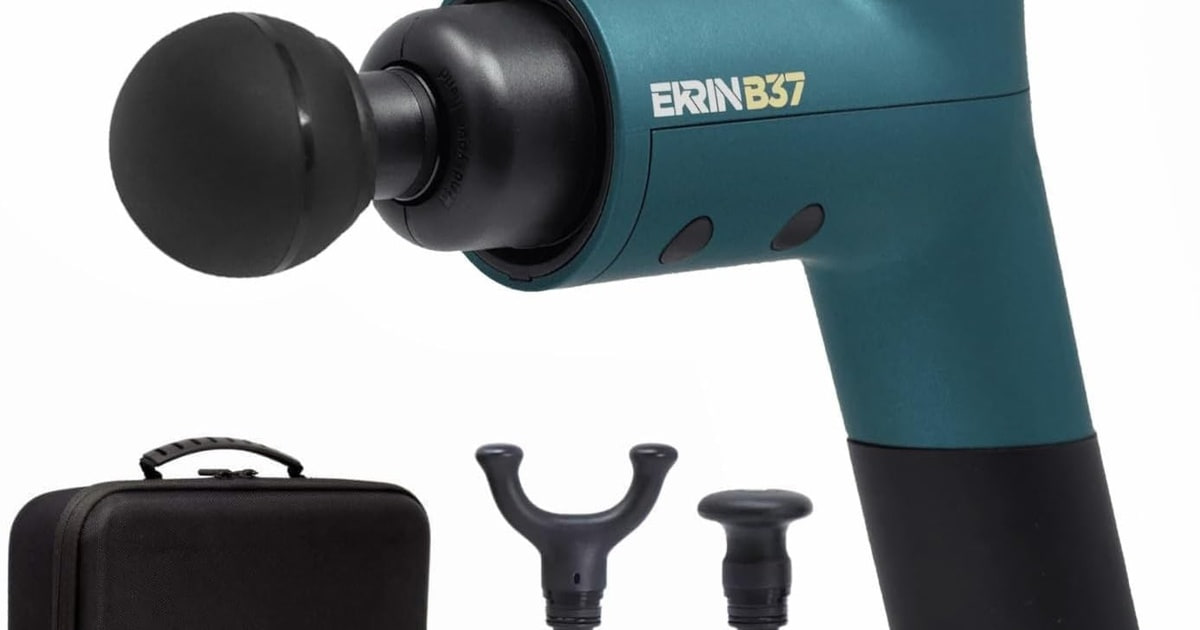
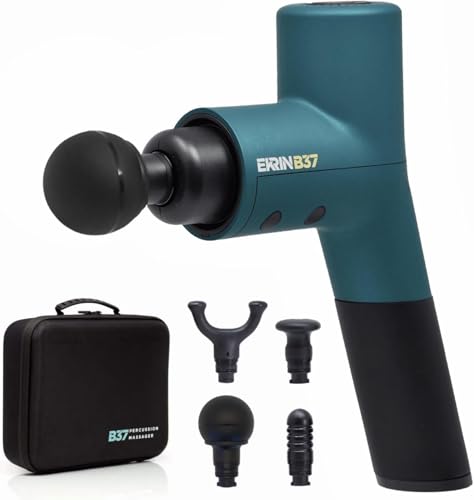
Ekrin Athletics B37v2 Massage Gun - Deep
Ekrin's B37v2 has a 15-degree angled handle built specifically for reaching your own back, wrapped in sound insulation that keeps it unusually quiet. The battery runs up to 8 hours, so it lives on a nightstand rather than a charger.
$224.99fromAmazonPrices as of Oct 24, 6:27 AM PT · Details
Noise is the thing nobody thinks about until they own one of these. Consumer Reports engineers measured massage guns from 38 to 65 decibels, and the top of that range is genuinely intrusive. Ekrin wraps its brushless motor in proprietary sound insulation, and the earlier B37S in that same testing pool landed near the quiet end at 39.8 decibels. If you want to work on your back at 10 p.m. next to a sleeping partner, or at your desk in an open office, this is the one that doesn't announce itself.
The angled handle is a real design decision, not marketing. Ekrin canted the grip 15 degrees, and that small change does two things: it puts the head where your back is without asking your wrist to rotate, and it cuts arm fatigue on longer sessions. It's not as flexible as the Theragun's three-position triangle. But it's the second-best reaching solution here, and it costs less than the Theragun.
Eight hours of battery over USB-C PD is the longest runtime in this lineup. Combined with a compact 6-inch body and 2.2 pounds of weight, this is the gun you throw in a bag and forget about. Four locking attachments come included, so the heads don't pop off mid-session on a tough spot.
The speed range runs from 1,400 to 3,200 RPM across five settings, which is wider on both ends than most competitors. The low setting is genuinely gentle, which matters for older adults or anyone easing into percussive therapy on an angry lower back. Most guns bottom out around 1,750.
Flaws but not dealbreakers
Ekrin doesn't publish stall force or amplitude in its listing, and those are the two numbers that predict how a gun feels on a deep knot. Based on the sound-insulated build and the general design, expect solid mid-range performance rather than the brute force of the Opove. If you specifically want maximum depth, that uncertainty is a reason to look elsewhere.
Quiet operation and power pull in opposite directions, and Ekrin clearly chose quiet. Larger athletes working through thick glute and erector tissue may find they're pressing harder than they'd like to get the same effect.
Budget pick
Pocket-sized and quiet, strong enough for upper-back tension
BOB AND BRAD Q2 Mini Massage Gun
The Q2 Mini weighs under a pound and fits in a handbag, but its brushless motor still puts out 35 pounds of stall force at up to 3,000 RPM. It was designed by two physical therapists, and it shows in the silicone grip and the gentle low speed.
$59.99fromAmazonPrices as of Oct 24, 6:27 AM PT · Details
This is the one you actually carry. At 0.95 pounds and roughly the size of a large phone, the Q2 Mini goes in a work bag without a thought, and that changes how often you use it. A powerful gun sitting at home does nothing for the knot you develop by 3 p.m. Verywell Health's physical therapist panel rated it 4.5 out of 5 for back pain relief in spite of the size, which tracks with how it feels in hand.
Thirty-five pounds of stall force is more than the shape suggests. Bob and Brad put a high-torque brushless motor in a body most people assume is a toy, and it reaches 3,000 RPM. That's enough for upper-back and shoulder tension, the trapezius tightness that comes from a laptop and a bad chair. It won't push through a dense lower-back knot the way the Opove will. For desk-worker pain, it doesn't need to.
The design pedigree is worth something here. Bob and Brad are practicing physical therapists with a large following, and the choices reflect clinical thinking: a soft silicone shell instead of hard plastic, a rounded grip that doesn't dig into your palm, and quiet-motion engineering so it works in an office without turning heads. USB-C charging off any standard 5V-2A adapter means no proprietary brick to lose.
For older adults and anyone with grip strength or wrist issues, this is often the right recommendation over anything bigger. Holding 3 pounds behind your shoulder is a genuine barrier. Holding one pound is not. That accessibility is the whole case for the mini category.
Flaws but not dealbreakers
The short body is the trade-off for portability, and it means reaching your own lower back is hard. You'll get your shoulders, neck, and upper back easily. Below the ribcage, you'll be twisting or asking someone for help.
Thirty-five pounds is the lowest stall force here, and on a genuinely stubborn knot you'll feel the head bog down when you press in. Treat it as a maintenance tool, not a deep-tissue one.
Who this is for
Buy one of these if your back pain is muscular: the ache from sitting badly for eight hours, the tightness after a heavy lifting session, the knot between your shoulder blades that won't let go. It's especially worth it if you live alone and have nobody to work on the spots you can't reach. Desk workers, gym-goers, and people with chronic lumbar tightness get the most out of these. Older adults do too, as long as they pick something light enough to hold up.
Don't buy one expecting a cure. The American Chiropractic Association advises against using percussion massagers directly over the spine, the kidneys, or anywhere with acute inflammation, and that rules out a lot of what people hope to use them for. If your pain is sharp, radiating down a leg, tied to a diagnosed disc problem, or getting worse, see a clinician before you buy anything. This guide covers handheld percussion massagers for self-administered back work. It doesn't cover shiatsu chairs, TENS units, heat wraps, or massage cushions, and it doesn't cover accessories or replacement parts.
How we picked
We built this guide around six things. Reach: the handle shape has to let you get to your own lower back, which straight-handle designs mostly don't. Stall force: at least 40 pounds, so the head doesn't stop when you lean in. Amplitude: 12mm or more for real depth on lumbar and thoracic muscle, per physical therapist guidance. Noise: quiet enough for evening use in a shared space, which means the low end of the 38 to 65 decibel range that Consumer Reports measured. Battery and charging: long enough runtime and standard USB-C, because a dead gun is a useless gun. Attachments: a flat or large-ball head for broad back muscle, since bullet heads shouldn't go near the spine.
Other percussion massagers for back pain worth considering
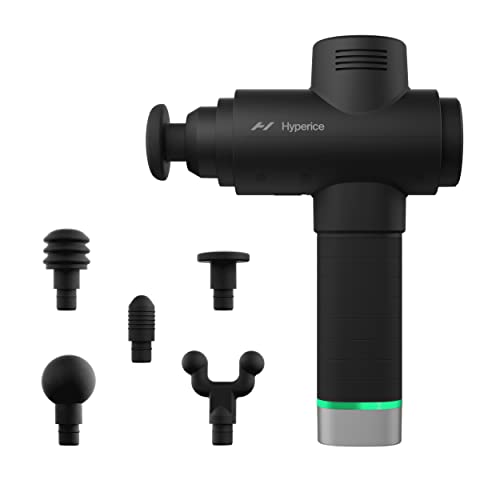
If you want the deepest, most powerful massage available: The Hyperice Hypervolt 2 Pro Handheld Percussion Massage — The Hypervolt 2 Pro is the strongest thing here by independent measurement. RTINGS lab testing put it at 60 pounds of stall force, among the highest in a pool of more than 20 massage guns, driven by a 90-watt high-torque motor. It ships with five heads including the fork that straddles either side of the spine, and the Hyperice app adjusts speed automatically through HyperSmart. What you give up is reach. The handle is a conventional straight grip, and at 2.6 pounds with a bulky head assembly, working your own lower back is genuinely awkward. Physical therapists love it because they're using it on someone else. If you have a partner who'll help, or you mostly want it for legs and glutes, it's the most capable device in this lineup.
If you travel constantly and want a Theragun anyway: The TheraGun Therabody Mini 3rd Gen Massage Gun — The Theragun Mini 3rd Gen weighs under a pound and is 30 percent smaller, lighter and quieter than the original. It connects to the same Therabody app with the same sciatica and back routines, and a travel lock keeps it from switching on in your bag. Three attachments come included, and the Thumb head is designed specifically for lower-back work. But it has three speeds instead of five, and Therabody doesn't publish a stall force figure for it. For deep lumbar knots you'll want the full-size Prime. Buy this as a second device for hotel rooms and long flights, or as a first one if the only thing you're treating is neck and shoulder tension.
The competition
This is what our research surfaced, not a census of the market. Massage guns turn over fast, and dozens of near-identical devices appear under different brand names every season. The lineup below reflects the models that came up repeatedly in published reviews, physical therapist recommendations and owner feedback for back-specific use.
How to use one safely on your back
Start on the lowest speed and stay off the bone. The American Chiropractic Association advises against running a percussion massager directly over your spine, your kidneys, or any area that's actively inflamed, so work the muscle on either side of the spine instead of the midline. Keep it to a minute or two per muscle group and let the gun's weight do the work rather than pressing hard. If something hurts sharply, stop. For heads, Healthline's physical therapist reviewer recommends the flat and large-ball attachments for the broad muscles of the back and says to keep bullet heads away from the spine entirely. Wipe the attachments down after use, charge over the supplied USB-C where possible, and don't leave any of these in a hot car, since heat degrades lithium batteries faster than anything else you'll do to them.
Questions we get
Are percussion massagers actually good for back pain?
For muscular tightness, yes, with modest evidence behind it. A 2023 systematic review in the Journal of Clinical Medicine found consistent use improved lower-back range of motion by 4 to 6 percent over two weeks. Harvard Health notes percussive therapy can temporarily reduce post-workout soreness by up to 30 percent in small studies. Think of it as short-term relief for tight muscles, not treatment for a structural problem.
Can you use a massage gun directly on your spine?
No. The American Chiropractic Association specifically advises against using percussion massagers over the spine, the kidneys, or any area with acute inflammation. Work the muscle on either side of the spine instead, which is where most back tension actually sits. Healthline's physical therapist reviewer also says to keep bullet heads away from the spine entirely.
What's the best massage gun for someone who lives alone and can't reach their back?
The Theragun Prime 6th Gen, because of the handle. Its triangle grip gives you three hand positions, and published testing found 90 percent of users could reach their own lower back with that design versus under 60 percent using a straight handle. The Ekrin B37v2 is the next-best option, with a 15-degree angled grip that does something similar for less money.
How long should you use a massage gun on your back?
A minute or two per muscle group is plenty, and most guided routines land in that range. Longer sessions don't help more and can leave the muscle sore. Let the weight of the device do the work instead of pressing hard, and stop immediately if you feel sharp pain rather than the dull pressure you're after.
What amplitude massage gun is best for deep tissue back work?
Aim for 12mm or more of head travel. Physical therapists writing for Men's Health recommend that threshold for effective work on the lumbar and thoracic muscles, since shallower devices skim the surface rather than reaching the tissue underneath. The Opove M3 Pro 2 lists 12mm, while the Renpho Active+ is 10mm, which is why the Renpho feels buzzier on a deep knot.
Are quiet massage guns as effective as loud ones?
Mostly, though there is a real trade-off. Consumer Reports engineers measured devices from 38 to 65 decibels, and the quietest models achieve that through sound insulation that adds weight and sometimes tempers peak output. The Ekrin B37v2 is the quiet option here, and it's plenty for typical back tension. If you're a large athlete chasing maximum depth, the louder Hypervolt 2 Pro pushes harder.
Why you should trust us
For this guide:
- We read published lab measurements from RTINGS, Consumer Reports and BarBend covering stall force, amplitude and noise output across the massage-gun category.
- We compared manufacturer specification sheets for every device in this lineup against physical therapist guidance from Healthline, Men's Health and Verywell Health on what back muscles actually need.
- We reviewed recurring themes in owner feedback about reach, weight, battery life and durability, and weighted those against the clinical cautions published by the American Chiropractic Association.
- We read owner reviews on every listing, weighted toward the critical ones, because that is where the recurring failures show up.
- We have a systematic way of automatically fetching the latest prices, so the numbers on this page stay current.
- This is a research-focused guide, so the team may not own every product listed — though we often do own the top winners, which gives us extra context for the recommendations.
- We don't accept free products, and the retailer commission never changes which product we recommend.
Sources
Best Massage Guns 2026 - Wirecutter, Wirecutter
Massage Gun Reviews - RTINGS.com, RTINGS.com
Do Percussion Massagers Really Work for Back Pain? - Harvard Health Publishing, Harvard Health
Best Massage Guns, Tested by Physical Therapists - Men's Health, Men's Health
Best Massage Guns of 2026 - Consumer Reports, Consumer Reports
Percussive Massage Therapy: Efficacy Review - Journal of Clinical Medicine, Journal of Clinical Medicine
Best Massage Guns for Back Pain - Healthline, Healthline
Theragun Prime Review - Runner's World, Runner's World
Massage Gun Buying Guide - GoodHousekeeping, Good Housekeeping Institute
TimTam Power Massager Review - Barbend, BarBend
Bob and Brad Q2 Mini Review - Verywell Health, Verywell Health
American Chiropractic Association: Guidance on At-Home Massage Devices, American Chiropractic Association
Amazon product listings and owner reviews for all 7 products
Manufacturer specification pages for each product
Some passages in this guide may be paraphrased with AI help.
Product prices and availability are accurate as of the date/time indicated and are subject to change. Any price and availability information displayed on Amazon.com at the time of purchase will apply to the purchase of this product.
More like this.
Continue exploring health reviews and recommendations.

The Best Heating Pads for Back Pain
A heating pad is the rare pain remedy that asks almost nothing of you. You plug it in, you lie down, and 20 minutes later the knot between your shoulder…

The Best Ergonomic Office Chairs for Back Pain
Your chair decides how your lower back feels at 4 p.m. If you sit six to ten hours a day, that's not a small thing. The spine has a natural inward curve…

The Best Mattress Toppers for Back Pain
Back pain rarely announces itself at bedtime. It shows up at 6 a.m., when you roll over and your lower back feels like it's been clenched for hours. A lot…

The Best Mattresses for Side Sleepers With Back Pain in 2026
Most adults sleep on their side, and if your lower back hurts, that position asks a lot of a mattress. Your shoulder and hip press in hard while your…

The Best Shiatsu Foot Massagers
Your feet take a beating. Standing all day at work, walking on concrete, cramming into shoes that were never quite right - by evening the arch aches and…

The Best Heated Compression Knee Massagers
Knee pain rarely shows up at a convenient moment. It's the first ten minutes after you get out of bed, or the ache that settles in after a long drive, a…