The Best Pillows for Side Sleepers
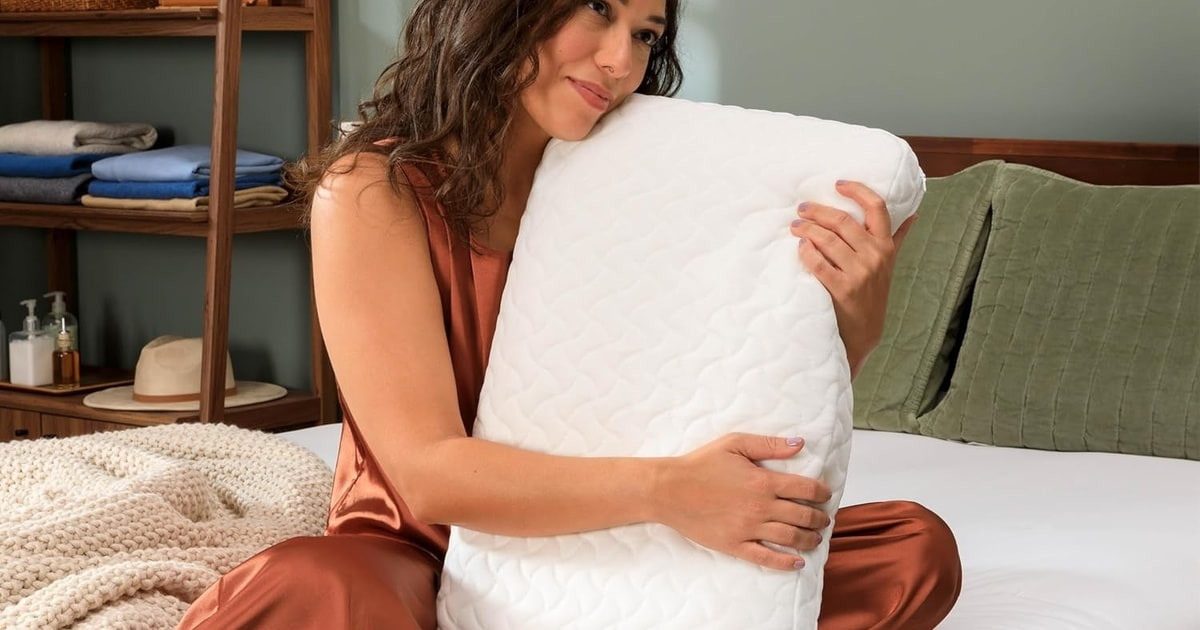
When you sleep on your side, your pillow has one job: fill the gap between your ear and the mattress so your neck stays level with your spine. That gap is bigger than most people think. Your shoulder props your head several inches off the bed, and a thin pillow lets your head sag toward the mattress all night. Sleep Foundation and Mayo Clinic guidance puts the target loft at 4 to 6 inches for most side sleepers. Get it wrong and you wake up stiff, sore, or with a headache that took hours to build.
Here's the frustrating part: no pillow is right for everyone, and the specs on the box can't tell you what you need. Your shoulder width, your body weight, and how much your mattress lets you sink all change the loft that works for you. A pillow that's perfect for a narrow-shouldered sleeper on a firm mattress is too tall for someone sinking into plush memory foam. That's why fixed-loft pillows are a gamble, and why almost every pillow here has some kind of caveat about sizing or break-in.
Fill material matters too. Latex breathes and holds its shape for years. Standard memory foam conforms beautifully but traps heat. Polyester feels great in week one and packs down fast — Consumer Reports found it loses 30 to 40 percent of its loft within a year. We think that the Coop Home Goods Original Adjustable Pillow is the best pillow for side sleepers for most people, and that the Purple Harmony Pillow is the one to buy if you sleep hot and wake up sweating.
Everything we recommend

Add or remove fill until the loft matches your shoulders

The one to get if you wake up hot and sweaty

Plush, washable, and you get two of them

Shredded latex and organic cotton, if you want to spend more
At a glance
| Product | Firmness | Fill Material | Price | |
|---|---|---|---|---|
| Coop Home Goods Original Adjustable PillowTop pick | Medium Firm | Memory Foam | $89 |
| Purple Harmony Pillow - Medium LoftAlso great | Medium Loft | GelFlex Grid | $229 |
| Saatva Latex PillowUpgrade pick | Standard Loft (4in) | Shredded Latex | $165 |
 | Eli & ElmAlso consider | — | Open Cell Latex | $118.99 |
 | Tempur-Pedic TEMPUR-Cloud Pillow for SleepingAlso in lineup | Extra Soft Feel | TEMPUR-Material | $84 |
 | Avocado Organic Green PillowAlso consider | Medium Firm | Organic Latex | $179 |
 | Casper Sleep Original PillowAlso in lineup | Medium-Soft | Down-Alternative | $75 |
| Beckham Hotel Collection Bed Pillows Standard/Queen SizeBudget pick | Medium-Firm | Down Alternative | $59.99 |
How we picked
Loft for side sleeping. We prioritized pillows that reach the 4-to-6-inch range Sleep Foundation and Mayo Clinic guidance recommends for keeping the cervical spine neutral. Pillows only available in low profiles got ruled out as primary picks.
Adjustability. Because the right loft depends on your shoulder width and how much your mattress gives, we favored pillows with removable fill. A zippered liner turns a sizing guess into something you can correct.
Fill and cooling. We compared spec sheets and published lab findings on heat retention — including CNET's gel-versus-standard foam comparison and Sleep Doctor's measurement of Purple's grid. Latex and open-cell designs scored better than dense memory foam.
Loft retention. Consumer Reports and Good Housekeeping Institute durability findings shaped how we weighted materials, since a pillow that packs flat in a year isn't a bargain at any price.
Certifications and washability. We looked for CertiPUR-US, OEKO-TEX, GOLS, or GOTS certification on the materials, and gave credit to pillows with covers or fills you can actually put through a washing machine.
Top pick
Add or remove fill until the loft matches your shoulders
Coop Home Goods Original Adjustable Pillow
The Coop Original is a shredded memory foam pillow with a zippered liner, so you can pull fill out or pack more in until your neck sits level. It ships with an extra bag of fill, and the whole thing is CertiPUR-US and GREENGUARD Gold certified.
$89fromAmazonAdjustability solves the problem that sinks most side-sleeper pillows. You don't have to guess your loft from a product page. Unzip the liner, pull out a handful of fill, sleep on it, repeat until your head sits square over your shoulders. Broad shoulders? Pack it fuller. Sinking into a soft mattress? Take some out. It's the closest thing to a custom pillow you can buy off a shelf.
The fill is cross-cut memory foam blended with microfiber, which keeps it from clumping into hard lumps the way cheap shredded foam does. It's a 3.5-pound pillow at queen size, and it holds shape overnight instead of flattening under your head by 2 a.m. Owners with neck hardware, bulging discs, and years of failed pillow purchases keep landing on this one — it's a common last stop after a long search.
Coop includes a second bag of fill in the box. That matters more than it sounds. Shredded foam compresses over months of nightly use, and instead of buying a new pillow when the loft drops, you top it off. Wirecutter, Sleep Foundation, and Forbes Health have all ranked it in their top three across consecutive review cycles — it's the only pillow that's pulled that off.
Both certifications are worth having. CertiPUR-US covers the foam itself; GREENGUARD Gold covers what the finished pillow emits into your bedroom air. If you're sensitive to off-gassing or just don't want to think about it, that combination is about as reassuring as pillow certifications get.
Flaws but not dealbreakers
New foam smells. Some buyers report a mild scent that airs out in a day or two, but others describe a genuinely strong, skunk-like odor that took multiple rounds in the dryer to fade — and a few Coop pillows in the same household smelled while others didn't. Unbox it a few days before you plan to sleep on it.
Getting the fill right takes patience. Most people don't nail it on the first night, and you'll be pulling foam out and stuffing it back in over the course of a week. It's also messy work — loose foam bits get everywhere. And the foam firms up in a cold room, so a loft that felt right in July can feel different in January.
Coop backs the Original with a five-year warranty.
Also great
The one to get if you wake up hot and sweaty
Purple Harmony Pillow - Medium Loft
The Harmony pairs Purple's honeycomb GelFlex Grid with a Talalay latex core, so air moves through it instead of getting trapped against your face. It comes in three fixed heights, and side sleepers generally want the Medium at 6.5 inches or the Tall at 7.5.
$229fromAmazonIf you sleep hot, this is the category's real answer. The grid is open on all sides, so body heat vents out rather than pooling in a foam crater around your head. Sleep Doctor measured the GelFlex Grid surface running 3.2°F cooler than a standard foam pillow in a controlled lab environment. That's not a rounding error — it's the difference between flipping the pillow at 3 a.m. and sleeping through.
Pick the height carefully, because you can't change it later. The Low sits at 5.5 inches and is aimed at back and stomach sleepers. Medium and Tall are the side-sleeper heights, and Purple's own guidance points broad-shouldered sleepers toward the taller option. Owners who bought the wrong one say so loudly — this is the single biggest complaint, and it's entirely avoidable if you measure the gap between your ear and the mattress first.
The feel is unusual. It's springy and airy rather than sinking and cradling, with no slow memory-foam melt. Some people love it immediately; others find it too light and go back to foam. If you've never touched a Purple product, that's a genuine unknown, and it's worth knowing before you commit.
The cover is machine washable and moisture-wicking, and the latex core doesn't flatten the way polyester does. At a pound, it's also the lightest pillow here, which makes it easy to reposition when you roll over.
Flaws but not dealbreakers
Returns aren't free through every channel, and buyers have complained about paying to send it back after discovering the height was wrong. Between that and the fixed loft, this is the pick where guessing costs you the most.
The polyester cover can pick up odor from body heat over time — one recurring complaint from hot sleepers who switched the rest of their bedding to natural fibers. Washing the cover helps, but if you're specifically avoiding synthetics against your skin, that's a mismatch.
It's one of the most expensive pillows in this guide, and a handful of owners feel the price outruns the benefit if you're not a hot sleeper.
Budget pick
Plush, washable, and you get two of them
Beckham Hotel Collection Bed Pillows Standard/Queen Size
The Beckham Hotel Collection is a down-alternative pillow with a 250-thread-count cotton cover and about 8 inches of gel-fiber loft. It comes as a set of two, washes in a regular machine, and costs a fraction of everything else here.
$59.99fromAmazonThis is the sensible choice if you're not sure a pricey pillow will help. Buying a premium pillow is a real bet when you don't yet know what loft works for you. The Beckham lets you find out for a small fraction of the cost, and you get two of them, so you and your partner can compare — or you can stash the spare for guests.
The fill is a bounce-back hollow fiber that mimics down without the feathers poking through. It arrives plush and thick, and the cotton cover breathes better than the tightly woven microfiber shells you find on other cheap pillows. It's OEKO-TEX certified, so the materials have been tested for harmful substances.
Machine washing is the underrated feature. You toss the whole pillow in — not just a cover — and air dry it. Most foam and latex pillows here require spot cleaning or washing the cover only, which means the fill itself never actually gets clean. For anyone with allergies or a drooling habit, that's a real practical advantage.
It's the most-bought pillow in this lineup by a wide margin, and the feedback is remarkably consistent: it feels like a good hotel pillow. That's not nothing. Hotel pillows are engineered to feel great to almost everyone for a few nights.
Flaws but not dealbreakers
It's on the soft side for dedicated side sleepers. Several owners specifically note it works better for back sleeping, and that the loft compresses more than they wanted once their full head weight settled in. If you have broad shoulders, you'll likely want something firmer.
Polyester fill is the fastest-degrading material in the category. Consumer Reports found polyester pillows lose 30 to 40 percent of their loft within a year of nightly use, and Good Housekeeping Institute's trials put polyester lifespan at one to two years versus three to four for latex. Plan on replacing these sooner.
Upgrade pick
Shredded latex and organic cotton, if you want to spend more
Saatva Latex Pillow
The Saatva pairs a shredded natural latex core with a layer of down-like microdenier fiber, wrapped in a Fair Trade Certified organic cotton cover. The High Loft version, at 6 to 7 inches, is the one side sleepers want.
$165fromAmazonLatex is the durability play. Consumer Reports found latex pillows hold 85 to 90 percent of their original loft after two years, against 60 to 70 percent for polyester. Good Housekeeping Institute's sleep trials put usable latex lifespan at three to four years. If you're tired of replacing pillows every 18 months, that's the material argument in one sentence.
The construction is what separates this from a plain latex pillow. A shredded latex core does the supporting; a surrounding layer of microdenier fiber does the softening. You get a pillow that feels plush when you first lie down but doesn't collapse under your head an hour later. Gusseted sides keep the edges from folding in, which matters when your shoulder is pushing up against the pillow all night.
Order the High Loft. Saatva's Standard Loft is 4 inches and aimed at back and stomach sleepers — too low for most people on their side. The High Loft lands in the 6-to-7-inch range that fits broader shoulders and softer mattresses. Getting this wrong is the most common reason people are disappointed by this pillow.
The organic cotton cover is fully machine washable and moisture-wicking, and latex is naturally hypoallergenic. Saatva pitches chiropractor and orthopedist endorsement, which lines up with how latex behaves — responsive support that pushes back rather than letting your head sink out of alignment.
Flaws but not dealbreakers
Several owners find it too soft even in the higher loft, especially people who want firm support directly under the neck. If your preference runs toward dense, unyielding pillows, this isn't that.
Reports on cooling are mixed. Latex breathes better than dense memory foam, but at least some owners who switched from a cooling pillow found this one warmer than expected. It's not a dedicated hot-sleeper pillow.
It's the priciest pick here, and the feedback base is still thin compared to the older pillows in this guide.
Who this is for
This guide is for anyone who spends most of the night on their side and wakes up with a stiff neck, a sore shoulder, or a headache that starts at the base of the skull. Side sleeping is the most common position — Sleep Foundation puts it at roughly 63% of adults — and it's also the position that asks the most from a pillow. If you're a dedicated back or stomach sleeper, most of what follows works against you; you need less loft, not more. Combination sleepers who mostly favor their side are well served here, and adjustable pillows in particular handle the rolling.
We're covering standard bed pillows sized for side sleeping. Body pillows, wedge pillows, and cervical traction devices are outside the scope, though pregnant side sleepers often do well with the taller adjustable options here alongside a separate body pillow. If your neck pain is persistent, radiating, or waking you regularly, a pillow is worth trying but it isn't a diagnosis — see a doctor. Healthline's medical review board flags improper pillow loft as a contributor to cervicogenic headaches and shoulder impingement, not the only cause.
How we picked
Loft: We started with the 4-to-6-inch range sleep medicine guidance recommends for side sleepers, and treated anything that couldn't reach it as a non-starter for the picks. Adjustability: Because your shoulder width and mattress firmness change what loft you need, we favored pillows with fill you can add or remove. Fill and cooling: We compared material specs against published lab findings on heat retention, which consistently favor latex and open-cell grid designs over dense memory foam. Durability: Consumer Reports and Good Housekeeping Institute loft-retention findings pushed latex ahead of polyester across the board. Certifications and care: CertiPUR-US, OEKO-TEX, GOLS, and GOTS all mean independent testing for harmful chemicals, and a washable cover is the difference between a pillow that stays usable and one you quietly replace.
Other pillows for side sleepers worth considering
If you want a shape built specifically for side sleeping: The Eli & Elm ($118.99) — The Eli & Elm is the only pillow here with a U-shaped cutout down the middle, meant to cradle your ear and let your shoulder settle into the contour instead of getting jammed. The fill is adjustable latex noodle with a down-like fiber blend, and it's OEKO-TEX certified. When it clicks, owners say it fixes years of neck and shoulder pain. But the split is real: a meaningful share of buyers find it collapses under their head and reads as too flat for side sleeping, and nearly everyone who likes it describes a week or more of adjusting fill and learning how to position their head. It's a bigger commitment than the Coop for a similar adjustable approach, so take it on if the shoulder cutout is specifically what you're after.
If you want certified organic materials: The Avocado Organic Green Pillow ($179) — The Avocado Green Pillow is the organic option in this lineup — GOLS-certified latex and kapok fill inside a GOTS-certified organic cotton cover, plus GREENGUARD Gold certification. Like the Coop, it has a zippered design and ships with extra fill, so you can tune the loft. Kapok is a plant fiber that gives it a softer, more down-like feel than pure latex. Two caveats: it's expensive for what amounts to a fill-it-yourself pillow, and at least one owner was frustrated to receive something that needed assembly rather than arriving luxurious out of the box. Also expect a natural, farm-like smell for the first few days.
The competition
These are the other pillows our research surfaced — not everything on the market, but the ones that came up often enough to compare. Each is a reasonable pillow. They just lost to a pick on loft, adjustability, or how long they hold their shape.
The Tempur-Pedic TEMPUR-Cloud Pillow for Sleeping ($84) — The Tempur-Pedic TEMPUR-Cloud is a single slab of TEMPUR material with an extra-soft feel, and it conforms to your head and neck better than almost anything else. The problem for side sleepers is height: at about 5 inches on the box and considerably less once your head compresses it, the listing itself points toward back and stomach sleepers. Owners describe it going flat under any real weight, and one recurring note is that it works best on a medium-firm mattress rather than a firm one. It's also heavy, and the slick cover doesn't hold a pillowcase well. If you specifically want the TEMPUR feel and you're a lighter-weight sleeper on the right mattress, it's worth a look.
The Casper Sleep Original Pillow ($75) — The Casper Original uses a pillow-in-pillow design — a firmer inner core inside a softer outer shell — with a cotton percale cover and down-alternative fill. It's fully machine washable and clump-resistant, which is a real advantage over foam. But it's built as a medium-soft, medium-loft pillow for all positions, and a general-purpose pillow is exactly what most side sleepers already tried and gave up on. Owners praise the comfort and the build quality, though height complaints show up regularly. Choose it if you switch positions constantly and want something washable that doesn't commit hard to one loft.
Getting the fit right
Start by measuring the gap. Lie on your side against a wall or have someone look at you from behind — your nose should line up with your sternum, and your head shouldn't tilt up or sag down. If your chin is dropping toward your chest, the pillow's too tall. If your ear is falling toward your shoulder, it's too short. With an adjustable pillow, change the fill in small handfuls and give each setting two or three nights before you judge it; your neck needs time to stop compensating. Wash covers on cold and let them air dry, since heat breaks down foam and latex faster than anything else. Replace pillows every 18 to 24 months, and use the fold test: bend it in half and let go. If it stays folded, the support's gone.
Questions we get
What loft height should a pillow be for side sleeping?
Sleep Foundation and Mayo Clinic guidance points to 4 to 6 inches for most side sleepers, enough to bridge the gap between your ear and the mattress. Tom's Guide's in-home trials found that pillows under 3.5 inches produced measurable lateral neck flexion, which lines up with morning stiffness. Broader shoulders need more; a softer mattress that lets your shoulder sink needs less. Measure yourself rather than trusting a size chart.
Is memory foam or latex better for side sleepers?
Latex wins on cooling and durability. Consumer Reports found latex retains 85 to 90 percent of its loft after two years, and it breathes far better than dense memory foam. Memory foam conforms more precisely to the curve of your neck, which some people with neck pain prefer. If you sleep hot, go latex or a gel-infused open-cell foam; CNET measured gel-infused foam running about 1.8°F cooler than standard.
Can a pillow that's too high cause neck pain?
Yes. Too much loft pushes your head up toward the ceiling and bends your neck the opposite way from a pillow that's too thin. Either direction holds your cervical spine out of neutral for hours. Mayo Clinic experts describe the too-thin version as sustained downward flexion that strains the levator scapulae and sternocleidomastoid — too tall does the mirror image. The goal is a straight line from your head through your spine.
Are adjustable pillows worth it for side sleepers?
For most people, yes. The right loft depends on your shoulder width, your body weight, and how much your mattress lets you sink, and none of those are printed on a box. An adjustable pillow lets you correct a wrong guess instead of paying to return it. The trade-off is a week of fiddling with loose fill before you land on the setting that works.
How often should side sleepers replace a pillow?
Every 18 to 24 months for most fills. The simplest check is the fold test: bend the pillow in half and let go — if it stays folded instead of springing back, it's lost its structure. Polyester goes first, dropping 30 to 40 percent of its loft within a year according to Consumer Reports. Latex lasts longest, with Good Housekeeping Institute trials pointing to three to four years.
What do the certifications on pillow labels actually mean?
They mean an independent lab tested the materials for harmful chemicals. CertiPUR-US applies to polyurethane foam, OEKO-TEX Standard 100 to textiles and finished goods, and GOLS and GOTS to organic latex and organic cotton respectively. GREENGUARD Gold goes a step further and limits what the finished product can emit into your bedroom air. None of them say anything about comfort or support — just safety.
Why you should trust us
For this guide:
- We read published reviews and durability findings from Consumer Reports, Good Housekeeping Institute, Sleep Foundation, Tom's Guide, CNET, Sleep Doctor, and Forbes Health, along with clinical guidance from Mayo Clinic and Healthline's medical review board.
- We compared the manufacturer spec sheets for every pillow here on loft, fill material, cover construction, and certification.
- We read through owner feedback for each product and looked for the complaints that repeated — odor, sizing mistakes, and loft loss came up far more than anything else.
- We read owner reviews on every listing, weighted toward the critical ones, because that is where the recurring failures show up.
- We have a systematic way of automatically fetching the latest prices, so the numbers on this page stay current.
- This is a research-focused guide, so the team may not own every product listed — though we often do own the top winners, which gives us extra context for the recommendations.
- We don't accept free products, and the retailer commission never changes which product we recommend.
Sources
Best Pillows for Side Sleepers — Sleep Foundation, Sleep Foundation
Best Pillows — Wirecutter (New York Times), Wirecutter
Best Pillows — Good Housekeeping Institute, Good Housekeeping
Best Pillows for Side Sleepers — Tom's Guide, Tom's Guide
Best Pillows of 2026 — CNET, CNET
Best Pillows for Side Sleepers — Forbes Health, Forbes Health
Pillow Buying Guide — Consumer Reports, Consumer Reports
How to Choose the Right Pillow — Mayo Clinic, Mayo Clinic
Best Pillows for Side Sleepers — Healthline, Healthline
Purple Harmony Pillow Review — Sleep Doctor, Sleep Doctor
Amazon product listings and owner reviews for all 8 products
Manufacturer specification pages for each product
Some passages in this guide may be paraphrased with AI help. Prices are refreshed automatically.
More like this.
Continue exploring home reviews and recommendations.

The Best Mattresses for Side Sleepers With Back Pain
Most adults sleep on their side, and if your lower back hurts, that position asks a lot of a mattress. Your shoulder and hip press in hard while your…

The Best Cooling Pillows for Hot Sleepers
If you wake up at 3 a.m. flipping your pillow to find the cool side, you already know the problem. Your head and neck sit against the same patch of fabric…

The Best Memory Foam Pillows for Neck Pain
Wake up with a stiff neck often enough and you start blaming your mattress. Usually it's the pillow. Your neck has a natural curve, and a pillow's job is…

The Best Travel Pillows for Neck Support
A travel pillow has one job: keep your head from falling forward while you doze upright. That sounds simple, but the physics are brutal. The American…

The Best Bed Wedge Pillows for Acid Reflux
If you wake up at 2 a.m. with a burning throat, gravity is the simplest fix available to you. Lying flat lets stomach acid drift back into your esophagus,…

The Best Cervical Neck Traction Pillows
Neck pain from a desk job creeps up slowly. You spend eight hours with your chin drifting toward your chest, then another two on your phone, and by…