The Best Cable Machines for Home Gyms
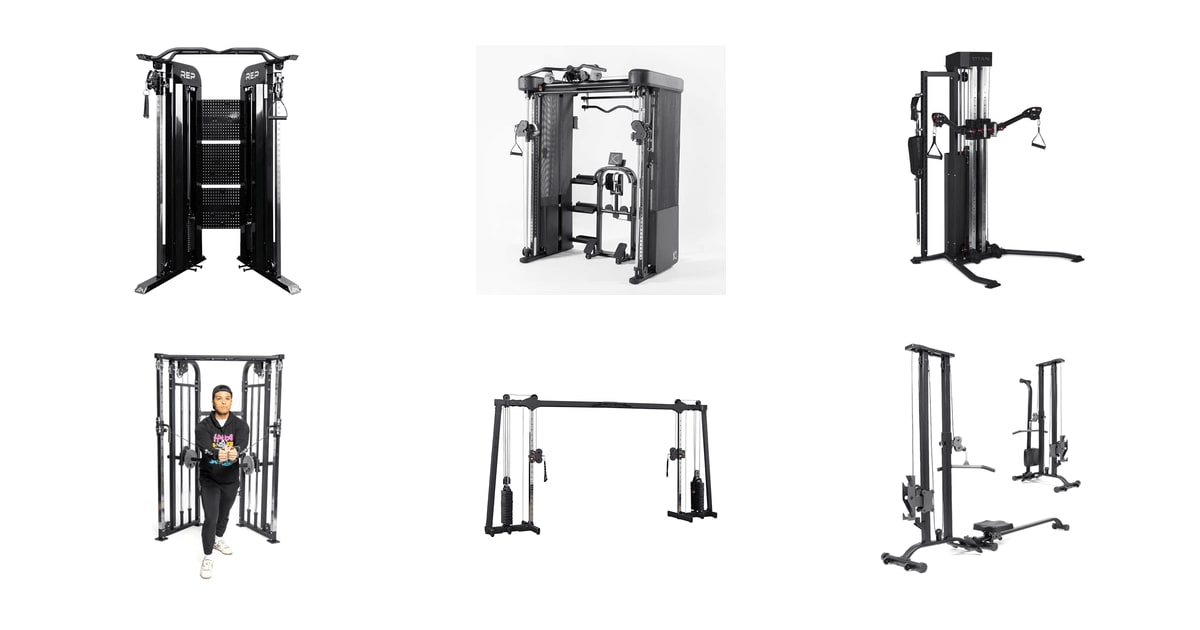
A cable machine is the piece that finally makes a home gym feel complete. Dumbbells and a barbell cover the heavy stuff, but cables give you the angles — face pulls, woodchoppers, lateral raises that stay hard at the top. That last part matters more than most people expect. A dumbbell fly gets easy as your hands rise, because gravity stops fighting you. A cable doesn't. The tension stays on the muscle through the whole rep, which is why so many lifters keep a cable station even after they've bought everything else.
Here's the honest part: none of these machines are easy to live with. They're heavy, they're big, and they arrive in freight crates that you'll need help moving. Assembly runs hours, not minutes — published reviews put most mid-range trainers at three to five hours solo, and budget models longer because the hardware and drilling templates are sloppier. You also need real space. Plan on six to eight feet of clearance and an eight-foot ceiling, or you'll be doing lat pulldowns on your knees.
You'll also want to understand the pulley math before you shop, because the number on the stack isn't the number you'll feel. Most trainers run a 2:1 ratio, so a 200-pound stack gives you about 100 pounds per cable. That's plenty for isolation work and a real ceiling for heavy rows. We think that the REP Fitness Arcadia is the best cable machine for most home gyms, and that the Inspire FT2 PRO is the one to buy if you want a Smith bar and cable station in one frame.
Everything we recommend
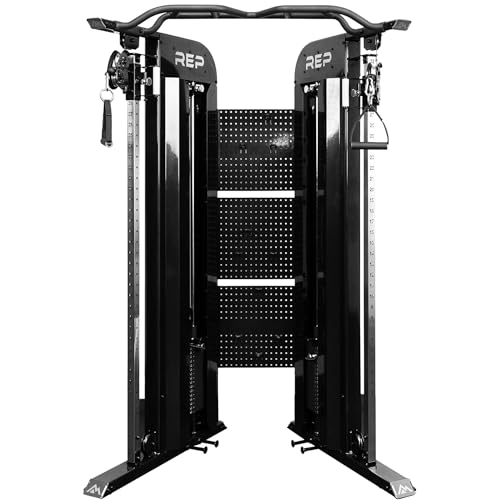
The most cable positions and the cleanest build for the money

A Smith bar and a full cable station in one heavy frame

The heaviest stacks here, and it shows up mostly built
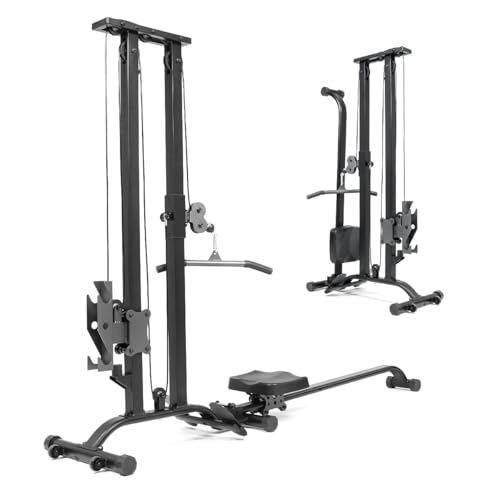
Folds into a closet, costs the least, and gives up the most

Commercial-rated crossover with a lifetime frame warranty
At a glance
| Product | Weight Stack | Cable Positions | Price | |
|---|---|---|---|---|
| REP Fitness Arcadia Functional TrainerTop pick | 170 Lb x2 | 32 Positions | $2,199.99 |
| Inspire Series FT2 PRO Smith Functional TrainerUpgrade pick | 165 Lb x2 | 40 Positions | $5,999 |
 | Titan Fitness Nemesis 300 LB Single StackAlso consider | 300 Lb Stack | 18 Positions | $2,999.99 |
 | Cable Machine Bells of Steel - FunctionalAlso consider | Plate Loaded | 16 Positions | $1,399.99 |
| Body-SolidAlso great | — | — | $2,493 |
| TOUSAINS Cable Machine Home Gym CR63Budget pick | 400 Lb Plate | — | $199.99On sale |
| XMARK Functional Trainer Cable Machine with DualRunner-up | 230 Lb x2 | 21 Positions | $2,920On sale |
How we picked
Effective resistance. We compared stack weight against pulley ratio on every spec sheet, because the number printed on the plate isn't what your hand feels. A 2:1 machine with a 200-pound stack gives you roughly 100 pounds per cable, and we ruled out anything that couldn't reach useful resistance for rows and pulldowns.
Frame steel and rigidity. Published specs let us separate 11-gauge commercial tubing from the 14-gauge steel common in budget frames, which is about 40% thinner and noticeably less rigid under load. We weighted rigidity heavily because cable work pulls sideways, and a flexing frame loosens hardware over time.
Pulley positions. We counted the independent height positions on each cable arm from manufacturer documentation. More positions means fewer compromises on angle, which matters most for shorter and taller lifters and for anyone doing rehab-style work at specific heights.
Space and ceiling fit. We logged assembled height, width and depth for every machine and checked them against the eight-foot ceiling that home gym guides treat as the practical minimum. Anything approaching 90 inches tall gets flagged, because attachment length and your reach eat the remaining clearance.
What's in the box. We tallied included attachments and assembly requirements from listings and owner feedback. A machine that ships with a rope, lat bar and ankle strap saves real money, and published reviews put solo assembly at three to five hours for most mid-range trainers.
Top pick
The most cable positions and the cleanest build for the money
REP Fitness Arcadia Functional Trainer
The REP Arcadia gives you 32 cable positions, dual stacks that start at 170 pounds and upgrade to 220, and a frame owners describe as thick-gauge and rigid. It's the machine that covers the widest range of exercises without demanding a commercial-sized room.
$2,199.99fromAmazonThirty-two cable positions is the number that matters most here. More positions means you stop compromising on angles. You can set the pulleys at ankle height for glute kickbacks, mid-chest for flies, and overhead for pushdowns and lat work — plus everything in between for the awkward heights that suit your actual arm length. If you're short or tall, that granularity is the difference between good form and improvised form.
The stacks are dual and independent, which is the setup you want. Each side tops out at 170 pounds, with an upgrade to 220 if you outgrow it. At the standard 2:1 ratio you'll feel about half that per cable, so figure roughly 85 pounds per hand on the base configuration. That's more than enough for flies, rows and pulldowns. It's also the reason unilateral work feels honest — one arm can't borrow help from the other.
REP includes a 5-pound dropdown add-on weight, which sounds trivial until you're stuck between plates on a lateral raise. Because of the pulley ratio, that 5 pounds lands as about 2.5 pounds of felt resistance. Small jumps are how you keep progressing on small muscles. Most machines in this category make you jump 10 pounds on the stack, and that's a big step when you're training rear delts.
Owners consistently call out the assembly experience, which is unusual for this category. The reports describe complete hardware, parts that line up, and instructions that actually track step by step. Expect around three hours and a second person for part of it. The built-in storage pegs are a genuinely nice touch too — your rope, ankle cuff and handles hang on the frame instead of piling up in a corner.
Flaws but not dealbreakers
The base stacks are the lightest of our main picks. If you're already rowing heavy or doing weighted cable pulldowns near your bodyweight, 170 pounds per side at 2:1 will feel light fast, and you'll want the 220-pound upgrade from the start — which pushes the total cost up.
It ships with two D-handles and nothing else. A rope, lat bar, ankle cuff and straight bar are all separate purchases, and you'll want most of them. Budget for the attachment package rather than assuming you're set out of the box.
At roughly 81 inches tall and 55 inches wide, it isn't a small machine. It fits a standard garage or basement, but you still need clear floor in front of it for crossovers, and low basement ceilings will limit overhead work.
Upgrade pick
A Smith bar and a full cable station in one heavy frame
Inspire Series FT2 PRO Smith Functional Trainer
The Inspire FT2 PRO adds a counterbalanced Smith bar to a dual-stack functional trainer, with a weight multiplier that pushes the bar up to 350 pounds. It's the closest thing here to replacing an entire commercial gym corner.
$5,999fromAmazonThe pitch is simple: this is two machines welded into one. You get a functional trainer with dual 165-pound stacks and 40 vertical pulley positions, and you get a Smith bar with built-in safeties that ties into those same stacks. If you squat and bench alone and want a spotter substitute, that's a real argument. Nothing else in this lineup gives you both jobs in one footprint.
The weight multiplier is the feature that makes the Smith bar useful rather than a token. Instead of being capped by the stack, a proprietary system doubles the resistance on the bar, up to 350 pounds. That's a workable ceiling for squats and presses for most lifters who aren't competing. On the cable side, the ratio works the other way — you feel roughly half the stack, which is what you want for flies and pushdowns.
The pulley layout is the most flexible here. Two wide adjustable pulleys with 40 vertical positions, two upper pulleys, and two low-to-mid center pulleys with six positions of their own. That center pair is the part people miss when they downgrade to a simpler machine. It's what makes seated rows and low-cable work feel natural instead of improvised.
It's also expandable in a way the others aren't. A bench, a leg extension and curl attachment, and a leg conversion kit all bolt into the same frame. If you're trying to close down a gym membership permanently and you've got one corner to spend, this grows with you instead of forcing a second purchase later.
Flaws but not dealbreakers
It weighs almost 880 pounds assembled and stands over 83 inches tall in a frame 64 inches wide and 52 inches deep. This is a permanent installation. Getting it into a basement is a project, and you should measure your door frames and stairwell before you commit.
The base stacks are 165 pounds each — lighter than several cheaper machines here. Inspire sells a 50-pound add-on per side, but it's a separate purchase, so the strongest configuration costs meaningfully more than the sticker suggests.
It's by far the most expensive machine in this guide, and the Smith bar is the reason. If you already own a squat rack and barbell, you're paying a large premium for a feature that duplicates what's in your garage.
Runner-upOn sale
The heaviest stacks here, and it shows up mostly built
XMARK Functional Trainer Cable Machine with Dual
XMark's functional trainer pairs dual 230-pound stacks with a 90-inch commercial frame and a full aluminum attachment set. It arrives nearly assembled with cables already routed, which spares you the worst part of owning one of these.
$2,920fromAmazonList priceDual 230-pound stacks make this the strongest cable setup in the lineup. At a 2:1 ratio that's around 115 pounds of felt resistance per hand, and 460 pounds of plates total. If you've outgrown a lighter trainer on rows and pulldowns, this is the one with headroom left. Most people will never top it out, which is exactly the point when you're buying something you plan to keep for a decade.
The attachment package is the most complete here. An aluminum lat bar, row triangle, curl bar, triceps rope, ankle strap and cable handles all come in the box. Compare that with our top pick, which gives you two D-handles and a catalog. Add up what you'd spend filling those gaps and the price difference between machines narrows considerably.
XMark ships it 98% pre-assembled with the cables pre-installed. Cable routing is the step that turns a three-hour build into a five-hour one, and skipping it is a real gift. Owner feedback backs this up — the assembly experience comes up repeatedly as a strength, alongside the sheer heft of the thing once it's standing.
At 90 inches tall, the frame gives taller lifters full cable travel on pulldowns and overhead extensions. It's also narrow front to back, at roughly 33 inches, so it hugs a wall better than the footprint suggests. Twenty-one adjustment positions is fewer than our top pick, but it's enough to cover the heights most people actually use.
Flaws but not dealbreakers
That 90-inch height is a genuine problem in a basement. If your ceiling is eight feet, you're at the edge, and anything lower rules it out. Measure before you order, because this isn't a machine you return casually.
Owners mention that the plastic weight-stack guards don't fit well — some just leave them off. It's cosmetic rather than structural, and several people prefer seeing the stack anyway, but it's a sloppy detail on an otherwise well-made frame.
Twenty-one positions is fine, but it's a step down from the 32 on the REP and the 40 on the Inspire. If you're chasing very specific angles for rehab work or unusual body proportions, you'll feel the coarser spacing.
Budget pickOn sale
Folds into a closet, costs the least, and gives up the most
TOUSAINS Cable Machine Home Gym CR63
The TOUSAINS CR63 is a plate-loaded cable station that folds down to about three square feet and doubles as a rower. It's the only machine here that works in an apartment with seven-foot ceilings and no dedicated gym space.
$199.99fromAmazonList priceThis is the machine for people who don't have a gym room. It stands under 63 inches tall, folds to roughly 2.9 square feet, and takes up about 7 square feet fully open. You can slide it behind a door or into a closet corner between sessions. Nothing else here comes close to that — the other machines are furniture you build a room around.
It's plate-loaded, which is both the compromise and the appeal. You skip the selectorized stack and load your own dumbbells or plates instead, up to a rated 400 pounds. If you already own adjustable dumbbells, you're not paying twice for iron. Owners specifically like how quickly you can swap loads, and the dual-dumbbell grooves are a small design win over competitors that only take one.
The rower mode is more useful than it sounds. Swapping between cable work and rowing takes seconds, so a small space can cover both strength and conditioning without a second machine. It won't feel like a dedicated erg. But for intervals at the end of a lifting session, it does the job.
Owner feedback is broadly positive with clear limits. People call the cables reasonably smooth and the frame steadier than they expected for the weight, and several note it's light enough to reposition alone. That's rare in this category — most of these machines move once, ever.
Flaws but not dealbreakers
The height is the real constraint. At just under 63 inches, tall users report they can't fully extend on lat pulldowns, and some exercises end up done kneeling. If overhead cable work is central to your program, this isn't the machine.
The pulleys are the weak link. Owners describe them as low-quality and a likely upgrade to sealed bearings down the line. The frame and cables hold up fine; the hardware around them is where the price shows.
Some owners find the included seat useless and remove it. Assembly is also fiddly at first, though most people get through it solo once the sequence clicks.
Also great
Commercial-rated crossover with a lifetime frame warranty
Body-Solid
Body-Solid's GDCC250B is a wide, true cable crossover built from 11-gauge oval tubing and rated for light commercial use. Its warranty coverage on the frame, welds, plates and guide rods is the strongest in this guide.
$2,493fromAmazonThe warranty is the reason to buy this one. Body-Solid covers the frame, welds, weight plates and guide rods for life, and the machine carries a commercial rating rather than a home-use one. If you're the kind of buyer who plans to use something hard for fifteen years and never think about it again, that coverage is worth more than a few extra pounds on the stack.
It's a genuine crossover, not a compact trainer. The extra-wide mainframe — around 164 inches across in its full configuration — gives you the sweeping arc that makes chest crossovers work properly. Dual independent stacks handle true isolateral movements, so each arm works alone. Owners who've used the commercial version in gyms consistently describe the stacks and pulleys as smooth.
Construction is 11-gauge, 2-by-4-inch oval tubing with a powder-coat finish. That's the same steel spec the commercial-grade machines use, and it's meaningfully more rigid than the 14-gauge tubing common in budget trainers. On a machine you'll be yanking sideways for years, rigidity is what keeps the bolts from working loose.
For a household with a couple of lifters, or a small training studio, the light-commercial rating matters. This is built for more than one person's use per day. That's a different design brief from most home trainers, and it shows in the mass and the joinery.
Flaws but not dealbreakers
It needs a lot of room. The full crossover span is far wider than any other machine here, which rules it out for most garages and basements. Check your wall-to-wall measurement first, not last.
Owner feedback is more mixed than the rest of our picks. Some report flex when doing pull-ups on the frame — enough rocking to be distracting — and at least one describes an assembly that required drilling extra holes and sourcing bolts. Others report a smooth build by following the instructions. Expect some variance.
There's also a report of a cable failing at the pulley under load. Cable inspection is routine maintenance on any of these machines, but it's a reminder to check the swages and sheathing regularly rather than assuming a lifetime frame warranty covers the wear parts.
The GDCC250B carries a lifetime warranty on frames, welds, weight plates and guide rods.
Who this is for
This guide is for anyone building a home gym who wants the exercises a rack and dumbbells can't give them — cable flies, face pulls, pushdowns, woodchoppers, kickbacks. If you're trying to cancel a gym membership, a dual-stack functional trainer is usually the single biggest step toward that. It's also a strong choice if you're working around an injury, since cables let you load a joint through a controlled arc at whatever height feels safe. Constant tension through the full range is the mechanical reason cables suit isolation work better than dumbbells do.
You shouldn't buy one yet if you don't have the space or the ceiling. Six to eight feet of clearance and an eight-foot ceiling is the realistic minimum for full-range work, and the tallest machines here want more. We cover free-standing cable machines and functional trainers meant for a home or garage — not rack-mounted cable attachments, wall-mounted pulleys, or full commercial cable stations. We also don't rank based on price, since prices move constantly.
How we picked
We built the shortlist around five things. Effective resistance: we read stack weight against pulley ratio, since a 2:1 machine gives you roughly half the plate weight per cable. Frame steel: 11-gauge commercial tubing beats the 14-gauge used in budget frames, which is about 40% thinner and flexes more under sideways load. Pulley positions: more independent height stops means fewer compromises on angle, which matters most at the extremes of height and for rehab work. Space and ceiling: we checked assembled dimensions against the eight-foot ceiling that home gym guides treat as the floor, flagging anything near 90 inches. What's in the box: included attachments and realistic assembly time, which published reviews put at three to five hours solo for most mid-range machines.
Other cable machines for home gyms worth considering
If you want a very heavy single stack in a narrow frame: The Titan Fitness Nemesis 300 LB Single Stack ($2,999.99) — Titan's Nemesis takes a different approach — one 300-pound stack instead of two smaller ones, with dual independent pivoting arms fed off it. Run the cables separately and you get a 4:1 ratio for smooth, light isolation work; connect them and the ratio shifts for heavy pulls. The arms pivot from 30 to 165 degrees with eight locking positions, and each column has 18 cable stops across 54 inches of travel. It ships with a long bar, short bar, waist strap, ankle strap and dual D-handles, which is generous. What you give up is true independent bilateral loading — with one stack, you can't set different weights per side. At 665 pounds and 84 inches long, it's also a serious install.
If you already own a pile of plates: The Cable Machine Bells of Steel - Functional ($1,399.99) — The Bells of Steel functional trainer is plate-loaded at a 2:1 ratio, with 8.25-inch loadable sleeves that take 45s or microplates. If you've got a barbell setup, you're not paying for a second set of iron. The 81-inch height leaves overhead room for chin-ups under a standard ceiling, and the aluminum pulleys should outlast nylon ones. It comes with a limited lifetime warranty and fits a 56-by-32-inch footprint. The trade-offs: 16 handle heights is the fewest among the trainers here, and loading plates between sets is slower and more annoying than moving a pin. It also ships with pegs and foot covers but no handles beyond the included D-handles.
The competition
Here's what our research turned up beyond the picks. This is the set of machines that came up repeatedly in specifications, published reviews and owner feedback for home cable training — not a survey of everything sold. A machine's absence here doesn't mean it's bad, and a machine's presence doesn't mean it's a mistake. Several of these are perfectly good buys for a specific person; they just lost to a pick on the criteria that matter for most home gyms.
Installation and maintenance notes
Before anything ships, measure twice. You want six to eight feet of clear floor in front of the machine and an eight-foot ceiling minimum — taller if the top pulley sits high, since the attachment and your reach eat the rest. Check your door frames and stairwell too, because these arrive as freight and weigh hundreds of pounds. Plan three to five hours for assembly solo, closer to two or three with help, and expect the budget models to run longer because the hardware and templates are less precise. Once it's up, the maintenance is mostly cables and pulleys. Look over the sheathing and the swaged ends every couple of months for fraying or kinks, wipe the guide rods and keep them lightly lubricated, and re-torque the frame bolts after your first few weeks of use — new machines settle.
Questions we get
What does a 2:1 cable ratio actually mean?
It means you feel about half the weight you select. A 200-pound stack on a 2:1 machine gives you roughly 100 pounds of resistance per cable. This isn't a gimmick — it doubles the cable travel, which is what lets you take a fly or a pulldown through a full range without running out of rope. Just factor it in when you're comparing stack sizes across machines.
How much space does a cable machine really need?
More than the footprint suggests. Plan on six to eight feet of horizontal clearance in front of the machine so you can step into crossovers and rows, plus an eight-foot ceiling for overhead work. Machines with top pulleys above 84 inches effectively want nine-foot ceilings once you add attachment length and your own reach. Measure your stairwell and doorways before ordering, too.
What's the difference between a functional trainer and a cable crossover?
A functional trainer packs two adjustable pulley columns close together in a compact frame, so it fits a garage or basement. A cable crossover spreads the columns much wider, which gives you a bigger arc for chest work but needs a lot more wall. For most home gyms the functional trainer is the right call — you get nearly all the exercises in a fraction of the room.
Can you build muscle with only a cable machine?
Yes, for most goals. Research reviewed by the NSCA found cable exercises produced equivalent or better muscle activation than free weight versions for chest flies, lateral raises and triceps extensions, because the resistance stays constant through the whole motion. Where cables fall short is heavy compound loading — you won't replicate a heavy squat or deadlift. Pair one with a barbell if maximal strength is the goal.
How big a weight stack do I actually need?
For most people, 150 to 200 pounds per side at a 2:1 ratio is plenty, since that's 75 to 100 pounds of felt resistance per cable. Isolation work rarely needs more. If you row or pull down heavy and you're already strong, look at the 220- and 230-pound stacks — or a machine with an upgrade path, so you're not buying twice.
Are budget cable machines worth it for serious training?
It depends on what you're giving up. The cheaper machines here save space and money but tend to cut corners on pulley quality, frame height and cable smoothness — owner feedback on the budget picks consistently flags pulleys as the first upgrade. If you train hard several times a week, a heavier frame in 11-gauge steel will hold up better and stay tighter. If you're starting out or squeezed for space, a budget machine beats no machine.
Why you should trust us
For this guide:
- We read manufacturer specification sheets for every machine here, comparing stack weight, pulley ratio, adjustment positions, frame steel gauge and assembled dimensions side by side.
- We reviewed published evaluations from home gym equipment outlets, including their reported assembly times and adjustment-range comparisons across the category.
- We read through owner feedback for each listing and looked for repeated themes — assembly quality, frame rigidity, pulley smoothness and long-term wear — rather than isolated complaints.
- We read owner reviews on every listing, weighted toward the critical ones, because that is where the recurring failures show up.
- We have a systematic way of automatically fetching the latest prices, so the numbers on this page stay current.
- This is a research-focused guide, so the team may not own every product listed — though we often do own the top winners, which gives us extra context for the recommendations.
- We don't accept free products, and the retailer commission never changes which product we recommend.
Sources
Best Functional Trainers and Cable Machines 2026, Garage Gym Reviews
Best Cable Machines for Home Gyms 2026, BarBend
Best Cable Machines: Expert-Tested and Reviewed, Men's Health
REP Fitness FT-100 Functional Trainer In-Depth Review, Garage Gym Reviews
Inspire FT2 Functional Trainer Review, BarBend
Rogue CT-1 Cable Tower Official Product Specifications, Rogue Fitness
Bells of Steel Functional Trainer 2.0 Review, Garage Gym Reviews
Body-Solid GDCC210 Functional Training Center Specifications, Body-Solid
Functional Trainer vs. Cable Crossover: Key Differences Explained, Breaking Muscle
Cable Machines vs. Free Weights: Science and Application, National Strength and Conditioning Association (NSCA)
Home Gym Equipment Buyer's Guide: Functional Trainers, American Council on Exercise (ACE)
Comparative Muscle Activation: Cable vs. Free Weight Resistance Exercises, Journal of Strength and Conditioning Research
Amazon product listings and owner reviews for all 7 products
Manufacturer specification pages for each product
Some passages in this guide may be paraphrased with AI help. Prices are refreshed automatically.
More like this.
Continue exploring health reviews and recommendations.

The Best Under-Desk Cable Management Trays
The mess under your desk is the part of your setup nobody photographs. A power strip on the carpet, three adapter bricks piled on top of it, and a knot of…

The Best Aluminum Cable Deck Railing Kits
Cable railing sells itself on one thing: you stop noticing the railing and start noticing the yard. Thin horizontal cables block a fraction of the view…

The Best Home Gym Flooring
Flooring is the part of a home gym nobody thinks about until something goes wrong. A dumbbell chips the concrete. The treadmill hums through the ceiling…

The Best Power Towers for Home Gyms
A power tower earns its floor space by doing three things you can't easily do anywhere else at home: pull-ups, dips, and hanging knee raises. Those three…

The Best Gym Bags And Workout Backpacks
A gym bag spends its life getting abused. You stuff damp clothes into it, drop it on a locker room floor, sling it over one shoulder on a crowded train,…

The Best Smart Home Gym Systems
The pitch for a smart home gym is simple: the equipment is already in your house, so the hardest part of working out - getting there - disappears. That's…