The Best Tennis Ball Machines
A ball machine is the only practice partner that never cancels on you. It'll feed the same wide slice to your backhand 200 times while you figure out your footwork. That's the real appeal: volume. You get more reps in forty minutes than a full afternoon of casual hitting with a friend gives you. What separates a good machine from a frustrating one comes down to a few things you'll notice every session — how many balls it holds, whether it can move the ball around the court, and how much fuss it takes to change a setting.
Here's the honest part: nothing in this category is as reliable as you'd hope for the money. Owner feedback across brands is full of the same stories — a control board that quits after a few months, an oscillator that stops sweeping, a charger that dies. These are motors, feed wheels and circuit boards living outdoors in the heat and getting bounced around in a trunk. Even the well-regarded brands generate a steady trickle of complaints. Buy from a seller with a real returns process, and expect that at some point you'll be emailing support.
You'll also spend more time picking up balls than you expect, and no hopper size fixes that entirely. Think about where you'll actually practice before you shop, because a machine that needs a wall outlet is useless at a public park. We think that the Spinshot Player is the best tennis ball machine for most people, and that the Lobster Elite Liberty is the one to buy if you want proven battery portability with simple knob-and-remote controls.
Everything we recommend

Program every shot from your phone, with no extra hardware

Battery freedom and real spin control, minus the app

The lightest way into app-controlled practice, with real limits

Triple oscillation and 24 drills, if you coach or drill daily

A 225-ball hopper and a three-year warranty, for a home court
At a glance
| Product | Price | |
|---|---|---|
| SPINSHOT PLAYER Tennis Ball MachineTop pick | $1,749 |
| LOBSTER Sports Elite Grand Five LE TennisUpgrade pick | $2,599On sale |
| Spinshot Lite Tennis Training Machine Basic ModelBudget pick | $599 |
 | Tennis Tutor Plus Player Ball Machine withAlso consider | $2,339 |
| LOBSTER SportsRunner-up | $1,179 |
 | duskhoot AC Adapter for Charging Lobster SportsAlso in lineup | $8.49 |
 | Mighty Max Battery 12V 7.2AH SLA BatteryAlso in lineup | $36.99 |
| Sports Tutor Tennis Tower with Remote -Also great | $2,255 |
How we picked
Ball capacity. We compared published hopper capacities against typical feed rates to work out how long each machine runs before a reload. Anything near 120 balls means stopping every few minutes, so bigger hoppers earned real credit.
Oscillation and spin. We looked for machines that move the ball around the court and can produce backspin as well as topspin, since fixed-line topspin-only feeds run out of training value fast.
Power and portability. We read specs on weight, battery runtime and wheel size, and weighted battery machines heavily because most public courts have no outlet.
Control approach. We compared app-driven machines against knob-and-remote machines on whether you can change a setting mid-drill without walking across the court.
Durability signals. We read through owner feedback for repeat failure patterns — oscillators quitting, control boards dying, calibration drifting — and checked those against each brand's warranty length.
Top pick
Program every shot from your phone, with no extra hardware
SPINSHOT PLAYER Tennis Ball Machine
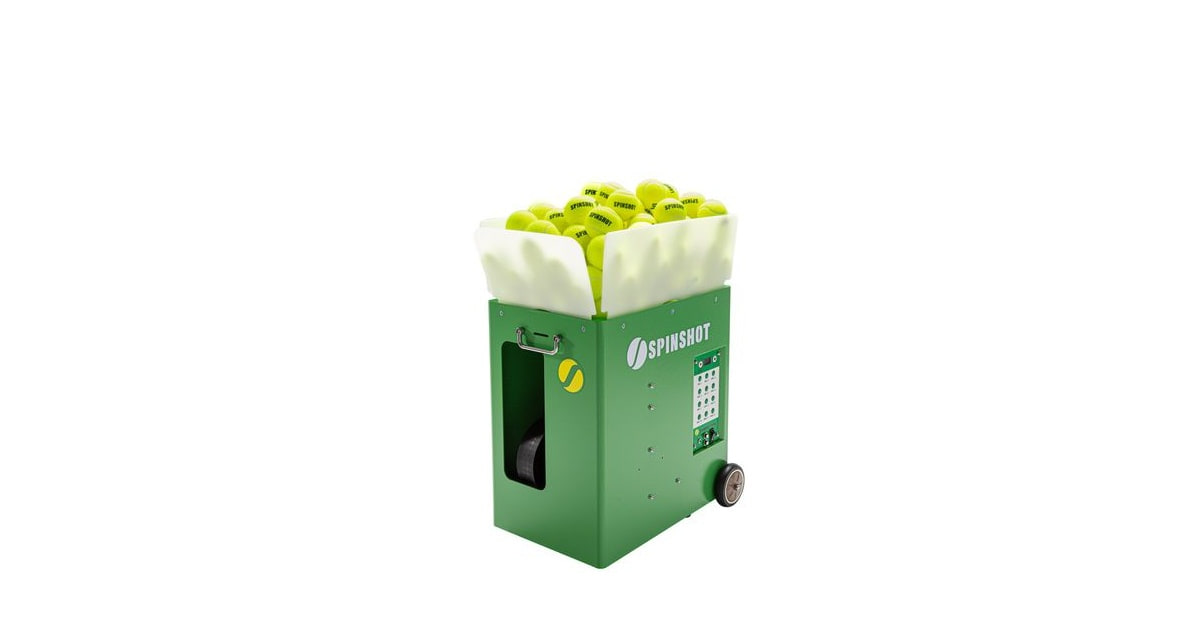
The Spinshot Player lets you set speed, spin, height, angle and feed rate from a free phone app, then build and save your own drills. It's the rare mid-priced machine that doesn't lock you into factory presets, and its metal body should hold up better than plastic housings.
$1,749fromAmazonThe app is the whole argument for this machine. Speed, spin type, launch height, horizontal angle, feed rate — you set all of it from your phone, and Spinshot doesn't charge extra for the remote upgrade the way some brands do. That matters more than it sounds. When your forehand is landing long, you can drop the feed speed by a notch without walking across the court and back.
Most machines give you a fixed menu of oscillation patterns: two-line, six-line, random. This one lets you define the pattern yourself. If your league opponent always goes heavy crosscourt topspin and then jams you wide to the backhand, you can build that sequence and hit it fifty times. That's the kind of practice that actually changes match results, and it's normally reserved for machines that cost far more.
Spinshot notes this is the only ball machine in its line that isn't made of plastic. Given how often owners across this category report cracked housings and failed internals after a season or two of trunk rides and summer heat, a metal shell is a reasonable thing to want. It won't make the electronics bulletproof, but it's one less failure mode.
You can save your drills, which sounds minor until you've spent ten minutes re-dialing settings at the start of every session. Set up your warm-up feed, your crosscourt pattern and your volley reaction drill once, then pull them up from your phone whenever you get to the court.
Flaws but not dealbreakers
The battery is sold separately. The charger comes in the box, which makes the omission stranger — you get the thing that fills the battery but not the battery. Budget for one before you order, because a machine you can't power is just a heavy green box.
This listing has no owner feedback yet, so there's no independent read on how it holds up over a couple of seasons. Given how common electronics and calibration failures are across this whole category, that's a real gap. If long-term durability evidence matters more to you than programmability, the Lobster Elite Liberty has years of owner reports behind it, good and bad.
Runner-up
Battery freedom and real spin control, minus the app
LOBSTER Sports
The Elite Liberty gives you horizontal oscillation, topspin-through-backspin control and two to four hours of battery life, with the charger included. It's the machine to get if you practice at public courts and don't want to think about wall outlets.
$1,179fromAmazonIf your court doesn't have an outlet — and most public courts don't — this is the practical pick. The rechargeable battery runs two to four hours depending on how hard you're feeding, which covers a normal session with room to spare. Owners routinely report finishing an hour of hitting having barely dented the charge. Big all-terrain wheels and a folding handle mean you can roll it over gravel and grass instead of carrying it.
Spin control here is better than the price segment usually allows. You can dial anywhere from heavy topspin through flat to heavy backspin, which opens up slice defense and approach-shot drills that topspin-only machines simply can't run. Speed goes from 10 to 70 mph and elevation from flat to 50 degrees, so lobs and overheads are on the menu too.
It's the simple option, and that's a feature. No app to pair, no firmware, no phone battery to worry about. You turn knobs. Owners who've kept these for years tend to describe the same routine — set oscillation, set spin, hit for an hour, load it back in the car.
Lobster backs it with a two-year warranty, which is longer than a lot of this category offers. Worth knowing, since owner reports make clear that the oscillator and battery are the parts most likely to give you trouble.
Flaws but not dealbreakers
Owner feedback on this machine is genuinely mixed, and the pattern is consistent: oscillation failures and battery problems, sometimes within the first year, with support that can be slow to resolve them. It's still the most-reviewed machine here by a wide margin and most owners are happy, but go in knowing the failure modes.
At 35 to 38 pounds it fits in a trunk, but you'll feel it on stairs or a long walk from the parking lot. And the 70 mph ceiling is lower than the Sports Tutor machines — fine for most club players, short of what an advanced player wants for approach-shot pace.
There's no way to store a drill sequence. Every adjustment means walking to the machine, which gets old during interval work.
The Elite Liberty comes with a two-year warranty.
Budget pick
The lightest way into app-controlled practice, with real limits
Spinshot Lite Tennis Training Machine Basic Model
The Spinshot Lite is the smallest, lightest machine here and still gives you phone-based control of speed, spin and feed rate. It's aimed at juniors and intermediate players, and its small hopper is the trade you make for that portability.
$599fromAmazonSpinshot builds this one around portability, and it shows. It's the smallest machine in the lineup by a wide margin and the easiest to move without a car. If you take a bus or walk to your courts, or if the machine is mainly for a junior who needs to handle it alone, that changes what's possible.
You still get app control of the core settings — speed, spin, feed rate — plus a built-in oscillator, at a fraction of what the Player costs. Owners who use it for repetition work and conditioning tend to be the happiest with it: consistent feeds, quick charging, a couple of hours of hitting per charge at moderate speeds.
The hopper is the catch, and it's a big one. Owners consistently report it holds somewhere in the range of 30 to 50 balls, which at a normal feed rate means you're hitting for a few minutes and then picking up for a few minutes. If that ratio would frustrate you, size up. If you're working with a junior who needs the breaks anyway, it's less of a problem.
Flaws but not dealbreakers
Reliability reports are uneven. A meaningful share of owners describe units that stopped working within weeks or months, and while returns seem to go through without much fight, that's still a ruined practice week. The rest of the feedback is genuinely positive, so this reads like a quality-control spread rather than a design flaw — but it's a coin flip you should know you're taking.
Power and placement are limited. Owners note the speed range is on the weak side and that you'll often need to set it up near the service line rather than the baseline. A few also report the side-to-side setting pushes balls into the doubles alley, which is more useful for running drills than for grooving a stroke.
Upgrade pickOn sale
Triple oscillation and 24 drills, if you coach or drill daily
LOBSTER Sports Elite Grand Five LE Tennis
The Elite Grand Five LE combines vertical and horizontal oscillation with 24 drills and a Match Play mode that varies speed and spin shot to shot. It's built for coaches and players who are on court four or more times a week.
$2,599fromAmazonList priceTriple oscillation is the feature you can't get lower down the range. The machine moves the ball side to side and short-to-deep at the same time, so you're covering the whole court instead of one line. Combine that with Match Play mode, which changes speed and spin between shots, and you get something closer to rally variation than a drill feed.
The 12 preloaded drills are built around player archetypes — the moonballer, the slicer, the power baseliner, the lefty. If you're preparing for a specific opponent style before a tournament, you pick the profile and hit. Another 12 slots are yours to program. For a coach running a lesson, that means setting up a circuit once and stepping through it with the 20-function remote instead of walking back to the panel between drills.
The 150-ball hopper and long battery life are what make it work for teaching. Four to six hours of runtime and a bigger hopper mean fewer interruptions during a paid lesson, which is the whole point. Electronic elevation up to 60 degrees also covers overhead and lob work that most machines only gesture at.
Owner feedback backs the coaching use case in particular — parents and coaches describe sitting courtside with the remote while a junior gets a workout that would otherwise need a hitting partner. That's a specific, real job this machine does well.
Flaws but not dealbreakers
This is the machine with the most concerning owner feedback in the guide, and it's why it isn't our top pick despite having the most features. Multiple owners report calibration drifting out after a few months of light use, control boards failing before the machine had really been used, and inconsistent ball throws. Others report exactly the opposite plus excellent support — Lobster's team, and in some cases the company president, stepping in with replacement parts. It's a wide spread of experiences on an expensive machine.
At 42 pounds it's a real load, and the feature set is more than a recreational player who hits twice a week will ever use. Add-on accessories like the phone remote have drawn complaints for not working as sold, so treat those as optional rather than assumed.
Lobster Sports includes a standard battery charger with the machine; check the current warranty terms with the seller before ordering.
Also great
A 225-ball hopper and a three-year warranty, for a home court
Sports Tutor Tennis Tower with Remote -
The Sports Tutor Tennis Tower holds 225 balls — nearly double most machines here — with random oscillation, 10 to 85 mph speeds and knob controls. It's made in the USA and carries a three-year warranty, the longest in this guide.
$2,255fromAmazonThe hopper changes how a session feels. At a typical feed rate, 225 balls keeps you hitting for roughly twice as long as a 120-ball machine before you stop to collect. If the thing that annoys you most about practicing alone is the constant pickup, this is the direct fix. On a home court where the machine lives permanently, it's the difference between a real workout and a series of interruptions.
Controls are knobs and a two-button remote — start and stop, and oscillation on and off. There's nothing to pair or update. A single dial sets topspin or backspin, elevation has a bar graph display so you can repeat a setting exactly, and random oscillation spreads balls across the court for hitting on the run. Speed runs from 10 to 85 mph, the widest range here alongside the Tennis Tutor.
Sports Tutor backs this with a three-year warranty and points out, fairly, that many competitors offer nothing close. For a category where owner reports are full of boards and oscillators failing in year one, a long warranty from a US manufacturer is worth weighing seriously against a flashier feature list. An all-weather cover is included too, which tells you what kind of use they expect.
At 65 pounds this is the heaviest machine here by a good margin. Oversized wheels handle rolling it around a court, but this isn't something you load into a sedan twice a week. It's a machine that stays where you put it.
Flaws but not dealbreakers
It needs AC power. If your court doesn't have an outlet within cable reach, this is simply the wrong machine — go with the Elite Liberty or the Spinshot Player and a battery.
There's no app, no saved drills and no programmable sequences. You get random oscillation or none. For structured pattern work you'd want the Spinshot Player or the Elite Grand Five LE.
This listing has no owner feedback yet, so the durability case rests on the brand's reputation and the warranty rather than on reports from buyers.
Sports Tutor covers the Tennis Tower with a three-year warranty.
Who this is for
Buy a ball machine if you're on court at least twice a week and can't reliably find someone to hit with. The value is repetition: hundreds of the same ball while you fix a grip, a swing path or your split step. It's especially good for players working on a specific weakness, and for juniors who need volume between lessons. If you play once a week and mostly want matches and the social side of tennis, skip it — you'll get more out of a local open-play group, and the machine will sit in the garage.
This guide covers freestanding machines that feed and oscillate on their own, from lightweight portable units up to full-featured coaching machines. We don't cover ball hoppers, court accessories or the machines' consumables, and we've kept the guide to models you can buy new. One thing worth planning for: pressureless balls are the right choice for machine use, since they hold their weight and bounce across hundreds of feeds instead of going dead in an afternoon.
How we picked
We weighed five things. Capacity: how many balls the hopper holds, and therefore how long you hit before stopping to collect. Oscillation and spin: whether the machine moves the ball around the court and can produce backspin as well as topspin, not just a fixed topspin feed. Power: battery machines go anywhere, AC machines need an outlet, and that single fact rules out half the market for anyone using public courts. Control: whether you can change speed or spin mid-drill from your pocket or a remote, or have to walk over and turn a knob. Durability signals: the failure patterns that show up repeatedly in owner feedback, checked against how long each manufacturer is willing to warranty the machine.
Other tennis ball machines worth considering
If you want the widest speed range and no software at all: The Tennis Tutor Plus Player Ball Machine with ($2,339) — The Tennis Tutor Plus Player throws from 10 to 85 mph with pushbutton controls and a display that shows exactly how much topspin or underspin you've dialed in — useful if you're a coach explaining a drill to a student. Its patented Player Mode picks speed and spin on its own and changes both the side-to-side position and the depth of shots, which is closer to a real opponent than a fixed feed. The built-in battery runs four to six hours and the smart charger shuts itself off overnight. What you give up is any kind of saved drill programming, and at 48 pounds it's a heavy lift for someone moving it alone. There's no owner feedback on this listing yet either, so you're buying on the brand's reputation.
The competition
This is what our research surfaced in this category, not a complete map of the market. Ball machines are sold through club channels and direct-from-manufacturer sites as well as retail, so there are models we didn't look at. The two products below came up in the same searches but aren't machines at all.
Care and maintenance
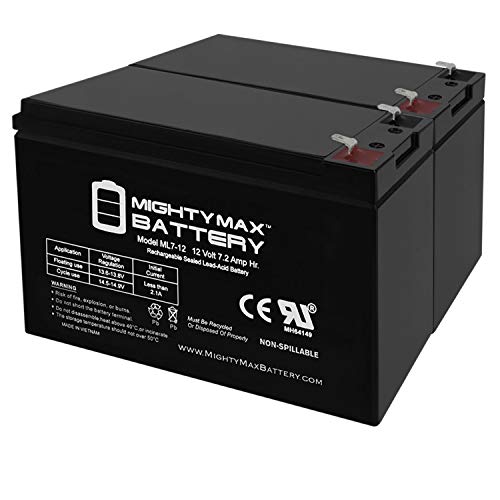
The two things that end sessions early are power and feed jams. If your machine takes a removable battery, buy a second one and keep it charged — battery failure is the single most common mid-session complaint owners raise, and a spare eliminates it. Charge on a schedule rather than waiting for the machine to die, since lead-acid and lithium packs both last longer when they aren't run flat. Keep balls clean and dry; wet or gritty balls are what clog feed tubes and chew up throwing wheels, and clearing a tube is usually a two-minute job you can do yourself. Store the machine indoors or under a cover, because heat and moisture are hard on circuit boards. And if something stops working, contact the manufacturer before you take it apart — several owners report support sending replacement parts at no charge.
Questions we get
What's the best tennis ball machine for a beginner?
The Spinshot Lite is the easiest starting point. It's the lightest machine here, you control it from your phone, and it doesn't overwhelm you with settings you won't use. Just know that its small hopper means frequent pickup breaks, which most beginners don't mind.
Is a ball machine actually worth it?
It depends on how often you play. If you're on court twice a week or more and struggle to find hitting partners, a machine gives you consistent repetition that's hard to get any other way. If you play once a week and mostly want match play, you'll get more from a local open-play group.
How long does a ball machine battery last on one charge?
Two to six hours depending on the model and how fast you're feeding. The Elite Liberty is rated for two to four hours, while the Elite Grand Five LE and the Tennis Tutor Plus Player claim four to six. Higher feed rates and higher speeds drain faster, so plan for the low end of whatever a machine advertises.
Can a machine replace a hitting partner?
For stroke mechanics and footwork, yes — it's arguably better, since it never gets tired or sprays balls. For tactics, no. A machine can't disguise a shot or react to what you did, so competitive players should mix machine drilling with real matches.
What's the difference between 2-line and random oscillation?
Two-line oscillation alternates between two fixed court positions, like wide forehand then wide backhand — predictable, and good for footwork patterns. Random oscillation scatters balls across the court so you don't know where the next one is going. The Elite Grand Five LE combines horizontal and vertical movement, which varies depth as well as width.
Should I use pressureless balls?
Yes, for machine practice. Pressureless balls hold their bounce and weight across hundreds of feeds, while pressurized balls go dead within a few hours of heavy machine use. All the machines here work with both, and pressureless balls cost less per session over time.
Why you should trust us
For this guide:
- We compared manufacturer specifications for every machine in this guide — hopper capacity, speed range, elevation, spin control, battery runtime and weight — and lined them up against each other rather than taking any single listing at face value.
- We read through hundreds of owner reports across these listings, looking for repeated failure patterns rather than one-off complaints, and those patterns shaped the flaws sections and our award assignments.
- We did not use, install or run any of these machines ourselves.
- We read owner reviews on every listing, weighted toward the critical ones, because that is where the recurring failures show up.
- We have a systematic way of automatically fetching the latest prices, so the numbers on this page stay current.
- This is a research-focused guide, so the team may not own every product listed — though we often do own the top winners, which gives us extra context for the recommendations.
- We don't accept free products, and the retailer commission never changes which product we recommend.
Sources
Best Tennis Ball Machines 2026 — Tennis Warehouse Buyer's Guide, Tennis Warehouse
Spinshot Player Full Review — TennisnerdReview, TennisnerdReview
Best Tennis Ball Machines Ranked — Tennis Companion, TennisCompanion
Tennis Ball Machine Reviews — My Tennis HQ, My Tennis HQ
Lobster Elite Grand V Full Review — TennisMachines.net, TennisMachines.net
Amazon product listings and owner reviews for all 8 products
Manufacturer specification pages for each product
Some passages in this guide may be paraphrased with AI help. Prices are refreshed automatically.
More like this.
Continue exploring health reviews and recommendations.

The Best Pickleball Ball Machines
A ball machine is the only practice partner that never gets tired, never checks its phone, and never wants to just play games instead of drilling. That's…

The Best Tennis Racquets for Intermediate Players
A racquet is the one piece of tennis gear you feel on every single ball. Once you're rallying with real pace, the differences stop being marketing and…

The Best Leg Stretching Machines
A leg stretching machine does one job. It holds your legs apart at an angle you pick, and it lets you widen that angle a little at a time without a…

The Best Indoor Rowing Machines
Rowing is the rare cardio machine that works almost your whole body at once. One stroke pulls in your legs, core, back and arms, so twenty minutes does…

The Best Cable Machines for Home Gyms
A cable machine is the piece that finally makes a home gym feel complete. Dumbbells and a barbell cover the heavy stuff, but cables give you the angles - …

The Best Home Cardio Machines
A cardio machine at home earns its floor space by being the one you'll actually use. No drive, no parking, no waiting on a stranger to finish. Ellipticals…