The Best Tennis Racquets for Intermediate Players
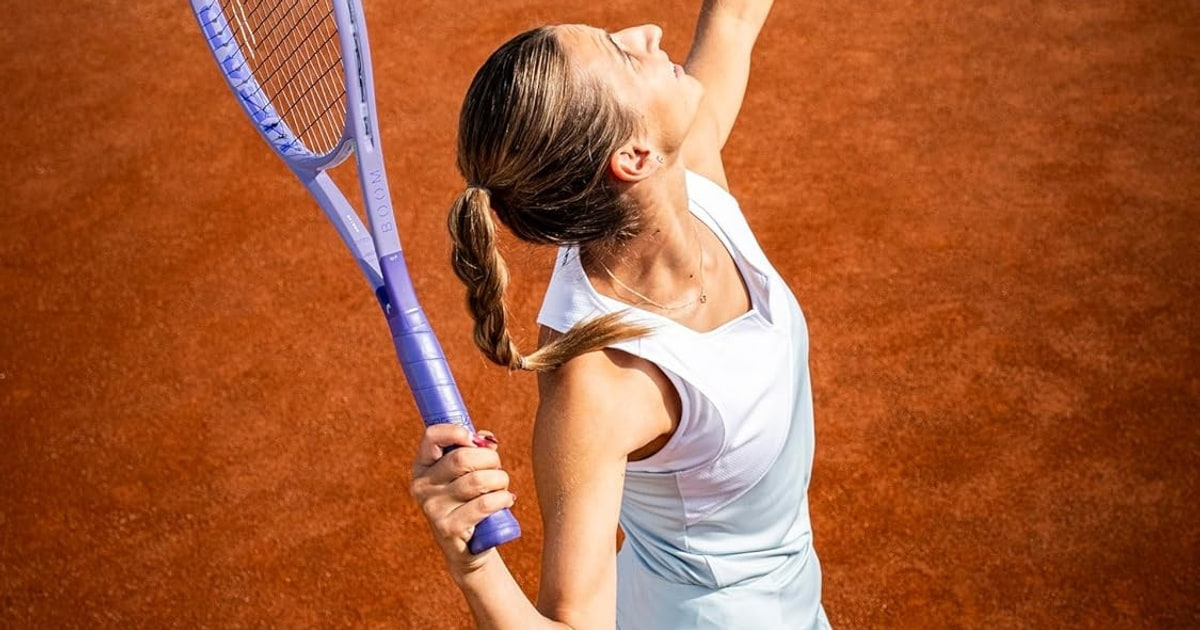
A racquet is the one piece of tennis gear you feel on every single ball. Once you're rallying with real pace, the differences stop being marketing and start being obvious. A frame that's too light gets pushed around on deep returns. One that's too stiff can leave your elbow sore by the third set. Head size, weight and string pattern decide how much help you get and how much control you keep. Get that mix right and your strokes start to look like the ones you've been practicing.
Here's the honest part. No racquet fixes a swing, and nobody can tell you which frame feels right from a spec sheet. Two players at the same level often love opposite racquets. Published reviews and manufacturer numbers narrow the field, but feel is personal, and fitting services report that most players who demo end up buying something other than what they walked in for. Strings and tension change a frame's character too, sometimes more than the frame itself does.
So treat this as a shortlist, not a verdict. We focused on frames in the range that suits most 3.0 to 4.0 club players: heads around 98 to 100 square inches, strung weights near 300 grams, and enough forgiveness to survive an off-center backhand. Then we sorted them by who they actually help. We think that the Yonex Ezone 100 is the best tennis racquet for intermediate players for most people, and that the Babolat Pure Drive is the one to buy if you want the most free power on every swing.
Everything we recommend
A forgiving, arm-friendly frame that fits most club games

More free power, if you can keep it in the court

The gentlest frame here on a sore elbow

Built to turn a big swing into heavy topspin
Prices as of Oct 25, 6:48 AM PT · Details
At a glance
| Product | Head size (sq in) | String pattern | Price | |
|---|---|---|---|---|
| Wilson Clash 100 Pro V2 Unstrung PerformanceAlso great | 100 | 16x20 | Check price |
| Babolat Pure Drive Strung Tennis RacquetRunner-up | 100 | 16x19 | $293 |
 | HEAD Boom MP Alternate 2026 Tennis RacquetAlso consider | — | — | Check price |
| YONEX Unisex EZONE 100 Blast Blue RacquetTop pick | 100 | 16x19 | $304 |
 | Wilson Blade 98Also in lineup | 98 | 18x20 | $219On sale |
| Babolat Pure Aero Tennis Racquet - StrungAlso great | 100 | 16/19 | $229 |
 | HEAD 2024 Extreme MP Tennis RacquetAlso consider | — | — | $199 |
 | Prince 7TJ173 Hard Tennis Racquet Tour O3Also in lineup | 100 | — | $266.02 |
Prices as of Oct 25, 6:48 AM PT · Details
How we picked
Head size and weight. We compared spec sheets against the 98-to-100-square-inch, roughly 300-gram range that fitting guidance and published reviews point intermediates toward. Frames well outside that window didn't make the shortlist.
String pattern. We read comparisons of open 16x19 beds against dense 18x20 ones, since pattern shapes ball flight as much as brand does. Each frame had to be a clear fit for one style or the other.
Comfort and stiffness. We favored frames with published shock-dampening design or a low stiffness rating. Arm pain is one of the most common reasons club players stop playing, so comfort counted heavily.
Owner feedback themes. We read through owner comments looking for repeated complaints about fit, finish and durability rather than isolated bad experiences.
Top pick
A forgiving, arm-friendly frame that fits most club games
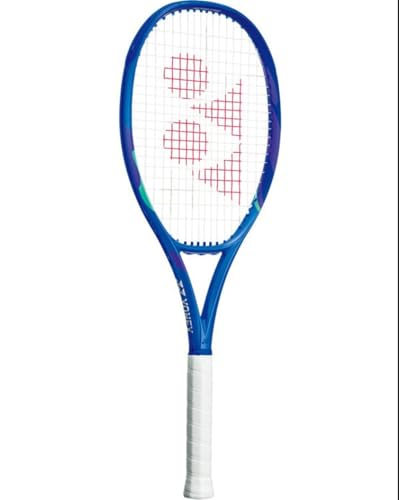
YONEX Unisex EZONE 100 Blast Blue Racquet
Yonex builds this one around an isometric head shape that stretches the sweet spot, so mishits still go roughly where you aimed. At 300 grams strung with a 16x19 pattern, it swings fast enough for doubles reflexes and stays steady when a hard, flat hitter leans on you.
$304fromAmazonPrices as of Oct 25, 6:48 AM PT · Details
This is the racquet we'd hand to most improving players. The isometric head is squarer than a traditional oval, and Yonex says that widens the effective sweet spot by about 7 percent. You notice it on the balls you don't quite middle. A stretched return that catches the upper hoop still clears the net instead of dribbling into it. That forgiveness buys you time while your timing catches up.
Comfort is the other reason it lands here. Yonex packs vibration-dampening mesh and shockless grommets into the frame, both aimed at cutting the shock that travels up your arm. If you're the player who feels a twinge in the elbow after a long doubles night, that matters more than an extra mile per hour of pace. It's not a medical fix, but it's a kind frame.
Against the Pure Drive, the Ezone trades a little power for control. The 16x19 pattern still bites the ball for topspin, and the open string bed lets you swing up through a heavy forehand without watching it sail. If you'd rather brush a ball into the corner than blast it, you'll get along with this one better than with a stiffer power stick.
At 300 grams strung with a 320-millimeter balance, it sits right in the window most club players do well in. It's heavy enough that a big serve doesn't twist it in your hand. It's light enough that you can still get the head around on a quick exchange at net. That combination is harder to hit than it sounds, and it's why the Ezone shows up on so many club courts.
Flaws but not dealbreakers
The Ezone isn't a control specialist. If you already swing fast and flat, the open pattern and generous head can send a few balls long until you commit to more spin. Players coming off a dense 18x20 frame usually need a session or two to trust it.
It's sold here in one grip size, and grip fit isn't something to guess at. If you're between sizes, get your hand measured at a shop before you order, or plan on an overgrip to bump it up.
Runner-up
More free power, if you can keep it in the court
Babolat Pure Drive Strung Tennis Racquet
The Pure Drive has been the default club-player upgrade for years, and the 11th generation keeps the formula: a 100-square-inch head, a 16x19 pattern and 11.2 ounces strung. Swing normally and the ball comes off hot, which is exactly what you want if your strokes are still short.
$293fromAmazonPrices as of Oct 25, 6:48 AM PT · Details
Retailers and trade press have called the Pure Drive the best-selling adult racquet in the United States, and popularity like that isn't an accident. It does one thing extremely well. Babolat's FSI Power layout, with an open string pattern and diamond-shaped grommets, keeps the ball on the strings a beat longer and fires it back. Short, blocky swings still produce a ball with pace on it.
This is the frame for the player whose serve needs help. If your first serve lands short and sits up, the extra pop turns a rally ball into something your opponent has to respect. The same goes for deep returns you can only chip. You get free depth on shots you didn't hit cleanly, and depth is what wins club points.
Power comes with a bill attached. The Pure Drive is a stiff frame, and stiff frames transmit more shock into your wrist and elbow. Babolat's answer is flax fiber in the throat to filter vibration, and it does take some sting out. Still, if your arm already complains after a match, look at the Clash or the Ezone first.
Setup matters more with this one than with most. Strung with a soft synthetic at a middling tension, it can feel like a trampoline. A firmer polyester at a slightly higher tension tames it and adds control, and that's the simplest change you can make to a racquet you already own.
Flaws but not dealbreakers
The stiffness is the thing to think hard about. Players with a history of tennis elbow tend to do better on a softer frame, and no string choice fully undoes a rigid layup.
Control is the other trade. When you're swinging freely on a warm day, balls that would land near the baseline with a Blade go a foot long. You learn to add spin, but that's a real adjustment, not a free upgrade.
Also great
The gentlest frame here on a sore elbow
Wilson Clash 100 Pro V2 Unstrung Performance
The Clash line carries one of the lowest stiffness ratings among mainstream performance racquets, and the frame bends through contact instead of punishing your arm. This Pro version comes unstrung with a 16x20 pattern and a very head-light balance, so it swings easy and holds a line.
Check priceatAmazonPrices as of Oct 25, 6:48 AM PT · Details
Think about the last time your forearm ached on the drive home from league night. That's the problem the Clash was built around. Wilson's construction lets the frame bend horizontally and twist without losing stability, which is an unusual pairing. The result feels soft at contact but doesn't fold when a big hitter leans on a return.
If you're managing tennis elbow, start your demo list here. A flexible frame won't cure anything, and you should talk to a physio about the actual cause. But shock is one input you can control, and this is the most forgiving frame in the group on that front. Owners who've switched over from stiff power sticks consistently mention how much better their arm feels afterward.
The Pro version is the steadier one. It's built head-light, which drops the swingweight and lets you whip the head through a low volley or a quick block at net. The 16x20 pattern is a touch denser than the 16x19 beds on most frames here, so you trade a little easy topspin for a flatter, more predictable ball.
You'll feel the difference in what it doesn't do. This is a comfort-and-control frame first, so you supply the pace. Against an opponent who feeds you nothing, you have to swing to generate your own. That's a fair deal if your strokes are long and confident. It's a bad one if you're still poking at the ball.
Flaws but not dealbreakers
It ships unstrung, so budget for a stringing job before you can play with it. That's normal for performance frames, but it catches people out.
The flex that makes it comfortable also caps what it gives you on serve. If you like flat, heavy first serves, the Clash asks you to work harder for the same speed than a Pure Drive does.
Also great
Built to turn a big swing into heavy topspin
Babolat Pure Aero Tennis Racquet - Strung
This is Rafael Nadal's frame, and it's engineered around spin: an aerodynamic beam for faster head speed, spin-specific grommets that let the strings snap back, and a 16x19 pattern. If your forehand already brushes low to high, this racquet exaggerates it.
$229fromAmazonPrices as of Oct 25, 6:48 AM PT · Details
Buy this one if you already swing up on the ball. The whole design targets head speed and string snap-back, the two things that put revolutions on a tennis ball. Babolat lists a 300-gram unstrung weight and a 290 swingweight, which is quick through the air. Owners who are building a topspin game regularly single it out for how much the ball dips.
Heavy spin does more for a club player than heavy pace. A ball with real topspin can clear the net by three feet and still land near the baseline, so you make fewer errors on the shots you actually take a cut at. It kicks up above your opponent's strike zone too. That's the shot that turns a grinding rally into a short ball you can attack.
The flip side shows up on flat shots. If your backhand is a compact drive rather than a brushed topspin ball, the Aero can feel like it's fighting you, and the ball flies. Babolat tightened the pattern relative to the previous generation to help with that. The frame still rewards a full, upward swing path much more than a level one.
Owner feedback on this listing splits harder than on the others here. Plenty of people love the spin and call the frame solid on volleys and returns. But there's a recurring thread about paint chips near the neck on arrival, plus reports of racquets showing up strung when they were ordered otherwise. Inspect it the day it lands so you're well inside the return window.
Flaws but not dealbreakers
It's a specialist. If you're still developing a topspin swing, a more neutral frame like the Ezone will be easier to hit well from day one.
Quality control on this listing is the other worry. Cosmetic chips around the neck come up repeatedly in owner feedback, and a flaw on a brand-new racquet stings. Check the frame carefully as soon as it arrives.
Who this is for
This guide is for 3.0 to 4.0 club and league players, plus anyone coming back to tennis after a few years off. If you're still swinging the racquet you grabbed off a big-box wall, and you now hit hard enough that balls fly on you, you've outgrown it. The signs are pretty consistent: the frame twists on hard returns, you can't control depth, and your arm hurts more than it should. Any racquet here is a real step up.
It's not for true beginners, who do better with something lighter while they build a swing. It's also not for 5.0 players hunting a tour frame or for juniors. We've stuck to adult 27-inch racquets, so there are no junior lengths, no extended frames, and nothing from pickleball or platform tennis.
How we picked
Head size and weight: We stayed inside the 98-to-100-square-inch, roughly 300-gram window that fitting guidance points intermediates toward, since a frame that's too light loses control as your swing speeds up. String pattern: We treated 16x19 and 18x20 beds as genuinely different tools, one for spin and easy depth, the other for flat, predictable ball flight. Comfort: We favored frames with published shock-dampening design or low stiffness, because sore elbows end more club seasons than bad forehands do. Owner feedback: We looked for repeated complaints about fit, finish and durability rather than isolated bad days. Fit: We flagged the listings where grip size and stringing are left entirely up to you.
Other tennis racquets for intermediate players worth considering
If you want easy power with a softer feel than a Pure Drive: The HEAD Boom MP Alternate 2026 Tennis Racquet — Head aims the Boom MP squarely at this reader, an intermediate who wants power from the baseline without a harsh frame. Auxetic 2.0 is Head's dampening layup, meant to give you feedback at contact, and the Hy-Bor carbon-and-boron build is there for stability. Head describes it as a frame for confident, attacking, all-court play, and that tracks with where it sits in the lineup. What keeps it out of the picks is information. It's newer than the racquets above, so there's less accumulated owner feedback to lean on, and the listing doesn't state head size, weight or string pattern.
If you want a spin-friendly frame with a bigger margin for error: The HEAD 2024 Extreme MP Tennis Racquet — The Extreme MP is Head's forgiving spin racquet, and owners who play a topspin baseline game speak well of it. They tend to describe a frame that stays stable without feeling harsh, and several say it helped them build a heavier ball. What holds it back is the listing itself, which gives almost nothing beyond the model name and the mid-tension stringing service. You're buying on the Extreme's reputation rather than confirmed numbers. If you've hit a previous Extreme and liked it, that's a reasonable bet. If not, demo before you commit.
The competition
Here's what our research surfaced, not a survey of everything on the market. Racquet lineups turn over constantly, and plenty of good frames never show up on Amazon at all. These two are still worth knowing about, because each one is the right answer for a specific kind of player.
The Wilson Blade 98 — The Blade is a control frame, and this version pairs a 98-square-inch head with a dense 18x20 pattern. That combination gives you a flatter, more predictable ball than any open-pattern racquet here, which is what a developing player with a full, repeatable swing often wants. But it's less forgiving on mishits, and the smaller head punishes exactly the off-center contact intermediates still make. Owner feedback on this listing is mixed, and the strung-at-mid-tension service draws some of the complaints. If you keep hitting balls long with a power frame, demo it. Otherwise start with one of the picks.
The Prince 7TJ173 Hard Tennis Racquet Tour O3 — This is a Prince Tour O3 100 sold as a frame only, listed at 305 grams with a 100-square-inch head, a 310-millimeter balance and a 285 swingweight. On paper that's a legitimate intermediate spec, and Prince's O3 grommet design has long been aimed at a bigger sweet spot. Two things give us pause. Grip sizes are given in Japanese sizing rather than inches, so getting the right handle takes homework, and it arrives with no strings. If you already know Prince frames suit your hand, it's a fine buy. If this is your first real racquet, the picks are less work.
Stringing and grip care
Strings matter almost as much as the frame, and they're the part people ignore. A useful rule of thumb: restring as many times per year as you play per week. If you're on court twice a week, that's about twice a year, even if nothing breaks, because strings lose tension and go dead long before they snap. Softer synthetic gut and multifilaments are kinder to your arm, while polyester holds spin and control but stiffens fast. Grip size is the other thing to get right, so have your hand measured instead of guessing. If you're between sizes, take the smaller one and add an overgrip. And keep the racquet out of a hot car, since heat is rough on strings and glue alike.
Questions we get
What head size is best for intermediate players?
Most players in the 3.0 to 4.0 range do best somewhere between 98 and 100 square inches. That's big enough to forgive the mishits you still make and small enough to keep control as your swing speeds up. Below 98 you need consistent centered contact. Above 100 you gain forgiveness but start giving up precision.
What's the difference between a 16x19 and an 18x20 string pattern?
A 16x19 has fewer, more widely spaced strings, so the bed deforms more and grabs the ball for spin and easy depth. An 18x20 is denser, which flattens the ball out and makes flight more predictable. Independent comparisons consistently show the open pattern producing more topspin and the dense one producing more control. Most intermediates are better served by 16x19.
Is the Wilson Clash or the Babolat Pure Drive better for an intermediate?
They solve opposite problems. The Pure Drive is stiff and powerful, so it's the pick if your swings are short and your balls land shallow. The Clash is one of the most flexible performance frames made, so it's the pick if your strokes are already long or your elbow is unhappy. Pick based on your arm and your swing, not the brand.
What's the best racquet for an intermediate with tennis elbow?
Start with the Clash 100 Pro V2, then look at the Yonex Ezone 100. Both are built around shock absorption, one through an unusually flexible frame and the other through dampening mesh and shockless grommets. Softer strings at a lower tension help as much as the frame does. And see a physio, since equipment is only one piece of it.
How often should an intermediate player restring?
Restring as many times a year as you play per week, at minimum. Strings lose tension steadily from the moment they go in, so a frame that hasn't been strung in two years plays dead even if the strings look fine. Polyester in particular stiffens quickly and should come out sooner than it breaks.
Can I just buy the racquet a pro uses?
You can buy the retail version, but it isn't the frame they actually play with. Tour racquets are customized with added weight, different balance and a paint job over an older mold. The retail Pure Aero or Blade is a fine racquet for a club player, and picking it because it suits your swing is smarter than picking it because of whose name is on the bag.
Why you should trust us
For this guide:
- We read manufacturer spec sheets and technology claims from Wilson, Babolat, Yonex, Head and Prince alongside independent comparisons of head size, weight and string pattern.
- We compared each listing's stated specs against published fitting guidance on what suits players in the 3.0 to 4.0 range.
- We read owner feedback for recurring themes about comfort, quality control and grip fit, and we did not hit with any of these racquets.
- We read owner reviews on every listing, weighted toward the critical ones, because that is where the recurring failures show up.
- We have a systematic way of automatically fetching the latest prices, so the numbers on this page stay current.
- This is a research-focused guide, so the team may not own every product listed — though we often do own the top winners, which gives us extra context for the recommendations.
- We don't accept free products, and the retailer commission never changes which product we recommend.
Sources
Wilson Clash 100 v2 spec sheet and flex rating, Wilson
Babolat Pure Drive product specifications, Babolat
Tennis Warehouse University racquet database and comparison tool, Tennis Warehouse University
Head Boom MP launch and specs, Head
Yonex Ezone 100 product page and technology overview, Yonex
Wilson Blade 98 v9 specifications, Wilson
Babolat Pure Aero specifications and spin technology, Babolat
Tennis Industry Association state-of-the-industry participation report, Racquet Sports Industry / Tennis Industry Association
How to choose a tennis racquet: a beginner-to-intermediate guide, Tennis.com
USTA racquet and equipment guidance for recreational players, USTA
Prince Textreme Warrior 100 specifications, Prince
Racquet fitting and demo program overview, PlayYourCourt
Amazon product listings and owner reviews for all 8 products
Manufacturer specification pages for each product
Some passages in this guide may be paraphrased with AI help.
Product prices and availability are accurate as of the date/time indicated and are subject to change. Any price and availability information displayed on Amazon.com at the time of purchase will apply to the purchase of this product.
More like this.
Continue exploring health reviews and recommendations.

The Best Tennis Ball Machines
A ball machine is the only practice partner that never cancels on you. It'll feed the same wide slice to your backhand 200 times while you figure out your…

The Best Gifts for Soccer Players
Soccer players accumulate gear fast, and most of it wears out on a schedule. Cleats get shredded by a season on turf. Balls lose their shape. Shin guards…

The Best Anti-Snoring Mouthpieces and Devices
Snoring is one of those problems you rarely notice yourself. Your partner does. And once it's a nightly thing, the fixes people reach for first - a…

The Best Foldable Treadmills for Small Spaces
A treadmill in a small apartment is a negotiation. It has to be big enough that you'll actually use it, and small enough that it doesn't eat your living…

The Best Smart Scales for Body Composition
A smart scale earns its place by making the boring part automatic. You step on, it reads your weight, and the number lands in an app before you've…

The Best Cervical Neck Traction Pillows
Neck pain from a desk job creeps up slowly. You spend eight hours with your chin drifting toward your chest, then another two on your phone, and by…