The Best Gifts for Soccer Players
Soccer players accumulate gear fast, and most of it wears out on a schedule. Cleats get shredded by a season on turf. Balls lose their shape. Shin guards get outgrown. That churn is good news for you, because it means there's almost always something a player needs — you just have to find the thing they haven't replaced yet. The best soccer gifts are the ones that get used weekly: something they kick, something that helps them train alone, or something that helps them feel better the day after a match.
Here's the honest catch. The single highest-impact gift — cleats — is also the riskiest one to buy blind. You need their exact size, their foot width, and whether they play on grass, turf, or indoors. Get any of that wrong and you've bought a return trip, not a present. Balls have a smaller version of the same problem, since age groups use different sizes. If you don't have those details and can't get them without spoiling the surprise, skip the gear and go for training and recovery instead.
Our favorite gift here is the SKLZ Star-Kick solo trainer, because it works for a seven-year-old and a grown rec-league player alike and doesn't require you to know a single measurement. The Hypervolt Go 2 is the safe choice when you're less sure of their taste — every player has sore legs, and almost nobody buys themselves a massage gun.
Everything we recommend

Solo practice for any age, and no sizing to guess
For the kid who wants to practice when nobody's around
$14.99 from Amazon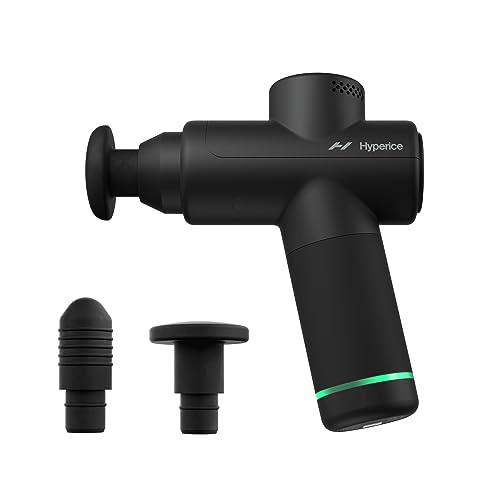
Nobody buys themselves one, and every player wants one
For the player who limps down the stairs on Sunday mornings
$139 from Amazon
Pro-level tracking for a player who's genuinely serious
For the club player who already talks about their top speed
$320 from Amazon
The cleat line most new players end up in anyway
For the new club player whose foot size you already know
$99.99 from Amazon
The ball a Champions League fan will actually display
For the fan who watches every Champions League midweek match
$73.68 from Amazon
For the winger who plays entirely on the counter-attack
$59.95 from Amazon
For the midfielder who cares about first touch above all else
$224.99 from Amazon
For the young kid who mostly kicks it around the yard
$36.28 from AmazonAt a glance
| Product | Price | |
|---|---|---|
| SKLZ Star-Kick Hands-Free Adjustable Solo Soccer TrainerOur favorite gift | $14.99On sale |
| Nike CU8062-100 Strike Team Recreational Soccer BallMore good gifts | $36.28 |
| adidas Unisex Predator League Fold-Over Tongue FirmBest for beginners | $99.99 |
| Hyperice Hypervolt Go 2 Handheld Percussion MassageSafest bet | $139 |
| adidas Unisex-Adult UEFA Champions League Competition SoccerMost personal | $73.68 |
| STATSports Academy GPS Soccer Tracker Vest -Best splurge | $320 |
| Nike Phantom GX 2 Elite FG Low-TopAlso consider | $224.99 |
| PUMA Mens Ultra Ultimate Soccer Cleats CleatedAlso consider | $59.95 |
How we picked
Low sizing risk. We favored gifts that don't require knowing a foot size, width, or shirt size, because most givers can't get those details without ruining the surprise. Where a gift does require a measurement, we say so plainly.
Actually gets used. We looked for the things players reach for weekly — balls, training aids, recovery tools — over novelties. Owner feedback themes about repeat use mattered more to us than a long feature list.
Works across ages. The best gifts here suit a nine-year-old and a thirty-five-year-old rec player alike. We prioritized adjustable and age-flexible gear so you don't have to guess where someone sits on the skill ladder.
Unwraps well. A gift should be complete in the box. We flagged every case where a recipient needs a separate ball, charging brick, or app account to start using the thing on day one.
Honest durability. We read owner feedback for recurring failure patterns — torn seams, dead batteries, buggy apps — and reported them rather than burying them. A gift that breaks in a month reflects on you.
Our favorite giftOn sale
Solo practice for any age, and no sizing to guess
SKLZ Star-Kick Hands-Free Adjustable Solo Soccer Trainer
For the kid who wants to practice when nobody's around
A neoprene belt and an 18-foot cord that snap onto a ball and return it after every kick. It fits ball sizes 3 through 5, so it works whether your recipient is a second-grader or a weekend adult leaguer.
$14.99fromAmazonList priceThis is the rare soccer gift with no measurements to get wrong. The belt adjusts with hook-and-loop closure and fits most body sizes. The ball glove stretches around size 3, 4, or 5 balls, which covers essentially every organized age group. You don't need to know their foot size, their arch, or what surface they play on. You just need to know they play soccer.
The use case is genuinely common. A kid wants to practice, nobody's free to shag balls, and the yard isn't big enough to blast shots into. The cord solves that. Owners describe kids using it in the backyard, in a driveway, before practice starts — juggling, trapping, working on first touch. Parents of new players report it helps most with technique repetition, which is exactly the thing that's boring to drill with a partner.
It's also useful past the youth level. Adult recreational players report using it for touch work when teammates aren't around, and goalkeepers use it for handling reps. That range matters for a gift, because you're not betting on a specific skill level. A serious club player and a kid who just signed up for their first season will both find something to do with it.
Note that the ball isn't included. If you want this to unwrap as a complete present rather than a mysterious belt, pair it with a ball in the right size — size 3 for the youngest players, size 4 through roughly age twelve, size 5 from there up.
Flaws but not dealbreakers
The neoprene is the weak point. Some owners report seams tearing early, and while the trainer usually still works after a tear, it's a disappointing thing to see in the first week. Treat it as a practice tool with a finite lifespan rather than something that lasts years.
Younger kids can struggle to get the ball into the glove on their own. Owners of eight-year-olds mention needing help at first, though most figure it out. And the novelty does fade for some kids — one parent noted their child drifted back to kicking against a wall once the newness wore off.
Safest bet
Nobody buys themselves one, and every player wants one
Hyperice Hypervolt Go 2 Handheld Percussion Massage
For the player who limps down the stairs on Sunday mornings
A compact percussion massager that weighs about a pound and a half and runs three hours on a charge. It's TSA-approved for carry-on, which matters for players who travel to tournaments most weekends.
$139fromAmazonRecovery is the gap in almost every player's gear closet. They'll spend on cleats and balls without blinking, then do nothing for the calf that's been tight since August. A massage gun is the classic gift-shaped object: clearly useful, easy to justify as a present, and rarely bought for oneself. That combination is why this is our safe pick when you don't know someone's taste well.
The Go 2 is built around portability. At roughly a pound and a half it fits in a gear bag next to shin guards, and the three-hour battery means it survives a tournament weekend without a charger hunt. Hyperice rates it at 40 pounds of force at up to 3,200 RPM, which is plenty for quads and calves even though it's the small model in the line.
It's quiet enough to use in a shared space. Hyperice calls the design QuietGlide, and owners consistently describe it as reasonably hushed for its power — usable in a living room with the TV on. For a teenager doing legs in front of the couch, that matters more than it sounds like it should.
One button runs everything. Hold to power on, tap through three speeds. There's no app, no screen, no pairing step. If you're giving this to someone who won't read a manual — which is most people — that simplicity is the feature.
Flaws but not dealbreakers
Durability is the recurring complaint. Multiple owners report the head-attachment area failing after several months, and one describes the unit dying at around eighteen months. Hyperice did send a replacement in that case, so support seems responsive, but this isn't a buy-it-for-life object.
The box includes a USB-A to USB-C cable and no wall brick. If your recipient doesn't have a spare 5V USB-A charger sitting around, the gift doesn't work on day one. Throw a brick in the box — it's a small thing that saves an awkward Christmas morning.
Best splurge
Pro-level tracking for a player who's genuinely serious
STATSports Academy GPS Soccer Tracker Vest -
For the club player who already talks about their top speed
A GPS vest and pod that records 24 metrics — sprint counts, total distance, top speed, heart rate zones — and feeds them into a companion app with drills and training plans. There's no subscription after the purchase.
$320fromAmazonGive this only to someone who will actually look at the data. GPS tracking has moved from pro clubs down to serious youth and amateur players, and STATSports says over 2,000 professional teams use its system. But the appeal depends entirely on the recipient's temperament. A player who wants to know whether they covered more ground this week will love it. A player who just wants to play will wear it twice.
For the right person, the numbers change how they train. Peer-reviewed work published in the Journal of Sports Sciences found that GPS-based training load monitoring was associated with a meaningful drop in non-contact soft-tissue injuries among semi-professional players over a year of monitoring. That's the real argument for it — not bragging rights, but noticing when you're ramping up too fast.
The package is complete and doesn't nickel-and-dime. You get the pod, the vest, a charging cable, and the Academy app with 200-plus drills and training plans, all for one payment with no recurring fee. That's unusual in connected fitness gear and worth knowing when you compare it to subscription-based alternatives.
Sizing is the one detail you can't dodge. The vest comes in adult sizes, and owners have run into the annoyance of receiving the wrong one and struggling to swap it. If you can find out their shirt size without tipping your hand, do it before you order.
Flaws but not dealbreakers
The app is the weak link. Owners report heat maps and pitch boundaries failing to load on Android, sessions occasionally going missing, and inconsistent data display. Several describe support responses as slow or unhelpful. When it works, people are enthusiastic; when it doesn't, the whole gift is frustrating.
It's the most expensive thing here by a wide margin, and it's the one most likely to sit unused. If you're not confident the recipient is the type to check their numbers after every session, the Hypervolt is a much safer place to spend that money.
Best for beginners
The cleat line most new players end up in anyway
adidas Unisex Predator League Fold-Over Tongue Firm
For the new club player whose foot size you already know
A firm-ground cleat from Adidas's Predator family, built with a textured upper for grip on the ball and a fold-over tongue. Predator is the best-selling cleat series by volume at Soccer.com, which tells you how many players land here.
$99.99fromAmazonOnly buy cleats if you have the size, the width, and the surface. All three. Firm ground studs are for natural grass, and they're the wrong choice for a player whose league runs on artificial turf. If you can't confirm those details, buy the solo trainer or a ball and give the cleats a miss — a returned pair of shoes is a worse gift than a smaller thing that fits.
With that out of the way: Predator is the sensible default. It's the top-selling cleat series by unit volume on Soccer.com for the most recent product cycle, which means teammates are wearing it, coaches recognize it, and a kid opening the box won't feel like they got something off-brand. For a first serious pair, that social factor matters more than a spec sheet does.
The League sits in the middle of the Predator range. It carries the textured grip-zone upper the line is known for, without the price of the elite version, and the fold-over tongue gives a cleaner striking surface across the laces. For a player still developing technique, that's the right place on the ladder — good enough to feel like real cleats, not so expensive that a growth spurt is a tragedy.
The listed color is white with solar turbo and black, and sizing runs in the unisex men's/women's convention. Check which system your recipient uses before ordering. A women's 7.5 and a men's 6.5 are the same shoe here, and that conversion trips people up constantly.
Flaws but not dealbreakers
This is a new listing without an established feedback record, so there's less owner reporting to lean on than we'd like for a cleat.
Firm-ground studs are genuinely uncomfortable on turf and unusable indoors. If your player's season is split between surfaces — which is common for indoor winter leagues — these cover only part of their year.
Most personal
The ball a Champions League fan will actually display
adidas Unisex-Adult UEFA Champions League Competition Soccer
For the fan who watches every Champions League midweek match
The UEFA Champions League competition ball, built with seamless thermal-bonded panels instead of stitched seams. For a player who watches the tournament every week, the badge on the ball is most of the appeal.
$73.68fromAmazonThis is a gift about meaning, not just equipment. A serious ball plays better than a cheap one, sure. But the reason to give this one is that your recipient recognizes it instantly from television. If they've got a favorite European club and a midweek viewing ritual, unwrapping the ball from that competition lands differently than unwrapping a generic training ball.
The construction is a real upgrade over the balls most players own. Thermal bonding fuses the panels rather than stitching them, which removes the seams where water gets in and shape gets lost. SoccerPrime's lab testing found thermobonded balls hold roundness and pressure about 40 percent longer than hand-stitched equivalents across comparable use.
For context on what the top ball tier means: FIFA Quality Pro certification requires passing seven standardized tests covering circumference, roundness, rebound, water absorption, and shape retention. That's the ceiling for ball certification, and it's the standard the competition-grade balls in this family are built toward.
It's a size 5, which is the adult and older-youth standard — roughly age thirteen and up. Younger players use size 4 or size 3, so check the age before you commit. A size 5 handed to an eight-year-old is a ball they'll grow into rather than one they'll use this season.
Flaws but not dealbreakers
The listing has almost no feedback behind it, and what little exists is negative. That's thin evidence either way on a brand-new listing, but it's worth knowing you're buying on brand reputation and construction specs rather than on a track record of buyer reports.
A premium ball on rough concrete or a gravel lot is a waste. If your recipient mostly plays on hard surfaces rather than a proper pitch, they'll scuff it up fast and a cheaper training ball would serve them better.
Who this is for
This guide is for anyone shopping for a soccer player: a parent buying for a kid in a youth club, a partner buying for someone in an over-30 league, a grandparent who knows the sport matters but not much else about it, or a coach picking up something for end-of-season. We've tried to sort the picks by how much you need to know about the recipient. The solo trainer and the massage gun need almost nothing. The cleats and the GPS vest need real information about size and temperament.
It's not for you if you're buying for someone who's just curious about soccer and hasn't started playing. Everything here assumes a player with a schedule — practices, matches, a bag in the hallway. We also don't cover goalkeeper gloves, shin guards, kits, or team apparel, which all carry their own sizing headaches. And if the person on your list is deep enough into gear that they research boot silos for fun, they've probably already got strong opinions. Ask them, or get a gift card.
How we picked
We weighted this list toward gifts that survive an information gap between you and the person you're shopping for. Low sizing risk: the fewer measurements you need, the better the gift, and we say clearly which picks demand a foot size or a shirt size. Actually gets used: we favored the weekly items — something to kick, something to train with alone, something for sore legs — over gadgets that get one enthusiastic session. Works across ages: adjustable gear that suits a youth club player and an adult leaguer beats something tuned to one narrow band. Unwraps well: we flag every pick that needs a separate ball, charger, or app to be usable on day one. Honest durability: we read owner feedback for repeat failure patterns and put them in the flaws section, because a present that tears in week one is worse than no present.
Other gifts for soccer players worth considering
If you want a cleat for a fast, attacking player: The PUMA Mens Ultra Ultimate Soccer Cleats Cleated ($59.95) — The Puma Ultra Ultimate is a speed boot, built around an ULTRAWEAVE upper and a dual-density outsole modeled on track spikes. Footy Headlines puts it among the three lightest speed cleats on the current market at roughly 170 grams in a UK 8.5. It's also rated for both firm ground and artificial grass, which quietly makes it a safer surface bet than a pure FG cleat. The catch is fit: Puma lists it as regular to narrow, so it's a poor guess for a wide-footed player. And a bright yellow speed boot is a statement — great if that's their style, awkward if it isn't.
If you want the technical player's boot: The Nike Phantom GX 2 Elite FG Low-Top ($224.99) — The Nike Phantom GX 2 Elite is the top-tier control cleat, and it's aimed at players who think about their touch. Nike builds the upper from Gripknit with a micro-textured forefoot designed to grip the ball the way a keeper glove does. The Cyclone 360 traction pattern and asymmetric lacing are both about control on the turn rather than straight-line speed. It's the most expensive cleat here and it's an elite-tier boot, so it's overkill for a casual player. Buy it only for someone genuinely serious, and only when you're certain of the size — it's listed for slightly wet, short-grass fields, so it's a grass boot, not a turf one.
More good gifts
These are the products our research surfaced, not a survey of everything sold for soccer players. Nothing here is a bad gift by definition — each one just suits a narrower recipient than the picks above, and it's worth knowing which person that is before you buy.
The Nike CU8062-100 Strike Team Recreational Soccer Ball ($36.28) — The Nike Strike Team recreational ball is a machine-stitched size 4, which puts it in the roughly age-eight-to-twelve range. The thing to know before gifting it is weight: owners repeatedly describe it as noticeably lighter than a standard ball, and reactions split hard on that. Some parents don't mind for backyard play, and a few coaches wave it through. Others expected a match-weight ball and were unhappy. Feedback also mentions inconsistent shape and at least one air-retention problem. If you want a ball to pair with the solo trainer for a young kid who's just knocking it around, it does that job. For anyone training seriously, spend up to a competition-grade ball instead.
Getting the details right before you buy
Three numbers make or break a soccer gift. First, ball size: size 3 for the youngest kids, size 4 through roughly age twelve, size 5 from about thirteen up. Second, cleat size, and remember that unisex listings often show both a men's and a women's number for the same shoe — a women's 7.5 and a men's 6.5 are the same pair. Third, playing surface: firm ground studs are for natural grass, artificial grass models handle turf, and neither works indoors. If you can't confirm all three without spoiling the surprise, buy something adjustable. The solo trainer fits three ball sizes and most waists. The massage gun fits everyone. Those are the gifts you can order without a reconnaissance mission.
Questions we get
What's the safest soccer gift if I don't know their gear or sizes?
A solo kick trainer or a recovery tool. Neither needs a foot size, a shirt size, or knowledge of what surface they play on. Both get used regularly by players at every level, which is the real test of a gift.
Should I buy soccer cleats as a gift?
Only if you know their exact size, their foot width, and whether they play on grass, turf, or indoors. Miss any one of those and you've bought a return trip. If you're set on cleats but short on details, a mid-range firm-ground pair from a mainstream line like Predator is the least risky guess, since it's what most players end up in anyway.
What size soccer ball should I buy?
Size 3 for the youngest players, size 4 for roughly ages eight through twelve, and size 5 for about thirteen and up. Adults and older youth all use size 5. If you're unsure of the age bracket, ask — a ball in the wrong size is barely usable for practice.
Are GPS trackers worth it for a youth player?
For a genuinely committed player, yes. Research published in the Journal of Sports Sciences linked GPS-based training load monitoring to fewer non-contact soft-tissue injuries in semi-professional players. But it's a data toy for someone who won't check the numbers, so match it to temperament rather than age.
What's a good gift for a player who already owns everything?
Recovery gear. Players buy cleats and balls without hesitating and then ignore the tight calf they've had since preseason. A compact massage gun is the classic thing nobody buys themselves, which is exactly what makes it work as a present.
Firm ground or artificial grass cleats?
Ask, if you possibly can. Firm ground studs are for natural grass and feel bad on turf; artificial grass models use shorter, denser studs made for synthetic pitches. Some boots, like the Puma Ultra Ultimate, are rated for both, which is a smart hedge when you're not certain what they play on.
Why you should trust us
For this guide:
- We read manufacturer specification sheets, published reviews and certification standards from FIFA for every product in this guide.
- We compared owner feedback themes across each listing, looking for recurring complaints about durability, sizing and app reliability rather than one-off reports.
- We weighted our picks toward gifts that require the least information about the recipient, since that's the constraint most gift-givers actually face.
- We read owner reviews on every listing, weighted toward the critical ones, because that is where the recurring failures show up.
- We have a systematic way of automatically fetching the latest prices, so the numbers on this page stay current.
- This is a research-focused guide, so the team may not own every product listed — though we often do own the top winners, which gives us extra context for the recommendations.
- We don't accept free products, and the retailer commission never changes which product we recommend.
Sources
Best Soccer Cleats 2026 — Goal.com, Goal.com
Best Soccer Balls Reviewed — SoccerPrime, SoccerPrime
STATSports Apex Team Pro — Official Product Page, STATSports
Hyperice Hypervolt Go 2 — Official Specs, Hyperice
FIFA Quality Programme for Footballs — Official Standards, FIFA
Puma Ultra Ultimate FG Review — Footy Headlines, Footy Headlines
Soccer Gift Guide 2026 — Soccer.com, Soccer.com
GPS Load Monitoring and Injury Prevention in Soccer — Journal of Sports Sciences, Journal of Sports Sciences
Global Soccer Equipment Market Report — Grand View Research, Grand View Research
FIFA Big Count — Global Soccer Participation, FIFA
Amazon product listings and owner reviews for all 8 products
Manufacturer specification pages for each product
Some passages in this guide may be paraphrased with AI help. Prices are refreshed automatically.
More like this.
Continue exploring lifestyle reviews and recommendations.

The Best Tennis Racquets for Intermediate Players
A racquet is the one piece of tennis gear you feel on every single ball. Once you're rallying with real pace, the differences stop being marketing and…

The Best Soccer Rebounders for Backyard Training
A rebounder turns a lonely backyard into a practice partner. Your kid kicks, the ball comes back, and the touch-after-touch repetition that builds a first…

The Best Halloween Animatronic Decorations
An animatronic is the one decoration on your lawn that people stop and stare at. Inflatables sag, string lights blend together, and foam tombstones stop…

The Best Toddler Learning Companions and Interactive Books
A toddler's day is mostly repetition. The same song, the same page, the same animal noise, forty times. That's not a bug - it's how small kids learn, and…

The Best Osprey Backpacks
A backpack is one of the few things you buy that has to fit you, not just hold your stuff. Get the torso length wrong and a loaded pack digs into your…

The Best Pergola Kits
A pergola changes how you use your yard. Without one, a patio in July is a place you walk across on the way to somewhere else. With one, it's where you…