The Best Pergola Kits
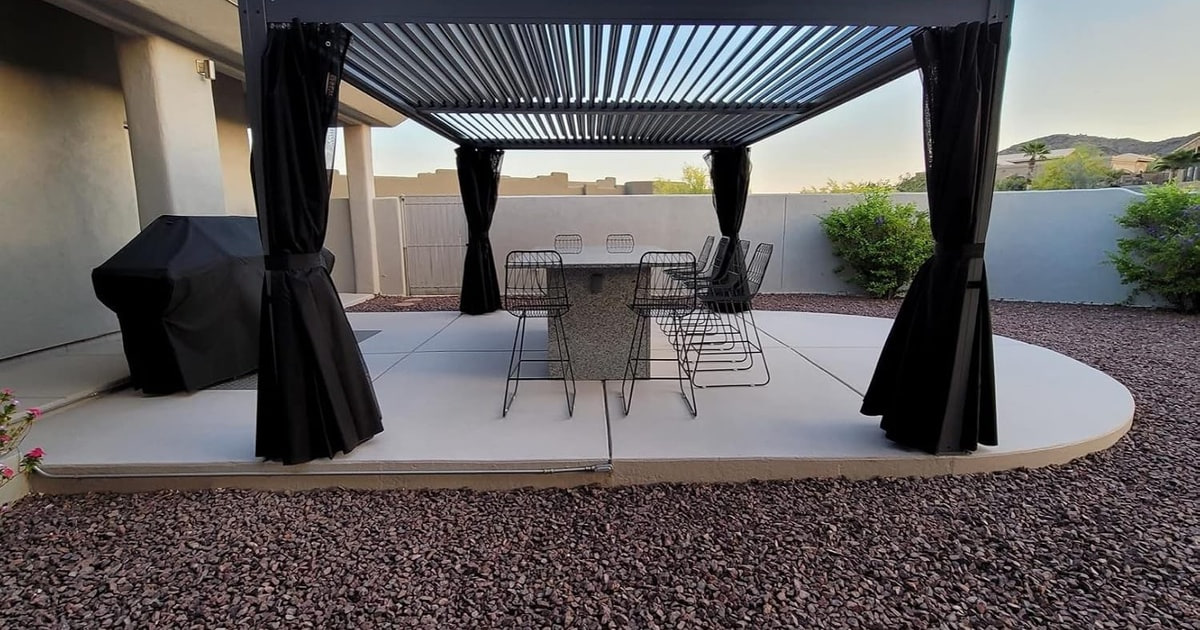
A pergola changes how you use your yard. Without one, a patio in July is a place you walk across on the way to somewhere else. With one, it's where you eat dinner. The right kit gives you real shade over a real table, stands up to a windy afternoon without wobbling, and doesn't turn into a weekend of swearing at instructions. The wrong one leaves you with a scratched pile of aluminum and a customer service email thread that goes nowhere. Size, roof type and anchoring matter far more than looks.
Here's the honest part: no pergola kit in this range is a roof. Louvered aluminum models shed most rain and drain it through the posts, but owners of even the good ones report drips in a hard downpour. Fabric canopies block sun well and rain poorly. Open cedar slats block neither. Shipping damage is endemic across every brand and price point here — dented posts, gouged beams, the occasional missing part. And almost every kit needs two people minimum, three if you want the day to be pleasant.
We think that the Domi 12x16 louvered aluminum pergola is the best pergola kit for most people, and that the PURPLE LEAF 12' x 16' retractable canopy pergola is the one to buy if you want adjustable shade without the weight, cost and crew of a louvered roof.
Everything we recommend

Adjustable louvers and real drainage, if you can wrangle it

Lighter, simpler shade that one determined person can build

Real cedar and an easy build, for less than the metal kits

The sturdiest wood option, with power built into the post
At a glance
| Product | Frame Material | Footprint | Price | |
|---|---|---|---|---|
| PURPLE LEAF Outdoor Pergola 12' X 16'Runner-up | Aluminum | 12' X 16' | $545.01 |
 | SUNJOY Outdoor Pergola 10 x 12 ft.Also consider | Steel | 10 x 12 ft. | $471 |
| MUPATER 12x16 FT All Cedar Wood WoodenBudget pick | Cedar Wood | 12 x 16 FT | $899.99 |
| Backyard Discovery Beaumont 16 ft. x 12Also great | Cedar Wood | 16 ft. x 12 ft. | $1,711.95On sale |
| Domi Outdoor Pergola 12x16FTTop pick | Aluminum | 12'×16' | $2,599 |
How we picked
Roof that earns its keep. We prioritized kits where the roof does real work — adjustable louvers with drainage, or a retractable canopy that meaningfully cuts heat. Open slat roofs qualified only when the frame itself was strong enough to justify the buy.
Frame material and upkeep. We compared powder-coated aluminum, powder-coated steel and cedar on corrosion and rot resistance, leaning on manufacturer spec sheets and published editorial comparisons. Aluminum's zero-repaint lifecycle counted heavily for humid and coastal buyers.
Assembly reality. We read owner accounts of how many people and hours each kit actually took, and weighed that against manufacturer estimates. Kits where owners consistently reported needing more help than the box promised got marked down.
Anchoring and wind. We looked for stated wind ratings, base plate design and included anchoring hardware for soil, concrete and decking. Published guidance puts the residential baseline near 90 mph when anchored to spec, so anything vague about anchoring was a problem.
Support and shipping. We tracked recurring themes in owner feedback around damaged parts, missing hardware and how brands responded. In a category where nearly every kit ships damaged sometimes, replacement-part support is a real differentiator.
Top pick
Adjustable louvers and real drainage, if you can wrangle it
Domi Outdoor Pergola 12x16FT
The Domi is a full-aluminum louvered pergola with two independently adjustable roof sections that tilt from fully open to nearly closed. Rainwater runs into gutters and down through the posts, so you get shade you can dial in and a patio that isn't a puddle.
$2,599fromAmazonThe two independent louver banks are what make this worth the effort. Most pergolas give you one shade setting: whatever the canopy is doing today. Here you rotate each half of the roof anywhere from 0 to 130 degrees. Open one side over the grill and close the other over the table. Track the sun through the afternoon without getting up more than once. It's the difference between a structure that shades a spot and one that shades where you actually are.
The integrated drainage is the quiet feature that matters more than it sounds. Rain collects in channels along the roof and runs down inside the columns instead of sheeting off the edges onto your chairs. Owners in heavy-rain regions report it holds up through serious storms once it's anchored into concrete. It's not a sealed roof — more on that below — but it's a real system, not a marketing bullet.
Everything structural here is aluminum, and that's the right call for a pergola you plan to keep. Powder-coated aluminum doesn't rust, doesn't rot and doesn't need re-staining every couple of years the way cedar does. Bob Vila's editors note that powder-coated aluminum kits in the 6000-series range need no repainting or sealing over their lifetime, while cedar typically wants a fresh coat of stain every two to three years. If you're in a coastal or humid spot, that's not a preference, it's the whole decision.
At 440 pounds and 12 by 16 feet, this thing has presence. The 7.6-foot clearance is enough for a dining set and a standing adult without feeling like a carport. Owners consistently describe it as sturdy once anchored, and several specifically mention it riding out heavy weather. The white finish reads more architectural than backyard-kit, which helps in neighborhoods where an HOA has opinions.
Flaws but not dealbreakers
This is not a two-person weekend job. Domi's own guidance calls for a team of three to five people and four to six hours, and owner accounts back that up — a couple working alone reported two full days. Owners also warn against installing the center beam and louvers before lifting the roof onto the posts unless you have extra hands. Plan the crew before the delivery, not after.
It's not fully waterproof in heavy rain. Owners report some leaking through the louver seams during harder downpours, which is normal for the type but worth knowing if you were picturing a dry patio in any weather. There's also a knack to the louver screws: overtightening the fasteners at each louver binds the mechanism, and leaving a little slack makes the roof operate smoothly. That's the kind of thing you learn from other buyers, not the manual.
The instructions are, by several accounts, confusing on first read. They make sense once you've gone through them, but budget time for reading before you start turning screws. Delivery timing has also frustrated some buyers.
Runner-up
Lighter, simpler shade that one determined person can build
PURPLE LEAF Outdoor Pergola 12' X 16'
The PURPLE LEAF trades the louvered roof for a retractable fabric canopy on a powder-coated aluminum frame. You give up rain drainage and get a structure that's dramatically easier to assemble and lighter on your patio.
$545.01fromAmazonIf the Domi's three-person crew is a dealbreaker, this is your pergola. Multiple owners report a single person handling most or all of the build, with a second set of hands needed only to steady the frame while the top goes on. That's a genuinely different project. You can decide on Saturday morning and be eating dinner under it that night, which is not something we'd say about most 12-by-16 structures.
The retractable canopy slides along the beams and locks where you put it. Pull it closed for full shade over the table, open it to let evening light through. Homes & Gardens reported that Purple Leaf's retractable canopy blocked 91% of direct solar heat gain in midsummer afternoon conditions, dropping the temperature underneath by an average of 17 degrees. On a west-facing patio in August, that's the difference between usable and abandoned.
The frame is powder-coated aluminum with thick-gauge posts and an added beam for load-bearing, and owners describe the finish as genuinely hard and well applied. Purple Leaf also ships mounting hardware for multiple surfaces, so anchoring to a deck, a concrete pad or soil doesn't mean a hardware store trip. Given how many buyers here are working over an existing patio, that's more useful than it sounds.
Fabric is the honest trade-off, not a flaw to explain away. A canopy is lighter, cheaper and far easier to put up than an aluminum louver system, and it shades just as well. What it won't do is manage rain, and it's the part of the structure with a service life measured in years rather than decades. Purple Leaf uses a yarn-dyed fabric that's more colorfast than earlier versions. You'll still be replacing it eventually.
Flaws but not dealbreakers
The base design draws the most consistent criticism from owners — it's the weak point of an otherwise solid structure, and you should plan to weight or bolt the legs down rather than trusting the stakes alone. Several owners are blunt that wind will move an unanchored unit.
Shipping damage and hardware fit are recurring complaints. Owners report gashed beams arriving in the box, occasional missing canopy rollers, and one specific assembly snag: the screws labeled J don't seat in their designated holes for some buyers, who ended up sourcing self-tapping screws to finish the job. None of that is fatal, but it's common enough that you should open and inventory every box before you start.
Budget pick
Real cedar and an easy build, for less than the metal kits
MUPATER 12x16 FT All Cedar Wood Wooden
The MUPATER is a 12-by-16-foot cedar pergola with an open flat-slat roof and metal ground stakes. It costs a fraction of the aluminum kits here, and owners consistently finish it in an afternoon with two people.
$899.99fromAmazonThis is the kit for someone who wants the classic wood-pergola look over a patio and doesn't need a roof that manages rain. The open slat design throws dappled shade and lets plenty of light through. Owners repeatedly describe getting it up in about three hours with two people, including a couple in their sixties who did it themselves over one day. For a structure this size, that's fast.
Cedar is the reason wood pergolas still sell, and it's the reason this one works. Cedar resists rot naturally, which is why it survives outdoors where pine wouldn't. MUPATER recommends adding a water-based stain for better protection, and that's advice worth taking. Expect to re-coat every two to three years — the going rate for cedar generally. If that maintenance rhythm sounds like a chore rather than a spring ritual, buy aluminum instead.
The included metal ground stakes anchor it into soil, and the base plates accept additional anchor bolts if you're mounting to a concrete pad or a deck. Owners who bolted it to decking report a solid, confidence-inspiring result. Anchoring isn't optional on a structure with this much surface area, and it's good that the hardware path exists for both surfaces.
You can add a cover on top for more shade or rain protection, and the beams will carry a lightweight hanging plant or string lights. That flexibility is part of the appeal of an open pergola: it's a frame you finish yourself, over time, rather than a finished product.
Flaws but not dealbreakers
The wood is softer than some buyers expect. Owners note it dents easily, and gouged posts from shipping handling come up more than once. If you want furniture-grade timber, this isn't it — it's serviceable cedar at a price that reflects that.
There's no roof here in any meaningful sense. The flat slat design gives you filtered sun and nothing else. Rain goes straight through. If you're in a wet climate and hoping to use the space year-round, look at the louvered options instead.
MUPATER is upfront that assembling a pergola this size is complicated, and the instructions lean on a companion video. That's fine if you're comfortable pausing to watch, less fine if you'd rather work from paper.
Also greatOn sale
The sturdiest wood option, with power built into the post
Backyard Discovery Beaumont 16 ft. x 12
Backyard Discovery's Beaumont is a 16-by-12-foot cedar pergola rated to withstand winds up to 100 mph, with a removable power port offering three outlets and three USB ports. It's the wood kit to buy if you want engineering, not just lumber.
$1,711.95fromAmazonList priceA 100 mph wind rating is the number that separates this from most wood kits. The Home Depot's buying guide notes that residential freestanding pergola kits are typically engineered to a 90 mph minimum when anchored to spec, so the Beaumont clears the usual bar. That matters most in open yards, on exposed lots, and anywhere your county's wind code has teeth. Dual beams and corbels do structural work here, not just decorative work.
The built-in power port is the feature we wish more pergolas had. Three outlets and three USB ports mean string lights, a fan, a speaker and two phones without an extension cord snaking across the patio. It's removable, so you're not committed to it. If you've ever run a cord out a window to power a backyard dinner, you know exactly why this is on the list.
It comes in three footprints — 14 by 12, 16 by 12 and 20 by 12 — which helps if your patio isn't a standard rectangle. Popular Mechanics has reported that Backyard Discovery's pre-drilled, color-coded systems cut assembly errors sharply compared with traditional numbered-lumber kits. That's the meaningful difference between a wood kit designed as a product and one that's a stack of boards with a diagram.
This listing bundles 25 heavy-duty ball bungees. They're for tying down tarps and gear, which is genuinely useful under an open pergola if you plan to add a shade cloth seasonally. Don't buy the kit for the bungees, but don't ignore them either.
Flaws but not dealbreakers
It's still an open cedar roof. There's no canopy, no louvers and no panels, so you get filtered light rather than shade or rain cover. Adding a fabric top later is on you.
Cedar needs the same upkeep here as anywhere: a stain or sealer every couple of years to keep the color and slow weathering. And this listing is a bundle, so confirm the size you're ordering matches your space before you click — the three available footprints are easy to mix up.
Who this is for
This guide is for homeowners with an existing patio, deck or flat yard who want shade over it and are willing to spend a weekend building. If you're comfortable with a drill, a level and a helper or two, a kit saves you a lot compared with a contractor — Angi's cost data puts professional pergola installation for a 12-by-12 structure well above what these kits cost, and the National Association of Realtors found outdoor living projects recoup about 83 cents on the dollar at resale. That's among the best returns of any exterior improvement.
It's not for you if you need a genuinely dry, all-weather space. None of these are patio covers. If rain protection is the point, price out a solid roof or a polycarbonate-panel structure instead. Skip these too if you're attaching to your house — that usually means a permit, since Thumbtack's data shows attached pergolas trigger permit requirements in roughly 73% of surveyed U.S. municipalities, while freestanding structures under 200 square feet were exempt in about 61%. Everything here is freestanding. And if your lot is exposed and your county enforces strict wind and snow loads, check the rating against your code before you order.
How we picked
We weighed five things. Roof function: whether the top actually manages sun and rain, not just frames the sky — adjustable louvers with drainage and retractable canopies ranked above open slats. Material and upkeep: powder-coated aluminum needs no repainting or sealing, while cedar wants a fresh stain every two to three years, so we matched material to climate and patience. Assembly reality: we compared what manufacturers claim about crew size and hours against what owners report, and marked down kits where the gap was wide. Anchoring and wind: stated wind ratings, base plate design and included hardware for soil, concrete and decking, measured against the roughly 90 mph residential baseline for properly anchored freestanding kits. Support and shipping: shipping damage is endemic here, so how a brand handles a gouged beam or a missing roller matters as much as the spec sheet.
Other pergola kits worth considering
If you want a built-in privacy wall: The SUNJOY Outdoor Pergola 10 x 12 ft. ($471) — The Sunjoy is a 10-by-12-foot powder-coated steel pergola with an adjustable textilene shade and a horizontal steel slat wall across the back. That wall is the reason to buy it. It blocks sightlines from a neighbor's deck and cuts low afternoon sun without killing airflow, which no other kit here does. The canopy is CPAI-84 rated 450 g/m² fabric — fire-retardant and breathable — and it slides on side rails with a sewn-in rod along the bottom edge as a handhold. What you give up is size and calm weather tolerance. It's the smallest footprint in this lineup, owners describe assembly as a three-person job despite the modest dimensions, and more than one long-term owner reports it doesn't fare well in a genuinely windy location. Buy it for a sheltered patio where privacy matters more than square footage.
The competition
This is what our research surfaced across a handful of widely available kits, not a survey of everything on the market. Pergola kits from specialty manufacturers, custom-cut Douglas fir systems and polycarbonate-roofed structures all exist and can be the right answer for a specific yard. Every product we looked at closely is either a pick above or covered here.
Installation and anchoring notes
Anchor everything, always. The single most common regret in owner feedback across every kit here is a structure that moved in wind because someone trusted stakes in soft soil. On a concrete patio you don't need to dig — wedge anchors or concrete screws through the base plates hold fine, and most of these kits ship with base plates pre-drilled for exactly that. On a deck, bolt through into joists or blocking, not just decking boards. Before you start, open every box and inventory the hardware against the parts list. Shipping damage and missing fasteners come up often enough that finding out on hour four is worse than finding out on hour zero. For cedar, plan on a water-based stain or sealer at setup and again every two to three years. Aluminum needs nothing but a hose.
Questions we get
Are aluminum pergola kits better than wood?
For low maintenance, yes. Powder-coated aluminum doesn't rust or rot and needs no repainting or sealing over its life, while cedar generally wants re-staining every two to three years. Wood wins on looks and price — a cedar kit costs a fraction of a louvered aluminum one and reads warmer in a garden setting. In humid or coastal spots, go aluminum.
How long does it take two people to assemble a pergola kit?
It depends heavily on the kit. Family Handyman clocked a standard 12-by-12 aluminum pergola at about 4.5 hours for two adults versus 7.5 hours for an equivalent pressure-treated wood kit. But that's for a smaller footprint than most kits here. The louvered aluminum models really do want three or more people, and owners working in pairs have reported two full days.
Do pergola kits require a building permit?
Often, and it depends on how you install it. Thumbtack's permit data found that attached pergolas trigger permit requirements in roughly 73% of U.S. municipalities surveyed, while freestanding structures under 200 square feet were permit-exempt in about 61% of jurisdictions. Call your local building department before you order. HOA approval is a separate conversation.
What's the difference between a louvered pergola and a regular one?
A louvered pergola has rotating roof blades you can angle from open to nearly closed, so you control shade through the day and shed most rain. A regular pergola has fixed slats or a fabric canopy. Louvers cost considerably more and weigh a lot more, but they're the only version that adapts to the weather.
Can pergola kits handle high wind?
Properly anchored freestanding kits are generally engineered to around a 90 mph minimum, per The Home Depot's buying guide, and the Backyard Discovery Beaumont states 100 mph. Anchoring is the whole story — an unanchored pergola is a sail. If your area enforces specific wind or snow load codes, check the manufacturer's rating against them before ordering.
Do pergolas add value when you sell?
They hold value better than most exterior upgrades. The National Association of Realtors' Remodeling Impact Report found outdoor living projects recoup roughly 83 cents on the dollar at resale, among the highest returns of any exterior improvement. The American Institute of Architects has also ranked outdoor living as the most-requested home feature for three straight years, so buyer interest is there.
Why you should trust us
For this guide:
- We read manufacturer spec sheets and listing details for every kit here, comparing frame material, dimensions, anchoring hardware and stated wind ratings side by side.
- We drew on published editorial reporting from Bob Vila, Family Handyman, Popular Mechanics, Homes & Gardens, The Home Depot's buying guide and This Old House for material durability, assembly timing and shade performance.
- We reviewed themes in owner feedback across each product — recurring shipping damage, crew size needed for assembly, anchoring problems and leak reports — and used them to shape the flaws and caveats above.
- We read owner reviews on every listing, weighted toward the critical ones, because that is where the recurring failures show up.
- We have a systematic way of automatically fetching the latest prices, so the numbers on this page stay current.
- This is a research-focused guide, so the team may not own every product listed — though we often do own the top winners, which gives us extra context for the recommendations.
- We don't accept free products, and the retailer commission never changes which product we recommend.
Sources
Best Pergola Kits of 2026 — Bob Vila, Bob Vila
Best Pergola Kits, Tested by Editors — Popular Mechanics, Popular Mechanics
Best Pergola Kits Review — This Old House, This Old House
Pergola Buying Guide — The Home Depot, The Home Depot
Best Pergola Kits: Our Top Picks After Testing — Homes & Gardens, Homes & Gardens
Pergola Kits Reviewed and Ranked — Family Handyman, Family Handyman
Best Pergola Kits for 2026 — Forbes Home, Forbes Home
Louvered Pergola vs. Traditional Pergola Cost and ROI — Angi, Angi
Pergola Building Permits: What You Need to Know — Thumbtack, Thumbtack
Polycarbonate Roofing Panels Performance Testing — Palram Industries Technical Bulletin, Palram Industries
Outdoor Living Trends Report 2025–2026 — American Institute of Architects, American Institute of Architects
Backyard Addition ROI Statistics — National Association of Realtors 2025, National Association of Realtors
Amazon product listings and owner reviews for all 5 products
Manufacturer specification pages for each product
Some passages in this guide may be paraphrased with AI help. Prices are refreshed automatically.
More like this.
Continue exploring lifestyle reviews and recommendations.

The Best Backyard Shed Kits
A shed solves a problem you probably live with every day. The mower is wedged behind the car. Rakes fall over every time you reach for the hose. Bags of…

The Best DIY Windshield Repair Kits
A rock kicks off the back of a gravel truck, and a second later there's a small white star in your glass. It looks harmless. Then a cold morning and a…

The Best Pumpkin Carving Kits
Carving a pumpkin is the most popular Halloween activity in the country. A National Retail Federation survey found that roughly 72% of celebrating…

The Best Beekeeping Starter Kits
You'll open your hive every week or two, for years. So the parts that matter are the boring ones: square corners, frames that hang straight, a lid that…

The Best Snake Bite First Aid Kits
Snakes bite about 7,000 to 8,000 people in the US every year, according to the CDC, and fewer than 10 of those people die - almost entirely because…

The Best Raised Garden Bed Kits
A raised bed changes gardening in two boring, useful ways. You control the soil instead of fighting whatever clay or sand came with your yard, and you…