The Best Beekeeping Starter Kits
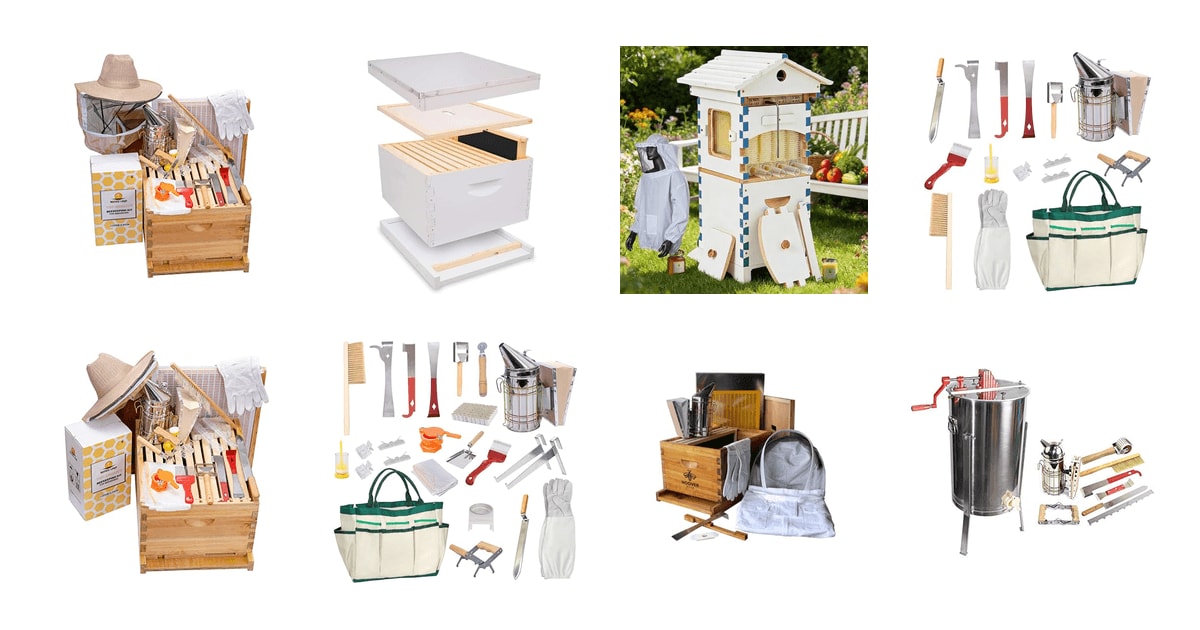
Beekeeping gear is simpler than it looks. Nearly everything you'll see for sale is a Langstroth hive: a stack of boxes holding removable frames, with a lid on top and a bottom board underneath. What separates a good starter kit from a frustrating one is whether it arrives complete, square, and ready for bees. You'll be lifting these boxes, prying them apart with a hive tool, and leaving them outside year-round. Sloppy joints, thin wood, and missing hardware all turn into real problems by your second season.
No kit here gets you all the way to keeping bees. Most include the hive and nothing else, so you'll still need a suit, a smoker, and a hive tool — plus the bees, which nobody ships in a box with the lumber. The kits that do bundle gear skip the hive entirely. And none of them protect you from what actually kills colonies: varroa mites, starvation, and swarming. A flow hive doesn't change that either. It just makes the honey easier to get out.
So choose for your climate, your patience with assembly, and what you already own. If your winters are hard, weight insulation heavily. If you'd rather never hold a paintbrush, wax-dipped cedar saves you an afternoon now and upkeep later. And if you're not sure the hobby will stick, start with one box and expand, since standard Langstroth parts swap across brands. We think that the Mann Lake Complete Hive Kit Combo is the best beekeeping starter kit for most people, and that the MayBee 10-Frame Langstroth Beehive is the one to buy if you want the full stack of boxes from day one.
Everything we recommend

Shows up assembled and painted, from a name every supplier stocks

More boxes and frames, if you don't mind a screwdriver

A single solid box to start small and add to later

Insulated foam for hard winters, and much lighter to lift
At a glance
| Product | Frame Count | Material | Price | |
|---|---|---|---|---|
| Mann Lake Complete Hive Kit ComboTop pick | 10 Frame | Pine | $238.95 |
 | Flow Bee Hive Starter Kit for BeginnersAlso consider | 10 Frames | Cedar Wood | $300.99 |
 | Hoover Hives 10 Frame Langstroth Beehive PartsAlso in lineup | 10 Frame | — | $89 |
 | Honey Lake 31Pcs Beekeeping Supplies Starter KitAlso consider | 31Pcs | — | $49.97On sale |
| Complete Lyson Beehive KitAlso great | 10 Frames | Polystyrene | $199.95 |
| Little Giant® 10 Frame Complete HiveBudget pick | 10 Frame | — | $124.99 |
| 10-Frame Langstroth Beehive Dipped in 100% BeeswaxRunner-up | 30 Frames | Cedar Wood | $134.99On sale |
 | XHDZSM Automatic Flow Hive Beehive Kit -Also in lineup | — | Cedar | $179.99 |
How we picked
Climate fit. We looked at whether the construction suits hard winters, hot summers, or both, based on spec sheets and what published beekeeping guides say about overwintering. Insulation and ventilation carried the most weight, since both show up in colony losses.
What's in the box. We compared each listing against the full set of parts you need before bees can move in: boxes, frames, foundation, covers, bottom board, excluder, and entrance reducer. Kits missing several of those had to earn their place another way.
Assembly burden. Fully assembled kits remove the most common beginner mistakes — out-of-square boxes and wrong frame spacing. We favored them for first-timers, and required good joinery from anything shipping flat.
Finish and durability. Beeswax-dipped cedar and dense polystyrene need no painting, while raw or painted pine needs periodic resealing. We weighed that ongoing upkeep as part of what you're signing up for.
Room to grow. We checked that each hive uses standard 10-frame Langstroth dimensions, so supers, excluders, and frames from other suppliers will fit. Proprietary sizing boxes you in once the colony expands.
Top pick
Shows up assembled and painted, from a name every supplier stocks
Mann Lake Complete Hive Kit Combo
This is a standard 10-frame Langstroth hive that arrives fully assembled, painted, and ready to set on a stand. You get a deep brood box for the colony and a medium super above it for honey, which is the configuration most first-year beekeepers are pointed toward.
$238.95fromAmazonYou don't have to build anything. It ships assembled, so you're not squaring up box joints or second-guessing your carpentry on something that has to stay weathertight through years of rain and snow. That matters more than it sounds. A beginner-built box with gaps at the corners is an open door for small hive beetles and wax moths, and it bleeds heat all winter. Here you set it on a stand and you're ready for bees.
The deep-plus-medium stack matches what beginners are told to buy. The deep box gives the queen room to lay and the colony room to grow. The medium above it is where surplus honey collects, and a full medium is a box you can actually pick up. A full deep is punishing on your back. If the colony grows faster than expected, you add another box of the same size and nothing else changes.
The finish work is already done. The low-VOC white paint reflects summer sun, which keeps the inside from cooking during a heat wave and spares the bees some of the work of fanning the hive cool. The screened bottom board comes with it, unpainted, which is exactly right — it's there to move air and dump moisture, not to look pretty. That's one less afternoon of sealing and drying before you can place the hive.
Parts are easy to find. Mann Lake is one of the most widely stocked names in American beekeeping, and this is a standard 10-frame Langstroth footprint. When you need another super, replacement frames, or a queen excluder, you won't be hunting a specialty importer. Your local bee club almost certainly runs the same equipment, so borrowed advice and borrowed frames both fit.
Flaws but not dealbreakers
You still have to buy the gear. There's no suit, no smoker, and no hive tool in the box, and you can't safely open a hive without all three. Plan for that purchase before you order bees, not after they arrive. The Honey Lake kit further down covers it in one shot.
Painted pine is maintenance you'll owe later. Pine holds up fine outdoors as long as the paint holds, but sun and rain chew through a coat in a few years. You'll be scraping and repainting exterior surfaces periodically to keep water out of the end grain. If that sounds like a chore you'll skip, buy wax-dipped cedar instead.
Runner-upOn sale
More boxes and frames, if you don't mind a screwdriver
10-Frame Langstroth Beehive Dipped in 100% Beeswax
You get two deep brood boxes, a medium honey super, and 30 dovetail frames with beeswax foundation, all in cedar dipped in beeswax. It's the most complete hive stack here, and it's the one you're least likely to outgrow in your first summer.
$134.99fromAmazonList priceYou get the whole stack at once. Two deeps plus a medium is the configuration most colonies need by the end of a good first summer, and buying it upfront means you're not scrambling for another box during a nectar flow. Crowded bees swarm, and a swarm takes half your colony with it. Having the next box sitting in the garage is the simplest swarm prevention there is.
Cedar dipped in beeswax means you never paint it. Cedar's own oils fight rot and insects, and the wax dip seals the wood against water without any primer, brush, or drying time. You don't repaint it in three years either. For anyone placing a hive in a damp corner of the yard or somewhere they'd rather not haul a ladder and paint tray, that's a genuine relief.
The joinery is cut to hold its shape. The boxes use pre-cut dovetail joints and pre-drilled holes, and the 30 frames are dovetailed pine rather than stapled scrap. Frame spacing is one of those things you don't think about until it's wrong, and then the bees build comb across the gaps and every inspection turns into a scraping job. Square boxes and consistent frames keep that from starting.
The hardware budget kits leave out is in the box. A queen excluder, a metal-capped telescoping cover, an inner cover, an entrance reducer, a bottom board, plus the screws and nails to put it all together. The metal cap is the part that pays off — plain wooden lids crack and cup after a couple of winters, and a warped lid lets water straight in.
Flaws but not dealbreakers
You're assembling this one. The joints are pre-cut and the holes are pre-drilled, but you'll still spend an evening or two fitting boxes and nailing up 30 frames. Take the time to check that each box sits square, because a twisted box never stops annoying you. If your carpentry confidence is low, the Mann Lake kit is the safer buy.
The bottom board is solid, not screened. That's fine in a cold climate, where you want to hold heat. In a hot one you lose useful ventilation, and you also lose the easy option of sliding a sticky board underneath to count mite drop. You can add a screened bottom board later, but it's another purchase.
Budget pick
A single solid box to start small and add to later
Little Giant® 10 Frame Complete Hive
This is one deep 10-frame body with a telescoping cover, a vented inner cover, frames, and a screened bottom board with a mite grid. It's made in the USA, the joints are milled properly, and it costs a fraction of the bigger stacks here.
$124.99fromAmazonThe box joints are milled properly. Interlocking joints are the difference between a hive that stays square and one that racks out of shape after a wet winter. Cheap imported boxes tend to open up at the corners, and once there's a gap, beetles and moths find it. This one holds together, which is the single thing you most want from an inexpensive hive body.
The screened bottom board has a mite grid. Varroa mites are the reason most first-year colonies die, and you can't manage what you don't measure. A grid under the screen lets you check what's dropping and decide whether to treat. Plenty of hives at this end of the market leave it out and expect you to buy one separately, so having it included saves you a decision you might not know to make.
The vented inner cover handles winter condensation. Bees survive cold. What kills them is cold water dripping off the underside of the lid onto the cluster. Venting lets that moisture escape instead of condensing overhead, and it's a failure mode most beginners don't see coming until they open a dead hive in early spring.
Black foundation makes eggs easier to see. Reading a frame is the core skill of beekeeping, and eggs are small, pale, and tucked at the bottom of a cell. Against dark foundation they stand out. That's a small design choice that speeds up the months where you're still learning what a healthy brood pattern looks like.
Flaws but not dealbreakers
One box won't hold a growing colony. By midsummer a healthy hive needs more room, so you'll be buying a second box and frames whether you planned to or not. Treat this as the first floor of a hive, not the whole thing.
No gear, and availability is inconsistent. There's no suit, smoker, or hive tool, so budget for those separately. Stock also comes and goes, which is worth knowing if you're timing a spring installation around a package of bees you've already ordered.
Also great
Insulated foam for hard winters, and much lighter to lift
Complete Lyson Beehive Kit
This assembled polystyrene Langstroth hive holds heat well enough that you don't need to wrap it for winter. It arrives with 10 frames and plastic foundation already in place, and it weighs far less than an equivalent stack of pine.
$199.95fromAmazonFoam holds heat the way wood can't. In a wooden hive during a hard winter, the cluster burns through stores just keeping itself warm. Dense polystyrene slows that loss, so the colony spends less energy on heat and more of its honey lasts until the first flowers. If you're somewhere winter temperatures sit below freezing for weeks, that's the variable that decides whether you open a live hive in spring.
You skip the wrapping ritual. Plenty of northern beekeepers spend a cold afternoon strapping insulation board or tar paper around each hive, then undo it all a few months later. This one doesn't need it. That's one seasonal chore off the list, and one fewer thing to get wrong in your first year.
It shows up assembled, with frames in. The body, bottom board, inner cover, outer cover, and 10 assembled frames with plastic foundation all arrive ready. Spring installations are time-sensitive — bees arrive on the supplier's schedule, not yours — and a hive you can set up in an afternoon takes that pressure off.
It's genuinely light. Foam weighs a fraction of what pine does, so lifting boxes during inspections is easier on your back and your balance. That matters if you're working alone, or if bending over a hive for 40 minutes is already the hardest part of the day. The 9.5-inch deep body is standard 10-frame Langstroth, so commercial supers and excluders fit.
Flaws but not dealbreakers
Foam dents and cracks if you pry carelessly. Bees glue boxes together with propolis, and separating them takes real force. On wood you can lever against the rim without thinking. Here you need to place the hive tool deliberately and push evenly, or you'll gouge a wall and leave a gap you have to patch.
It's one deep box, and it doesn't look like a beehive. You'll need supers as the colony grows, and matching Lyson boxes come from a narrower set of suppliers than pine equipment does. The white foam also reads as industrial rather than rustic, which is worth a thought if you have neighbors or an HOA with opinions about what's in your yard.
Who this is for
This guide is for someone setting up their first backyard hive, or their second. If you want the shortest path from delivery to bees, buy an assembled Langstroth hive and a separate gear kit, and spend the saved effort on learning to read a frame. If you already know you'll expand — and most people who enjoy the first season do — buy the taller stack now rather than shopping mid-flow. And if you live somewhere with long, cold winters, let insulation drive the decision more than looks or price.
It's not for you if you want low-effort honey. Every hive here needs regular inspections, mite monitoring, feeding in lean stretches, and swarm management, and a flow-frame hive is no exception. We stick to 10-frame Langstroth equipment, because that's what bee clubs, extension programs, and nearly every beginner book assume you own. Top bar and Warré hives have devoted fans, but you'll find far less local help when something goes sideways. None of these kits include bees, and none include local permits.
How we picked
Climate fit: we weighed insulation for cold regions and ventilation for hot ones, since both show up plainly in what published guides say about overwintering and summer heat. What's in the box: we listed the parts each kit includes against everything a hive needs before bees arrive, and counted what you'd have to buy on top. Assembly burden: assembled kits skip the mistakes beginners actually make, so they got preference, and flat-packed kits had to show real joinery. Finish and durability: wax-dipped cedar and foam need no paint, while pine needs resealing every few years, and we treated that as part of the cost of ownership. Room to grow: standard 10-frame Langstroth dimensions only, so you're never stuck hunting a proprietary super.
Other beekeeping starter kits worth considering
If you need the suit, smoker, and tools: The Honey Lake 31Pcs Beekeeping Supplies Starter Kit ($49.97) — None of our hive picks include protective gear, and this 31-piece kit fills the gap in one order. You get a full-body suit with a removable mesh hood and gloves, a smoker, hive tools, a frame grip and frame holder, a bee brush, a queen cage, a marking pen, a honey gate, and a filter bag, all in a pocketed tool bag. A full suit beats a jacket-and-veil setup for a beginner, because you don't yet know how to read a defensive colony. The sizing runs small, so order a size up — you want room to layer clothes underneath, since bees can sting through fabric pulled tight against skin. It doesn't include a hive, so pair it with one of the picks above.
If you want honey without an extractor: The Flow Bee Hive Starter Kit for Beginners ($300.99) — This cedar flow hive comes with four auto-flow frames, six brood frames, a queen excluder, observation windows, an air vent, and a weatherproof roof. Turning the key splits the wax cells and honey drains into your jars without opening the super, which means no centrifugal extractor, no uncapping knife, and no sticky kitchen. The solid cedar with a food-safe wax coating handles weather better than painted pine, and the side windows let you check on the colony without a full inspection. Two caveats. It's the most expensive kit here by a wide margin, and it ships under a generic brand rather than the original Australian one. Flow frames also automate exactly one job — everything else about keeping bees alive is unchanged.
The competition
Here's what else turned up while researching this category. It isn't every beekeeping kit on the market, just the ones that came up alongside our picks and didn't make the cut.
The XHDZSM Automatic Flow Hive Beehive Kit - ($179.99) — The XHDZSM Automatic Flow Hive is the inexpensive way into flow-frame harvesting, and the hardware list is respectable: a telescoping cover, a ventilated inner cover, a screened bottom board with rails, dual-queen entrance reducers, an observation window, and a stand. The key mechanism works on the same principle as pricier flow hives. But it's built from solid fir rather than cedar, and fir doesn't shrug off moisture the same way, so you'll be sealing the exterior after the first season. The brand is new and thinly documented, and the listing specs are inconsistent enough that we'd want a closer look before recommending it. Shipping also runs about a week, which is awkward when your bees have a fixed arrival date. Consider it a learning platform you'll likely replace, not a hive you keep for a decade.
Setup and first-season care
Put the hive on a stand a foot or so off the ground, level side to side and tipped very slightly forward so rain runs out the entrance. Face it away from foot traffic and give the bees a hedge or fence to climb over, which pushes their flight path above head height. Check your municipal setback rules and HOA covenants before anything ships, and register the hive with your state department of agriculture if that's required where you live. Keep water nearby or your bees will find your neighbor's pool. Then leave the colony mostly alone: a full inspection every week or so through swarm season, mite counts on a schedule, and honey left in the hive through the first winter.
Questions we get
What else do I need besides the hive?
A suit or jacket with a veil, a smoker with fuel, and a hive tool are the non-negotiables — you can't safely open a hive without them. A frame grip, a bee brush, and an entrance feeder all make the first season easier. Then there are the bees themselves, which you order from a local supplier, and a stand to keep the hive off the ground. The Honey Lake kit covers the gear side in one order.
Is a flow hive worth it for a first-time beekeeper?
Only if extraction is the part you're dreading. Flow frames let honey drain into jars through a key mechanism, so you skip the extractor and the sticky cleanup. Everything else stays identical: inspections, mite treatment, feeding, and swarm prevention all take the same time and skill they would in any Langstroth hive. Most beginners are better served putting that money toward a second colony.
What's the difference between a Langstroth hive and a Flow Hive?
A Flow Hive is a Langstroth hive with modified honey frames. The brood box, queen excluder, covers, and dimensions are the same, and you manage the colony exactly the same way. The only difference is harvest: standard frames come out of the hive and go through an extractor, while flow frames drain in place. That's it — one step out of dozens.
Can I keep bees in a suburban backyard?
Usually yes, but rules vary a lot by city and county. Common requirements include a minimum setback from property lines, a cap on hives per lot, a water source on your property, and a flyway barrier like a fence or hedge to send bees up over your neighbors. Some states require annual registration, and a few dense urban areas still ban hives. Check your local ordinance and your HOA before you order equipment.
How long until my first honey harvest?
Plan on none in year one. A colony started from a package spends its first couple of months building population and drawing comb, and whatever surplus it makes after that should stay in the hive as winter stores. Take honey from a first-year colony and you're gambling with its survival. Most beekeepers get their first real harvest in the early summer of year two.
Should I start with one hive or two?
Two, if you can manage it. With a single hive you have no baseline, so you can't tell whether a thin brood pattern is a queen problem or just how things look this month. With two, you compare them side by side and the answer is usually obvious. Two hives also let you rescue a struggling colony by moving a frame of eggs and brood over from the strong one.
Why you should trust us
For this guide:
- We read the manufacturer specifications and listing details for every kit here, then compared what each one includes against the hive configuration extension programs recommend for a first-year colony.
- We drew on published beekeeping guides and recurring themes in owner feedback for the problems that surface later — warped boxes, cracked foam walls, condensation in winter, and suits that run small.
- We noted which kits ship assembled and which leave you with joinery and frame nailing, since that's where beginner mistakes concentrate.
- We read owner reviews on every listing, weighted toward the critical ones, because that is where the recurring failures show up.
- We have a systematic way of automatically fetching the latest prices, so the numbers on this page stay current.
- This is a research-focused guide, so the team may not own every product listed — though we often do own the top winners, which gives us extra context for the recommendations.
- We don't accept free products, and the retailer commission never changes which product we recommend.
Sources
Honey Bee Colonies — USDA National Agricultural Statistics Service 2024, USDA NASS
Annual Honey Bee Colony Loss Report 2023–2024 — BeeInformed Partnership, BeeInformed Partnership
Getting Started in Beekeeping — Penn State Extension, Penn State Extension
Honey Bee Health and Colony Losses — USDA AMS Honey Market Report, USDA AMS
Economic Value of Honey Bee Pollination — National Honey Board Bee Facts, National Honey Board
Amazon product listings and owner reviews for all 8 products
Manufacturer specification pages for each product
Some passages in this guide may be paraphrased with AI help. Prices are refreshed automatically.
More like this.
Continue exploring lifestyle reviews and recommendations.

The Best Fish Tank Starter Kits for Beginners
A fish tank is the rare pet that asks for a little work every week instead of a lot every day. But the equipment you start with decides how pleasant that…

The Best Ventilated Beekeeping Suits
A hive inspection in July is hot work. You're standing in full sun, lifting boxes that weigh forty pounds, and every layer you wear traps the heat you're…

The Best Disc Golf Starter Sets
Disc golf is easy to start and hard to shop for. A course near you is probably free, the rules take five minutes to learn, and one afternoon is usually…

The Best Portable Jump Starters
A dead battery never picks a good moment. It's the grocery store parking lot with melting ice cream in the trunk, or a work morning when you're already…

The Best Lithium Jump Starter Power Banks
A dead battery almost never happens at a convenient moment. It happens in a parking garage at 11 p.m., or on the first genuinely cold morning of the year,…

The Best Car Battery Jump Starters
A dead battery almost never happens at a convenient time. It's the school run, the grocery-store parking lot at dusk, or a driveway on the first genuinely…