The Best Ventilated Beekeeping Suits
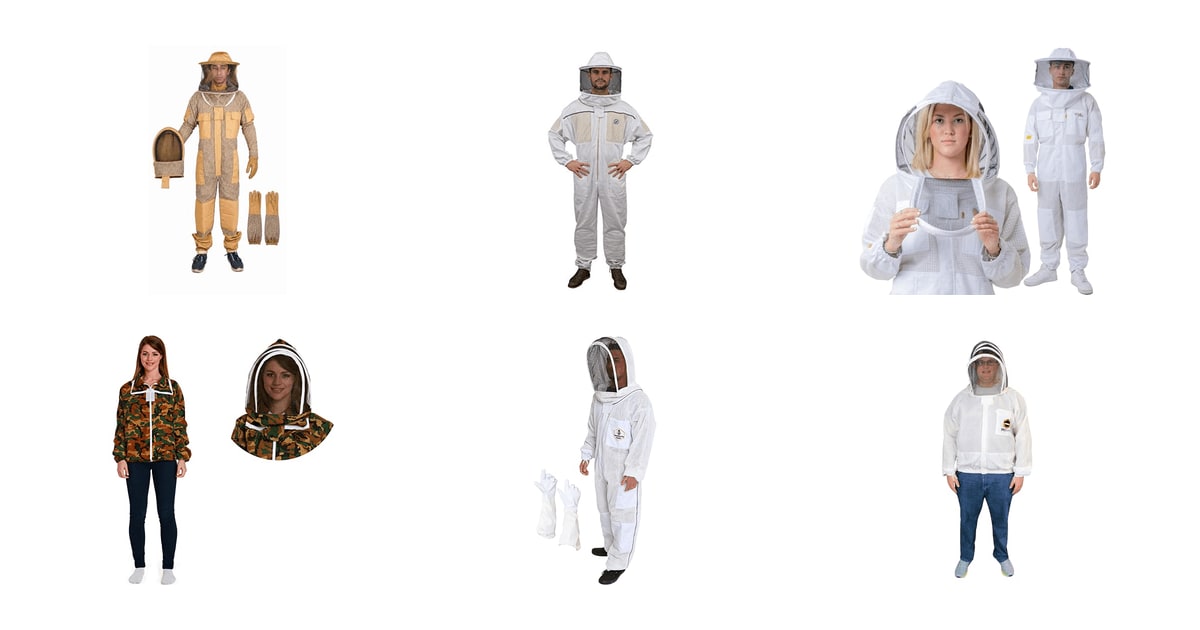
A hive inspection takes twenty minutes if you're quick, an hour if you're not. You spend that time bent over boxes, in direct sun, wearing a full-body garment that's designed to keep thousands of insects away from your skin. Cotton coveralls do that job, but they hold heat like a sleeping bag. Ventilated suits solve the problem by trading solid fabric for layered mesh, so air moves through the suit while a stinger still can't reach you. If you keep bees anywhere warm, it's the single upgrade that changes how long you can stay out there.
No ventilated suit is actually cool. It's cooler than cotton, and that's a real difference, but you'll still sweat through a July afternoon in Georgia. Mesh also snags on hive staples and rough wood, and a torn layer is a hole a bee will find. Sizing is the other persistent headache: these suits are cut generously on purpose, since the whole design depends on an air gap between fabric and skin, and owner reports across every brand here describe sleeves that run long or waists that balloon. Expect to size by chest and tolerate some bagginess.
The three-layer mesh suits are the ones worth your money, because the spacer layer gives the stinger somewhere to stop. Single-layer vented jackets breathe beautifully and weigh almost nothing, but press one against your forearm and you'll feel the difference. We think that the OZ ARMOUR 3 Layer Ventilated Bee Suit is the best ventilated beekeeping suit for most people, and that the Mount Helicon 3-Layer Bee Keeper Suit is the one to buy if you want two veils and gloves in the box.
Everything we recommend

Heavy for its class, but the protection is the point

Two veils, gloves, and knee pads, with a tighter cut

Three-layer protection without the bulk of the top pick

Published fabric weights and a self-supporting round veil
A jacket and hood for guests, kids, and light duty
At a glance
| Product | Layers | Veil included | Price | |
|---|---|---|---|---|
| Mount Helicon 3-Layer Bee Keeper Suit forRunner-up | 3-layer poly-cotton | — | $109.99 |
| Humble Bee 430 Ventilated Beekeeping Suit withUpgrade pick | 280 gsm + 220 gsm panels | — | $199.95 |
| OZ ARMOUR 3 Layer Ventilated Bee SuitTop pick | 3-layer air mesh | Fencing + round | $259.99 |
 | Natural Apiary - Apiarist Polycotton Beekeeping JacketAlso consider | — | — | $51.73 |
| Forest Beekeeping Supply 3-Layer Ventilated Bee SuitAlso great | 3-layer ventilated | — | $139.95On sale |
 | Mann Lake ProVent Beekeeping JacketAlso in lineup | — | Self-supporting | $108.25 |
| VIVO Professional White XL Beekeeping SuitBudget pick | — | — | $29.99 |
How we picked
Layer construction. We read manufacturer specifications to separate true three-layer mesh suits from single-layer vented cotton, since only the layered designs put an air gap between the stinger and your skin. Suits that publish fabric weights or layer counts got more weight in our ranking than ones that only claimed breathability.
Veil design. We compared fencing veils against self-supporting round veils on visibility, airflow, and whether they detach for washing. Suits that include both veils let a first-time buyer avoid an expensive guess.
Fit and sizing. We looked hard at owner feedback about sizing, because a ventilated suit that fits tight loses its protective air gap entirely. Stout sizing, published height ranges, and adjustable wrist and ankle closures all counted.
Seals and closures. We checked specifications for overlapping neck zippers, covered zipper tracks, and elastic or Velcro at the wrists and ankles. A suit is only as good as the gaps it closes, and owner reports flagged zipper quality as the most common early failure point.
Durability signals. We read owner feedback across multiple seasons for reports of slackening elastic, torn mesh, and zipper failures. Suits with recurring sting-through or elastic complaints dropped out of pick consideration.
Top pick
Heavy for its class, but the protection is the point
OZ ARMOUR 3 Layer Ventilated Bee Suit
A three-layer air-mesh coverall with both a fencing veil and a round veil, eight pockets, and full-length leg zippers. It's the suit beekeepers reach for when they're working hives that sting back, and the overlapping neck zippers close the gap most suits leave open.
$259.99fromAmazonThe double-layer air mesh is what you're paying for. OZ ARMOUR builds this suit from mesh fabric that circulates air around your body while holding a barrier against stings. That gap between outer and inner surface is the whole mechanism: the stinger goes into the mesh, not into you. Owners who got caught in hornet encounters — including one who'd had a prior anaphylactic reaction — report the fabric held. That's the kind of feedback that matters more than any breathability claim.
Both veils come in the box, and they zip on. The fencing veil keeps the screen off your face with a stand-up collar, which is the design most keepers settle on once they've tried both. The round brim version gives you more space around your head and better overhead visibility when you're looking up at a swarm. Swapping takes a minute. If you've never worn either, having both means you don't have to guess right the first time.
The small stuff is done properly. Neck zippers overlap each other, so there's no seam for a bee to walk into. Velcro and elastic at the wrists and ankles let you snug the closure to your actual arm rather than the average arm. Leg zippers run knee-to-ankle, so you step in with your boots on. Eight pockets hold a hive tool, a lighter, queen cages, and your phone. Owners consistently describe the stitching and zippers as the solid kind.
OZ ARMOUR also sells stout sizing, which is rarer than it should be in this category. If you're broad through the chest and shoulders, the standard cut on most suits forces you into a size that then swims at the waist and drags at the wrists. Stout sizes fix the ratio. That said, owners describe the sizing chart as genuinely confusing, so measure your chest and read the chart twice before you order.
Flaws but not dealbreakers
It's the heaviest suit here by a wide margin — the listing puts it at about four pounds. That weight is the price of three layers, and in warm-weather hive work it reads as bulk. At least one owner in a hot climate found it too heavy to use comfortably for summer inspections, and if you keep bees in Phoenix or Houston you should take that seriously. A lighter single-layer jacket may genuinely serve you better, with the trade-off that you'll get stung through it occasionally.
The sizing confusion is real and it costs you. Several owners went through an exchange before landing on a fit, with heavier-set keepers consistently advising you to order up. Zippers also come up as a worry point in owner feedback — not failures exactly, but enough concern that it's worth checking every slider before your first inspection rather than discovering a problem with the lid off.
Runner-up
Two veils, gloves, and knee pads, with a tighter cut
Mount Helicon 3-Layer Bee Keeper Suit for
A three-layer poly-cotton mesh suit that arrives with a fencing veil, a round veil, goatskin gloves, and built-in knee pads. It covers nearly everything a new beekeeper needs in one box, and the YKK brass zippers are a better grade than most suits at this level.
$109.99fromAmazonThis is the most complete package in the lineup. You get three layers of poly-cotton mesh, two detachable veils, goatskin gloves, and eight deep pockets. If you're assembling your first setup and you'd rather not order gloves separately and guess at sizing twice, that matters. Owners describe the suit as well made, light, and genuinely breathable — including people who bought it not for bees but to clear yellow jacket nests out of attics and lawns.
The knee pads earn their place faster than you'd expect. Hive work means kneeling: on gravel, on a pallet, on whatever's next to the stand. Most suits leave you to buy separate pads or accept bruised knees by the third inspection. These are built into the suit, so they're always there and never slide out of position. It's a small thing that you notice on the fourth hive of the day.
The zippers are YKK brass at the front and down both legs, which is a step up from the plastic hardware you find on cheaper suits. Long leg zippers mean you pull the suit on over boots instead of wrestling your foot through a cuff. The fencing veil zips open at the front, so you can drink water without pulling the whole veil off and re-sealing it afterward. The round veil uses a rigid insert to hold the screen off your face.
The brown colorway is the odd choice here. Extension guidance for hive work consistently points toward light, smooth-textured clothing, because bees respond more defensively to dark, fuzzy materials. Brown isn't black, and plenty of owners report no trouble with it. But if you're nervous about defensive colonies or you're working Africanized stock, white or tan is the safer call and this suit is sold in other colors.
Flaws but not dealbreakers
The cut doesn't work for everyone. One owner at 6'4" and 230 pounds found the XL too snug, and in a ventilated suit snug is a functional problem, not just a comfort one — when the mesh presses flat against your back, the air gap disappears and a stinger can reach skin. Another owner found the 2XL baggy through the waist while fitting the chest. If you're tall, or built outside the middle of the range, read the measurements carefully and consider a different suit.
Veil zipper problems show up in owner feedback, including one suit that arrived with a fencing-veil zipper that wouldn't track straight out of the box. Check it before you need it. The goatskin gloves also draw mixed comments — thicker and stiffer than other goatskin gloves owners have handled, which costs you some dexterity when you're lifting frames.
Also greatOn sale
Three-layer protection without the bulk of the top pick
Forest Beekeeping Supply 3-Layer Ventilated Bee Suit
A three-layer ventilated suit kit with a detachable fencing veil and gloves, built lighter than the heavyweight options here. It's the middle path if you want mesh-layer protection but the top pick's weight worries you.
$139.95fromAmazonList priceForest Beekeeping Supply splits the difference that trips up a lot of buyers. You get three-layer construction, which is the thing that actually stops stingers, in a suit the manufacturer describes as lightweight. If you read the weight complaints about the heavier three-layer suits and started drifting toward a thin single-layer jacket, stop here first. This is the compromise you were looking for.
The fencing veil detaches, which matters more for laundry than for convenience. Veils are the part of a suit you can't throw in a machine with the rest, and a fixed veil turns every wash into a careful hand job. Pull this one off and the suit washes normally. The clear-view screen also gets consistent praise from owners for visibility — you can watch what your hands are doing on a frame without squinting through a dark mesh.
It comes with gloves, which makes it a genuine starter kit. For a first-year beekeeper, the suit-plus-gloves bundle removes a decision and a second shipping wait. The sizing is unisex across a normal range, so a couple keeping hives together can order the same product in two sizes rather than hunting for separate men's and women's cuts. Reinforced stitching is listed throughout, and owner feedback on construction is quietly positive.
Flaws but not dealbreakers
This is the least-discussed suit here. It has a small owner base compared with the big-brand options, so there's less accumulated feedback about how it holds up after two or three seasons of mesh snagging on hive bodies and frame staples. The specs and early reports are good. You just don't get the reassurance of hundreds of people reporting back about year three.
The listing stays vague about the specifics. It describes the fabric as breathable and lightweight without giving the fabric weights or layer composition that OZ ARMOUR and Humble Bee publish. If you want to compare mesh gauge or fabric density on paper before buying, you can't do it with what's printed here.
Upgrade pick
Published fabric weights and a self-supporting round veil
Humble Bee 430 Ventilated Beekeeping Suit with
A ventilated suit with a 280 gsm cotton-synthetic body, 220 gsm ventilation panels, and a self-supporting round veil that needs no separate hat. Humble Bee publishes real numbers, and the fit is tailored rather than generously cut.
$199.95fromAmazonHumble Bee is the only brand here that tells you what the fabric actually weighs. The body is a 50/50 cotton-synthetic blend at 280 gsm, with 220 gsm synthetic panels doing the ventilation. That's the kind of spec you can compare against another suit instead of taking "breathable" on faith. It also tells you something about the design philosophy: this is a medium-weight suit with vented panels, not a mesh suit throughout.
The round veil supports itself, so there's no separate hat to lose or crush in a truck bed. Pull it on and the screen holds its shape away from your face. Owners who prefer round veils over fencing veils for the head clearance will appreciate that this one doesn't require assembly. It's removable for washing and for packing it into the canvas case that comes with the suit.
The fit is described as tailored rather than roomy, with elastic at the waist, wrists, and ankles, plus thumb loops and foot stirrups that keep the suit from riding up when you reach into a deep. The listing specifies a height range of 5'9" to 5'10" for this size, which is more honest than the one-size-fits-most language most brands use. If you're in that band, you'll get a cleaner fit than the baggy alternatives.
At under a pound on the listing, it's one of the lightest full suits here. That's the direct consequence of the panel-and-body construction instead of full three-layer mesh. You give up some sting resistance in the vented panels. You get a suit you barely notice over a t-shirt, which is why owner feedback on hot-weather comfort runs favorable.
Flaws but not dealbreakers
Panel ventilation isn't the same as three-layer mesh. The vented sections are a single synthetic layer, and where that fabric lies against your skin — the backs of the arms, your shoulders when you lean over a box — a determined bee has a shorter path. Wearing a loose base layer underneath fixes most of this, and you should do it with any ventilated suit, but it's a design limitation rather than a quirk.
The specified height band is narrow, which cuts both ways. It's useful information, but it means tall and short keepers have to hunt for the right size rather than relying on the usual chest measurement. And the tailored cut leaves less room for a base layer than the roomier suits here.
No gloves in the box, and no fencing veil option on this model. If you want the fencing style for visibility and airflow, you're buying a different product.
Budget pick
A jacket and hood for guests, kids, and light duty
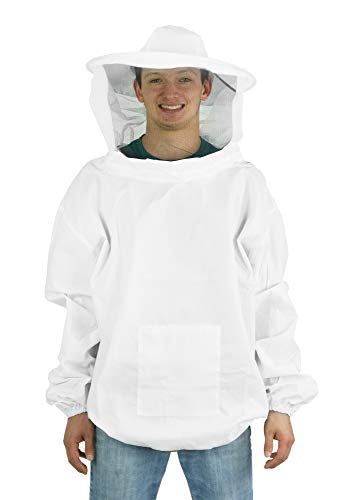
VIVO Professional White XL Beekeeping Suit
A lightweight vented beekeeping jacket with a partially removable zip hood and a single large front pocket. It's the simplest way to put someone in protective gear in a hurry, and it's what you hand to a curious visitor.
$29.99fromAmazonEvery apiary needs a spare. Your neighbor wants to see the hive, your kid wants to help, a friend offers to hold the smoker — and you're not going to buy them a three-layer coverall. This VIVO jacket is lightweight, hand-washable, and costs a fraction of the suits above. For an hour of standing back and watching, it's enough.
The hood zips partially off, so you can fold it back between hives rather than wrestling it on and off. The front pocket is roomy at eight inches. The fabric is thin enough that the listing frames it around staying cool on hot summer days, and for light work in the heat that's the honest trade. The listing also gives real measurements — brim to waistband, shoulder to sleeve — which helps when you're buying for someone whose chest size you don't know.
This is a jacket, not a suit, and it's the lightest protection here. Pair it with jeans, boots, and tucked socks and you've covered most of what matters for a quick look in the lid. For a full inspection of a defensive colony, or for a hive on a stand that puts bees at ankle height, you want legs covered properly. Know which job you're buying it for.
Flaws but not dealbreakers
Thin fabric means stings get through more easily, and there's no mesh layer holding the cloth off your skin. The elastic waistband also means bees can work their way up from below if you haven't tucked a shirt in properly. Treat this as a jacket for calm hives and short visits, not as your working suit through a summer of splits and honey pulls.
Hand washing only, per the listing. After a season of propolis and smoke, that's a chore. And the hood is a hood rather than a proper veil with a stand-off structure, so the screen sits closer to your face than a fencing or self-supporting round veil does.
Who this is for
Buy a ventilated suit if you keep bees somewhere hot or humid, or if heat is the reason you've been putting off inspections. The cooling is real, and skipped inspections cost you more than a suit does. If you're a first-year beekeeper, a three-layer suit with both veils is the version that doesn't need a second purchase in year two. And if you've had a systemic reaction to a sting, full-body coverage plus a plan with your allergist matters more than any comfort feature — AAAAI guidance points people with a history of systemic reactions toward venom immunotherapy and carrying epinephrine, and Mayo Clinic notes that stings can trigger anaphylaxis in susceptible people. The suit is one layer of that plan, not the whole plan.
Skip it if you keep one or two gentle hives in a cool climate and a cotton jacket already works for you. This guide covers ventilated full suits and ventilated jackets you'd wear over your own pants — it doesn't cover non-vented cotton coveralls, gloves sold separately, replacement veils, or hive tools. We also don't cover children's sizing, which varies too much by brand to recommend across the category.
How we picked
We built this guide from manufacturer specifications, published guidance from extension services and allergy organizations, and recurring themes in owner feedback. Layer construction: three layers of mesh beat single-layer vented cotton, because the spacer layer gives a stinger somewhere to stop short of skin. Veil design: we favored detachable veils, and suits that ship with both a fencing and a round veil, for visibility and easier washing. Fit and sizing: a tight ventilated suit isn't a ventilated suit, so published height ranges, stout options, and adjustable cuffs all counted. Seals and closures: overlapping neck zippers, covered tracks, and elastic plus Velcro at wrists and ankles close the gaps bees actually find. Durability signals: we watched owner feedback for slack elastic, snagged mesh, and zipper failures, and we dropped suits where sting-through came up more than once.
Other ventilated beekeeping suits worth considering
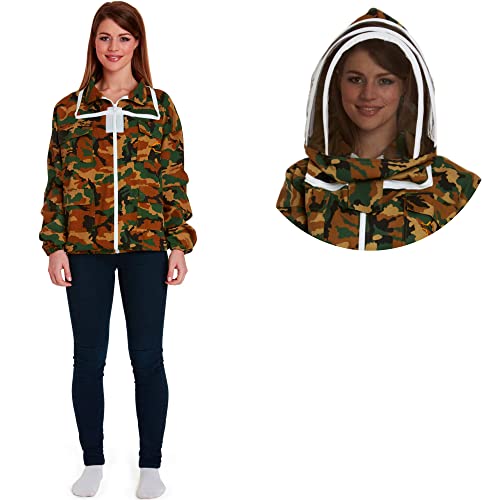
If you want a jacket-style suit with a non-flammable veil: The Natural Apiary - Apiarist Polycotton Beekeeping Jacket ($51.73) — Natural Apiary builds this one from polycotton with a non-flammable mesh fencing veil, which is a genuine safety feature when you're working near a lit smoker. Owners describe a generous veil zipper overlap with a Velcro flap over it, metal zippers, and elastic seals — and the cloth strikes most of them as medium weight, neither flimsy nor heavy. Several keepers with larger frames report that the 3XL fits properly with real room in the hood, which is a complaint you hear constantly about other brands. What you give up is ventilation: this is polycotton with a fencing veil, not a three-layer mesh suit, so it won't breathe like the picks above. Owners also consistently say it runs small, so order up.
The competition
This is what our research surfaced on Amazon, not every ventilated suit on the market. Specialty beekeeping suppliers sell suits that never show up here, and some of them are worth a look if you've got a local shop. The lineup below is what we could confirm and compare against the picks.
The Mann Lake ProVent Beekeeping Jacket ($108.25) — The Mann Lake ProVent jacket is marketed as the lightest vented jacket available, with a self-supporting veil and covered heavy-duty zippers. Mann Lake is also a major US supplier, which normally means easy access to replacement veils and parts — a real advantage over the import brands. But owner feedback is the worst in this lineup by some distance. Multiple keepers report elastic at the waist and cuffs going slack by the end of the second season, one describes the construction as foam-like and not durable, and one experienced beekeeper reports taking well over a dozen stings through the sleeves during a split, with a trip to the emergency room after. Another bought it expecting a three-layer suit and found a two-layer construction instead. Those are serious reports about the thing a suit exists to do, and they're why we can't recommend it. If you already own one and it's working, fine. We wouldn't buy it new.
Care, fit, and layering
Wear a thin, loose base layer under any ventilated suit. It keeps the mesh off your skin where the suit presses flat — across your back when you lean over a box, down the backs of your arms — and that's where stings get through. Before every inspection, check your three seals: wrists, ankles, and the veil-to-body zipper. Run the neck zipper fully closed and feel for the overlap. For washing, detach the veil and wash it separately by hand; veils are stiff screen and machine agitation wrecks them. The suit itself usually machine-washes cold, though a few of these are hand-wash only, so read the tag. Skip fabric softener — it clogs mesh. Air-dry everything flat. And inspect the mesh for snags every few weeks, because hive staples and rough box edges catch it, and a small tear is a door.
Questions we get
Are ventilated beekeeping suits worth it?
If you keep bees anywhere warm, yes. Mesh construction moves air through the fabric instead of trapping it, which is the difference between finishing an inspection and cutting it short. The honest caveat is that a ventilated suit is cooler than cotton, not cool — you'll still sweat.
Can bees sting through a ventilated suit?
Through a three-layer mesh suit, rarely — the spacer layer holds the stinger short of your skin. Through a single-layer vented suit or jacket, yes, especially where the fabric presses flat against you. Wearing a loose base layer underneath closes most of that gap. Owner reports in this category consistently trace stings back to tight fit rather than bad fabric.
Fencing veil or round veil?
A fencing veil gives you better visibility and airflow and doesn't need a separate hat, which is why most keepers end up preferring one. A round veil gives you more clearance around your head and a better view upward, useful for swarm retrieval. If you've never worn either, buy a suit that includes both rather than guessing.
How should a beekeeping suit fit?
Loose enough that the fabric doesn't press against your skin anywhere, snug enough that the wrists and ankles seal without gapping. Those two requirements pull against each other, which is why sizing is the most common complaint in this whole category. Measure your chest, check the brand's chart rather than assuming your shirt size, and if you're between sizes, go up.
What should I wear under a ventilated suit?
A thin, loose long-sleeve shirt and light pants. The point is a second gap between the suit's inner layer and your skin, especially across your back and the backs of your arms. Avoid anything dark and fuzzy — extension guidance recommends light, smooth-textured clothing for hive work, since bees respond more defensively to dark fuzzy materials.
Suit or jacket?
A full suit if you're inspecting regularly, working hives on low stands, or dealing with defensive colonies — ankle-height bees find bare legs. A jacket if your hives are calm, your inspections are short, or you're buying spare gear for visitors. Jackets are also the sensible choice if you already own boots and heavy pants you're happy to tuck.
Why you should trust us
For this guide:
- We read manufacturer specifications for every suit in this guide, comparing published layer counts, fabric weights, veil types, and closure designs.
- We reviewed recurring themes in owner feedback — sizing, zipper reliability, elastic life, and sting-through reports — and weighted repeated complaints more heavily than isolated ones.
- We consulted published guidance from Mayo Clinic and the American Academy of Allergy, Asthma & Immunology on sting reactions, and university extension beekeeping guidance on clothing color and texture.
- We read owner reviews on every listing, weighted toward the critical ones, because that is where the recurring failures show up.
- We have a systematic way of automatically fetching the latest prices, so the numbers on this page stay current.
- This is a research-focused guide, so the team may not own every product listed — though we often do own the top winners, which gives us extra context for the recommendations.
- We don't accept free products, and the retailer commission never changes which product we recommend.
Sources
Beekeeping Protective Gear - Penn State Extension, Penn State Extension
Beekeeping Basics - University of Minnesota Bee Lab, University of Minnesota Bee Lab
Getting Started with Beekeeping - UC Davis Honey and Pollination Center, UC Davis
Insect Stings - Mayo Clinic, Mayo Clinic
Insect Sting Allergy - American Academy of Allergy, Asthma & Immunology, AAAAI
Beekeeping Suit and Veil Product Pages - Mann Lake, Mann Lake
Ultra Breeze Official Site, Ultra Breeze
Humble Bee Official Site, Humble Bee
Oz Armour Official Site, Oz Armour
Bee Culture Magazine, Bee Culture
American Bee Journal, American Bee Journal
Amazon product listings and owner reviews for all 7 products
Manufacturer specification pages for each product
Some passages in this guide may be paraphrased with AI help. Prices are refreshed automatically.
More like this.
Continue exploring lifestyle reviews and recommendations.

The Best Beekeeping Starter Kits
You'll open your hive every week or two, for years. So the parts that matter are the boring ones: square corners, frames that hang straight, a lid that…

The Best Home EV Charging Stations
Home charging is the whole reason an EV feels easy. A 240-volt Level 2 charger adds roughly 25 to 45 miles of range an hour, so you plug in after dinner…

The Best Cold Water Surfing Wetsuits
Cold water finds every gap. A suit that feels fine in September can turn a February session into ten shivering minutes and a long walk back to the car.…

The Best Books for Learning Python and Machine Learning
Learning to code and learning machine learning are two different projects, and most people end up doing both at once. You want something you can follow at…

The Best Portable Camping Chairs
A camping chair is one of those things you don't think about until you're standing around a fire with nowhere to sit. Then it's the best thing in your…

The Best Garage Tire Inflators
Tire pressure is the one bit of car maintenance you can actually do yourself in two minutes. Tires lose roughly a pound of pressure a month, and more when…