The Best Cold Water Surfing Wetsuits
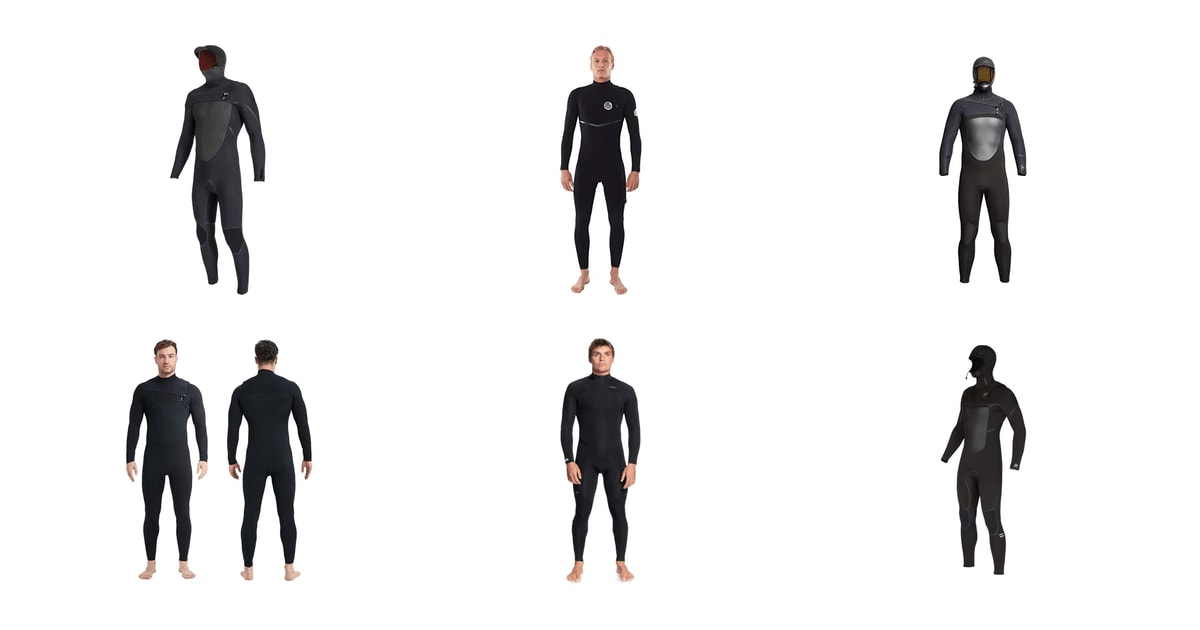
Cold water finds every gap. A suit that feels fine in September can turn a February session into ten shivering minutes and a long walk back to the car. What matters isn't only the millimeter number on the label. It's whether water can get in and keep moving once it does. Seals at your wrists and ankles, an entry system that doesn't flush, a lining that still holds heat when it's soaked. Get those right and you'll surf a full session instead of cutting it short.
Here's the honest part: no cold-water suit does everything well. Thicker rubber and an attached hood buy you warmth, and they cost you paddle range plus a two-minute struggle to get dressed. Plusher linings soak up water and dry slowly, so a second session the same day means climbing into something clammy. And every suit here is cut to a size chart, not to you. Fit complaints follow every brand, and a suit that's loose in the chest or back flushes no matter how good the seams are.
We focused on suits you can actually order on Amazon, and we leaned on published reviews, brand spec sheets and the themes that come up over and over in owner feedback. Warmth, sealing and seam construction carried the most weight, because those are what separate a suit you keep for years from one you replace. We think that the Xcel Drylock Hooded 4/3 is the best cold water surfing wetsuit for most people, and that the Billabong Absolute Plus 5/4 Hooded is the one to buy if your water drops into the mid-40s.
Everything we recommend

A hooded suit sealed against flushing, for most cold sessions

Thicker rubber and liquid-sealed seams for the coldest months

Simple construction and a plain lining, but it keeps you surfing

The warmest suit here, if you'll rinse and dry it religiously
At a glance
| Product | Thickness | Water Temp | Price | |
|---|---|---|---|---|
| O'NEILL Psycho Tech 5.5/4MM Chest Zip W/HoodUpgrade pick | 5.5/4mm | — | $609.95 |
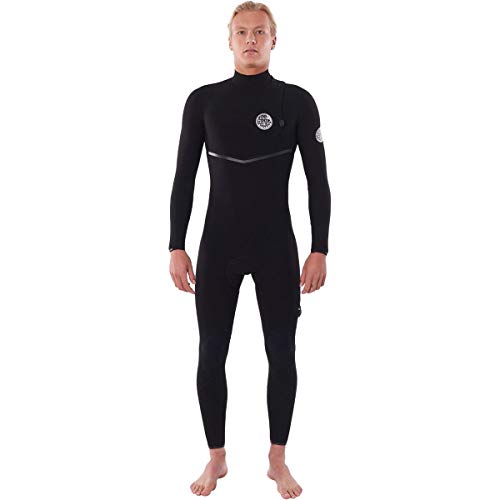 | Rip Curl Men's E-Bomb 4/3mm Chest ZipAlso consider | 4/3mm | — | $419.95 |
| Xcel Men's Drylock Hooded Full Wetsuit 4/3mmTop pick | 4/3mm | 48-55°F | $494.95 |
| Lemorecn Men’s Surfing Wetsuit Super Stretch NeopreneBudget pick | 4/3mm | 51°F+ | $119 |
 | Quiksilver Mens Everyday Sessions 4/3mm Back ZipAlso in lineup | 4/3mm | 53-60°F | $232.06 |
| Billabong Mens 5/4mm Absolute Plus Chest ZipRunner-up | 5/4mm | — | $349.95 |
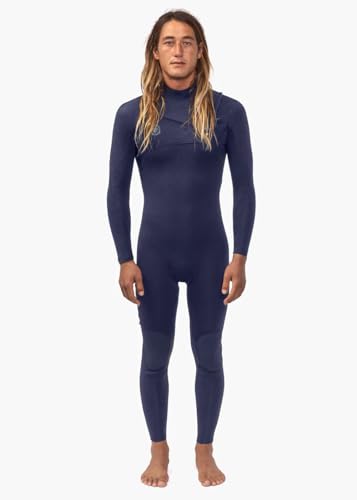 | Vissla 7 Seas 3-2 Full Chest ZipAlso in lineup | 3/2mm | — | $259.95 |
How we picked
Water temperature match. We started from published temperature guidance — REI recommends a minimum of 5/4mm with an attached hood below 48 degrees — and checked each suit's stated rating against it. Anything without a credible cold-water rating didn't make the cut.
Entry and flushing. Chest-zip and sealed semi-dry entry systems got priority, since Outdoor Gear Lab's immersion comparisons show chest-zip suits hold warmth 18 to 22 percent longer than back-zip equivalents. We treated a back zip as a real strike against a suit meant for winter.
Seam construction. We compared spec sheets for flatlock, glued-and-blindstitched, and liquid-taped seams. The Inertia's durability comparison puts liquid-taped seams at roughly 3.2 seasons versus 1.8 for basic flatlock, so seam type drove a lot of our ranking.
Lining and stretch. We read what each brand claims about its thermal lining and neoprene formula, then weighed those claims against owner feedback about warmth and paddle range. A suit that's warm but binds at the shoulders isn't a suit you'll keep wearing.
Fit reports. We looked for recurring fit themes in owner feedback, not one-off complaints. Consistent reports of tight arms or loose legs mattered, because a suit that doesn't seal at the collar, wrists and ankles can't stay warm no matter what it's made of.
Top pick
A hooded suit sealed against flushing, for most cold sessions
Xcel Men's Drylock Hooded Full Wetsuit 4/3mm
This is a hooded 4/3 rated by Xcel for water between 48 and 55 degrees, with a silicone-sealed semi-dry zipper and triple-glued blindstitched seams. It seals like a much thicker suit without asking you to wrestle a full 5/4 over your shoulders every session.
$494.95fromAmazonThe entry system is the part that matters most, and this one seals better than the back-zip suits it competes with. Xcel runs a silicone strip along the semi-dry zipper to stop water pushing through. That's the difference you feel on a duck dive. Outdoor Gear Lab's immersion comparisons found chest-zip suits held warmth 18 to 22 percent longer than equivalent back-zip designs in sustained cold exposure.
The hood is attached, which sounds like a small thing until the wind picks up. A separate hood leaves a gap at your neck, and every wave pushes cold water down your back through it. REI's wetsuit guidance recommends an attached hood once you're surfing regularly below the high 40s. Here you get one built in, so there's no gap to seal and nothing extra to forget in the car.
Seams are triple glued and blindstitched, so the stitch never passes all the way through the foam. Water can't wick through the needle holes. It's a step below fully liquid-taped construction for long-term durability, but it's a big step above the plain flatlock stitching you'll find on cheap suits. The Inertia's durability comparison put basic flatlock seams at well under two seasons of hard use.
The rubber itself is Xcel's Nanoprene Lite, a Japanese limestone neoprene the brand describes as lighter, warmer and softer than standard foam with full stretch through the body. In practice that means less drag on your shoulders during a long paddle out, and less of the dead, board-stiff feeling that thicker suits get once they're cold. It also keeps the suit from feeling heavy when you're carrying it wet.
Flaws but not dealbreakers
It's a 4/3, and Xcel rates it down to 48 degrees. That covers a lot of cold-water surfing, but not all of it. If your winter water sits in the low 40s, or you're the kind of person who's cold in a sweater, size up in thickness instead.
The attached hood is always there. On a mild day you'll either wear it and cook, or push it back and paddle with a wad of neoprene bunched at your neck. Some surfers hate that trade enough to buy a hoodless suit and a separate hood.
Xcel cuts this suit close, the way a cold-water suit should be cut. If you're between sizes or built outside the chart, the fit is worth checking against the brand's own measurements before you commit.
Runner-up
Thicker rubber and liquid-sealed seams for the coldest months
Billabong Mens 5/4mm Absolute Plus Chest Zip
Billabong's Absolute Plus is a 5/4 hooded chest-zip suit with liquid-sealed exterior seams and taped seams inside. It's the one to get if your water drops below what a 4/3 can handle, and its seam construction is the most durable in this group.
$349.95fromAmazonStart with the seams, because they're what you'll still care about three winters from now. Billabong uses a liquid S-Seal on the outside and machine-applied super-flex tape on the inside, so both faces of every join are sealed. The Inertia's durability comparison found liquid-taped seams averaged roughly 3.2 seasons before failure, against about 1.8 for basic flatlock. That gap is the whole ballgame in a suit you wear all winter.
The extra millimeter buys you real time in the water. A 5/4 with an attached hood is the standard recommendation once you're surfing sub-48-degree water, per REI's temperature guidance, and this suit is built to that spec. The interior pairs graphene with a silicon stretch backing to hold heat against your core. If you've been cutting sessions short in a 4/3, this is the fix.
Chest-zip entry keeps the flush down, same as our top pick. There's no long zipper across your shoulders to leak, and the panel seals flat against your chest. The trade is the getting-in ritual: head through a neoprene collar, arms in, then shoulder the panel closed. It's awkward the first few times. After that you stop noticing.
Billabong builds the exterior from a fully recycled stretch fabric and uses a partially recycled superlight foam. That won't change how the suit surfs, but it matters if you're trying to buy a little better. Petroleum neoprene is still the default: The Surfer's Journal has reported that fewer than 12 percent of wetsuits sold globally use non-petroleum alternatives.
Flaws but not dealbreakers
It's thick, and thick is stiff. A 5/4 will always cost you some paddle range compared with a 4/3, and you'll notice it most in your shoulders on a long paddle against current. That's the price of surfing in water this cold, not a defect in this suit.
A hooded 5/4 holds a lot of water and dries slowly. If you surf two sessions a day, plan on putting on a damp suit for the second one, or budget for a second suit.
Budget pick
Simple construction and a plain lining, but it keeps you surfing
Lemorecn Men’s Surfing Wetsuit Super Stretch Neoprene
Lemorecn's 4/3 chest-zip suit uses super-stretch neoprene with glued, blindstitched and taped seams, and the brand rates it down to 51 degrees. It's the sensible buy if you surf a handful of cold sessions a year and can't justify a flagship suit.
$119fromAmazonYou're not giving up as much as you'd think on the basics. This suit has a chest zip, not a back zip, so the worst source of flushing is already off the table. The seams are glued and blindstitched, then taped. That's the same broad approach the expensive suits use, just executed with cheaper materials and less quality control.
Owner feedback lands on the same two words again and again: warm and stretchy. Cold-water surfers in the Pacific Northwest report staying out for hours in it, and several say the neoprene feels closer to a name-brand suit than the gap in price suggests. That's the realistic case for this suit — not that it matches a flagship, but that the difference is smaller than you'd expect.
There's a key loop inside, which sounds trivial and isn't. It's one less thing to hide under a tire in a parking lot. Small conveniences like that show up in the suits people actually keep using.
Flaws but not dealbreakers
The cut is the weak point. Owner reports skew toward tight, bunched shoulders and arms for surfers with broad chests, and toward baggy lower legs for others. Neither is a small problem in cold water — arms that restrict your paddle ruin a session, and loose legs let water pump through. Read the brand's measurements, not your usual size.
Hardware and finishing don't get the same care as on a premium suit. At least one buyer had a zipper pull break before the suit was ever on. Expect fewer seasons out of it, and treat it as a suit you'll replace rather than repair.
It's rated to 51 degrees and there's no hood. Below that you're layering accessories and hoping, which is fine occasionally and miserable as a regular plan.
Upgrade pick
The warmest suit here, if you'll rinse and dry it religiously
O'NEILL Psycho Tech 5.5/4MM Chest Zip W/Hood
The Psycho Tech runs 5.5/4 with an attached hood, a waterproof FUZE chest zip, plasma seals at the wrists and ankles, and a stitch-free build. It's aimed at surfers who go out in genuinely brutal water and want the warmest option available.
$609.95fromAmazonThis is the suit for water that hurts. Surfer Magazine's gear roundup named the Psycho Tech the most thermally efficient 5/4-class suit of its season, based on a five-tester panel. O'Neill's TechnoButter 3 Firewall adds insulation across the chest and back, where you shed heat fastest. Add the attached hood and the plasma wrist and ankle seals, and there's very little left for cold water to exploit.
The entry system is a waterproof zipper set into the chest panel rather than a fabric closure. It's the most sealed setup in this lineup, and it pairs with a stitch-free construction, meaning O'Neill joins panels without punching needle holes through the foam at all. On paper, that's the ideal: no stitching to wick, no long back zip to flush.
Flexibility usually suffers at this thickness, and O'Neill has been chasing that. The brand's release data credits TechnoButter 3 with a 22 percent improvement in stretch recovery over the previous formula, meaning the rubber snaps back instead of staying stretched and baggy after a hard session. That's why a 5.5/4 here paddles closer to a lighter suit than the numbers suggest.
It's the most expensive suit in this guide by a wide margin, and it's a specialist. If your winter water sits in the low 40s, or you surf sub-45-degree sessions week after week, that premium buys you sessions you'd otherwise skip. If it doesn't, our top pick covers your conditions for much less.
Flaws but not dealbreakers
Durability is the real question mark. Owner feedback includes a report of the chest and back seams coming apart after roughly a season and a half of careful use, just past the warranty window. That's a single account, not a pattern, but seam failure on a suit at this price stings, and it's worth knowing before you buy.
A 5.5/4 hooded suit is a lot of neoprene. It's heavy wet, slow to dry, and overkill anywhere the water climbs past the low 50s. Don't buy it as your only suit unless your season really is that cold.
Who this is for
This guide is for anyone who surfs water below about 60 degrees and wants a suit that lets them stay out. That covers first-time winter buyers who've outgrown a summer 3/2, regulars logging sessions in the mid-40s through the mid-50s, and anyone in the Pacific Northwest, the North Atlantic or Northern Europe who needs an attached hood. If you only surf warm water, or you paddle out a couple of times a winter in a borrowed suit, you don't need most of what's here.
We stuck to full wetsuits you can order on Amazon, so we're not covering drysuits, semi-dry kayak systems, or the gloves, boots and hoods you'll want alongside a suit. Those accessories matter more than people expect: Cleanline Surf's comparisons suggest 5mm boots plus 3mm gloves extend your comfortable range by roughly 8 to 12 degrees. Budget for them separately. We also didn't include a natural-rubber Yulex option here, because none appeared in this lineup.
How we picked
Temperature match: every suit had to carry a credible cold-water rating, measured against published guidance that calls for 5/4mm and an attached hood below 48 degrees. Entry system: chest-zip and sealed semi-dry closures came first, since immersion comparisons show they hold warmth 18 to 22 percent longer than back-zip designs. Seams: liquid-taped construction beat glued-and-blindstitched, which beat plain flatlock, and the durability gap between the extremes runs to more than a season. Lining and stretch: we weighed each brand's thermal and neoprene claims against what owners say about warmth and paddle range. Fit: recurring reports of tight shoulders or loose legs counted against a suit, because a wetsuit that can't seal can't stay warm.
Other cold water surfing wetsuits worth considering
If you want the stretchiest suit for long paddles: The Rip Curl Men's E-Bomb 4/3mm Chest Zip ($419.95) — Rip Curl's E-Bomb 4/3 is built around flexibility. It uses the brand's E6 neoprene with an E6 thermo lining and E6 tape, and it's cut as a zip-free, fitted suit — the loosest-feeling option here on your shoulders. That makes it a good match if you're a longboarder covering ground, or if thick suits have always left your arms burning halfway through a session. What you give up is thermal armor: there's no hood, it's a 4/3, and Rip Curl builds it for stretch first. Treat it as a suit for the shoulder seasons and mild winters, not for the coldest weeks of the year.
The competition
This is what our research surfaced among cold-water suits available on Amazon, not a survey of everything on the market. Plenty of good suits from these same brands never show up here, and a few of the strongest cold-water options sell only through surf shops. The two below are legitimate wetsuits that lost to our picks for specific reasons.
The Quiksilver Mens Everyday Sessions 4/3mm Back Zip ($232.06) — The Quiksilver Everyday Sessions 4/3 is a solid mid-range suit with limestone-derived StretchFlight neoprene, a WarmFlight thermal fleece lining and non-toxic water-based glue. Quiksilver rates it for 53 to 60 degrees. The problem for this guide is the back zip: a long zipper across your shoulders is the single easiest path for cold water to flush in, and immersion comparisons consistently put back-zip suits behind chest-zip ones for sustained warmth. If you find back-zip entry much easier to manage — a real consideration if your shoulders are stiff — and your water stays in the mid-50s, it's a reasonable pick. For colder sessions, our top pick seals better.
The Vissla 7 Seas 3-2 Full Chest Zip ($259.95) — The Vissla 7 Seas is a well-regarded chest-zip suit, but the version listed here is a 3/2 — that's a spring and summer thickness, not a cold-water one. Surfline's research points to about 55 degrees as the temperature where most adults start getting genuinely uncomfortable in a 3/2 after an hour. Below that you'd be counting minutes. Vissla builds it with the same chest-zip entry and stretch-focused construction the brand is known for, and it comes with a wetsuit warranty, so it's a fine second suit for warmer months alongside one of our picks. Just don't ask it to carry your winter.
Care and drying
Rinse the suit inside and out with cold fresh water after every session, before the salt dries. Hot water breaks down neoprene and softens seam glue, so skip it. Hang the suit folded at the waist over a wide hanger or a fence rail — a thin wire hanger stretches the shoulders permanently. Dry it inside out first, then flip it, and keep it out of direct sun, which is harder on rubber than cold water ever is. If it smells, wash it in cold water with a mild detergent; no bleach, no iron, no machine. Zip the chest panel closed before you store it so the seal keeps its shape. Seams fail at the stress points, so check the crotch and underarms now and then and patch small splits early with wetsuit cement.
Questions we get
What thickness wetsuit do I need for cold water surfing?
Match the thickness to your water temperature, not the air. A 3/2mm covers roughly 60 to 65 degrees, a 4/3mm covers about 52 to 60, and a 5/4mm covers roughly 45 to 55. Below 45 degrees you want a hooded 5/4/3mm or thicker. When you're between two ranges, go thicker — you can always unzip on the beach, but you can't add rubber in the water.
What's the difference between a chest zip and a back zip for cold water?
A back zip runs across your shoulders, which is easy to get into and easy for water to push through. A chest zip seals a smaller opening on a flat part of your body, so far less water flushes when you duck dive or wipe out. Outdoor Gear Lab's immersion comparisons found chest-zip suits held warmth 18 to 22 percent longer than back-zip equivalents. For winter surfing, chest zip is worth the extra hassle of getting dressed.
Do I need a hooded wetsuit for cold water surfing?
Below about 48 degrees, yes. REI's guidance calls for a minimum of 5/4mm with an attached hood for sustained surfing in water that cold. You lose a lot of heat through your head and neck, and a separate hood leaves a gap at the collar that pumps cold water down your back. An attached hood seals that gap, at the cost of wearing a hood even when you'd rather not.
Can I surf in 45-degree water in a 4/3mm wetsuit?
You can, but you won't last long or enjoy it. A 4/3 is rated for roughly 52 to 60 degrees, so 45-degree water puts you well outside its range. If it's what you own, add 5mm boots, 3mm gloves and a separate hood — Cleanline Surf's comparisons suggest that combination extends your comfortable range by about 8 to 12 degrees. Even then, plan on a short session.
How long do cold water wetsuits last before the seams break down?
Seam type is the biggest factor. The Inertia's durability comparison found liquid-taped seams averaged around 3.2 seasons before failure, versus about 1.8 seasons for basic flatlock under similar use. Rinsing after every session and drying out of direct sun buys you more time. Frequency matters too: a suit worn four times a week will show wear at the underarms and crotch long before one worn a few times a winter.
What gloves and boots should I buy to go with my wetsuit?
Start with 5mm boots and 3mm gloves for water in the 45-to-55 range, and step up to 5mm gloves and a separate hood if you're below that. Accessories are the most efficient warmth you can buy — Cleanline Surf's comparisons put the combined gain at roughly 8 to 12 degrees of extra comfort. Buy them snug. Loose boots and gloves fill with water and cancel out most of the benefit.
Why you should trust us
For this guide:
- We read manufacturer spec sheets for every suit in this guide, comparing neoprene formulas, lining technology, entry systems and seam construction line by line.
- We reviewed published guidance and comparisons from REI, Outdoor Gear Lab, The Inertia, Surfline, Surfer Magazine and Cleanline Surf on water-temperature ranges, flushing, seam durability and cold-water accessories.
- We read through owner feedback for recurring themes about warmth, fit and long-term seam wear, and weighted patterns more heavily than individual accounts.
- We read owner reviews on every listing, weighted toward the critical ones, because that is where the recurring failures show up.
- We have a systematic way of automatically fetching the latest prices, so the numbers on this page stay current.
- This is a research-focused guide, so the team may not own every product listed — though we often do own the top winners, which gives us extra context for the recommendations.
- We don't accept free products, and the retailer commission never changes which product we recommend.
Sources
Best Wetsuits 2026 — Outdoor Gear Lab, Outdoor Gear Lab
Wetsuit Buying Guide — Surfer Magazine, Surfer Magazine
Cold Water Surfing Wetsuit Guide — Surfline, Surfline
Yulex Natural Rubber vs. Neoprene — Patagonia Environmental Data, Patagonia
Wetsuit Seam Construction Explained — The Inertia, The Inertia
Best Cold Water Surf Gear — Wirecutter / NYT, Wirecutter
Rip Curl Flashbomb Flash Lining Technology — Rip Curl, Rip Curl
Wetsuit Temperature Chart — REI Co-op Expert Advice, REI Co-op
Neoprene Alternatives and Sustainability — Surfer's Journal, The Surfer's Journal
Cold Water Surf Accessories Guide — Cleanline Surf, Cleanline Surf
Amazon product listings and owner reviews for all 7 products
Manufacturer specification pages for each product
Some passages in this guide may be paraphrased with AI help. Prices are refreshed automatically.
More like this.
Continue exploring lifestyle reviews and recommendations.

The Best Gifts For Surfers
Surfing looks simple from the beach, but the gear around it isn't. A surfer's setup is a pile of small, personal decisions: how thick the wetsuit needs to…

The Best Surf Fishing Rods
Surf fishing asks a lot of a rod. You're standing in moving water, throwing a heavy sinker into wind, and trying to keep your line above the breakers so…

The Best Sleeping Bags for Cold Weather Camping
Cold-weather camping lives or dies on sleep. If you're shivering at 3 a.m., nothing about the trip works - not the summit push, not the second day of…

The Best Cold Weather Camping Sleeping Bags
A cold night in a tent isn't dangerous so much as it's miserable. You wake at 2 a.m. with cold feet, pull the drawcord tighter, and then lie there doing…

The Best Cold Press Juicers
A cold press juicer crushes produce slowly instead of shredding it at high speed. That means less foam, less heat, and juice that holds its color and…

The Best Cold Brew Coffee Makers
Cold brew asks one thing of you that morning coffee doesn't: a little planning the night before. Get that part right and the payoff is real. Coarse…