The Best Cold-Weather Dog Coats
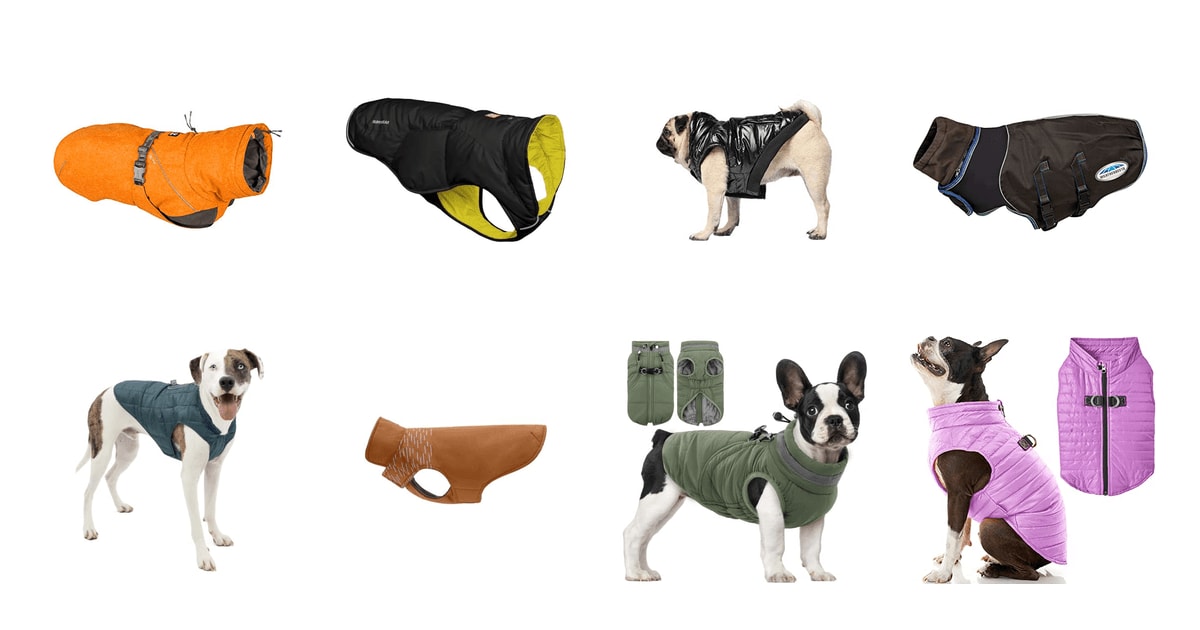
Cold hits some dogs much harder than others. A husky can nap in the snow. A whippet starts shivering on a 40-degree sidewalk, and a 12-year-old terrier with thinning fur isn't far behind. The American Kennel Club suggests outerwear once temperatures drop below 45°F for small breeds, short-coated breeds, seniors, puppies and dogs with health conditions like diabetes. Wind makes it worse. A 30°F day with 20 mph wind feels closer to 17°F, which shrinks how long your dog can comfortably stay outside.
Here's the honest part: no coat fits every dog, and sizing is where most of these purchases go wrong. Brands measure differently, so a medium in one line runs like a large in another. Deep-chested sighthounds, barrel-chested bulldogs and long dachshunds all get failed by standard cuts. Coats also can't help paws, and sidewalk salt still burns pads, so booties are a separate purchase. And once a coat soaks through, it stops doing its job until it dries.
So the job is narrower than it sounds. You want insulation that still works damp, coverage that wraps the belly instead of draping the back, a harness portal so you're not clipping a leash over fabric, and a size you measured before ordering. Everything else is a bonus. We think that the Hurtta Expedition Parka is the best cold-weather dog coat for most people, and that the Ruffwear Quinzee Insulated Winter Dog Vest is the one to buy if your dog runs, hikes and scrambles more than it strolls.
Everything we recommend

Serious winter warmth with a fit you can actually dial in

Lighter, packable, and made for dogs that move all day

Barely-there warmth for small dogs, and easy to get on

For sleet, mud and wind, with a belly wrap that stays put
At a glance
| Product | Insulation Fill | Water Resistance | Price | |
|---|---|---|---|---|
| Hurtta Expedition ParkaTop pick | — | — | $47.50 |
| RuffwearRunner-up | Recycled Insulation | Weather-Resistant | $59.99 |
 | Canada Pooch Cp01750 Nordpol Parka Black GlossAlso consider | Faux Down | Waterproof | $40 |
| WeatherBeeta ComFiTec Ultra Cozi Dog Coat Medium/LiteAlso great | 100g Polyfill | Waterproof | $14.99 |
 | Kurgo Loft Dog JacketAlso consider | — | Water-Resistant | $24.75 |
 | RC Pet Products Cascade Jacket Fleece LinedAlso in lineup | Fleece Lining | Waterproof | $62 |
 | SAWMONG Windproof Waterproof Dog CoatAlso in lineup | Fleece Lining | Waterproof | $16.99 |
| Gooby Puffer Vest Dog JacketBudget pick | 100% Polyester | Water Resistant | $24.95 |
How we picked
Insulation that works wet. We favored synthetic fills, which keep most of their warmth when damp, over down, which collapses and loses loft once it's saturated. On a slushy sidewalk that difference decides whether the coat is still helping halfway through the walk.
Belly and chest coverage. The ASPCA flags the underside as a main route of heat loss, so we prioritized coats that wrap below the rib line over back-only blankets. Neck coverage counted too, especially for short-faced breeds.
Sizing you can verify. We looked for published size charts based on neck circumference, chest girth and back length, plus size ranges that reach dachshunds, sighthounds and very large dogs. Brands whose fit guidance is vague get returned a lot, according to owner feedback.
Harness and leash setup. A leash portal or two-way zipper lets you clip to a harness worn underneath, which is safer than attaching a lead to fabric. We treated that as close to a requirement for any dog that pulls.
Movement and easy on-off. Spec sheets and published reviews told us which coats use stretch panels, articulated seams or buckle closures instead of pull-over cuts. Coats that bind at the shoulder or take two people to fasten don't get used.
Top pick
Serious winter warmth with a fit you can actually dial in
Hurtta Expedition Parka
The Expedition Parka is a full winter coat rather than a warm layer, built by a Finnish company that designs for genuinely brutal weather. Three separate adjustments — neckline, back length and collar circumference — let you fit it to a dog that standard sizing usually misses.
$47.50fromAmazonMost coats give you one size and hope for the best. This one gives you three dials. You can adjust the neckline, the back length and the collar circumference, which matters enormously if your dog falls between sizes or has proportions that off-the-rack cuts ignore. Hurtta also makes 16XS and 18XS sizes specifically for dachshunds and a 12XL for very large dogs, on top of the standard 8-to-32-inch range.
Hurtta's whole pitch is cold-weather clothing for dogs without much of their own. The company calls out short-haired dogs and dogs with no undercoat as the ones who benefit most, and that lines up with veterinary guidance: greyhounds, whippets, vizslas and pit bull terriers have lean bodies, thin coats and very little subcutaneous fat, and they get uncomfortable well before a double-coated dog notices anything at all.
The parka is cut so your dog can still move. Hurtta designed it not to bind at the shoulders when a dog runs or plays, which is the failure mode of cheap winter coats — they're warm standing still and awkward the second the dog breaks into a trot. If your walks involve any actual romping, that difference shows up fast.
3M reflective piping runs along the coat, and in winter that's not a small thing. Most of your walks happen in the dark on both ends of the day. Reflective trim on the dog's back and sides puts light where a driver's headlights will catch it, which is more useful than a reflective collar alone.
Flaws but not dealbreakers
This is the most expensive coat here by a wide margin, and it's overkill for a mild climate. If your winters top out around 40°F and your dog has a decent coat of its own, you're paying for warmth you'll never need.
All that adjustability takes a few minutes to sort out the first time. Hurtta is blunt about not guessing your size, and you really do have to measure back length, neck and chest before ordering. Skip that and you'll be shipping it back.
There's no built-in leash attachment. You'll be putting a harness underneath, which is the safer setup anyway, but it's an extra step every time.
Runner-up
Lighter, packable, and made for dogs that move all day
Ruffwear
The Quinzee is a high-loft insulated vest with a weather-resistant shell that stuffs into its own sack. It's the one to get if your dog hikes, and if you want a coat you can throw in a pack when the sun comes out.
$59.99fromAmazonRuffwear builds this around recycled synthetic insulation, and that choice matters more than it sounds. Synthetic fill keeps most of its warmth when it gets damp. Down collapses and loses its loft when it's saturated, which is exactly what happens on a slushy walk or after a dog rolls in wet snow. For real winter conditions, synthetic is the safer bet.
It goes on fast, which you'll appreciate at 6 a.m. Stretch panels at the neck and side-release buckles mean you're not wrestling anything over your dog's head, and it slips on over most harnesses. A leash portal on the back lets you clip to the harness underneath instead of to the coat, so a lunging dog pulls against the harness where it belongs.
The relaxed, non-restrictive cut is the point. Ruffwear designs this so dogs can run, jump and curl up without the coat fighting them, and that's the difference between a jacket your dog tolerates and one it forgets it's wearing. Owners of anxious or coat-averse dogs tend to have better luck with pieces that don't clamp down anywhere.
It packs into its own stuff sack and weighs well under a pound in a medium. If you drive to trailheads, that means the coat lives in the car door pocket instead of the closet, which is the only way it actually gets used.
Flaws but not dealbreakers
It's a vest, and the shell is weather resistant rather than waterproof. It sheds light moisture fine. In sustained rain or heavy wet snow it'll wet out, and belly coverage is less complete than what a full parka gives you.
It's also not the warmest option here. For a short-coated dog standing around in single digits, you'd want more insulation and more coverage than this.
Budget pick
Barely-there warmth for small dogs, and easy to get on
Gooby Puffer Vest Dog Jacket
The Gooby Puffer Vest is a lightweight polyester-fill puffer with a water-resistant nylon shell, aimed squarely at small dogs. A snap button holds it in place while you zip, which is a genuinely thoughtful touch on a squirming chihuahua.
$24.95fromAmazonSmall dogs are the ones who need a coat most, and they're also the hardest to dress. Gooby's answer is weight: this thing is almost nothing on the dog, which cuts down on the freeze-in-place routine that a lot of toy breeds pull the first few times you put clothes on them. If your chihuahua has rejected two coats already, this is a reasonable third try.
The zipper guard is the detail that earns this a spot. Anyone who has caught a fine-coated dog's hair in a zipper knows how quickly that ruins the whole idea of coat-wearing. Gooby puts a guard behind the zipper to keep fur out of the teeth, and the snap button holds everything in position so you can zip one-handed.
The 100% polyester fill provides real insulation while staying breathable, and the nylon outer shell sheds a sudden shower. It's not a storm coat. For a quick trip around the block on a cold, dry morning with a dog that weighs eight pounds, it covers what you need.
Dual D-rings let you clip a leash directly to the vest for short walks, so you can skip a separate harness on a quick outing. Gooby says outright that this isn't the setup for a strong puller, and that's the right call — a leash on fabric is fine for a dog that walks politely and nothing more.
Flaws but not dealbreakers
It's a vest with modest fill, so it won't carry a thin-coated dog through a serious cold snap. Think brisk fall and mild winter, not January in Minnesota.
Sizing runs snug, and Gooby recommends sizing up if your dog is between sizes. Chest measurement is what to go by here — a small fits a 15-inch chest — and a puffer that's tight across the ribs is uncomfortable in a way your dog can't tell you about.
Also great
For sleet, mud and wind, with a belly wrap that stays put
WeatherBeeta ComFiTec Ultra Cozi Dog Coat Medium/Lite
WeatherBeeta makes horse blankets, and the ComFiTec Ultra Cozi is that engineering scaled down. The outer shell is breathable and waterproof, the belly wrap closes underneath, and a stretch chest panel keeps the whole thing from binding.
$14.99fromAmazonIf your winter is wet more than it's frigid, this is the coat. The outer is genuinely waterproof and breathable, built for the muddiest and windiest days rather than dry cold. WeatherBeeta's spec sheet lists a 1200-denier ripstop shell on this line — a number borrowed from equestrian gear, and far tougher than the 300- to 420-denier fabrics most dog coats use.
The belly wrap is what separates this from a back-only blanket. The ASPCA points to belly and chest exposure as a main driver of heat loss on cold walks and recommends coverage that extends below the rib line. A wrap that fastens underneath does that, and it also stops the coat from sliding sideways when your dog shakes off.
A wrap-around front design with a stretch panel across the chest keeps the shoulders free. That's the same problem the Hurtta and Ruffwear coats solve differently, and it's worth caring about — a coat that pinches at the chest will have your dog walking like it's wearing someone else's shoes. Reflective piping handles the dark-at-5-p.m. problem.
The snug collar is high enough that it can be pulled up over the ears, which is a small mercy for dogs that hate wind in their face. Brachycephalic breeds like French bulldogs and pugs benefit here in particular; their shortened airways make it harder to generate heat through exertion, so blocking wind does more for them than it would for a leggier dog.
Flaws but not dealbreakers
The version sold as Medium/Lite carries 100g of polyfill, which is a middleweight amount. It's built for weather protection first and deep cold second, so a lean, short-coated dog standing still below 20°F will want more.
Horse-blanket construction means horse-blanket bulk. This is a heavier, stiffer garment than the Ruffwear vest, and it isn't the thing you stuff in a daypack.
Equestrian sizing is quoted in back-length inches, which trips people up. Measure from the base of the neck to the base of the tail and buy to that number, not to a small-medium-large habit.
Who this is for
Buy a coat if your dog is small, short-coated, lean, elderly, very young or managing a health condition. That covers chihuahuas, yorkies, min pins, greyhounds, whippets, italian greyhounds, vizslas, pit bull terriers, french bulldogs and most dogs past seven years old. PetMD's guidance puts sighthounds and brachycephalic breeds in coats below 50°F, and the AKC's general threshold is 45°F. Senior dogs regulate their temperature less efficiently than they used to, so if your dog is older and seems to hate going out in the cold, a coat is worth trying before you assume it's stubbornness.
You can skip all of this if you have a husky, malamute, samoyed, bernese or any other thick double-coated breed in normal winter conditions — those dogs are already wearing the best coat available, and adding a layer can make them uncomfortably warm. This guide covers insulated outerwear for cold weather only. It doesn't cover rain shells without insulation, knit sweaters, cooling vests or booties, though booties are worth owning separately if your sidewalks get salted, since ice-melt chemicals can chemically burn paw pads.
How we picked
We compared manufacturer spec sheets, published reviews and recurring themes in owner feedback against five things. Insulation: synthetic fills that hold warmth when damp, since down loses its loft once it's wet. Coverage: a belly and chest wrap that extends below the rib line, not a blanket that only drapes the back. Fit: published charts keyed to neck, girth and back length, plus size ranges that actually reach dachshunds, sighthounds and giant breeds. Leash integration: a portal or two-way zipper so the lead clips to a harness underneath rather than to the coat itself. Movement: stretch panels, articulated seams or buckle closures, so the coat doesn't bind at the shoulder the moment your dog breaks into a run. Reflective trim and machine washability broke the ties.
Other cold-weather dog coats worth considering
If you want one coat that handles car rides, errands and walks: The Kurgo Loft Dog Jacket ($24.75) — The Kurgo Loft Dog Jacket is reversible, lightweight and cut athletically, with a two-way zipper for harness access and water-resistant Microtomic ripstop fabric. It's the pick for a medium dog whose day involves as much backseat as trail, and it packs down small enough to live in the car. Kurgo backs it with a lifetime warranty, which is unusual in this category. You give up the deep insulation of the Hurtta and the full waterproofing of the WeatherBeeta — this handles wind and light rain, not a sustained soaking.
If you want a hooded parka with pockets and real coverage: The Canada Pooch Cp01750 Nordpol Parka Black Gloss ($40) — The Canada Pooch Nordpol Parka pairs a waterproof outer with fleece lining and faux-down fill, and it's the most fully featured coat here. Double Velcro fastening at the stomach and back, ribbed cuffs, a harness slot, a treat pocket and a faux-fur-trimmed hood that snaps back off the face add up to a lot of coat. If your dog tolerates a hood, it's excellent in wind. The trade-offs are bulk and fussiness: more closures to fasten, more places for snow to pack in, and a look that some dogs clearly find silly.
The competition
This is what our research surfaced, not a census of every dog coat sold. Plenty of good regional and small-batch brands never turn up in a broad search, and a coat we didn't cover isn't automatically a bad one. The two below came close enough to consider and lost on specific points.
The RC Pet Products Cascade Jacket Fleece Lined ($62) — The RC Pet Products Cascade Jacket is a fleece-lined, water-resistant coat from a Canadian brand with a solid reputation for cold-climate gear, and it's sold in a wide size range. It lost to our picks on documentation more than anything: the listing describes a waterproof shell and fleece lining and stops there, with no detail on fill weight, closure design, harness access or reflective trim. Fleece lining alone is a warm layer rather than true insulation. If you've had good luck with RC Pet sizing before and you want something simple, it's a reasonable buy.
The SAWMONG Windproof Waterproof Dog Coat ($16.99) — The SAWMONG dog coat checks a surprising number of boxes on paper — windproof and waterproof outer, fleece lining, back zipper, adjustable belly straps, reflective strips, a built-in harness with a leash hole, and seven sizes from XS to 3XL. What it doesn't have is a track record. There's no published fill weight, no established design history, and none of the outdoor-brand engineering notes we could weigh against the other coats here. If you need a large size cheaply and your winters are mild, it's a defensible gamble; for a dog that genuinely depends on the coat, we'd spend more.
Fit, sizing and care
Measure before you order, every time. You need three numbers: neck circumference, chest girth at the widest point behind the front legs, and back length from the base of the neck to the base of the tail. Back length is the one most brands size to, and it's the one people guess at. Buy to the chart, not to the size your dog wore in another brand. When the coat arrives, check that it clears the shoulders when your dog walks and doesn't rub under the front legs. Introduce it indoors first — a few minutes with treats, then longer — rather than debuting it in a snowstorm. Wash on cold and tumble dry low; heat melts synthetic fill and flattens the loft that keeps your dog warm. And take the coat off indoors, since a dog that can't shed heat gets uncomfortable fast.
Questions we get
What temperature does a dog need a coat?
The AKC's general threshold is 45°F for small breeds, short-coated breeds, seniors, puppies and dogs with health conditions. For very lean, thin-coated breeds like greyhounds and whippets, veterinary guidance puts it closer to 50°F. Factor in wind, too — 30°F with a 20 mph wind feels like about 17°F to your dog.
Do all dogs need a winter coat, or just certain breeds?
Just certain ones. Double-coated northern breeds like huskies, malamutes and samoyeds are already well insulated, and adding a coat can make them overheat. The dogs who need one are small, short-coated, lean, very old, very young, or dealing with a condition like diabetes or Cushing's that affects how they handle cold.
How do I measure my dog for a coat so it actually fits?
Take three measurements with a soft tape: neck circumference where a collar sits, chest girth at the widest point just behind the front legs, and back length from the base of the neck to the base of the tail. Compare all three to the brand's chart, since sizing varies dramatically between companies. If your dog is between sizes, size up — a coat that's slightly loose beats one that binds at the shoulders.
What's the best coat for a greyhound or whippet with a narrow chest?
Look for adjustable back length and collar circumference rather than a fixed cut, which is why the Hurtta Expedition Parka works well here. Sighthounds have deep chests and tiny waists, so standard proportions leave them either tight at the ribs or flapping at the belly. Buy from a brand that publishes a real size chart and be prepared to exchange once.
Is synthetic insulation really better than down for a dog coat?
For winter walks, yes. Synthetic fill keeps most of its insulating ability when it's wet, while down collapses and loses the bulk of its loft once it's saturated. Dogs get wet constantly in winter — slush, snow, shaking off — so a coat that fails when damp isn't much of a coat.
Is it safe to leave a coat on my dog overnight or when I'm out?
We'd take it off. Dogs shed heat differently than we do, and a dog that can't get out of a warm coat can overheat or get tangled, especially with buckles and straps. Coats are for the walk. If your house is cold enough that your dog seems uncomfortable indoors, a light sweater under supervision is the better answer.
Why you should trust us
For this guide:
- We read manufacturer specifications for every coat here, including fill type, shell fabric, closure design and published size charts.
- We compared that against veterinary and breed guidance from the AKC, ASPCA, VCA Animal Hospitals and PetMD on when dogs need outerwear and which breeds are most cold-sensitive.
- We also weighed recurring themes in owner feedback — especially around sizing accuracy and how easily each coat goes on — when deciding which flaws were worth flagging.
- We read owner reviews on every listing, weighted toward the critical ones, because that is where the recurring failures show up.
- We have a systematic way of automatically fetching the latest prices, so the numbers on this page stay current.
- This is a research-focused guide, so the team may not own every product listed — though we often do own the top winners, which gives us extra context for the recommendations.
- We don't accept free products, and the retailer commission never changes which product we recommend.
Sources
Winter Weather Advice for Dog Owners — American Kennel Club, American Kennel Club
Hypothermia in Dogs: Signs, Causes, and Treatment — VCA Animal Hospitals, VCA Animal Hospitals
How to Tell If Your Dog Needs a Winter Coat — PetMD, PetMD
Best Dog Coats — Wirecutter (New York Times), Wirecutter
Best Dog Coats for Winter 2026 — Good Housekeeping, Good Housekeeping
Best Dog Coats — The Spruce Pets, The Spruce Pets
Best Dog Winter Coats Tested Outdoors — Outdoor Life, Outdoor Life
Best Dog Coats — Forbes Vetted, Forbes Vetted
Hypothermia in Dogs — American Kennel Club Health, American Kennel Club
Hurtta Summit Parka Technical Product Specifications, Hurtta Outdoor
Ruffwear Quinzee Jacket Product Specifications, Ruffwear
Cold Weather Safety for Pets — ASPCA, ASPCA
Amazon product listings and owner reviews for all 8 products
Manufacturer specification pages for each product
Some passages in this guide may be paraphrased with AI help. Prices are refreshed automatically.
More like this.
Continue exploring pet reviews and recommendations.

The Best Ceramic Coating for Car Paint
A ceramic coating is a thin layer of liquid glass that bonds to your clear coat and changes how your car behaves in the weather. Rain sheets off instead…

The Best All-Weather Windshield Wipers
Wipers are easy to ignore until the moment you can't see. You merge onto a wet highway, a truck throws up a sheet of spray, and a worn blade smears it…

The Best All-Weather Family Camping Tents
The tent that matters is the one you're stuck inside at 2 a.m. when the rain starts. That's when you find out whether the fly reaches the ground, whether…

The Best Cooling Tents and Hot-Weather Camping Gear
Heat is the one camping problem you can't sleep through. A tent sitting in afternoon sun turns into an oven fast - Wirecutter's summer tent research found…

The Best All-Weather Car Floor Mats
Winter doesn't stay outside. Salt, slush, sand and gravel ride in on your boots and grind into the carpet every time you get in. A good all-weather mat…

The Best Emergency Weather Radios
Severe weather doesn't wait for you to check your phone. A NOAA weather radio sits in the corner of a room and does one job: it makes noise when the…