The Best Ceramic Coating for Car Paint
A ceramic coating is a thin layer of liquid glass that bonds to your clear coat and changes how your car behaves in the weather. Rain sheets off instead of sitting in puddles. Bug guts, bird droppings and road film release with a lot less scrubbing, so washing gets faster and gentler on the paint. And because the coating takes the UV hit instead of your clear coat, dark colors hold their depth longer. That's the real payoff: less work, for years, not weeks.
Here's the part the bottles won't tell you. Every durability claim on this page assumes a level of prep most people won't do. Wash, iron decontamination, clay, polish, then an alcohol wipe on every panel — that's a full weekend before you open the coating. Skip it and the coating locks in the swirls and contamination that were already there. And none of these stop a rock chip. A hardness number on the label protects against wash marring, not gravel. For that you need paint protection film.
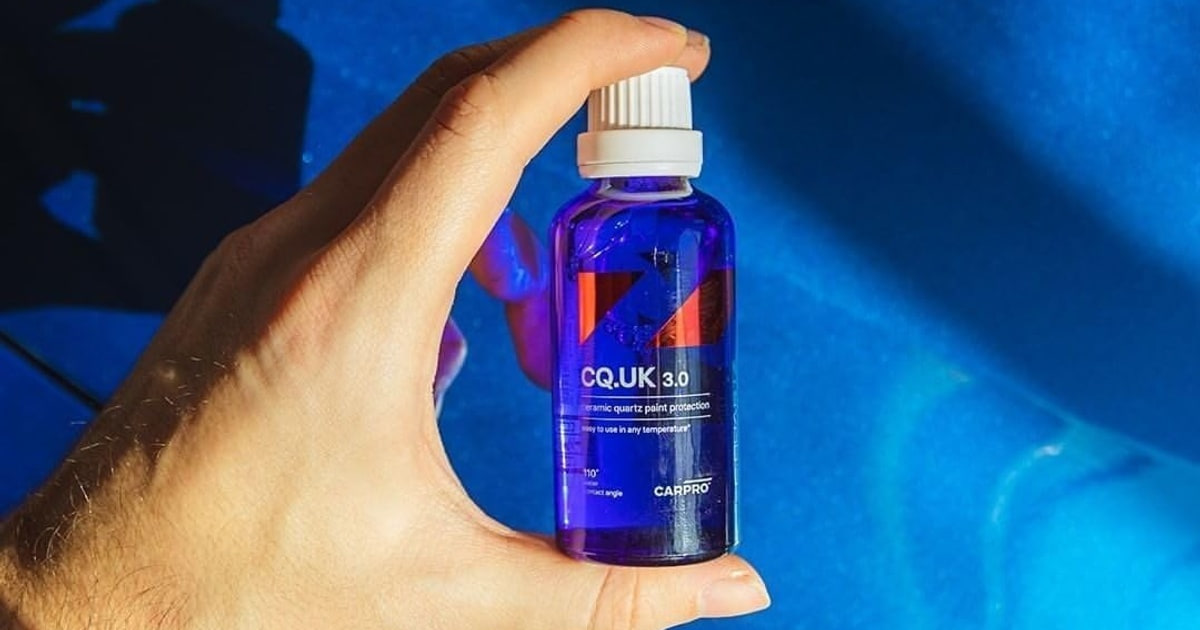
So match the product to your patience, not to the biggest number on the box. If you're happy spending a weekend on prep, a liquid coating pays you back for years. If your idea of detailing is a wash and a spray bottle, a ceramic spray gets you most of the water-beading fun with none of the anxiety. We think that the Adam's Polishes UV Graphene Ceramic Coating is the best ceramic coating for car paint for most people, and that the CARPRO CQUARTZ UK 3.0 is the one to buy if you want a formula the detailing community has tracked for years.
Everything we recommend

UV-traceable coverage and long protection, if you do the prep

Community-vetted durability with a friendlier working window

Ceramic water beading in twenty minutes, months not years

The deepest gloss and longest claim, for skilled hands only
At a glance
| Product | Durability | Application Difficulty | Price | |
|---|---|---|---|---|
| Adam's Polishes UV Graphene Ceramic Coating -Top pick | 7+ Years | — | $154.99 |
| Gtechniq Crystal Serum Light Ceramic Coating forUpgrade pick | Up To 5 Years | — | $109.95On sale |
| CARPRO CQUARTZ UK 3.0 - Ceramic CoatingRunner-up | — | Easy To Use | $82.99 |
| Chemical Guys WAC23016 HydroCharge High-Gloss Hydrophobic SI02Budget pick | Up To 1 Year | User-Friendly | $39.99 |
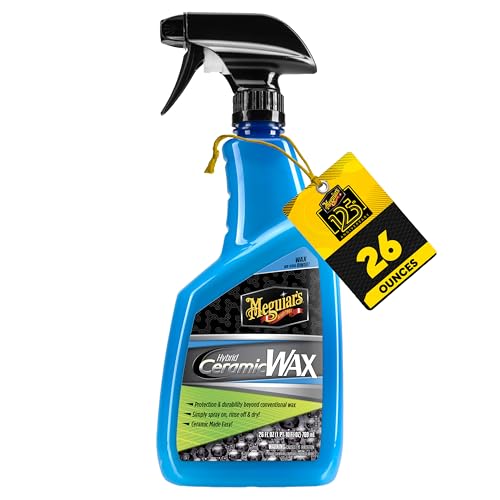 | Meguiar's Hybrid Ceramic WaxAlso in lineup | — | Easy To Use | $17.59On sale |
How we picked
Real-world durability. We weighed manufacturer durability claims against what owners report over multiple seasons, and discounted anything that only performs in ideal conditions. A liquid coating had to show credible evidence of at least two years of maintained water repellency.
Application forgiveness. We looked at how much room a coating gives you between wiping on and leveling off, since that window is where most home applications go wrong. Coverage aids like a UV tracer counted heavily in a product's favor.
Prep required. We noted exactly what each product demands before application — clay, correction, alcohol wipe — because a coating you'll never prep for correctly is worse than a spray you'll actually reapply.
Water behavior. We compared claimed contact angles and owner descriptions of beading and sheeting, prioritizing coatings where water leaves the panel on its own at speed rather than sitting and drying into spots.
Coverage and kit contents. We checked bottle volume against typical vehicle size and whether the kit includes applicators and a leveling towel. A coating that runs out on an SUV hood isn't a bargain.
Top pick
UV-traceable coverage and long protection, if you do the prep
Adam's Polishes UV Graphene Ceramic Coating -
Adam's UV Graphene Ceramic Coating glows under a blacklight while you apply it, so you can see exactly where you've been before anything cures. That single trick removes the mistake that ruins most first attempts, and the graphene formula sheets water hard.
$154.99fromAmazonThe UV tracer solves the one problem that wrecks DIY coating jobs. Liquid coatings go on nearly invisible, which is why high spots and missed panels are the classic beginner disaster. Adam's adds a compound that fluoresces bright under a blacklight. Sweep a UV lamp across the fender after you level it and you'll see coverage, streaks and thin patches while you can still fix them. No other coating here gives you that feedback.
Graphene changes how water leaves the car, not just how it beads. The listing describes a nanocrystalline layer that repels water, dirt and chemicals, and owners of graphene-hybrid coatings consistently report water sheeting off in sheets at speed rather than sitting in fat beads that dry into spots. Practically, that means fewer water marks after a rainstorm and a shorter drying towel session. Panels also tend to run cooler in the sun than plain silica coatings.
It's rated for 10H hardness and claims seven-plus years of protection. Treat the years as a ceiling rather than a promise, since it assumes correction, a clean alcohol wipe and pH-neutral maintenance washes. Even discounted heavily, that's far beyond anything a wax does. The hardness rating won't stop a shopping cart, but it does reduce the fine swirls that come from drying towels and automatic washes.
One kit covers more than the paint. Adam's rates it for paint, glass, plastic trim and wheels, and the listing extends that to boats, RVs and motorcycles. Coating your wheels is the underrated move here — brake dust stops baking on, and a rinse gets most of it. If you own a car plus a bike or a trailer, one kit stretches further than a paint-only product would.
Flaws but not dealbreakers
The prep is non-negotiable and it's a whole weekend. You need a decon wash, clay, polish and a surface prep wipe before the bottle even opens. Adam's sells its own prep spray separately, which is another thing to buy. If your paint has swirls, this coating seals them in and makes them more obvious under the added gloss.
The application window is narrow and the lamp isn't included. You want moderate temperatures, humidity on the low side, shade, and twelve to twenty-four hours where the car stays dry and dust-free. That rules out a driveway job in a July heat wave or a damp fall week. And the UV blacklight that makes the tracer useful is a separate purchase.
It costs more per ounce than plain silica coatings. You're paying for the graphene and the tracer. If you've coated a dozen cars and never had a high spot, that premium buys you a feature you may not need.
Adam's backs the coating with a satisfaction guarantee rather than a formal parts warranty.
Runner-up
Community-vetted durability with a friendlier working window
CARPRO CQUARTZ UK 3.0 - Ceramic Coating
CQUARTZ UK 3.0 is the coating detailing forums have been tracking for years, across road salt, freeze-thaw and desert sun. It's 70% silica at high purity, and it gives you a few more seconds to level each panel than the pickiest formulas do.
$82.99fromAmazonNothing here has more real-world track record. The UK name points at northern European weather testing — road salt, acid rain, freeze-thaw — and owners in Canada, Scandinavia and northern England report two-plus years of water beading with routine pH-neutral washes. That's not a lab claim. It's years of people posting the same result, which is about the strongest evidence a coating category can offer.
The silica content is unusually high and unusually clean. CARPRO lists 70% SiO2 at 99.9% purity, which is what builds the hard, glassy layer that resists chemicals and salt. Higher concentration generally means stronger water repellency and better staying power against detergents. In use, that shows up as beading that survives a winter of grimy washes instead of fading after a couple of months.
The leveling window is more forgiving than the most demanding coatings. You get a few more seconds between wiping the coating on and buffing off the excess before it flashes. That sounds minor. It isn't — it's the difference between a clean panel and a haze you have to polish off. CARPRO also rates application from cool to fairly warm ambient temperatures, which widens your workable days.
The kit gives you what you actually need to apply it. You get the 50ml bottle, a foam applicator block, four suede applicators and a large suede leveling towel. Plan on roughly 15ml per coat for an average car. Buying leveling towels separately adds up, so a complete kit keeps first-timers from improvising with the wrong microfiber and smearing the job.
Flaws but not dealbreakers
There's no coverage aid, so you're working blind. No tracer, no glow, nothing. You need strong raking light and a disciplined panel-by-panel pattern, or you'll find the missed strip after it cures.
A 50ml bottle runs short on big vehicles. For a sedan it's fine. For a three-row SUV or a pickup, especially if you want two coats, plan on a second kit. Running out mid-hood is a genuinely bad afternoon.
It still demands full prep and a protected cure. Clay, correction and an alcohol wipe are all required, and the car needs twelve to twenty-four hours away from rain and dust afterward. If you're street-parked, that alone may push you toward a spray.
Budget pick
Ceramic water beading in twenty minutes, months not years
Chemical Guys WAC23016 HydroCharge High-Gloss Hydrophobic SI02
Chemical Guys HydroCharge sprays on after a normal wash and wipes off. There's no clay bar, no polishing and no cure window to babysit. Protection is measured in months rather than years, but it takes about twenty minutes and you can redo it anytime.
$39.99fromAmazonYou can do this on a Saturday morning with no skills at all. Wash the car, spray HydroCharge on wet or dry paint, wipe it down, done. No clay, no machine polisher, no alcohol wipe, no strict temperature rules. If the idea of a weekend of paint correction is why you've never coated a car, this is the product that gets silica onto your paint anyway.
The water behavior is a real step up from spray wax. Chemical Guys describes a nanotech silica layer that fills fine surface imperfections and leaves the paint slick. Owners consistently notice that the car dries in a fraction of the usual time, because water slides off instead of clinging. Fewer water spots, less towel dragging, less swirl risk. That's the everyday win.
It's the best maintenance layer for a coated car. If you've got Adam's or CQUARTZ underneath, a quick HydroCharge pass every few months refreshes the surface and takes the UV beating instead of your expensive base layer. Detailers do exactly this between deep details. A 16-ounce bottle goes a long way when you're only topping up.
It works on more than the paint. Chemical Guys rates it for cars, trucks, SUVs, RVs, boats and motorcycles. Glass responds particularly well — rain starts moving on the windshield before the wipers do. If you've got a boat or a camper sitting outside, one bottle covers a lot of territory.
Flaws but not dealbreakers
Durability is the trade-off, full stop. Chemical Guys claims up to a year; owners in hard sun and frequent-wash routines generally see a fraction of that before beading fades. Plan on reapplying a few times a year. That's fine as a routine and disappointing as a strategy.
It sits on the paint instead of bonding into it. That means much less chemical resistance than a liquid coating, so bird droppings and bug acid can still etch if you leave them. It also does nothing for swirl resistance.
Gloss gain is modest. It's slick and it's clean-looking, but you won't get the wet, deep reflection a liquid coating gives on corrected dark paint. If you want the show-car look, this isn't the path.
Upgrade pickOn sale
The deepest gloss and longest claim, for skilled hands only
Gtechniq Crystal Serum Light Ceramic Coating for
Gtechniq Crystal Serum Light is the closest a consumer gets to a professional installer's coating. On fully corrected paint it produces exceptional gloss and up to five years of protection. It's also the least forgiving product here, by a wide margin.
$109.95fromAmazonList priceThis is a professional formula sold without a trade account. Crystal Serum Light descends from Gtechniq's installer-only Serum Ultra, reworked for consumer application. Gtechniq's professional network has been logging long-term results since launch, so the five-year claim carries more evidence behind it than the usual number on a box. If you want the ceiling of what a home applicator can reach, this is it.
The gloss on corrected paint is the reason people pay up. It chemically bonds to the clear coat rather than sitting on it, and the result on a fully polished dark car is that wet, liquid depth you normally see in a detailer's portfolio. Water beads tight and uniform, and slides off horizontal panels at a very shallow angle. It's the best-looking finish in this group.
Chemical and swirl resistance are the strongest here. Gtechniq calls out resistance to dirt, tree sap, swirl marks and hazing, and a hard non-smearing film is what delivers that. For a car that lives under trees or takes long highway trips, that matters more than beading photos. It's rated for paint, glass, alloy wheels and plastic trim.
It's the right call for a car you plan to keep pristine. New paint, a garage-kept weekend car, a collector vehicle already machine-corrected — those are the cases where five years of one coating beats a spray you refresh every season. Gtechniq has been the choice for high-end vehicles for two decades, and the reputation is earned.
Flaws but not dealbreakers
The application window is brutally tight. In warm or humid conditions the coating flashes fast, and a mistake you don't catch immediately becomes a permanent haze that needs machine polishing to remove. There's no tracer and no coverage aid. This is not a first coating.
It amplifies whatever is under it. Swirls, buffer trails and oxidation all get locked in and made more visible by the added gloss. That means full correction is mandatory, not optional, which for most cars is hours of machine polishing before you start.
It's the most expensive product here by a large margin, and overkill on a beater. On a ten-year-old daily driver with uncorrected paint, you'd get a better result from a mid-tier coating and the time you'd have spent polishing.
Who this is for
Buy a coating if you keep your car outside, wash it yourself, and you're tired of bugs and bird droppings that need soaking and scrubbing. The payoff is biggest on a new or freshly corrected car, in a punishing climate — desert sun, salted winter roads, coastal air — and on dark paint where gloss and oxidation are most visible. If you're on a lease you'll return in a year, a spray makes more sense than a multi-year liquid coating.
Skip the liquid coatings entirely if you don't have a shaded garage, a free weekend and some comfort with a polisher. There's no shame in it — a ceramic spray gets you most of the day-to-day benefit for a fraction of the effort. This guide covers consumer coatings you apply yourself. It doesn't cover installer-only products, paint protection film, or the prep supplies you'll need alongside a liquid coating, and it isn't a substitute for film if rock chips are your real worry.
How we picked
Durability: we weighed claims against what owners report across full seasons and expected at least two solid years from a liquid coating. Application forgiveness: we favored formulas with a wider leveling window and any coverage aid that shows you where you've already been. Prep required: we spelled out what each product demands beforehand, because the honest answer changes which one you should buy. Water behavior: we prioritized coatings where water sheets off the panel on its own rather than beading up and drying into spots. Coverage: we checked bottle size against real vehicles and whether applicators and a leveling towel come in the box.
The competition
This is what our research surfaced in the consumer coating aisle, not a map of everything sold. There are dozens of silica sprays and a handful of installer-only coatings we couldn't fairly consider here. The product below is a legitimate choice for a specific kind of owner — it just isn't the best answer for most people.
The Meguiar's Hybrid Ceramic Wax ($17.59) — Meguiar's Hybrid Ceramic Wax is the softest possible landing into ceramic protection. You spray it on a wet car, rinse and dry — no buffing, no cure time, no temperature rules, and it's available at practically every auto parts store. The silica sits in a wax carrier, so it rests on top of the clear coat rather than bonding into it, and protection lasts a few months at best. It won't help with swirls and the gloss gain is mild. But if you already wax your car a few times a year and just want better water beading with zero change to your routine, it does that honestly. Anyone chasing multi-year protection should step up to a liquid coating instead.
Prep and application notes
If you do one thing before a liquid coating, make it the alcohol panel wipe. Polishing oils, old wax and silicone are invisible and they stop the coating from bonding, which is the most common reason a DIY job fails early even when everything else went right. Work in the shade, one panel at a time, in overlapping passes. Level the excess with a clean suede towel before it hazes, and flip to a fresh side often. Keep the car dry and out of dust for a day afterward. From then on, wash with pH-neutral shampoo and two buckets — harsh degreasers strip the coating faster than sun does.
Questions we get
How long does a ceramic coating actually last?
It depends far more on your prep than on the bottle. Premium liquid coatings like Gtechniq Crystal Serum Light and Adam's UV Graphene realistically hold up for several years on properly corrected paint, and CQUARTZ UK 3.0 sits in a similar range based on years of owner reports. Sprays like HydroCharge and hybrid waxes like Meguiar's are a months-long proposition, not a years-long one. Every claim assumes a clean bond and pH-neutral maintenance washes.
Does a ceramic coating prevent scratches?
Not the ones you care about. Coatings do reduce the fine swirls that come from washing and drying, and that alone keeps dark paint looking better. But they're not impact resistant — rock chips, door dings and deep scratches go right through. If gravel damage is your main worry, put paint protection film on the bumper and hood first, then coat over it.
Do I have to clay bar and polish first?
For any liquid coating, yes. The coating locks in whatever the surface looks like when you apply it, so iron contamination and swirls get sealed under it and become more obvious, not less. Budget four to eight hours for a sedan and do it in a shaded garage. Sprays like HydroCharge and Meguiar's Hybrid Ceramic Wax skip all of this — a thorough wash is enough.
Can I apply this myself or should I pay a detailer?
A confident DIYer can absolutely apply a liquid coating, but the skill you need is in the prep, not the coating step. If you're comfortable with clay and a polisher, go for it, and the UV tracer on Adam's takes a lot of the guesswork out. If your paint needs real correction and it's a car you love, paying a shop for the correction is money well spent. Sprays need no skill at all.
What's the difference between a ceramic coating and regular wax?
Wax sits on the surface and washes away in a month or two. A ceramic coating bonds chemically to the clear coat, which is why it survives detergents, sun and repeated washing for years instead of weeks. You also get a higher water contact angle, so the self-cleaning effect is much stronger. Meguiar's Hybrid Ceramic Wax splits the difference by mixing silica into a wax base — easier to use, shorter-lived.
Which coating should I put on a brand-new car?
Adam's UV Graphene is the best default. Factory paint usually needs only a wash, clay and an alcohol wipe rather than full correction, and the UV tracer keeps a first-timer from leaving high spots on a car they just bought. If you're experienced and the paint is already perfect, Crystal Serum Light will give you a deeper gloss and a longer protection claim.
Why you should trust us
For this guide:
- We read the manufacturer specifications and application instructions for every coating here, including silica concentration, rated temperature ranges and stated coverage per bottle.
- We compared published detailing reviews and long-running owner threads that track water repellency and gloss over multiple seasons and climates.
- We weighed recurring owner complaints — leveling streaks, short spray durability, bottles running out on large vehicles — against each product's claims.
- We read owner reviews on every listing, weighted toward the critical ones, because that is where the recurring failures show up.
- We have a systematic way of automatically fetching the latest prices, so the numbers on this page stay current.
- This is a research-focused guide, so the team may not own every product listed — though we often do own the top winners, which gives us extra context for the recommendations.
- We don't accept free products, and the retailer commission never changes which product we recommend.
Sources
Best Ceramic Coatings — The Drive, The Drive
Best Ceramic Car Coatings — Forbes Wheels, Forbes Wheels
Best Ceramic Coating for Cars — Popular Mechanics, Popular Mechanics
Best Ceramic Coating — Car and Driver, Car and Driver
Best Ceramic Coating — Motor Trend, Motor Trend
Ceramic Coatings — DetailingWiki, DetailingWiki
Ceramic vs. Graphene Coating — AutoGeek, AutoGeek
PPF vs. Ceramic Coating — The Drive, The Drive
Amazon product listings and owner reviews for all 5 products
Manufacturer specification pages for each product
Some passages in this guide may be paraphrased with AI help. Prices are refreshed automatically.
More like this.
Continue exploring electronics reviews and recommendations.

The Best Car Wax and Paint Sealants
Wax won't make your car faster or safer. It just keeps the paint from looking tired. A coat of wax or sealant is a sacrificial layer that takes the UV,…

The Best Car Paint Protection Film Kits
Paint damage on a car almost never arrives all at once. It shows up as a rash of tiny chips on the leading edge of the hood, a scuff where your kid swings…

The Best Cold-Weather Dog Coats
Cold hits some dogs much harder than others. A husky can nap in the snow. A whippet starts shivering on a 40-degree sidewalk, and a 12-year-old terrier…

The Best Ceramic Cookware Sets
Ceramic nonstick is what most people buy when they want eggs to slide out of the pan without cooking on a coating made with PFAS. It's the pan you grab on…

The Best Ionic Ceramic Hair Dryers
Most of us dry our hair on autopilot: head down, dryer on high, out the door. But the tool you grab every morning does more to your hair over a year than…

The Best Ceramic Heaters for Home Offices
A home office gets cold in ways the rest of the house doesn't. You're sitting still for hours, often in a converted bedroom or a garage corner the furnace…